
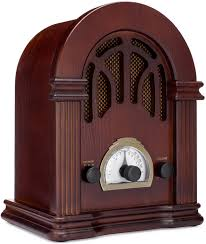
Two years ago, I asked the question, “Has Radio Lost Its Why?” I asked, because 100 years ago radio’s WHY was to be a technology that could provide nationwide communications that would be a unifier for cultural and social systems.
Since the start of the new year, as I’ve sat in on webinars, one technological development has dominated all of them; Artificial Intelligence aka AI.
Radio’s Revenue Source
Radio is an advertising supported medium and in 2026, the radio companies that are growing the most, attribute that growth to their digital initiatives.
Those initiatives include standalone web news sites, that don’t even mention radio, let alone radio stations owned by the same company. These products work best in communities that have been left with a “news desert” created by say the death of their local newspaper.
Just about every business has found its original business model challenged by a population connected to the internet; an internet now enhanced by artificial intelligence.
What Does A.I. Say Radio is Today?
I put that very question to artificial intelligence and it responded with:
AI Overview
In 2026, radio is a hybrid, digital-first medium, blending traditional intimate human-hosted broadcasting with AI-driven efficiencies and multi-platform distribution. It acts as a trusted, community-focused and increasingly interactive audio experience, merging terrestrial, streaming and podcasting formats while leveraging AI to enhance, not replace, the human connection.
Key Aspects of Radio in 2026:
- Digital Integration & AI: The industry is focusing heavily on integrating digital sales and AI-based recommendations to boost advertiser ROI, notes Radio Ink. AI is used to optimize content creation and understand listener habits.
- Human Connection in the Age of AI: Despite the rise of AI-driven tools the human voice remains the most valuable asset for connecting with local audiences.
- Format Trends: “Yacht Rock” has, emerged as a popular format in early 2026, alongside more traditional local programming. RadioInsight.
- Technological Shift: The, growth of, DAB+ is enhancing sound quality and variety offering better reach for local and online stations, say RadioKing.
- Key Future Focus: According to the National Federation of Community Broadcasters 2026 is about adapting to new models where community stations prioritize direct engagement over federal funding.
- Role and Relevance: Radio is seen as one of the last free accessible sources of news and information, as shown on PBS.
According to Radio Content Pro 2026 signals a pivot towards a more diversified revenue stream.
Where is The Best Place For a Small Business to Advertise?
I asked A.I. to advise me about where a small business should advertise, and it said:
Recommended “Small Business Mix” (2026)
If you have a limited budget, experts recommend a 70/20/10 split:
- 70% in proven intent-based channels (e.g., Google Search).
- 20% in optimization/retargeting (e.g., Meta Ads to stay top-of-mind).
- 10% in experimental high-growth channels (e.g., TikTok Shop or in-game advertising).
Color me skeptical, but asking an internet based computer brain, where the best place to advertise, is like asking a barber where the best place is to get a haircut.
But as Fred Jacobs pointed out in a blog article he wrote this week, in 2026 “it is a challenge to find radios for sale at mass merchandise stores like Walmart, Costco, Target, or Best Buy.”
Radio’s Big Problem
The real issue for radio broadcasters is that the internet is a better innovation for addressing those original foundational tenets of radio’s purpose than radio itself; to “operate in the public interest, convenience and/or necessity.” “You can often feel a competitor coming long before you lose your dominance in your format category,” says Jacobs.
So, in 2026, What is Radio’s WHY?
Simon Sinek published a great book in 2009 called “Start With Why.” Sinek argued that the most influential leaders and organizations communicate from the inside out, starting with their purpose (the “Why”) before the “How” and “What”.
Sadly, all I’m hearing from radio industry leaders are a lot of “How’s” and “What’s” without the foundational question of “Why.”
People don’t buy what you do, they buy why you do it.
-Simon Sinek
Radio consultant Tommy Kramer frames the answer to your radio station’s WHY question this way:
- What does your radio station do that I can’t get everywhere else?
- What does your radio station do that I can get ANYWHERE else?
My wife Sue and I got really engaged in the Venerable Monks “Walk For Peace” from Fort Worth, Texas to Washington, DC; a 2,300 mile walk. Venerable Monk Bhikkhu Pannakara was riveting each time he spoke. He said something that I think applies to this question of knowing Radio’s WHY in 2026 when it comes to sales and marketing your radio station.
He said that in order to give something to another person, you must first own it yourself. For example, you can’t give a bottle of water to another person if you don’t first have a bottle of water to give. Likewise, you can’t give love to another person if at first you don’t love yourself.
Radio can’t tell an advertiser WHY radio is a good place to spend their ad dollars, if they don’t first know their radio station’s WHY to begin with.
 DickTaylorBlog
Pingback: What is Radio in 2026? – Radio News
Great outline DT! The radio paradox (to my ears) is the product doesn’t match the ad. I see all the posts and articles how radio is live, local and a human interactive “companion”. Makes sense, until I casually listen to most stations. I still encounter the audio environment that the “consultants” created about 50 years ago. Short personality-less breaks, liner cards, every long commercial breaks…no real companionship, our audio risks, from what I can hear. Most of the DJ’s still sound interchangeable, just telling me here’s the new Taylor Swift song. It’s not their fault. Leadership, while spouting how radio is a personality driven companion, (and great for advertisers) still keep the sound as safe as “egg shell white” paint on the wall.
LikeLiked by 1 person
Exactly. That’s the paradox. What they say radio should be is correct, unfortunately, it’s not what’s being delivered.
Sometimes I wonder if the people who say these things ever listen to the radio, because then they would hear the problem.
And yes, there ARE exceptions (WETA, as an example, has live knowledgeable personalities that provide companionship, entertainment and valuable information. WETA is Washington, DC’s classical music station. The very thing that the elimination of CPB has the potential to damage.)
Thank you for sharing your thoughts on the blog today.
-DT
LikeLiked by 1 person
I agree with the statement, “Despite the rise of AI-driven tools the human voice remains the most valuable asset for connecting with local audiences.” However, that is not the route commercial broadcasters are taking. As listenership declines cutting budgets anywhere they can is the golden rule. We need more local ow power community radio stations. The FCC needs to dump the requirement to keep an old AM signal on the air to run a 250 watt translator. The 100 watt limit on community radio stations is just too low.
Fred Jacobs is right when he points out, “it is a challenge to find radios for sale at mass merchandise stores like Walmart, Costco, Target, or Best Buy.” This joins Motels, Hotels and other locations that used have radios available for the convenience of their customers.
Two points on the good side, AI said, “Just about every business has found its original business model challenged by a population connected to the internet” Radio has adopted to that pretty good. But do not enhance it enough. For example many stations stream on the web, but their web sites are fairly plain. TV stations will talk about something briefly, then say go to our web site for more information., I don’t think I’ve ever heard a radio station say that.
Secondly, I’ve long contented smart devices like Alexa and others are the future of radio, not “over the air.” Even car manufacturers are pulling back on having radios in vehicles. Setting up an Alexa account on Amazon should be a basic method of “spreading your word” around. Modern audiences are used to just saying “Alexa play (followed by what they want to hear).” Today’s weather, a particular song, etc. Let’s hope it’s your station as the total number of standalone radios continue to shrink.
Dick there is a lot to unpack in this week’s post.
Thanks for keeping us informed.
LikeLiked by 1 person
WOW – Thank You, Paul for all your wrote!
I’ve been in total agreement with eliminating the low power AM radio stations needing to remain on the air, once they have secured an FM signal. It’s a waste of energy and costs a lot of money that could be better spent.
Likewise, Community LPFM signals could use a power boost to better serve their listeners, though most also stream their signals.
Interesting observation about TV promoting additional information on their websites…it’s not something other than NPR stations, I’ve ever heard a radio program do.
I use my Amazon Echo’s for all kinds of information and for playing radio and/or streaming stations. While I have an AM/FM radio (at least one) in every room in my home, my Echos are the go-to device I use for all audio listening.
There’s a lot to unpack about the future of over-the-air radio for sure, Paul.
-DT
LikeLike
DT wrote: Interesting observation about TV promoting additional information on their websites…it’s not something other than NPR stations, I’ve ever heard a radio program do.”
I know on TV stations will present a brief 5 minute feature and say go to our web site for more where they will have a newspaper type article. But no, never heard a radio station say it. Which is strange as they will use on the air time to say, “To stream go to our website.”
LikeLiked by 1 person