Tag Archives: Bing Crosby

Gone In a Wink

Barry Lee & Dick Taylor

On June 26, 1941, at 6:57am, a new local radio station, WINC -1400AM began serving the Winchester, Virginia community. It was the city’s first radio station, and it brought Virginia Senator Harry F. Byrd and Virginia Governor James Hubert Price to town for the ribbon cutting ceremonies signing on this new radio service.

The radio station’s offices, studios, transmitter and tower were located at 520 Pleasant Valley Road in Winchester.

It would broadcast live descriptions of the attack on Pearl Harbor and FDR’s famous “Infamy Speech” only six months after signing on-the-air.

In 1947 a radio contest on WINC (known locally as Wink) would take down the entire telephone system for the City of Winchester, as female listeners tried to win a free pair of nylon stockings and a $10 handbag.

Virginia Hensley

Winchester’s most famous resident is Virginia Hensley, better known to the world as Patsy Cline.
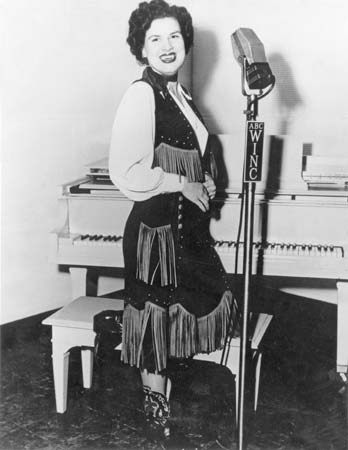
When Ginny was just fourteen years old, she walked into WINC and asked if she could sing on one the station’s live music shows, . The leader of the band, told her to come back next week and maybe he’d let her sing on the radio. Ginny returned the following weekend and made her broadcast debut on WINC in 1948.

Other stars to visit the station included, Bing Crosby, Bob Hope and Paul Harvey, who would broadcast his national News & Commentary over the ABC Radio Network on April 14, 1962.

Local Radio

WINC provided residents of Frederick County Virginia with news, entertainment and advertisements from local retailers. Those ads must have been popular with the business community because the radio station ran into trouble with the FCC (Federal Communications Commission) when trying to renew its broadcast license in 1971. At that time, the FCC allowed no more than 18-minutes of commercials per hour and WINC was airing 22-minutes of ads. It was reported that the FCC’s Broadcast Bureau Chief felt the excessive number of commercials were not in the best interests of Winchester community, but in the end renewed the station’s broadcast license.

Programming

Through the years, WINC -1400AM would undergo various programming changes. From live musical performances, to playing records. Musically, the station went from playing middle-of-the-road music, to adult contemporary, to classic hits; finally changing to a news/talk format in 1996, because its sister station, WINC-FM 92.5 had become Winchester’s most popular music radio station.

75th Anniversary
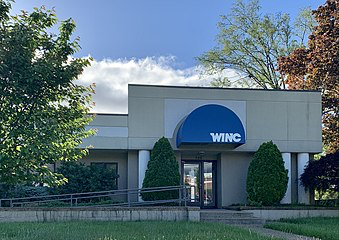
In 2016, WINC-1400AM celebrated its 75th anniversary of broadcasting. During this period of time, the station had only two different owners, the Lewis family and Centennial Broadcasting.

Richard Field Lewis, Jr., a broadcast engineer filed the initial application for a new station in Winchester in November 1940 and six years later, he would launch sister station WINC-FM.

On October 18, 1957 Richard F. Lewis, Jr. died and control of the two stations would pass to the Lewis family and incorporated as Mid-Atlantic Network, Inc.

In May 2007, the Lewis family would sell WINC AM/FM to North Carolina-based Centennial Broadcasting for about $36 million.

The End of an Era

Centennial would begin divesting their Winchester radio properties, which now numbered  three FM stations and one AM radio station in 2020.

50,000-watt WINC-FM would be sold to the Educational Media Foundation (EMF) for $1.75 million, which would begin airing EMF’s Air1 network. Centennial’s other two FM stations would be sold to Fairfax, Virginia-based Metro Radio, Inc. for $225,000.

The future of WINC-1400AM was uncertain as the radio station celebrated its 80th anniversary in 2021. Ultimately, the station would find a buyer that paid $25,000 for the signal. The call letters WINC would be changed to WZFC upon completion of the sale in October 22, 2021.


How do you mark the end of a local radio station?

Was it when:

  • WINC-FM was sold to EMF and its call letters were changed to WAIW?
  • WINC-AM was sold and the call letters were changed to WZFC?*
  • The retirement of 37-year Wink Morning Man Barry Lee when the radio stations were sold?
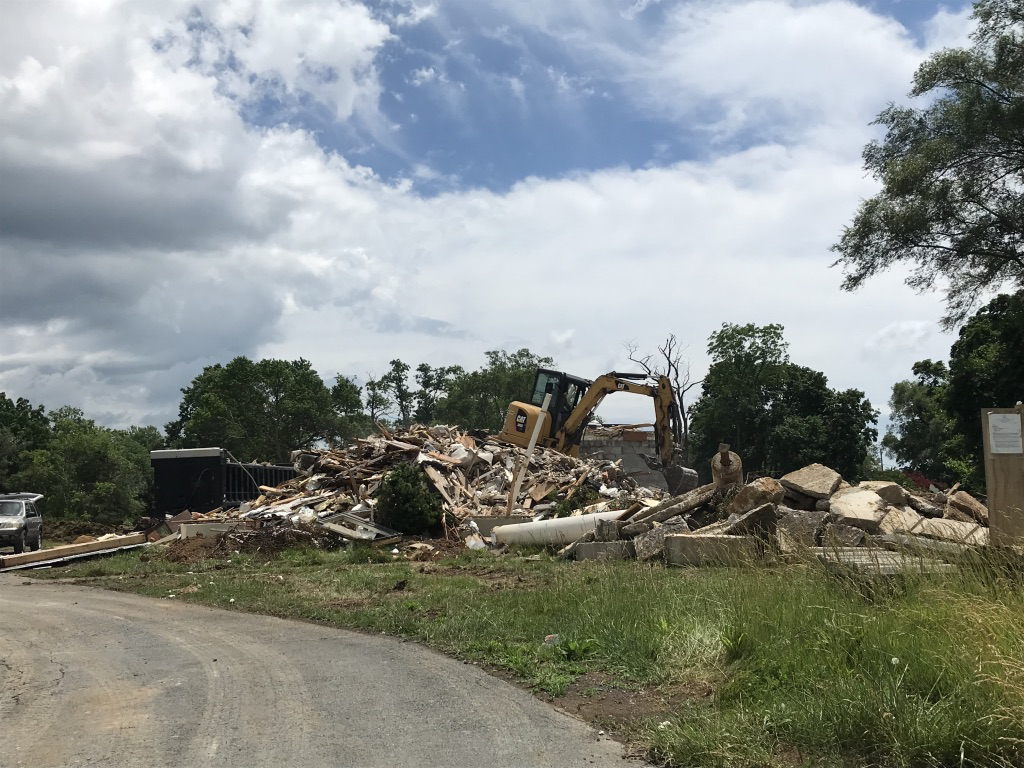
  • The demolition of the building WINC AM/FM had broadcast from for over its 75-year existence?

Every day, communities across America are finding a once local radio station vanishing, sometimes they’re replaced by syndicated programming with little local service, other times the city of license is changed and the local radio service is moved to a larger population center and sometimes, the signals just go off-the-air.

Generations who grew up and lived in Winchester, Virginia depended on radio stations WINC AM/FM as they were a part of the fabric of the community. More importantly, the local radio personalities that were heard over Wink Radio for decades, were very much a part of these families lives.
And now, it’s gone.

In a wink.

*Paperwork filed with the FCC to change WZFC’s call sign back to WINC, was done on February 25, 2023.

24 Comments

Filed under Education, Mentor, Radio

It Was All Harry’s Fault

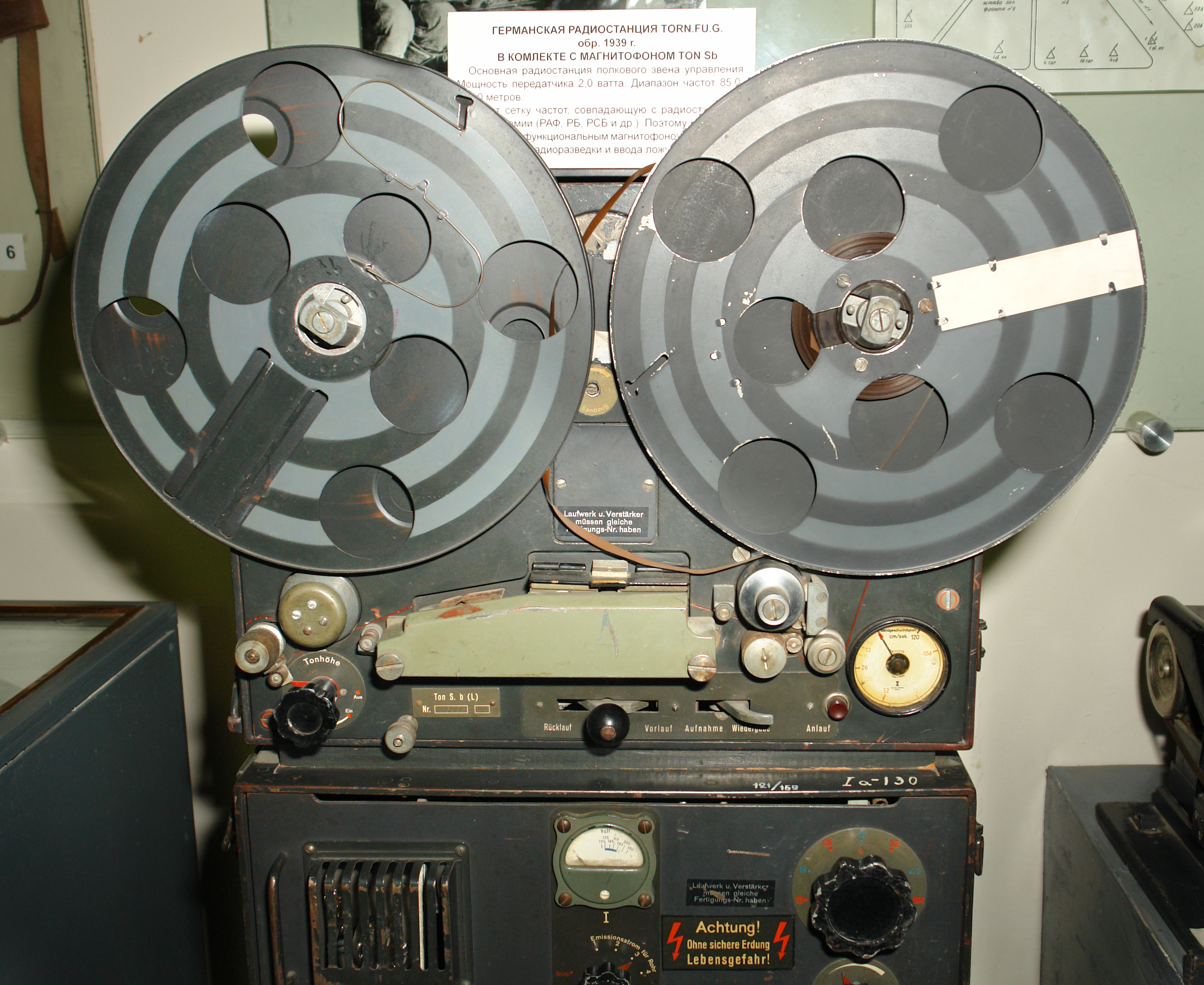
Magnetophon German Recorder

There was an interesting discussion this week, stirred up by a couple of Fred Jacob’s blogs; one asking if radio was losing the battle for the listener’s ear and the other questioning if radio’s “Live & Local” ship had sailed.

I’m sure you have your opinions on both.

But it got me to thinking about the history of radio and its battle over LIVE versus RECORDED programming.

Radio Was Born on LIVE Programs

In the beginning of commercial radio, the Federal Radio Commission had a decision to make, would it put a lot of radio signals into the air with mediocre content or limit the number of radio signals to only those entities that could provide LIVE quality programming content. It chose the latter.

Radio was born as a medium that broadcast only LIVE content. Music, news and sports was all broadcast LIVE; that is until a man named Harry came along.

The Following Program was Pre-recorded             

In the history of show business, Harry was a very popular entertainer and is remembered as its first “multimedia star.”

By 1948, half of the recorded music broadcast on radio was Harry’s, not to mention he was also a major Hollywood attraction at the movies.

But first and foremost, Harry was a savvy businessman, investing in Minute Maid orange juice, owning part of the Pittsburgh Pirates baseball team and seeing the future of tape-recording technology.

In 1936, Harry became the host of a nationwide variety show. Because the network radio programs were all done LIVE, Harry not only had to do the show once, but twice, every night; once for the East Coast and again for the West Coast.

By 1945, Harry was tired of two shows a night and because his network, NBC, wouldn’t let him record his first show for replay, Harry and his network parted company when the season ended that year.

NBC Red & NBC Blue Networks

It was during this same time that NBC, which dominated America’s network radio with their Red and Blue networks had been forced by the government to sell off its Blue network, which would become the American Broadcasting Company and the ABC Radio Network.

ABC needed a headliner and they approached Harry to host their nightly variety show. Harry said he would do it, if he could record it for replay to the West Coast. ABC said he could, but only if the quality of the recorded show equaled that of a live broadcast.

The recording technology in that day was primarily the Electrical Transcription or ET disc. These were giant records, 16-inches in diameter (an LP is 12-inches in diameter), but even an untrained ear could discern whether what they were hearing through a AM radio speaker was LIVE or played off of an ET.

If you’ve ever heard the Herb Morrison broadcast of the crash of the Hindenburg, you know the level of quality this type of recording device delivers. Listen HERE

Recording on Magnetic Tape

A recording device that resembles a reel-to-reel recorder had been developed in Germany during World War II to record Adolf Hitler. After the war, an American GI brought one of these machines back home and began to improve upon it using American made components. Recordings made on this new machine sounded like the original LIVE performance and Harry thought this might be the answer he was looking for. There was just one problem, the company was broke. So, Harry put $50,000 in an envelope and sent it to Alexander Poniatoff, the head of the company called AMPEX.

To put this in perspective, $50,000 in 1948 would be the equivalent of more than a half million in today’s dollars.

ABC heard the recordings of Harry’s show on these new AMPEX recorders using 3M recording tape and gave them a “green light.”

Now, Harry only had to do one LIVE show a night on the East Coast with the West Coast hearing the recorded playback.

Radio’s Innovators

It’s always a challenge to say who makes a greater contribution to changing the world, as each generation has its great innovators.

Marconi gave us the wireless, a one-to-one form of communications that transformed the world.

General David Sarnoff (RCA) innovated the radio as a form of mass communication, giving us a one-to-many instant communication service of news, entertainment and advertising supported radio.

And Harry “Bing” Crosby was the person who introduced high quality recording technology to broadcast radio that sounded equal to the original LIVE presentation.

Like Steve Jobs, who didn’t invent the cellular telephone but had the vision to develop it into the smartphone we enjoy today, Bing Crosby was the person who had a vision to see how a new recording technology could be transformative to the radio industry.

Innovation requires investment.

For too long, radio broadcasters have been living off their “seed corn,” while technology companies have been focusing on improving the audio listener experience and by delivering  what the customer wants.

“It’s never too late to do great radio that serves your community.”

-Fred Jacobs

6 Comments

Filed under Education, Mentor, Radio