Tag Archives: The Golden Age of Radio

Expiring versus Permanent

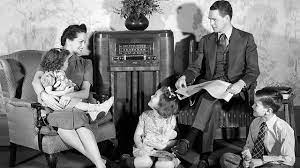
A hundred years ago, radio was the new form entertainment that captivated the world. The radio receiver occupied prime real estate in American living rooms and families would make sure that dinner was over and the dishes cleaned before the evening’s entertainment was broadcast to their radio. This was the first Golden Age of Radio.

Television

When TV came along, the radio would lose its place of prominence in the American living room. Radio, due to the advent of the transistor would find a new home in the bedrooms of teenagers and in the dashboard of automobiles. Radio’s original stars would move to the medium of television and radio would give birth to a new type of performer, the Disc Jockey aka the DJ.

It would be a position that didn’t exist before records or radio. It required a new kind of communication skill, one filled with personality and imagination.

Expiring Skills versus Permanent Skills

One of the most popular instructors at West Point was Robert Walter Weir. Weir taught painting and drawing offering this class not to broaden a cadet’s perspective on the world, but because in the 19th century, military officers were expected to draw maps of the battlefields they fought on, and be able to record their topography quickly.

One of Weir’s best students would be Union General Ulysses S. Grant, who defeated Confederate General Robert E. Lee during the Civil War.

Drawing, it turns out, was an expiring skill, as today’s West Point offers classes in mapping software and technology, but no longer in painting and drawing.

Morgan Housel, a partner at The Collaborative Fund and an expert on behavioral finance and history, says that every field has two kinds of skills:

  • Expiring skills, which are vital at a given time but prone to diminishing as technology improves and a field evolves.
  • Permanent skills, which were as essential 100 years ago as they are today, and will still be 100 years from now.

Is Being a DJ an Expiring Skill?

Over the past month, everyone’s been talking about what artificial intelligence (A.I.), like Futuri’s RadioGPT means for the future of air personalities. Radio owners seem to be excited about A.I. but radio personalities view this new technology with trepidation.

You might be wondering if being an air personality is something that will no longer be relevant and can be replaced by a robot.

If we’re talking about replacing mindless voice tracking, maybe A.I. is an improvement, but if we’re talking about making a human connection, I think not.

Most permanent skills are human-centric, meaning that they are not something a chatbot can duplicate. Sharing of human experiences can only be done by another human. Permanent skills require emotional intelligence which compound over time.

People who spend a lifetime perfecting one skill whose importance never wanes, will be ones in demand.

The Lesson of Family Feud

The popular TV game show, Family Feud, began airing on ABC in 1976. It would be the personal charm and witty banter of host Richard Dawson that would make the Feud hugely popular with television audiences.

The show continued on after Dawson left, hosted by Ray Combs, Louie Anderson, Richard Karn and John O’Hurley, but it wasn’t until radio star Steve Harvey took over in 2010 that Family Feud saw renewed success. Ratings for the program increased by as much as 40%, and has become the fifth most popular show in syndication being renewed once again through the 2025-2026 season.

By the way, Steve Harvey hosts the #1 syndicated morning radio show in America too.

Personalities like Steve Harvey are not worried about being replaced by artificial intelligence because they have developed a useful and permanent skill in a world that is constantly changing.

Being human is something artificial intelligence will never be.

9 Comments

Filed under Education, Mentor, Radio

War of the Worlds Radio Broadcast

This being Halloween Eve 2022, I thought it might be fun to revisit one of radio’s most famous broadcasts, Orson Welles Mercury Theater of the Air broadcast based on the novel by H.G. Wells’s “The War of the Worlds.”

On October 30, 1938, 84 years ago today, the program aired on the CBS Radio Network.

If you’ve never heard it, or would like to listen to it again, click HERE

Remember, listeners had no TV, no internet and no Google Search to confirm or deny what they were hearing over their radios.

The Morning After

When Orson Welles woke up on Halloween morning, he would quickly learn that he had become the most talked about man in America. Some listeners thought those fake news bulletins were the real thing and called police departments, newspaper offices and radio stations, which led many journalists to believe that the broadcast had caused a nationwide mass panic.

The 23-year old Welles thought his career might have ended with that broadcast, telling friends at the time “If I’d planned to wreck my career, I couldn’t have done it better.” In an effort to salvage his reputation and career, Welles would go before reporters, photographers and newsreel cameramen in a hastily arranged press conference held at the CBS building in New York City.

All of the questions centered around one key issue, and that was, did he intend or anticipate that his Mercury Theater broadcast would cause its listening audience to panic?

That question would haunt Welles for the rest of his life. Click HERE for a short clip of that press conference.

WKBW’s War of the Worlds

The Mercury Theater broadcast of The War of the Worlds was over a decade before my time, as it occurred during a time considered to be The Golden Age of Radio and it was when a radio set could be found in 80% of America’s households. (Today, less than 68% of American households have one working radio in them.)

By the mid-1930s, after finishing dinner, families would spend their evenings all gathered around the radio set. Ending a day, listening to the radio, had become a nightly habit that united Americans nationwide; across class, race, gender, regional and ethnic differences.

American families had become Radio Families.

The War of the Worlds radio broadcast that would keep me on the edge of my seat was produced by one of my favorite Top 40 radio stations in 1968, WKBW AM 1520 out of Buffalo, New York. I encourage you to listen to this broadcast by clicking HERE

The Original “Fake News”

While the fable of Orson Welles broadcast of The War of the Worlds causing mass panic in the streets of America is well-known, it is also famously inaccurate.

The broadcast did produce nearly two thousand letters to the Federal Communications Commission (FCC) about the broadcast, but more likely bold headlines and news reports in the newspapers across America were the real the culprit. Newspapers feared the power of radio and were eager to show that it was a medium that could not be trusted.

The Moral Questions

What role does media play in our society today? Can media cause citizens to be in a constant state of “moral panic?” How is media impacting the minds of our children? How do we determine what is real and what is fake?

Many scholars believe that pre-war tensions at the time of the Mercury Theater broadcast led to the anxiety listeners felt.

Today we live in a world of 24-hour news cycles and social media,  it’s non-stop “Breaking News.” The tensions of people living in the 1930s are not that much different than those we all are experiencing today.

As much as radio impacted and changed the world in so many ways back in the 1930s, today it’s the internet, smartphones and social media that’s impacting us in the 21st Century.

One can look no further than the podcast Serial. It told the story of Adnan Syed and caused both its listeners, as well as America’s legal system to question whether he should be sitting in a jail cell for the rest of his life. Thanks to the Serial podcast, Syed, whose 2000 murder conviction became a media sensation, became a free man after 23 years when new prosecutors found alternative suspects in the killing of He Min Lee, along with unreliable evidence in the case stirred up by the podcast.

The Age Gap

Of the two thousand letters sent to the FCC about The War of the Worlds broadcast, only twenty-four were from people under the age of 18 complaining about the program. It appears that children of the 1930s were better able to understand the nature of the broadcast than were their parents. In fact, most of the letters written by children approved of the broadcast, saying it didn’t frighten them.

Children were also more likely to recognize Welles’s voice from The Shadow broadcasts than were their elders, and also were more likely to listen to other science-fiction radio broadcasts of the time like Buck Rodgers and Flash Gordon.

Halloween Pranks

And finally, children were more likely than adults to understand that the broadcast on Halloween Eve was presented as a fun prank and not something real.

A fourteen year old girl from New York City summed it up best in a letter she wrote to Orson Welles:

“Didn’t any of our so called adults realize that Sunday night was Halloween Eve

and that it is the night for scary things?”

11 Comments

Filed under Education, Mentor, Radio