
In 1984, when I was hired as a general manager in Atlantic City, New Jersey, Pierre Bouvard was my first sales representative from the Arbitron Company. I’ve known Pierre for forty years and have great respect for him. But his latest research presentation “Nielsen: AM/FM Radio Expands Its Ratings Lead Over TV And Smashing AM/FM Radio’s Drive Time Myth” https://www.westwoodone.com/blog/2024/03/04/nielsen-am-fm-radio-expands-its-ratings-lead-over-tv-and-smashing-am-fm-radios-drive-time-myth/ does something that really troubles me. It combines AM listening with FM listening, as if they contributed equally to radio’s total listening pie. They don’t.
I first wrote about this uneasiness in an article six years ago titled “AM/FM or just FM?” I felt it was worth re-sharing what I wrote as this blog has now broken through the 300,000 views level. I think you will find what I wrote is even more pertinent in the 21st Century.
AM/FM or just FM?
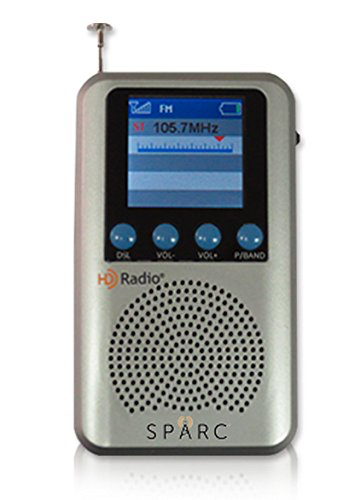
There’s something that’s been troubling me for some time. It’s the radio industry’s habit of reporting radio listening results by calling it “AM/FM” versus what it really is, virtually all FM radio listening.
Nieman Lab
Who could not be buoyed by this headline from Nieman Lab: “AM/FM radio holds strong for American listeners.” ( http://www.niemanlab.org/2018/07/am-fm-radio-holds-strong-for-american-listeners/ )
But is it true?
When I read the ratings reports from both PPM and diary markets, I see an FM world.
Don’t get me wrong, I grew up on AM radio and recognize that almost every market has a heritage AM radio station that still garners a big audience. I’m not blind to the wonderful ratings of 1010 WINS in New York City for example.
But there are only 26 all-news terrestrial radio stations left in America according to Nieman. This popular format is missing from the majority of America’s radio markets.
WTOP
WTOP was built on AM radio. It moved its entire operation over to the FM band and grew its audience, revenues and lowered its listener demographic. People who never heard this radio station on its AM dial position were suddenly newly minted fans of their all news format.
The FCC Saves AM Radio
The FCC’s mission to save AM radio is to give these radio stations an FM dial position using a translator. What are we really saving? The AM band or a particular format that a radio operator created on the AM band and now, to survive, needs to move it, like WTOP, to the FM side of the dial.
WIP
From my blogging, I get lots of feedback about a variety of things concerning broadcasting. One reader wrote to me about his father, a sports fan, who turned on WIP-FM to hear the latest chatter. WIP-FM was broadcasting a game of no interest to his father, so his son said to him, why don’t you turn on WIP AM610. Sadly, this person wrote the audio was unlistenable. He wrote: “You’d think the FCC would mandate that AM have standards for audio quality in receivers.”
WSM
When I was living in Bowling Green, Kentucky, I couldn’t receive 650AM WSM in my office, even though my office looked south and my antenna was able to enjoy a full wall of windows. The noise floor both inside my university office as well as around town while driving in my car made the station unlistenable. WSM was once listened to all the way to Louisville in northern Kentucky. Instead, I downloaded WSM’s app and could enjoy the radio station in crystal clear stereo. (I see WSM has stopped subscribing to Nashville Nielsen Audio ratings.)
BBC
The British Broadcasting Corporation (BBC) did a review of the range of services it offered on the AM band (called medium wave across the pond) and it included a financial review of all its services too. They concluded the ROI (return on investment) in AM was not there and announced they would be turning off some 13-AM radio stations in January 2018 according to Radio Business Reports.
WHVO
There’s a great radio operator in Cadiz, Kentucky by the name of Beth Mann. WHVO is her AM radio station at 1480, but if you go on her website, you won’t find any mention of this station being on the AM radio dial. It’s promoted as WHVO 96.5 & 100.9 FM. ( http://www.whvoradio.com/ )
Bottom Line
It’s time to face the fact that AM radio needs to be re-deployed for a new service. Current radio station owners should be given a viable FM dial position that replaces their AM service area, and doesn’t require multiple translators to attempt to accomplish this task. (Note: WHVO needs two translators to deliver the signal of its AM 1480.)
It’s time to allow those same dedicated radio broadcasters to sell off their expensive AM tower sites and turn off their AM stations that consume electrical power with no real ROI.
Ecclesiastes 3
“To everything there is a season, and a time to every purpose under heaven…”
AM radio’s time has come and gone as the mass communication delivery system it was from the 1920s to the 1970s, much as radio replaced vaudeville.
To put things in perspective, at a time in America’s radio history when the number of FM signals equaled the number of AM signals on the air, 75% of all radio listening was to FM. So, you can only imagine what it’s like today for AM radio listening.
That’s why I believe we do no service in promoting radio as “AM/FM” and not being honest about where virtually all of the radio listening is really taking place.
Sadly, AM radio is to broadcasting as coal is to power generation. ( https://dicktaylorblog.com/2017/08/20/coal-aint-coming-back-neither-is-am-radio/ ) It was the perfect solution in its day.
 DickTaylorBlog
Regarding the all-news stations, I listen to KCBS in San Francisco. But, being 80 line insight miles away, I cannot get their FM. Regarding the importance of AM radio, it is paramount in emergencies as people are fleeing floods and fires and ending up many miles from the FM sister station. Yes, these are rare—3 major flood evacuations in 37 years and 2 major wildfires—but still valuable in covering all of the information reception bases.
LikeLiked by 1 person
However, once you flee harms way, you most likely now have excellent cell reception and can pickup any radio station via their stream.
Then there are those folks today, who even though they may have an AM radio in their vehicle have never used it and may not even be aware of how to access it. That’s not as unusual as you might think.
In today’s high tech cars, I’m sure there are lots of things that most people never use because they are unaware the darn thing exists.
I’m sure I’m like that with my iPhone. I only know about the things I use on a daily basis.
Thank You Bob for sharing your perspective.
-DT
LikeLike
Spot on as usual, Dick. But the notion that every AM station should be given an FM frequency that replicates its coverage area without having to cobble together a translator network is sadly amiss. In markets that actually have viable numbers of potential listeners the FM frequencies are fully allocated. . .shoe-horning in a translator is one thing, degrading service area for the FM band by ushering in thousands of new channels for the “save AM” movement would be as big a disservice to FM as computers and indoor lighting has been to AM listening.
LikeLiked by 1 person
Thank You Mike for weighing in on this topic.
Obviously we’ve built out American radio broadcasting without a lot of forethought.
We’re redoing our home office, the nerve center for our internet and WiFi. As we added more electronics in the room over the years, I simply added another extension cord. Now that we are redoing the room, I’ve eliminate about five extension cords and have everything efficiently connected with all wiring hidden.
We need that kind of thinking today to keep radio alive and viable. The patchwork plan isn’t working.
-DT
LikeLike
AM radio’s final days loom as a few cling to paychecks, subsidies, or nostalgia in the Houston market, where both radio and TV are contracting, shedding personalities. Media is fragmenting, catering to niche audiences online, signifying the twilight of AM radio’s heyday. Rush Limbaugh’s passing underscores the shift away from AM’s heyday. We live in a on-demand media world.
LikeLiked by 1 person
You’re right Victor.
I think we will find a diminished number of AM radio stations operating in the future. Much like with the advent of video games we find there are still over a dozen pinball game manufacturers still in business. However, this type of arcade gaming has become more niche.
-DT
LikeLike
The only way to accomplish this would take a bit of time. Reallocate 82-88 for the new stations. Then the major metro markets would be able to attain coverage similar to their daytime AM signals, plus would open up some 88-108 where their translators are at and decongest a bit. Simple solution, wouldn’t even displace any TV in most markets. When the Commission is looking at ATSC 3.0, or whatever ends up replacing 1.0, they should remove TV6 from the band. Leave the translators in place for a few years while newer receivers are introduced into the market. Five or ten years down the road, AM is gone, and all of those broadcasters are alive and well.
LikeLike
Thank You for weighing in on this subject Steve. Unfortunately, the radio industry doesn’t have that kind of time. What you propose, needed to have begun twenty years ago. Like Wayne Gretzky, one of the highest scorers in the NHL said, you need to skate to where the puck is going to be, not where it has been. These words should guide the radio industry in making decisions about the future of mass communication.
-DT
LikeLike
Here’s my solution to the issue. Its quite likely to anger some folks.
1) Take TV channels 5 & 6 and reallocate to FM broadcast. The FM band becomes 76-108 MHz. The current crop of “Franken FMs” can go away.
2) Allocate an FM channel to every AM currently on air that is NOT simulcasting on a current full power class A B or C. Remove all the current translators from AM licensees and have them use their new FM full power allocation. It doesn’t matter if they are on a local, regional or a clear. Give them EQUAL FOOTING on an FM allocation. If they offer compleeing programming, they will survive If the programming is subpar, then they fail like any other business.
3) Time for the clear channels to scream. They are OBSOLETE in the 21st century! They need to GO AWAY and move to an FM allocation and be on equal footing with all the daytimers that are forced to shut down to “protect” the mighty clears. We are now back to compelling programming or fail. It’s that simple. I do not live in, say, Philadelphia. I have no interest in WPHT in Philadelphia. They do not sell commercials in my area, which is southwest Ohio. They currently DO displace a daytimer in my area that actually DOES serve its market…well until sunset, then they have a translator.
This is the only way I see to fix something that has been broken for too many years.
Let the flams begin.
LikeLiked by 1 person
This type of thing has been suggested many times over the years, Phil. It has not moved an inch, as far as I can tell.
There’s no doubt, the radio broadcasting industry needs a real plan for the future; other than going extinct.
Thanks for bring up these ideas once again. I hope someone is listening.
-DT
LikeLike
Pingback: Best of the Blog 2024 | DickTaylorBlog