
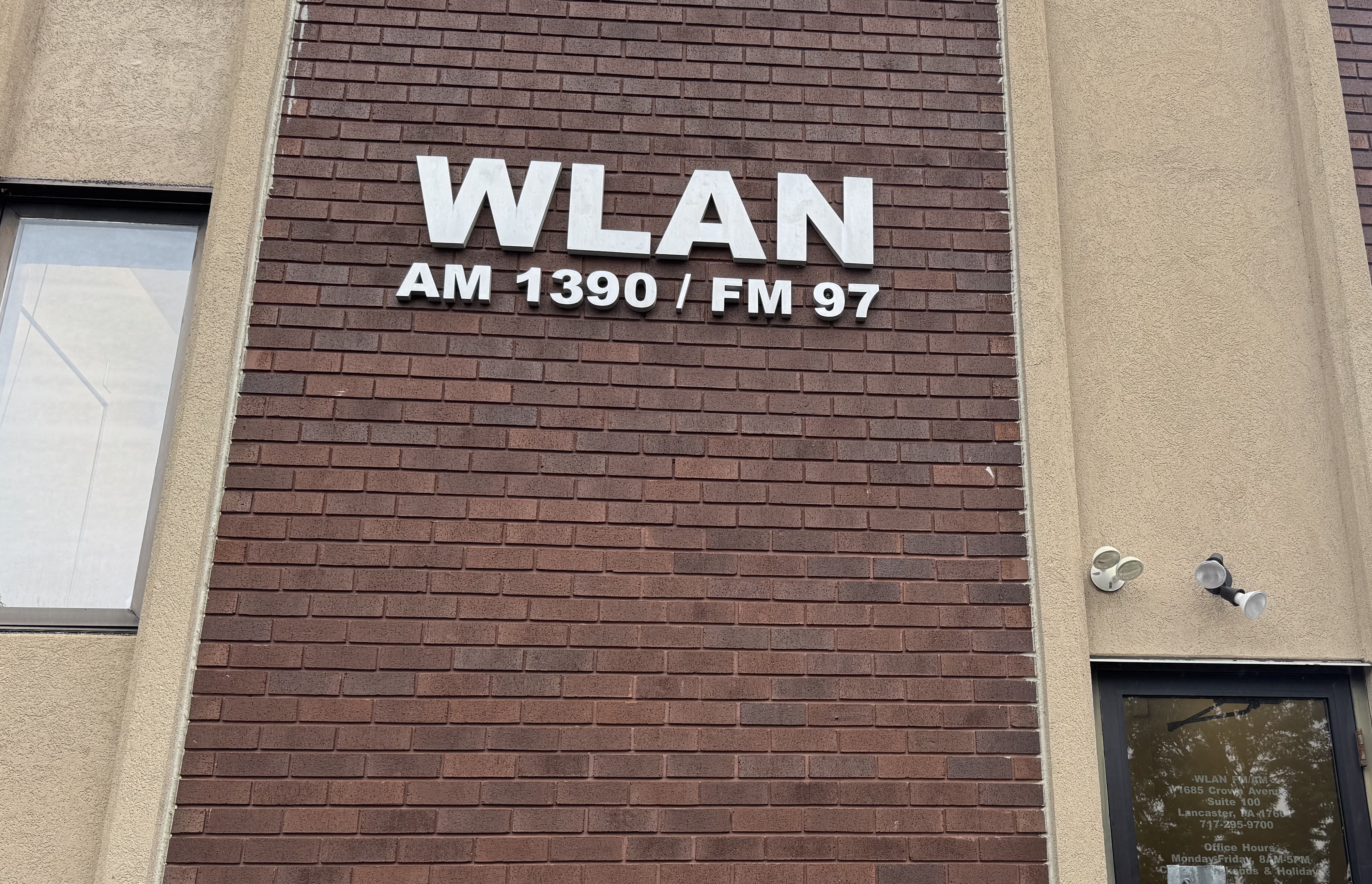
WLAN – AM1390 signed on the air in Lancaster, Pennsylvania in 1940 from offices and studios located 252 North Queen Street. Seven years later, WLAN – 96.9FM began broadcasting from the same location as the AM station, which was a three and four story walk-up.
2004
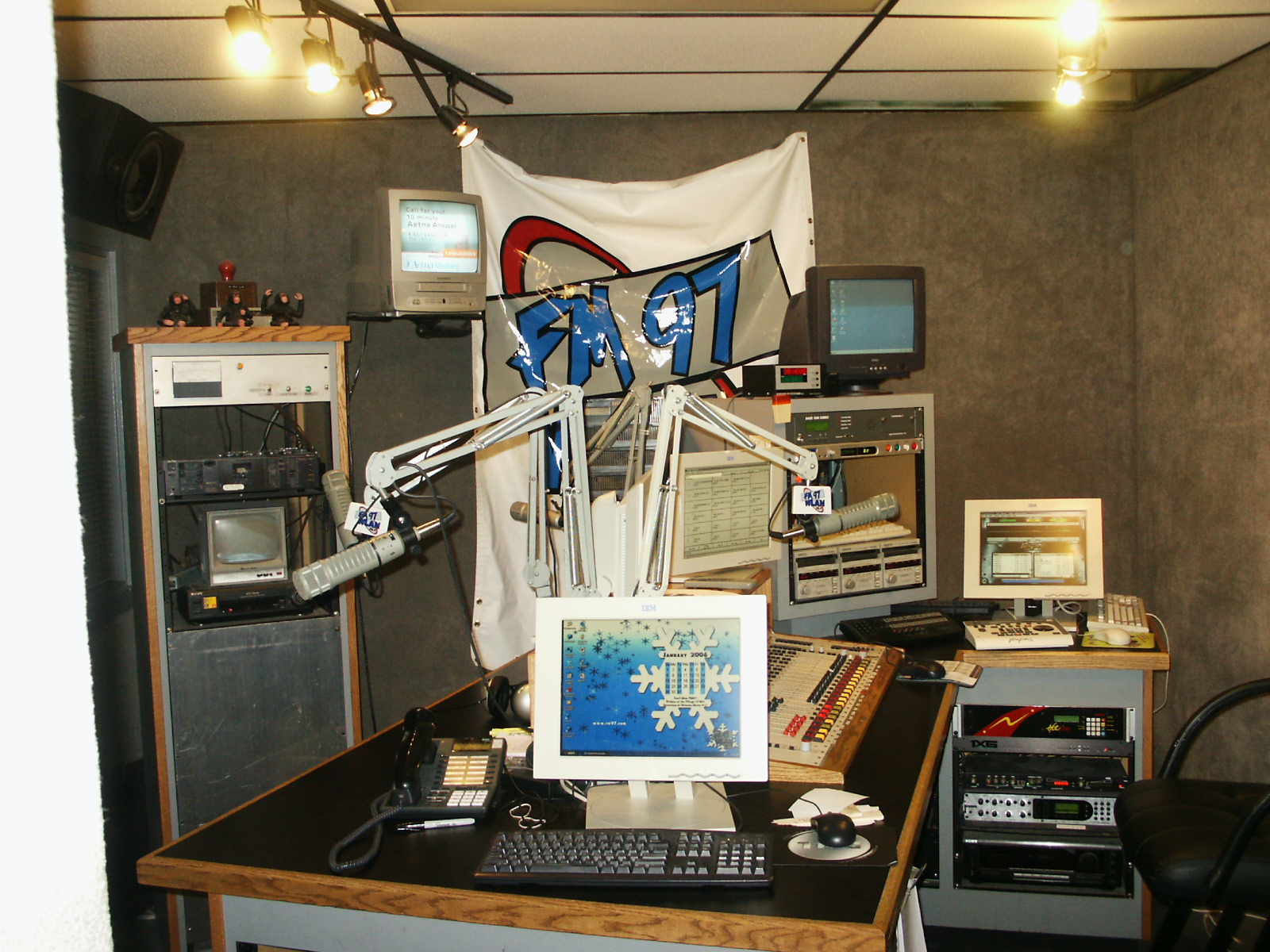
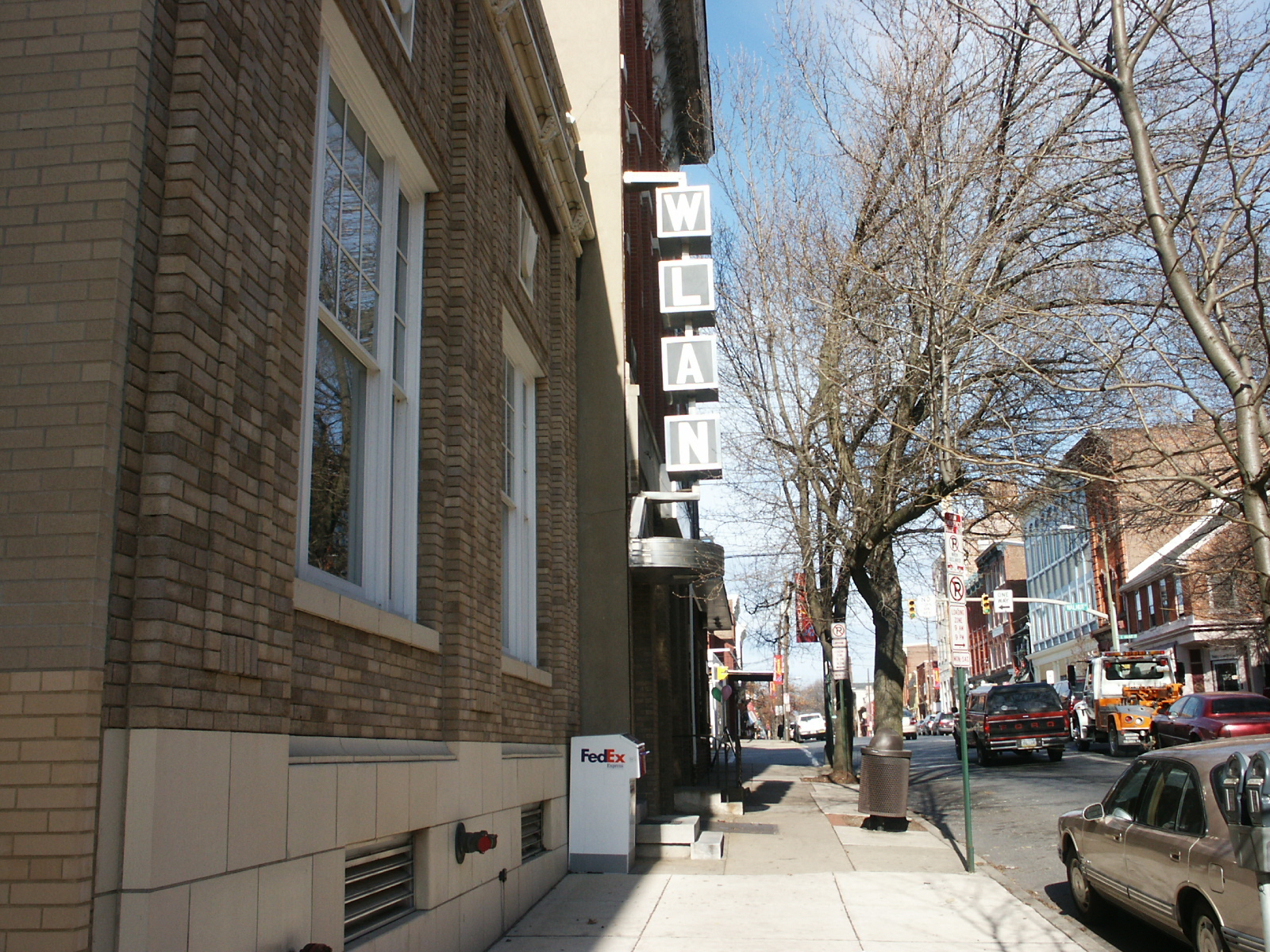
I was hired as the General Manager of WLAN AM/FMN in the fall of 2004 and quickly realized the stations not only needed to be modernized but relocated to a part of Lancaster that would be more accommodating to our listeners (for prize pickups and events), our advertising clients, and our staff – in particular our sales staff, which had to come and go from the station multiple times a day.
2005
Meetings with Clear Channel corporate led to getting a budget for a move and the green light to relocate to 1685 Crown Avenue, Suite 100 in Lancaster.

2006
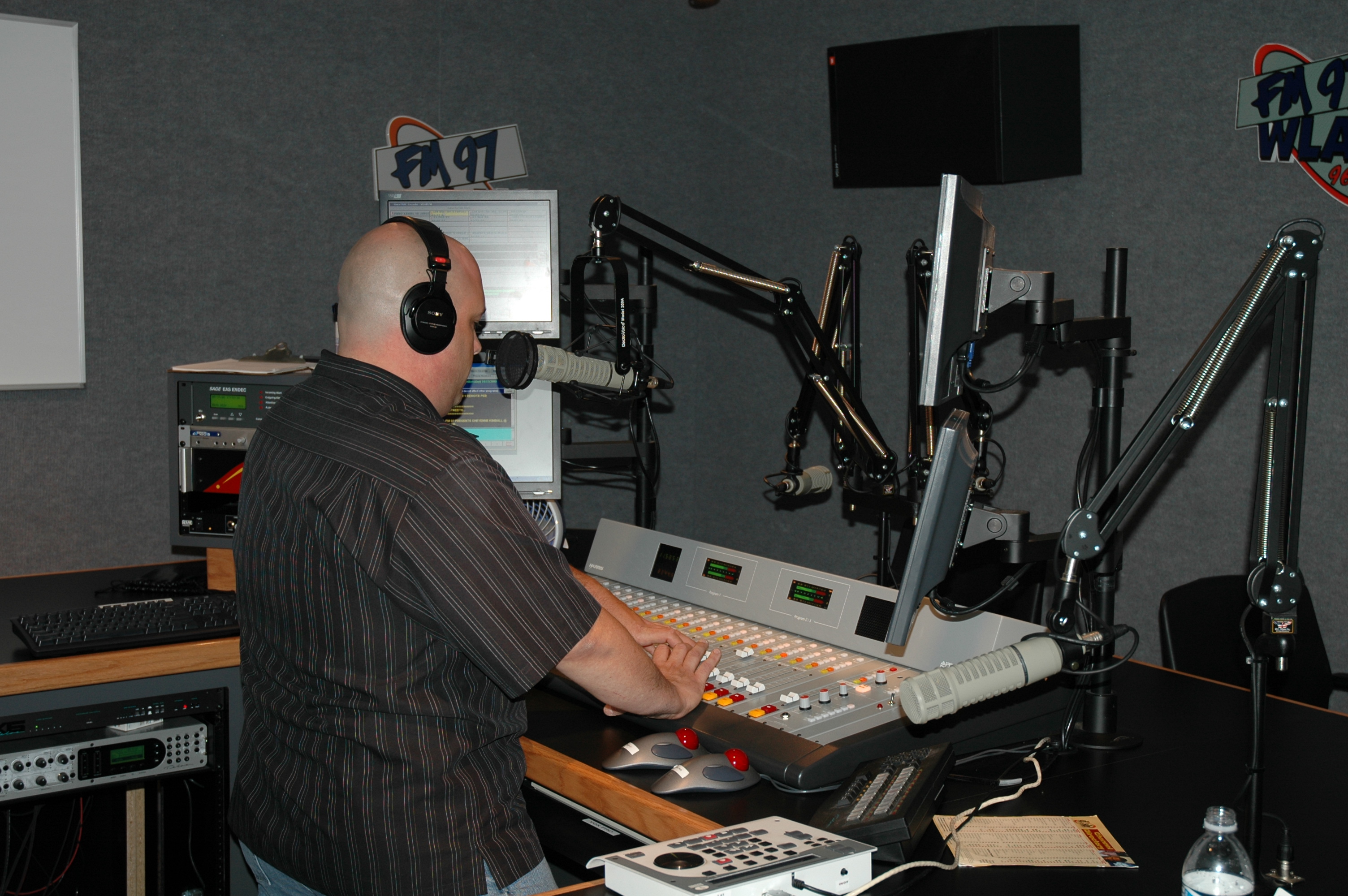
In May of 2006 the ribbon was cut and a huge party for listeners and advertisers was held in our parking lot outside of our state-of-the-art broadcast center. Tours of our offices and studios were given while members of The New Holland Band serenaded our guests.
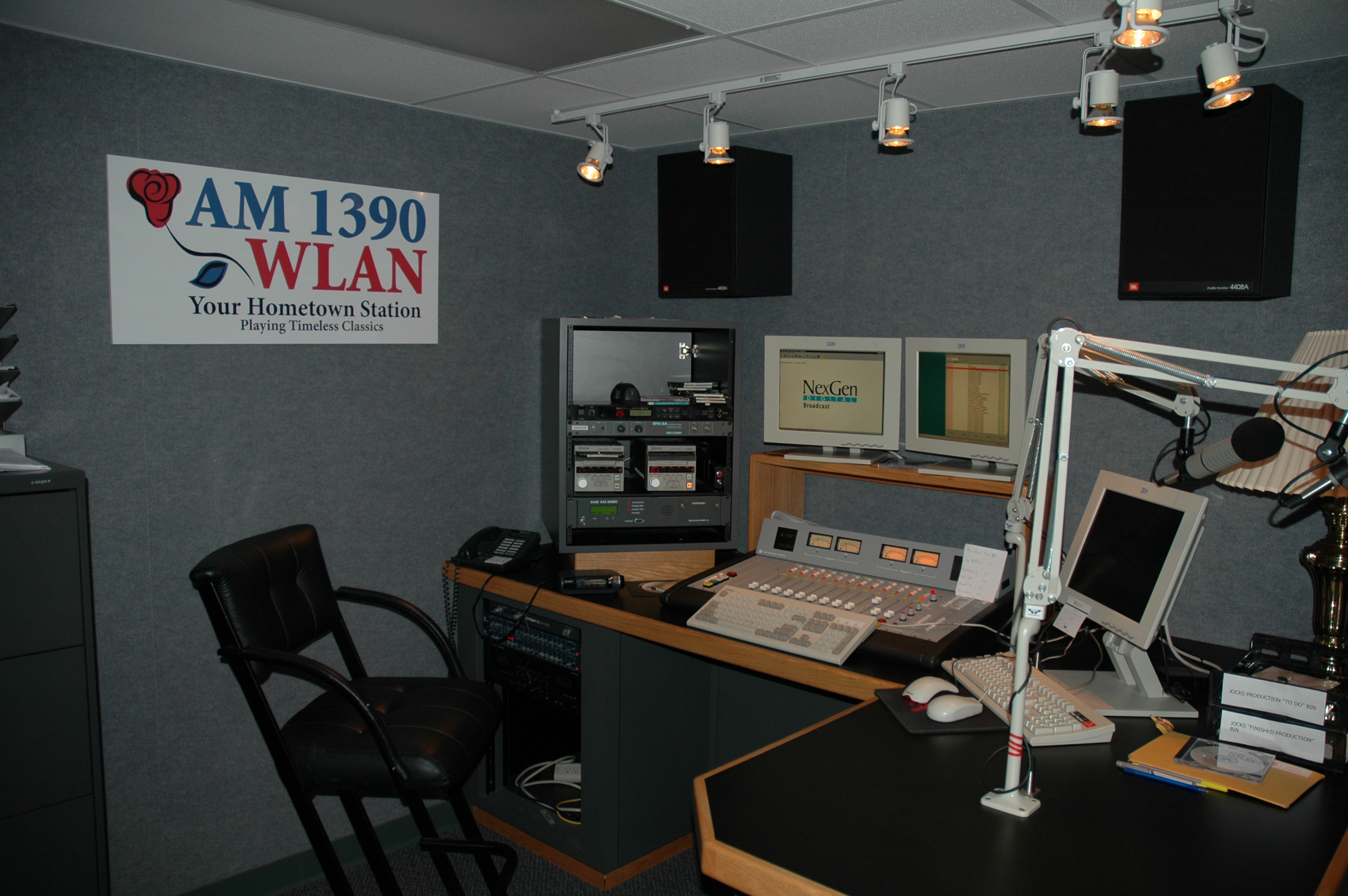
19
Sadly, while the stations were able to broadcast from their original location for sixty-six years, the new facility would be abandoned just 19 years after it was opened.

I learned this news when I stopped in to visit the stations during a weekend getaway my wife Sue had planned in Lancaster County.
As we drove up to the front door, we saw a dumpster outside filled with building materials and looking through the windows, we saw that the former offices and studios had been completely gutted.
Nobody’s Home Anymore
What I would learn is that WLAN AM/FM had moved to Harrisburg, Pennsylvania; about 40 miles and an hour’s travel time away from Lancaster.
Listeners who wanted to pick up prizes they may have won, now had to drive to 600 Corporate Circle in Harrisburg.
The website listed numbers to call for the Studio Lines, but all I’ve gotten when I’ve tried calling is a recorded message that says “your call cannot be completed as dialed.”
Local Is Where You Live
In my time as general manager of WLAN AM/FM, I rarely traveled to Harrisburg, even though my regional manager was located there and was manager of Clear Channel’s dominant radio stations in Dauphin County and Pennsylvania’s capital city. Harrisburg was a world away from Amish country in Lancaster.
WLAN-FM now lists itself as a Harrisburg/Lancaster radio station with Elvis Duran’s New York City syndicated morning radio show airing live and voice tracked DJs the rest of the day.
The only local air personality that remains from my days at WLAN is Damian Rhodes who is the station’s production wizard and covers the 4-7pm afternoon drive time period.
Reviewing WLAN-FM’s website reveals mostly items for iHeartRadio, national news, entertainment and music stories with just a couple of items for events in Harrisburg, but it is devoid of anything happening in Lancaster.
For a city of almost 60,000 people located in a county of over 560,000 people, you would think there would be a lot going on that a LOCAL radio station would be involved in.
I know that’s the way it once was, when the radio station was actually broadcasting from the City of Lancaster.
“Doesn’t it always seem to go,
You don’t know what you’ve got,
Til it’s gone.”
-Joni Mitchell
 DickTaylorBlog
Pingback: When Is Local Radio NOT Local? – Radio News
So SAD!
LikeLiked by 1 person
My heart sunk.
-DT
LikeLike
I’m sure, Dick. You put your “heart and soul” into that place.
LikeLike
This comment will not be unusual for you, Dick. As you know, I live and breath the concept of local radio and fortunately, I work for a group of broadcasters who don’t believe in the true scenario you describe at WLAN.
To amplify your comments, I am now a member of a group of Cincinnati and Kentucky broadcasters as I was a News Director in that city in the late 1970’s. Some are retired. A few, like me are still working, even if it’s part time as it is for me now. Others may be working full or part time still at various stations in the area. One or two may actually own stations.
We get together about every three months at a restaurant in Northern Kentucky. Last week I was at one of those gatherings.
Now, it’s fun to talk old times with these folks. We come from all corners of the business – news, sales, traffic, research, jocks. And the views and opinions of them all are wide and varied.
All of us generally agree:
Consolidation has gone farther than it should have. But, in certain cases is now necessary due to the perilous business conditions.
Stations which serve public necessity are few with the exception of serious emergencies such as hurricanes or blizzards.
Many owners refuse to look at certain formats as money makers when, if they looked at stations that are successfully doing it. (I mention this because, as you well know, the concepts of an oldies station are few anymore. And yet, WAKY-FM in Louisville is still #1 doing it with success in all major demographics. John Sebastian is successful with it in Phoenix. Several small town owners here should be trying it, but won’t. All they want to do is Classic Hits and most of them go way too deep with the music.
Even with all that, we all still believe that radio gets in your blood and refuses to leave unless you make it leave. None of us regret being in it.
The pesky problem with local radio is – it takes people to do it. It is not the collective contest that hurts a station. It only does that if your station never gets a winner.
Our cluster has hired several young people recently. We have both college and even a couple of high school radio stations still. You should see the one at Centerville High School. It has operated since 1972 and the community supports it probably almost as much as it supports athletics. People have written four figure checks for the radio station. They have great, modern equipment and audio processing. And a classroom with Adobe Creative Cloud and microphones at every desk.
These young people are as eager to get into the business as anywhere I’ve seen. One of my jobs is to help mentor them. And I do. To realize they want to be me someday is humbling.
One of the members of our Cincinnati radio group is none other than Randy Michaels. Backing away from the business for a while has brought back what everyone remembers as well, call it, “Jacor Randy”. The outgoing, gregarious, intelligent programmer who, yes, admits did some stupid stuff and shouldn’t have. But, oh! What stories he tells. The Randy with the cold stare who looked right through you at one time has, at least, been turned off and now he is back in ownership of some small stations, has some lease deals, too. I’ve really had a couple of fun conversations with him in the past several months.
At the end of these events, we always take a “class picture”. And last Wednesday as we were getting ready to do that, Randy spoke up and said, “There’s a bigger air staff in this picture than at all of the i-Heart stations in the state of Ohio!”
Everyone was laughing out loud. I was two people away from him and shot back, “Randy, you’re probably right about that!”
No one said what probably we all either felt, or knew.
Randy WAS right about that. And it’s sad.
LikeLiked by 1 person
Whoops! I just realized I have typed faster than I thought in a couple of places. So a correction or two:
I live and breathe radio. Forgot to add the “e”.
When I said: Many owners refuse to look at certain formats as money makers when, if they looked at stations that are successfully doing it. (I should have added: they might find they can be successful and make money with them).
LikeLiked by 1 person
I understood what you meant, but thank you for the clarification.
-DT
LikeLike
You wrote: “WAKY-FM in Louisville is still #1 doing it with success in all major demographics.” I live in this area and the station is actually in a small town, Elizabethtown, Ky, licensed to Radcliff, Ky..so not technically Louisville. Another classic example of what Dick is talking about..local radio, not being local. Though recently sold and will probably moved to Louisville. Using a Classic Rock format it is hardly “all major demographics.” If you at the Louisville market, you will see it pretty much has they format to itself. Other formats are on multiple stations splitting the audience.
LikeLiked by 1 person
It’s sad how many communities lost their local radio station to a larger market.
-DT
LikeLiked by 1 person
WOW Kevin, you mixed the positive, the hopeful with the sad in that comment.
I’m truly grateful for all you shared.
My one question is, where will these up and coming radio people go to find gainful employment and the compensation they will need to stay in the business?
-DT
LikeLike
This is happening even more as independent stations are consolidated with other stations in a central facility.
A couple comments on your thoughts.
You wrote: “Listeners who wanted to pick up prizes they may have won, now had to drive to 600 Corporate Circle in Harrisburg.” I doubt if they give much away anymore, unless it’s tickets to something like the state fair. Oops Penn doesn’t have one..well at least the “Pennsylvania Farm Show Complex & Expo Center is in Harrisburg” and according to google is the largest type show in the USA. Harrisburg is also the state capital.
According to Wikipedia the Harrisburg “population is 50,099 at the 2020 census, while the Harrisburg–Carlisle metropolitan statistical area has an estimated 615,000 residents and is the fourth-most populous metropolitan area in Pennsylvania”
You mentioned “The only local air personality that remains from my days at WLAN is Damian Rhodes who is the station’s production wizard and covers the 4-7pm afternoon drive time period.” If the station has updated their computer system, he probably works from home.
I don’t know if the station still covers local Lancaster news and reads local community announcements but since it is I-Heart , I serious doubt it.
That’s the problem with most radio in my local area in the “sticks of Kentucky.” The stations here consider themselves “regional” and therefore feature nothing local except an occasional remote from a store or car dealership, which of course they get paid big bucks for.
It’s the sad state of radio today.
LikeLiked by 1 person
Paul, you pretty much summed up the state of “local” radio in 21st Century America.
-DT
LikeLiked by 1 person
Great story
LikeLiked by 1 person
Thank You, Joel.
-DT
LikeLike
I was the President/GM of WWKL-KOOL 94.9 in Harrisburg from 1988-1993. We had a great staff, great facilities and an actual promotion budget.
Barnstable Broadcasting was a great company to work for and the owner was a fantastic human being.
Went to Lancaster quite often during my time there.
LikeLiked by 1 person
Yes, Barnstable Broadcasting was a great company and Al Kaneb was a real broadcaster from my home state of Massachusetts.
-DT
LikeLike
As a 1983-4 on-air veteran of WLAN-FM, this makes me sad. The AM and FM were family owned. The family didn’t always do everything “right,” but they were fixtures in town and cared enough to dedicate the subcarrier to a reading service for the blind. Oh, and they made a lot of money. On the other hand, there wasn’t much we did on the air back then that was strictly “local.” In fact, we behaved like a regional station — trying to outflank the strong signals in the market from York, Reading and Harrisburg. I wonder if any listeners even care that the studio is 40 miles away now.
LikeLiked by 2 people
When I was GM at WLAN AM/FM, we were constantly on the streets and neighborhoods in Lancaster County.
When I changed WLAN AM1390 from sports to standards, the station’s audience grew and we began super-serving the senior market that was growing as the Amish sold their farms to senior development and moved to Ohio.
The Altdoerffer Family was my original landlord after they sold the stations to Clear Channel and they had their offices inside our radio station even after they sold out.
With Clear Channel, the local manager determined the direction of the station’s sales, programming, promotions and budget.
People’s Clear Channel experience was often determined by both the local and regional management they worked under.
My time with Clear Channel was nothing but positive.
-DT
LikeLike
When I used to drive the turnpike between Pittsburgh and Philly , WSBA from York covered the Turnpike for about half the way . Although it was the early Sixties , I swear I remember them IDing as Harrisburg / York. Anybody else remember that.
LikeLiked by 1 person
That was before my time, Ricki.
-DT
LikeLike
This is so true. I just started a discussion on this very topic on The Broadcasting Club facebook group last week. It is so difficult to get people to understand that you can’t be a local station if you’re running everything from a distance. Operators who do this give localism a lot of lip service but if you listen to the station, there’s nothing “local” about. It’s usually just turned into another jukebox for one of their alternate music formats. Elimination of the main studio was the final nail in the coffin for anything resembling local radio. I filed comments to that effect when the FCC was considering the change but I knew it wouldn’t matter. The FCC doesn’t give a flying ________ about local radio, nor do many group operators who are buying up small town stations and shutting down the studios. It is, indeed, a sad state of affairs.
LikeLike
Very sad tail that I’m sure is repeating all over the country.
Frank
LikeLiked by 1 person
It IS. That’s what really makes me sad.
-DT
LikeLike
Happening in the UK as well
LikeLike
Pingback: It seems the same thing has happened in the USA as in the UK, Local Radio is dying sadly! – wirelesswaffle
You are sadly, so very right and it breaks my heart.
-DT
LikeLike