Category Archives: Radio

Community & Companionship Isn’t Built on Efficiency

The 1979 hit record by Charlie Dore called Pilot of the Airwaves perfectly captured a listener’s sentiment in the lyric:

“I’ve been listening to your show on the radio

and you seem like a friend to me.”

The two most important features radio broadcasting can provide for its listeners are a sense of community, and companionship.

While the pandemic exacerbated the situation, it’s been decades in the making.

Bowling Alone

In 1995, Robert D. Putnam wrote an essay entitled “Bowling Alone: America’s Declining Social Capital”; the essay chronicled the decline in all forms of in-person social interchange. What Putnam saw in his research was that the very foundation Americans had used to establish, educate and enrich the fabric of their social lives was eroding. People were now less likely to participate in their community, social organizations, churches, and even their democracy.

This trend has only been accelerated by social media and the internet with the unintended consequences of the internet being, that it has isolated each of us to a web of one. Algorithms have taken what Putnam saw happening in the last century and put it on steroids in this century, all in the name of driving more efficiency.

Efficiency Bubble

The term “efficiency bubble” means that efficiency is valued over effectiveness in today’s world, it was coined by Will Lion of BBH advertising.

Rory Sutherland, Vice Chairman of Ogilvy in the UK, shared this personal experience that demonstrated the efficiency bubble.

“The absurdity of the efficiency bubble was brought home to me in a recent meeting with an online travel company. The conversation repeatedly included the mantra ‘the need to maximize online conversion.’ Everyone nodded along. Clearly, it is much more efficient for people to book travel through the website than over the telephone, since it reduces transaction costs. But then someone – not me, I’m ashamed to say – said something revelatory: ‘Ah, but here’s the thing. Online visitors to the site convert at about 0.3%. People who telephone convert at 33%. Maybe the website should have a phone number on every page.”

“Perhaps the most efficient way to sell travel is not the most effective way to sell travel. What, in short, is the opportunity cost of being efficient?”

“Nobody ever asks this question. Opportunity costs are invisible; short-term savings earn you a bonus. That’s the efficiency bubble at work again.”

Consolidation is Just Another Word for “Efficiency”

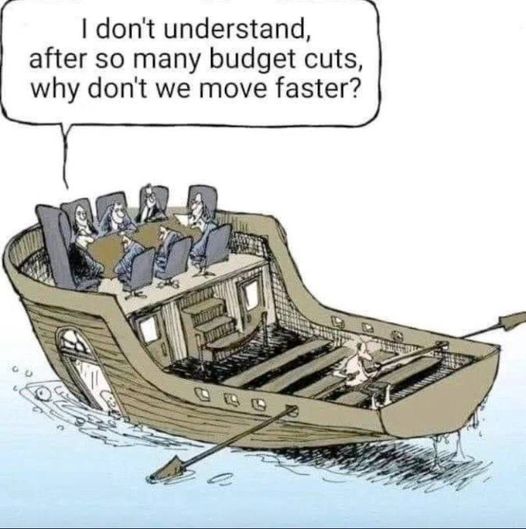
During radio’s massive consolidation, Excel spreadsheets produced by new minted MBAs screamed a multitude of ways to have radio stations become more efficient. Unfortunately, the fast-lane involved the elimination of tens of thousands of radio jobs.

And this is still going on as I write this article; not just in radio, but in television and social media as well.

I don’t ever remember anyone asking about “opportunity costs” being sacrificed in the process.

In the last radio property, I managed, my days would be spent going to corporate meetings about Reductions In Force (RIFs) and coming home with a thumb drive that had dates to open new pages in an Excel spreadsheet, that listed what people and departments were to be eliminated next.

Efficient radio chases away listeners,

effective radio creates them.

Blame It on Competition

When all radio companies chase the same efficiency metrics, they all end up sounding the same, their websites end up looking the same, and in essence, they’ve turned the creative medium of radio into a commodity.

As I wrote about in the article The Birth of Radio in America, deregulation of broadcast now has virtually all of the radio stations in a radio market owned by one or two companies.

Radio always stole great ideas from other radio stations around the country, but most often those stolen ideas were massaged and improved upon in the process. Everyone was upping the game through their own creativity lens, and each radio station had its own unique sound.

Unfortunately, along with corporation radio came the concept of “Best Practices”. This would be yet another contributor to the end of personal creativity at radio stations, all in the name of more efficiency.

Emotions

The pursuit of efficiency is a rational answer to an emotional problem.

The radio business was never built on Excel spreadsheets and doing what was most efficient, it was built by creative people who touched others emotionally. Be it station imaging, air personalities, promotions, contests, community events, advertising or marketing, radio always went for people’s hearts.

I was reminded all of this when I was listening to Music & Jingles LIVE with Jon Wolfert on Rewound Radio. The show featured the creators of the famous 1974 Nine Tape created by Howard Hoffman, Randy West, Russ DiBello and Pete Salant. Listen to this five minute and thirty-seven seconds of audio HERE and you will understand…

“9”

7 Comments

Filed under Education, Mentor, Radio, Sales

Monkey First

There’s been many changes to the radio industry in the past fifty years, but one thing has not changed and that is the reason people listen.

People listen to radio that interests them.

This past week I sat in on a webinar that revealed groundbreaking data that is being produce by DTS AutoStage. Joe D’Angelo, Xperi’s Senior Vice President of Global Radio & Digital Audio, showed how granular, and in virtually “real time,” the data from vehicle listening produced by DTS AutoStage is. This research will give the radio industry unprecedented access to radio analytics and audience insights.

Train The Monkey First

The problem I see with all the technological advancements in the radio business these days is that it feels like we’re putting the cart before the horse.

Google’s division to foster innovation operates under the philosophy of “#MonkeyFirst.”

If you want to get a monkey to recite Shakespeare on a pedestal,

you start by training the monkey, not building the pedestal.

The hard part is training the monkey, as anyone can build a pedestal.

Applying this to radio broadcasting, the hard part is crafting the programming that goes out to a listener. The easy part is acquiring the technology to transmit a signal; whether over the internet or through the ether.

Headline News

CNN and Headline News (simply known as HLN) is under new ownership.

Back when Ted Turner conceived of the Headline News channel, it featured a full half-hour long newscast every thirty minutes, 24-hours a day.

With ownership change, came changes to Headline News, including the dropping of the name in favor of just calling the channel HLN. The channel also stopped doing thirty-minute newscasts round-the-clock and the only news program left was Robin Meade’s Morning Express.

That came to end after a 21-year run on Monday, December 5, 2022. Robin Meade explained that

“because of budget cuts and a changing industry HLN is no longer

producing its own live news. It means our news shows are ending.

In its place you will see a simulcast of CNN’s morning show.”

Once again, a broadcast company is expecting to do better by cutting costs and eliminating the very entity that drew people to the channel in the first place.

Too many broadcasters are hard at work building a better pedestal when where their attention should be focused on, is delivering the programming their audience wants.

The reason for this misplaced effort is because building technology is the easy part and management can show their investors early progress against a timeline.

The broadcasting industry is creating a world of outstanding pedestals, while the audience leaves.

Make sure you address the crux of the problem

and don’t waste time with the peripheral issues.

-Greg Satell

10 Comments

Filed under Education, Mentor, Radio, Sales

Follow The Media Money

You’ve probably heard the catch phrase, “follow the money,” first popularized in the movie about the Watergate scandal, that detailed the work of Washington Post reporters Bob Woodward and Carl Bernstein.

Since the 1970s, “follow the money” has seen extensive use by investigative journalists, and that’s what the most recent Borrell webinar looked at for 2023 with respect to media advertising dollars.

Media Spending Forecast

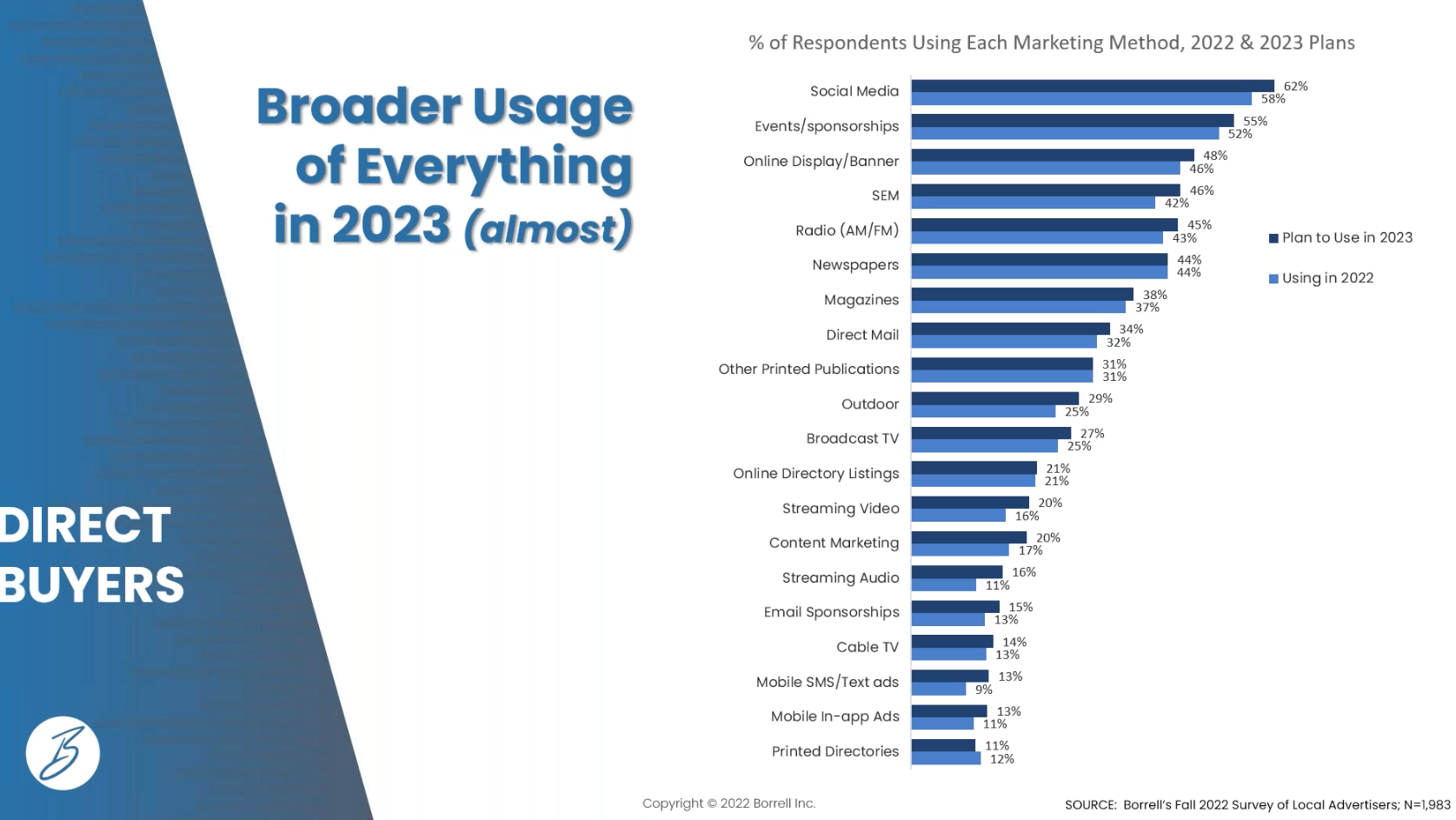
On November 29th Gordon Borrell and Corey Elliott presented Borrell’s Fall 2022 Fall Survey of Local Ad Agencies. Here’s how I interpreted the information they shared starting with the Top 5 types of media that agencies said their clients are planning to invest more money into next year, and also the 5 they will be cutting:

            Investing More $$$                Planning to Eliminate

            Streaming Video                     Printed Directories

            Social Media                           Newspapers

            Search Engine Marketing        Other Printed Publications

            Streaming Audio                     Magazines

            Website Ads                            Cable TV

At first blush, things don’t look so rosy for print media, however, wrapped into that media category “Website Ads” are the digital versions of newspapers and magazines, to name just two.

I’ve been a digital subscriber to the Washington Post newspaper for a couple of years now and I also read Atlantic Magazine digitally.

When it comes to radio, the number of advertisers who say they will buy more radio ads about equals the number who say they will buy less. In other words, broadcast radio advertising looks to be treading water in 2023.

High Usage, High Effectiveness

When it came to what types of media direct buyers say are the best, we find five of them:

  • Social Media
  • Search Engine Marketing
  • Events
  • Banner Ads
  • Radio

OTT, Streaming Audio & ???

During the webinar I asked the following question:

“Streaming video is called Over-The-Top (OTT),

podcasts & other digital audio is called Streaming Audio,

what are digital newspapers and magazines called?”

Turns out the answer was both newspapers and magazines are included in the media category “Banner Ads” in this research.

So, while advertisers may not be interested in those paper and ink publications, they are interested in their digital products, and their digital offerings compete for the same ad dollars as broadcast radio and TV.

Broadcast TV was rated higher in effectiveness than radio by advertisers, but saw lower usage as one can assume it was most likely due to the cost of television advertising.

Streaming Audio

You can’t help to look at the high interest in “Streaming Audio” and not wonder why it doesn’t command more advertising dollars. Corey Elliott said the answer to this question of why they weren’t spending more ad dollars on streaming audio was simply that “no one pitched them.”

Search Engine Marketing #1

For direct buyers of advertising, Gordon Borrell pointed out that “for the first time in 13 years of surveying, broadcast TV doesn’t occupy the top spending spot, falling to roughly half of what it was in prior surveys.”

What beat broadcast TV was “Search Engine Marketing.”

Search Engine Marketing is a form of Internet marketing that involves

the promotion of websites by increasing their visibility

in search engine results pages primarily through paid advertising.

-Wikipedia

In 2023, DIGITAL will account for $7 of every $10 spent on local advertising and 45% of local ad buyers will purchase their advertising from fewer than 3 media companies.

2023 is forecast to see broader usage of virtually everything.

The media companies that are positioned to enjoy success in 2023, are:

  1. The companies that have invested in training and retaining their sales people in the area of all things digital, and
  2. Focused their company to deliver media products consumers want and enjoy on every digital media platform.

Leave a comment

Filed under Education, Mentor, Radio, Sales

Today’s Media Consumption Headlines

I can’t help but be struck by the headlines I read each morning when I log onto my computer or pickup my smartphone to read the latest news.

Here’s just a few recent ones:

  • More audio is now consumed in the U.S. through mobile devices than through traditional radio receivers. -Edison Research
  • 83% of U.S. Homes have enabled smart TVs or streaming media players. -Hub Research
  • 49% of registered voters don’t have traditional TV, 80% stream. -Samba TV & HarrisX
  • The steady climb of podcasting’s reach in the U.S. -Edison Research
  • Why mobile first is radio’s road back. -Jacob’s Media
  • Survey finds older adults are slowly warming to streaming audio. -Broadbeam Media

This last headline flies in the face of traditional wisdom that people over the age of 55, who grew up with AM/FM radio, won’t abandon the medium. However, the COVID pandemic has caused rapid shifts in media habits, even among older Americans.

Not surprising, it has been the shift to streaming video that’s taught people how easy it is to stream audio content as well.

Traditional Radio vs. Digital Audio

For twenty years, we’ve seen this day coming. With each passing survey, research study or anecdotal observation it’s clear that listening to audio content is moving from the world I grew up in, AM/FM radio, to digitally streamed audio.

The trend line is clear, everything is moving in one direction and there’s no signs of it reversing. Today 53% of audio time spent listening is to digitally streamed audio.

I started off this year of blogging with an article about how ALL of my radio listening is digitally steamed, whether I’m at home or in one of our cars. You can read that article HERE

Hallmark Christmas Movies

My wife Sue and I love watching Hallmark Christmas Movies. One of the things I’ve noticed about today’s movies, is how ubiquitous the smartphone has become in storylines. Everyone is constantly texting or video chatting with others in these movies.

But what really struck a nerve with me, was a scene in a recent Christmas film where a character in the movie tries to explain to another character what radio is:

Actor 1: It’s like TV without pictures.

Actor 2: You mean it’s a podcast?

It’s clear that we are living in the future that was predicted decades ago.

Life Is Change

It doesn’t have to be all doom and gloom. Both public radio and Christian radio have found audiences that will listen and support them whether they are received by traditional radio broadcasting or via a digital stream on a smartphone or smart speaker.

Many of our country’s smallest radio markets are also some of the most successful radio operations. Why? Because they know their listeners, and engage with them on a very personal level.

It’s only when the tide goes out that you learn who has been swimming naked.

-Warren Buffett

In other words, everyone looks like they know what they’re doing when business is good, it’s only when things become challenging, that we know who is prepared to not just survive, but thrive.

How many years must a mountain exist
Before it is washed to the sea?

-Bob Dylan

Radio broadcasting, like the mountain in Bob Dylan’s song “Blowin’ In The Wind,” is dealing with its own type of climate change, a change in people’s habits for how they receive and consume their media.

Let’s hope the answer to radio’s future isn’t “Blowin’ In The Wind.”

6 Comments

Filed under Education, Mentor, Radio

Sharing Motivational Thoughts, I’m Grateful For

With Thanksgiving approaching this Thursday, I thought it appropriate to share the wisdom I’ve collected over the years from some incredible folks.

++++++++

“Learn as if you will live forever, live like you will die tomorrow.”

– Mahatma Gandhi

++++++++

“Our lives improve only when we take chances – and the first and most difficult risk we can take is to be honest with ourselves.”

-Walter Anderson

++++++++

“Success is not final; failure is not fatal: It is the courage to continue that counts.”

-Winston S. Churchill

++++++++

“We all become the stories we tell ourselves.”

-Tom Asacker

++++++++

“There are three ways to ultimate success: The first way is to be kind. The second way is to be kind. The third way is to be kind.”

-Mister Rogers

++++++++

“Eighty percent of success in life is showing up.”

-Woody Allen

+++++++

“Success is peace of mind, which is a direct result of self-satisfaction in knowing you made the effort to become the best of which you are capable.”

-John Wooden

++++++++

“Don’t let yesterday take up too much of today.”

– Will Rogers

++++++++

“Just one small positive thought in the morning can change your whole day.”

– Dalai Lama

++++++++

“It is never too late to be what you might have been.”

– George Eliot

++++++++

“You can get everything in life you want if you will just help enough other people get what they want.”

-Zig Ziglar

++++++++

“The two most important days in your life are the day you’re born and the day you find out why.”

– Mark Twain

++++++++

You’ll never get bored when you try something new. There’s really no limit to what you can do.” – Dr. Seuss

++++++++

“NOTICE

If you want to sell your product to our company,

be sure your product is accompanied by a plan,

which will so help our business that we will be more anxious to buy

than you are to sell.”

-Don Beveridge

++++++++

“I choose to make the rest of my life the best of my life.”

-Louise Hay

Today, we live a world consumed by measurement. The internet, along with social media, has put data tracking front and center. To people selling traditional media, where user estimates are still the currency, it might be good to keep this wisdom from Albert Einstein in mind. Einstein’s fame was based on numeric calculations that helped us to understand the universe, so it might surprise you that he had these words printed on a sign that hung over his desk at Princeton.

“Not everything that counts can be counted,

and not everything that can be counted counts.”

Have a

Happy Thanksgiving

6 Comments

Filed under Education, Mentor, Radio

A Friend I’ve Never Met

People who write blogs, are faithful readers of other people’s blogs. Doug Erickson is “a friend I’ve never met,” who is a very respected radio programming consultant and yes, also writes a blog.

This past week, Doug went back to one of my blog articles from 2017 that posed the question: “What Can Radio Do That Other Media Can’t?

Here’s how Doug answered that question:

  • Engage the mind, spark the imagination, unlock old memories and the emotion connected with them.
  • Video, if done well, allows us to see what the creator sees. But, it is rarely the same image we would have seen if we would’ve pictured it in our minds first.
  • That’s why, when we hear a voice, it rarely fits the actual person speaking because we’ve already imagined what that voice must look like.
  • Writing can be incredibly engaging, but it seems fewer and fewer allow themselves the uninterrupted time to allow for character and story development to do their work.
  • Only radio has the power to use sound and words alone to literally paint images in the brains of those who listen, and because listening is often done while alone. the engagement is intensely and uniquely personal.
  • No two people listening see exactly the same images.
  • And while the very best radio talent will help us feel, and feel deeply, each listener’s emotional response is personal because each of us has experienced life just differently enough to make it so.
  • Words, carefully chosen; the timbre of each voice delivering those words; pauses to draw listeners closer; ambient sound that can help paint a scene; music, which uniquely communicates the inexpressible…these are your tools.
  • This is what makes personal human connection possible and deepens the experience of listening to you.
  • How many of your tools do you use?
  • How often do you offer something no other medium can?
  • How often do you create content that no one else, your listeners can hear today, can?

That’s the goal, isn’t it?

-Doug Erickson, Erickson Media

In Other Words…

Your radio station needs to be RELEVANT to the audience it’s focused on serving.

  • It needs to have a heartbeat and be ready to go LIVE on a moment’s notice when warranted.
  • It needs to provide a sense of COMMUNITY & COMPANIONSHIP to the listener.
  • Define who your audience is and then super-serve them 24/7, 365.

You know what to do.

Now you just need to do it.

4 Comments

Filed under Education, Mentor, Radio

Does Your Media Property Provide a Shared Experience?

Have you ever heard the story about one of the ways NASA (National Aeronautics and Space Administration) trained our astronauts survival skills for America’s Apollo missions? Before heading off to land on the moon, Neil Armstrong, John Glenn, Michael Collins and Charles Conrad traveled into the jungles of Panama for survival training from the Choco nation, training that began during the Mercury program and continued with both the Gemini and Apollo missions into outer space.

This training takes place at Geoversity’s natural campus in the 12,800-acre Mamoni Valley Preserve.

Geoversity

The Chair of Medicine and Human Performance at Geoversity, Michael Schmidt, writes that

“Geoversity welcomes the curious, the mysterious, the generous, the leaders, the followers, the suffering and the aspiring. The culture of Geoversity seeks to elevate rigorous science, the richness of nature and the culture of people and place.

It seeks to not only to find our place in the world but to shape our world in a way that raises human dignity while tackling the technical challenges of our day. It seeks to build leaders who excel at collaboration. It seeks to bring people together by find what we share while celebrating our uniqueness.”

The Power of Shared Experience

When we go to the theater or a concert, other than the performance itself, what enriches people’s experience is that it is shared with others. It’s not any different when it comes to going off to work in an office with other people or working from home (WFH); learning in a classroom full of students or online in front of a computer screen. What the COVID pandemic robbed from us the most are shared experiences in every aspect of our lives.

The power of social media is built on our ability to share our experiences with others. A Yale University study found that when two people share eating chocolate, the experience was more enjoyable than when one person ate the chocolate while the other person was engaged in some other activity. Experiences that are shared are more intense.

Understanding and harnessing this dynamic is invaluable in any communications effort, whether cultural, educational, corporate or political. The impact of a message is amplified, indeed transformative, when experienced with others.

-Maria Basescu, senior advisor at Denterlein

When Radio was “Theater of the Mind”

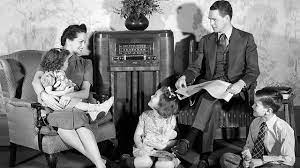
Last week I wrote about the 84th anniversary of the infamous radio broadcast of H.G. Wells “The War of the Worlds.” It was a time when families gathered around their radios after finishing dinner for a shared experience. Can you understand now why radio had such a powerful impact in its “Golden Age?”

In time television would replace this family activity, with parents watching TV while children my age gravitated to listening to our favorite radio personalities and the hit music they played (Top 40). This was the beginning of a shared family media experience being fractured.

The Past Guides Our Future

Concepts that stand the test of time shouldn’t be tossed aside, however to create the future we must also be prepared to break free of the past.

The challenge for all of us in today’s media world is to figure out what we leave in the past and what we bring with us into the future.

No matter how advanced our technology becomes our human condition remains little changed, in that we all have a deep longing for human connections.

The media platforms that will thrive in the 21st Century will be the ones that are best at leveraging live contact and bringing people together for a shared experience.

For the radio industry, that human connection was the live radio personality curating a shared experience.

2 Comments

Filed under Education, Mentor, Radio

War of the Worlds Radio Broadcast

This being Halloween Eve 2022, I thought it might be fun to revisit one of radio’s most famous broadcasts, Orson Welles Mercury Theater of the Air broadcast based on the novel by H.G. Wells’s “The War of the Worlds.”

On October 30, 1938, 84 years ago today, the program aired on the CBS Radio Network.

If you’ve never heard it, or would like to listen to it again, click HERE

Remember, listeners had no TV, no internet and no Google Search to confirm or deny what they were hearing over their radios.

The Morning After

When Orson Welles woke up on Halloween morning, he would quickly learn that he had become the most talked about man in America. Some listeners thought those fake news bulletins were the real thing and called police departments, newspaper offices and radio stations, which led many journalists to believe that the broadcast had caused a nationwide mass panic.

The 23-year old Welles thought his career might have ended with that broadcast, telling friends at the time “If I’d planned to wreck my career, I couldn’t have done it better.” In an effort to salvage his reputation and career, Welles would go before reporters, photographers and newsreel cameramen in a hastily arranged press conference held at the CBS building in New York City.

All of the questions centered around one key issue, and that was, did he intend or anticipate that his Mercury Theater broadcast would cause its listening audience to panic?

That question would haunt Welles for the rest of his life. Click HERE for a short clip of that press conference.

WKBW’s War of the Worlds

The Mercury Theater broadcast of The War of the Worlds was over a decade before my time, as it occurred during a time considered to be The Golden Age of Radio and it was when a radio set could be found in 80% of America’s households. (Today, less than 68% of American households have one working radio in them.)

By the mid-1930s, after finishing dinner, families would spend their evenings all gathered around the radio set. Ending a day, listening to the radio, had become a nightly habit that united Americans nationwide; across class, race, gender, regional and ethnic differences.

American families had become Radio Families.

The War of the Worlds radio broadcast that would keep me on the edge of my seat was produced by one of my favorite Top 40 radio stations in 1968, WKBW AM 1520 out of Buffalo, New York. I encourage you to listen to this broadcast by clicking HERE

The Original “Fake News”

While the fable of Orson Welles broadcast of The War of the Worlds causing mass panic in the streets of America is well-known, it is also famously inaccurate.

The broadcast did produce nearly two thousand letters to the Federal Communications Commission (FCC) about the broadcast, but more likely bold headlines and news reports in the newspapers across America were the real the culprit. Newspapers feared the power of radio and were eager to show that it was a medium that could not be trusted.

The Moral Questions

What role does media play in our society today? Can media cause citizens to be in a constant state of “moral panic?” How is media impacting the minds of our children? How do we determine what is real and what is fake?

Many scholars believe that pre-war tensions at the time of the Mercury Theater broadcast led to the anxiety listeners felt.

Today we live in a world of 24-hour news cycles and social media,  it’s non-stop “Breaking News.” The tensions of people living in the 1930s are not that much different than those we all are experiencing today.

As much as radio impacted and changed the world in so many ways back in the 1930s, today it’s the internet, smartphones and social media that’s impacting us in the 21st Century.

One can look no further than the podcast Serial. It told the story of Adnan Syed and caused both its listeners, as well as America’s legal system to question whether he should be sitting in a jail cell for the rest of his life. Thanks to the Serial podcast, Syed, whose 2000 murder conviction became a media sensation, became a free man after 23 years when new prosecutors found alternative suspects in the killing of He Min Lee, along with unreliable evidence in the case stirred up by the podcast.

The Age Gap

Of the two thousand letters sent to the FCC about The War of the Worlds broadcast, only twenty-four were from people under the age of 18 complaining about the program. It appears that children of the 1930s were better able to understand the nature of the broadcast than were their parents. In fact, most of the letters written by children approved of the broadcast, saying it didn’t frighten them.

Children were also more likely to recognize Welles’s voice from The Shadow broadcasts than were their elders, and also were more likely to listen to other science-fiction radio broadcasts of the time like Buck Rodgers and Flash Gordon.

Halloween Pranks

And finally, children were more likely than adults to understand that the broadcast on Halloween Eve was presented as a fun prank and not something real.

A fourteen year old girl from New York City summed it up best in a letter she wrote to Orson Welles:

“Didn’t any of our so called adults realize that Sunday night was Halloween Eve

and that it is the night for scary things?”

11 Comments

Filed under Education, Mentor, Radio

What’s a Radio Look Like?

When someone uses the picture of a radio in an article, it often looks like this:

And if they are talking about a camera, the picture they show looks something like this:

The problem for both of these single use devices is today they look like this:

The smartphone has replaced so many of the past’s single use devices. Here’s a partial list:

  • Camera
  • Cam-recorder
  • Radio
  • Portable Music Player
  • eBook Reader
  • Calculator
  • Voice Recorder
  • GPS
  • Flash Light
  • Leveler
  • Scanner
  • Compass
  • Portable Gaming Device
  • Game Console Controller
  • Barcode Scanner
  • Credit Card Scanner
  • USB Thumb Drive
  • Portable Video Player
  • Walkie Talkie
  • Traditional Landline Phone
  • Clock/Alarm Clock
  • Wrist Watch
  • Timer
  • Books
  • Calendar
  • Notepad/Sketchpad
  • Newspaper
  • Photo Album
  • Contact List/Phone Book
  • Board Games
  • Watching Movies
  • Landline Internet
  • Checking eMail
  • Surfing Internet
  • Video Chatting
  • Thermostat
  • Measuring Tape
  • Guitar Tuner
  • Light Meter
  • ATM/Debit/Credit Cards
  • Airline Tickets
  • Business Cards
  • Remote Controller
  • Car Keys
  • Paper Money/Coins
  • Cable TV
  • Laptops
  • Getting an Uber/Lift
  • Magazines
  • Tourist/Visitor Guides
  • Sheet Music
  • Paper Tickets for Shows/Events/Movies
  • Diaries
  • TVs
  • Pedometer
  • Magnifying Glass
  • Compact Mirror
  • Cardiac Monitors
  • Stopwatch
  • Weather Forecasts
  • Banking
  • Train/Bus/Airline Schedules

You probably have some things I’ve missed. Please feel free to add them in the comments section of this blog.

Smartphones Wipe Out Decades of Camera Industry Growth

When I saw that headline, I thought about my old Canon 35mm camera and lenses that haven’t seen use in a couple of decades. Even my Nikon digital pocket camera hasn’t been out of its case in over twenty years. My iPhone, which is always with me, is my camera of record.

And I’m not alone, because worldwide camera shipments have dropped 93% between 2010 and 2021. This graphic from Statista show how dramatic and swift this change is.

Phones In, Radio Out

So, it was hardly a surprise to read the latest Edison Research report that found 88% of Americans over the age of 16 own a smartphone. Moreover, 31% of those smartphone owners now use it to listen to audio versus a traditional radio.

While the Statista graphic covered a ten-year period of time, this Edison Research graphic shows the dramatic change occurring in audio listening over just eight-years’ time. Compounding this problem for broadcast radio is the fact that radios have disappeared from store shelves.

Sue & I just returned from a trip to New England for our two-year delayed 50th High School Reunion. We stayed in our Timeshare, two different historic inns, a Boston Marriott, a Residence Inn and a Bed and Breakfast during our latest road trip. None of them had a radio in our room, but all had places to charge our smartphones.

The B and B even had an Amazon Echo, which allowed us to ask for anything we wanted to know about the city we were staying in, or audio we wished to listen to. I would not be surprised to see smart speakers appearing in more lodging rooms soon.

It was in the spring of 2000, that the late publisher of Radio Business Reports (RBR), Jim Carnegie, launched the first streaming radio station operated by a radio trade publication. Carnegie said that changes were happening too fast for radio owner/operators to wait until the morning fax to arrive. In addition to RBR’s website, they would now stream the latest news 24/7.

Jim & Cathy Carnegie devoted their lives to the radio industry and were passionate about pushing for everyone in radio to not be complacent and rest on their laurels. He not only talked the talk but through his publications walked it as well.

I will always remember what Jim Carnegie said about change and his words resonate with me still:

Change: you either get with it or get left behind by it.

21 Comments

Filed under Education, Mentor, Radio, Sales

Does Your Radio Station Have Schwerpunkt?

Many people have often wondered what the radio industry might have been like today, if it had had a Steve Jobs.

Steve Jobs had Schwerpunkt.

What is “Schwerpunkt”?

The term is attributed to Carl von Clausewitz and is now considered the heart of any sound plan.

“An operation without Schwerpunkt

is like a man without character.”

-Field Marshall Paul von Hindenburg

Schwerpunkt means “focus of effort.”

When Steve Jobs returned to Apple in 1997, he stunned his employees not by creating anything, but instead destroying many of the products Apple was making; like the Newton personal digital assistant and the many Macintosh clones.

Jobs quickly made it clear that Apple would no longer try to be all things to all people, and that the key to Apple’s future success would be winning where it mattered and focusing Apple’s resources on just a few meaningful products.

iPod

In December of 1996, under the leadership of then CEO Gil Amelio, Apple suffered its worst financial quarter in the company’s history. Michael Dell, founder of Dell Computers, when asked what he’d do to fix Apple if he were made the new CEO said, “I’d shut the company down and give the money back to shareholders.”

Steve Jobs knew that he couldn’t compete against Microsoft and Dell when he returned to Apple, so he focused the company’s resources in an area he saw as fragmented and that made products that as Jobs put it, “sucked.” He decided that Apple would produce a digital music player that would allow him to have a thousand songs in his pocket. The result was the iPod.

Focus On Your Strengths

The iPod took advantage of Apple’s strengths in simplicity of design and an ability to build easy-to-use interfaces. Jobs learned everything he needed to know about negotiating intellectual property rights from his ownership of Pixar. This knowledge was perfect for the creation of the iTunes store.

When you identify weakness in a market, and then apply a good strategy to exploit that weakness for your business success, that application is a key part of Schwerpunkt.

Steve Jobs was confident he knew where Apple’s strengths were, and how to apply them for the best opportunities that could leverage those strengths.

iPod = Apple’s Schwerpunkt

The iPod was an immediate game changing hit which changed the basis of competition in the music business.

While Dell was playing catchup, developing its Digital Jukebox, and Microsoft was creating its Zune, neither of which saw much success, Apple was preparing to launch the iPhone.

Schwerpunkt

When Steve Jobs returned to Apple in 1997, the company was near death, while Microsoft and Dell were giants. It was by employing Schwerpunkt that Apple went from worst to first. Today, Apple is the richest company in the world with a market cap of $2.294 Trillion.

While his competitors were still reacting to his latest innovation, Jobs was already hard at work on his next big thing.

Radio & Schwerpunkt

When I read the radio trades or sit in on a webinar, what strikes me most is how the radio industry’s leaders are talking about working to develop areas that are already owned by others. Areas, that don’t align with radio’s strengths.

When I worked for Clear Channel, I also remember management meetings that spoke of how we needed to focus, and then rolled out an agenda of 20 to 50 things we needed to focus on.

In 1952 Rosser Reeves, the ad man who developed the television ads for President Dwight Eisenhower was confronted with Ike’s multiple talking points. Reeves told the President that he needed to focus on just one thing, but relented to allow Ike to have three. Reeves understood the concept of Schwerpunkt, though he may never have heard of it.

Radio’s strength has always been about serving its community of license with live local personalities that provide companionship for the listener.

The very people the radio industry continues to eliminate.

When hurricane Ian bore down on Florida this past week, I’m sure I’m not alone in turning to The Weather Channel to see Jim Cantore and Stephanie Abrams tell us what was happening.

Jim Cantore joined The Weather Channel upon graduating from college in 1986 (36 years) and Stephanie Abrams has been with the network since 2003 (19 years). Cantore and Abrams along with the rest of the team of meteorological professionals have earned our respect and trust. Trust that has been earned over many years of excellent broadcasting.

Good luck to anyone who thinks they can beat them.

The Weather Channel has Schwerpunkt.

Until the radio industry truly focuses on its strengths, and leverages them for both its own financial benefit as well as that of their advertisers and listeners, its future will remain cloudy.

Radio = Schwerpunkt-less

14 Comments

Filed under Education, Mentor, Radio, Sales