

I’ve been writing this blog for ten years. A question that comes up occasionally is, why don’t I record my articles and make them into a podcast. The reason in one word is “focus.”
Seth Godin, a marketing genius I’ve followed for years says, if you want to communicate to the world, pick one medium and give it your all. For me, it was the written blog.
But – never say never.
Google’s NotebookLM
Steve Goldstein* wrote on this week’s Amplifi Media blog about a new audio product from Google, called “NotebookLM.” Steve says:
“If you’re in the audio business and haven’t yet explored
NotebookLM, you should.
It’s an impressive, jaw dropping tool that is exciting, weird and unsettling at the same time.”
Now, that sounded very enticing; so, I gave it a try.
We Never Called It Content – Podcast
I published my most read article on September 6, 2015 titled “We Never Called It Content.” I decided that I would put my words through Google’s NotebookLM Artificial Intelligence Tool (AI) and see what came out.

NotebookLM produced an eight minute and seven second audio conversation between a man and a woman (both AI generated voices) discussing my article, as if I were a listener to their podcast and submitted this topic for their analysis.
The end result was produced in less than four minutes. Take a listen:
https://notebooklm.google.com/notebook/30d99a06-d33e-467e-84be-09c61a6a8a25/audio
We Never Called It Content – Blog Article
Now, for comparison of my original work, here’s the blog article I wrote back in 2015:
Larry Lujack, The Real Don Steele, Robert W. Morgan, Dale Dorman, Ron Lundy, Salty Brine, Bob Steele, and so many, many more. These names I’ve dropped are all no longer on the radio. Terrestrial radio anyway. We radio geeks like to think they are now Rockin’ N Rollin’ the hinges off the pearly gates.
Everyone can understand the circle of life. People retire, people pass on.
But this past week saw the “forced retirement” of more big names in radio. Two of them that were on Los Angeles radio have a star on the Hollywood Walk of Fame. They delivered, according to what I’ve read in the trades, excellent audience ratings. So, what happened?
Bill Gates once famously announced “content is king” as we entered the Internet age. Microsoft would give businesses WORD, EXCEL, PowerPoint etc. The business schools graduated a whole gaggle of spreadsheet nerds who excel at these computer tools. The Telcom Act of 1996 was the beginning of the consolidation of radio and when Wall Street would jump into this wonderful new investment opportunity.
When you look at radio stations via spreadsheets, you primarily are reducing everything to numbers. It completely eviscerates the human element from the decision making process.
Nobody turned on Steele, Lujack, Morgan, Dorman, Lundy, Brine, Steele and the rest of radio’s iconic personalities and said, “I’m going to get me some great content.” We turned on our favorite radio station because the people behind the microphone were members of our family. We enjoyed spending time with them. We knew that what we were experiencing, they were experiencing right along with us. They were local & live.
Radio is an art form.
When you remove the artists, there’s not much left.
Radio is a pretty simple business. You play recordings people want to hear, you keep your hand on the pulse of the community you’re licensed to serve and report on what’s going on that people need to know and you hire personalities that become the audio glue that keep it all together running smoothly and engage the listener.
To support the expense of doing all of this, you work with businesses to expose their products and services to the audience you’ve attracted to your radio station.
The irony with today’s radio is that more radio stations operate out of a single location than at any time in radio’s 95 year history, but with less people per station than at any time in that same history. I wouldn’t be surprised to see Rick Moranis (Honey, I Shrunk the Kids) return to make a new movie about today’s radio called “Honey, I Shrunk the Staff.”
Frederick Allan “Rick” Moranis, a native Canadian, was a disc jockey on three Toronto radio stations back in the mid-70s performing on the radio under the name “Rick Allan.”
No one has a clue how much the employment in the radio industry has shrunk as the industry rushed to consolidate. What we do know is when you walk into any of these huge clusters; there are rows of empty cubicles, offices that are no longer occupied – it can be depressing.
I’m not saying that radio, like every other business, shouldn’t be running more efficiently and taking advantage of technology to control the costs of operation. But the buzz you hear is that the fat cutting has become cutting the bone.
As Ken Levine wrote in his blog about the state of the radio industry http://kenlevine.blogspot.com/2015/08/why-im-glad-i-got-out-of-radio.html?m=1 “In the past when a great disc jockey got fired he would simply show up elsewhere. But who knows today? Nobody is hiring. They’re all just firing.”
Today’s radio is being driven by Excel spreadsheets and PowerPoint presentations trying to put a pretty face on the new strategy. But radio is more than just studios, transmitters, and now websites/social media, radio is made up of people, albeit fewer of them by the day.
Radio was never a just a job. Radio was a mission inspired by people who were passionate about all the medium could be. Everyone inside a radio station worked towards this common goal, just like the people at Google, Apple, Southwest – to name a few – do.
People didn’t get into radio, radio got into people.
Holy Audio, Batman!
Now remember, everything in my original article was simply uploaded to Google’s NotebookLM and the audio you just listened to, of a man and a woman, discussing my blog – in some cases actually expanding on my original thoughts – was completely AI-generated.
I honestly don’t know what to think, but I’m very curious as to what your impressions are about all of this.
Please post your thoughts in the comments section of this blog article, so that others may be stimulated to share their own, and we can all learn from one another’s perspective.
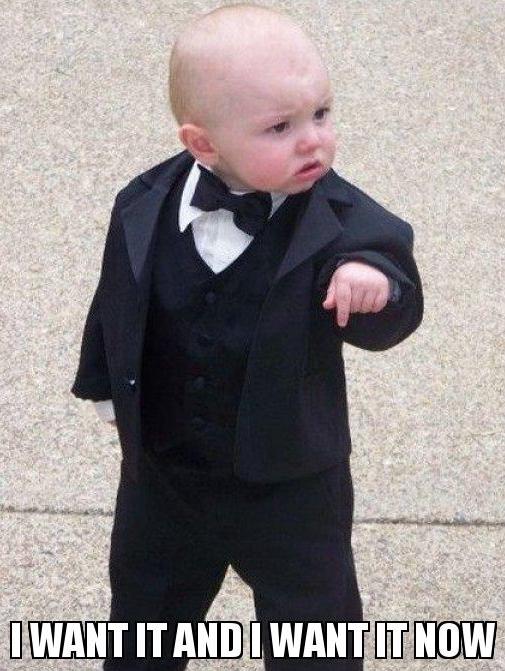 Growing up telling mom or dad that I wanted something now, got the usual response of “you will have to work for it” or “you’ll get it when it’s ready.” Learning that good things come to those who wait was part of my maturing process.
 Is there a lesson for radio broadcasters from what I just shared about television viewing habits? I think there is. Programmer Steve Goldstein puts it this way, “Traditional radio – by design – is a lean-back business. Podcasting is a lean-in business.” That perfectly describes the difference between Netflix (lean-in) and broadcast (lean-back) commercial television.
 DickTaylorBlog