Tag Archives: Randy Kabrich

What Happened to the Gatekeepers?

While radio advertising is still being heard by radio listeners, the relevancy of those ads to listeners is low. In contrast, the audio ads heard by podcast listeners were deemed highly meaningful.*

The Radio Ad Disconnect

Once upon a time, radio stations employed gatekeepers. (Gatekeeping – “the process of controlling information as it moves through a gate.)

Let me give you a personal example of what I’m talking about. In the 80s, I was managing WFPG-FM in Atlantic City, New Jersey. WFPG-FM programmed a Bonneville Beautiful Music format and was the market leader in the Atlantic City-Cape May, New Jersey Metro. Walter Powers, Vice President of Operations at Bonneville Broadcasting System, was our music gatekeeper. But just as important as making sure that the music was well targeted, WFPG-FM’s program director was the gatekeeper of every other element of content that would be heard on the radio station. Every advertisement was reviewed to insure it was appropriate and relevant to our audience. We employed these same standards when it came to our promotions and air personalities too.

Paul Harvey

Paul Harvey News and Commentary on the ABC Radio Network was an advertising powerhouse. Paul considered himself to be a salesman first and a broadcaster second. Harvey wrote and voiced the radio copy for the products and services he told his listeners about and it was well-known he would not advertise a product or service he did not personally use.

Today, we see this happening with podcasters who likewise voice the ad copy for the company that sponsors their podcast. I believe this is why podcast ads resonate with podcast listeners versus radio advertising.

Howard Stern

When Howard Stern was the afternoon air personality on 66-WNBC in New York City, he often read live copy for his local advertisers.

On one of my trips to New York City to meet with advertisers, I stopped into the broadcast facilities of WNBC and met with their local sales manager. I will never forget asking her this question: “What are fewest number of commercials you will sell an advertiser?” She answered: “one, if it’s on Howard Stern’s show.” One, I asked? Is that effective? She told me that Howard Stern was such a good communicator and had such a loyal audience, that if he promoted a product or business, even just once, they always got results. But then again, Howard had the authority to accept or reject any advertiser.

Both Paul Harvey and Howard Stern were gatekeepers for their radio programs.

Randy Kabrich

This past week, we learned of the passing of one of radio’s great CHR/Top40 programmers, Randy Kabrich.

In reading an article about his life, I couldn’t help but notice that the twice named Billboard magazine CHR/Top40 radio programmer of the year was a serious gatekeeper.

When Kabrich was Program Director at WROQ-AM/FM in Charlotte, North Carolina, the station management planned to accept an advertising buy from Planned Parenthood. Randy felt the ads were “too volatile and blatant” to appear on a “family” radio station. Inside Radio reported that Kabrich said “I’ve been trying to make WROQ a fun, family radio station – an escape from reality, from the conflicts in life – and I felt these spots were inappropriate for the station’s audience.” This resulted in Randy resigning.

Anything For a Buck

There was a time when radio operators employed gatekeepers that weren’t afraid to say “NO” to an advertiser and his money when their product, service or simply the way they wanted to deliver their message was not in concert to the goals of the radio station.

Those were the days when radio operators understood that EVERYTHING

that came out of the listener’s radio speaker mattered. Spoiler Alert:
 It still does!

*  https://soundsprofitable.com/research/the-ad-bargain/

13 Comments

Filed under Education, Mentor, Radio, Sales

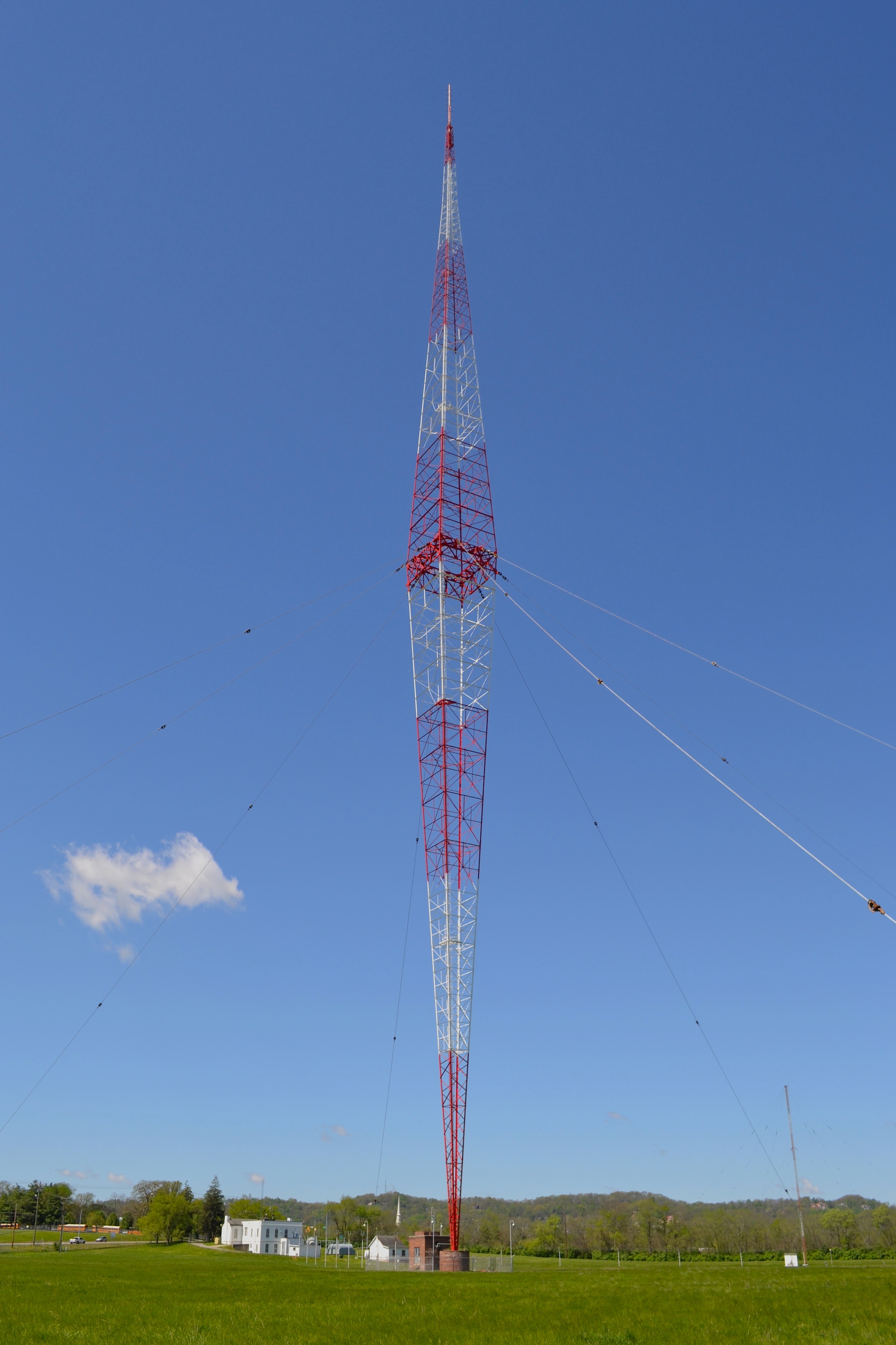
Tall Towers in Big Fields

55I worked for Clear Channel for five years. As best as I remember, not a meeting went by that John Hogan wouldn’t say “we’re not about tall towers in big fields anymore.” And as I watch radio companies all across America selling off their radio towers, I think that day has come to fruition.

Introducing the iPhone7

This week on September 7, 2016 the iPhone7 came out and the big news was that it eliminated the headphone jack. The radio industry was in shock. How would NextRadio be heard without the wire that connected the ear buds to the phone since that wire acts as the antenna to receive FM radio through a smartphone with the FM chip activated. Except Apple never activated the FM chip inside any iPhone.

PPM & the iPhone7

Then only two days later, Randy Kabrich published a concern that may be even more important to the radio industry, and that was, how would PPM* work with the new iPhone7? Randy posted this picture with his article iphone7-with-ppm and you really should read all that Randy has to say on the subject with his article on Tom Taylor’s NOW here.

Change is the Only Constant

Jim Carnegie, who founded Radio Business Reports, used to continuously preach to the radio industry you can’t hold back change. If you are to survive you must embrace change.

In the case of wireless headphones, the tipping point has been reached. More wireless headphones are now sold than wired ones. So I don’t think Apple was going out on a limb by eliminating a 19th century technology. I also fully suspect that AirPods will soon become the new “IN” thing.

What Should Radio Be Focused On?

MediaLife Magazine published a really interesting article on the seven important trends that radio should be focused on. You can read the article here. I will give you the “Reader’s Digest” version with some of my own thoughts.

The Future of Big Radio

Radio is best when it’s LIVE & LOCAL. The consolidation of radio has not been the successful business model that investors on Wall Street bought into. Of course the concept of “increasing shareholder value” and radio’s operating in the public interest, convenience and necessity were at odds with one another from day one. I would agree with MediaLife that radio’s future will be via locally managed radio operators.

The Future of Local Radio

Johnny Carson used to say: “If you buy the premise you buy the bit.” In this case if you believe in the demise of big radio, then you will also believe in the rise of local radio. I know right here in Kentucky many locally owned and operated radio stations that are fully engaged in every aspect of the lives of their listeners and they are thriving.

Radio Goes Digital

With radio company after radio company selling off their radio towers, the writing appears to be on the wall that all radio will be delivered digitally and via the internet. Gone will be towers and transmitters and FCC regulations, fees and fines.

Convergence of Media

I remember writing a paper on media convergence when I was in college. That was long before the concept of a world wide web. With the internet all media becomes identical. What difference is there between a newspaper, a radio station or a television station when each of them can do the same thing? What will separate them is the quality of their content.

NAB, NAA and IAB et al.

The coming convergence will really play havoc with media associations. When what once were separate and distinction constituencies will now also converge into a media association.

I remember being in Washington, DC when Senator Gordon Smith came on board at the NAB President. I shook his hand and asked him about the NAB inviting the satellite radio and internet radio operators into our big tent. I said better to have them with us than against us. He nodded and said that was certainly something to think about. (I think he may have just been being kind.)

Radio’s Opportunity

The History Channel did a program on the “100 Greatest Inventions” and number two on the list was RADIO. Number one was the smartphone. The smartphone really replaces many of our other devices. My digital camera lays somewhere gathering dust as my iPhone has been my digital camera since I got it. CD player, iPod etc, have been all replaced by my iPhone for playing my own music collection. My iPhone is my radio and TV too. Newspapers, magazines, books, are also easily accessible on my iPhone. I know I’m not alone in finding that their smartphone has become a very important part of their life. My iPhone is the model 4S. It’s ancient in the eyes of my students. That’s why the new iPhone7 with the 256GB storage, stereo sound, wireless AirPods, water resistant and all the rest has me thinking it’s time to upgrade.

For me, the big change is the size of the phone. I like the size of my 4S. It was just a bit smaller than the Blackberry Pearl it replaced, but the technology leap it offered over the Blackberry was incredible. I’m sure that the size thing is only in my perception and once I advance to the larger screen I will wonder how I lived without it.

No One Goes Backward

History shows that once people adopt something new, they never go back to the way it used to be. We may wax romantically about the good old days, but if we had to trade another time in history for life without our smartphones and wireless internet, I seriously doubt we could make the trade.

-0-

*PPM is a Nielsen’s Personal People Meter. It’s a device used to measure radio listening in the top 50 radio markets in the USA.

Note: Randy Kabrich blogs here: http://blog.kabrich.com/


14 Comments

Filed under Education, Mentor, Radio, Sales, Uncategorized