Category Archives: Mentor

Who’s in Their Ear?

When radio was first introduced, to listen to it, you needed to wear headphones. Radio was one-to-one and very intimate. As the technology evolved the radio speaker would change the medium from one-to-one to group listening. Radios were expensive. If you owned a radio you shared it. A family would gather around the radio and listen together. Families would transfer this together media habit to TV and the transistor radio would become the refuge of teenagers who wanted to go in a different direction.
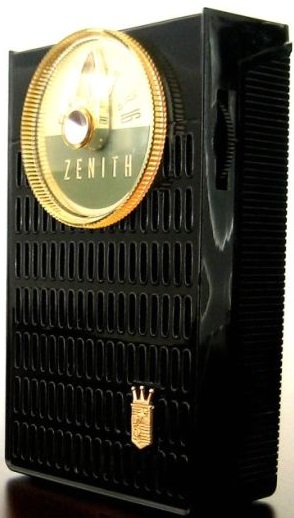
Zenith Transister Radio

My first radio was a Zenith transistor with a little ear piece for one ear. I would go to bed and turn it on under the covers and listen to “the world.” It was all AM radio and after sunset, the DX’ing of the nighttime skywave would always bring a new radio station into my ear to savor.

In the mid-70s the Boombox would be introduced to America and these radios grew both in size and the amount of bass they 1could produce. By the 80s they could be as big as a suitcase and carrying them around on your shoulder was a status symbol.

Go to a beach resort, and whether you were walking the boardwalk or on the beach, radios were blasting music from every direction.

When Y2K didn’t impact our fully computerized radio stations, we all breathed a short-lived sigh of relief because it was quickly followed by a new threat; the iPod and ear buds. Once again listening to music became a very personal activity.

The ear buds would transfer to the iPhone and iPad. The introduction of the iPhone6 may have killed the iPod, but not the use of headphones or ear buds to listen to your audio.

So what exactly are all those people listening to? lady listening with ear buds

The latest research from Edison Research says American Teens are spending more time with streaming audio services from places like Pandora and Spotify, than they are listening to either streaming AM/FM radio or over-the-air radio. Edison reports this finding in their fall 2014 “Share of Ear” report.

Remember it was my generation that grew up hooked on radio & TV that were credited with eroding newspaper readership. (Full disclosure: I read all my news online using my computer, iPad or iPhone.)

It’s not all bad news for AM/FM radio. It is still popular Edison tells us “by a significant margin among all other age groups.” So where did the teens go? Pureplay Internet streamers. What do they love most? The ability to skip a song they don’t like.

That’s really not hard to understand. I love my DVR for a similar reason. Especially when it comes to award shows. I never watch them live anymore. I record them for later viewing and I can watch a 3+ hour awards show in about 20 minutes time. I skip all the bad parts.

In fact, I rarely watch anything on TV live anymore. Everything is recorded so I can control it. So is it any surprise that teenagers once they are given this kind of control will ever want to give it up. A new habit is being formed.

The other aspect about pureplays that AM/FM radio could be addressing is their complete focus on the quality of their streaming product. What I’m hearing is a clean commercial insertion. Nothing gets cut off in the middle or repeated multiple times in the same long break. Pureplays deliver their commercial messages in a style that compliments the music programming; in a way that actually has you enjoying listening to the commercial message.

The teenagers have moved their listening to streaming and podcasts. The spectrum auction being held by the Federal Communications Commission is all about creating more wireless connections for all kinds of mobile devices.

I live in South Central Kentucky. I can stream my iPhone into my car’s seven speaker sound system through Bluetooth and everywhere I drive it’s clean and clear with no dropout or buffering. It’s scary good. It’s as easy to do as turning on my car’s audio system. Nothing to plug in or connect. It happens automatically.

South Central Kentucky is also blessed with some excellent over-the-air radio stations. So they very effectively compete, in my opinion, with streaming. But I wasn’t raised on streaming. I also like a good air personality.

The next generation is being raised on streaming that they have some power over to skip things they don’t wish to hear. Reminds me of the old saying “How are you going to get the kids back on the farm, after they’ve seen New York?”

baby listening to ear buds

2 Comments

Filed under Education, Mentor, Radio

The Problem with Digital Radio

The problem with digital radio is FM radio. FM radio is loved by the consumer. They don’t find anything wrong with FM radio (other than too many commercials). With no perceived need to change, the FM radio listener doesn’t. That’s not just a problem for radio station owners in America, but all around the world.

I often like to compare the start of HD Radio with the introduction of the iPod by Apple. Both happened about the same time. One has sold hundreds of millions of units and now is no longer made, and the other is HD Radio.

Interestingly enough, the introduction of digital audio broadcasting was born around the same time as the World Wide Web. It was born before MP3s and iPods. Born long before the advent of Smartphones and Tablets and yet, digital in the world of over-the-air radio transmission is still waiting to get traction with the consumer.

FM radio commanded 75% of all radio listening in America back in the 1980s when the number of AM and FM radio stations in America numbered about the same. So it’s no surprise that over three decades later that FM dominates when the number of FM radio stations, translators (FM stations) and LPFM (FM stations) far outnumber AM radio stations that are on-the-air today in the USA.

Across the pond, the British government was planning to switch that country’s radio listening from FM analog to digital when the penetration of digital radio listening reached 50%. They thought that would happen by 2015. Currently digital radio listening in England stands at only 36% and the government has now wisely put off setting a new date for this transition.

The problem in England goes beyond just radio sets in homes and cars. British folks also can listen to FM radio on their Smartphones. Unlike here in America, the FM chip that comes inside Smartphones has been turned on. These chips remain in the off position in America with no way for a Smartphone owner to turn it on without “jailbreaking” their phone which is illegal. The members of parliament aren’t about to turn off a system that serves around 25 million listeners, if they want to get re-elected.

I own one HD Radio. My local NPR FM radio station broadcasts with 100,000 watts on their analog FM signal. It’s crystal clear and comes in everywhere I go. They simulcast their NPR and other talk programming on their HD Radio signal too. That is plagued with dropout and a short range in terms of where I can pick it up. The same HD Radio that picks up the digital broadcast of my local NPR radio station also has an FM tuner (but no AM tuner). I can switch between the analog FM and digital FM, and to my ears they sound about the same. And therein lies the problem. No perceived difference other than one goes great distances with no drop out and the other is HD Radio.

At this point in time, what seems clear is that is FM radio isn’t going anywhere anytime soon. AM radio station operators would benefit by having a similar FM signal that delivers the same coverage area as their AM license provides sans the sky wave effect. Giving them a low power translator is an insult in my opinion. All Smartphones should have their FM chips turned on. NextRadio should be embraced by FM broadcasters. All broadcasters need to focus on their content and make sure that whether it’s over-the-air or over-the-Internet, it’s of the same high quality and offers all of the same content on both.

I’ve never heard an FM radio listener complain about the quality of their signal and what they do complain about, isn’t being focused on by broadcasters. We have no time to lose.

FM radio has the delivery system in place. Take advantage of it to serve, entertain and inform.

7 Comments

Filed under Education, Mentor, Radio

Radio’s NOT Like it Used to Be

Marconi Wireless(Spoiler Alert: It never was, starting with day 2) When I hang out on social media – or imagine this, have a real face-to-face conversation – with my radio contemporaries that grew up listening to radio in the 60s & 70s, the conversation invariably turns to “radio’s not like it used to be.”

From the moment of its birth, radio has been one long experiment.

It took hold when Marconi International Marine Communication Company, Limited began to make money with wireless over-the-air transmissions. Marconi was in it for the money. He really cared little how it all worked. He wanted to build more powerful transmitters and cover greater distances. He didn’t sell his technology but leased it. He also trained and employed the wireless operators who used his equipment.

So, imagine you’re a wireless operator on Christmas Eve 1906 and you’re at sea monitoring your dots & dashes – all that you’ve ever heard come through your headphones – when at 9 PM EST on Christmas Eve you suddenly hear a human voice coming through your headphones. Then singing. Then a violin playing. And finally a man speaks a Christmas greeting. What would you have thought to yourself?

The man who did this was Reginald Fessenden. In addition to being a brilliant scientist, he also sang and played the violin. From his transmitting station in Brant Rock, Massachusetts his first wireless transmissions of voice and music were heard up and down the Eastern seaboard. He would repeat this again on New Year’s Eve.

In the United States the final commercial Morse code transmission was sent on July 12, 1999. The last message sent was the very same as the first message sent by Samuel Morse in 1844, “What hath God wrought”, and the prosign “SK”.

What brought this all to mind was a news item that has been circulating recently about a survey by Morgan Stanley that was released by Quartz.

The survey is a positive for radio. In a survey of 2,016 American adults taken last November, AM/FM radio use was #1 with 86%. Number two was YouTube, number three was Pandora and number four were “TV music channels”.

The first four were all advertising supported and thus free to the user. The fifth on the list was also the first paid service; SiriusXM radio (tied with iHeartRadio).

So one thing that hasn’t changed is that most people would rather access free-with-ads entertainment versus paid-without-ads entertainment when given a choice.

However, this survey has spurred a lot of discussion in the radio world. Broadcasters are divided on what this survey is really telling us. Owners/operators are saying that it shows “radio ain’t dead.” Broadcasters that have been consolidated out of the industry are saying “not so fast.” And to some extent, they’re both right.

As Mark Ramsey pointed out on his blog, “86% of respondents saying its part of their usage routine” is what radio folks would call “reach” and does not really address frequency of usage or “time spent listening;” two key radio metrics.

Conspicuously missing from the Morgan Stanley list is a service I use and enjoy TuneIn radio. I wonder why?

So where does that leave us?

I think it’s a twist on one of Henry Ford’s most famous quotes:

Whether you think radio is or is not, you’re right.

Radio owners/operators have it within their power to create the future for the radio industry. So what’s it going to be?

2 Comments

Filed under Education, Mentor, Radio