Tag Archives: AM Radio For Every Vehicle Act

Where Should the Radio Industry Be Focused?

You most likely have heard how the radio industry in America is trying to get Congress to pass a law requiring that all cars sold must have an AM radio installed in them. Radio folks say this is necessary so emergency information will be available to the general public in times of a crisis.

The AM Radio for Every Vehicle Act is bipartisan legislation aimed at ensuring AM radio remains accessible in all new vehicles sold in the United States. It would require automakers to include AM broadcast radio as a standard feature, without any additional cost to consumers. The bill also addresses transparency by requiring automakers to disclose if a vehicle lacks AM radio access before the rule takes effect.

But is this really necessary, if we’re being honest with one another?

When Sue and I are on one of our many road trips, and a weather emergency or some other crisis occurs in the area that we are traveling in, our iPhones go crazy with that critical information.

Redundancy

Today, we live in a world with a lot of redundancy when it comes to communication. It’s not like a hundred years ago where radio provided the only means of immediate information to the public. In addition to broadcast radio/TV, we have computers, tablets, and smartphones filling the role of delivering emergency information quickly.

I won’t ever forget the day a tornado alert was issued for Bowling Green, Kentucky, including the campus of Western Kentucky University; every electronic device my students carried with them went off with the tornado warning.

The sound was deafening.

Obviously, as I was teaching a class at the time, no one was listening to a radio or watching TV but we all immediately knew of the imminent danger and sought protective cover.

AM Radio

From my earliest years as a listener, it was AM radio that caused me to want to pursue a career in the radio industry.

The first ten years of my radio career were spent on-air, in programming and operations. The next thirty years would see me move in to radio sales, sales management, general management and finally as a market manager of radio station clusters.

Over that period of time I watched as AM radio listenership grew older and declined, while FM radio amassed a large audience and the lion’s share of the advertising revenue.

The point I’m trying to make is, that AM radio was always available in cars and trucks, but people had moved on; to FM radio, satellite radio and portable music playing devices.

Reach people where they are, not where you want them to be.

Where Did All Radios Go?

Pete Seeger wrote a song that is applicable to the radio issue today, “Where Have All the Flowers Gone?” This song could be radio’s battle cry, by changing “flowers” to “radios.”

If you go into any retailer today, you’ll feel like Harrison Ford in Raiders of the Lost Arc trying to find a radio receiver.

Recently, Sue and I road tripped to Gainesville, Florida for another one of our grandchildren graduating from high school. During our two weeks of travel, every hotel we stayed in no longer had a radio in our room. Instead they had a large screen TV (up to 85 inches) and by our bed a charging block for plugging in our smartphones, tablets and computers.

So, should the radio industry be adding to the “AM Radio for Every Vehicle Act” as well as hotel rooms too? I think not! Have you ever tried to listen to AM radio on one of those cheap radio’s that hotels used to put into their rooms?

The Francis Marion Hotel

On our way home from Florida, we stayed a couple of nights in Charleston, South Carolina at The Francis Marion Hotel. The hotel was named after a revolutionary war hero and built in 1924. The Francis Marion hotel was early to include an AM radio in every room and even housed the city’s first radio station on an upper floor of the hotel.

The 1920s was the Golden Age of railroads, radio and grand hotels, and the Charleston Renaissance was in full bloom.

That was then, this is now.

Today, our room at The Francis Marion featured one of those clock charging cubes by our bedside, two flat screen TVs and excellent WiFi. Oh, and there is no longer a radio station broadcasting from the hotel; that’s been gone for years.

Radio Today

James Cridland reported in his latest newsletter that he read in Radio Today that the UK’s first commercial radio station is switching off two of its FM frequencies. The owners claim that DAB (Digital Audio Broadcasting) and online streaming serves its audience well enough. Cridland believes they won’t be the last either.

The Future is here, NOW!

What Do We Listen To When We Road Trip?

Everything we want to hear when we’re on-the-road comes from our smartphones. They automatically connect to our Honda’s audio system via Apple CarPlay. For music we can choose from my own music library, RadioTunes or Pandora. If we want to hear any radio station, we can listen to it via TuneIn Radio, StreamS, myTuner Radio, or Simple Radio. Plus, any time I want a quick check of the latest news, I click on my Hourly News app which streams the latest news from NPR, CBC, AP, ABC, CBS, FOX, and the BBC in succession. By the time I’ve finished listening, I not only have a good sense of what’s going on in the world, but how each news service ranks each story’s importance to its listeners.

The amazing thing about all of this is, the streaming of audio content we’ve found, is stable; with no dropouts, static or disruption of any kind. Unlike satellite radio which drops out under bridges, streaming audio does not.

In fact, my blog of January 9, 2022 titled “Why I Stream ALL of My Radio Listening,” goes into detail about how and why I started doing this. https://dicktaylorblog.com/2022/01/09/why-i-stream-all-my-radio-listening/ While we still own the 2009 Honda Accord talked about in that article, we recently upgraded to a 2018 Honda Accord for our road trips, which makes everything even easier. Mind you, this vehicle is seven years old and has an AM radio in it; somewhere, I just haven’t spent any time looking for it. The touch screen does have a button at the top that says FM Radio, even when I’m in Apple CarPlay mode, which is ALWAYS.

The Bottomline

Today we live in an ON DEMAND world. People want what they want, when they want it, and where they want it. The focus of today’s radio owner/operators should be on that reality, not on trying to keep a 20th Century technology alive by forcing it on people.

Five years ago, the Radio Advertising Bureau’s Senior Vice President Jeff Schmidt was telling radio sales people,

“If you’re selling the way you were five years ago,

you’re in trouble because the world is changing

and we need to change with it.”

And he’s right, but not just about radio sales, about the entire radio industry. It can’t try and hold back the massive change that is occurring in the world of communications. That’s the message.

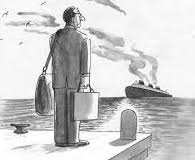
Radio needs to get on board

or

miss the boat.
23 Comments

Filed under Education, Mentor, Radio, Sales

Radio’s Most Pressing Issues

This past week, Radio/TV state broadcast associations were in our nation’s capital meeting with their elected representatives in both the House and Senate about issues that are important to them. It’s the annual National Association of Broadcasters (NAB) State Leadership Conference.

More than 500 radio broadcasters from across America assembled to hear Senator Ted Cruz (R-TX) speak on his support of the “AM Radio for Every Vehicle Act,” and advocating for a level playing field in the advertising market.

Cruz is the new Chairman of the Senate Commerce Committee and he pledged a proactive approach to support broadcasters, create jobs and uphold free speech.

Free Speech

Brendan Carr is the new Chairman of the Federal Communications Commission (FCC) and in only a couple of weeks, since taking this leadership position, his actions have caught the attention of some members of Congress, who were alarmed by recent moves impacting broadcasters.

Representative Jerold Nadler (D-NY) expressed his concern over the Carr’s FCC assault on a media organization’s free speech.

“Exploiting his asserted ‘unitary executive’ powers, [President] Trump is unleashing his sycophant FCC Chairman, Brendan Carr, on every newsgroup whose news stories he does not approve of — actually threatening to pull the broadcast licenses for ABC, CBS, NBC, PBS, and NPR,” said Rep. Jamie Raskin (D-MD). “Is this North Korea?”

The President of Free Press Action, Craig Aaron, in testimony said that threats and opening investigations into broadcast outlets by the FCC is out of the norm.

“The FCC usually talks about licenses on very narrow terms, such as if an owner has committed a major crime,” Aaron said. “The idea that a news organization would be threatened because they asked a tough question of the President, or because they tried to fact check him during a debate, or because they edited their own news content before putting it out over the airwaves is preposterous, and it’s dangerous.”

DEI

Diversity, Equity and Inclusion (DEI) has been terminated by Carr at the FCC and he’s been signaling that the agency might go after FCC licensees over their own DEI programs.

Are DEI programs good for business? Apple’s shareholders think so, so do Costco shareholders, and Hyundai’s marketing executive, Erik Thomas, credits its DEI programs with driving the automobile manufacturer’s bottom line.

SiriusXM

Nine years ago I wrote an article with a title that sounded like click bait titled “SiriusXM Radio is Now Free,” which speculated when the FCC licensed satellite broadcaster would start offering ad-supported channels for free.

Four years later, I wrote that “Could 2021 Be the Year SiriusXM Adds FREE Channels?” speculating that new SiriusXM CEO, Jennifer Witz, would be pursuing revenue growth by  leveraging the 132 million cars the service was available in. SiriusXM, like commercial radio over-the-air (OTA) broadcasters, knows that the competition for listener ears is in the car. The advantage the satellite broadcaster has over AM/FM radio operators is they know exactly what their listeners are listening to, and don’t have to rely on audience estimates that may or may not be accurate in today’s media saturated world.

Last year, what I have been predicting since 2016, became a reality, as I wrote in:  “Ad-Supported SiriusXM Requires No Paid Subscription.”

Monopoly

One of the radio industry’s most respected researchers, Dr. Ed Cohen, wrote “The direct-to-consumer satellite radio business is a monopoly,” shortly after my 3rd article on this subject was published. Originally, the FCC offered only two satellite broadcast licenses, one went to a company called “Sirius” and the other to a company called “XM,” with the idea being they would be competitors and that the consumer would benefit by not having a single company – a monopoly – control satellite radio and what it could charge.

The two companies were supposed to never be able to merge, but in August of 2008, by a 3 to 2 vote of the FCC, that changed. Dr. Cohen does a really good deep dive into explaining how this all came about in his article “SiriusXM and the FCC: Is the Camel’s Nose Under the Tent?” Which is an allusion to a story that takes place in Arabia, with this metaphorical moral:

If the camel once gets his nose in the tent, his body will soon follow.

What the FCC never took into consideration was, how much damage might occur to local AM/FM radio stations, if and when, the new combined SiriusXM ever decided to provide an ad-supported free radio service.

Dr. Cohen believes that while this new free service from SiriusXM is limited in scope, like the proverbial camel, it won’t be long before the whole service becomes real competition for audio listeners and advertisers.

People Love Free

AM Radio vs SiriusXM

Dr. Cohen makes an excellent case for commercial radio broadcasters to be demanding, the FCC revisit the SiriusXM merger decision in light of this change by the satellite broadcaster.

By the way, public broadcasters also have a horse in this race, as NPR Now is part of the new free SiriusXM service.

“While the NAB is busy with getting Congress to force OEMs (Original Equipment Manufacturers) to include AM in every vehicle, the battle with SiriusXM’s ad-supported venture is probably more important to the industry in the long run,” says Dr. Cohen.

It’s The Economy Stupid

But the most important issue facing the commercial radio industry are the financial fears that have been generated by the Trump tariffs and fire hose of government regulatory changes that seem to come at us on an hourly basis. I wrote about this concern in February with an article titled “The Cost of Uncertainty to Radio.”

Now BIA Advisory Services this week updated its local advertising revenue forecast for 2025. Cameron Coats, in Radio Ink, reports that “over-the-air revenue [for radio] takes the largest hit, falling by 6%.” Digital radio, says Coats, shows a slight increase of 0.1%.

SiriusXM has enjoyed growth through the sale of new cars, but with the high tariffs Trump has announced, it wouldn’t be a surprise if people hang onto their current vehicles a little longer, which also means that AM radio will still be accessible. Without an economic downturn, the average life of a car in America is 12-years, up from 8.4-years in 1995. Progressive Insurance says that a well-maintained car will reach 300,000 or more miles, and those cars have both AM/FM radios as well as SiriusXM.

The radio industry’s most pressing issue is who wins in the car, and in that arena AM radio – a hundred year old medium is not our industry’s best play –

stopping satellite radio’s FREE ad-supported service is.

When the pie isn’t growing,

the game becomes who can cut the biggest slice.

5 Comments

Filed under Uncategorized

I Propose the “Speedometers in Every Car Act”

When my wife Sue & I are driving, locally or on one of our road trips, we’ve noticed that drivers have no idea how fast they’re going. Speed Limit signs are no longer even considered a suggested “speed limit,” but more like something that should be considered a minimum speed.

Speedometers

In 1902, German engineer Otto Schulze patented the speedometer and Oldsmobile would be the first American car company to factory install them into their vehicles. However, speedometers were originally considered an option, that owners could buy.

It wasn’t until 1910 that speedometers started becoming standard equipment in American automobiles.

How to Become a Road Hazard

If you really want to put your life in jeopardy, try traveling the posted speed limit. We have, and there’s not a single vehicle that will follow us. NOT ONE.

The Drive Rite Academy says: Speed limit signs serve as a guide for drivers to maintain a safe and appropriate speed, based on the type of road, traffic, and environmental conditions. They are designed to protect both drivers and pedestrians by reducing the risk of accidents and ensuring smooth traffic flow.

            KEY POINTS:

  • The number on the sign represents the maximum speed you’re legally allowed to drive, under ideal driving conditions.
  • Ideal driving conditions include clear weather, dry roads, and low traffic.
  • It’s important to note that the posted speed limit is NOT a target speed. Drivers should adjust their speed based on traffic and weather conditions, even if it means driving below the posted limit.

Does Your Car Have a Speedometer?

The question posed at the beginning of this section is rhetorical. Every vehicle built and sold for use on our highways and byways in America comes equipped with a speedometer, but we’re beginning to wonder if today’s drivers know how to use them.

Speed Limit signs are the law on our roadways.

Once upon a time, Americans believed no one was above the law. But those days are now in the rearview mirror. 99% of today’s drivers believe that speed limit signs don’t apply to them.

And don’t get me started on drivers who don’t come to a full-stop at STOP SIGNS.

AM Radio

It’s why I chuckle when the National Association of Broadcasters (NAB) will try again in the 119th Congress to pass their “AM Radio in Every Vehicle Act.”

Personally, I believe, it’s more important that every vehicle come equipped with an FM radio, as that’s what the majority of Americans use – if they listen to broadcast radio at all.

Just Because…

Just because a vehicle has an AM radio – or speedometer for that matter – doesn’t mean anyone will use them for their safety, or that of their passengers.

I rest my case.

9 Comments

Filed under Education, Mentor, Radio

What’s the Future of Radio, AM or Digital?

Reading the RAB’s “Radio Matters” blog, I couldn’t help but notice the picture of the radio used for the article, “What’s on the Horizon for Radio?” was an AM/FM radio set that couldn’t receive HD Radio broadcasts. (Picture of that radio is on the left.)

Radio Digital Growing

The article did cite that in 2025 radio digital* presented the radio industry in America with growth potential, stating:

“The Finance/Insurance category will be the spending leader for Radio Digital with $586 million in local ad spend, with other categories that will be significantly increasing their spend in Radio Digital being QSRs (Quick Service Restaurants), Supermarkets & Other Grocery Stores and Tier 3 – New Car Dealers.”

HD Radio

What I found most curious about the blog article was the total absence of anything regarding America’s digital radio standard, HD Radio.

We just acquired a new car that has an HD Radio, and I am finding great difficulty in navigating radio stations and their HD 1, 2, 3 & 4 subchannels. Hopefully, the FCC’s  (Federal Communications Commission) “Modifying Rules for FM Terrestrial Digital Audio Broadcasting Systems, First Report and Order” will improve this digital radio service.

Ironically, when we enter our new car, it automatically and seamlessly connects to Apple CarPlay and allows us to play our personal music library or favorite streaming App. It’s so easy, because it operates just like our iPhones and accepts voice commands.

AM Radio

James Cridland wrote in this week’s newsletter:

“In the US, the House of Representatives is reviewing “the AM Radio For Every Vehicle Act”, a piece of legislation aimed at ensuring that AM radio is not removed from car radio receivers, “because emergencies”.”

“John “Cats” Catsimatidis, “a true self-made billionaire, philanthropist, and former NYC mayoral candidate“, has been buying full-page ads in the New York Post – like the one below – raising awareness of the issue. He’s the owner of 77 WABC, an AM radio station in New York, so he’s got considerable skin in the game.”

“I’ve written much about AM’s decline; but it should be noted that in Europe, a piece of legislation aimed at ensuring that DAB was put into all cars, “because emergencies”, was passed – and is a good reason for the success of DAB on the continent.”

Sadly, it appears that the American broadcast industry is investing its money and political capital in trying the preserve the past rather than lead the charge into the future.

Alaska

Before COVID-19 and a global pandemic closed down the world, Sue and I had planned a trip to our 49th state, Alaska. Now, four years later, that trip was finally taken.

We traveled through Anchorage, Seward, Juneau, Skagway, Haines, Hoonah and Ketchikan. Music was playing in just about every business we entered, not on a radio, but on a digital speaker that was apparently connected to a streaming music service or personal library.

Also, not one of our hotel rooms had a radio in them, unlike in 1922 when having a radio in your hotel room was a big deal. I wrote about that in a blog titled “Once It Was Radio.”

We found local cell service to be prolific everywhere we went and often available on our cruise ship while cruising the inland passages, allowing us to avoid purchasing the cruise lines internet/cellphone package.

Our smartphones are portable and allow us to tune into the world for music, entertainment and information. So, the possibility arises that the “horizon for radio” is delivery of its programming primarily via smartphones, as in our household, they represent the portable “transistor radio” of our youth.

In today’s connected world, relevant content rules.

Relevant is the new local.

* Radio Digital means digital radio advertising including local advertising sold by local stations (streaming, email advertising, O&O banners, SEM (not SEO), website advertisements) and pure play streaming services except CTV/OTT.  that utilizes digital formats. Includes the share retained by local radio stations after reselling other online platforms (e.g., Google AdWords). -BIA Advisory Services

4 Comments

Filed under Education, Mentor, Radio