Tag Archives: CNN

Is AM Radio “Hot or “Not”?

Twenty-four years ago, in October 2000, a new relationship website launched called “Hot or Not.” The premise of the site was for people to submit photos of themselves (or others) to have users of the site rate them on a scale of 1 to 10 on their attractiveness.

Within a month of launching, the site reached around two million page views per day.
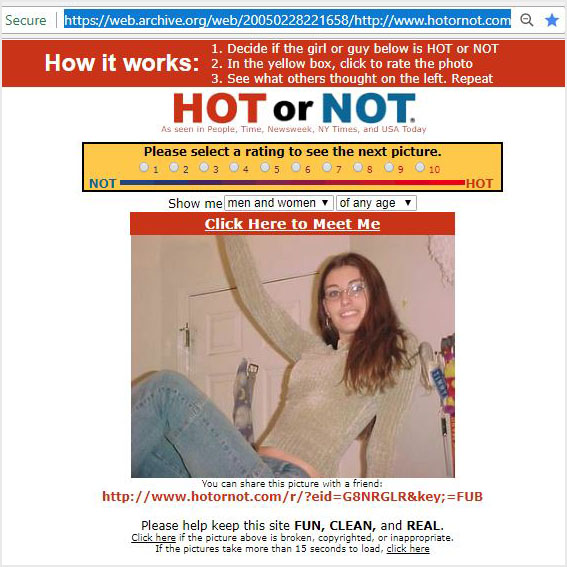
Mark Zuckerberg’s original idea was to do something similar with a site he created called FashMash, which became TheFacebook.com in 2004 (now just Facebook.com). Likewise, the founders of YouTube said they originally set out to create a video version of “hot or not” before developing a more inclusive site.

HOT or NOT

It was based on this site that Fred Jacobs presented, the things he did and saw at this year’s Consumer Electronics Show in Las Vegas, aka CES 2024, as being “Hot or Not.”

During the webinar, I asked the smarmy question “Is AM Radio HOT?” in the chat box. (No, I didn’t get an answer.)

However, the bigger question really is, “Is RADIO Hot or Not?”

The answer from everything I’m reading is “Not,” at least in the way things are going.

When it came to radio audience ratings, I never concerned myself with individual ratings, but preferred to study audience trends. Here’s the latest trend lines for both broadcast radio and digital streaming:

Not A Viable Business Anymore

In Canada this month, the chief legal and regulatory officer of Bell Media grabbed the headlines worldwide, when he explained the reason Bell was selling off 45 of its radio broadcast properties, was they were “not a viable business anymore.”

“One man’s trash is another man’s radio stations.”

-Fred Jacobs

So, what do you think the buyers of these radio stations must have thought, after the seller tells the world they think the radio stations they just sold are not a viable business?

Surprise, they are very positive about the radio business. Take a moment to listen to this very positive view from the CEO of My Broadcasting Corporation, one of the seven local broadcast companies that purchased radio stations from Bell.  You can here that CBC interview here: https://www.cbc.ca/listen/live-radio/1-100-ottawa-morning/clip/16041778-local-bell-media-radio-stations-owner

The State of Media 2024

Harker Bos Group https://harkerbos.com/ released new research on the state of media today and here are some of the key takeaways.

What are radio listeners looking to hear?

  • 54% highlight the importance of local coverage
  • 67% sound quality
  • 54% station availability
  • 53% ease of use

When the researchers compared broadcast radio to digital streaming of music, they found that usage of broadcast by younger audiences was losing out to streaming services. Those that are frequent users of streaming music tend to access it via smartphones, computers, smart speakers and tablets preferring on-demand music services with personalized playlists and recommendations. Streaming also provides users global access that is not bound by geographical limitations.

Is The Media Prepared For An Extinction-Level Event?

That headline in the New Yorker caught my attention! The author, Claire Malone, cites “ads are scarce, search and social traffic is dying, and readers are burned out, [which means] the future will require fundamentally rethinking the press’s relationship to its audience.”

The way to become a millionaire in radio,

is to start with a billion dollars.

That’s not something new, that witticism has been around since the end of the 20th Century. I was reminded of it when Claire shared the words of a late-career writer’s advice to the newbies: “You want to make it in journalism, marry rich.”

Last year, 2,681 people were laid off in broadcast, print and digital news media.

In February of this year, after the record-setting viewership to the CBS broadcast of Super Bowl 58, that very network announced it would be cutting 800 jobs.

Significant job cuts have taken place at:

  • NBC News
  • Vox Media
  • Vice News
  • Business Insider
  • Spotify
  • theSkimm
  • FiveThirtyEight
  • The Athletic
  • The New Yorker
  • Sports Illustrated

And some other media outlets closed down:

  • BuzzFeed
  • Gawker
  • Pitchfork
  • The Messenger (this endeavor lasted less than a year)

“Publishers, brace yourselves – it’s going to be a wild ride.

I see a potential extinction-level event in the future.”

-Matthew Goldstein, media consultant

I share these stories with you, not to depress you, but for you to better understand what’s going on, and that it’s not just a radio problem, but a media problem.

As Netflix, Amazon Prime Video and others add advertising to formerly ad-free streaming channels, where will those ad dollars come from; radio, TV, cable, newspapers, magazines? The advertising dollar pie is not infinite; to grow your piece of the pie, means eating someone else’s.

“It’s time for a new revolution.”

-Mark Thompson, CNN’s new CEO/Editor-in-Chief

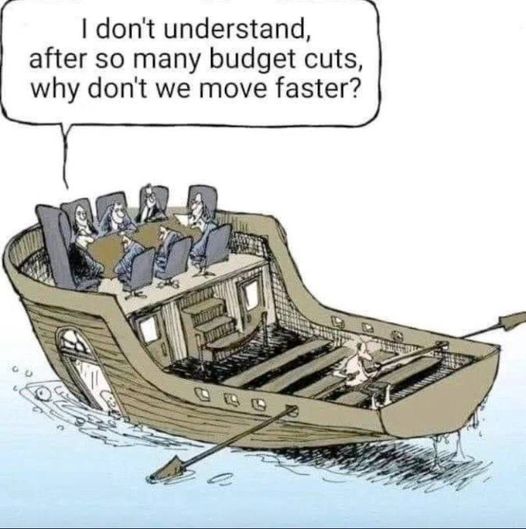
Sadly, many media folks working in the industry today, have only been part of the culture of decline – where cutting expenses has been the only plan to achieve future success.

What’s always been true, is it takes money to make money.

Netflix, for example, invests a billion dollars in research and development – mostly on data scientists, engineers, and designers who help Netflix subscribers discover content that they will love.

How’s that working out for Netflix? Here’s the latest data:

In 2024, media companies will find media users making decisions on which services they really want – and can afford – to continue subscribing to.

For radio operators, who operate a subscription-free service, the challenge will be:

  • to understand what your listening area’s population wants, needs and desires, and
  • to deliver for your underwriters or advertisers the best R.O.I. (Return On Investment)

The best ratings for advertisers

will always be increased cash register rings.

6 Comments

Filed under Education, Mentor, Radio, Sales

Monkey First

There’s been many changes to the radio industry in the past fifty years, but one thing has not changed and that is the reason people listen.

People listen to radio that interests them.

This past week I sat in on a webinar that revealed groundbreaking data that is being produce by DTS AutoStage. Joe D’Angelo, Xperi’s Senior Vice President of Global Radio & Digital Audio, showed how granular, and in virtually “real time,” the data from vehicle listening produced by DTS AutoStage is. This research will give the radio industry unprecedented access to radio analytics and audience insights.

Train The Monkey First

The problem I see with all the technological advancements in the radio business these days is that it feels like we’re putting the cart before the horse.

Google’s division to foster innovation operates under the philosophy of “#MonkeyFirst.”

If you want to get a monkey to recite Shakespeare on a pedestal,

you start by training the monkey, not building the pedestal.

The hard part is training the monkey, as anyone can build a pedestal.

Applying this to radio broadcasting, the hard part is crafting the programming that goes out to a listener. The easy part is acquiring the technology to transmit a signal; whether over the internet or through the ether.

Headline News

CNN and Headline News (simply known as HLN) is under new ownership.

Back when Ted Turner conceived of the Headline News channel, it featured a full half-hour long newscast every thirty minutes, 24-hours a day.

With ownership change, came changes to Headline News, including the dropping of the name in favor of just calling the channel HLN. The channel also stopped doing thirty-minute newscasts round-the-clock and the only news program left was Robin Meade’s Morning Express.

That came to end after a 21-year run on Monday, December 5, 2022. Robin Meade explained that

“because of budget cuts and a changing industry HLN is no longer

producing its own live news. It means our news shows are ending.

In its place you will see a simulcast of CNN’s morning show.”

Once again, a broadcast company is expecting to do better by cutting costs and eliminating the very entity that drew people to the channel in the first place.

Too many broadcasters are hard at work building a better pedestal when where their attention should be focused on, is delivering the programming their audience wants.

The reason for this misplaced effort is because building technology is the easy part and management can show their investors early progress against a timeline.

The broadcasting industry is creating a world of outstanding pedestals, while the audience leaves.

Make sure you address the crux of the problem

and don’t waste time with the peripheral issues.

-Greg Satell

10 Comments

Filed under Education, Mentor, Radio, Sales

What I Recently Witnessed About Radio Use

Sue & I just returned from a seven week trip out west to visit our children and grandchildren who are living in Nevada, Montana and Washington. For me, our trip would also be a chance to witness how radio is used (or not used) in three different households, as well as in hotels, businesses and public transportation. What I would witness, was concerning.

Nevada

In Nevada, I noticed that for a household of seven, not a single radio was to be found. Audio was accessed by asking Alexa (Amazon Echo) to play something or a particular playlist was sent wirelessly to speakers via someone’s iPhone. Everyone, even the very youngest grandchild, who’s five, had their own iPhone.

In a house where both parents work, and can be called out at any hour of the day, this type of communications for all family members becomes a necessity.

Radio listening, if done at all, was something only done when in the car. Television, was connected to a cable bundle and only CNN or Netflix seemed to get viewed. The grandkids spent most of their time playing video games on the house computer, game console or their iPhones.

Montana

Here a Sonos home speaker system had been installed in the home. I found that two different local radio stations (country & classic rock) were programmed into rotation, along with an Amazon Echo smart speaker. Our grandkids called up songs they wanted to hear by asking Alexa to play them, so in the week we spent, Alexa was pretty much the default choice for anything musically played.

Television programs were all streamed via YouTube TV.

Radio pre-sets in the car were set to several country stations, several classic rock stations, several contemporary music stations and an oldies station. In all, 22 different radio stations were loaded onto the pre-sets. I added KBMC to that pre-set list when we borrowed the car a couple of times. KBMC programs a variety of jazz and classical music.

Washington

Our stay in the State of Washington took place on Whidbey Island. The only radio signal licensed on the island plays regional Mexican music and the majority of its content is in Spanish. So, it wasn’t surprising to find the pre-sets on the car radio did not include KNZW – La Zeta 103.3.

What was surprising was to see that all the pre-sets were to HD1 signals in this Mazda 6 sedan. (It appears Mazda has their radio default to HD signals and you have to toggle it off to get FM signals.) Since the island is just across the water from Seattle, all of the pre-sets were to Seattle radio stations. The two that dominated the listening in the car were KSWD (Audacy’s 94.1 The Sound) when mom was behind the wheel and KQMV (Hubbard’s Movin’ 92.5) when either of the grand kids got control of the radio. However, what is dispiriting to witness is how frequently the radio stations get changed whenever something comes on that they don’t wish to hear. When commercials come on, the station gets changed. Likewise, when songs they don’t like come on, the station gets changed. It’s like watching football using the Red Zone.

Here again, not a single radio receiver was to be found inside the home.

The Bus & Hotels

When we departed Whidbey Island, we took a bus into Seattle. On the bus we listened to KSWD 94.1 The Sound out of Seattle. It provided a nice sound track for the ride and the bus driver never changed the station for the two hours it took to reach our destination.

Every hotel room we stayed in featured flat screen TVs but none had a radio. The old clock radios have been replaced by digital clock/USB charging stations for our iPhones, iPads and laptop computers.

Summing It All Up

I realize there is nothing scientific about this, it’s all anecdotal, but it was a dose of reality that confirms much of the research I’m reading about today’s radio landscape.

No one in our seven weeks on the road tuned into any AM radio station. FM, was radio to everyone, but then, only in their vehicles. Listening to radio in the home was not possible, because there was only one radio in any of the homes we stayed at and that was in the garage.

HD Radio sounds great, but in all honesty, the one family that had this easily accessible in their car, probably didn’t know that’s what they were listening to and it certainly wasn’t the reason they were listening to any particular station.

With the exception of our two hour bus ride, radio exposure could be measured in short segments, that only happened to occur because the radio comes on with the ignition switch. Sadly, changing radio stations occurs constantly, so any commercial content never gets heard.

Likewise, businesses we frequented either had their own franchise “radio station,” like Walmart Radio or streamed a music channel from some other music service they subscribed to.

In our travels, we didn’t see a TV commercial, billboard or bumper sticker for any radio station. Lots of shirts and sweatshirts promoting lots of things, but not one for any radio station.

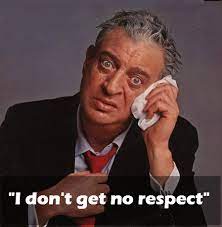
Radio, it would appear, has become the Rodney Dangerfield of media.

“We don’t get no respect.”

But then maybe, it’s a self-inflicted situation

57 Comments

Filed under Education, Mentor, Radio, Sales