Tag Archives: disruption

Is Radio Ready for a Black Swan?

Once upon a time, radio employed a lot of people. Radio stations that operated 24/7 had to have a live person on duty every hour of every day.

Radio studios were different back then too. There were multiple turntables, cart machines, reel-to-reel recorders and multiple microphones/headphones in every studio. In short, there was lots of redundancy. Radio wasn’t very fragile.

But as technology invaded the radio world, computers would replace just about every piece of equipment in the building; saddest of all were the people. They increased efficiency by a lot.

That’s what disruption does. Disrupts. Everything.

Ironically, there’s a relationship between all this efficiency and fragility. As computers increased efficiency it also increased radio’s fragility.

In those early days, lose a phonograph needle or a cart machine, it was no big deal. However, when you lost a computer, you lost the entire radio station. This drive for efficiency eliminated the redundancy. (Most radio stations today have redundant computer networks to deal with crashes; but not all.)

In New York City, many radio and TV stations left the Empire State building when the World Trade Towers were erected. A couple didn’t. On 9/11 those that kept a redundant transmitter plant in place at the Empire State building were able to stay on the air when those iconic towers came down. That kind of redundancy wasn’t efficient, but it was smart and it made those broadcasters less fragile.

The problem is that in business, becoming more efficient means eliminating human redundancies. That’s been part of our high unemployment problem since the beginning of the digital revolution. All businesses are becoming more efficient through digital ecosystems. It’s these very ecosystems that eliminate lots of jobs.

When systems become more optimized, efficient and complex their fragility increases. Fragile systems often break suddenly and with no warning.

Consolidation contributes to this scenario by stacking optimized, efficient and complex systems into an even larger ecosystem that become top down managed through “best practices” strategies. Unfortunately, the reality of “best practices” is they are often more “average” than they are “best.” Often what’s best for one location, doesn’t translate to best for others. Best practices are really a “one size fits all” situation.

Before you argue that local decisions sometimes also fail (and I would not disagree with you), the failure is quarantined to a single location and does not impact the entire enterprise.

Nassim Nicholas Taleb wrote about all of this in his book The Black Swan.

 “The Black Swan asymmetry allows you to be confident about what is wrong, not about what you believe is right.”

History teaches us the outcome of efficiency and fragility. But like the couple getting married who knows that between one third and one half of all marriages end in divorce is convinced they are the exception, companies operate with this same blind eye to the arrival of a black swan to fly into their path. Or as Taleb writes:

“If you survive until tomorrow, it could mean that either a) you are more likely to be immortal or b) that you are closer to death.”

The world we live in today is changing. No doubt about it. It’s a communications revolution. We can’t operate the way we’ve always done it. Taleb shares this example:

“Those who believe in the unconditional benefits of past experience should consider this pearl of wisdom allegedly voiced by a famous ship’s captain:

‘But in all my experience, I have never been in any accident… of any sort worth speaking about. I have seen but one vessel in distress in all my years at sea. I never saw a wreck and never have been wrecked nor was I ever in any predicament that threatened to end in disaster of any sort.’

-E. J. Smith, 1907, Captain, RMS Titanic Captain Smith’s ship sank in 1912 in what became the most talked-about shipwreck in history.”

If there’s an industry that needs to be thinking about “black swans” and balancing efficiency with redundancy, it’s the radio industry.

People don’t have a favorite McDonalds or a favorite #2 pencil brand, but they do have a favorite radio station.

When a “black swan” swoops in, will you be ready?

Your listeners are depending on you.

Don’t disappoint them.

They love your radio station.

They trust you are prepared for black swans.
30 Comments

Filed under Education, Mentor, Radio

Radio: Landmark or Beacon

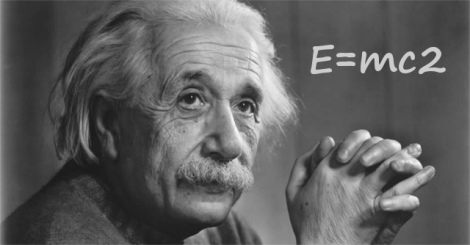
albert-einstein-2Even though it was 110-years ago that Albert Einstein would disrupt the world with how we saw the universe and how we saw time, space, mass, energy and light, we still invoke his name when a person does something brilliant. We say they’re an “Einstein.”

Unfortunately for Einstein, his groundbreaking 1905 theory that would be the foundation for a new way of thinking in physics – quantum mechanics (which gave us things like lasers, microprocessors and iPhones) – wasn’t embraced by this genius. It would be his undoing for the rest of his life.

In the world of higher education, the importance of publishing in an academic journal is more revered than publishing on LinkedIn (where other forwarding thinking professionals hangout) or on a personal blog that’s available to the world. What once was – really isn’t anymore, except to those who cannot accept that today we live in a world made up of platforms, not products.

Radio suffers from a similar dilemma. To traditional broadcasters, radio is something that needs an FCC license, radio tower, antenna and transmitter that sends a signal out over the AM or FM radio bands. I always smile when I look at my old Radio Telephone Third Class Operator Permit that I earned taking a test administered by the Federal Communications Commission at the Customs House in Boston back in 1968. Notice it had the world “telephone” in the name.

Kentucky melon farmer Nathan Stubblefield was an early experimenter in radio broadcasting. Only Nathan wanted his wife to be able to talk to him while he was driving his car from their farmhouse. For you see, in those early days no one was quite sure what this new technology would or could be used for.

“The next big thing always starts out looking like a toy,” says Chris Dixon.

So when people started streaming over the Internet and calling it “radio,” traditional broadcasters looked down their noses at it in much the same way that journalists looked down their noses at the new media platforms like Buzzfeed and Vice Media invading their world.

Einstein teaches us something more than E=mc2, it’s that we need to learn to accept the new platforms that disrupt the world as we knew it and are creating the world that will be. Radio, higher education – most likely your business too – cannot afford to be Einstein-like in our future thinking. The world is moving faster and faster. 50% of today’s jobs won’t exist in ten years.

The iPhone, the Connected Car, Buzzfeed, Bitcoin etc are all platforms.  Radio, colleges, newspapers etc. are all products. Understanding this dichotomy is critical.

In Abraham Pais’s book “J. Robert Oppenheimer: A Life” he writes that Einstein’s inability to adapt to new platforms failed him and that he became a “landmark, but not a beacon.”

And so the choice in our world today is to adapt or die.

Welcome to the age of disruption created by the Internet.

5 Comments

Filed under Education, Mentor, Radio

AM Radio, Streaming Radio, FCC Spectrum Auction & the Future

6Every June, I set-off on a road trip back to New Jersey to speak at the annual New Jersey Broadcasters Convention and Gala in Atlantic City. The roundtrip spans 3-weeks and I drive over 3,000 miles.

This year on the drive up I listened to AM radio and on the drive back I listened to streaming radio. I’d like to share my thoughts with you about what I heard and observed, as well as ponder what the future of both might hold.

Small signal AM radio stations primarily identify themselves with their FM translator dial position (How’s that saving AM radio?). The “pups” are mostly syndicated, automated, religious, sports or Spanish. They aren’t very engaging, which is probably a good thing if you’re driving because you don’t care when you lose the signal. Oh, and just try to hear their translator FM signal; forgetaboutit.

The “big dawg” signals (Bill Bungeroth, former Cumulus Broadcasting president used the term “big dawgs” for those monster signal radio stations and “little pups” for everything else and that’s where I picked it up) on AM like WOWO in Ft Wayne, Indiana, WJR in Detroit, Michigan, WLW in Cincinnati, Ohio and KDKA in Pittsburgh, Pennsylvania are in another universe when it comes to radio programming.

While listening to WOWO, I heard a powerful morning show that was fun, engaging and tuned into the Ft Wayne area. WJR told me about Frankenmuth, Michigan while their midday show was broadcasting live from this unique resort town on the great lakes. WLW was talking about how the Cincinnati police were getting body cameras and how they were loaning them to the news folks in Cincinnati to wear and learn how they work. It was fascinating radio. And KDKA was a potpourri of information about all things Pittsburgh; thoroughly engaging and very enjoyable.

I rode each of these big dawg stations for hundreds of miles and enjoyed listening to them every minute. Each was different, unique, fun, engaging and LOCAL.

The observation I made was that maybe the AM band should be reserved for these high power AM signals that have the bench strength to do great radio.

My drive home started in Albany, New York. I drove back to my hometown in Western Massachusetts following the NJBA Convention and Gala to visit a close family member that had suffered a significant stroke. Thankfully, that situation is improving daily.

I decided my drive back to Kentucky would focus on the other kind of radio available these days; streaming radio. My streaming provider of choice is called Radio Tunes. I like this service because their music formats are curated by people who know and love their genres. Jimi King out of London, England curates the Smooth Jazz channels. Smooth Jazz is a format that has almost completely disappeared from America’s airwaves.

Side Note: WNUA in Chicago, Illinois was a top five radio station playing the Smooth Jazz format. That is until the PPM became the listener measurement currency in Chicago and the other top 48 American metros chasing this format off FM radio. Is Smooth Jazz a PPM unfriendly format for PPM encoding? Might a Voltaire have helped Smooth Jazz? Just asking.

My first day of my 15-hour drive back home allowed me to listen to this streaming radio station through my iPhone4S fed into my car’s audio system with no dropout, no buffering, no disruption of any kind. The audio fidelity beats anything coming out of AM or FM terrestrial radio or SiriusXM too.

On day two of my drive home, I again put on Radio Tunes’ Smooth Jazz channel knowing that Jimi King and Stephanie Sales would be hosting a LIVE 3-hour Smooth Jazz show (they do this every Sunday). This makes Radio Tunes into a real radio station, though I will admit that I love the channel mainly because of all the things it doesn’t do the other 165 hours a week. However, for three of the 7-hours of my second day’s drive, the companionship was really nice.

Again, I experienced no disruption to my listening as I proceeded from Maryland and through the state of West Virginia and into Kentucky. I carried Radio Tunes all the way into Lexington, Kentucky where I stopped to have some lunch.

While eating lunch it occurred to me how well my reception to streaming radio through my smartphone was. It’s scary good when you think about it. Excellent fidelity, no dropout, buffering or other disruptions.

Brian Solis recently spoke at the PromaxBDA Station Summit and told attendees:

“Disruption happens because someone innovated and innovation changes behavior. A good place to start is thinking about a mobile experience. 74% of businesses have no plans to optimize their sites for mobile viewing meaning they don’t have a plan to stay competitive in the increasingly mobile world. If most content experiences are starting here, then that experience needs to be reimagined.”

It wasn’t until I left Lexington that I found gaps in the cell service and finally gave up my experiment of listening to streaming radio through my smartphone in my car.

My observations were cell service is becoming ubiquitous. There are times when having the companionship of LIVE personalities are appreciated versus just streaming music without any talk. Your smartphone gets really hot when you stream on it continuously for a lot of hours. The data use for streaming audio is not huge, like streaming videos or downloading pictures and if all the cell companies make streaming audio free from a person’s data usage plan, it would provide a serious threat to over-the-air radio. Just as Netflix, HBO, Showtime and other OTT (over-the-top) TV services are proving a challenge to cable companies, OTT radio services could be just as challenging to the radio industry.

Then I read this article “Could LTE Broadcast Technology Supersede Over-The-Air Broadcasting?” Listen to what this technology can do:

“LTE Broadcast is based on the eMBMS (Evolved Multimedia Broadcast Multicast Service) point-to-multipoint interface specification developed for delivery of any content received by multiple viewers at the same time, including files and emergency alerts as well as broadcast video. The motive in all cases was to avoid consuming large amounts of bandwidth through transmission of the same data over multiple unicast sessions, which is particularly expensive in the case of HD video.”

Does that get your attention? Then read this second article “Further Consideration of LTE Broadcast”:

“LTE Broadcast is the most efficient mechanism to distribute the same content to many users, and is an important solution to address the 1000x data challenge. Initially focusing on venue-casting, LTE Broadcast can address many other media distribution such as software updates and breaking news. The evolution of LTE Broadcast makes it dynamic and more scalable, and in the long term, takes it even beyond mobile as a solution for next generation terrestrial TV.”

And anything done for TV is even simpler to do for radio.

LinkedIn CEO Jeff Weiner has been reported saying:

“There is a widening skills gap where the existing workforce has been educated and trained to obtain jobs of yesterday and not the jobs of today and tomorrow.”

The broadcast game is rapidly moving to the cellular platform. If you’re wondering why Tim Cook is jazzed about Apple Music it’s because he understands broadcasting is entering a new era. The future belongs to those who can deliver superior content to the global village known as planet Earth.

Now which company do you think has a better chance of winning this race? Apple with $178 billion cash in the bank or, I don’t know, say iHeartMedia with $20.7 billion in debt?

The FCC’s spectrum auction is all about creating more spectrum for the mobile communication platform.

Now do you understand why spectrum is being reallocated?

3 Comments

Filed under Education, Mentor, Radio, Sales