
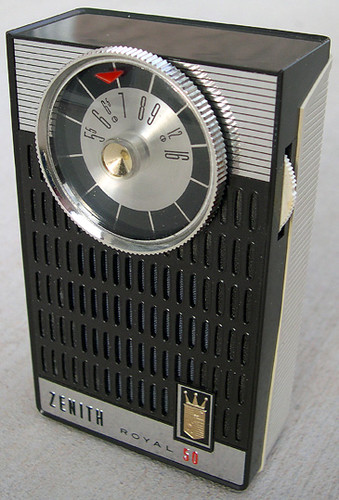
 Growing up in western New England, the transistor radio would impact my life and career. Radio has been in my blood as long as I can remember, but it would be my Zenith transistor radio that would first allow me to explore new stations, new music, new personalities and new ways of delivering content without the supervision of my parents. My transistor radio and ear piece would make me the master of my own radio dial.
Growing up, it seemed like most radio markets had two radio stations battling for the teenage ear. WPTR and WTRY out of Albany, New York’s capital district would be mine. Each of those radio stations would bring their mobile studios to our county shopping center and broadcast LIVE. It was such a thrill.
Hartford had WDRC and WPOP. Boston had WMEX and WRKO. Philadelphia had WIBG and WFIL. Chicago had WLS and WCFL.
New York City would finally be a battle between WMCA and WABC for the Top40 crown in the Big Apple.
What made traveling around in my folk’s car so exciting was that each of these radio markets and radio stations were special and different. The personalities, the promotions, the station jingles and yes, even some of the music was unique to each station and market. Local and regional bands could be heard hoping to be discovered and go national with their music.
Radio stations all did music research back then and printed weekly surveys charting how the hits were doing from week to week with local listeners.
That was then, this is now. Larry Rosin at Edison Research says that today “virtually no radio stations perform formal research for music among teens nor target teens directly in their marketing strategy.”
I’ve sold “old people radio formats” where the presentation was quick to point out that what advertisers should be focused on is not the age of the audience but the amount of money they control and have as discretionary to spend as they wish.
I’ve also sold “young people radio formats” where we pointed out that kids are the masters of convincing their parents and grandparents to get them anything they wanted, so please don’t focus on how young they are. I mean once my boys were out of the house, I no longer went to Mickey D’s and ordered “Happy Meals.” (That made me very happy!)
Radio has always focused on the “family reunion demo” aka 25-54 adults; though that demo is shifting upwards with the aging baby boomers to 35-64 adults.
When Radio Disney was born and focused on little tykes, it appeared there was now a radio operator ready to pick up the torch for young people listening to radio. But then radio was shocked the day Disney announced it was selling all but one of its owned and operated Radio Disney stations. Radio Disney basically operated on AM radio. AM radio is no longer used for music listening by the public and so was Disney just abandoning AM radio for FM radio? No. Radio Disney had established a strong beach front on two audio delivery mediums; SiriusXM and online listening. (It also benefits from the Disney TV Channel on cable, satellite and streaming via the Net.)
It should also be noted that around the time Radio Disney was coming into existence that the radio ratings company known at that time as Arbitron began to measure listening audiences down to age 6+ with their new PPM device where as the diary previously only measured “adults 12+.” When Nielsen bought Arbitron and rebranded the radio ratings service Nielsen Audio it kept the 6+ listening metric. Nielsen also now is trying to establish a listening service that will measure all audio listening consumption across all platforms. Can you see where this is going?
Radio listening is a habit. My father never acquired it. I was raised on it. My sons were raised on it. But I see my grandchildren are holding iPad-like devices and easily navigate their parents’ iPhones.
You would have thought that with more radio stations on-the-air in America than at any time in history there would be more variety than at any time in our history, but that’s not the case. There’s actually less variety.
After launching two Smooth Jazz formatted radio stations and falling in love with the artists and their music I now can only hear this music streamed online. So like my grandchildren, I’m forming a listening habit that doesn’t require a radio; just my iPad or iPhone.
I believe the future is going to be all about being the best at something, not necessarily garnering the most people. Radio was always about getting the most ears. Everything was based on CPP (cost per point), but in a world of infinite choice, the best will dominate.
Radio can play in this world if programming is turned back over to people who program their passions to others just like themselves.
Steve Jobs made Apple into the world’s most valuable company by focusing on design (in radio, that’s programming) and making products that he and his team wanted to have for themselves (building a radio station that you not only own, but love to listen to yourself).
Radio is either going seize the day or have a seizure.
 Today in America there are more radio stations on the air than at any time in its almost 100 year history. More radio stations are taking to the air every day. That’s a good thing, right? I would argue it’s not.
 When radio was first introduced, to listen to it, you needed to wear headphones. Radio was one-to-one and very intimate. As the technology evolved the radio speaker would change the medium from one-to-one to group listening. Radios were expensive. If you owned a radio you shared it. A family would gather around the radio and listen together. Families would transfer this together media habit to TV and the transistor radio would become the refuge of teenagers who wanted to go in a different direction.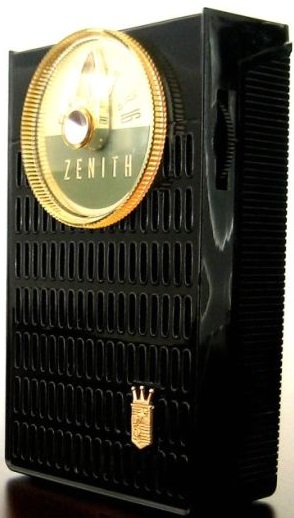



 DickTaylorBlog