
Tag Archives: Fred Jacobs

What’s In a Name?

34In his play Romeo & Juliet, William Shakespeare wrote “A rose by any other name would smell as sweet.” Gertrude Stein in her 1913 poem Sacred Emily wrote “Rose is a rose is a rose is a rose.” It is one of her most famous quotes and has been interpreted to mean “things are what they are.” In other words, the fact that simply using the name of a thing invokes the imagery and emotions associated with it.

Podcasting

Which brings me to a follow-up on last week’s blog post “Podcasts & Homework.” This past week, Jacobs Media Strategies in their blog asked the question “Is the Name ‘Podcasting’ Hurting the Medium’s Growth?”  Jacobs’ resident podcaster, Seth Resler, said there are basically two types of people: “Those who think the word ‘podcasting’ is preventing the medium from reaching its full potential, and those who think that idea is silly.”

Where Did the Name Podcasting Come From?

The term “podcasting” came from a portmanteau of the words broadcasting and the Apple device known as the iPod. The iPod was the first device to make using MP3 files simple and easy to download, organize and use. Its ubiquitous use made it the name people used for all such devices, much like Kleenex came to represent all tissues and Xerox came to represent all paper copies.

Is Podcasting the Correct Name For This Type of Content Delivery?

The debate is whether a name that is so tied to a device, the iPod, and to a single company, Apple, a good thing? Well, if you own an iPhone, you now have an App for podcasts. Likewise if you own an Android phone you also have many Apps for listening to podcasts. So the Alphabet Company isn’t fighting the use of the term on their platform. The name podcast is also the way the big internet content aggregators like Pandora, TuneIn, Stitcher and others refer to this type of programming.

As I read through the various comments from the podcasting gurus Seth had put the question to, one concept seem to rise above the others and that was podcasts were really “On Demand Audio.” They are the TiVo of audio. (TiVo is the digital video recorder that allows people record and watch video content on demand.)

What’s the dictionary say?

David Plotz, CEO of Atlas Obscura and co-host of Slate’s Political Gabfest said in Seth’s blog post


“Podcasting is (a) dreadful name. No one uses iPods anymore. Podcasts are not broadcast. The only part of the word that’s accurate is the ‘ing.’”


So that got me to thinking about what Merriam Webster had to say about this. Turns out that the word “casting” is defined as “1: something (as excrement of an earthworm) that is cast out or off. “ Depending on what your experience has been with either broadcasting or podcasting, you might think old Webster got it right with the excrement part. So “casting” is appropriate in the name “podcasting.” But how about the “pod” part?  If you remember, the theme that was heard over and over being said by the gurus in Seth’s blog was that podcasts were really “On Demand Audio.” So, if the “pod” were to stand for “Programs On Demand,” then the word Podcasting is absolutely the perfect word for this type of programming.

Radiotelephone License

And since most people who listen to podcasts, do so on their mobile phone, that signal is arriving through the ether, just like radio and television signals do, to your mobile device.

In fact, my very first FCC 3rd Class Operators License was called a Radiotelephone license because when this whole wireless communications world was born, no one knew what it would become. Initially some, like Nathan B. Stubblefield, felt it would be one-to-one wireless telephony. Others, like David Sarnoff and Edwin Howard Armstrong, would see it as a one-to-many form of communication that would become broadcast radio.

 

Leave a comment

Filed under Education, Mentor, Radio, Sales, Uncategorized

Jacobs’ Four Questions

15Fred and Paul Jacobs are prolific bloggers; they blog five days a week. Recently, their blog asked four questions about the future of radio. I found them interesting and thought I’d give you my answers to their questions. I’ve provided a link to their original blog post here.
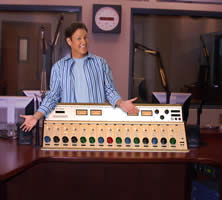
  1. What is radio? I guess I’d have to say my earliest exposure to radio was of the amplitude modulation kind; AM radio. My first radio was a Zenith transistor AM radio with a single earphone. In junior high school, I would build an AM & FM radio station in the basement of my parent’s home and broadcast to my neighborhood. When I went to the FCC field office in Boston to take my FCC license exam when I was in high school the license I would receive said “Radio Telephone Third Class Operator Permit (Restricted Radiotelephone Certificate).” I remember thinking the day I received it, “Why does it say telephone on it?” Nathan Stubblefield, a Kentucky melon farmer and inventor, invented the first radio (many would say). Nathan invented it because he wanted to be able to talk to his wife at home while driving his car. Maybe Nathan and the FCC were just ahead of their time, for today RF goes through the air to our smartphones giving us the ability to send and receive voice, pictures, and data. Today’s pocket computers – smartphones – have synthesized every form of mass communication into a single device. When Apple was putting together the launch of their Beats 1 stream, Zane Low said they spent three months trying to come up with a name to call what they were about to launch. They couldn’t come up with a better name than radio. And that’s what I find teaching at the university. My students basically call everything audio sourced “radio.” Every semester when I poll my students as to what media device they would keep, if they could only keep one, the overwhelming winner is their smartphone. The reason is simple; it allows them to do everything while every other media devices can only do a single application or two. The History Channel did a program on the 100 Best Inventions of all time. Radio was number two. The smartphone was number one. Today’s smartphone is the “transistor radio” of my youth.
  2. What are ratings? I’m a graduate of the Roy H. Williams Wizard Academy and Roy believes that any radio station with about thirty thousand listeners has more than enough to drive business for any advertiser. So what’s the defining measure of a radio station? The quality of the content of its advertising. Ratings were only created for one purpose, to sell advertising. Initially a concept called “applause cards” was used by radio operators. These were simple post cards that could be picked up by consumers at local retailers, filled out, and mailed in. The Association of National Advertisers would hire Archibald Crossley to create a way to discern what people were actually listening to on the radio. Crossley would produce reports from his Cooperative Analysis of Broadcasting (CAB) system. CAB used telephone recall much like Tom Birch did with his Birch Ratings reports. Today, everyone’s hung up on the measurement systems of clicks and clacks of the Internet. Ad Blocking is going to put a real dent into this system that really doesn’t tell advertisers what they wanted to know anyway. The simple fact is no one is measuring what counts. Great creative content gets results and radio needs to invest in employing dedicated copywriters once again.
  3. What is content? I wrote a whole blog post on content that went viral. I won’t re-plow that ground again in this post. If you’d like to read what I wrote, go here.
  4. What is in-car entertainment? I remember when buying a car, one of the options was adding a rear speaker to your AM radio for passengers riding in the back seat. Those were simpler times. I’ve lived through every new device that was going to be the death of radio in the car: 8-track tapes, cassette tapes, CB radios, CDs, CD changers, MP3 players, smartphones, streaming audio. Nothing has. However, the new digital dashboards appear to be so complicated, I fear for the folks who could never stop the blinking 12:00 on their VCRs. The new learning curve to find the radio on new cars might be a problem. My Honda Accord has lots of digital components to my entertainment system, but what I love most is Honda left the volume control knob I can turn. Rick Dees loves rotary pots on his control consoles and will not work a board that has slider pots. 19Crank it up means turning a knob. Radio people are going to have to make sure their car dealers demonstrate, or even set-up for their new car customers, how to find and lock in their local radio stations on these new digital dashboards. If the radio listener can easily find their favorite hometown companion, then they will default to what they know and love best. The reason radio has retained over 92% of its listeners is because all those new media devices mostly took out the new media device that came before it. Free over-the-air radio is unique and special. Let’s all work to keep it that way.

And so that’s my take on Fred and Paul Jacobs “Four Questions for Radio.” What are yours? Please share them with me by writing them into the comment section of this blog. I can wait to read what you have to say.

13 Comments

Filed under Education, Mentor, Radio, Sales, Uncategorized

Radio’s Challenge

David Goldberg pa1ssed away on Friday, May 1st at the age of 47; too soon to be sure. He was an Internet radio pioneer having created LAUNCHcast in 1999 which evolved into Yahoo! Music Radio. Until his passing he was CEO of SurveyMonkey and he was married to the Chief Operating Officer of Facebook. He was very savy about our Internet connected world.

Brad Hill in RAIN wrote that in 2005, Goldberg was the RAIN keynote speaker. To put his words into perspective, you should know he spoke just before the iPhone was first launched. For it was the iPhone that really launched what we now refer to as the smartphone and mobile music revolutions, that would provide Pandora with its launchpad. Hill wrote that Goldberg said:

“We hope that 10 years from now almost no one is accessing Yahoo services on a PC. It needs to be in my living room, in my car, on my cellphone. This will affect the change in replacing the CD, as well as moving music off of broadcast radio which is also what we believe will happen.”

Fast-forward to Pandora’s latest earnings call and Hill reports that Pandora execs said:

“We really want to replace broadcast radio for music discovery. We believe music will migrate off of terrestrial radio to the services we are offering because we can deliver the music consumers want, when they want it, where they want it. CDs will be replaced by on-demand subscription services. ‘Personalization’ and ‘community’ features will be key ways we’ll be able to deliver the right music to people at the right time, on devices, on a global basis.”

And Pandora is not alone in this quest. Spotify recently reported a market cap more than twice that of Pandora’s in the neighborhood of $8 billion to pursue their quest of being the world’s music provider. (Contrast that to America’s largest radio group iHeartMedia $20+ billion in debt.)

The world is also watching Apple. It made a $3 billion acquisition of Beats and is working on its iTunes streaming audio product. More about Apple in a moment.

Then Fred Jacobs authors a column talking about “Moodstates.” Jacobs’ latest Techsurvey continues to find how much emotion plays a role in broadcast radio listening. Jacobs writes:

“While consumers enjoy hearing their favorite songs, personalities, and information, mood plays a role why they continue to come back to AM/FM radio stations. In our research, it is often in the form of companionship, mood elevation, and escape.”

I’m a big fan of Rewound Radio and their weekly Saturday feature “The DJ Hall of Fame.” What I’ve personally found is that I’m not so enamored with just listening to old tapes of radio broadcasts from the 60s & 70s – I can hear this music anywhere, including my own CD library – but hearing the air personalities that provided me with hours of companionship, mood elevation and escape. And I’m not alone in feeling this way. I’m a member of a couple of DJ groups on Facebook and we all experience these same emotions.

This fact evidently hasn’t been lost on Apple. Apple has been raiding the talent at the BBC. Zane Lowe was their first hire. Lowe is known as a trend-spotter. He’s also a presenter (they don’t call them disc jockey’s in jolly old England) that builds a strong rapport with his listeners. At least three more folks from this BBC talent tank have announced they are joining Lowe at Apple.

Unlike Pandora or Spotify, it appears that Apple plans to put the personality into their streaming. Could Apple be the first to do for today’s generation what Dan Ingram, The Real Don Steele, John Records Landecker, Bob Dearborn, Ron Lundy etc did for my generation? Put the personality front and center in music presentation?

Horizon Media undertook a comprehensive study on the impact mood plays in effective audio advertising. As the results of what they’ve learned are implemented, the placement of those advertising dollars under Horizon’s control will be affected.

Back to Goldberg’s 2005 RAIN Keynote, he predicted that over-the-air radio would be reduced to a mostly-talk medium.

            “We don’t believe music will continue to be broadcast on analog radio,” Goldberg said.

A survey that I conducted with the 300 radio stations in Kentucky showed that local radio stations planned to take their talk programming more locally originated and less national syndicated talk. It also showed that no local music research was being done, but that national charts were being relied upon along with consultants and music programming service providers.

All of this comes at a time when the CEO’s of public radio companies report they’re facing strong headwinds on their advertising revenues. Radio is being attacked from all angles.

Not since the introduction of television back in the 50s has the radio industry faced such a big challenge. We are living in revolutionary times in the communications industry.

Commercial radio is 95 years old. When television presented its challenge it was only in its 40s. Still a young medium with lots of new blood entering its doors with a vision for a new kind of radio.

Boss Radio was born on 930AM-KHJ in Los Angeles and News Radio was born on 1010AM-WINS in New York City both in 1965. But even the new radio formats that were born in that era are now 50 years old.

I challenge my broadcast students to create the radio that will be meaningful for them and their generation. But for those students to have that chance, the owners of radio stations will need to open their doors and let them innovate.

Will radio pick up the challenge?

1 Comment

Filed under Education, Mentor, Radio