

It’s human nature to wonder about how our world will change and most times, what we think will change or maybe what we worry might change, doesn’t.
So, why do we do this?
Most likely because we all want to know what the future will bring and this is why fortune tellers are still in business or why we watch The Weather Channel. It’s definitely not because they always get it right.
What’s Going to Change in 10 Years?
I just finished listening to Bob Pittman, CEO of iHeart, on the Borrell Local Marketing Trends podcast on how radio will change in the years ahead. Gordon Borrell and Corey Elliot wanted to know “how radio will remain unique over the next 10 years, whether its dependence on advertising revenue might need to change, and whether we should be calling it ‘radio’ at all.”
What was his answer? Well you can listen to the podcast HERE, if you really want to know. But I can save 23-minutes and 15-seconds of your time by telling you it doesn’t matter what he said, because he’s probably wrong, and that’s OK, because no one will remember what he said a month from now.
What’s NOT Going to Change in 10 Years?
I remember reading that Jeff Bezos said people constantly asked him the “change in 10 years question,” and he said the question they should be asked is “what won’t change in 10 years.” Both Bezos and the brilliant investor, Warren Buffett, believe this is a very important question you should be asking yourself about your business or industry.
“When you have something you know is true, even over the long term, you can afford to put a lot of energy into it,” says Bezos.
Radio Personalities
Over the Labor Day holiday weekend, Rewound Radio presented the sound of classic Chicago Top 40 radio with air checks of WCFL (Super CFL) and WLS (The Big 89 – The Rock of Chicago).
When I was growing up both of these radio stations greatly influenced me and were responsible for creating the desire to make radio my lifelong career.
Listeners to this special Labor Day Weekend presentation on Rewound Radio said they loved hearing their favorite radio personalities once again.
The program was not broadcast over any AM or FM radio signal, but was only streamed on the internet to a worldwide audience.
In fact, this past July 2022, more people watched their favorite programs by streaming them versus a cable TV subscription. Streaming, says Nielsen, is now “the most popular way to consume content.”
The one thing that Bob Pittman did share in his Borrell interview worth noting, was that in focus groups people didn’t call our medium, “radio.” They called what they listened to by the station’s brand, as much as we don’t refer to our mode of transportation as a “car”, but as a Ford, Chevy, Honda etc.
So, having a unique brand for your radio station is very important. The one unique brand every radio station in America has are its FCC call letters, like WCFL or WLS.
Dan Mason

Dan Mason was recently inducted into the Broadcasting & Cable Hall of Fame 2022. Dan said he grew up in Louisville, Kentucky listening to Cawood Ledford, the voice of the University of Kentucky sports for decades. It was Cawood that created the desire in Mason to be on the radio and he never pictured himself in the executive suite. But Dan Mason would rise to the president and CEO of CBS Radio, which he retired from at the age of 64.
Upon retiring that position, Mason quickly return to his first love, that of being on the radio and broadcasting sports play-by-play.
Dan Mason believes that great radio depends on two things: 1) community & companionship for the listener, and 2) having integrity.
For the listener, both of these are created, and earned, by the radio station’s air personalities.
And that’s something that’s never going to change.

 I hope you are enjoying this holiday weekend celebration of America’s independence 244-years in the making.
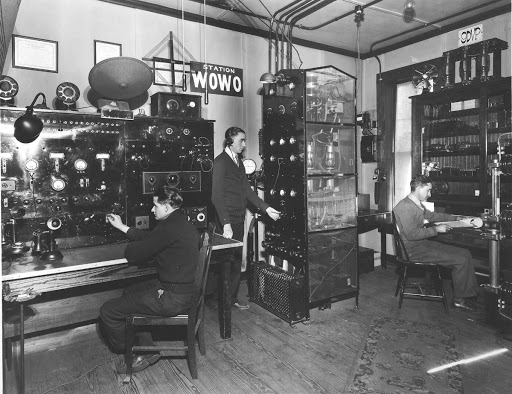 joyous time for the staff and management at that radio station. It was only four years earlier that WOWO signed on the air for the first time in its storied broadcast history, March 25, 1925.
 It was a joint venture between Texas Instruments and Regency Electronics that would produce the world’s first transistor radio, the TR1, in 1954. However, it wasn’t until three years later when SONY would introduce its smaller and cheaper TR-63 transistor radio that this new communication device would become the 1960s/70s mass market success story.

 The successful television sitcom “Seinfeld” debuted on the NBC television network. The show “about nothing” ran for nine years and has grossed more than $4 Billion, making it the most profitable half-hour television program in history.
 Each new generation of technological development has moved media consumers away from traditional broadcast radio’s position as the leader for reaching the masses with new music, news and cultural trends.
 It was the radio commercial that planted Motel 6’s “We’ll keep the light on for you,” in your brain. The frequency and repetition of that phrase, along with a well-crafted and ever changing script always kept you wondering what
  I remember how a weekly fax changed my radio life. It was called the “Monday Morning Memo,” and it was written by a guy in Texas by the name of Roy H. Williams.
 This past Tuesday, September 11, 2018, America remembered the 17th anniversary of the 9/11 attack on America in New York City, Washington, DC and Shanksville, Pennsylvania. My class at the Wizard Academy was supposed to have 29 students. Only four of us showed up: Dr. Kevin Ryan, a famous writing coach from Utah; Chet Young, a big salesman with a booming voice from Burlington, Iowa; Akintunde Omitowoju, a senior programmer of Nintendo games from Kyoto, Japan and me, a radio station general manager from Atlantic City, New Jersey.
 Want to make your radio station more effective for your advertisers and more engaging for your listeners? Then do those things that will not change for effective radio in ten years.
 I read a recent article in

 Jeff Bezos’
 DickTaylorBlog