Tag Archives: Roy H. Williams

It’s Another Fine Mess

62“Well, here’s another nice mess you’ve gotten me into.” Variations of this line were always a part of Laurel and Hardy movies. In fact, the pair made a film in 1930 with the title “Another Fine Mess.”

A couple of weeks ago I wrote about things I had learned at the Radio Show 2016 in Nashville and one of those things was about “sharing your messes” during a presentation I attended given by John Bates. What I will share today are some of the points John made amplified by my own personal experiences in the classroom and on the job.

3 Ways to Inspire & Connect

John said there are three ways to inspire and connect with people or an audience. Logic is not one of them. We are emotional creatures and to engage people you first need to touch them emotionally. I know from my sales training from the Wizard of Ads – Roy H. Williams – that you first must touch a person’s heart before you will win their mind and their wallet to buy whatever it is you’re selling.

John next said our human eyes are unique. We are the only living creature that has white in our eyes. We always know where a person is looking (or not looking). Our eyes enable us to better cooperate with one another.

Our conspicuous eyes mean we can immediately sense authenticity when dealing with others.

Your Message is Your Mess

I don’t know about you, but over my career I’ve learned that success teaches you very little. It’s our screw-ups that are the great teacher of life’s lessons.

When things are going great, the natural impulse is to not do anything to screw it up.

Likewise, when teaching another person, only sharing your successes imparts very little knowledge. However, when you share the things that went wrong, and how you learned from these little disasters, and how you changed course to not have something like that happen again, real knowledge is shared.

Les Brown puts it this way: “People don’t connect with your successes; they connect with your messes.”

Life’s real knowledge message is in your mess.

Let Me Tell You about the Time I Screwed-Up

My students tell me that how impactful my sales lectures are when they contain stories about the things I did wrong, learned from and grew from, by messing it all up.

Wow, they say, a teacher that doesn’t know it all, that makes mistakes and became a better person through failure. It lets them know that failure isn’t fatal and can provide some benefits.

I vividly remember the time a new hotel came to town and I went in to see the new manager spewing facts and figures a mile a minute. I had thoroughly prepared for the meeting and I was there dumping all of my prep on his head. The only problem was, I had not touched this new manager on a emotional level and I never asked him what he wanted to achieve. I would be the only media property to not be on the initial buy.

I went back to see the new manager, hat-in-hand, to find out what I did wrong. I’m grateful that he would share with me why I wasn’t bought. Turns out, I was such a fast-talker he figured me to be the conman in the group of media sales people who had initially come to call on him. What he quickly learned was, I knew my stuff and that we should work closely together going forward. It was my first impression that needed working on, he would tell me.

I would learn that when you meet someone for the first time, you need to not “spill all your candy at the door” but shut-up and listen first. Establish common ground and build rapport on which a solid relationship can be built upon.

Losing that sale taught me a valuable lesson that would greatly improve my new radio sales career.

Make a Difference

So don’t be afraid to share yourself with others. Let them in and show them you’re human.

My sales mantra when calling on a new business was always make a friend. People buy from people they know and like. They buy from their friends.

People who listen to the customer, define how success will be measured and make a difference will never have to worry about making a sale.
 

7 Comments

Filed under Education, Mentor, Radio, Sales, Uncategorized

Radio Creates Traffic

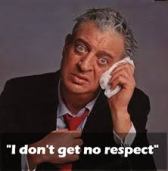
51Radio is like the Rodney Dangerfield of media; it doesn’t get any respect. Ask any business owner what form of advertising is best and they will almost always respond “word of mouth.” Hard to argue that position. Well, radio is really word of mouth communication with a really big mouth.

Last week I wrote an article titled “Don’t Let Radio End Up Like Yahoo!” The whole point of the story was that radio has the power to make things happen; to create traffic, be it in-store or online.

Google Analytics & The Great Oz

TechCrunch published a great article on “How Google Analytics Ruined Marketing” that a good friend of mine sent to me. It’s a long, but excellent read. It left me thinking how Google is like the Wizard of Oz. The Great Oz wasn’t as great as the people in the Emerald City made him out to be. But the wizard was very good at distraction. While everyone was staring at the huge face and the smoke and flames that billowed from below it, Oz took everyone’s eye off of reality.

Google Analytics is like that. It created a whole new bunch of buckets to measure people’s online marketing effectiveness. Except it really doesn’t tell you what you really need to know and that is WHY things happened. If people began searching for your business or product on Google or clicked on your ad on Facebook, you haven’t a clue as to what caused them to do that.

Marketing Channels vs. Marketing Strategies

Radio is a marketing channel. TV is a marketing channel. Newspaper is a marketing channel. But in the digital world, those channels are called social media marketing and search marketing; only they really are not. Facebook, Google, and all the rest are just another marketing channel. You need to develop a marketing strategy first and then deploy it on marketing channels.

What Google Analytics Misses

Google Analytics traps business owners and advertising agencies into thinking that it measures everything in their marketing strategy. It doesn’t. It only measures online activity. It completely misses how radio, TV or any of the mass media are having an impact.

It’s All About the Message

I’m a disciple of The Wizard of Ads, Roy H. Williams, who has long preached there really are no bad marketing channels only bad messages. Roy prefers the power of radio and its ability to deliver word of mouth advertising with the longer lasting results of echoic retention. Roy uses the example of eye witnesses vs. ear witnesses. Police often find that everyone saw something different when then go around interviewing witnesses but when it comes to what they heard, they all pretty much agree on that.

Consumer Behavior

Back when gas prices were high and the great recession was beginning, a story in New Times Magazine told of how America’s love affair with the automobile was over. Car sales were in the tank and the United States had to bailout General Motors.

If you were an auto dealer advertising on the radio, you probably were telling your account executive how their radio station wasn’t working.

Fast-forward to 2015 and auto/truck sales just recorded their best year ever in a single year.  Oh and it just so happens that gas prices plummeted and the great recession was mostly over.

If you were an auto dealer advertising on the radio, you probably were telling your account executive their rates were too high and you didn’t need to advertise as cars were flying off the lot.

We Buy With Our Emotions

People buy on emotion and then justify their purchase with logic. That’s never going to change. People buy stuff to make themselves feel good.

Google Analytics measures the activity in the action channel of marketing. It doesn’t measure what got people all emotionally fired up in the first place.

Google’s Getting Your Credit

When I started selling radio advertising, it was long before the internet and Google. Back then when we advertised something for a retailer on the radio, people would come in and say they read about the item in the newspaper.

History doesn’t repeat but it rhymes and so today the newspaper has been replaced by Google search. Now with the free Google Analytics tool, retailers and ad agencies can measure the power of their “digital marketing” and show you how their SEO worked magic. Except the reason anyone did the search in the first place was because they heard about it on the radio.

Radio & Rodney

Which brings me back to where I started, Radio & Rodney “don’t get no respect.”

The Question You Should Be Asking

Samuel Scott says in his TechCrunch article that the question you should be asking is this:

“How would you market yourself if the Internet didn’t exist?

Answer that, and it’ll help your online marketing too.”

16 Comments

Filed under Education, Mentor, Radio, Sales, Uncategorized

Jacobs’ Four Questions

15Fred and Paul Jacobs are prolific bloggers; they blog five days a week. Recently, their blog asked four questions about the future of radio. I found them interesting and thought I’d give you my answers to their questions. I’ve provided a link to their original blog post here.
  1. What is radio? I guess I’d have to say my earliest exposure to radio was of the amplitude modulation kind; AM radio. My first radio was a Zenith transistor AM radio with a single earphone. In junior high school, I would build an AM & FM radio station in the basement of my parent’s home and broadcast to my neighborhood. When I went to the FCC field office in Boston to take my FCC license exam when I was in high school the license I would receive said “Radio Telephone Third Class Operator Permit (Restricted Radiotelephone Certificate).” I remember thinking the day I received it, “Why does it say telephone on it?” Nathan Stubblefield, a Kentucky melon farmer and inventor, invented the first radio (many would say). Nathan invented it because he wanted to be able to talk to his wife at home while driving his car. Maybe Nathan and the FCC were just ahead of their time, for today RF goes through the air to our smartphones giving us the ability to send and receive voice, pictures, and data. Today’s pocket computers – smartphones – have synthesized every form of mass communication into a single device. When Apple was putting together the launch of their Beats 1 stream, Zane Low said they spent three months trying to come up with a name to call what they were about to launch. They couldn’t come up with a better name than radio. And that’s what I find teaching at the university. My students basically call everything audio sourced “radio.” Every semester when I poll my students as to what media device they would keep, if they could only keep one, the overwhelming winner is their smartphone. The reason is simple; it allows them to do everything while every other media devices can only do a single application or two. The History Channel did a program on the 100 Best Inventions of all time. Radio was number two. The smartphone was number one. Today’s smartphone is the “transistor radio” of my youth.
  2. What are ratings? I’m a graduate of the Roy H. Williams Wizard Academy and Roy believes that any radio station with about thirty thousand listeners has more than enough to drive business for any advertiser. So what’s the defining measure of a radio station? The quality of the content of its advertising. Ratings were only created for one purpose, to sell advertising. Initially a concept called “applause cards” was used by radio operators. These were simple post cards that could be picked up by consumers at local retailers, filled out, and mailed in. The Association of National Advertisers would hire Archibald Crossley to create a way to discern what people were actually listening to on the radio. Crossley would produce reports from his Cooperative Analysis of Broadcasting (CAB) system. CAB used telephone recall much like Tom Birch did with his Birch Ratings reports. Today, everyone’s hung up on the measurement systems of clicks and clacks of the Internet. Ad Blocking is going to put a real dent into this system that really doesn’t tell advertisers what they wanted to know anyway. The simple fact is no one is measuring what counts. Great creative content gets results and radio needs to invest in employing dedicated copywriters once again.
  3. What is content? I wrote a whole blog post on content that went viral. I won’t re-plow that ground again in this post. If you’d like to read what I wrote, go here.
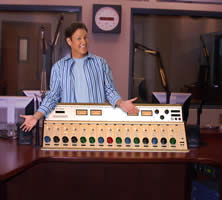
  4. What is in-car entertainment? I remember when buying a car, one of the options was adding a rear speaker to your AM radio for passengers riding in the back seat. Those were simpler times. I’ve lived through every new device that was going to be the death of radio in the car: 8-track tapes, cassette tapes, CB radios, CDs, CD changers, MP3 players, smartphones, streaming audio. Nothing has. However, the new digital dashboards appear to be so complicated, I fear for the folks who could never stop the blinking 12:00 on their VCRs. The new learning curve to find the radio on new cars might be a problem. My Honda Accord has lots of digital components to my entertainment system, but what I love most is Honda left the volume control knob I can turn. Rick Dees loves rotary pots on his control consoles and will not work a board that has slider pots. 19Crank it up means turning a knob. Radio people are going to have to make sure their car dealers demonstrate, or even set-up for their new car customers, how to find and lock in their local radio stations on these new digital dashboards. If the radio listener can easily find their favorite hometown companion, then they will default to what they know and love best. The reason radio has retained over 92% of its listeners is because all those new media devices mostly took out the new media device that came before it. Free over-the-air radio is unique and special. Let’s all work to keep it that way.

And so that’s my take on Fred and Paul Jacobs “Four Questions for Radio.” What are yours? Please share them with me by writing them into the comment section of this blog. I can wait to read what you have to say.

13 Comments

Filed under Education, Mentor, Radio, Sales, Uncategorized

The Future of Ad Supported Media

I’ve just finished reading Thomas Piketty’s book “Capital in the Twenty-First Century,” which I highly recommend everyone read, and Piketty stops me cold on page 357 with this graph (see below). I’ve highlighted in yellow two things for you to take note of. In a moment I’ll explain why this hit me so hard.

This same week, I was reading Seth Godin’s blog post “Mass production and mass media” where he explains that mass media exists because it permits mass marketers to do their job and how mass media is going away. If you’re in radio or TV, that kind of proclamation will get your attention; BIGTIME.

Godin is predicting that the “mass” part is what’s going away and that it is being replaced by “micro.” In essence that it’s better to be important to a few than be irrelevant to the many.

Then this article appears in AllAccess “Radio’s Dying…But The Cause Isn’t What You Think.” Seth Resler writes that radio isn’t going to die because it has been abandoned by listeners, but it’s going to die because it’s been abandoned by advertisers. Resler goes on to make the case that advertising is moving away from the Mad Men era art form that it was, towards a keyword and search scientific algorithm metric of today.

“…there has been little doubt for more than a decade that the advertising model that traditionally supported an industrial-age news and information system is evaporating,” writes Anderson, Bell and Shirky on pages 11-15 in “Post-Industrial Journalism: Adapting to the Present (2012)”

Mark Perry, blogging at the American Enterprise Institute writes: “The dramatic decline in newspaper ad revenues since 2000 has to be one of the most significant and profound Schumpeterian gales of creative destruction in the last decade, maybe in a generation.”

Well, I’m here to have you consider a 3rd possibility, one that stopped me in my tracks as I was reading Piketty’s book. Now, I may be putting words in Professor Piketty’s mouth when I tell you what I’m about to say. Piketty did not write about radio or TV, or mass media in general in his book. He writes about wealth inequality in our world from antiquity to the present day and then makes some predictions about where things are headed based on current trend lines.

But this graph on page 357 haunts me.

Picketty Chart on page 357

That graph, from the period of 1913 to 2012 includes the period in which radio and television were born. It’s the era when advertising supported media took off. I worked the last forty years of that graph in the radio business and experienced the change in business that this graph shows.

Commercial radio was born in 1920. Commercial TV took-off in the 1950s. And I quite agree with Seth Godin when he writes “Mass production, the ability to make things cheaply, in volume, demanded that we invent mass marketing – it was the only way to sell what was being made in the quantity it was produced. Mass media exists because it permits mass marketers to do their job.” To which I would add to Seth’s thoughts that mass media and mass marketing both existed because there was a strong American middle class of consumers.

If Piketty is correct, the concept of a middle class consumer economy that existed between 1913 and 2012, was an anomaly. It didn’t really exist anywhere in the world before 1913 and it’s very likely not going to exist anywhere in the world as we journey away from the year 2012. The middle class consumer economy will evaporate and along with it, advertiser support for mass media.

1913-2012 was a unique period in world economic history. It gave birth to consumers who had money to spend, mass production that could produce lots of goods and mass media that could advertise those goods. All three were simultaneously occurring at the very same moment.

The new buzz words are “shared economy” and “collaborative economy.” What roles will large corporations, universities and mass media play when people are getting what they need from one another?

In 2014, Nielsen Music reported a staggering drop in music sales where as much as a fifth of music buyers didn’t buy anything.   2014 also saw box office ticket sales plunge to their lowest level in three years. The home ownership rate reached its lowest point in 25 years at the end of 2014. More people were now living in shared living arrangements or going back home to live with mom and dad. And NYC Mayor Bill de Blasio appearing on “The Nightly Show with Larry Wilmore” told viewers that:

“The wealth gap in New York City today is worse than during the Great Depression or The Roaring 20s – and the gap is growing bigger. Today over half the people in NYC pay over a third of their income for housing. The reality is, (according to the mayor) if we don’t change course middle class families won’t exist in New York City.”

Are these reports canaries in the consumer coal shaft?

Medialife Magazine, a magazine devoted to media buyers and planners, reported that 2014 wasn’t good for advertising. Total spending was up 3.0 percent, but if you take out political spending and the Winter Olympics, the number shrinks to 1.6 percent. “That’s the worst yearly growth pace since the recession began in 2008,” said writer Bill Cromwell. Traditional media is struggling and according to Magna Global, “this appears to be a lasting trend.”

Only recently have broadcast operators said things like “flat is the new up” when comparing year-over-year revenues. I realize there are exceptions to what I’m saying. Your broadcast property might be one of them. But what are the trends that are taking place and how will they impact you in the years to come?

It took two world wars to re-set the wealth inequality gap and put into place FDR’s New Deal. Changes that have in more recent times been stripped away returning things to the way they were in the 19th Century; a period of time when the concept of a middle class of consumers didn’t exist.

Roy H. Williams, aka The Wizard of Ads wrote recently (Monday Morning Memo, March 2, 2015) about “the shrinking of mass media” and “the growing reality of gender equality.” America went from being 16% single to 46% single in just one generation, Williams writes. “A once-proud nation of families is evolving into a proud nation of individuals.” And Williams sees “The trend toward singleness is sociological (while) the erosion of mass media is technological (as) each trend accelerates the other.”

Williams comes to this conclusion:

“We’re approaching the end of a golden time when courageous advertisers can invest money in mass media and see their businesses grow as a result. My suspicion is that we’ve got perhaps 5 to 7 more years before retail businesses and service businesses will be forced to begin playing by a whole new set of rules. Buy mass media while the masses can still be reached.”

The future of ad supported media is tied to consumerism. Consumerism is tied to having a strong middle class.

Does the Piketty graph on page 357 of his book “Capital” send a chill down your spine like it does to mine?

P.S. Thomas Piketty published an amplification on his r>g theory. You can read that here.

36 Comments

Filed under Education, Mentor, Radio, Sales