Tag Archives: WTOP News Radio

Are we helping or hurting by giving AM radio a piggyback ride on the power of FM radio?

In 1984, when I was hired as a general manager in Atlantic City, New Jersey, Pierre Bouvard was my first sales representative from the Arbitron Company. I’ve known Pierre for forty years and have great respect for him. But his latest research presentation “Nielsen: AM/FM Radio Expands Its Ratings Lead Over TV And Smashing AM/FM Radio’s Drive Time Myth” https://www.westwoodone.com/blog/2024/03/04/nielsen-am-fm-radio-expands-its-ratings-lead-over-tv-and-smashing-am-fm-radios-drive-time-myth/ does something that really troubles me. It combines AM listening with FM listening, as if they contributed equally to radio’s total listening pie. They don’t.

I first wrote about this uneasiness in an article six years ago titled “AM/FM or just FM?” I felt it was worth re-sharing what I wrote as this blog has now broken through the 300,000 views level. I think you will find what I wrote is even more pertinent in the 21st Century.

 AM/FM or just FM?
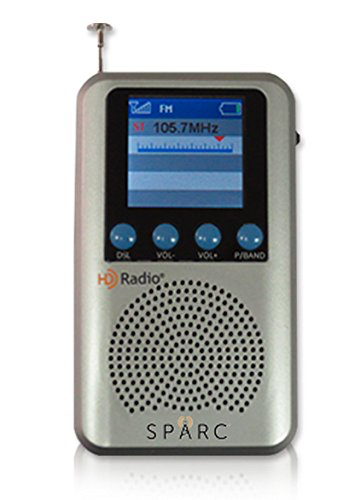
SPARC HD RADIO with FM, but no AM

There’s something that’s been troubling me for some time. It’s the radio industry’s habit of reporting radio listening results by calling it “AM/FM” versus what it really is, virtually all FM radio listening.

Nieman Lab

Who could not be buoyed by this headline from Nieman Lab: “AM/FM radio holds strong for American listeners.” ( http://www.niemanlab.org/2018/07/am-fm-radio-holds-strong-for-american-listeners/ )

But is it true?

When I read the ratings reports from both PPM and diary markets, I see an FM world.

Don’t get me wrong, I grew up on AM radio and recognize that almost every market has a heritage AM radio station that still garners a big audience. I’m not blind to the wonderful ratings of 1010 WINS in New York City for example.

But there are only 26 all-news terrestrial radio stations left in America according to Nieman. This popular format is missing from the majority of America’s radio markets.

WTOP

WTOP was built on AM radio. It moved its entire operation over to the FM band and grew its audience, revenues and lowered its listener demographic. People who never heard this radio station on its AM dial position were suddenly newly minted fans of their all news format.

The FCC Saves AM Radio

The FCC’s mission to save AM radio is to give these radio stations an FM dial position using a translator. What are we really saving? The AM band or a particular format that a radio operator created on the AM band and now, to survive, needs to move it, like WTOP, to the FM side of the dial.

WIP

From my blogging, I get lots of feedback about a variety of things concerning broadcasting. One reader wrote to me about his father, a sports fan, who turned on WIP-FM to hear the latest chatter. WIP-FM was broadcasting a game of no interest to his father, so his son said to him, why don’t you turn on WIP AM610. Sadly, this person wrote the audio was unlistenable. He wrote: “You’d think the FCC would mandate that AM have standards for audio quality in receivers.”

WSM

When I was living in Bowling Green, Kentucky, I couldn’t receive 650AM WSM in my office, even though my office looked south and my antenna was able to enjoy a full wall of windows. The noise floor both inside my university office as well as around town while driving in my car made the station unlistenable. WSM was once listened to all the way to Louisville in northern Kentucky. Instead, I downloaded WSM’s app and could enjoy the radio station in crystal clear stereo. (I see WSM has stopped subscribing to Nashville Nielsen Audio ratings.)

BBC

The British Broadcasting Corporation (BBC) did a review of the range of services it offered on the AM band (called medium wave across the pond) and it included a financial review of all its services too. They concluded the ROI (return on investment) in AM was not there and announced they would be turning off some 13-AM radio stations in January 2018 according to Radio Business Reports.

WHVO

There’s a great radio operator in Cadiz, Kentucky by the name of Beth Mann. WHVO is her AM radio station at 1480, but if you go on her website, you won’t find any mention of this station being on the AM radio dial. It’s promoted as WHVO 96.5 & 100.9 FM. ( http://www.whvoradio.com/ )

Bottom Line

It’s time to face the fact that AM radio needs to be re-deployed for a new service. Current radio station owners should be given a viable FM dial position that replaces their AM service area, and doesn’t require multiple translators to attempt to accomplish this task. (Note: WHVO needs two translators to deliver the signal of its AM 1480.)

It’s time to allow those same dedicated radio broadcasters to sell off their expensive AM tower sites and turn off their AM stations that consume electrical power with no real ROI.

Ecclesiastes 3

“To everything there is a season, and a time to every purpose under heaven…”

AM radio’s time has come and gone as the mass communication delivery system it was from the 1920s to the 1970s, much as radio replaced vaudeville.

To put things in perspective, at a time in America’s radio history when the number of FM signals equaled the number of AM signals on the air, 75% of all radio listening was to FM. So, you can only imagine what it’s like today for AM radio listening.

That’s why I believe we do no service in promoting radio as “AM/FM” and not being honest about where virtually all of the radio listening is really taking place.

Sadly, AM radio is to broadcasting as coal is to power generation. ( https://dicktaylorblog.com/2017/08/20/coal-aint-coming-back-neither-is-am-radio/ ) It was the perfect solution in its day.


11 Comments

Filed under Education, Mentor, Radio, Sales

Use It or Lose It

How important is it to have AM radio in cars if the majority of the people don’t listen to any AM radio stations?

I loved AM radio and my five decades plus career started on AM radio back in the 60s, but if I’m being honest, I can’t remember the last time I listened to any AM radio station, even though both of my older cars have decent AM radios in them – and I’m a “radio guy.”

Can we get real about AM radio’s problems? Mandating AM radio in all vehicles won’t cause more people to listen this radio service.

650AM – WSM

When I worked at Western Kentucky University in Bowling Green, Kentucky, the only way I could listen to 650AM – WSM broadcasting from Nashville, Tennessee was via their stream. My office had a huge picture window that looked south towards the WSM tower site, but the interference from the fluorescent lights and the steel structure of the building made AM reception impossible.

Inviting radio professionals into my Capstone Class to talk about radio, one of those professionals was the program director of WSM who told my students that more people listened to his radio station via the WSM App & stream, than did via their AM 50,000-watt FCC licensed clear channel frequency on the AM radio dial in Nashville.

Monthly Radio Ratings

Every month, when the radio trades publish radio ratings, you’re lucky to find a single AM radio station listed; in market after market. Often you find no AM radio stations listed at all, and on rare occasions you might find two.

If you go deep into the weeds, you might find an all religious station or foreign language AM radio station with a small listener base.

WIIN – AM1450

Back in the early 80s, WIIN-AM1450 in Atlantic City had a news/talk format with a local news team, sports director and even a plane in the sky doing traffic reports during the busy summer tourist season. Its sister FM radio station was 50,000-watt WFPG that featured a beautiful music format. WFPG was rated #1 by Arbitron and WIIN never showed up in the ratings.

WFPG, on the FM band, was fully automated and made all the money. WIIN-AM was fully staffed and lost a great deal of money. The owners of WIIN once said it would be more cost effective to mail the station’s few listeners a news sheet than broadcast the news to them.

AM Radio or AM Programming

Every radio format, once only associated with AM radio – like news or sports programming –today can now be heard on an FM signal.

18-years ago WTOP-AM 1500 moved its excellent news format to FM and yet, do you recall anyone being up in arms that Washington, DC area residents had just been “unserved” with important news and information, because this format moved from the AM band to FM? Quite the opposite, many FM only listeners discovered WTOP for the very first time and became avid listeners.

Revenue wise, WTOP-FM has been the nation’s top billing radio station and has won all the major radio awards year after year. In fact, our nation’s capital is dominated by FM signals. The first AM radio station doesn’t show up until you get to #24 and it only managed a 0.4 audience rating – it also is connected to an FM translator where I’m guessing, the audience is listening.

The reason AM radio formats have moved to the FM radio band is that most people today only listen to FM radio.

I rob banks, because that’s where the money is.

-Willie Sutton, bank robber

Corollary:

We broadcast emergency information on FM, because that’s where the listeners are.

-Dick Taylor

The AM Exceptions

The Big One, 700AM-WLW in Cincinnati is just one of the notable exceptions to the problem with AM radio listening. It operates on what the FRC (Federal Radio Commission, which predated the FCC or Federal Communications Commission) called a clear channel frequency. It was in November 1928, under provisions of the FRC’s General Order 40, that 700kHz was one of 40 frequencies designated as “clear channels”, allowing WLW to operate exclusively on this frequency in both the United States and Canada.

Then in early 1933, WLW would begin building the largest broadcasting transmitter in the world with 500,000-watts of AM broadcast power, at a cost in today’s dollars of $11.3 million. It would sign-on its new half-million watt transmitter on May 2, 1934 with President Franklin D. Roosevelt pressing a golden telegraph key to ceremonially launch the new signal. WLW truly became “The Nation’s Station.”

Saving AM Radio

It seems to me that if AM radio is deemed such a critical service for the nation in times of emergency, maybe it’s time to re-think the entire AM radio band and once again establish a network of high powered AM radio stations that cover the entire continental United States, and are manned 24-hours a day, 7-days a week, providing all Americans with this type of radio service. There could even be a special circuit in all radios that would automatically switch the radio to these emergency channels when warranted; much as cellphones so effectively alert their owners of an impending emergency situation.

Likewise, current local AM stations should be allowed to sunset their AM signals and continue serving their communities via their FM signals (translators), just as they are currently doing, often with much better coverage than their original AM license permits.

Saving AM Radio via FM Translators

Giving AM radio stations an FM translator signal in order to save its AM signal – would be like trying to save Ford by giving everyone a Chevy. It was a ludicrous of an idea that the FCC never fully thought out before implementing.

The FCC was also derelict in its duties by not protecting the AM band from all kinds of noise interference, for example the kind generated by the electronic ballast in fluorescent lighting and by not standardizing AM stereo along with not setting audio quality standards for AM broadcasting.

The “AM Radio in Every Vehicle Act” currently before Congress says nothing about mandating a certain quality standard for AM radio in vehicles, leaving open the possibility that vehicle manufacturers will install the cheapest and lowest quality AM receivers, if such a law is passed?

Longtime agricultural broadcaster, Max Armstrong, loves AM radio, but admits that broadcasters are part of the blame for AM radio’s decline. Some examples are:

  • Sold the land that was needed for strong AM signals, and reduced power
  • Changed the format of their AM station, once they obtained an FM translator
  • Re-allocated resources for areas other than for AM broadcasting
  • Poorly maintained their AM transmitting facilities, in favor of their FM

“When the epitaph is written for AM radio, I think it will be

that AM radio killed itself. I think broadcasters have

neglected it to some extent.”

-Max Armstrong

19 Comments

Filed under Education, Mentor, Radio, Sales

What Is That?

One of my granddaughters, who’s 8 years old, was at our home the other evening, before heading off to dance class, when she looked into my curio grandfather clock and exclaimed, “What is that?” I walked over to her to see what she was pointing at, and saw it was one of my miniature radios. I said to my granddaughter, it’s a radio, to which she replied, “What’s a radio?”

What’s a Radio?

We’ve all probably seen the YouTube videos of young people trying to figure out what a rotary telephone is and how to use it, along with having a good chuckle along the way. But, if you’re a lifelong radio person, like me, having your granddaughter ask you what a radio is, can be rather disconcerting.

My grandkids are all connected to audio sources via their iPads, smartphones and smart speakers. The only place they may even be familiar with a radio is when they ride with their parents in the car.

Saving AM Radio

Last week’s blog was another in a series about the state of AM radio in America and if it could be saved. You can read that article HERE

As the latest monthly radio audience ratings get released, I can’t help but notice how most markets have one big AM radio station – maybe – that’s still a dominant force. In our nation’s capital, there is none.

Recently, seven former heads of FEMA (Federal Emergency Management Agency) said “AM radio serves as a linchpin of the infrastructure behind the federal National Public Warning System, which provides emergency-alert and warning information from FEMA to the public during natural disasters and extreme weather events.” Which made me wonder if our nation’s capital is in severe peril, as AM radio listening is virtually non-existent.

However, fear not, as I’m sure that no one in Washington, DC doesn’t know that WTOP News Radio at 103.5 FM is fully staffed and ready to provide that emergency information 24/7.

AM Radio Formats

The real problem, it seems to me, is that people confuse the AM and FM broadcast bands with a particular format. The reality today is, both commercial broadcast bands are filled with music and news/talk/sports formats. What has been different, for many years now, is more people listen to FM radio stations than they do AM stations; and by a wide margin, with most of that listening taking place in people’s cars and trucks.

Car Radio Listening

Research presented this past week at the NAB Show in Las Vegas says 46% of radio listening by people over the age of 13 only takes place in the car; a number that jumps to 58% for teenagers, according to Edison Research.

The U.S. Bureau of Transportation Statistics says that most people’s car trips are only three miles or less, so they aren’t listening for any length of time.

When asked what they listen to on long car trips, streaming jumped to 68% and broadcast radio fell to 32%.

Today’s Youth & Car Ownership

If radio’s last beachhead is a vehicle dashboard, the future for the next generation and car ownership should also be concerning.

It was only about two decades ago that 80% of American youth (18 year olds) had a driver’s license; today that number has fallen to just 60%. Here’s some of the reasons for the drop:

  • Lyft and Uber take them anywhere they want to go
  • Cost of getting a driver’s license
  • Cost of owning a car
  • Fewer teenagers have jobs compared to past decades
  • Having a car is no longer a “virtual necessity” (which the Supreme Court enshrined in law in 1977 for anyone living in America)

What Do Today’s Youth Do?

Today’s youth have their faces buried in apps and social media. It’s all about Instagram and Snapchat, YouTube and video games.

When you can easily access everything you want, from home on your digital devices, it’s easy to understand why teenagers today have little interest in getting a driver’s license and owning a car.

Digital interaction has replaced real social interaction for today’s youth.

And that’s another fly in the ointment of future radio listening by the next generation.

In my youth, there was nothing greater than putting down the top on my convertible, cranking up the radio and driving off to explore the world in my own car.

“On some nights, I still believe that a car

with the gas needle on empty can run about fifty more miles

if you have the right music very loud on the radio.”


-Hunter S. Thompson

12 Comments

Filed under Education, Mentor, Radio, Sales