
 If someone had asked you, “Where do you see yourself in 5-years?” I seriously doubt anyone could have imagined they would be smack dab in the middle of a global pandemic. But that’s where we find ourselves at this moment in time.
No matter what you may think will return us to the life we had before COVID-19, nothing even begins to change until we have two things: therapeutics to cope with this novel coronavirus and a better understanding of how this dastardly disease can be squashed like a bug. In the meantime, everything else we try is merely a Band-Aid on the problem.
TRUST
A good radio friend posted on LinkedIn a graphic from the Radio Advertising Bureau (source: Kantar 2017) “Trust in News” purporting radio to be the medium, Americans turn to for trust.

Well, we are now half-way through 2020, and I wonder what relevance that this research conducted in 2016 and published in 2017 has in a COVID-19 world. Probably, slim and none.
In fact, the NRRC (Network Radio Research Council) is recommending that all network/national buying and selling be based on the Fall 2019 Nationwide survey, and not those surveys conducted since the start of COVID-19, saying “the impact of the COVID-19 pandemic has caused unprecedented divergence of traditional patterns of media consumption, including AM/FM listening and the streaming of audio.”
If we can take to the bank anything from the world we are living in now, it’s that anything pre-COVID-19 is now FUBAR*.
How COVID-19 Has Changed Our Media Consumption
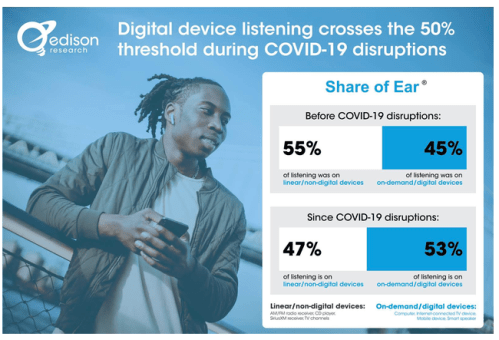
Since the onset of this global pandemic, the home broadband bundle has significantly been changed. Most consumers are adopting a stand-alone broadband service and not bundling it with Pay-TV or home phone or even their mobile phone. Why is this happening? Researchers say with another recession looming, people are watching all of their pennies.
With people working from home (WFH) and driving less, Out-Of-Home (OOH) media has been clobbered. Revenue projections for the Billboard industry show it will be down over 19% in 2020, compared to radio (down 13.7%) and local television (down 12.4%), according to MAGNA. Before COVID-19 hit, OOH was one of the fastest-growing and most stable linear media channels. Zenith thinks that OOH revenue will be down even more, predicting it to be down 25% in 2020.
Nieman Lab writes “Radio listening has plummeted. NPR is reaching a bigger audience than ever. What gives?” And the answer is, 2020 is the year that NPR will make more money from underwriting on its podcasts than it will from its radio programs.
Follow the Money
Local radio is very dependent on Main Street, but Main Street is in the cross-hairs for defaults, bankruptcies and evictions due to COVID-19.
Much like NPR is experiencing with its online products, retailing is becoming an online activity with American consumers. Economists knew that many cities had a retail footprint that was too big for the local consumer economy to support. COVID-19 merely accelerated things.
In fact, COVID-19 has created a quantum leap for e-commerce in 2020. What was projected to take place over years, has been compressed into a few months.
The United States Census Bureau reports that in the second quarter of 2020, e-commerces retail sales in America rose 31.8% from the first quarter and were 44.5% above the same period in 2019. The Census Bureau says that compared to the share of total retail sales, e-commerce sales grew as much in three months as it had over the past five years.
We are living a period of rapid technological change. Columbia Business School economist Laura Veldkamp says, “We are changing the way business is getting done, we’re changing the way we’re shopping and the way we’re eating – we’re changing the way we’re having meetings.” She points out that:
“the pandemic, like the Depression and World Wars I and II, is fundamentally altering people’s tastes. Some businesses will be left behind, as consumers get accustomed to videoconferencing instead of commuting, and buying groceries and other goods online instead of braving stores, malls and restaurants.”
Unemployment Tsunami Ahead
Economists are worried what’s ahead when it comes to unemployment in America. They see exponential growth in claims for the Pandemic Emergency Unemployment Compensation (PEUC) program and a weakening U.S. labor market. The PEUC has grown from 27,000 people on April 11, 2020 to 1.3 million as of August 1, 2020. Worse, the number of PEUC recipients has stayed at over 1 million people for four straight weeks and has actually been increasing each week.
“The real tsunami is coming,” says Mark Zandi, chief economist at Moody’s Analytics. “My guess is at this point hiring in the industries that have been hit hard is going to abate.” Plus we know that United Airlines plans to furlough 3,900 pilots, Delta 2,000 pilots and American Airlines are alerting their employees to furloughs of 19,000 companywide.
The Conference Board Consumer Confidence Index declined in August for the second consecutive month hitting a new pandemic low. Consumer optimism, along with their financial prospects also declined. Both are continuing on a downward path.
The Long Road Back
Economists see a long road back for the United States economy. A National Association for Business Economies (NABE) survey of 235 members July 30-August 10, 2020 showed that 60% predict that it will not be until the second quarter of 2022 (or later) that our economy may finally rebound to where it was in 2019, pre-COVID-19.

The Party’s Over
When you’re having a good time, it’s hard to call it a night and leave a party. Sometimes it’s due to FOMO (Fear Of Missing Out) and other times, it’s because no one likes to see good times come to an end.
The Oracle of Omaha – Warren Buffett, puts it this way:
‘They know that overstaying the festivities — that is, continuing to speculate in companies that have gigantic valuations relative to the cash they are likely to generate in the future — will eventually bring on pumpkins and mice. But they nevertheless hate to miss a single minute of what is one helluva party. Therefore, the giddy participants all plan to leave just seconds before midnight. There’s a problem, though: They are dancing in a room in which the clocks have no hands.’
Commercial broadcasters, by and large, have enjoyed the radio broadcasting party of the 60s a little too long. So many of the programming models haven’t really changed since the days when I was still a disc jockey, yet the world has changed, and changed exponentially.
Radio broadcasters, like NPR, that have embraced a vision of where media consumption is headed, are seeing their investments paying off.
Those that haven’t changed, are finding today’s environment extremely challenging.
Local radio’s fortunes have always been tied to Main Street, not Wall Street.
COVID-19 has disrupted Main Street’s business model.
The old rules don’t apply any longer, but, we don’t really know yet if this is another giant bubble or the future of our world.
Realizing that the time horizon for answers could be two years out, one wonders, will you be able to survive till we have the answers?

 I recently sat in on the Edison Research webinar about people born between 1996 and 2012, known as GEN-Z.
 NuVoodoo does some really wonderful research about radio listening. They particularly focus on reaching people who are most likely to keep a radio listening diary or wear a Nielsen Portable People Meter, aka PPM.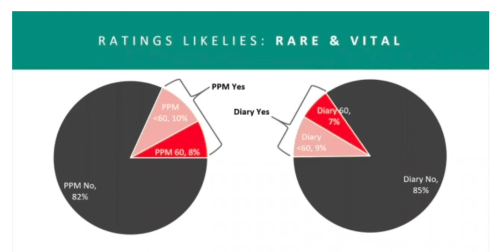
 In 1963, Bob Dylan wrote the song “The Times They Are A-Changin” which would become an anthem for frustrated youth who were anti-establishment and wanted change. This marked the beginning of the upswing of a “Me” cycle. 1963 was the rise of the Baby Boomers, a generation that would grow to seventy-four million teenagers at its peak. A generation raised on radio.
 South from where I live, is a little community by the name of Bumpass, Virginia. As far as I can tell, the FCC have never licensed a radio station to this little community of 8,792 people.
 and perspectives. It also works with some of the country’s largest newspapers, magazines and television networks to broaden its scope of news coverage.
 Two such operations that come to mind are: “yourKawarthaOLDIES.com” and “1059WMEX.com” that are filling a gap left by Big Box broadcasters. WMEX-FM
  recently added an LPFM to its operation, this allows locals in Rochester, NH to hear the station easily when in their cars.
 Once upon a time, radio was pretty much like the TV show The Voice. We only knew what we heard coming through the speaker on our radio.
 BIA Advisory Services conducted a rather insightful webinar at the beginning of the COVID19 pandemic. While every media sector was predicting huge downturns in sales revenues, what struck me most were comments like, ‘but radio sales executives are the most pessimistic,’ or ‘23% of radio sales people don’t feel they
 will be employed by the same company in six months.’
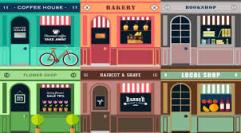 Your local radio station, like your hometown newspaper, depends on local businesses and their advertising dollars. Eighty to ninety percent of their ad revenues come from local businesses, those small “mom & pops,” as we like to call them.
 day we see another local business decide to close down permanently rather than sink further into debt.
 People are adapting to working from home, home schooling their children and doing things like baking, learning to play a musical instrument, streaming their audio, video and print content. Our habits are changing and it’s quite likely they will become permanent.
 I hope you are enjoying this holiday weekend celebration of America’s independence 244-years in the making.
 joyous time for the staff and management at that radio station. It was only four years earlier that WOWO signed on the air for the first time in its storied broadcast history, March 25, 1925.
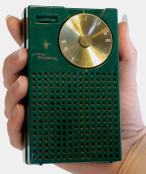 It was a joint venture between Texas Instruments and Regency Electronics that would produce the world’s first transistor radio, the TR1, in 1954. However, it wasn’t until three years later when SONY would introduce its smaller and cheaper TR-63 transistor radio that this new communication device would become the 1960s/70s mass market success story.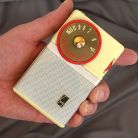

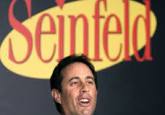 The successful television sitcom “Seinfeld” debuted on the NBC television network. The show “about nothing” ran for nine years and has grossed more than $4 Billion, making it the most profitable half-hour television program in history.
 Each new generation of technological development has moved media consumers away from traditional broadcast radio’s position as the leader for reaching the masses with new music, news and cultural trends.
 “It ain’t over, till it’s over,” one of the many phrases made popular by Yogi Berra kept popping into my mind as I sat in on several webinars these past few weeks. COVID19 is not over, so why are people acting like it is? We can expect that we will be living with this virus through all of this year and through most of 2021.
 DickTaylorBlog