
In my decades of radio management, I’ve worked with different radio program consultants and found them to be helpful in creating winning radio stations. One of the many advantages they bring to the table is a big picture perspective on what makes for successful programming.
I especially respect the work of Fred Jacobs and his long-running Techsurvey. I’ve also learned from Dave Van Dyke’s Bridge Ratings. Both of these gentlemen pull no punches, telling radio operators what’s really happening in the world of radio listening today.
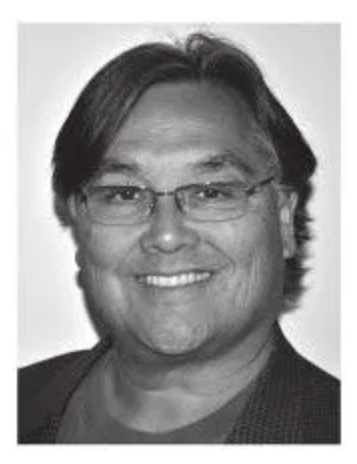
It was Radio’s Best Friend, Art Vuolo, who made me aware of an insightful piece that radio programmer, Ed Hil, had written and published on Facebook about radio program consultants.
I guess what struck me most as I read Ed’s piece was, like the consultants he profiles, I’m in that same age bracket. Does our history with radio and “old age” cloud our vision about what the next generation wants, desires and needs? Or are we simply recycling things that worked well in the past, but no longer resonate with today’s radio listeners?
Who is Ed Hill?
Ed Hill is a current podcast coach and a 25-year broadcast radio veteran and programming executive most recently with CBS Radio. He is a broadcast consultant, media company owner, and a podcast talent coach and consultant.
Highlights of Ed’s accomplishments:
- 25 years of top ratings and rankings as a Professional Broadcast talent coach, creator, and producer.
- Proven results from millions of listeners and over $100 million in revenue.
Among Ed’s other skills and accomplishments are movie producer who has worked with an Academy Award-winning director, a music consultant with the NFL, NBA, and MLB, and Corporate Creative Director for Citadel/ABC Broadcasting. Ed’s lesser known accomplishments are worth mention as well. He has created a dancing routine with The Famous Chicken, held Paris Hilton’s hand for sixty seconds, sat next to Roger Ebert at a movie, and composed a country music song with a hit songwriter.
And now, here is the article Ed wrote, in its entirety:
RADIO CONSULTANTS: A FIELD GUIDE TO THE MEN WHO KILLED THE MEDIUM AND ARE NOW CHARGING TO IDENTIFY THE BODY
by Ed Hill
I want to talk to you today about a very specific type of American fraud. Not Wall Street. Not Washington. Those are obvious. I’m talking about something smaller. More intimate. More personal.
I’m talking about the radio consultant.
The man who gets paid, handsomely paid, to tell you what’s wrong with your radio station. Using data he collected from other radio stations. That are also dying. While he was consulting them.
And when those stations fail? He gets paid again. To analyze why they failed.
Beautiful. It’s genuinely beautiful. If you stripped away the sport coat and the PowerPoint, you’d recognize this in a heartbeat. It’s a protection racket. Pay me or the ratings get it. Except the ratings got it anyway.
Now let me introduce you to these gentlemen individually. Because they deserve to be seen. Really seen.
KENT BURKHART, Age: Old Enough To Have Consulted Marconi
Let’s start at the beginning. The patriarch. Kent Burkhart. The man who invented the consulting model itself.
Kent Burkhart has been in radio so long he knew Todd Storz personally. Todd Storz. The man who invented Top 40 radio. Do you understand what that means chronologically? We are talking about a man with direct social connections to the invention of the format system that is now dying on his watch.
He founded Burkhart/Abrams. He founded Burkhart/Douglas. He was a Living Legend at the NAB in 1990. 1990. Bill Clinton hadn’t even been elected yet. The Gulf War hadn’t started.
The Georgia Radio Hall of Fame inducted him. The Texas Radio Hall of Fame inducted him. Radio Ink made him a Pioneer. Broadcasting Magazine gave him the Fifth Estate Award.
And somewhere out there, a radio station is playing the same thirty-eight songs it played in 1987.
Kent Burkhart is the Big Bang of this entire consultant universe. Everything that followed, every conference, every white paper, every Innovation in Media Award, all of it traces back to the moment Kent decided that radio stations needed professional outside guidance to do what their own people couldn’t figure out.
He was right, incidentally. And that is the saddest part of this whole story.
LEE ABRAMS, Age 73
Born April 29, 1952, Harvey, Illinois.
Here is the central irony of Lee Abrams’ life, and I want you to sit with it. Lee Abrams is the man who took the freedom out of FM radio and is now 73 years old, running a consultancy called MediaVisions, writing screeds about how radio needs to be reimagined.
He de-imagined it. He walked into FM, which was wide open, weird, wonderful, dangerous. DJs played what they wanted, for God’s sake. And he said, no, no. Playlist. Research. Rotation. And the FM stations loved it because it made them money. And they all did it. And they all sounded the same.
And then Lee Abrams turned around and said, today, radio has become too corporate, too consolidated, too boring.
He said that. He said too boring. The man who installed the machinery of boredom looked at his creation and said, I’m concerned about the boredom.
Now he’s out there pitching information is the new rock and roll. He says radio should incorporate more news, more video, more music innovation.
Music innovation. From the man who invented the tight playlist. That’s like the guy who invented the assembly line now telling you that the problem with manufacturing is that it lacks artisanal craft.
I don’t hate Lee Abrams. I genuinely don’t. He’s 73, he’s got energy, he got Newsweek’s 100 Cultural Elite in 1993. He co-founded XM Satellite Radio, which was actually a great idea. He gave Howard Stern his first shot.
But the thing is, and this is what I want you to understand, being right in 1972 does not make you right in 2026. And being wrong in 1982 does not disqualify you from being the person they call to fix it. That’s not how consulting works. Consulting works on reputation. And reputation is just history with better lighting.
MIKE McVAY, Age approximately 69
Railroad family. Pittsburgh. Dropped out of college. Got on the radio at fifteen.
I respect the origin story completely. That’s a real American story. That’s grit. That’s instinct overcoming circumstance. He earned his shot.
Then he advised eight hundred radio stations.
Eight. Hundred.
One man. One philosophy. Eight hundred markets. You know what that’s called in nature? A monoculture. And you know what happens to monocultures? They’re catastrophically vulnerable. One pest, one blight, one disruption and the whole thing goes.
The disruption was called the internet. And the internet was not subtle about it. The internet sent a certified letter in 1995 and followed up every year for thirty years.
Mike McVay is now 69, back at McVay Media after his Cumulus chapter, partnered with Benztown, doing podcasts. Which is wonderful. I mean that. Podcasts are the thing that ate radio’s lunch and now radio consultants are pivoting into podcasts. That’s like the guy who sold typewriters pivoting to selling computers. Completely rational. Not even ironic. Just adaptive.
But here’s my question, Mike. Here’s my honest question. What exactly are you bringing to podcasting that the podcasters don’t already have? Because the podcasters figured out what radio forgot, which is authenticity. They figured out that people will sit with one human voice for three hours if that voice is genuinely real. No formatting. No research. No consultant.
They accidentally reinvented what radio used to be. Before McVay Media told them how to stop being that.
FRED JACOBS, Age approximately 72
Michigan State, class of 76. That means Fred Jacobs was approximately 22 years old when radio still had its soul. He caught it at the perfect moment. He got to see what it was before anyone figured out how to ruin it, and then spent the next fifty years accidentally helping to ruin it while believing he was saving it.
Here’s what Fred actually did that was genuinely brilliant. He looked at Album Rock in 1983 and said, what if we took the best parts of this and formalized it? And Classic Rock was born. And Classic Rock was huge. It was the most successful new format in decades.
And do you want to know what killed Classic Rock?
Classic Rock killed Classic Rock. Because you can only play More Than a Feeling so many times before even the people who love that song start to feel like they’re being held hostage by a very polite radio station.
Fred Jacobs is 72. He has a blog that comes out every morning. Every single morning. Thoughts on the radio industry, served fresh at 6 AM like a continental breakfast at a Holiday Inn Express.
I’ve read the blog. It’s well-written. He’s smart. He knows the data. He sees the trends. He watches what the kids are doing. And then he takes all of that intelligence and channels it into advice for radio stations. Which is the intellectual equivalent of doing cutting-edge aerodynamics research and then applying it to the horse-drawn carriage industry.
He was inducted into the Radio Hall of Fame in 2018, the first consultant ever to receive that honor. And I believe he genuinely deserves it. He genuinely shaped the medium.
But the Radio Hall of Fame is in Chicago. And radio is in the ICU. And I want to know: do they serve champagne in the Hall of Fame? Because someone is celebrating something, and it sure isn’t the listeners.
DAVE VAN DYKE, BRIDGE RATINGS, Age approximately 74 to 75
Started in radio in 1972 at ABC Radio in Chicago. Worked his way from Dallas to Denver to Portland to Boston to Los Angeles. A serious career. A real career.
Then he founded Bridge Ratings in 2001 and became the most rigorous chronicler of radio’s decline in the history of the medium. Month after month, year after year, study after study, Dave Van Dyke publishes the most accurate, most sobering data on what is happening to broadcast radio.
And it is grim, people. The audience is less engaged. Time spent listening is down. The demos radio needs are gone. Not leaving. Gone. Bridge Ratings has the receipts.
And Dave Van Dyke publishes this with the consistency and dedication of a coroner writing cause of death reports for the same patient, who somehow keeps signing up for more autopsies.
He said it himself, out loud, in print, in 2026: most of the audience is less engaged than ever.
To which radio responded by running the same morning zoo show they’ve had since the Reagan administration.
Dave Van Dyke at 74 is the most honest person in this whole ecosystem. He’s not selling a solution. He’s just telling you what’s happening. And nobody is listening. Which is, I have to say, profoundly on-brand for radio.
JON COLEMAN, COLEMAN INSIGHTS, Age approximately 72
Started in Dallas in 1978. That’s not a typo. 1978. Coleman Insights has been researching radio listeners for 48 years. Jimmy Carter was president when Jon Coleman wrote his first research questionnaire.
Here’s the beautiful thing about Coleman Insights: they’re the good research firm. They’re serious. The team actually knows what they’re doing. They do podcast research now, streaming research, global media research. They’ve evolved.
But Jon Coleman started this company to serve radio. And the question I want to ask, respectfully, because I believe in the man’s integrity, is this: after 48 years of research showing you exactly what listeners want, exactly what turns them off, exactly what the habits are, exactly what the trends indicate, did radio listen?
Because the research is one thing. Doing something with the research is another. And what I’ve observed, watching this industry for fifty years, is that radio is very good at commissioning research and then filing it in a cabinet next to last decade’s research, which is next to the decade before’s research, all of which said roughly the same thing and none of which materially changed the product.
Forty-eight years of research. Forty-eight years of findings. And the morning show is still doing a phone prank bit.
ALAN BURNS, GARY BERKOWITZ, AND RANDY MICHAELS: THREE
MORE EXHIBITS IN THE MUSEUM OF RADIO’S LONG GOODBYE
ALAN BURNS, Age approximately 73 to 75, Alan Burns and Associates, Founded
1985
Let me start by giving Alan Burns his due. And I mean that. Alan Burns actually worked in the
rooms that matter. He did afternoons at WDAI Chicago. He programmed WLS. He ran ABC’s
WRQX in Washington DC and grew it from a 2 share to the highest-rated major-market Top
40 in America in 1983. He consulted Z100 in New York. KIIS in Los Angeles. These are not
small rooms, people. These are the biggest rooms in the building.
So Alan Burns earned his credibility the right way. He was in the fire. He felt the heat. He has
the scars.
Which makes what happened next all the more fascinating.
In 1985, he took all of that hard-won big-market experience and turned it into a consulting
firm. And for the last forty years, Alan Burns and Associates has been consulting AC and CHR
stations, coaching morning shows, and conducting research.
Forty years.
Here is what I want you to think about. Alan Burns was programming the highest-rated Top 40
in America in 1983. 1983. That is forty-three years ago. Michael Jackson’s Thriller was the
number one album. The internet did not exist. Streaming did not exist. The iPhone did not
exist. The entire competitive landscape that now makes radio irrelevant did not exist.
And Alan Burns has been consulting from that 1983 vantage point for four decades.
Now I want to show you something. Alan Burns and Associates has a website. The website
runs on deprecated PHP code. Literally, if you look at the source, you get error messages
about functions that no longer work in modern programming environments. The digital
infrastructure of Alan Burns and Associates is itself a monument to things that used to work
and no longer do.
I am not making this up. The website of the radio consulting firm is broken in the same way
that radio consulting is broken. Deprecated functions. Legacy code. A system that was built in
one era trying to run in another.
He co-authored the morning show bible, Morning Radio: A Guide to Developing On-Air
Superstars. A guide. To developing. On-air superstars. For a medium that is currently losing
its on-air talent to podcasts, YouTube, and Substack, because those platforms pay better and
have larger audiences and do not require you to be in a building at 5 AM.
Alan Burns is a genuinely accomplished man who built his reputation in the right rooms, at the
right time, and has spent forty years successfully selling that reputation to people who needed
to believe that someone had the answers.
The answers, incidentally, are not the same answers they were in 1983. But forty years of
momentum is a hard thing to redirect.
GARY BERKOWITZ, Age approximately 71 to 73, Berkowitz Broadcast Consulting,
Founded 1990
Gary Berkowitz has done one thing for thirty-five years.
One thing.
Adult Contemporary radio. AC. That is it. That is the entire menu. You want Country? Call
someone else. You want Talk? Wrong number. You want Rock? Gary Berkowitz is not your
man. You want Adult Contemporary radio with a focus on 25-54 ratings?
Gary Berkowitz is your guy. The only guy. His guy.
Now here is where I have to give him credit before I take it away. Gary Berkowitz actually
programmed real stations in real markets. PRO-FM in Providence. WROR in Boston, which
he transformed from an automated Oldies station into one of the first AC formats in America.
WJR in Detroit, the News-Talk powerhouse, which was always number one 25-54 on his
watch. Q95 in Detroit, one of the first Hot ACs in the country, with the celebrated Dick Purtan
morning show.
Boston is market seven. Detroit is market eleven. These are legitimate big-market credentials.
Gary Berkowitz has been in real buildings with real pressure and real stakes and he has
produced real results.
And then in 1990 he started Berkowitz Broadcast Consulting. And the specialization began.
And it never stopped. And it never widened.
Thirty-five years of AC radio. AC radio in 1990. AC radio in 2000. AC radio in 2010. AC radio
in 2024 when Gary Berkowitz wrote a piece saying AC is in a good place and remains one of
the most consistent and resilient of all the legacy formats.
Legacy formats. He called them legacy formats. Gary Berkowitz is himself using the language
of the museum to describe the exhibit he curates.
And here is the beautiful absurdity at the center of Gary Berkowitz’s career. He specializes in
improving 25-54 ratings. 25-54. The demo that advertisers want. The demo that radio has
been chasing for fifty years. The demo that is now 35-74 in terms of who actually listens to AC
radio and has been moving in that direction for twenty years.
Gary Berkowitz is chasing a demographic that has aged out of where it was when he started
chasing it, using strategies refined for a competitive landscape that has completely
transformed, for a format that he himself describes as a legacy, and he is doing it with the
energy and conviction of a man who genuinely believes the patient can still be saved.
And I respect the conviction. I genuinely do. A man who has done one thing for thirty-five
years and still loves doing that one thing is a rare and admirable creature.
I just want to ask him one question. When was the last time a 28-year-old listened to an AC
station and thought: this is exactly what I needed today?
I’ll wait.
RANDY MICHAELS, Age approximately 73 to 74, Real Name: Benjamin Homel,
Currently: Radioactive LLC
Now we get to the main event.
Randy Michaels. Born Benjamin Homel. Changed his name when he started doing on-air
work. At one point early in his career was working at five stations simultaneously under three
different names.
Five stations. Three names. One person. That right there tells you everything you need to
know about Randy Michaels. He has always been more than one person at a time, and the
names have never quite matched the behavior.
Let me walk you through the career because it is genuinely spectacular in the way that a
hurricane is spectacular.
He started in the early 1970s at WGR in Buffalo as an evening personality. Then ten years as
top programmer for Taft Broadcasting’s twelve-station group. Then helped launch Republic
Broadcasting in 1983. Jacor absorbed Republic in 1986 and Michaels went along with it. By
1996 he was CEO of Jacor. In 1993 he had persuaded Sam Zell, the self-described vulture
capitalist, to invest 70 million dollars in the ailing company. Zell bonded with Michaels
because Zell and Michaels were the same kind of person, which is to say the kind of person
who mistakes recklessness for vision.
Michaels sold Jacor to Clear Channel in 1999 for 2.8 billion dollars. Then he ran Clear
Channel Radio and grew it from 425 stations to 1,200 stations in three years.
1,200 stations. One company. One programming philosophy spread across 1,200 properties.
Do you understand what that did to local radio? Do you understand what it means when one
man’s taste, one company’s cost-cutting, one centralized programming strategy, replaces
1,200 individual stations that used to know their communities?
It means you can drive from Miami to Seattle and hear essentially the same station. It means
the DJs are voice-tracked from a studio in another city. It means the morning show has never
been to your town and doesn’t know your mayor’s name. It means local radio became a
national product and lost the only thing that made it irreplaceable.
Randy Michaels did not do this alone. But he ran the machine while it happened and he made
a lot of money doing it.
He left Clear Channel in 2002. Then Sam Zell, apparently having learned nothing from
previous experiences with Randy Michaels, put him in charge of the Tribune Company in
2007. The Chicago Tribune. The Los Angeles Times. The Baltimore Sun. Legacy journalism
institutions with histories going back over a century. Zell handed them to a man whose
journalism credentials were exactly zero.
What happened next was reported on the front page of the New York Times.
Randy Michaels created what multiple witnesses described as a frat house atmosphere at
Tribune Tower. Executives discussed the sexual suitability of employees on an open balcony
above a work area. His chief innovation officer, Lee Abrams, sent a company-wide email with
links to videos labeled with words I cannot repeat in polite company, which resulted in Abrams
being suspended. There were poker parties with cigars in the office of former Tribune
publisher Colonel Robert R. McCormick, which had long been considered a shrine.
And at a formal business dinner at a Chicago hotel, Randy Michaels looked at a waitress, said
to the group watch this, and offered her one hundred dollars to show him her breasts.
The group sat dumbfounded. That is the word a witness used. Dumbfounded. As if it were
possible to be anything else.
The New York Times ran the story in October 2010. Michaels resigned days later. Tribune
paid him 675,000 dollars to go away.
In October 2011, eleven months after being forced out of Tribune for alleged sexual
misconduct and creating a hostile workplace, Randy Michaels was arrested for driving under
the influence in Middletown, Ohio. He had driven his vehicle into a muddy construction area
near Interstate 75. He smelled of alcohol. He failed the sobriety tests. He refused the
breathalyzer.
He was charged under his real name. Benjamin Homel.
Now. Are you ready for the ending? Because here is the ending.
In 2025, Radio Ink Magazine gave Randy Michaels its Lifetime Leadership Award.
Lifetime Leadership.
The man who oversaw the consolidation that hollowed out local radio. The man who ran a
company into bankruptcy while paying himself and his executives 57 million dollars in
bonuses. The man who was forced to resign from Tribune for creating a culture of sexual
harassment and debasement. The man who was arrested for drunk driving in a construction
zone eleven months after the forced resignation. That man received the Lifetime Leadership
Award from the leading trade publication of the radio industry in 2025.
And Randy Michaels, to his credit, is now buying classic hits stations in Louisville and
Cincinnati and programming them himself at the age of 73. He bought WAKY in Louisville. He
bought WOXY in the Miami Valley. He is out there in the mud, literally, doing the work.
And in his Radio Ink interview he said, and I want you to hear this: the people using radio are
people over 45.
After everything. After the consolidation. After Tribune. After the frat house. After the DUI.
After all of it. Randy Michaels, at 73, figured out the same thing that anyone paying attention
figured out twenty years ago: radio’s audience is old. Serve the old audience.
That is the insight. That is what a Lifetime Leadership Award gets you.
I was out of radio in 2016. I worked with a clueless idiot GM in Denver that forced me out so I never saw Randy Michaels get a Lifetime Leadership Award.
Some people really do have all the luck.
RANDY KABRICH, 1956 to 2024, Age at death: 68
I have to include Randy Kabrich. I have to, because Randy Kabrich was the exception in this whole crowd, and exceptions deserve their moment.
Randy Kabrich died in March 2024 of a heart attack in Palm Harbor, Florida. He was 68 years old. He never retired. He was still in the fight.
Here’s what made Randy different: he was willing to call the baby ugly. That was his phrase, call the baby ugly. Meaning: if your station was bad, Randy would tell you it was bad. Not with a PowerPoint. Not with a rebranding strategy. Just, this is bad, here’s exactly why, here’s how to fix it, and I don’t care if you’re the President of the group.
Bob Neil, who ran Cox Radio, said Kabrich had a unique ability to tell you exactly what he thought, even if he thought you might not want to hear it. In a consultant, that’s actually very valuable and unusual.
Unusual. He said unusual. As if telling the truth is a specialty. As if honesty is a differentiator in a consulting marketplace.
And the tragic thing is, it was. It is. It genuinely is.
Randy Kabrich died at 68 having spent his whole career telling radio the truth, and radio is still struggling, and the consultants who told radio what it wanted to hear are still booking keynotes.
There’s a lesson in there. I’ll let you find it.
THE CONFERENCE ECOSYSTEM
Now let me tell you about the conferences. Because you cannot understand the consultant class without understanding the conference ecosystem that sustains them.
Every year, multiple times a year, there are radio conferences. The NAB. The Conclave. The Worldwide Radio Summit. The Country Radio Seminar. The Jacobs Media DASH Conference. The BNM Summit.
And at every one of these conferences, the consultants give speeches. And the programmers attend the speeches. And everybody nods. And then there’s a cocktail hour. And then awards are given. And then everybody goes home and the station still plays the same thirty-eight songs.
Here’s what I want you to calculate: if you take the total cumulative cost of every radio conference ticket, every flight, every hotel room, every cocktail shaker at every cocktail hour, for the last thirty years, how much money is that? Now compare that to the cost of just hiring different people and trying different things.
The conferences are not about fixing radio. The conferences are about processing grief in a socially acceptable way that reinforces the hierarchies of the people who benefit from being at the top of the hierarchy. It’s a wake that never ends. And the corpse is the one paying for the bar tab.
WHAT THEY ALL HAVE IN COMMON
Here is the thing I want you to understand, and this is the uncomfortable truth that none of the trade publications will print because these guys advertise in the trade publications:
Every major radio consultant is between 68 and 90-something years old. Every one of them.
These are men who came of age in radio’s golden era, who built careers during radio’s monopoly on the car and the workplace and the bedroom, who got rich during the era of captive audiences, and who are now being asked to save a medium in a world where attention is the most contested resource in human history.
They are not bad people. Several of them are genuinely brilliant people. They invented things that mattered. They built real things. But they built those things in 1974. In 1983. In 1991. When there was no internet. No streaming. No algorithm that knew your taste better than your best friend. No podcast available on any subject, for free, from someone who actually cares about the subject.
Radio had a captive audience and the consultants helped radio optimize for a captive audience. Which is great. Except now the audience isn’t captive. The audience is gone. And the tools you build to optimize captivity are exactly the wrong tools for building something worth choosing.
You can’t consult your way out of this. You can’t research your way out of this. You can’t conference your way out of this. You could reinvent your way out of this. But reinvention requires burning down what you built. And none of these men are going to burn down what they built. That’s not a character flaw. That’s physics.
The people who built the cages cannot see the cages. The cages look like furniture to them. They’ve been in the cage so long the bars feel like walls, and the walls feel like home.
IN SUMMARY
Radio had the most powerful, intimate, personal medium ever invented. A human voice in your ear, wherever you went. No screen required. No battery to charge. Just a voice.
And a generation of consultants, brilliant men, serious men, men with genuine accomplishments, took that voice and ran it through enough research and rotation software and format clocks that it stopped sounding like a person and started sounding like a policy.
And the audience noticed. The audience always notices. They just don’t always tell you. They just leave.
And now the consultants are 70-something years old, still giving speeches, still publishing surveys, still collecting checks, still presenting at the NAB, and the medium they shaped is playing somebody’s algorithm-generated playlist to an audience that is three-quarters the age of the people trying to save it.
-0-
Contact Ed
Web: www.theedhill.com
Phone: (801) 910 – 5447
Email: ed@podstars.net

