Tag Archives: Android Audio

AM Radio in Retreat

While the National Association of Broadcasters (NAB) is still pursuing its goal of getting Congress to pass the “AM Radio in Every Vehicle Act*,” the number of AM radio stations on-the-air continues to shrink.

How Many Radio Stations Are There?

Inside Radio published the latest FCC radio station count and the number of AM radio stations on-the-air continues to shrink.

In 1968, I passed my 3rd Class Radiotelephone FCC License, Broadcast endorsed, it was also the year that the Federal Communications Commission (FCC) began publishing its Broadcast Station Totals reports.

At that time the FCC said that 4,236 AM radio stations and 2,306 FM radio stations were on the air.

In December 1990, the next report the FCC published became available showing 4,987 AM radio stations and 5,832 full power FM radio stations were now on the air; plus, another 1,866 FM translator/boosters.

It’s worthy to note that the general public cannot tell the difference between a:

  • Full power FM
  • FM booster
  • FM translator signal

as to the FM listener they all are received on a standard AM/FM receiver. Only broadcasters, broadcast engineers and the FCC are concerned about such distinctions.

So, in just the first two decades of my radio career, FM signals outnumbered AM signals by 2,711.

Telecommunications Act of 1996

On February 8, 1996, President William Jefferson Clinton signed into law what is commonly referred to as “The Telcom Act of 96.” The intent of the legislation was to allow more companies to operate in the communications space, but what actually happened was a flurry of mergers and acquisitions as corporate media giants bought out small, local broadcasters.

The FCC reported that as of February 29, 1996 there were:

  • 4,906 AM stations
  • 7,151 FM stations
  • 2,527 FM translators/boosters on-the-air

almost two FM signals beating the airwaves to every AM signal.

A year after the Telcom Act of 96, the number of AM signals began its decline to:

  • 4,840 (a loss of 66 AM signals in one year)
  • full power FM signals increased to 7,295 (up 144 FM signals)
  • FM translator/booster signals grew to 2,744 (up 217 FM signals)

While AM radio signals were signing off, FM radio signals were growing by an additional 361.

Ten Years After Passage of the Telcom Act of 96

On March 31, 2006, ten years after the Telcom Act became law, and the consolidation of the radio industry began, the FCC Broadcast Station Totals report listed:

  • 4,759 AM signals
  • 8,989 full power FM signals
  • 4,049 FM translator/booster signals

and now something new began appearing, Low Power FM signals (LPFM) which numbered 712,  meaning the radio listening consumer could now access 13,750 FM signals versus 4,759 AM signals.

Wall Street investors were clearly showing more interest in FM signals than AM signals as their money poured into the radio industry.

Twenty Years After Passage of the Telcom Act of 96

Twenty years after President Clinton signed the Telcom Act and consolidation continued squeezing out the mom and pop broadcasters, the FCC Broadcast Station Totals report listed:

  • 4,680 AM signals (down 307 signals from the day I began my broadcast career)
  • 10,811 full power FM signals
  • 6,582 FM translator/booster signals
  • 1,516 LPFM signals

AM signals totaled 4,680 and FM signals totaled 18,908.

Radio Broadcast Signals 2024

Which brings us to the present day report, March 31, 2024. The FCC Broadcast Station Totals report now lists:

  • 4,427 AM signals
  • 10,983 full power FM signals
  • 8,913 FM translator/booster signals
  • 1,960 LPFM signals

Remember, the radio listening public DOES NOT distinguish between the different classifications of FM signals, as they all appear on the same FM radio receiver they are using.

To the radio listener, they have

4,427 AM signals compared to 21,856 FM signals

they can access. Almost 5 times as many FM signals as AM signals, and each year we witness those AM signals either reducing their power or just signing off-the-air and turning in their FCC broadcast license.

Radio Dominates in Vehicles

The latest research from Quu ( www.quureport.com ) shows that in 2023 model vehicles:

  • 100% of them have an FM radio
  • 98% of them have an AM radio
  • 98% of them have Android Audio
  • 98% of them have Apple CarPlay
  • 92% have SiriusXM
  • 70% have HD Radio

What surprised me about this research report, was that this was the first time I’ve ever seen separate AM and FM numbers listed. All reporting about radio usage should list AM and FM listening separately. I feel it is disingenuous to give the false impression that AM and FM broadcast signals contribute equally when that’s clearly NOT the case.

Having access to an audio service does not equate to usage.

Fred Jacobs in his TechSurvey 2023 for example, revealed how HD Radio was only listened to by 16% and SiriusXM was only listened to by 28%, which shows that despite their high availability numbers in vehicle dashboards, usage is still low. Unfortunately, AM/FM is never broken apart, but listed together so can they can garner 86% of the listening.

I’m thinking that both HD radio and SiriusXM usage might eclipse AM radio listening, if we were allowed to see AM and FM usage shown separately.

Vehicles On The Road in America Today

According to S&P Global Mobility, there are 284 million vehicles on our roadways and the average age of them continues to rise to a new record of 12.5 years. About 23% of all passenger cars now are 20 years or older with the bulk of them made between 2015 and 2019.

By 2050, when electric vehicles are projected to make up 60% of new sales, the majority of vehicles on America’s highways will still be powered by gasoline, because most vehicles today last twenty years meaning AM radio will still be in most cars, but the bigger question is how many AM radio stations will still be on-the-air.

Radio Needs To Look Forward

In ten to twenty years, AM radio will be at best a niche way to listen to audio.

Where the radio industry and the National Association of Broadcasters should be focusing their time is keeping FM radio viable, in all vehicles and FREE!

Sadly, the FM band is becoming overcrowded with signals and this, I believe, needs to be seriously addressed.

Finally, I would like to believe, as does Scott Shannon, that radio can still succeed in the 21st Century if it will just be “authentic, local, magical, and deliver an audio product with passion.” Or as radio programming consultant and author Valerie Geller puts it:

Great radio is interesting people communicating with listeners

by telling the truth, making it matter and never being boring.

14 Comments

Filed under Education, Mentor, Radio, Sales

Saving AM Radio

The radio trades have been full of headlines about saving AM radio, especially in the dashboard of America’s cars and trucks. Here’s some of the most recent ones I’ve seen:

NAB launches campaign for AM radio

State Broadcasters Group Ask AM Stations for Help

Can The Industry and Congress Keep AM Radio in the Dashboard?

Detroit Newspaper Looks at Loss of AM Radio in New Ford Vehicles

The National Alliance of State Broadcasters Associations (NASBA) even put out an online survey “to more accurately craft the AM broadcaster owner’s message and to develop actionable items to keep AM [radio] in the dash.”

Let me tell you why everything I’ve read in the broadcasting newsletters, magazines and websites seems to be focused 180-degrees in the wrong direction.

What Features Do New Car Buyers Want?

Keeping AM or FM radio in vehicle dashboards has nothing to do with what broadcasters want, it has everything to do with what car buyers want. The lists from various sources I’ve found are all pretty much the same, though ranking positions may vary a little from publication to publication.  Here is what car buyers want:

  1. Proximity Key – a key fob that allows you to unlock (and lock) your vehicle’s doors and start it without having a physical key in your hand
  2. Apple CarPlay and Android Auto – smartphone connectivity is as important as a steering wheel to today’s car buyers*
  3. USB Outlets – lots of places to charge or run tablets, laptops and other electronic equipment
  4. Blind-Spot Monitoring and Rear-Cross-Traffic Alert – to keep you informed of what’s going on around your car while you’re driving
  5. Adaptive Cruise Control – systems that adjust your car’s speed while maintaining a safe distance from the vehicle in front of you.
  6. Surround-View Camera Suite – this puts the backup camera on steroids and allows a driver to see a 360-degree view of everything around their vehicle
  7. Wireless Smartphone Charging – a place you can put your cellphone to charge while you’re driving
  8. Rain-Sensing Windshield Wipers – a step-up from intermittent wipers, these blades automatically adjust to the amount of road spray or rainfall coming at you to keep your windshield clean
  9. Automatic High Beams – No need to raise and lower your headlight power manually, these systems do it automatically for you, so you always have the most light your vehicle is capable of producing shining on the road in front of you
  10. Heated, Ventilated Seats and a Heated Steering Wheel

What you don’t find on any of these lists are people asking for a radio, let alone an AM radio to be in their next vehicle.

What Features Do New Car Buyers Feel They Can Skip?

It surprised me to find that ‘Navigation’ topped lists, but then when Sue & I rented a car a couple of years ago, I learned that rental cars no longer offer a navigation system option. What they do offer is Apple CarPlay and Android Audio that automatically connects to your smartphone and displays the navigation software you enjoy using to the car’s video screen. (And yes, that arrangement worked for us perfectly, while driving cross-country.)

So, let’s look at the features car buyers don’t mind not having:

  1. Navigation
  2. Premium Audio System – most feel the hefty costs to upgrade the standard audio system the car comes with is not worth the money
  3. Onboard WiFi Hotspot – like Satellite Radio (which most new car buyers are also OK with skipping) WiFi Hotspots require a monthly subscription fee and are deemed not worth the added expense

Your Baby’s Ugly

The real problem the radio industry has is that it lives in a reality distortion field that has it thinking it’s still 1960s/70s. In other words, it needs to put on a pair of headphones and hear it for what it is.

John Frost’s most recent Frost Advisory email, told the story of a small AM radio station that broadcast a financial talk show that he occasionally tunes into hear. John says “it’s terrible radio, but the guys are really smart, they cough a lot, have lots of room noise and give insightful advice.”

On Good Friday, the show was a repeat of Thursday’s show and so what the listener heard on Friday were invitations to call in (which they could not because the show wasn’t live), announcements that Friday’s show would be a repeat of Thursdays show (but this was Friday) and commentary about the current day’s stock market prices (the market was closed on Good Friday) and nothing is more meaningless than yesterday’s stock prices.

Sadly, this kind of thing isn’t an isolated incident, but standard operating procedure on both AM and FM radio stations across America.

No one wants to hear their baby is ugly,

but for today’s radio industry, that’s the truth.

What Should Be The Focus of the Radio Industry

What keeps running through my mind is,

if the radio industry spent as much time, money and effort on producing a great product on AM radio stations across America, might their radio listeners be leading the charge with the auto industry to keep AM radio in the dashboard?

Let’s look at what fans make happen when a favorite TV show gets cancelled. The first television program to be saved by its fans was Star Trek in 1968. The franchise began in 1966 and 57 years later, it is still going strong.

More recently, fans of the FOX series Friday Night Lights organized a Facebook group with online petitions to show the network their support for this show, having it continue for five seasons despite its less than stellar audience ratings.

In both cases, it was not a television network that tried to convince an audience to watch a program, it was the audience that convinced a network NOT to cancel a program. That’s how it’s suppose to work.

AM radio isn’t coming back, so what the radio industry should instead be focused on is making FM radio the best that it can be and insuring that it won’t suffer the same fate befalling AM radio.

To win in today’s media marketplace, you must have a product that listeners want to hear;

today’s audio consumer has an infinite number of choices available.

When it comes to what new car buyers want in their next vehicle, broadcast radio is not on their list of wants, needs or desires.

That’s a real wake-up call,

if there ever was one.

*On April 1, 2023, General Motors plans to phase out widely used Apple (AAPL) CarPlay and Android Auto technologies that allow drivers to bypass a vehicle’s infotainment system, shifting instead to built-in infotainment systems developed with Google (GOOG) for future electric vehicles. It made me wonder if this was an April Fools prank, but apparently GM is that tone death. 

27 Comments

Filed under Education, Mentor, Radio, Sales

Car Radios & The Future

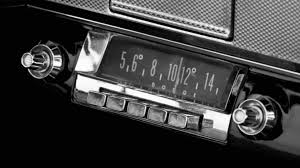
AM Car RadioThe first mass-market car radio premiered in June of 1930, but due to a second World War it wouldn’t be until the 1950s that car radios became common.
Another factor that slowed their growth was cost. Those early six vacuum tube car radios cost around $130.

To put that into perspective, you could buy one of Henry Ford’s model A’s for $450.

Motorola

The Galvin Manufacturing Corporation, founded by brothers Paul and Joseph Galvin, were early pioneers in car radios. Paul Galvin realized their radios needed a brand name and came up with the name of “Motorola,” a portmanteau (a word blending the sounds and combining the meanings of two others, for example motel (from ‘motor’ and ‘hotel’) or brunch (from ‘breakfast’ and ‘lunch’) of the words motor car and ola. “Ola” back then was a slang word for anything audio.motorola car radio installation

Motorola introduced the first dash-mounted AM car radios in the 1930s. It wasn’t until 1952 that a German company, Blaupunkt, would introduce the first FM car radio. AM/FM car radios followed the next year.

1952

I was born in 1952, and like other Baby Boomers my age, radios and cars have always been one.

While transistor car radios were introduced in 1955, it wouldn’t be until the 1960s that they became affordable. It should also be noted that dashboard radios were still an option in 1963, however, they were a very popular option and more than 60% of all cars on the road in America had one.

Rear Speaker & 8-Track Tape Player

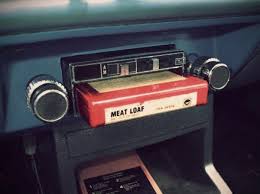
I can still remember the time my parents were buying a new car and one of the decisions that they had to make was whether or not to add the new car radio option that had just come out, adding a rear speaker to the dashboard radio.Car 8-track player radio

The first aftermarket option I remember my parents adding was that of an 8-track tape player. I loved this device because it allowed me to listen to air checks of my weekly radio show on my daily commute to college. I wanted to improve my style and presentation.

Cassettes & CDs

The 8-track tape players in cars would soon be replaced by cassettes, allowing people to make up their own “mix tapes” of songs they loved to hear most.

Compact Discs (CDs) eventually replaced cassette players in the car dashboard, and for those of us that didn’t want to change CDs, one at a time, it was a thrill having a six-CD changer located in the trunk that allowed for even more variety with the touch of a button.

iPods & Smartphones

Steve Jobs once said he wanted to be able to have a 1,000-songs in his pocket, and from that vision, came the Apple iPod. iPods could eventually be plugged into the car’s audio system and now offered a virtually unlimited supply of music and audio books at the touch of a button.

The iPhone would offer all that any iPod ever could, plus so much more. It became the computer in our pockets replacing a multitude of single use devices, including the car radio.

Entertainment CenterDigital Car Radio

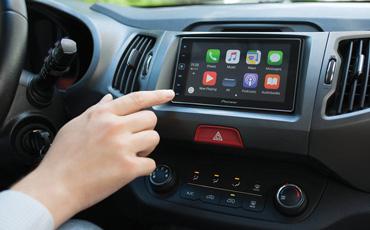
Today’s automobile dashboard offers occupants a complete entertainment center that immediately connects to a person’s smartphone via either Apple’s CarPlay, Google’s Android Auto, or a manufacturer’s proprietary system. Today the vehicle’s onboard entertainment system plays a big role in people’s car buying decision and it can also add from a thousand to two thousand dollars more to the price of a vehicle.

Self-Driving Cars

TV Car RadioWith the evolution of self-driving cars, you can expect that more and more vehicles will come with video capabilities as well as audio, and also that the competition for who can provide the best in-car entertainment will be fierce and passionate.

Traditional radio programming staples, like Two-fer Tuesdays, ten-songs-in-a-row and no-repeat workdays aren’t going to cut it.

The global pandemic has caused two markets to significantly heat up:

1) suburban house sales and

2) new car sales.

Today’s reality is that people who now find themselves working from home, don’t want to be stuck in a little urban apartment and are moving to homes that offer more space to enjoy. Likewise. those individuals whose work demands they still commute, no longer feel safe on mass public transportation and are upgrading their ride.

Understanding how these changes will impact the future of your media enterprise is critical.


5 Comments

Filed under Education, Mentor, Radio, Sales