Tag Archives: Apple

Radio’s Most Pressing Issues

This past week, Radio/TV state broadcast associations were in our nation’s capital meeting with their elected representatives in both the House and Senate about issues that are important to them. It’s the annual National Association of Broadcasters (NAB) State Leadership Conference.

More than 500 radio broadcasters from across America assembled to hear Senator Ted Cruz (R-TX) speak on his support of the “AM Radio for Every Vehicle Act,” and advocating for a level playing field in the advertising market.

Cruz is the new Chairman of the Senate Commerce Committee and he pledged a proactive approach to support broadcasters, create jobs and uphold free speech.

Free Speech

Brendan Carr is the new Chairman of the Federal Communications Commission (FCC) and in only a couple of weeks, since taking this leadership position, his actions have caught the attention of some members of Congress, who were alarmed by recent moves impacting broadcasters.

Representative Jerold Nadler (D-NY) expressed his concern over the Carr’s FCC assault on a media organization’s free speech.

“Exploiting his asserted ‘unitary executive’ powers, [President] Trump is unleashing his sycophant FCC Chairman, Brendan Carr, on every newsgroup whose news stories he does not approve of — actually threatening to pull the broadcast licenses for ABC, CBS, NBC, PBS, and NPR,” said Rep. Jamie Raskin (D-MD). “Is this North Korea?”

The President of Free Press Action, Craig Aaron, in testimony said that threats and opening investigations into broadcast outlets by the FCC is out of the norm.

“The FCC usually talks about licenses on very narrow terms, such as if an owner has committed a major crime,” Aaron said. “The idea that a news organization would be threatened because they asked a tough question of the President, or because they tried to fact check him during a debate, or because they edited their own news content before putting it out over the airwaves is preposterous, and it’s dangerous.”

DEI

Diversity, Equity and Inclusion (DEI) has been terminated by Carr at the FCC and he’s been signaling that the agency might go after FCC licensees over their own DEI programs.

Are DEI programs good for business? Apple’s shareholders think so, so do Costco shareholders, and Hyundai’s marketing executive, Erik Thomas, credits its DEI programs with driving the automobile manufacturer’s bottom line.

SiriusXM

Nine years ago I wrote an article with a title that sounded like click bait titled “SiriusXM Radio is Now Free,” which speculated when the FCC licensed satellite broadcaster would start offering ad-supported channels for free.

Four years later, I wrote that “Could 2021 Be the Year SiriusXM Adds FREE Channels?” speculating that new SiriusXM CEO, Jennifer Witz, would be pursuing revenue growth by  leveraging the 132 million cars the service was available in. SiriusXM, like commercial radio over-the-air (OTA) broadcasters, knows that the competition for listener ears is in the car. The advantage the satellite broadcaster has over AM/FM radio operators is they know exactly what their listeners are listening to, and don’t have to rely on audience estimates that may or may not be accurate in today’s media saturated world.

Last year, what I have been predicting since 2016, became a reality, as I wrote in:  “Ad-Supported SiriusXM Requires No Paid Subscription.”

Monopoly

One of the radio industry’s most respected researchers, Dr. Ed Cohen, wrote “The direct-to-consumer satellite radio business is a monopoly,” shortly after my 3rd article on this subject was published. Originally, the FCC offered only two satellite broadcast licenses, one went to a company called “Sirius” and the other to a company called “XM,” with the idea being they would be competitors and that the consumer would benefit by not having a single company – a monopoly – control satellite radio and what it could charge.

The two companies were supposed to never be able to merge, but in August of 2008, by a 3 to 2 vote of the FCC, that changed. Dr. Cohen does a really good deep dive into explaining how this all came about in his article “SiriusXM and the FCC: Is the Camel’s Nose Under the Tent?” Which is an allusion to a story that takes place in Arabia, with this metaphorical moral:

If the camel once gets his nose in the tent, his body will soon follow.

What the FCC never took into consideration was, how much damage might occur to local AM/FM radio stations, if and when, the new combined SiriusXM ever decided to provide an ad-supported free radio service.

Dr. Cohen believes that while this new free service from SiriusXM is limited in scope, like the proverbial camel, it won’t be long before the whole service becomes real competition for audio listeners and advertisers.

People Love Free

AM Radio vs SiriusXM

Dr. Cohen makes an excellent case for commercial radio broadcasters to be demanding, the FCC revisit the SiriusXM merger decision in light of this change by the satellite broadcaster.

By the way, public broadcasters also have a horse in this race, as NPR Now is part of the new free SiriusXM service.

“While the NAB is busy with getting Congress to force OEMs (Original Equipment Manufacturers) to include AM in every vehicle, the battle with SiriusXM’s ad-supported venture is probably more important to the industry in the long run,” says Dr. Cohen.

It’s The Economy Stupid

But the most important issue facing the commercial radio industry are the financial fears that have been generated by the Trump tariffs and fire hose of government regulatory changes that seem to come at us on an hourly basis. I wrote about this concern in February with an article titled “The Cost of Uncertainty to Radio.”

Now BIA Advisory Services this week updated its local advertising revenue forecast for 2025. Cameron Coats, in Radio Ink, reports that “over-the-air revenue [for radio] takes the largest hit, falling by 6%.” Digital radio, says Coats, shows a slight increase of 0.1%.

SiriusXM has enjoyed growth through the sale of new cars, but with the high tariffs Trump has announced, it wouldn’t be a surprise if people hang onto their current vehicles a little longer, which also means that AM radio will still be accessible. Without an economic downturn, the average life of a car in America is 12-years, up from 8.4-years in 1995. Progressive Insurance says that a well-maintained car will reach 300,000 or more miles, and those cars have both AM/FM radios as well as SiriusXM.

The radio industry’s most pressing issue is who wins in the car, and in that arena AM radio – a hundred year old medium is not our industry’s best play –

stopping satellite radio’s FREE ad-supported service is.

When the pie isn’t growing,

the game becomes who can cut the biggest slice.

5 Comments

Filed under Uncategorized

Does Your Radio Station Have Schwerpunkt?

Many people have often wondered what the radio industry might have been like today, if it had had a Steve Jobs.

Steve Jobs had Schwerpunkt.

What is “Schwerpunkt”?

The term is attributed to Carl von Clausewitz and is now considered the heart of any sound plan.

“An operation without Schwerpunkt

is like a man without character.”

-Field Marshall Paul von Hindenburg

Schwerpunkt means “focus of effort.”

When Steve Jobs returned to Apple in 1997, he stunned his employees not by creating anything, but instead destroying many of the products Apple was making; like the Newton personal digital assistant and the many Macintosh clones.

Jobs quickly made it clear that Apple would no longer try to be all things to all people, and that the key to Apple’s future success would be winning where it mattered and focusing Apple’s resources on just a few meaningful products.

iPod

In December of 1996, under the leadership of then CEO Gil Amelio, Apple suffered its worst financial quarter in the company’s history. Michael Dell, founder of Dell Computers, when asked what he’d do to fix Apple if he were made the new CEO said, “I’d shut the company down and give the money back to shareholders.”

Steve Jobs knew that he couldn’t compete against Microsoft and Dell when he returned to Apple, so he focused the company’s resources in an area he saw as fragmented and that made products that as Jobs put it, “sucked.” He decided that Apple would produce a digital music player that would allow him to have a thousand songs in his pocket. The result was the iPod.

Focus On Your Strengths

The iPod took advantage of Apple’s strengths in simplicity of design and an ability to build easy-to-use interfaces. Jobs learned everything he needed to know about negotiating intellectual property rights from his ownership of Pixar. This knowledge was perfect for the creation of the iTunes store.

When you identify weakness in a market, and then apply a good strategy to exploit that weakness for your business success, that application is a key part of Schwerpunkt.

Steve Jobs was confident he knew where Apple’s strengths were, and how to apply them for the best opportunities that could leverage those strengths.

iPod = Apple’s Schwerpunkt

The iPod was an immediate game changing hit which changed the basis of competition in the music business.

While Dell was playing catchup, developing its Digital Jukebox, and Microsoft was creating its Zune, neither of which saw much success, Apple was preparing to launch the iPhone.

Schwerpunkt

When Steve Jobs returned to Apple in 1997, the company was near death, while Microsoft and Dell were giants. It was by employing Schwerpunkt that Apple went from worst to first. Today, Apple is the richest company in the world with a market cap of $2.294 Trillion.

While his competitors were still reacting to his latest innovation, Jobs was already hard at work on his next big thing.

Radio & Schwerpunkt

When I read the radio trades or sit in on a webinar, what strikes me most is how the radio industry’s leaders are talking about working to develop areas that are already owned by others. Areas, that don’t align with radio’s strengths.

When I worked for Clear Channel, I also remember management meetings that spoke of how we needed to focus, and then rolled out an agenda of 20 to 50 things we needed to focus on.

In 1952 Rosser Reeves, the ad man who developed the television ads for President Dwight Eisenhower was confronted with Ike’s multiple talking points. Reeves told the President that he needed to focus on just one thing, but relented to allow Ike to have three. Reeves understood the concept of Schwerpunkt, though he may never have heard of it.

Radio’s strength has always been about serving its community of license with live local personalities that provide companionship for the listener.

The very people the radio industry continues to eliminate.

When hurricane Ian bore down on Florida this past week, I’m sure I’m not alone in turning to The Weather Channel to see Jim Cantore and Stephanie Abrams tell us what was happening.

Jim Cantore joined The Weather Channel upon graduating from college in 1986 (36 years) and Stephanie Abrams has been with the network since 2003 (19 years). Cantore and Abrams along with the rest of the team of meteorological professionals have earned our respect and trust. Trust that has been earned over many years of excellent broadcasting.

Good luck to anyone who thinks they can beat them.

The Weather Channel has Schwerpunkt.

Until the radio industry truly focuses on its strengths, and leverages them for both its own financial benefit as well as that of their advertisers and listeners, its future will remain cloudy.

Radio = Schwerpunkt-less

14 Comments

Filed under Education, Mentor, Radio, Sales

My Desk is Cluttered, Not My Mind

One of the snappiest dressers on television was Morley Safer. But if you were to peek into Morley’s office when he was off-camera, you would have seen an office that was quite the opposite.

Depending on your point-of-view, a cluttered desk might have been thought of as a cluttered mind, or the opposite; a clean desk means an empty mind.

Spatially Organized

Let me offer you a third perspective.

My desk is usually cluttered when I’m deep into a project.

What I have learned about myself was I tend to be spatially organized, and when things get neatly put away, out of sight, in a file drawer, they are also out of mind. Mine!

Productive Workspaces

We’re all different.

When people try to design workspaces for others, it will most likely fail.

In his book, “Messy: The Power of Disorder to Transform Our Lives,” Tim Harford explains how engineered spaces can kill productivity and innovation, while having a messy workspace might actually help us to do some of our best work.

Arbitron

I remember entering Arbitron’s new facility when it opened in Columbia, Maryland. Everything was fresh and new and oh, so very sterile.

One of the managers could be seen chasing people around and chastising them for taping things to the walls or for having a cluttered desk.

This type of order is fine for an automobile assembly line, but not your radio station.

WLAN AM/FM

When I moved WLAN AM/FM from its original location in downtown Lancaster, PA to a brand-new facility, I told everyone that their workspace was theirs to decorate as they wished.

I even let everyone pick out their own style and color of desk and chair.

Everyone was excited for moving day to arrive and had been planning for months how they would set-up their new offices.

Studies have shown that when people are allowed to decorate their work place with the stuff and personal knickknacks they love, productivity can increase by as much as 32%. In fact, people are not only more productive, they are also happier and healthier.

Moves can be really disruptive to a business, but when I moved my Lancaster radio stations, we had a record setting year in both ratings and revenues.

Mix It Up

Another way to stimulate innovation and productivity in your station, is to create spaces where everyone bumps into each other on a regular basis.

When Steve Jobs was designing Apple’s new building, he purposely made sure there would be spaces that would cause employees from all sectors to come in contact with one another.

Diversity of thought and ideas come from everywhere and everyone.

So, break down the silos that walls create, and have some space that brings your people together like a tossed salad.

This will be a real challenge as COVID-19 sees more companies allowing their employees to continue to work from home as an option, versus daily commuting to an office.

The Take Away

The key thing to know about creating a productive work environment is this, you can’t dictate it. You have to empower your people to create it for themselves.

People who have power over their workspace tend to be more engaged, productive and collaborative.

Just remember, it can get a little messy at times, but that’s how greatness is birthed.

3 Comments

Filed under Education, Mentor, Radio

F’ing With the Magic

Those that know me, know I don’t use profanity. But former radio CEO Mel Karmazin, upon learning about Google’s automated advertising sales algorithm, verbalized what every nervous media and technology CEO was thinking when he said to Sergi Brin, Larry Page and Eric Schmidt “You’re fucking with the magic.” I read this in Ken Auletta’s 2009 book titled “Googled: The End of the World as We Know It.”

Media Advertising – The Last 10 Years

If we measure media advertising as a percentage of GDP (Gross Domestic Product), we see that in the last decade, media advertising in the United States was down 25% according to the Progressive Policy Institute. This think tank is reported to do some of the best research that uncouples advertising expenditures from the rest of the economy.

What caused this drop? Low cost digital ads, as compared to advertising rates in traditional media, what many of us used to call trading traditional media dollars for digital dimes.

Unfortunately, as traditional media, especially print, was seeing its advertiser base disappear, it compensated for fewer advertisers by raising its prices. Television did this too. They were assuming they held an impregnable position with advertisers. Unfortunately, they completely ignored the digital reality exploding all around them.

Radio’s Expansion

Similarly, the radio industry went about over-populating the AM and FM broadcast bands without acknowledging the growth of digital alternatives. The FCC’s “MM Docket 80-90” added over 700 new FM radio stations in the first three years after the law took effect in 1987. Then LPFM (Low Power FM radio signals) were added to help AM radio stations, as well as to provide local non-profit radio stations to communities that had no local radio service.

If that wasn’t enough, radio broadcasters began to embrace HD Radio (digital radio signals) when they learned that the same law that allowed for an AM radio station to rebroadcast its programming on an FM signal also allowed HD Radio broadcasts to be rebroadcast on an analog FM signal.

To be clear, in 1927 there were 705 commercial radio stations on-the-air (all on the AM band and most with transmitter power of under 1,000-watts). Today we have 25,819 radio stations (21,209 FM / 4,610 AM).

While all of this was going on at a frenetic pace, no one was paying attention to the 800-pound elephants in the room aka Facebook, Google, and Amazon.

Time Spent vs Ad Expenditures

It stands to reason, that the more time a person spends with a particular form of media, the more likely they are to be exposed to more of the advertising content it runs.

Ten years ago analyst Mary Meeker showed in her annual “State of the Internet” slide show, how things were trending negatively for traditional media.

For print, our media attention in 2010 was only 8%, but print commanded 27% of ad dollars. By 2018, our print attention had dropped to only 3%, and print’s ad dollars fell to 7%.

For TV, in 2010 it garnered 43% of our media attention, and commanded 43% of ad dollars. By 2018, both attention and ad dollars had fallen to 34%.

In 2010, for radio, we gave this medium 16% of our media attention and it collected 11% of the ad dollars. By 2018, our attention had fallen to 12% and radio’s ad dollars slipped to 8%.

Where did those ad dollars go? To digital media, as this Mary Meeker chart clearly shows.

More specifically, to mobile digital media.

In 2010, the smartphone in your pocket took up about 8% of our media attention and a paltry 0.5% of ad dollars spent. But by 2018, mobile digital media was commanding 33% of our attention and collecting an equal 33% of ad dollars, soon to be eclipsing TV in both metrics.

Too Little, Too Late

It’s easy to look back 20 years into the beginning of the 21st Century, and say what should have been done, but the fact of the matter remains that traditional media companies were in denial. The denial of the coming digital media world wasn’t just in the ad-supported mediums such as print, radio and TV, but also in companies like Kodak, which actually invented the digital camera in 1975, but whose leaders were in denial about it being the future of photography, and worried about cannibalizing its lucrative print film business.

Culture eats strategy for breakfast.

-Peter Drucker, legendary management consultant

Radio’s golden assets were its radio personalities and the relationships they built with the listeners. In the rush to expand, and appease shareholders who wanted accelerated growth, radio owners killed their “golden goose,” while enlarging its nest.

Radio continues to jettison the very people that connect its stations with their community of license.

Simon Sinek said, “People don’t buy what you do; they buy why you do it. And what you do, simply proves what you believe.”

For me, radio was a passion to make something great come out of a person’s radio speaker. It’s why I made radio broadcasting my career and why I went on to teach broadcasting at a university. It was my passion to create great radio!

What is radio’s WHY today?

I think that’s the question the industry needs to ask itself.

“If you keep your eye on the profit, you’re going to skimp on the product.

But if you focus on making really great products, then the profits will follow.”

-Steve Jobs

12 Comments

Filed under Uncategorized

Could 2021 Be the Year SiriusXM Adds FREE Channels?

Back in July of 2016, I wrote an article wondering what might happen if AM/FM radio broadcasters woke up one day to the headline “SiriusXM is Now Free.” What made me think about this happening, was I had just read how Angie’s List had announced they were pulling down their paywall and making their service free and available to everyone.

Pay to Play

Call it a subscription, a membership fee or a paywall, what happens when they are eliminated? In Angie’s List’s case, less than one percent of Americans were members at the $40/month fee that had been in place. Paying that fee let people see the reviews of members that they  experienced when doing business with certain businesses or services. But now, everyone could have free access to those same rather substantial reviews, while enjoying the website’s strong, trusted and valuable content.

Why did Angie’s List Tear Down Their Paywall?

Angie’s List is a publicly traded company. Their stock had been down seventy-five percent from the previous three years and management was under pressure to get the stock going back up. By tearing down their paywall, they would increase page views. When page views go up, revenue goes up.

SiriusXM Under New Leadership in 2021

On January 1, 2021, Jennifer Witz takes over from James Meyer as CEO of SiriusXM. Meyer has been leading the satcaster since May of 2004. During his tenure, SiriusXM has grown to having its service playing in 132 million cars, but with only 34.4 million paid subscribers.

Its stock price all-time high was back in February of 2000, over twenty years ago, when it hit $66.50 a share. This past year the stock has traded between $4.11 and $7.40, for an average price of $6.05 a share.

Do you see an Angie’s List type of problem?

Walking a Tightwire

Incoming CEO Witz knows she will be walking a tightwire by making part of SiriusXM free to all radios capable of receiving the satcaster’s signal. The challenge will be to monetize those non-members through ad-supported free channels without cannibalizing paid memberships. SiriusXM grew revenues 7% in 2019 to a record $6.2 billion.

AM/FM radio revenues are projected to fall 17% in 2020, largely due to the COVID-19 Pandemic, but quickly rebounding in 2021 and growing in the years beyond.

Audio Advertising Works

With the dynamic growth of smart speakers, fueled in the United States by Amazon which controls 70% of the home smart speaker market, new interest of advertising goods and services via audio only has increased dramatically.

This should be a boon to AM/FM radio advertising, except for one caveat, the way people consume audio today is vastly different than even ten years ago with eMarketer saying there are 204 million digital audio listeners in the United States today. In fact, listening to digital audio makes up two-thirds of all digital media consumption, second to only digital video viewing based on time spent on this activity.

Moreover, digital audio advertising has been growing at a double digit rate.

Competition for Your Ear

The competition to be in your ear has never been greater. Spotify, Pandora, Amazon Music, Apple Music, YouTube, podcasts, and audio books are all looking to get a piece of your time and attention.

With this increased focus on digital audio by consumers, advertisers are following in lockstep.

SiriusXM

Which brings us back to where this article started, SiriusXM. The satcaster has long seen AM/FM radio as its main competition and that two-thirds of AM/FM radio’s revenue stream is due to dominance on car radios. It’s simply too tempting not to want to utilize the chip it’s paid to have installed in your vehicle’s dashboard and monetize it in a new way. Doing so would mean an increase in revenues for its shareholders and at the same time the ability to elevate the company’s stock price.

If Apple has taught the world anything, it is that you can’t be afraid to cannibalize yourself if you want to grow your company.  Also, you don’t always have to be first to the party, to come away a big winner. You simply need to provide a superior product.

SiriusXM also enjoys the advantage of knowing who’s listening to what. Here’s how the satcaster puts it:

Jul 6, 2020 — “TRACKING” YOUR ACTIVITIES ACROSS DEVICES AND APPS We receive Listener Usage Data automatically from Internet-enabled devices. If you have a Sirius XM account, we may match the Listener Usage Data we receive to the device or devices associated with your account and thereby with you or your household.”

It’s an obvious advantage over audience estimates provided by a third party ratings company when a digital audio service can tell an advertiser how many people actually were exposed to their advertisement.

For radio sellers in 2021, it’s like bringing a knife to a gun fight.

4 Comments

Filed under Uncategorized

How Do You Spend Your Time?

U S Music Industry Revenues 1H 2019When this pie chart was posted on social media, it immediately captured my attention, by showing where the United States Music Industry is making its money. You can read the Mid-Year 2019 RIAA Music Industry Revenues Report HERE.
Total revenues were reported to be growing at 18%, with 80% of the industry revenues coming from streaming. By comparison, the radio industry ended 2019 up 2% and the inflation rate for the United States for 2019 was 1.7%.

Going Apple

I’ll admit, I was late to the Apple party. When I was a broadcast professor at Western Kentucky University, Steve Newberry, EVP with the National Association of Broadcasters, and I were having lunch one day, Steve asked me if I had an iPad. I said “no, and I didn’t know why I needed one.” Steve said, well I can’t explain it, but once you get one you’ll wonder how you lived without one. So, I got one. It would be my second Apple device, the first being an iPod Classic. I purchased my iPad2 on Black Friday in November 2011.

Blackberry to iPhone

I had owned a Blackberry Pearl “smartphone” since my days as a Market Manager at Clear Channel, I loved all it could do and I loved its compact size. But in less than a month of owning and enjoying my iPad2, I would upgrade from my Blackberry to an iPhone4S in January 2012. In 2015 I would switch my university desktop computer from a Dell to an iMac, and today I have added Apple TV for streaming my video entertainment.

One of the wonderful things about the Apple operating systems are that once you know how to operate one, you can operate them all, and they are very intuitive.

iTunes Match

When I got my iPhone4S (the “S” stood for Siri and it was the first introduction of voice command, that has since been joined with offerings by other companies such as Amazon’s Alexa and “Hey Google”), I immediately added a couple of other Apple services like iCloud and iTunes Match.

iCloud backs up all my data and iTunes Match makes it easy for my music library to be available on all my Apple wireless devices, which in 2012 was my iPhone4S and iPad2.

iTunes Match is an annual subscription service, that for me, renews every November for $24.95.

This year after it renewed for 2020, I realized that since owning my Amazon Echoes, I really never use my music library on iTunes anymore. It so much easier to just say “Alexa, play…”

Streaming

I’m sure I own more AM/FM radios than you, unless you’re also a radio geek, then you might own as many as me or even more. But these days, the radios throughout my house broadcast whatever I stream via my Whole House FM Transmitter.

I may stream music from Amazon Prime or Pandora or from one of my favorite internet radio stations, but I never change the dial position on any of my radios because I simply need to tell Alexa to change what I’m streaming from virtually anywhere in my house. (That device has incredible ‘hearing.’)

When we go to bed, one of the things Sue and I especially enjoy is asking Alexa to play some of our favorite songs. Alexa’s the only “DJ” I’ve ever known to not only take requests but play them for you as soon as you ask her to.

You Are No Longer in the Radio Business

This year during Radio Ink’s Forecast 2020 this year, Scott Flick told the audience “Whether you like it or not, you are no longer in the radio business, but the audio business.” Today, the competition is not another radio station or even another media source, but the competitive landscape is for people’s time. We live in a world where a plethora of options can fill our time.

Relevancy Replaces Local

What is local to you? The price of gas at your local pump? The price of goods at the place you shop? The quality of the air you breath or the water you drink? I’m sure you answered, they all are. And chances are not any of them are produced locally, but somewhere else in the world.

Local today is planet earth.

What will make any media property worth a person’s time will be how relevant it is to the person accessing it.

Relevant radio will be one that is closely connected with its audience.


13 Comments

Filed under Education, Mentor, Radio, Sales

Is Radio Being Disrupted or Simply Lacking the Human Factor

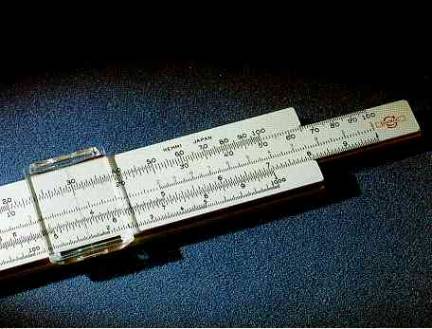
slide ruleI was a physics major in college. The slide rule was a necessary piece of equipment when I was going to school. Hewlett-Packard then came along and replaced it with a line of scientific pocket calculators.
When I began my radio sales career, I adopted the DayTimer written system for keeping track of my schedule and appointments. Then Palm came along and I replaced it with their Palm Pilot Digital Assistant.

When I became a general manager, I wore a pager. That soon was replaced by a Motorola flip phone.

Then Research In Motion (RIM) came along with the Blackberry and suddenly my flip phone and Palm were replaced by a single device.

I loved the size of my Blackberry Pearl smartphone and it wasn’t until I realized that the iPhone4S was the same size as the Pearl and more versatile that I switched to my first iPhone. I also saw Blackberry phones were clinging to life and wanted to adopt an ecosystem that would be around as long as I would be.

Today, I’m fully immersed in the Apple ecosystem and could not imagine what would ever get me to leave it.

Disruptive Innovation

I thought for years that these disruptive changes were due to mechanical innovation. But was that the core reason? Could it be something else?

In 1943, Thomas J. Watson of IBM is credited with saying, “I think there is a world market for maybe five computers.” And Ken Olson of Digital Equipment Company (DEC) while acknowledging the growth of people using personal computers, said he couldn’t understand why.

The Human Factor

How important is the Human Factor in the future of a company, or even an industry?

October 6, 1997: Michael Dell makes an infamously bleak appraisal of Apple’s fortunes. Asked what he would do with Apple, the founder of Dell Inc. says he would “shut it down and give the money back to the shareholders.”

Where do you think Apple would be today if Michael Dell had been put in charge? What did Steve Jobs, who had just returned to lead Apple say to Dell’s assessment? “We’re coming after you buddy!”

Jobs gave Apple a vision, backed it up with management fortitude and people with the technical skills to make the Apple vision a reality. It was those human factors that carried Apple to become one of the most valuable companies in the world.

Apple’s market value (at the time I was writing this article) was $948M and Dell’s was $27M.

Radio’s Human Factor

Which brings me around to the industry I loved for over 50-years, RADIO. The aspect of radio that first captured my attention was the radio personality. These were the people who built the relationship with the listener.

Then there was the dedicated radio programmer who created the stationality, the promotions and like a good sports coach, kept the radio stars playing together as a winning team.

While it appears, too much of the radio industry is focused these days on mechanical things, blaming it for disruptive innovation, maybe the real culprit is radio’s loss of the “Human Factor.”

“Absolutely everything begins with imagination.”

-George Johns

Howard Stern was never really replaced when he left OTA radio for Satellite Radio. Howard Stern, like him or not, has a vivid imagination. For his listeners, he creates a style of radio that they have to hear.

My favorite part of the Stern movie, “Private Parts,” is dialog between the audience researcher and Stern’s WNBC program director Kevin Metheny, aka Pig Vomit.

RESEARCHER: The average radio listener listens for eighteen minutes. The average Howard Stern fan listens for – are you ready for this? – an hour and twenty minutes.

PIG VOMIT: How can that be?

RESEARCHER: Answer most commonly given? “I want to see what he’ll say next.”

PIG VOMIT: Okay, fine. But what about the people who hate Stern?

RESEARCHER: Good point. The average Stern hater listens for two and a half hours a day.

PIG VOMIT: But… if they hate him, why do they listen?

RESEARCHER: Most common answer? “I want to see what he’ll say next.”

Does anyone want to listen to your radio station to hear what comes next?

“Radio only needs to move @ the speed of life.”

-George Johns


24 Comments

Filed under Education, Mentor, Radio, Sales

The Voice Interface

Siri Voice InterfaceThis week I sat in on the Fred Jacobs webinar “Mobile Strategy for Radio: What we learned from Techsurvey 2019” and the #1 take away was “voice (not just smart speakers) is the next important user interface at home and in the car.”

I wasn’t surprised.

The Lowest Common Denominator

Here’s where we can expect technology to be headed to accommodate the next billion users that will be joining the digital media party. The next internet addicted people are those living in the developing world, the ones that will be shaping the internet over the next five years or less. They will be impacting ALL internet and mobile users.

What are the characteristics of these folks?

  • Literacy: lower levels of literacy will require different interfaces.
  • Language: a greater variety of language needs will inspire new content formats.
  • Technology: varying devices & connections will impact content format.
  • Motivations: new wants, needs, and desires will inspire new products & services.

Most of today’s internet is text based, but as populations of lower literacy levels sign-on, that will change this. Voice commands, image search and video content will become more dominant in the near future.

Economies of Scale

Technology companies are already working to have all devices and interfaces operate the same way on a global basis. Everything will be designed to cater to the lowest common denominator because it makes fiscal sense. It’s already happening on Google, Facebook, Apple and Amazon.

Why Apple won’t ever put FM receivers into their iPhones.

FM, HD Radio, DAB and DAB+ are all different standards for broadcasting OTA radio signals and do not meet the test of a global standard.

The Next Internet Revolution is Coming

Look for the next billion to drive the next internet revolution in the areas of:

  • Search: SEO will look very different for voice-centric search.
  • Social: People’s social media interactions will be more video than text.
  • Shopping: E-commerce orders will depend on spoken word.
  • Addressing: URLs & Hyperlinks will move from text to image.

Convergence

Something I researched back when I was an undergrad, convergence, is coming to fruition in my lifetime. Every form of media will be delivered over the same pathway and received on the same type of device plus it will be on-demand and on our schedule, not the creator’s schedule.

Fred’s latest webinar shows that were deep into this transition.

If you’d like to take a Deep Dive into this subject, watch this Hootsuite webinar from 2018 HERE

6 Comments

Filed under Education, Mentor, Radio, Sales

Is Radio Prepared for The Future

Radio & CobwebsIn a lot of ways, the future is here, now.
All of the things we knew were coming back at the turn of the century have become reality.

But the radio industry continues to try to adapt.

Great Companies Don’t Adapt, They Prepare

When I saw that headline on a blog article by Greg Satell two years ago, it resonated with me because it made me realize that the radio industry wasn’t prepared for the 21st Century. It was trying to adapt the past to the present and hoping that it would sustain them going into the future.

Unfortunately, it’s impossible to create the future by focusing on the present.

“The truth is,” writes Satell, “that companies rarely succeed by adapting to market events.”

“Firms prevail by shaping the future…but it takes years of preparation to achieve.

Once you find yourself in a position where you need to adapt, it’s usually too late.”

-Greg Satell

Marconi & Sarnoff

Each generation has its great innovators, so It’s always a challenge to say who makes a greater contribution to changing the world.

Marconi gave us the wireless, a one-to-one form of communications that transformed the world.

Sarnoff innovated the radio as a form of mass communication, giving us a one-to-many instant communication service of news, entertainment and advertising supported radio.

What we can be certain of, each person who creates the future is one who overflows with boundless curiosity.

Investing in Research

All of the Big 5 Tech companies (Amazon, Facebook Microsoft, Google and Apple) invest heavily in research. Each of them, in their own way, has made themselves indispensable from our daily lives.

Recently, a daily newsletter I read called “While You Were Working,” asked its readers which of the Big 5 Tech Companies they could survive without. Here are the results of that survey:

Which Big 5 tech company do you think it would be easiest to live without?

Facebook  70.71%
Apple  14.14%
Amazon  7.35%
Microsoft  5.74%
Google  2.06%

Probably not surprising that Facebook was the choice folks said they could live without by a wide margin.

For five weeks, Kashmir Hill, a writer for Gizmodo, decided to see how she would deal with giving up today’s technology by blocking one of the Big 5 from her world. In her sixth and final week, she decided to go cold turkey and blocked them all. How did that go? Well I think the title of her article said it all, “I Cut the ‘Big Five’ Tech Giants From My Life. It Was Hell.”

Hill compared her experience to that of an alcoholic trying to give us booze. And that life without them makes life very difficult as we are so dependent on them.

I’m not sure any of us really understands how married we are to these Big 5 Tech Companies or how hard it would be for us to give up even one of them, let alone to give them all up.

Listening to Radio

One of the interesting side-bars of the article Hill wrote was that by not having Alexa, Spotify audio books, podcasts or other such services on her Nokia feature phone, what she could receive, unlike with her iPhone, were radio broadcasts and that allowed her to listen to NPR while doing her daily run.

But how sad that listening to radio only seems to be an option when all other options are eliminated.

Investing in the Core Product

Some of the differences between the Big 5 Tech companies are what non-core areas they invest their research money into, like self-driving cars. The one thing they all take very seriously, however, is plowing the lion’s share of their research budget into their core competencies.

In my sales class, I used to tell my students that people don’t buy half-inch drill bits because they want them, they buy them because what they want are half-inch holes. In other words, you will be successful when you invest your time solving your customers’ problems.

Radio Research

Most radio research dollars are spent on one thing, audience measurement. Unfortunately, that’s research that studies the past performance of a radio station, not the present moment. Virtually no radio research money is spent on preparing the ground for the future.

We all know that Artificial Intelligence (AI) is the next big thing. Alexa, in your Amazon Echo, is the perfect example.

How is the radio industry preparing its employees to acquire the skills they will need to excel in an AI world? Artificial Intelligence is a force that will impact the communications industry in the years to come.

Broadcasting has been living off of its seed corn for too many years, while the technology industries have been focused on solving our customer’s problems by investing in them for years, even decades.

Broadcasters can’t create the future by continuing to focus on the present.

Innovation, will require investment in research that, imagines new possibilities.


15 Comments

Filed under Education, Mentor, Radio, Sales

Alexa, Let’s Go for a Ride

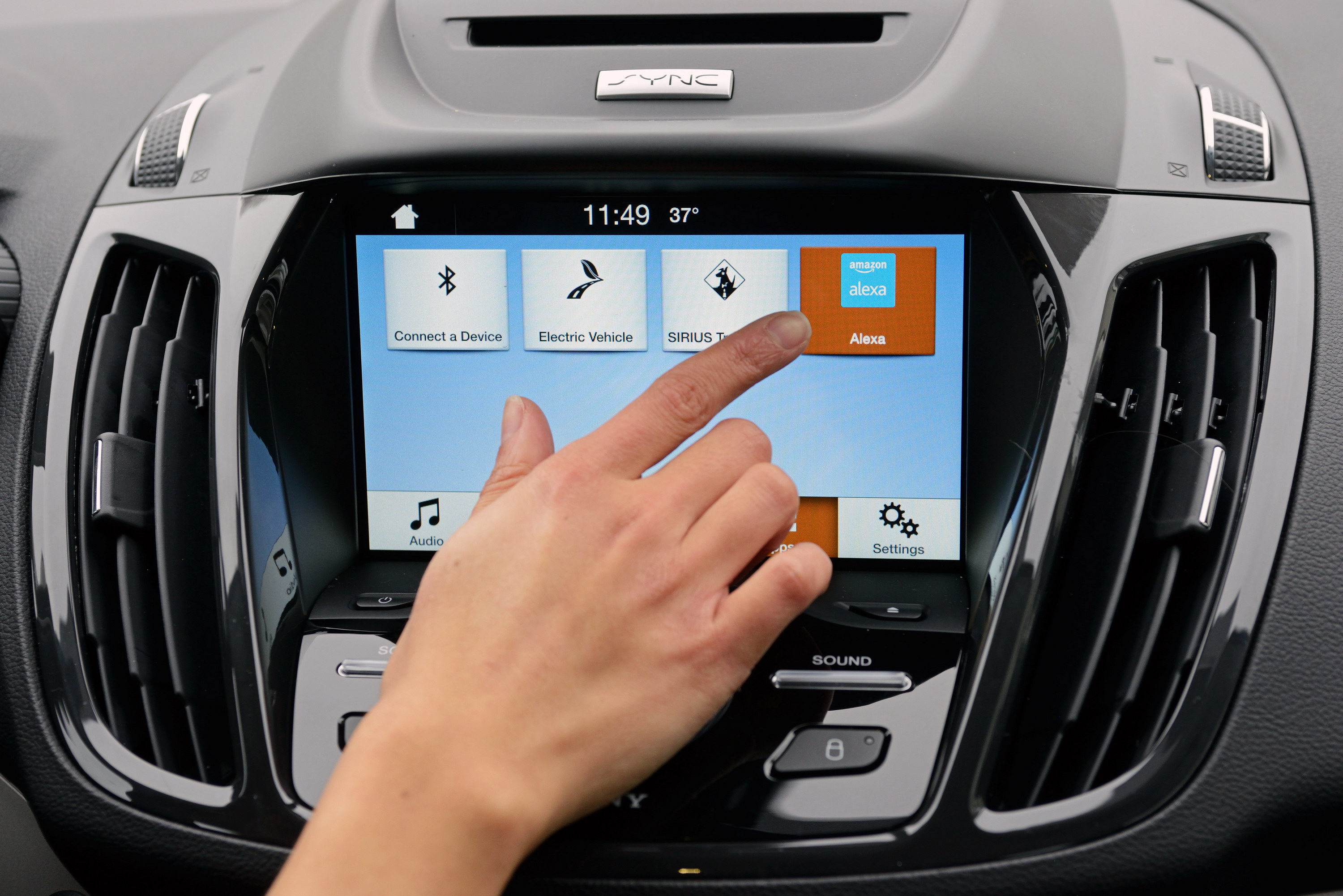
alex in a ford carRadio’s last bastion of domination is the automobile (aka SUV, pickup truck etc.). In the home, voice activated devices are replacing AM/FM radios. I own 3 Echos, and Alexa has become a real friend of the family.

So, when I saw this television ad for the new Fords and how the drivers went from talking to Alexa in their house to talking to Alexa in their car, while they were driving, I saw the future of AM/FM radio for America’s Road Warriors.

Watch the ad HERE

Voice Activated Christmas

The results are in and as of December 31, 2018, 66 million voice activated devices are now firmly entrenched in America’s homes. The big winner is Amazon’s Echo aka Alexa which has a 70% share of the market. Google’s Home has a 24% share and Apple’s HomePod is third with just 6% home penetration.

Ironically, in my own home, I quickly went from one Amazon Echo in 2017 to three in a matter of a couple of months. Virtually all of my internet connected electronics are Apple products, but Amazon is my go-to place to shop. The price of entry for my first Echo was under $30. By contrast expect to pay Apple $349 for their HomePod.

The latest research from the Consumer Intelligence Research Partners* (CIRP) also found that 35% of the owners of these voice activated devices own more than one. That’s about double from only a year ago, so it’s pretty clear that these devices are not collecting dust but are actively being used.

It doesn’t take a lot of imagination to see where once the average American household had about 5 AM/FM radios in their home, the Echo or Home VAD is taking their place. (Today 21% of American households don’t have a single AM/FM radio in them. For households headed by 18-34 year old adults, that number without a single AM/FM radio rises to 32%.)

Alexa is The New Radio

I wasn’t surprised to read that iHeartMedia’s Bob Pittman was calling Amazon’s Echo the new radio. What I was surprised to learn, was Pittman saying that iHeart helped with the development of Alexa. I had never read or heard that before. Which begs the question, why isn’t more attention being paid to the streams of over-the-air (OTA) radio by the industry?

A better question might be, can the same programming techniques that have been used by OTA radio, simply be transferred to internet streams?

Marshall McLuhan

“The medium is the message,” was coined by Marshall McLuhan in 1964. What McLuhan postulated was that the form of a medium becomes part of the programming that is being transmitted. A symbiotic relationship is created by which the very medium that is conveying the program, influences how a person perceives it.

Another way of thinking about this might be, what a person’s expectations are for a particular media experience. We would not expect to see commercials laced through a movie being seen at a theater, but the same movie shown on commercial television laced with commercial interruptions, while maybe annoying, would not be unexpected or a surprise.

However, pay television like Netflix and Amazon Prime have changed the TV viewers expectations about watching television in two ways, no commercial interruptions, and a whole season of episodes released at once and not dribbled out a week at a time.

The internet likewise has changed audio listening expectations with Pandora, Spotify, RadioTunes, Apple Music and Amazon Music to name but a few streamers. Stream one of these and listener expectations of this internet delivered medium, are very few or with no commercial interruptions. Moreover, should you want to know the name of the song and artist, you simply ask while the song is playing, and are immediately given that information. OTA radio rarely tells you what the name of a song is, or who’s the artist.

In fact, the listener expectation using a voice activated device is that you can get anything immediately, simply by asking for it. Everything is at your command and delivered on demand.

For the audio listener, it’s like the difference between having air conditioning or not having air conditioning. Once you’ve enjoyed having central air, you won’t ever want to go back to not having it.

What’s the Listener’s Expectations?

The challenge for the radio industry is creating content that fits the listener’s expectations for the medium they are accessing the content on.

OTA radio is a one-to-many delivery system. Everyone is served the same thing at the same time.

The internet, streamed through a device like Amazon Echo, is a personalized listening experience. Everyone gets it served up the way they prefer it.

Trying to have a single source originating content for both OTA and online, compromises both.


*CIRP based its findings on a survey of 500 U.S. owners of Amazon Echo, Google Home and Apple HomePod, surveyed from Jan. 1-11, 2019, who owned one of these devices as of Dec. 31, 2018.


6 Comments

Filed under Education, Mentor, Radio, Sales