Tag Archives: Audience Ratings

Are we helping or hurting by giving AM radio a piggyback ride on the power of FM radio?

In 1984, when I was hired as a general manager in Atlantic City, New Jersey, Pierre Bouvard was my first sales representative from the Arbitron Company. I’ve known Pierre for forty years and have great respect for him. But his latest research presentation “Nielsen: AM/FM Radio Expands Its Ratings Lead Over TV And Smashing AM/FM Radio’s Drive Time Myth” https://www.westwoodone.com/blog/2024/03/04/nielsen-am-fm-radio-expands-its-ratings-lead-over-tv-and-smashing-am-fm-radios-drive-time-myth/ does something that really troubles me. It combines AM listening with FM listening, as if they contributed equally to radio’s total listening pie. They don’t.

I first wrote about this uneasiness in an article six years ago titled “AM/FM or just FM?” I felt it was worth re-sharing what I wrote as this blog has now broken through the 300,000 views level. I think you will find what I wrote is even more pertinent in the 21st Century.

 AM/FM or just FM?
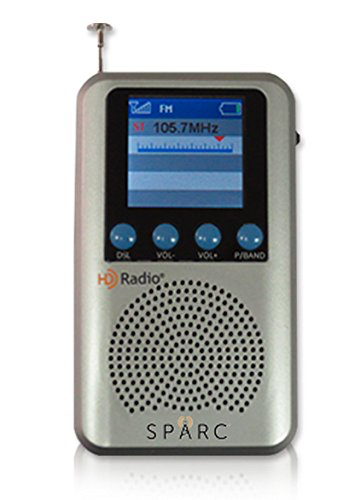
SPARC HD RADIO with FM, but no AM

There’s something that’s been troubling me for some time. It’s the radio industry’s habit of reporting radio listening results by calling it “AM/FM” versus what it really is, virtually all FM radio listening.

Nieman Lab

Who could not be buoyed by this headline from Nieman Lab: “AM/FM radio holds strong for American listeners.” ( http://www.niemanlab.org/2018/07/am-fm-radio-holds-strong-for-american-listeners/ )

But is it true?

When I read the ratings reports from both PPM and diary markets, I see an FM world.

Don’t get me wrong, I grew up on AM radio and recognize that almost every market has a heritage AM radio station that still garners a big audience. I’m not blind to the wonderful ratings of 1010 WINS in New York City for example.

But there are only 26 all-news terrestrial radio stations left in America according to Nieman. This popular format is missing from the majority of America’s radio markets.

WTOP

WTOP was built on AM radio. It moved its entire operation over to the FM band and grew its audience, revenues and lowered its listener demographic. People who never heard this radio station on its AM dial position were suddenly newly minted fans of their all news format.

The FCC Saves AM Radio

The FCC’s mission to save AM radio is to give these radio stations an FM dial position using a translator. What are we really saving? The AM band or a particular format that a radio operator created on the AM band and now, to survive, needs to move it, like WTOP, to the FM side of the dial.

WIP

From my blogging, I get lots of feedback about a variety of things concerning broadcasting. One reader wrote to me about his father, a sports fan, who turned on WIP-FM to hear the latest chatter. WIP-FM was broadcasting a game of no interest to his father, so his son said to him, why don’t you turn on WIP AM610. Sadly, this person wrote the audio was unlistenable. He wrote: “You’d think the FCC would mandate that AM have standards for audio quality in receivers.”

WSM

When I was living in Bowling Green, Kentucky, I couldn’t receive 650AM WSM in my office, even though my office looked south and my antenna was able to enjoy a full wall of windows. The noise floor both inside my university office as well as around town while driving in my car made the station unlistenable. WSM was once listened to all the way to Louisville in northern Kentucky. Instead, I downloaded WSM’s app and could enjoy the radio station in crystal clear stereo. (I see WSM has stopped subscribing to Nashville Nielsen Audio ratings.)

BBC

The British Broadcasting Corporation (BBC) did a review of the range of services it offered on the AM band (called medium wave across the pond) and it included a financial review of all its services too. They concluded the ROI (return on investment) in AM was not there and announced they would be turning off some 13-AM radio stations in January 2018 according to Radio Business Reports.

WHVO

There’s a great radio operator in Cadiz, Kentucky by the name of Beth Mann. WHVO is her AM radio station at 1480, but if you go on her website, you won’t find any mention of this station being on the AM radio dial. It’s promoted as WHVO 96.5 & 100.9 FM. ( http://www.whvoradio.com/ )

Bottom Line

It’s time to face the fact that AM radio needs to be re-deployed for a new service. Current radio station owners should be given a viable FM dial position that replaces their AM service area, and doesn’t require multiple translators to attempt to accomplish this task. (Note: WHVO needs two translators to deliver the signal of its AM 1480.)

It’s time to allow those same dedicated radio broadcasters to sell off their expensive AM tower sites and turn off their AM stations that consume electrical power with no real ROI.

Ecclesiastes 3

“To everything there is a season, and a time to every purpose under heaven…”

AM radio’s time has come and gone as the mass communication delivery system it was from the 1920s to the 1970s, much as radio replaced vaudeville.

To put things in perspective, at a time in America’s radio history when the number of FM signals equaled the number of AM signals on the air, 75% of all radio listening was to FM. So, you can only imagine what it’s like today for AM radio listening.

That’s why I believe we do no service in promoting radio as “AM/FM” and not being honest about where virtually all of the radio listening is really taking place.

Sadly, AM radio is to broadcasting as coal is to power generation. ( https://dicktaylorblog.com/2017/08/20/coal-aint-coming-back-neither-is-am-radio/ ) It was the perfect solution in its day.


11 Comments

Filed under Education, Mentor, Radio, Sales

NOT the Music of MY Life

112I read the transcript of the interview Mark Ramsey did with Gordon Borrell about how radio advertisers are less interested in audience and more interested in a buyer. It got me to thinking about my own radio sales experiences over my career.

Live by the Numbers, Die by the Numbers

Anyone who sells in a rated market has probably heard that phrase about what happens when all you sell are your ratings numbers. But what happens in unrated radio markets? How do these folks sell?

Cash Register Rings

Early in my radio career I landed my first general manager position at the age of thirty. It was as GM of an Al Ham formatted “Music of YOUR Life” thousand watt AM daytimer with no pre-sunrise or post-sunset authorizations.

In a market with no audience ratings measurement what we did was create a fan club for our listeners. We then created a fan club book of the names and locations our listeners lived. This book included state representatives, mayors, major business owners and even television & movie stars. It was a pretty impressive foot-in-the-door and helped us to close many sales.

But the way we measured the impact of our advertisers’ radio commercials were in cash register rings. That’s the real measure of R.O.I. (Return On Investment) for local owner/operators.

Does Anybody Really Listen to THAT Music?

I remember calling on the manager of our local Agway store as if it were yesterday. Rick Hurd was his name and he was about as old as I was at that time. He loved contemporary music and the big band selections my station played were definitely NOT his “cup of tea.”

“Does anybody really listen to THAT music?” he always asked. I said “YES, lots of people do and they are the very people who own the big country estates that you should be doing business with.”

After lots of weekly calls, Rick Hurd gave me my opportunity to show what my radio station could do.

Tell Our Advertisers You Heard About Them on “The Music of YOUR Life”

A key component of my marketing strategy was to air on a continuous basis how important it was for listeners of my radio station to tell our advertisers they were listening. We did this in a variety of ways and made sure to keep this type of messaging fresh.

Shortly after Rick began his Agway store advertising on my radio station, I stopped in to see how it was going. He said, “Dick, I still find it hard to believe that anyone enjoys the music you play over the radio, but WOW are those folks ever vocal and passionate about your radio station.” “I hear about your radio station at least once an hour from customers, some of whom I’ve never seen in the store before,” he told me.

How Many Listeners Do You Need to Be Effective?

I won’t ever know how many listeners we had to that radio station, but I do know how many were in our fan club.

The “secret sauce” of our marketing was making sure our audience understood how important it was for them to tell our advertisers they were listening and that they loved our programming and that in order to keep it on-the-air, they needed to patronize our advertisers and tell them what brought them into their place of business.

Bonneville Beautiful Music

Based on the sales success I had with an AM daytimer, my company’s President/CEO promoted me to general manager of his newly acquired Atlantic City radio stations. The AM station was a thousand-watt full-time news & information station and the FM was a 50,000-watt Bonneville Beautiful Music formatted radio station. Both stations appealed to a senior audience.

Atlantic City was a rated market and so Arbitron Ratings were important, especially for the advertising agencies out of New York, Philadelphia, Baltimore etc.

But what we really sold was the quality of our audiences and we worked very hard to build personal relationships with all of the buyers.

As general manager, I often went on out-of-town trips with my director of sales to call on the people who bought the advertising. We constantly heard “we’ve never met anyone from any of the radio stations in Atlantic City before.”

Relationships are VERY important in the radio business.

And as Simon Sinek likes to say “People don’t buy what you do, they buy why you do it.”

Age Wave

Another factor I employed in talking about the quality of our audience and the tremendous buying power they wielded came from the research of Dr. Ken Dychtwald that he conducted during the period of 1973 to 1979.

In 1986 Dr. Dychtwald coined the term “Age Wave” and formed a company to consult companies on how to market to a mature market.

I devoured Ken’s book and used it to market my Atlantic City radio stations to advertisers.

Key Factors to Consider

The Age Wave http://agewave.com/ website lists four key factors that will reshape supply and demand as the boomers move into maturity. The two that radio should be considering how to leverage are:

  • Boomers will have increasing amounts of discretionary dollars (for many) over the long-term as a result of escalating earning power, inheritances, and investment returns
  • Boomers will undergo a psychological shift from acquiring more material possession and towards a desire to purchase enjoyable, satisfying, and memorable experiences

The future is filled with challenges and opportunities, but then that’s always been the case for those who could see them and were willing to roll up their sleeves.

16 Comments

Filed under Education, Mentor, Radio, Sales

Jacobs’ Four Questions

15Fred and Paul Jacobs are prolific bloggers; they blog five days a week. Recently, their blog asked four questions about the future of radio. I found them interesting and thought I’d give you my answers to their questions. I’ve provided a link to their original blog post here.

  1. What is radio? I guess I’d have to say my earliest exposure to radio was of the amplitude modulation kind; AM radio. My first radio was a Zenith transistor AM radio with a single earphone. In junior high school, I would build an AM & FM radio station in the basement of my parent’s home and broadcast to my neighborhood. When I went to the FCC field office in Boston to take my FCC license exam when I was in high school the license I would receive said “Radio Telephone Third Class Operator Permit (Restricted Radiotelephone Certificate).” I remember thinking the day I received it, “Why does it say telephone on it?” Nathan Stubblefield, a Kentucky melon farmer and inventor, invented the first radio (many would say). Nathan invented it because he wanted to be able to talk to his wife at home while driving his car. Maybe Nathan and the FCC were just ahead of their time, for today RF goes through the air to our smartphones giving us the ability to send and receive voice, pictures, and data. Today’s pocket computers – smartphones – have synthesized every form of mass communication into a single device. When Apple was putting together the launch of their Beats 1 stream, Zane Low said they spent three months trying to come up with a name to call what they were about to launch. They couldn’t come up with a better name than radio. And that’s what I find teaching at the university. My students basically call everything audio sourced “radio.” Every semester when I poll my students as to what media device they would keep, if they could only keep one, the overwhelming winner is their smartphone. The reason is simple; it allows them to do everything while every other media devices can only do a single application or two. The History Channel did a program on the 100 Best Inventions of all time. Radio was number two. The smartphone was number one. Today’s smartphone is the “transistor radio” of my youth.
  2. What are ratings? I’m a graduate of the Roy H. Williams Wizard Academy and Roy believes that any radio station with about thirty thousand listeners has more than enough to drive business for any advertiser. So what’s the defining measure of a radio station? The quality of the content of its advertising. Ratings were only created for one purpose, to sell advertising. Initially a concept called “applause cards” was used by radio operators. These were simple post cards that could be picked up by consumers at local retailers, filled out, and mailed in. The Association of National Advertisers would hire Archibald Crossley to create a way to discern what people were actually listening to on the radio. Crossley would produce reports from his Cooperative Analysis of Broadcasting (CAB) system. CAB used telephone recall much like Tom Birch did with his Birch Ratings reports. Today, everyone’s hung up on the measurement systems of clicks and clacks of the Internet. Ad Blocking is going to put a real dent into this system that really doesn’t tell advertisers what they wanted to know anyway. The simple fact is no one is measuring what counts. Great creative content gets results and radio needs to invest in employing dedicated copywriters once again.
  3. What is content? I wrote a whole blog post on content that went viral. I won’t re-plow that ground again in this post. If you’d like to read what I wrote, go here.
  4. What is in-car entertainment? I remember when buying a car, one of the options was adding a rear speaker to your AM radio for passengers riding in the back seat. Those were simpler times. I’ve lived through every new device that was going to be the death of radio in the car: 8-track tapes, cassette tapes, CB radios, CDs, CD changers, MP3 players, smartphones, streaming audio. Nothing has. However, the new digital dashboards appear to be so complicated, I fear for the folks who could never stop the blinking 12:00 on their VCRs. The new learning curve to find the radio on new cars might be a problem. My Honda Accord has lots of digital components to my entertainment system, but what I love most is Honda left the volume control knob I can turn. Rick Dees loves rotary pots on his control consoles and will not work a board that has slider pots. 19Crank it up means turning a knob. Radio people are going to have to make sure their car dealers demonstrate, or even set-up for their new car customers, how to find and lock in their local radio stations on these new digital dashboards. If the radio listener can easily find their favorite hometown companion, then they will default to what they know and love best. The reason radio has retained over 92% of its listeners is because all those new media devices mostly took out the new media device that came before it. Free over-the-air radio is unique and special. Let’s all work to keep it that way.

And so that’s my take on Fred and Paul Jacobs “Four Questions for Radio.” What are yours? Please share them with me by writing them into the comment section of this blog. I can wait to read what you have to say.

13 Comments

Filed under Education, Mentor, Radio, Sales, Uncategorized

Radio – America’s #1 Mass Reach Medium

radio-reaches-245-million-americans-2015-2This was certainly true in the first golden age of radio, that period of time from its birth in 1920 through the mass takeover of television in the 1950s. Once TV came along, radio had to reinvent itself.
 

That reinvention came in the form of Rock ‘N’ Roll, the transistor radio and the car radio. Radio was portable, TV was not. TV took over the living room, but radio took over every other place.


In my life, I’ve lived through every new form of technology that was going to be the death of radio. The 8-track tape, the cassette tape, the CB radio, the CD player, the CD changer, the cell phone, the MP3 player, and most recently, the World Wide Web, Internet streaming and wireless broadband.


So you might be surprised to learn that at the 2015 annual meeting of the Association of National Advertisers Masters of Marketing Conference in Orlando, Florida attendees learned that when it comes to adults 18+, RADIO reaches 93% of them every week. That’s more than TV, more than smart phones, more than PCs and more than tablets.

8

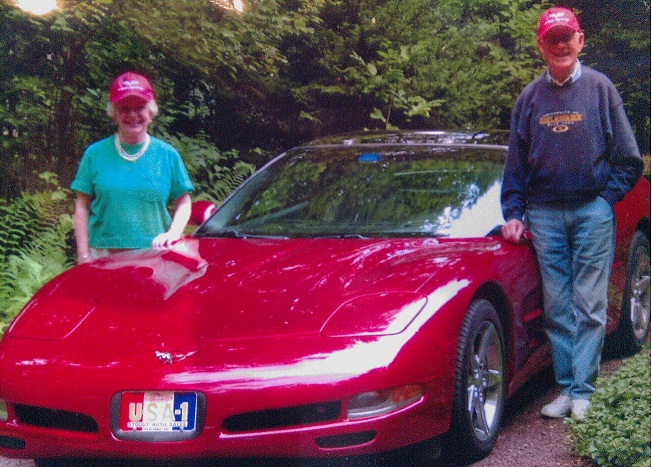
I remember when I got my first GM position. It was a daytime radio station that featured Al Ham’s “Music of YOUR Life” format, big band music for those not familiar with the programming. Yes, my audience was old. But only according to the calendar, but not the way they thought about themselves. Nampa and his corvette

It was always a tough putt with new advertisers, getting across this concept that you are as young as you think. So I wasn’t surprised to learn that one of the sessions talked about “APT.” APT was all about the “Age People Think” not demographics.


I’m not sure that lumping people by demographics was ever a sound marketing idea, but like a lot of bad ideas (buying radio on a Cost Per Point basis) in advertising, people do what’s always been done and ignore if it’s a sound way to place advertising.


A lot of my radio stations over my career have focused on an older demo. When Ken Dychtwald’s book “Age Wave” came out in 1990, I read it with enthusiasm. Dychtwald told of the massive population and cultural shifts that would be taking place because of the Baby Boom Generation. He put forward how the boomers would shift the epicenter of consumer activity from a focus on youth to the needs, challenges, and aspirations of maturing consumers. Those predictions are playing out today.


So again, I wasn’t surprised to read that at the ANA gathering attendees were told that old people were a growth market. In light of the trillion dollars in student loan debt, the millennials are cash challenged in a way that the Boomers are not.


I grew up in a Chevy family. Remember those days of yore? Chevy families and Ford families competing for bragging rights as to which drove the better cars?


Many marketers would have you believe that we are now stuck in a rut with our product choices and only the young are pliable enough to be swayed to try or change brands. So let’s see how that plays out in my family. I have two older brothers; one drives a Honda and the other a Toyota. How about our kids? Well we have a BMW, Mercedes Benz, Hyundai and Honda. In my case, I drove a Hyundai for the past eight years before switching to a Honda Accord; so much for that concept that once you are stuck in a brand, you stay there for life. Even my toothpaste is not the brand I grew up using.


Everything has changed about the world with the exception the way marketing is created and advertising is bought.


One of the big changes is that RADIO is back! It’s the massive reach medium that advertisers seek to expose their products and services on, except that they don’t know it.


Radio needs to use some frequency and repetition to get the word out.


Willie Sutton said he robbed banks because that’s where the money was.


If you’re an advertiser, you need to advertise where the people are and that’s today’s RADIO.

1 Comment

Filed under Education, Mentor, Radio, Sales, Uncategorized