Tag Archives: FCC

Colleges That Give-up Their FCC License

fcc-logoI recently wrote an article for Radio World about the impact of colleges that sold their student radio station’s FCC license had on the pedagogical program at those institutions. You can read that article in Radio World here.


Today, I’d like to share with you something else I learned in talking with educators from around the country while researching this article. The FM license in every case connected the student station to the community. It was the heart and soul of the operation. When the license was sold and the station would become an online Internet only radio station it lost that connection.


Now the irony is that all of these student radio stations didn’t stop broadcasting over the FM band and then become Internet radio stations. No, they already had been streaming on the Internet and had listeners from all over the world in many cases. So why didn’t that continue to sustain these radio stations?


Let me make a comparison to help you understand this a little better. When you buy a magazine, do you read only one article and then toss it away or do you turn all the pages and look at other things in addition to that cover story that first attracted your attention and caused you to purchase the magazine? You read, if only skimming, the entire magazine. You spent time with that publication and became a little more invested in it. If you subscribe to the magazine this would be akin to being a P1 listener to a radio station.


When you see an article from a magazine online do you read the whole magazine or just the article that captured your attention and then leave? You do what we all do. It’s one and done. No investment in the magazine, just the article.


Well, what I learned is that it apparently isn’t all that much different when it comes to student streaming radio stations. It’s more of a hit and run.


There’s also a problem with student online radio stations in that they have limited connection capacity in most cases. That means only a limited number of people can listen to the stream, unless the college makes a big investment in expanding the capacity in the number of listeners can be connected at the same time. This is somewhat solved if a student station goes with a large online aggregator like TuneIn or Live365.


But let’s be real, when you enter a store and everything in the place is priced the same – FREE – which would you chose? The best you could find. Good Luck student stations.


Contrast that with student radio stations that broadcast over FM radio. What you find is that they are now only competing within the local community of service and in that playing field, have a chance to break through and be heard.


Over 92% of Americans 12-years of age and older still have the radio habit and listen every week. When it comes to listening to streaming stations on the Internet the percentage of penetration doesn’t come close. And those that do listen to streaming Internet music are very likely tuned to Pandora, if the current data available about such things is to be believed.


Another thing I heard was how more and more of these student radio stations were working to get a LPFM license so they could return to the air on the FM radios in their community.


When Zane Lowe was getting ready to launch Apple’s Beats1, he told the trades that a big part of the three months leading up to the launch was spent trying to come up with a better name for the new service than radio. They couldn’t do it.


Radio is the brand, because it works.
10 Comments

Filed under Education, Mentor, Radio, Uncategorized

Radio: Landmark or Beacon

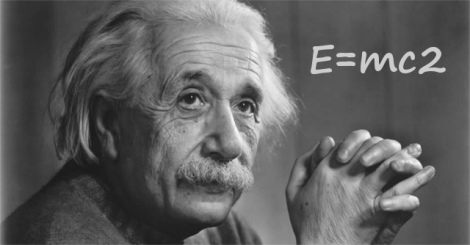
albert-einstein-2Even though it was 110-years ago that Albert Einstein would disrupt the world with how we saw the universe and how we saw time, space, mass, energy and light, we still invoke his name when a person does something brilliant. We say they’re an “Einstein.”

Unfortunately for Einstein, his groundbreaking 1905 theory that would be the foundation for a new way of thinking in physics – quantum mechanics (which gave us things like lasers, microprocessors and iPhones) – wasn’t embraced by this genius. It would be his undoing for the rest of his life.

In the world of higher education, the importance of publishing in an academic journal is more revered than publishing on LinkedIn (where other forwarding thinking professionals hangout) or on a personal blog that’s available to the world. What once was – really isn’t anymore, except to those who cannot accept that today we live in a world made up of platforms, not products.

Radio suffers from a similar dilemma. To traditional broadcasters, radio is something that needs an FCC license, radio tower, antenna and transmitter that sends a signal out over the AM or FM radio bands. I always smile when I look at my old Radio Telephone Third Class Operator Permit that I earned taking a test administered by the Federal Communications Commission at the Customs House in Boston back in 1968. Notice it had the world “telephone” in the name.

Kentucky melon farmer Nathan Stubblefield was an early experimenter in radio broadcasting. Only Nathan wanted his wife to be able to talk to him while he was driving his car from their farmhouse. For you see, in those early days no one was quite sure what this new technology would or could be used for.

“The next big thing always starts out looking like a toy,” says Chris Dixon.

So when people started streaming over the Internet and calling it “radio,” traditional broadcasters looked down their noses at it in much the same way that journalists looked down their noses at the new media platforms like Buzzfeed and Vice Media invading their world.

Einstein teaches us something more than E=mc2, it’s that we need to learn to accept the new platforms that disrupt the world as we knew it and are creating the world that will be. Radio, higher education – most likely your business too – cannot afford to be Einstein-like in our future thinking. The world is moving faster and faster. 50% of today’s jobs won’t exist in ten years.

The iPhone, the Connected Car, Buzzfeed, Bitcoin etc are all platforms.  Radio, colleges, newspapers etc. are all products. Understanding this dichotomy is critical.

In Abraham Pais’s book “J. Robert Oppenheimer: A Life” he writes that Einstein’s inability to adapt to new platforms failed him and that he became a “landmark, but not a beacon.”

And so the choice in our world today is to adapt or die.

Welcome to the age of disruption created by the Internet.

5 Comments

Filed under Education, Mentor, Radio

Why is so much of television so bad?

That’s the question that Newton Minow asked on May 9, 1961 when he addressed the National Association of Broadcasters in Washington, DC.

In his first public address after he took over as chairman of the Federal Communications Commission (FCC) Mr. Minow didn’t pull any punches. He made it clear that in his role at the FCC he was going to make darn sure that broadcasters operated in “the public interest.”

What is meant by operating in “the public interest?” That’s been open to interpretation since those words were written down. Here’s how Mr. Minow defined them:

“Some say the public interest is merely what interests the public. I disagree. And so does your distinguished (NAB) president, Governor Collins, who said ‘Broadcasting to serve the public interest, must have a soul and a conscience, a burning desire to excel, as well as to sell; the urge to build the character, citizenship, and intellectual stature of people, as well as to expand the gross national product….By no means do I imply that broadcasters disregard the public interest…But a much better job can be done, and should be done.’ I could not agree more with Governor Collins.”

Mr. Minow also told the radio broadcasters in the room that the FCC wasn’t going to go to sleep at the switch on them; they were still listening, but that most of the controversies and cross-currents in broadcast programming were swirling around TV and that’s what he planned to address in this speech.

“When television is good, nothing – not theater, not the magazines or newspapers – nothing is better. But when television is bad, nothing is worse,” said Minow.

He then threw out this challenge to television broadcasters:

“I invite each of you to sit down in front of your television set when your station goes on the air and stay there, for a day, without a book, without a magazine, without a newspaper, without a profit and loss sheet, or a rating book to distract you. Keep your eyes glued to that set until the station signs off. I can assure you that what you will observe is a vast wasteland.”

Mr. Minow is 89 and living in Milwaukee, Wisconsin. On the 50th anniversary of his famous speech, he was interviewed by James Warren of the Chicago Tribune. Minow was 35 years old when he took over as chairman of the FCC under President Kennedy. He told Warren that he couldn’t have anticipated the impact his speech would have. Minow’s severe censure of TV’s “procession of game shows, violence, audience participation shows, formula comedies about totally unbelievable families, blood and thunder, mayhem, violence, sadism, murder, western badmen, western good men, private eyes, gangsters, more violence and cartoons” remains highly “radioactive” to this day.

If you’re a fan of the television show “Gilligan’s Island” you might not have realized that the boat that sank was coyly named after the FCC chairman; however spelling it S. S. Minnow. Does that give you some idea of how distasteful having their medium called “a vast wasteland” was to the TV men of that day?

Mr. Minow’s own daughters joke that their dad’s tombstone might be inscribed with the words “On to a vaster wasteland.”

In 1998, President Clinton appointed a commission to review “the public interest” on the eve of the arrival of Digital Television. That commission issued a 160-age report on December 18, 1998.

In 2015, “the public interest” issue has been addressed with respect to the Internet.  Again, the FCC under its current chairman Thomas Wheeler has come forward with a plan that has been as well received by the “Internet men” of today as Mr. Minow’s assessment of TV back in 1961. Here’s what the FCC decided:

Adopted on February 26, 2015, the FCC’s Open Internet rules are designed to protect free expression and innovation on the Internet and promote investment in the nation’s broadband networks. The Open Internet rules are grounded in the strongest possible legal foundation by relying on multiple sources of authority, including: Title II of the Communications Act and Section 706 of the Telecommunications Act of 1996. As part of this decision, the Commission also refrains (or “forbears”) from enforcing provisions of Title II that are not relevant to modern broadband service. Together Title II and Section 706 support clear rules of the road, providing the certainty needed for innovators and investors, and the competitive choices and freedom demanded by consumers.

The new rules apply to both fixed and mobile broadband service. This approach recognizes advances in technology and the growing significance of mobile broadband Internet access in recent years. These rules will protect consumers no matter how they access the Internet, whether on a desktop computer or a mobile device.

The public interest standard has long provided guidance for promoting greater diversity in content, political debate, access, service to local communities, education, diversity and equal employment. The communications revolution will continue to challenge policymakers to ensure operating in “the public interest” remains.

Leave a comment

Filed under Education, Mentor, Radio

More is Less

In 1994, Dan O’Day was holding one of his famous “PD Grad Schools” in Dallas, Texas. One of the speakers he invited that day – and whose presentation was recorded by “Radio’s Best Friend” Art Vuolo – was a young Randy Michaels. Dan O’Day still sells this video, now on DVD, and labels it “The best radio video ever.” I would agree.

The video is titled “Positioning Your Radio Station by Randy Michaels.”  It addresses the explosion of new FM radio stations after the first round of radio deregulation brought us Docket 80-90. Then the LMA (Local Marketing Agreement) was born. Randy tells the audience:

“This was a fundamental change for the radio business. Just as TV was a fundamental change, duopoly fundamentally changed the radio business. This moved the radio business from being a franchise to being a commodity. McDonalds was once a franchise. Today burger fast-food restaurants are a commodity and we all know how that’s working for the ‘Golden Arches.’”

On May 24, 2004 the Federal Communications Commission (FCC) held a “Broadcast Localism Hearing” in Rapid City, South Dakota. The president, general manager and co-owner of KLQP-FM licensed to Madison, Minnesota (population 1, 767) Maynard Meyer addressed the commission. He told them (I’ve edited his comments. The full text can be found here.):

“Localism in radio is not dead, but it is in dire need of resuscitation in many areas. I have been involved in the radio business in announcing, sales, engineering and management for about 36 years, all of my experience is in communities of 5,000 people or less. We personally live in the communities we serve so we know the ‘issues,’ we work to address them in our programming and have been doing so for the past 21 years. “

“A few years ago, many stations operated this way, but much of that has changed for a variety of reasons. I think the beginning of the end of local broadcast service started in the 1980s when the Federal Communications Commission approved Docket 80-90.”

Mr. Meyer went on to explain to the FCC how many communities that “on paper” had a local radio station actually found that the transmitter was being fed from another location tens of miles away. Mr. Meyer went on to say:

“I don’t think this is the best way to promote local radio service. From what I have seen through my personal experience, as soon as a hometown studio is closed and relocated, the local service is relocated as well.”

Now put another decade plus on the calendar and we find that the FCC has decided that adding even more FM radio stations would fix this problem of local radio service that operates in the public “interest, convenience and/or necessity” by issuing FM licenses for FM translators and Low Power FM radio stations.

The most recent BROADCAST STATION TOTALS AS OF MARCH 31, 2015 issued by the FCC shows that there are 4,702 AM commercial radio stations, 6,659 FM commercial radio stations and 4,081 FM educational radio stations on the air. But wait; there are also 6,312 FM translators & boosters on the air; plus, another 1,029 Low Power FM radio stations. That’s 22,873 radio stations! And they now compete with SiriusXM satellite radio and streaming audio from Pandora, Spotify, Radio Tunes etc.

If Randy was thinking back in 1994 “being a media company today is a really tough business” he was seeing just the tip of the broadcast iceberg.

Randy’s prescription that day in Dallas was as prescient then as it is today; maybe even more so. He told the audience of program directors:

“In a crowded media environment radio needs to super-serve its local community. Be everywhere, all the time. Miss a day, miss a lot. Radio’s BEST when it’s personal.”

“What’s your station’s impact rating? Great radio stations are listener-focused.”

“If you’re smart enough to win in today’s radio, you’re smart enough to have done something legitimate with your life. This is work. This is a real job. It’s the merger of art and science and you’ve got to have both.”

I’m encouraged by my students who have big ideas about the future of radio and a desire to serve the communities they will be moving to and living in. I’m encouraged by some great radio broadcasters getting back into the business who are bringing back the fundamentals of great radio while extending that sense of purpose to the digital component that must be a part of today’s media company.

The pendulum is swinging back and it can’t get back here soon enough.

6 Comments

Filed under Education, Mentor, Radio, Sales

Who’s in Their Ear?

When radio was first introduced, to listen to it, you needed to wear headphones. Radio was one-to-one and very intimate. As the technology evolved the radio speaker would change the medium from one-to-one to group listening. Radios were expensive. If you owned a radio you shared it. A family would gather around the radio and listen together. Families would transfer this together media habit to TV and the transistor radio would become the refuge of teenagers who wanted to go in a different direction.
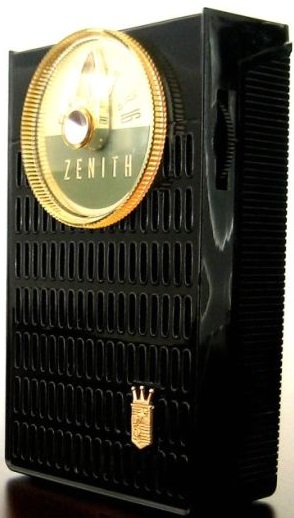

Zenith Transister Radio

My first radio was a Zenith transistor with a little ear piece for one ear. I would go to bed and turn it on under the covers and listen to “the world.” It was all AM radio and after sunset, the DX’ing of the nighttime skywave would always bring a new radio station into my ear to savor.

In the mid-70s the Boombox would be introduced to America and these radios grew both in size and the amount of bass they 1could produce. By the 80s they could be as big as a suitcase and carrying them around on your shoulder was a status symbol.

Go to a beach resort, and whether you were walking the boardwalk or on the beach, radios were blasting music from every direction.

When Y2K didn’t impact our fully computerized radio stations, we all breathed a short-lived sigh of relief because it was quickly followed by a new threat; the iPod and ear buds. Once again listening to music became a very personal activity.

The ear buds would transfer to the iPhone and iPad. The introduction of the iPhone6 may have killed the iPod, but not the use of headphones or ear buds to listen to your audio.

So what exactly are all those people listening to? lady listening with ear buds

The latest research from Edison Research says American Teens are spending more time with streaming audio services from places like Pandora and Spotify, than they are listening to either streaming AM/FM radio or over-the-air radio. Edison reports this finding in their fall 2014 “Share of Ear” report.

Remember it was my generation that grew up hooked on radio & TV that were credited with eroding newspaper readership. (Full disclosure: I read all my news online using my computer, iPad or iPhone.)

It’s not all bad news for AM/FM radio. It is still popular Edison tells us “by a significant margin among all other age groups.” So where did the teens go? Pureplay Internet streamers. What do they love most? The ability to skip a song they don’t like.

That’s really not hard to understand. I love my DVR for a similar reason. Especially when it comes to award shows. I never watch them live anymore. I record them for later viewing and I can watch a 3+ hour awards show in about 20 minutes time. I skip all the bad parts.

In fact, I rarely watch anything on TV live anymore. Everything is recorded so I can control it. So is it any surprise that teenagers once they are given this kind of control will ever want to give it up. A new habit is being formed.

The other aspect about pureplays that AM/FM radio could be addressing is their complete focus on the quality of their streaming product. What I’m hearing is a clean commercial insertion. Nothing gets cut off in the middle or repeated multiple times in the same long break. Pureplays deliver their commercial messages in a style that compliments the music programming; in a way that actually has you enjoying listening to the commercial message.

The teenagers have moved their listening to streaming and podcasts. The spectrum auction being held by the Federal Communications Commission is all about creating more wireless connections for all kinds of mobile devices.

I live in South Central Kentucky. I can stream my iPhone into my car’s seven speaker sound system through Bluetooth and everywhere I drive it’s clean and clear with no dropout or buffering. It’s scary good. It’s as easy to do as turning on my car’s audio system. Nothing to plug in or connect. It happens automatically.

South Central Kentucky is also blessed with some excellent over-the-air radio stations. So they very effectively compete, in my opinion, with streaming. But I wasn’t raised on streaming. I also like a good air personality.

The next generation is being raised on streaming that they have some power over to skip things they don’t wish to hear. Reminds me of the old saying “How are you going to get the kids back on the farm, after they’ve seen New York?”

baby listening to ear buds

2 Comments

Filed under Education, Mentor, Radio