Tag Archives: Fred Jacobs

Happy 80th Birthday Art Vuolo, Jr

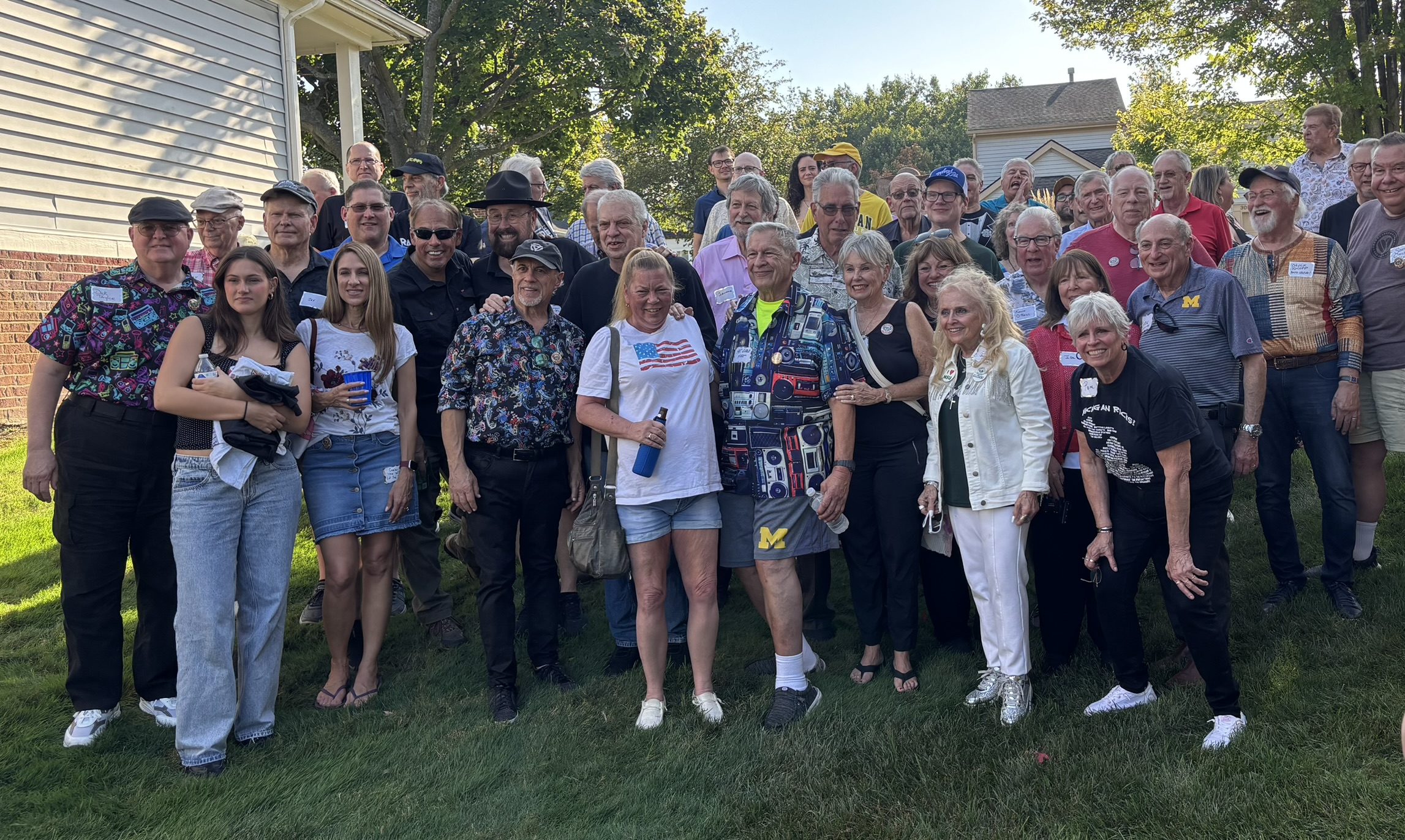
On September 27, 2025, radio people from all over the United States traveled to Novi, Michigan to celebrate Art Vuolo, Jr’s 80th birthday and enjoy each other’s company. The weather was spectacular, as the 150 or so folks that gathered renewed old acquaintances and/or made new ones.

I’ve known Art for over four decades, and cherish him like a brother.

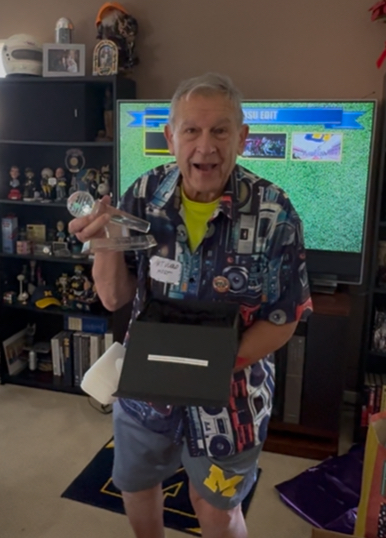
Sue and I commemorated Art’s decades of video recording America’s Best Air Personalities, by presenting Art with a crystal microphone for truly being “Radio’s Best Friend.”

Today’s blog is a montage of pictures Sue and I took on that special day.

Art Vuolo, Jr holding his “Radio’s Best Friend” crystal microphone
Phlash Phelps is presented with a plaque commemorating his 25-years on the air at SiriusXM
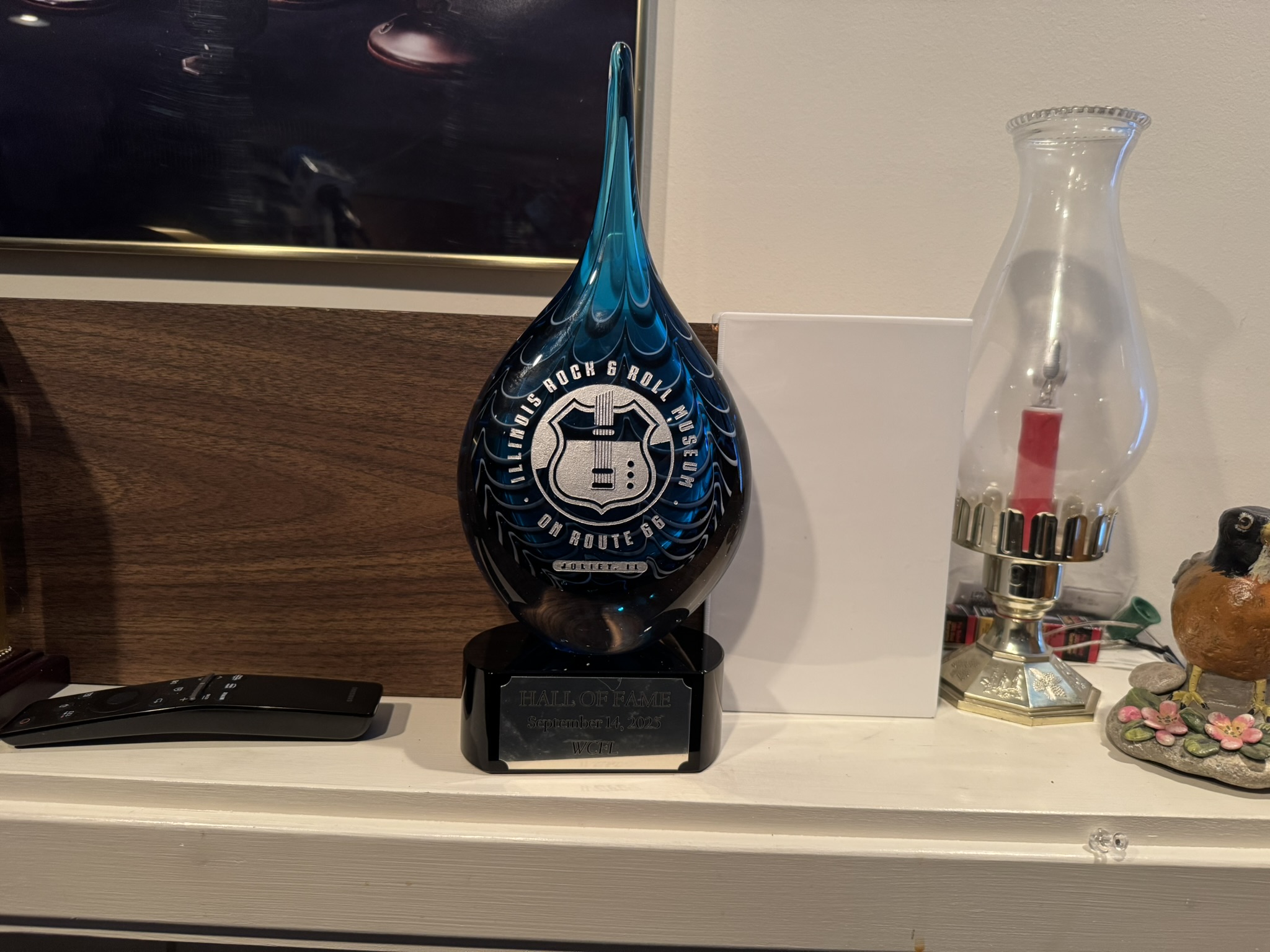
The Illinois Rock & Roll Museum inducted Chicago radio station WCFL into it’s Hall of Fame, two weeks before Art’s 80th party. Since WCFL is no more, it was decided that Art Vuolo, Jr should be the caretaker for this award.
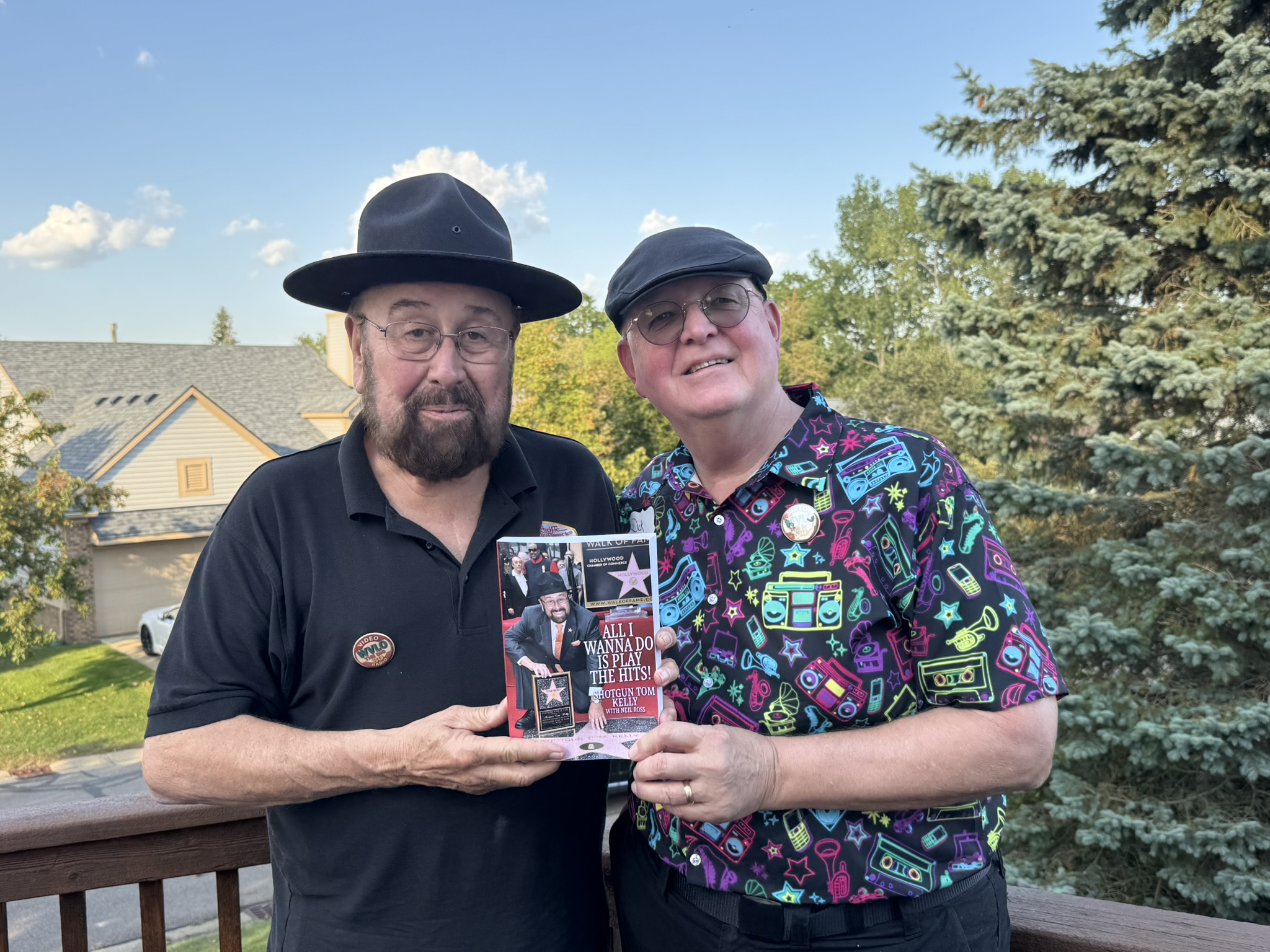
Shotgun Tom Kelly presenting me with a copy of his book, “All I Wanna Do Is Play The Hits!”
Shotgun Tom Kelly, John Records Landecker, Dusty Rhodes & Gary Jeff
Kathy & Terry Stevens, Art talk with Fred Jacobs and Paul Jacobs

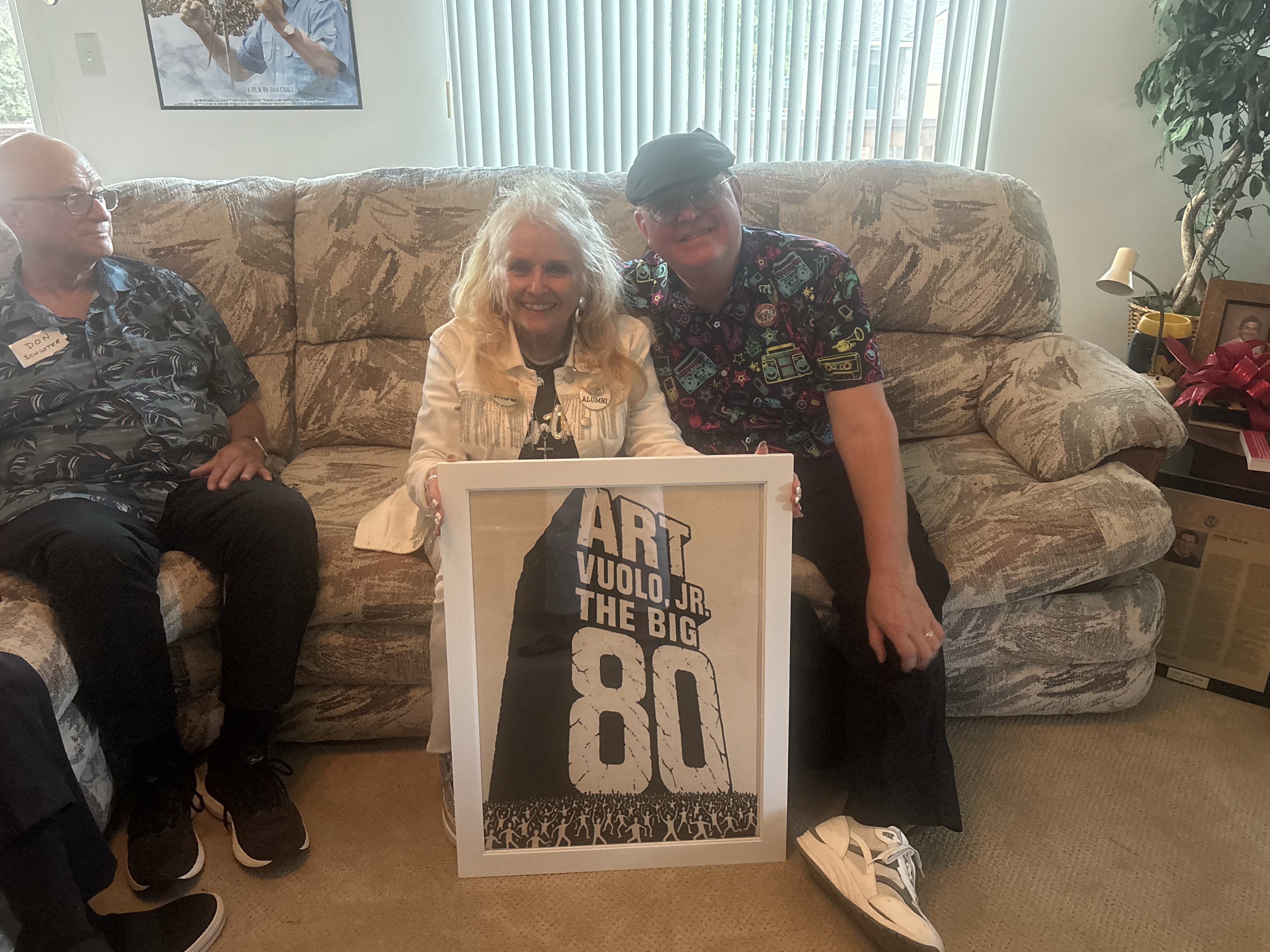
What a fabulous gift idea, a take-off of the BIG 8’s logo. Jo Jo Shutty, of CKLW, is holding it for the picture. Jo-Jo Shutty was the First Female News and Traffic Helicopter Reporter in North America while at CKLW.
Some of the attendees gathered on the hillside, next to Art’s home, for a group picture.

This was not only Art’s 80th birthday celebration, but sadly, also the last Motor City Radio Reunion. After all, we are all getting older, making it difficult for many of us to make this radio pilgrimage.

4 Comments

Filed under Education, Mentor, Radio

How You Say It, Makes All the Difference

A few of weeks ago, my wife Sue & I went to two different churches for Easter Sunday services; our new church, where we just became members and our old church where we exchanged our vows of commitment to each other.

Here’s what I learned…

Talking versus Preaching

One of the pastors delivered the service as if he was talking to us. He engaged us with his message, as if he were having a conversation, and even posed questions to the congregation. The religious meaning of Easter Sunday was delivered in a relatable way, bringing meaning and perspective to the world we are living in today.

The other pastor, at our second Easter service, preached…or what I might characterize as “talking at and not to” me. It didn’t really relate to the world outside the church doors, in tone or message. The sermon made no effort to tie a religious message to our current reality.

WABC – “The Last Aircheck”

On Saturday, May 10th, Rewound Radio aired, what’s become known as “The Last Aircheck,” the day that WABC Music Radio 77 would switch their format to Talk Radio 77. That happened 43 years ago on May 10, 1982.

Those final hours were hosted by Ron Lundy and Dan Ingram, and as I listened to the replay of that broadcast, I got goosebumps. The sound of their voices took me back in time, when listening to the radio was like a religious experience for me.

Techsurvey 2025

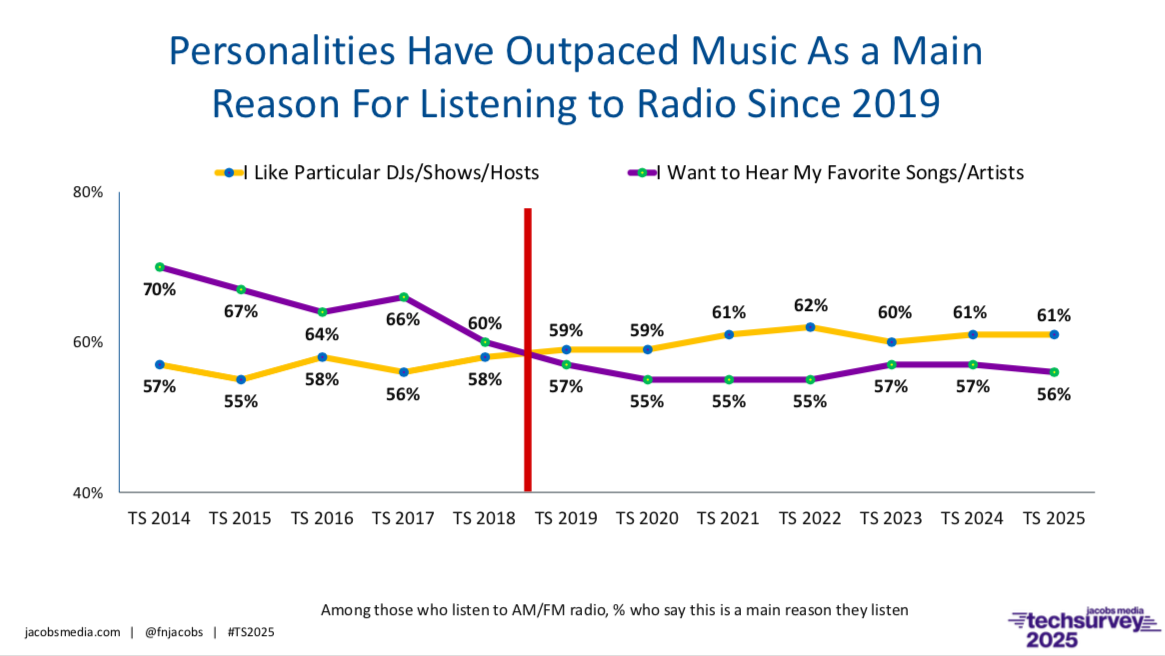
Fred Jacobs has been tracking the power of personalities in his annual Techsuveys, the most recent one which came out in the first quarter of this year. Here’s the trendline:

Fred’s graph only goes back to 2014, but radio captured my heart in the 60s. It was a time when great radio personalities ruled the airwaves on virtually every broadcast signal.

Radio owners would covet, promote and value their air personalities and so did the radio audience. For the radio listener, meeting their favorite air personality was a heart pounding experience.

The Human Voice

I never had the opportunity to meet Ron Lundy or Dan Ingram, but their voices owned real estate in my brain. As it was broadcast over Rewound Radio, hearing them talking on “The Last Aircheck” made the same impact as it did when I heard them LIVE 43 years ago.

That’s the power of the human voice.

Church Attendance & Radio Listenership

In today’s world, both entities are challenged to build and hold an audience. Our new church saw its lead pastor of 12 years promoted and a new pastor was named to replace him.

Like a radio station that loses a popular personality, and causes listeners to seek out other listening possibilities, a church changing its pastor is monumental change, often causing people to try other churches.

One saving grace in our church’s situation was having an assistant pastor that provided continuity to the congregation during this time of change.

The good news is that when the new pastor arrived, he would be as dynamic as the pastor who had left; maybe even more so. Our congregation has grown under his leadership, at a time when other churches have not. He talks, not preaches; and he listens.

Every Hour in Radio is Front Page

Radio, unlike print publications, doesn’t have a back page. Every minute of the broadcast day is like being on the front page. Every minute counts and a radio station is either building an audience, keeping an audience or losing an audience.

Radio’s reduction in force (RIF) of its air personalities has created two problems:

1) many hours of the broadcast day are now sterile and

2) those sterile hours aren’t just driving away radio listeners to other venues, but they also aren’t attracting a new generation of broadcasters who’ve been inspired by what they hear coming through their radio speaker.

BOTTOM LINE

Today’s radio lacks personality and FOMO.*

*FOMO is Fear Of Missing Out

18 Comments

Filed under Education, Mentor, Radio

Pilot of the Airwaves

Forty-six years ago, Charlie Dore wrote and recorded the song “Pilot of the Airwaves,” a song about a girl who stays up late every night to listen to her favorite radio air personality. She requests that he play a record for her, either the one she suggested or a record of his choice, and adds “I’ve been listening to your show on the radio and you seem like a friend to me.”

Companionship

Radio’s most important strength has always been its ability to provide companionship to the radio listener, and the radio air personality becomes a trusted friend, like a member of the family.

Freddie Mercury

Forty-one years ago (1984) Queen released “Radio Ga Ga,” a song that reflected on the changing popularity of radio and television with the advent of MTV and music videos. In the song, Freddie Mercury belts out “Radio, someone still loves you!”

Which begs the question, if in 1984, Queen felt it necessary to reaffirm the power of radio – before there was the internet and streaming – what must it be like today, 41-years later? Who’s showing the love now, and why?

I Watched It All On My Radio

Thirty-Five years ago, Lionel B. Cartwright released a song that spoke to how radio is “the theater of the mind” in a song called “I Watched It All On My Radio.” It’s a song about a young boy’s remembrances of listening to his transistor radio growing up. This song brought to mind how Charles Osgood (CBS Radio Commentator) would sign-off his radio broadcasts saying “I’ll see you on the radio.” Ah, the good old days.

Video Killed The Radio Star

MTV signed on in 1981, playing music videos that were introduced by Video Jockeys (VJs). The first song played on MTV on August 1st of that year was by The Buggles, “Video Killed The Radio Star.” A key line in that song was “In my mind and in my car, we can’t rewind we’ve gone too far.” The original VJs were all gone before the end of the decade and while MTV still exists, it’s less focused on music videos having  migrated into reality shows for teenagers.

So, video didn’t kill the radio star, but consolidation of radio ownership certainly has.

Radio Listeners Miss Hearing Their Favorite DJs

CRS ‘25 (Country Radio Seminar) just ended in Nashville. Listener research done by NuVoodoo’s Carolyn Gilbert and Leigh Jacobs found that listeners are noticing their favorite personalities are getting downsized, telling the audience that “thirty-six percent agreed that many of the hosts and DJs they had enjoyed hearing on the radio [have] lost their jobs. They’re aware.”

Techsurvey 2024

A year ago, Fred Jacobs released his company’s 20th annual Techsurvey on the habits of radio listeners. One of the major findings of Techsurvey 2024 was how a majority of listeners enjoy the local feel and connection with personalities.

Yet, radio companies continue to de-emphasize experienced local talent – in other words, fire them.

Expiring Skills & Permanent Skills

Morgan Housel, a partner at The Collaborative Fund and an expert on behavioral finance and history, says that every field has two kinds of skills:

  • Expiring skills, which are vital at a given time but prone to diminishing as technology improves and a field evolves.
  • Permanent skills, which were as essential 100 years ago as they are today, and will still be 100 years from now.

Is Being a DJ an Expiring Skill?

  • Seems like everyone’s been talking about what artificial intelligence (A.I.), means for the future of air personalities. Radio owners seem to be excited about A.I. but radio personalities view this new technology with trepidation.
  • You might be wondering if being an air personality is something that will no longer be relevant and can be replaced by a robot.
  • If we’re talking about replacing mindless voice tracking, maybe A.I. is an improvement, but if we’re talking about making a human connection, I think not.
  • Most permanent skills are human-centric, meaning that they are not something a chatbot can duplicate. Sharing of human experiences can only be done by another human. Permanent skills require emotional intelligence which compound over time.
  • People who spend a lifetime perfecting one skill whose importance never wanes, will be the ones in demand.

AI (Artificial Intelligence) Is Not The Answer

The popular TV game show, Family Feud, began airing on ABC in 1976. It would be the personal charm and witty banter of host Richard Dawson that would make the Feud hugely popular with television audiences.

The show continued on after Dawson left, hosted by Ray Combs, Louie Anderson, Richard Karn and John O’Hurley, but it wasn’t until radio star Steve Harvey took over in 2010 that Family Feud saw renewed success. Ratings for the program increased by as much as 40%, and has become the fifth most popular show in syndication being renewed once again through the 2025-2026 season.

By the way, Steve Harvey hosts the #1 syndicated morning radio show in America too.

Personalities like Steve Harvey are not worried about being replaced by artificial intelligence because they have developed a useful and permanent skill in a world that is constantly changing.

Yes, this is both a national example, as well as one about television, but great local radio stations embrace the importance of having strong personalities, like a Steve Harvey, filling their rosters of air talent.

Humans connect with other humans that engage them.

Being human is something artificial intelligence will never be.

10 Comments

Filed under Uncategorized

UNCERTAIN

If you had to sum up, in one word, what the year ahead for radio would be like, what word would you choose?

The word I chose was “UNCERTAIN,” when Fred Jacobs posed that question to the readers of his blog.

Word Salad

To be more specific, the question Fred Jacobs asked his readers to respond to was:

What’s your unique “take” on broadcast radio in 2025?  In a word, how would you describe this next 11+ months?  What’s the state of radio in 2025 – in just one word?

He put that question to the readers of his blog on Monday (1/20/2025) and on Wednesday (1/22/2025), after more than 225 people responded,  produced the “Word Cloud” shown below.

My response of “UNCERTAIN,” can be found in the upper left hand corner.

CES 2025

On Tuesday (1/21/2025), Fred gave a webinar on this year’s Consumer Electronics Show (now just simply called CES) held at the beginning of each year in Las Vegas. He characterized this year’s show as “NOT NORMAL” calling it a transformative event.

In his summary of the Top 10 Themes at CES 2025, all of them included Artificial Intelligence (AI).

Filling Talent Shortages

A new study released Tuesday (1/21/2025) by Hult International Business School and Workplace Intelligence found that even when faced with widespread talent shortages, employers would rather hire a robot or AI than a recent graduate.

You don’t have to be in radio to feel a sense of terror for what lies ahead for America’s working class.

College Graduates

“Meanwhile, recent graduates who have successfully joined companies, have found the work experience invaluable. 77% said they learned more in half a year on the job than in four years of undergrad and 87% said their employer provided better job training than college.”

“Over half (55%) said that college didn’t prepare them in any way for the job they currently hold,” according to the survey, which isn’t a glowing endorsement for getting an expensive college education and racking up a large debt.

This was something I realized while teaching at the university back in 2016 and blogged about in an article called “Just In Time Learning.”

Division

Fred summed up the results of his unscientific experiment saying:

“And we wonder why radio discussions on social media turn into debates, while often devolving into rants and responses in ALL CAPS. We may as well be talking politics. Actually, we very much are.”

The one word that never came up in the more than two hundred participants was…

“unified.”

For America today, the one word that best describes our country is “divided.”

So, it shouldn’t surprise anyone that when asked about what the future of broadcasting is, the answer is…

Radio, like our country, is divided.

We have the large and powerful radio operators and then we have a few mom & pop stations, with the rest of the local service primarily being the dedicated operators of Low Power FM (LPFM) radio stations, supported by listeners and local business underwriters.

The gap between the haves and have-nots keeps widening, which prevents the radio industry from speaking with one voice.

America’s 2nd Gilded Age

You tell me if what happened a century ago sounds like what’s happening in America today.

During the 1920s, America became more prosperous and saw unprecedented growth in industry and technology. But the Gilded Age had a more sinister side: It was a period where greedy, corrupt industrialists, bankers and politicians enjoyed extraordinary wealth and opulence at the expense of the working class.

3 Comments

Filed under Education, Mentor, Radio

Ad-Supported SiriusXM Requires No Paid Subscription

Eight years ago, I wrote an article for this blog titled “SiriusXM Radio is Now Free.” At the time I was speculating on what might happen to over-the-air commercial radio if the satellite company were to turn on their ad-supported channels in every vehicle equipped with a SiriusXM radio.

Well, it looks like that is finally coming to pass.

SiriusXM’s Growth Has Stalled

Fred Jacob’s wrote in his blog on Friday that…

SiriusXM, increasingly frustrated by their inability to grow their subscriber base.  Looking at the Netflix model, the satcaster earlier this week unveiled their own ad-supported tier for no fee.

Obviously, this is a radical departure from SXM’s legacy subscriber-driven platform.  Radio Ink reported that no matter how you look at the in-car battlefield, satellite lags far behind traditional radio listening.  SiriusXM, however, performs much better in luxury brand, such as Mercedes-Benz and Audio, as well as in newer vehicles.

Inside Radio says there are other hoops for drivers to jump through.  While SXM CEO Jennifer Witz says the new plan is all about “repositioning our business for the future,”  the story goes onto say the free service is only available to owners of vehicles with the company’s  360L receivers.   Additionally, eligibility is limited to those whose free trials runs out and can only be activated by one vehicle per customer.

But it’s a start.  While the company acknowledges it will take time to amp up the platform’s commercial options for advertisers, you can see that’s where they’re headed.  SiriusXM needs to jumpstart its user base, while cashing in on inventory sales.

Will it work?  Can a radical move to offer a “free” version of satellite radio actually be a game-changer for SXM.

We can all speculate about the wisdom of this risky move by SiriusXM, but like the growth of [other ad-upported] channels, it attempts to cash in on the notion of not paying cash for any media content.

Pay & Free

It doesn’t take a whole lot of imagination to understand why satellite radio is deciding to have the best of both worlds. Offer the premium pay channels to those willing to pay for them and at the same time create a free tier of channels that could be ad supported by national advertisers.

What history shows us are things that happen in other industries and services – eventually making their way around to virtually all of them.

NOW – It’s only a matter of time.

Link to my 2016 blog article: https://dicktaylorblog.com/2016/07/17/siriusxm-radio-is-now-free/

9 Comments

Filed under Education, Mentor, Radio, Sales

Is AM Radio “Hot or “Not”?

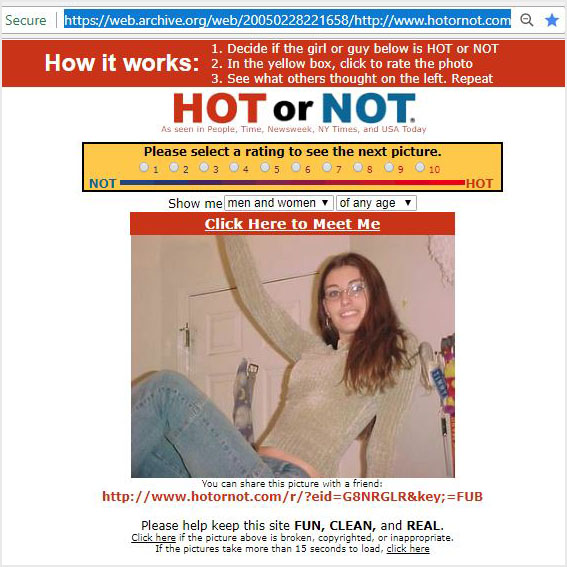
Twenty-four years ago, in October 2000, a new relationship website launched called “Hot or Not.” The premise of the site was for people to submit photos of themselves (or others) to have users of the site rate them on a scale of 1 to 10 on their attractiveness.

Within a month of launching, the site reached around two million page views per day.

Mark Zuckerberg’s original idea was to do something similar with a site he created called FashMash, which became TheFacebook.com in 2004 (now just Facebook.com). Likewise, the founders of YouTube said they originally set out to create a video version of “hot or not” before developing a more inclusive site.

HOT or NOT

It was based on this site that Fred Jacobs presented, the things he did and saw at this year’s Consumer Electronics Show in Las Vegas, aka CES 2024, as being “Hot or Not.”

During the webinar, I asked the smarmy question “Is AM Radio HOT?” in the chat box. (No, I didn’t get an answer.)

However, the bigger question really is, “Is RADIO Hot or Not?”

The answer from everything I’m reading is “Not,” at least in the way things are going.

When it came to radio audience ratings, I never concerned myself with individual ratings, but preferred to study audience trends. Here’s the latest trend lines for both broadcast radio and digital streaming:

Not A Viable Business Anymore

In Canada this month, the chief legal and regulatory officer of Bell Media grabbed the headlines worldwide, when he explained the reason Bell was selling off 45 of its radio broadcast properties, was they were “not a viable business anymore.”

“One man’s trash is another man’s radio stations.”

-Fred Jacobs

So, what do you think the buyers of these radio stations must have thought, after the seller tells the world they think the radio stations they just sold are not a viable business?

Surprise, they are very positive about the radio business. Take a moment to listen to this very positive view from the CEO of My Broadcasting Corporation, one of the seven local broadcast companies that purchased radio stations from Bell.  You can here that CBC interview here: https://www.cbc.ca/listen/live-radio/1-100-ottawa-morning/clip/16041778-local-bell-media-radio-stations-owner

The State of Media 2024

Harker Bos Group https://harkerbos.com/ released new research on the state of media today and here are some of the key takeaways.

What are radio listeners looking to hear?

  • 54% highlight the importance of local coverage
  • 67% sound quality
  • 54% station availability
  • 53% ease of use

When the researchers compared broadcast radio to digital streaming of music, they found that usage of broadcast by younger audiences was losing out to streaming services. Those that are frequent users of streaming music tend to access it via smartphones, computers, smart speakers and tablets preferring on-demand music services with personalized playlists and recommendations. Streaming also provides users global access that is not bound by geographical limitations.

Is The Media Prepared For An Extinction-Level Event?

That headline in the New Yorker caught my attention! The author, Claire Malone, cites “ads are scarce, search and social traffic is dying, and readers are burned out, [which means] the future will require fundamentally rethinking the press’s relationship to its audience.”

The way to become a millionaire in radio,

is to start with a billion dollars.

That’s not something new, that witticism has been around since the end of the 20th Century. I was reminded of it when Claire shared the words of a late-career writer’s advice to the newbies: “You want to make it in journalism, marry rich.”

Last year, 2,681 people were laid off in broadcast, print and digital news media.

In February of this year, after the record-setting viewership to the CBS broadcast of Super Bowl 58, that very network announced it would be cutting 800 jobs.

Significant job cuts have taken place at:

  • NBC News
  • Vox Media
  • Vice News
  • Business Insider
  • Spotify
  • theSkimm
  • FiveThirtyEight
  • The Athletic
  • The New Yorker
  • Sports Illustrated

And some other media outlets closed down:

  • BuzzFeed
  • Gawker
  • Pitchfork
  • The Messenger (this endeavor lasted less than a year)

“Publishers, brace yourselves – it’s going to be a wild ride.

I see a potential extinction-level event in the future.”

-Matthew Goldstein, media consultant

I share these stories with you, not to depress you, but for you to better understand what’s going on, and that it’s not just a radio problem, but a media problem.

As Netflix, Amazon Prime Video and others add advertising to formerly ad-free streaming channels, where will those ad dollars come from; radio, TV, cable, newspapers, magazines? The advertising dollar pie is not infinite; to grow your piece of the pie, means eating someone else’s.

“It’s time for a new revolution.”

-Mark Thompson, CNN’s new CEO/Editor-in-Chief

Sadly, many media folks working in the industry today, have only been part of the culture of decline – where cutting expenses has been the only plan to achieve future success.

What’s always been true, is it takes money to make money.

Netflix, for example, invests a billion dollars in research and development – mostly on data scientists, engineers, and designers who help Netflix subscribers discover content that they will love.

How’s that working out for Netflix? Here’s the latest data:

In 2024, media companies will find media users making decisions on which services they really want – and can afford – to continue subscribing to.

For radio operators, who operate a subscription-free service, the challenge will be:

  • to understand what your listening area’s population wants, needs and desires, and
  • to deliver for your underwriters or advertisers the best R.O.I. (Return On Investment)

The best ratings for advertisers

will always be increased cash register rings.

6 Comments

Filed under Education, Mentor, Radio, Sales

Is There a Future For Anyone in an A.I. World?

Last week I asked the question “Is There a Future for Radio Personalities?” That blog was my analysis of the latest research done by Jacob Media Strategies for Don Anthony’s annual Morning Show Boot Camp. I wasn’t surprised by the volume of comments about the blog, however it was sad to find that most people feel the days of making RADIO a career are over.

A.I. (Artificial Intelligence)

The part of Fred Jacob’s research I didn’t include in last week’s blog was the impact that air personalities thought A.I. would make on their future. 76% of the people in the survey agreed with the question: “I’m personally concerned that A.I. technology will lead to many more on-air radio jobs being lost.”

It’s Worse Than You Think

Our universe is estimated to be 26.7 billion years old. Humans on planet earth have only been around 6,000 years, but look at all we’ve accomplished in such a short period of time.

Now, what maybe mankind’s greatest invention might also be responsible for our demise: A.I. or Artificial Intelligence.

This technology has the potential to take away

30% OF ALL JOBS within 10 years.

Think of all the jobs that A.I. can do better (and maybe do even better than you or I).

  • Stock Trader
  • Truck Driver
  • Accountant
  • Telemarketer
  • Lawyer
  • Bookkeeper
  • Actor
  • Writer
  • Musician
  • Painter
  • Radio Personality

It would be easier to make a list of the jobs that cannot be impacted by A.I., than a list of those that will.

To get a better idea of how scary this technology is, listen to either of these links:

The proliferation of these kind of A.I. creations can abundantly be found on YouTube.

Today’s A.I. voice software can listen to a few seconds of anyone’s voice and completely re-create a replica that is almost indistinguishable from the original. I don’t know what is most troubling, that it can be done, that it can be done so quickly or that it’s so easy that anyone can do it.

Call Centers

Call centers are big business around the world, making up 8% of India’s GDP (Gross Domestic Product), 6.3% of Brazil’s GDP and while America outsources the majority of this type of work, the U.S. still employs 3.4 million people who work in call centers.

A.I. has the ability to completely replace everyone

working in call centers around the world.

You don’t have to be a political scientist to predict what would happen if 8% of a country’s GDP is suddenly wiped away. You’ll see more people carrying pitchforks and torches than stormed the castle in “Beauty & The Beast.”

I have radio friends that have used their incredible voices to produce audio books, and earned a good living in the process. A.I. will replace these talented people as well.

Actors & Writers Strike

It’s not just the radio industry that is finding itself in unknown territory.

Actors fear they will lose control of their lucrative likeness and writers fear they will have to share credit with a machine. Watch this situation closely, because writers and actors are the proverbial “canary in the coal mine” for what’s to come for the rest of us in media.

A.I. is at the very heart of the current actors and writers strike, it’s ahead of pay models, benefits and job protections.

Federal A.I. Commission

Senator Chris Murphy is one of the most outspoken members of Congress on artificial intelligence. “When you start to outsource the bulk of human creativity to machines, there comes with that a human rot,” says Senator Murphy. He estimates that humans being replaced for creativity by computers will happen at a staggering scale within the next two to three years, and it scares the hell out of him.

Senator Murphy believes that it is time to create a new regulatory body, like the creation of the FCC (Federal Communications Commission) that came into existence with the advent of broadcast radio.

“There are really deep spiritual questions at hand here. I don’t think policymakers should be shy about talking about that,” Senator Murphy believes.

Putting Things In Perspective

While humans may have inhabited this planet for 6,000 years, look at what has happened in just the last 50 years:

  • The personal computer is 50 years old
  • The iPhone is 16 years old
  • Today’s A.I. is 5 years old

Of all the many calamities the human race faces in the years ahead — a full-scale nuclear war, climate change or artificial intelligence – it’s A.I. that poses the greatest risk. One highly researched economist report on A.I. noted that “there’s more than a 50-50 chance A.I. will wipe out all of humanity by the middle of the century.”

“Open the pod bay doors please Hal.

I’m sorry Dave, I’m afraid I can’t do that.”

-from the movie “2001 – A Space Odyssey”

https://www.youtube.com/watch?v=dSIKBliboIo

Google co-founder, Larry Page, believes that once computers are smarter than humans, they will find no use for us humans, and they will simply get rid of us. He sees this as the next step in the evolutionary process.

If we don’t understand the risks, along with the benefits A.I. brings to us, we might all end up like Dave.

-0-

Note: For a deep dive on this subject, read the article by Nick Bolton from the September 13, 2023 edition of Vanity Fair. It was this article that provided many of the facts and quotes used in this week’s blog: Artificial Intelligence May Be Humanity’s Most Ingenious Invention—And Its Last? Silicon Valley is barreling ahead with AI technology that could unlock novel forms of creativity, art, and medicine, and potentially, wipe out all mankind. As one AI engineer warns, “We’re creating God.”

7 Comments

Filed under Education, Mentor, Radio, Sales

Is There A Future For Air Personalities?

This past week, Fred Jacobs shared the latest research about radio air personalities and how they view the future of this profession. Here’s what struck me about the presentation.

The Radio Talent Pool is Shrinking

Jacobs Media Strategies has been producing this research for Don Anthony’s Morning Show Boot Camp since 2018, and during COVID, no research was done in 2020. So, from the first survey in 2018 to the latest one in 2023, the number of participants shrank 62%; from 1,168 to 442 people.

COVID, with the resulting Work From Home (WFH) operating model,  has greatly impacted radio station cultures and has not returned to anything like pre-pandemic days.

Less People, More Hats to Wear

Not surprising, with fewer people working on the content side of radio, those that remain “wear more hats” than ever; 54% of radio personalities now say they are responsible for more than four different areas.

No Talent Farm

When I began my radio career, it was board operating Sunday morning church programs. That first radio job would give me the opportunity to land a nights/weekend part-time air shift. This was pretty much the norm for baby boomers in broadcasting. In fact, Jacobs research shows that 78% of us started in radio this way.

Today, those entry level radio positions are gone, with only 14% of today’s up and coming air talent having those same opportunities.

Talent Development

One of the concerns expressed by today’s air personalities is believing their radio station and/or their company is not working to discover or develop new air talent. Radio’s biggest companies are blamed most, with medium and small companies being exceptions.

Would You Recommend Radio as a Career?

When today’s air personalities were asked how they would respond to the statement:

“I would absolutely recommend [that] a high school student pursue radio as a career,”

  • More than half, 52%, said they would disagree or strongly disagree.
  • A quarter of the sample was neutral.

Possible reasons for this negative attitude might be:

  • Four in ten air personalities are in debt or struggling
  • Few air personalities expect to make more money this year
  • Three in ten air personalities are now involved in a second business
  • A majority of the air personalities feel they are taken for granted
  • 76% are personally concerned that Artificial Intelligence (A.I.) will lead to many more on-air radio jobs being lost
  • Four in ten of those air personalities currently “on the beach” say they won’t be back

Welcome to Consumer Choice

Gone are the days of the gate keepers of music; those people being the radio program directors, record store owners and record companies. Consumers are now in charge and define the characteristics of the media world we live in.

Any solution to the problems we confront must understand our audience’s needs, wants and desires, and put those first.

“People don’t by what you do, they buy why you do it.”

-Simon Sinek

21 Comments

Filed under Education, Mentor, Radio

For Whom Does The Bell Toll?

When I heard the news that All Access would be closing its doors after twenty-eight years in business, it came as a shock to my soul, and sent a chill down my spine that foretold of a media crisis much bigger than this publication’s demise.

It reminded me of the famous poem by John Donne, For Whom the Bell Tolls:

No man is an island,
Entire of itself.
Each is a piece of the continent,
A part of the main.
If a clod be washed away by the sea,
Europe is the less.
As well as if a promontory were.
As well as if a manor of thine own
Or of thine friend’s were.
Each man’s death diminishes me,
For I am involved in mankind.
Therefore, send not to know
For whom the bell tolls,
It tolls for thee.

The Bell Tolls For Thee

The news of the coming death of All Access made each of us consider our own mortality. Fred Jacobs wrote in his blog on Monday:

“Funerals are a mandatory attendance experience where we mourn the departed, while also considering our own mortality.  We think about the deceased and try to rationalize that he/she was older than us, in worse health, had questionable lifestyle habits, or had some undesirable traits and flaws.  And we rationalize that their sorrowful outcome will surely not be ours.

But in fact, it is hard to disassociate All Access’ fate from our own.  This isn’t just about what befell Joel and his staff – it is a referendum on radio and all of us who work in it.”

The Medium Is The Message

In his seminal 1964 book, “Understanding Media, The Extensions of Man” Canadian communications theorist Marshall McLuhan’s first chapter was titled “The medium is the message;” by which McLuhan felt “that the form of a medium embeds itself in the message, creating a symbiotic relationship by which the medium influences how the message is perceived.” (University of Michigan – Digital Rhetoric Collaborative)

But did McLuhan foresee the state of media today?

The Medium Is A Mess

Bob Iger was reinstated as CEO of The Walt Disney Company in November 2022. Iger, who had been Disney’s CEO from 2005 to 2020, had retired at the age of 69. His replacement, Bob Chapek, created two years of tumult at the mouse house, and was fired.

It was in 2006, that Iger sold Disney’s 22 ABC branded radio stations and the ABC radio network to Citadel Broadcasts Corporation in a cash and stock deal valued at $2.7 billion.

Last week, CNBC reported that Bob Iger had “opened the door to selling the company’s linear TV assets as the business struggles during the media industry’s transition to streaming and digital offerings.”

On June 30th, Audacy, the radio company formerly known as Entercom, did a 1-for-30 reverse stock split to try and prevent being expelled from the NY Stock Exchange. Stock watchers called it a “stock market Hail Mary attempt to stave off financial ruin.” (elitesportsny.com)

Adding to these two company’s woes, the media industry is also dealing with both a writers strike and an actors strike, global climate change, the ongoing war in Ukraine, out-of-control wildfires that have burned over 26 million acres of Canada, polluting the world with no end in sight, and the mess we call our democracy; it’s hard not to wonder what our future holds for anyone, anywhere.

Is This Television’s Radio Moment?

That’s what the analysts are wondering at MoffettNathanson, because radio’s lackluster revenue recovery has forced that broadcasting industry to cut into its bone and consider if using artificial intelligence (A.I.) could be their savoir to keeping investors at bay.

Goodbye All Access

To Joel Denver, Perry Michael Simon and the rest of the dedicated All Access team we say “Thank You, for 28 incredible years of chronicling the business of radio, records, and the people who made it happen.”

Your work has always been at the cutting edge, maybe that’s why your publication’s death feels like a harbinger for us all…

For whom the bell tolls,

It tolls for thee.

15 Comments

Filed under Education, Mentor, Radio, Sales

Listeners Don’t Care

If you think listeners hang on our every word – surprise – the reality is quite different.

Listening is a Habit

Radio listening, like many things in our lives, is on auto-pilot. When someone makes listening to your radio station part of their daily habit, you’ve struck gold.

However, two years of a global pandemic changed everyone’s routines and replaced them with new ones.

People who study people’s habits, usually say that it takes at least three weeks for a person to form a new routine and COVID forced changes on all of us that lasted for two years.

Award Winning

Go ahead and pound your chest that your radio station has won awards for its news coverage, its public service and its ability to break new hit songs, but appreciate that listeners don’t care. What is important to them is having your radio station deliver what they’re looking for, when they’re looking for it, and on the media platform they want it delivered on.

The Best Ads

It’s interesting that the ads listeners remember most are usually for products or services that have been around for decades and used the power of repetition to burn their ear worm into your brain.

Let me give you some examples of what I mean:

  • I don’t want to grow up, I’m a Toys R Us kid.
  • The best part of waking up, is Folgers in your cup. (Oddly, the brand actually sold the rights to this 38-year old jingle for $90,000.00.)
  • Plop, plop…Fizz, fizz…Oh, what a relief it is. This Alka-Seltzer ear worm was penned in 1976 and was so popular that Sammy Davis, Jr. actually recorded a version.
  • I’d like to teach the world to sing in perfect harmony, and I’d like to buy the world a Coke and keep it company, it’s the real thing.
    • I actually still play on my radio show, “I’d Like to Teach the World to Sing,” a song by Hillside Singers and it still makes me crave having a Coke, even though the hit record version never mentions Coca-Cola.

I could go on, but I think you get the idea.

Your Brand Messaging

You will never be all things to all people.

If your radio station uses multiple positioning statements, I’m willing to bet that your listeners, at best, can remember only one.

Back when I started in the broadcast business, radio stations spent a lot of money promoting their air personalities; they were the draw then, and they are the draw still, maybe even more so as Fred Jacobs TechSurvey 2022 so vividly points out.

Your personalities are your brand, and unique to your radio station; coach them, grow them and promote them.

If you don’t understand the listener’s needs, from the listener’s point of view, then you’re just spinning your wheels.

Your goal is to be the radio station a listener thinks of first,

and makes a daily habit.

8 Comments

Filed under Education, Mentor, Radio, Sales