Tag Archives: OTA Radio

Radio’s Most Pressing Issues

This past week, Radio/TV state broadcast associations were in our nation’s capital meeting with their elected representatives in both the House and Senate about issues that are important to them. It’s the annual National Association of Broadcasters (NAB) State Leadership Conference.

More than 500 radio broadcasters from across America assembled to hear Senator Ted Cruz (R-TX) speak on his support of the “AM Radio for Every Vehicle Act,” and advocating for a level playing field in the advertising market.

Cruz is the new Chairman of the Senate Commerce Committee and he pledged a proactive approach to support broadcasters, create jobs and uphold free speech.

Free Speech

Brendan Carr is the new Chairman of the Federal Communications Commission (FCC) and in only a couple of weeks, since taking this leadership position, his actions have caught the attention of some members of Congress, who were alarmed by recent moves impacting broadcasters.

Representative Jerold Nadler (D-NY) expressed his concern over the Carr’s FCC assault on a media organization’s free speech.

“Exploiting his asserted ‘unitary executive’ powers, [President] Trump is unleashing his sycophant FCC Chairman, Brendan Carr, on every newsgroup whose news stories he does not approve of — actually threatening to pull the broadcast licenses for ABC, CBS, NBC, PBS, and NPR,” said Rep. Jamie Raskin (D-MD). “Is this North Korea?”

The President of Free Press Action, Craig Aaron, in testimony said that threats and opening investigations into broadcast outlets by the FCC is out of the norm.

“The FCC usually talks about licenses on very narrow terms, such as if an owner has committed a major crime,” Aaron said. “The idea that a news organization would be threatened because they asked a tough question of the President, or because they tried to fact check him during a debate, or because they edited their own news content before putting it out over the airwaves is preposterous, and it’s dangerous.”

DEI

Diversity, Equity and Inclusion (DEI) has been terminated by Carr at the FCC and he’s been signaling that the agency might go after FCC licensees over their own DEI programs.

Are DEI programs good for business? Apple’s shareholders think so, so do Costco shareholders, and Hyundai’s marketing executive, Erik Thomas, credits its DEI programs with driving the automobile manufacturer’s bottom line.

SiriusXM

Nine years ago I wrote an article with a title that sounded like click bait titled “SiriusXM Radio is Now Free,” which speculated when the FCC licensed satellite broadcaster would start offering ad-supported channels for free.

Four years later, I wrote that “Could 2021 Be the Year SiriusXM Adds FREE Channels?” speculating that new SiriusXM CEO, Jennifer Witz, would be pursuing revenue growth by  leveraging the 132 million cars the service was available in. SiriusXM, like commercial radio over-the-air (OTA) broadcasters, knows that the competition for listener ears is in the car. The advantage the satellite broadcaster has over AM/FM radio operators is they know exactly what their listeners are listening to, and don’t have to rely on audience estimates that may or may not be accurate in today’s media saturated world.

Last year, what I have been predicting since 2016, became a reality, as I wrote in:  “Ad-Supported SiriusXM Requires No Paid Subscription.”

Monopoly

One of the radio industry’s most respected researchers, Dr. Ed Cohen, wrote “The direct-to-consumer satellite radio business is a monopoly,” shortly after my 3rd article on this subject was published. Originally, the FCC offered only two satellite broadcast licenses, one went to a company called “Sirius” and the other to a company called “XM,” with the idea being they would be competitors and that the consumer would benefit by not having a single company – a monopoly – control satellite radio and what it could charge.

The two companies were supposed to never be able to merge, but in August of 2008, by a 3 to 2 vote of the FCC, that changed. Dr. Cohen does a really good deep dive into explaining how this all came about in his article “SiriusXM and the FCC: Is the Camel’s Nose Under the Tent?” Which is an allusion to a story that takes place in Arabia, with this metaphorical moral:

If the camel once gets his nose in the tent, his body will soon follow.

What the FCC never took into consideration was, how much damage might occur to local AM/FM radio stations, if and when, the new combined SiriusXM ever decided to provide an ad-supported free radio service.

Dr. Cohen believes that while this new free service from SiriusXM is limited in scope, like the proverbial camel, it won’t be long before the whole service becomes real competition for audio listeners and advertisers.

People Love Free

AM Radio vs SiriusXM

Dr. Cohen makes an excellent case for commercial radio broadcasters to be demanding, the FCC revisit the SiriusXM merger decision in light of this change by the satellite broadcaster.

By the way, public broadcasters also have a horse in this race, as NPR Now is part of the new free SiriusXM service.

“While the NAB is busy with getting Congress to force OEMs (Original Equipment Manufacturers) to include AM in every vehicle, the battle with SiriusXM’s ad-supported venture is probably more important to the industry in the long run,” says Dr. Cohen.

It’s The Economy Stupid

But the most important issue facing the commercial radio industry are the financial fears that have been generated by the Trump tariffs and fire hose of government regulatory changes that seem to come at us on an hourly basis. I wrote about this concern in February with an article titled “The Cost of Uncertainty to Radio.”

Now BIA Advisory Services this week updated its local advertising revenue forecast for 2025. Cameron Coats, in Radio Ink, reports that “over-the-air revenue [for radio] takes the largest hit, falling by 6%.” Digital radio, says Coats, shows a slight increase of 0.1%.

SiriusXM has enjoyed growth through the sale of new cars, but with the high tariffs Trump has announced, it wouldn’t be a surprise if people hang onto their current vehicles a little longer, which also means that AM radio will still be accessible. Without an economic downturn, the average life of a car in America is 12-years, up from 8.4-years in 1995. Progressive Insurance says that a well-maintained car will reach 300,000 or more miles, and those cars have both AM/FM radios as well as SiriusXM.

The radio industry’s most pressing issue is who wins in the car, and in that arena AM radio – a hundred year old medium is not our industry’s best play –

stopping satellite radio’s FREE ad-supported service is.

When the pie isn’t growing,

the game becomes who can cut the biggest slice.

5 Comments

Filed under Uncategorized

Subscription Media

The inspiration for this week’s article came from a blog written by Fred Jacobs titled “When will ‘Netflixification’ Come To Radio?” Fred’s article revolved around Netflix’s innovation of a subscription model for its entertainment offerings, which got me to thinking about when the subscription business model for media began.

The Subscription Model

We would have to journey back to the 17th century to find the earliest records of book and periodical publishers pioneering a subscription business model for print media.

The subscription business model is one where the customer

pays a recurring price

at regular intervals to access a product of service.

Most recently, Apple is said to be working on a subscription model for its hardware; iPhones, iPads, computers etc. Why? Well customers are good, but it turns out that subscribers are even better. Emarsys’s Chris Gooderidge writes that over the last nine years, “the subscription economy has grown nearly 6x (more than 435%),” with subscription businesses growing five to eight times faster than those with a traditional business model. The two years the world closed down due to COVID only served to accelerate companies’ and consumers’ digital transformation.

On Demand & Subscriptions

What most of us want, as consumers, is convenience. We want what we want, when we want it. The subscription business model fulfills this desire. It enables us to listen to music or play games, as well as watch TV shows and movies.  

The more customers gain a taste

of truly personalized repeat services,

tailored specifically to them…

they won’t want to go back to what they had before.

-Chris Gooderidge

Subscription Radio

In 1923, in Dundee, Michigan, an early radio entrepreneur offered subscribers a wired radio system, that would provide radio programs from several radio stations for $1.50 a month; which would be $24.75/month in 2022. While it didn’t succeed, it was the precursor to what later would become the cable television industry.

Subscription Television (STV)

Back in the 60s, over-the-air television experimented with a subscription model. Companies in Connecticut and California each found themselves in court with theater owners when they developed a subscription business model that offered recent movies to be viewed in the home. The battle in Hartford, Connecticut made it all the way to the Supreme Court.

In the end, the pay television model was taken over by cable television, which learned in addition to providing a community antenna to receive distant broadcast television signals, could also create original programming. These new program channels could be offered on a subscription basis, like CNN, ESPN, The Weather Channel etc.

Is a Subscription-Based Business Model Right for You?

Like most questions along these lines, the answer is: it depends.

The subscription model is dependent on products and services that have a high perceived value to the consumer. (Note: things offered for “FREE” often don’t have a high perceived value)

On the blog, Billing Platform, they list four common successful subscription based business models:

  1. Consumables and Retail Models in Subscription Billing: companies like Dollar Shave Club and Blue Apron
  2. As-a-Service Subscription Billing Models: companies like Microsoft with their Office 365 and Dropbox
  3. Digital Entertainment Subscription Billing Models: companies like Netflix, Disney+, Apple TV+, Amazon Prime, Hulu, Peacock etc for video and Spotify, Pandora, Radio Tunes etc for audio
  4.  Maintenance and Repair Subscription Billing Models: companies like landscaping, pest control, heating & cooling, as well as other common maintenance needs

Peak Subscription

Which brings us to the million dollar question, when do we max out on all of these monthly/annual subscriptions? When do we reach, “peak subscription;” that light-bulb moment when we realize we need to start eliminating some of these expenses.

It was that very question that finally got me to sit down and review our monthly household subscriptions and total things up. It’s something I’ve been meaning to do anyway, but Fred’s blog was the spark that put me in action.

Here’s our entertainment subscription list:

  • Amazon Prime
  • Frndly TV
  • Netflix
  • Disney+
  • Apple TV+
  • Washington Post
  • Time Magazine
  • The Atlantic
  • Consumer Reports
  • Radio Tunes
  • Pandora Premium
  • Sling TV

Now, to make most of these digital entertainment subscriptions work, we need to subscribe to an internet service and since we use many of these services on our iPhones, we also need to add in our monthly call/text/data plan too.

Our monthly cost is $228 or $2,736 annually.

Fred reveals that in the upcoming Techsurvey 2022, two-thirds of the people in his survey now agree with the statement, “I am concerned about the growing number of subscription fees I’m paying for media content.”

I urge you to sit down with your bills and do an audit of your household’s entertainments subscription expenses. If you are like us, you didn’t subscribe to all of them at the same time, but added them one-by-one over a period of years.

Sophie’s Choice

The problem for all of us, comes to making a “Sophie’s Choice” of our media subscriptions. We love them all and trying to decide which ones to eliminate is NOT an easy decision.

What one learns when they are faced with this decision is that we are “happily hooked” on all of them.

Commercial radio and TV operators also need to realize as the subscription economy for entertainment continues to grow, the number of hours in a person’s day is finite, and our time with subscription media means little is left over for OTA radio/TV.

People will spend their time, on those media services

they spend their money with.

4 Comments

Filed under Education, Mentor, Radio, Sales

Radio’s GEN-Z Challenge

GEN ZI recently sat in on the Edison Research webinar about people born between 1996 and 2012, known as GEN-Z.
If you read about this webinar in the radio trades, you would have learned that 55% of these young people listen to AM/FM over-the-air radio. What’s not to like about that?

The reality was, this daily radio listening was only to Over-The-Air FM radio, none of these GEN-Z people ever mentioned listening to AM radio. That’s still a positive, right?

It is, if your only focus is on the immediate future, not future trends.

Generation Z

Today, people aged 8 to 24 make up over 65-million Americans. They are the first truly digital natives, not having known a world without full digital access to content. GEN-Z people are also often called “ZOOMers.” They would rather create their own content than curate other people’s content.

Edison Research points out that Generation Z has only known a world where everything is ON DEMAND, and it’s the growing up in an ON DEMAND world that makes ZOOMers a challenge for OTA radio.

ZOOMer Trends

  • Their smartphones are the center of their media world.
  • 53% of ZOOMers listen to audio streaming daily.
  • They spend 98% more time than the rest of the population watching videos and listening to music on YouTube.
  • Spotify is their go-to music streaming service.
  • Their radio listening is mostly in the car, some at work, but none of it occurs in the home.
  • If they listen to OTA radio, it is on a device that only receives OTA radio signals, not with a digital streaming device.

When Edison Research ran clips of people in this age group talking about their media habits, it was clear FM radio wasn’t their first choice, but the fact that it was available in the car they were riding in or it was playing on a radio that everyone listened to while they were working.

Things Radio Can Do to Attract ZOOMers

Edison suggested that these programming ideas might be a way to attract the GEN-Z audience:

  • News & Information is important to GEN-Z, it’s their social currency.
  • Remind ZOOMers that radio is available on their digital streaming device.
  • GEN-Z wants to change the world, their local communities for the better and OTA radio could be a catalyst for helping them do this.
  • Surprise and delight ZOOMers with your content.

This last point is really about engaging the listener, and showing them you really care. In reality, 74% of your listeners probably don’t care* if your FM radio station disappears, because they don’t think you really care about them. Radio needs to create shared experiences for this age group. Radio needs to show they care.

Shared Values and Shared Purpose

Christian broadcasters and NPR both understand the shared values and purpose of their listeners and base their programming decisions on them. These broadcasters understand that their mission is not to attract everyone to their programming, but to build a loyal audience with those who share their vision of the world.

Using the Edison Research on GEN-Z, how can your radio station inspire and empower the ZOOMers in your community?

How do you learn what the shared values and purposes of the GEN-Z listeners are?

Ask them.

Form a GEN-Z advisory board to learn what’s on their minds and what their vision for the future is. Be willing to focus every aspect of your radio station on what’s important to THEM.

Change doesn’t begin with a slogan, it begins with shared values and purpose, which then inspires people to come together and create a world that is better than they found it.


*based on book “Know What You’re For” by Jeff Henderson

10 Comments

Filed under Education, Mentor, Radio, Sales

Alexa, Let’s Go for a Ride

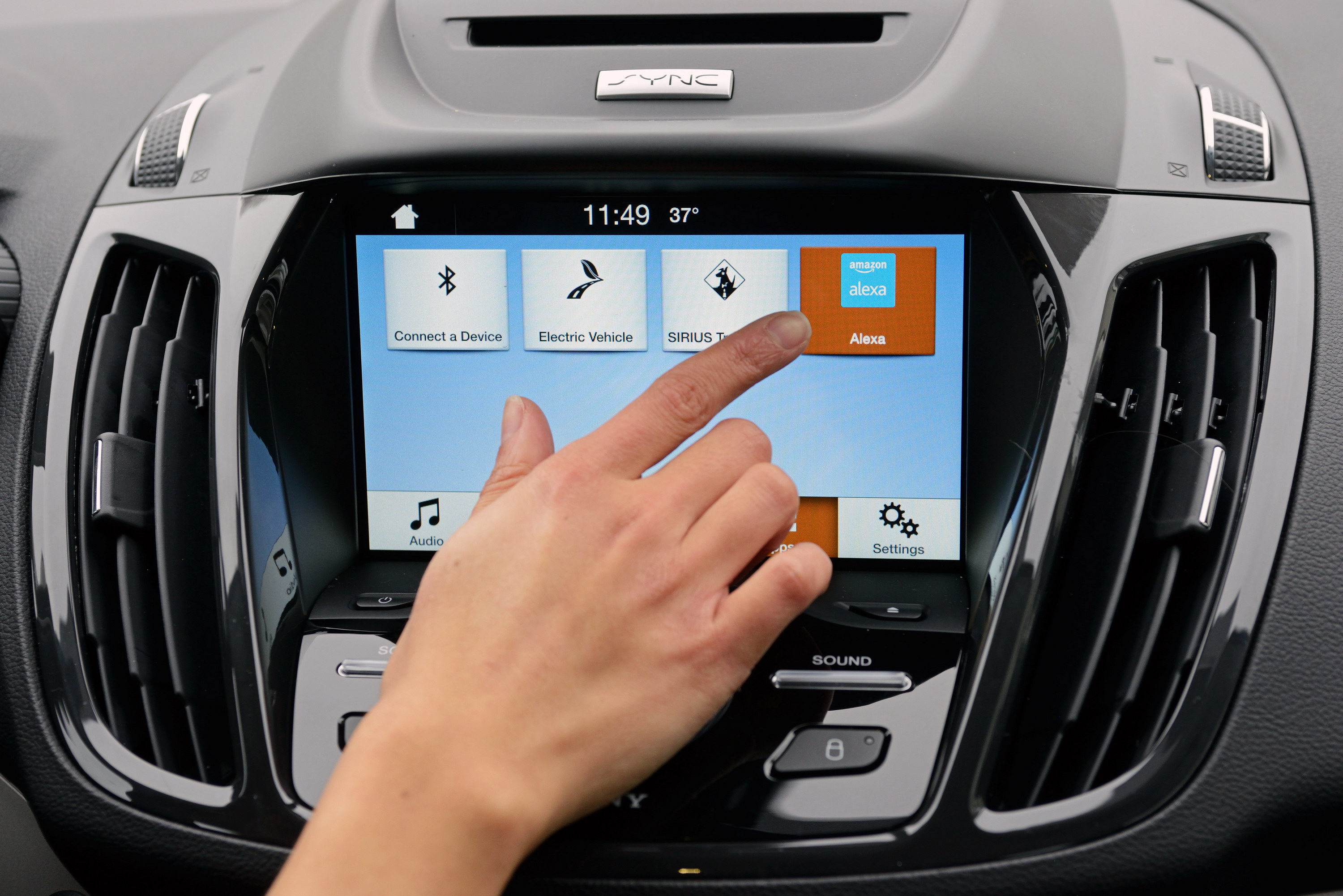
alex in a ford carRadio’s last bastion of domination is the automobile (aka SUV, pickup truck etc.). In the home, voice activated devices are replacing AM/FM radios. I own 3 Echos, and Alexa has become a real friend of the family.

So, when I saw this television ad for the new Fords and how the drivers went from talking to Alexa in their house to talking to Alexa in their car, while they were driving, I saw the future of AM/FM radio for America’s Road Warriors.

Watch the ad HERE

Voice Activated Christmas

The results are in and as of December 31, 2018, 66 million voice activated devices are now firmly entrenched in America’s homes. The big winner is Amazon’s Echo aka Alexa which has a 70% share of the market. Google’s Home has a 24% share and Apple’s HomePod is third with just 6% home penetration.

Ironically, in my own home, I quickly went from one Amazon Echo in 2017 to three in a matter of a couple of months. Virtually all of my internet connected electronics are Apple products, but Amazon is my go-to place to shop. The price of entry for my first Echo was under $30. By contrast expect to pay Apple $349 for their HomePod.

The latest research from the Consumer Intelligence Research Partners* (CIRP) also found that 35% of the owners of these voice activated devices own more than one. That’s about double from only a year ago, so it’s pretty clear that these devices are not collecting dust but are actively being used.

It doesn’t take a lot of imagination to see where once the average American household had about 5 AM/FM radios in their home, the Echo or Home VAD is taking their place. (Today 21% of American households don’t have a single AM/FM radio in them. For households headed by 18-34 year old adults, that number without a single AM/FM radio rises to 32%.)

Alexa is The New Radio

I wasn’t surprised to read that iHeartMedia’s Bob Pittman was calling Amazon’s Echo the new radio. What I was surprised to learn, was Pittman saying that iHeart helped with the development of Alexa. I had never read or heard that before. Which begs the question, why isn’t more attention being paid to the streams of over-the-air (OTA) radio by the industry?

A better question might be, can the same programming techniques that have been used by OTA radio, simply be transferred to internet streams?

Marshall McLuhan

“The medium is the message,” was coined by Marshall McLuhan in 1964. What McLuhan postulated was that the form of a medium becomes part of the programming that is being transmitted. A symbiotic relationship is created by which the very medium that is conveying the program, influences how a person perceives it.

Another way of thinking about this might be, what a person’s expectations are for a particular media experience. We would not expect to see commercials laced through a movie being seen at a theater, but the same movie shown on commercial television laced with commercial interruptions, while maybe annoying, would not be unexpected or a surprise.

However, pay television like Netflix and Amazon Prime have changed the TV viewers expectations about watching television in two ways, no commercial interruptions, and a whole season of episodes released at once and not dribbled out a week at a time.

The internet likewise has changed audio listening expectations with Pandora, Spotify, RadioTunes, Apple Music and Amazon Music to name but a few streamers. Stream one of these and listener expectations of this internet delivered medium, are very few or with no commercial interruptions. Moreover, should you want to know the name of the song and artist, you simply ask while the song is playing, and are immediately given that information. OTA radio rarely tells you what the name of a song is, or who’s the artist.

In fact, the listener expectation using a voice activated device is that you can get anything immediately, simply by asking for it. Everything is at your command and delivered on demand.

For the audio listener, it’s like the difference between having air conditioning or not having air conditioning. Once you’ve enjoyed having central air, you won’t ever want to go back to not having it.

What’s the Listener’s Expectations?

The challenge for the radio industry is creating content that fits the listener’s expectations for the medium they are accessing the content on.

OTA radio is a one-to-many delivery system. Everyone is served the same thing at the same time.

The internet, streamed through a device like Amazon Echo, is a personalized listening experience. Everyone gets it served up the way they prefer it.

Trying to have a single source originating content for both OTA and online, compromises both.


*CIRP based its findings on a survey of 500 U.S. owners of Amazon Echo, Google Home and Apple HomePod, surveyed from Jan. 1-11, 2019, who owned one of these devices as of Dec. 31, 2018.


6 Comments

Filed under Education, Mentor, Radio, Sales