

This past week, a post from Bridge Ratings President, Dave Van Dyke, has stuck with me as I’ve read all the various news articles about trying to “Save AM Radio.” What the radio industry seems to be missing, the problem is more than AM, it’s about broadcast radio in general.
Houston, We Have a Problem
Apollo 13 had just experienced an explosion and astronaut Jim Lovell called mission control in Houston to report the problem. I think that’s exactly what Dave Van Dyke was doing when he wrote:
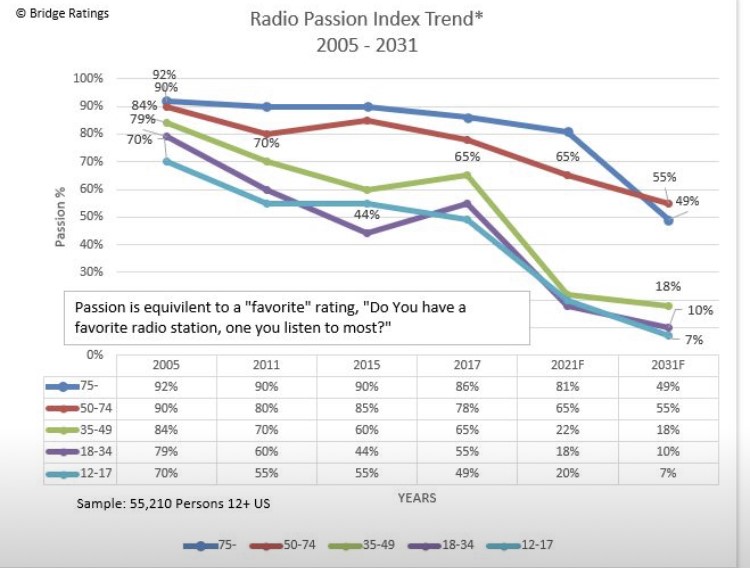
“With so much competition for ears over the last 22 years, radio has felt the brunt of all that new tech resulting in severe passion erosion for media that once had the playing field all to itself. Radio’s saving grace are aging boomers unless somehow, radio reinvents itself.”
And with those comments, Dave posted this chart:
CES2023
At the beginning of every new year, Las Vegas is the focus for what’s coming with the Consumer Electronics Show, known simply as CES.
Fred Jacobs shared his visit to the DTS AUTOSTAGE booth and when he asked the booth’s presenter to demonstrate the radio, the person said, “you mean satellite radio?” And then, still confused by the question, started naming different streaming services.
For me, that snippet was both, very telling, and at the same time, sad.
Maybe It’s Time to Give Away Radios, Again
Back when AM radio ruled the airwaves, Jerry Lee was trying to build an audience to his Philadelphia FM radio station, he began giving away high quality FM only radios that were tuned to WEAZ 101.1 FM.
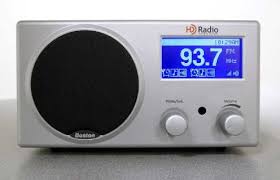
Working in Iowa, I remember KZIA 102.9 FM was one of the first stations to begin digitally broadcasting and promoting their new service by giving away HD Radios that could pick up the broadcasts.

Last week, Maynard Meyer, owner/operator of KLQP 92.1 FM in Madison, Minnesota wrote in the comments section of this blog:
“Perhaps if radio stations made actual radios available, people would know what they were! We sell them in the lobby at the radio station and we can’t get them in fast enough. The last time I got a half-dozen in, I posted it on our Facebook page…sold them all and had 28 more people asking for one. I sell basic little pocket size AM/FM/Weather band portables about the size of a pack of cigarettes for $20. Believe it or not, there is a demand for a basic radio receiver but they’re rarely available in local stores (one local hardware store actually has a couple on the shelf at all times. Newspapers sell subscriptions, radio stations should sell radios! Come on people, think outside the box! When you need prizes to give away…get some radios! When people come in looking for prize donations…give them radios! Ask your local stores to stock a couple of radios. If people don’t know what radios are…it’s radio’s own damn fault!”
What is radio?
Radio is sound communication by radio waves,
usually through the transmission of music, news,
and other types of programs
from single broadcast stations
to multitudes of individual listeners
equipped with radio receivers.
-Encyclopedia Britannica
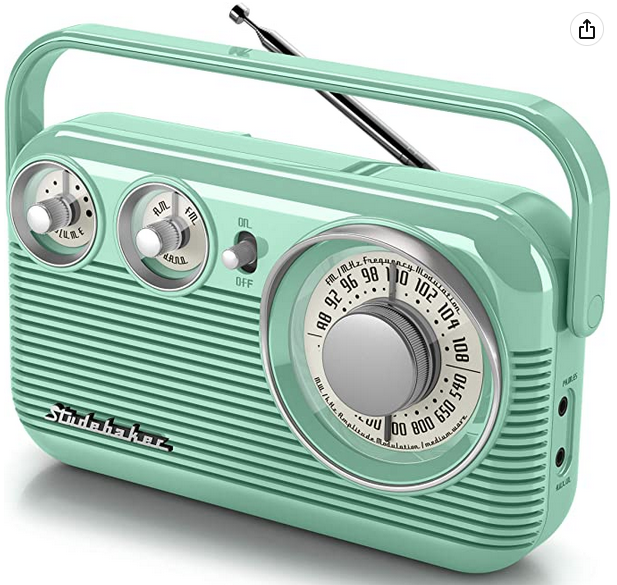
 The other day, we took two of our grandchildren to a wildlife safari park here in Virginia. It was a simply magical day. But that’s not the part of the story I want to share. It is that both kids were wearing their Boston Red Sox baseball caps.
 Jerry Lee recently sold his only radio station, WBEB in Philadelphia, Pennsylvania. It was 55-years ago this past May that Jerry and his partner David Kurtz put the station on the air. It signed on as WDVR. In the 1980s the call letters were changed to WEAZ and the station was branded as “EZ 101.” The station brand was not only well known, but fixed tuned FM radios were given out by the radio station to area businesses to play the station in their stores and offices.
 Most recently, Jerry rebranded his station as “101.1 MoreFM.” This change, like all the others, was promoted in every imaginable way and became familiar to listeners virtually overnight.
 Once upon a time, all radio listening was recorded using a diary, kept by a listener for seven days. Years of diary reviews at the Arbitron headquarters in Maryland proved to me that the radio stations most familiar to their listeners got the most “votes” from their fans.
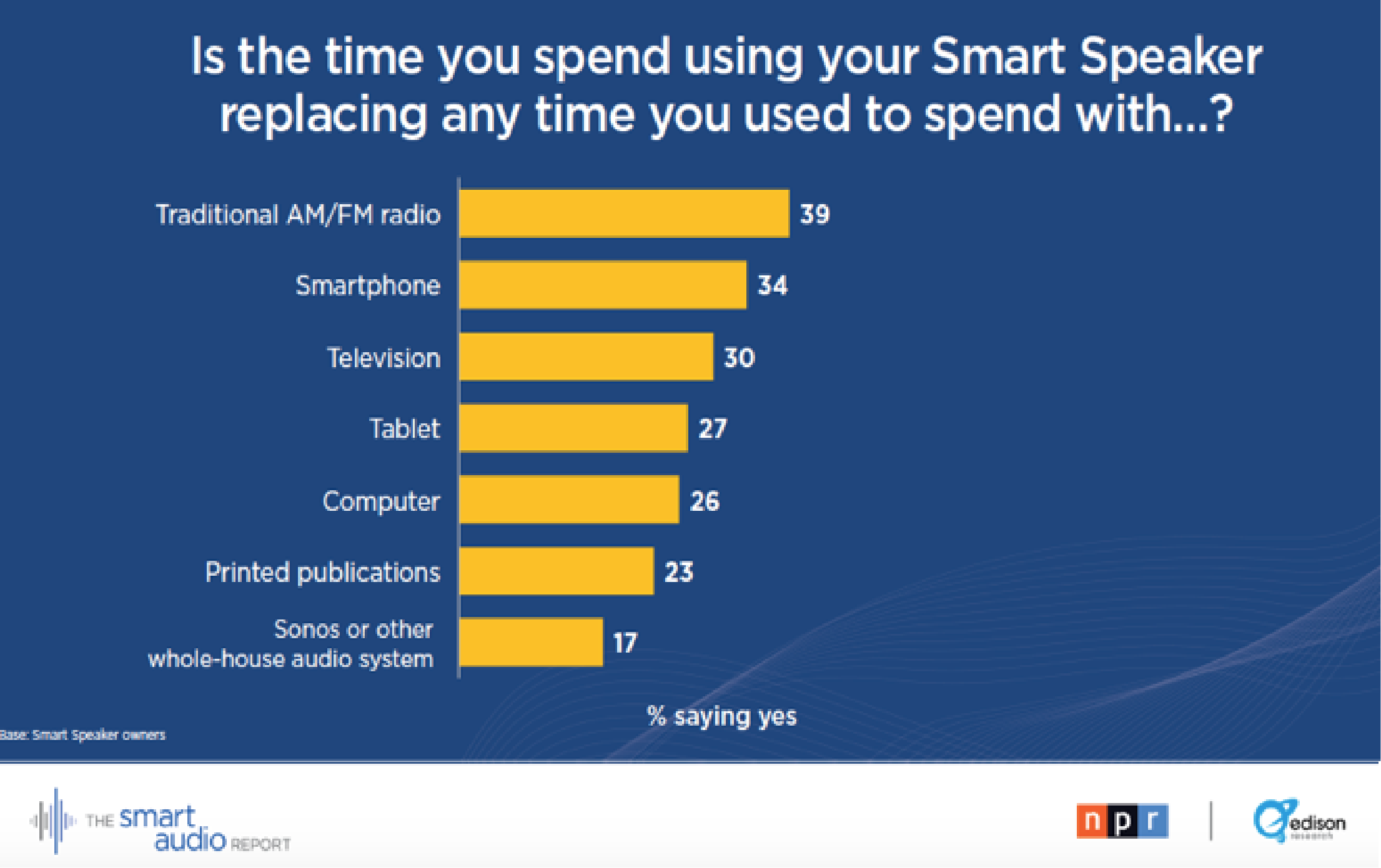 People in the survey said traditional AM/FM radio was the thing most replaced by audio listening via their smart speaker.
 “Brands now have a chance to behave like human beings, talking, understanding, guiding, empathizing…voice is the single biggest vector of emotion, emotion is the biggest driver of preference. This is a true 1:1 marketing opportunity and a chance to build relationships like never before.” -Mark Paul Taylor, Chief Experience Officer, Global DCX Practice, Capgemini
 That was the headline that appeared in the
  DickTaylorBlog