Category Archives: Radio

Best of the Blog 2024

2024 marked my 10th year of writing this blog, and while I reduced the number of articles I would write this year to focus more on faith, family and friends, here are the Top 5 Most Read articles from the past year.

To date, 508 articles have been published over the decade since the blog began, with over 314,215 views from folks around the world; maybe you missed them or perhaps you’d like to read them again.

Most Read Article of 2024

In 2016, Winchester, Virginia’s WINC AM/FM celebrated its 75th anniversary; eight years later this historic radio station and its 37-year morning man, Barry Lee, would be “Gone in a WINK.

As the radio industry continues to eliminate radio personalities that have become a part of the fabric of the communities they broadcast to, this story about the end of one local radio station resonated with readers.

Second Most Read Article of 20214

How important is it to have AM radio in cars, if the majority of the people on the roads don’t listen to any AM radio stations, with the subject of “Use It or Lose It.”

While I became attracted to a career in broadcasting due to AM radio and even had the opportunity to be an air personality on “The Air Castle of the South, 650AM-WSM” the reality in the 21st Century is that AM radio is the past and digital is the future.

Third Most Read Article of 2024

In the 1970s, listening to FM radio stations was pretty much equal to that of AM radio stations. However, FM radio gradually surpassed AM in popularity throughout the late 1970s, with the shift largely attributed to the introduction of FM stereo broadcasting and the FCC’s “non-duplication rule” that encouraged FM stations to offer unique programming compared to their AM counterparts.

The article “Are We Helping or Hurting by Giving AM Radio a Piggyback Ride on the Power of FM Radio” did a deep-dive into the subject of why AM radio stations can’t compete for ears with FM radio stations.  

Fourth Most Read Article of 2024

Radio station operators – commercial, public and religious – don’t play by the same rules. Readers were surprised to learn that the largest radio broadcaster deals with fewer regulations in “What If Every Radio Station in America Could Operate Like EMF?

Fifth Most Read Article of 2024

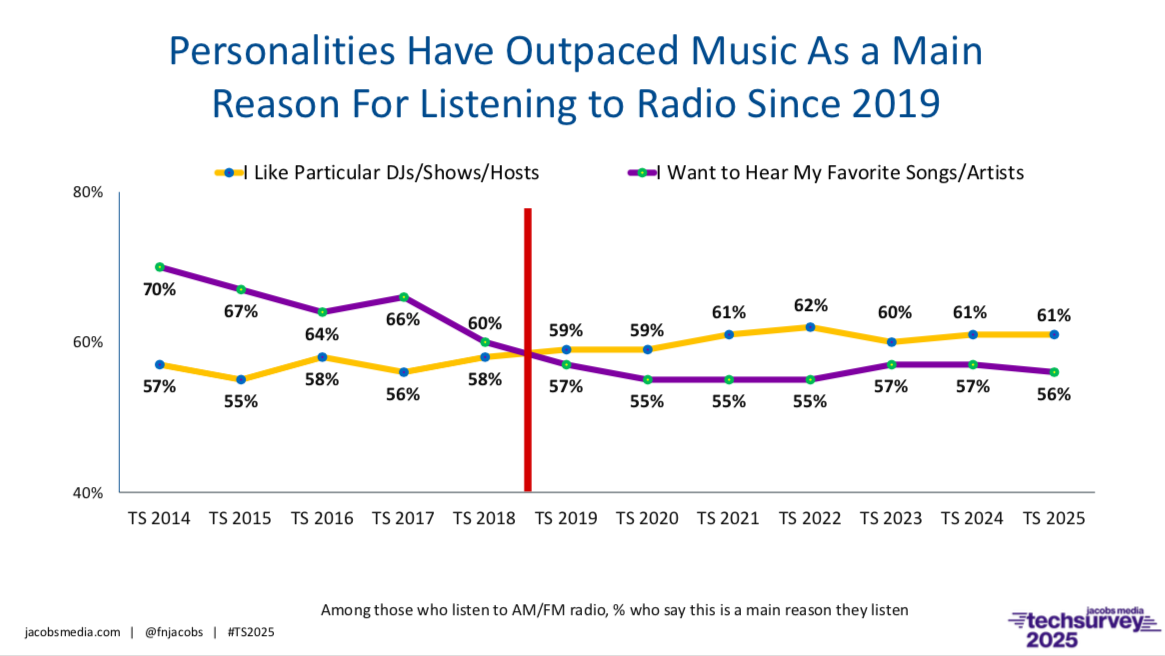
It became quite clear as I reviewed the list of articles written in 2024 and what most readers both read and shared (over 13,000 times), that AM radio stories dominated the list.

While the National Association of Broadcasters (NAB) tried to get Congress to pass the “AM Radio in Every Vehicle Act” – and failed to do so – the number of AM radio stations in America (and indeed around the world) continued to sign-off. That was the subject of “AM Radio in Retreat.”

Why I Blog

I blog for broadcasters, educators and students, to provide media mentorship and to pay-it-forward to the broadcasting industry that I have been a part of for over 56-years. I’m grateful for the more than 233,000-people from all over the world who have visited this blog (https://DickTaylorBlog.com) and have read articles that have caught their interest.

Also, every article I’ve written is archived on my blog site and easily accessible.

As I begin my 11th year of blogging, I plan to continue writing new articles when I feel I can add a different perspective to how our media world is changing and evolving; but just not on a weekly schedule.

If you’re a subscriber to my blog – IT’S FREE – you will automatically receive new articles as they are published.

8 Comments

Filed under Education, Mentor, Radio, Sales

A Purple Pine Tree

Last weekend, Sue & I joined other members of our family as they went on the hunt for their Christmas tree. We had a sleigh load of fun, but I was stunned when we arrived at the Christmas Tree Farm to see a purple pine tree amongst all the green ones.

It certainly grabs your attention!

The Purple Cow

Seeing this purple pine tree immediately brought to mind, Seth Godin’s book “The Purple Cow.”

In the book, Godin argues that companies need to innovate and create unique products to stand out in a crowded marketplace. The book’s main points include: 

  • Traditional marketing is no longer effective

The traditional marketing cycle of buying ads, getting distribution, selling products, and buying more ads is no longer working. 

  • Create a remarkable product or service

To cut through the clutter, companies need to create products that are new, different, and exciting. 

  • Target people who will spread the word

Companies should focus on creating products that people will be likely to tell others about. 

  • Be “too something”

Products and services that are “too something” for some people, but just right for others, are more likely to grow. 

DX’ing

Growing up, I loved to listen to as many different radio stations as my Grundig radio could receive.

DX’ing is the hobby of receiving and identifying distant radio or television signals, or making two-way radio contact with distant stations. The term “DX” is telegraphic shorthand for “distance” or “distant”.

Growing up in the 60s provided a young person a plethora of purple cow radio signals. Every turn of the tuning knob brought a new listening experience and that made listening to the radio a very exciting experience, and it was hard to turn the radio off at night to go to sleep for fear of missing something.

Fast-Forward to Today’s Radio

Sadly, today, finding that unique or special radio station is “Mission Impossible.”

We might blame it on automation, or syndication, or consolidation, or simply everyone following the same “Best Practices” playbook, but the result is a world of sameness in the radio broadcasting world.

If Everyone Was Exactly The Same The World Would Be A Boring Place

– Kerry Magro

General George S. Patton put it this way: “If everyone is thinking alike, then somebody isn’t thinking.”

I rest my case.

8 Comments

Filed under Education, Mentor, Radio, Sales

Instant Podcast

I’ve been writing this blog for ten years. A question that comes up occasionally is, why don’t I record my articles and make them into a podcast. The reason in one word is “focus.”

Seth Godin, a marketing genius I’ve followed for years says, if you want to communicate to the world, pick one medium and give it your all. For me, it was the written blog.

But – never say never.

Google’s NotebookLM

Steve Goldstein* wrote on this week’s Amplifi Media blog about a new audio product from Google, called “NotebookLM.” Steve says:

“If you’re in the audio business and haven’t yet explored

NotebookLM, you should.

It’s an impressive, jaw dropping tool that is exciting, weird and unsettling at the same time.”

Now, that sounded very enticing; so, I gave it a try.

We Never Called It Content – Podcast

I published my most read article on September 6, 2015 titled “We Never Called It Content.”  I decided that I would put my words through Google’s NotebookLM Artificial Intelligence Tool (AI) and see what came out.

NotebookLM produced an eight minute and seven second audio conversation between a man and a woman (both AI generated voices) discussing my article, as if I were a listener to their podcast and submitted this topic for their analysis.

The end result was produced in less than four minutes. Take a listen:

https://notebooklm.google.com/notebook/30d99a06-d33e-467e-84be-09c61a6a8a25/audio

We Never Called It Content – Blog Article

Now, for comparison of my original work, here’s the blog article I wrote back in 2015:

Larry Lujack, The Real Don Steele, Robert W. Morgan, Dale Dorman, Ron Lundy, Salty Brine, Bob Steele, and so many, many more.  These names I’ve dropped are all no longer on the radio.  Terrestrial radio anyway.  We radio geeks like to think they are now Rockin’ N Rollin’ the hinges off the pearly gates.

Everyone can understand the circle of life.  People retire, people pass on.

But this past week saw the “forced retirement” of more big names in radio.  Two of them that were on Los Angeles radio have a star on the Hollywood Walk of Fame.  They delivered, according to what I’ve read in the trades, excellent audience ratings.  So, what happened?

Bill Gates once famously announced “content is king” as we entered the Internet age.  Microsoft would give businesses WORD, EXCEL, PowerPoint etc.  The business schools graduated a whole gaggle of spreadsheet nerds who excel at these computer tools.  The Telcom Act of 1996 was the beginning of the consolidation of radio and when Wall Street would jump into this wonderful new investment opportunity.

When you look at radio stations via spreadsheets, you primarily are reducing everything to numbers.  It completely eviscerates the human element from the decision making process.

Nobody turned on Steele, Lujack, Morgan, Dorman, Lundy, Brine, Steele and the rest of radio’s iconic personalities and said, “I’m going to get me some great content.”  We turned on our favorite radio station because the people behind the microphone were members of our family.  We enjoyed spending time with them.  We knew that what we were experiencing, they were experiencing right along with us.  They were local & live. 

Radio is an art form.

When you remove the artists, there’s not much left.

Radio is a pretty simple business.  You play recordings people want to hear, you keep your hand on the pulse of the community you’re licensed to serve and report on what’s going on that people need to know and you hire personalities that become the audio glue that keep it all together running smoothly and engage the listener.

To support the expense of doing all of this, you work with businesses to expose their products and services to the audience you’ve attracted to your radio station.

The irony with today’s radio is that more radio stations operate out of a single location than at any time in radio’s 95 year history, but with less people per station than at any time in that same history.  I wouldn’t be surprised to see Rick Moranis (Honey, I Shrunk the Kids) return to make a new movie about today’s radio called “Honey, I Shrunk the Staff.” 

Frederick Allan “Rick” Moranis, a native Canadian, was a disc jockey on three Toronto radio stations back in the mid-70s performing on the radio under the name “Rick Allan.”

No one has a clue how much the employment in the radio industry has shrunk as the industry rushed to consolidate.  What we do know is when you walk into any of these huge clusters; there are rows of empty cubicles, offices that are no longer occupied – it can be depressing. 

I’m not saying that radio, like every other business, shouldn’t be running more efficiently and taking advantage of technology to control the costs of operation.  But the buzz you hear is that the fat cutting has become cutting the bone.

As Ken Levine wrote in his blog about the state of the radio industry http://kenlevine.blogspot.com/2015/08/why-im-glad-i-got-out-of-radio.html?m=1 “In the past when a great disc jockey got fired he would simply show up elsewhere.  But who knows today? Nobody is hiring. They’re all just firing.”

Today’s radio is being driven by Excel spreadsheets and PowerPoint presentations trying to put a pretty face on the new strategy.  But radio is more than just studios, transmitters, and now websites/social media, radio is made up of people, albeit fewer of them by the day.

Radio was never a just a job.  Radio was a mission inspired by people who were passionate about all the medium could be.  Everyone inside a radio station worked towards this common goal, just like the people at Google, Apple, Southwest – to name a few – do.

People didn’t get into radio, radio got into people.

Holy Audio, Batman!

Now remember, everything in my original article was simply uploaded to Google’s NotebookLM and the audio you just listened to, of a man and a woman, discussing my blog – in some cases actually expanding on my original thoughts – was completely AI-generated.

I honestly don’t know what to think, but I’m very curious as to what your impressions are about all of this.

Please post your thoughts in the comments section of this blog article, so that others may be stimulated to share their own, and we can all learn from one another’s perspective.

*Steve Goldstein’s Amplifi Media works with media companies and podcasters in developing audio content strategies.

12 Comments

Filed under Education, Mentor, Radio

What’s the Future of Radio, AM or Digital?

Reading the RAB’s “Radio Matters” blog, I couldn’t help but notice the picture of the radio used for the article, “What’s on the Horizon for Radio?” was an AM/FM radio set that couldn’t receive HD Radio broadcasts. (Picture of that radio is on the left.)

Radio Digital Growing

The article did cite that in 2025 radio digital* presented the radio industry in America with growth potential, stating:

“The Finance/Insurance category will be the spending leader for Radio Digital with $586 million in local ad spend, with other categories that will be significantly increasing their spend in Radio Digital being QSRs (Quick Service Restaurants), Supermarkets & Other Grocery Stores and Tier 3 – New Car Dealers.”

HD Radio

What I found most curious about the blog article was the total absence of anything regarding America’s digital radio standard, HD Radio.

We just acquired a new car that has an HD Radio, and I am finding great difficulty in navigating radio stations and their HD 1, 2, 3 & 4 subchannels. Hopefully, the FCC’s  (Federal Communications Commission) “Modifying Rules for FM Terrestrial Digital Audio Broadcasting Systems, First Report and Order” will improve this digital radio service.

Ironically, when we enter our new car, it automatically and seamlessly connects to Apple CarPlay and allows us to play our personal music library or favorite streaming App. It’s so easy, because it operates just like our iPhones and accepts voice commands.

AM Radio

James Cridland wrote in this week’s newsletter:

“In the US, the House of Representatives is reviewing “the AM Radio For Every Vehicle Act”, a piece of legislation aimed at ensuring that AM radio is not removed from car radio receivers, “because emergencies”.”

“John “Cats” Catsimatidis, “a true self-made billionaire, philanthropist, and former NYC mayoral candidate“, has been buying full-page ads in the New York Post – like the one below – raising awareness of the issue. He’s the owner of 77 WABC, an AM radio station in New York, so he’s got considerable skin in the game.”

“I’ve written much about AM’s decline; but it should be noted that in Europe, a piece of legislation aimed at ensuring that DAB was put into all cars, “because emergencies”, was passed – and is a good reason for the success of DAB on the continent.”

Sadly, it appears that the American broadcast industry is investing its money and political capital in trying the preserve the past rather than lead the charge into the future.

Alaska

Before COVID-19 and a global pandemic closed down the world, Sue and I had planned a trip to our 49th state, Alaska. Now, four years later, that trip was finally taken.

We traveled through Anchorage, Seward, Juneau, Skagway, Haines, Hoonah and Ketchikan. Music was playing in just about every business we entered, not on a radio, but on a digital speaker that was apparently connected to a streaming music service or personal library.

Also, not one of our hotel rooms had a radio in them, unlike in 1922 when having a radio in your hotel room was a big deal. I wrote about that in a blog titled “Once It Was Radio.”

We found local cell service to be prolific everywhere we went and often available on our cruise ship while cruising the inland passages, allowing us to avoid purchasing the cruise lines internet/cellphone package.

Our smartphones are portable and allow us to tune into the world for music, entertainment and information. So, the possibility arises that the “horizon for radio” is delivery of its programming primarily via smartphones, as in our household, they represent the portable “transistor radio” of our youth.

In today’s connected world, relevant content rules.

Relevant is the new local.

* Radio Digital means digital radio advertising including local advertising sold by local stations (streaming, email advertising, O&O banners, SEM (not SEO), website advertisements) and pure play streaming services except CTV/OTT.  that utilizes digital formats. Includes the share retained by local radio stations after reselling other online platforms (e.g., Google AdWords). -BIA Advisory Services

4 Comments

Filed under Education, Mentor, Radio

What If Every Radio Station in America Could Operate Like EMF?

At the beginning of 2024, I read an article from Rolling Stone.com that I can’t get out of my head. It was titled “Why Is the Radio Full of Christian Rock? Thank This Nonprofit.” It’s a long article, that I encourage you to read, but if you’re short on time, I will summarize its most important content for the commercial radio industry.

What is EMF?

EMF stands for the “Educational Media Foundation,” a name that does not immediately convey that they are a religious broadcaster.

On their website, the foundation states their mission this way:

“Educational Media Foundation (EMF) is a nonprofit, multi-platform media company on a mission to draw people closer to Christ. Founded in 1982 in Santa Rosa, CA, with a singular radio station, EMF today owns and operates the nation’s two largest Christian music radio networks (K-LOVE and Air1) with over 1,000 broadcast signals across all 50 states, streaming audio reaching around the world, and a growing family of media ministries including podcasts, books, films, concerts, and events. EMF employs nearly 500 team members between its offices in Nashville, TN, Rocklin, CA, and field locations around the country.”

Today, I believe, EMF is the largest radio station owner in America, with more radio signals in its control than iHeartRadio, estimating that it reaches a weekly audience numbering over 18-million listeners. It’s those listeners – and their donations – that fund EMF’s operations, much like the listeners support at public radio stations. EMF’s radio stations are licensed as non-commercial educational (NCE) radio stations and the foundation receives the majority of their donations during their twice annual pledge drives; usually held in the spring and fall.

What is iHeartRadio?

iHeartRadio is America’s largest commercial radio broadcaster and owned by iHeartMedia, which was rebranded by CEO Bob Pittman from Clear Channel Radio in 2014.

Full-disclosure, I worked for Clear Channel Communications from 2004-2010, a time when the company operated in a decentralized manner, allowing each of its radio station’s general managers to make their own decisions based on local market conditions and to deliver what was forecast by the radio station’s annual budget. That would change after I left the company to a centralized management model.

At its peak, Clear Channel owned and operated more than twelve hundred American radio stations. Today, the iHeartMedia website says:

“With over 860 live broadcast stations [with 781 employees] in 160 markets across America, there’s an iHeartRadio station where you live. Discover how our stations can deliver your message live and local to your community.”

Wikipedia says ”iHeartRadio’s main radio competitors are Audacy, TuneIn and SiriusXM,” which I found interesting in that TuneIn owns no radio stations, and while SiriusXM is licensed to operate by the Federal Communications Commission (FCC) and does employ land-based transmitter sites in addition to its satellites, it is basically a subscription service.

Its real competitor, like that of the rest of the commercial/public radio industry, is flying under the radar.

EMF versus Commercial/Public Radio

Rolling Stone writes: The big difference between EMF and other commercial broadcasters is that it operates without a local presence and unmanned transmitters.  

“Almost every new EMF station operates as a repeater

with no local voices, few local jobs and barely any overhead.”

Rolling Stone says that as of 2022, this “little-known organization had just shy of a billion dollars in net assets (a number that grows steadily year after year), with an annual revenue of nearly a quarter billion. (National Public Radio, by comparison, had net assets of less than $150 million and operated near the break-even mark.)”

The EMF business model has few operating costs – unlike commercial and public broadcasters – where every new radio station they acquire becomes a new source for donations. It’s estimated that about ninety-seven cents of every dollar comes from listener donations.

“Nonprofit EMF has built an unassuming money-making machine.”

-Rolling Stone

The genius of the EMF business model is that it exploits loopholes that the FCC created to help small nonprofits.

“in my own heart, I know God was involved

[in the decision to form a 501(c)(3)]

because being a not-for-profit has paid off for us

many, many times.”

Mike Novak, EMF CEO

The decision to incorporate as a “not-for-profit” entity allows EMF to enjoy many benefits:

  • Avoid paying taxes
  • Waves FCC applications costs and other fees
  • No requirement to maintain a local broadcast studio
  • Legally accept tax-deductible donations from their listeners (a revenue stream not available to commercial broadcasters)
  • The acquisition of translators* that are made more easily available to entities such as religious broadcasters
  • Access to lower FM band frequencies (88.1 – 91.9) that the FCC reserved for use by colleges, community and public-radio organizations and tribes; entities that the FCC envisioned would have limited funds to acquire these frequencies, and  commercial broadcasters were banned from bidding on, but didn’t exclude a not-for-profit giant like EMF from buying up.

Sadly, true community broadcasters find this unlevel playing field almost impossible to compete with, when EMF’s billion-dollar foundation can offer iHeart-level prices for neighborhood radio stations. It’s something I personally witnessed happen in my city of Winchester, Virginia when EMF bought 50,000-watt WINC-FM. All local community programming vanished, along with its employees and building.

While the FCC still maintains a policy of not allowing a single radio broadcaster from owning more than five AM or five FM stations in any one city, it left open a loophole for noncommercial broadcasters by never applying its ownership cap to nonprofits. There’s also no ownership cap on the number of translators a nonprofit may own in a single radio market.

Soft Conservatism

While nonprofits can’t legally engage in any political campaign activity, don’t think EMF isn’t using its fortunes to influence its point-of-view; through lobbying and legislation. Those in the Contemporary Christian Music (CCM) industry know that the genre is a punchline for most Americans; it’s something that actually works to EMF’s advantage, by keeping them low profile.

Unfortunately, this unlevel playing field is negatively impacting local commercial and public radio stations to profitably operate, which impacts the communities these stations once served with vital local news, sports, weather and community information.

*Translators are small FM radio signals that rebroadcast a parent radio station into an area the original signal couldn’t reach.

22 Comments

Filed under Education, Mentor, Radio, Sales

A Life Changing Observation

When we’re in school, we often begin to think that the most important things in life are what we read in our textbooks, or hear in our professor’s lectures, and that getting the best grades are very important. But really, how much of anything you learned in school, do you remember today?

Use It or Lose It

Being a physics major in college, most of what I studied, including the use of a slide rule, are today a very distant memory. Why? Because I don’t use most of what I studied back then, in my daily life today.

When I entered radio sales, I would use Newton’s 3rd Law of Motion from my physics education:

“For every action, there’s an equal and opposite reaction.”

That simple statement can be found in the Bible expressed this way:

“As you sow, so shall you reap.”

And one of my sales mentor’s, Zig Ziglar, put it this way:

“You can get anything in life you want,

 if you will just help enough other people get what they want.”

In sales, I used this universal principle on a daily basis to help my advertising clients grow their business, and later in my career as a market manager of radio station clusters to grow my people.

As a university professor, I not only taught my students this important life principle, but lived it as an example of its power.

Habit & Repetition

The lessons we learn best, are the ones we use daily. Through habit and repetition, we grow confidence in our ability to do whatever we put our minds to accomplishing. Drawing on our experiences better enables us to deal with life’s questions, confusions, and problems, making them less overwhelming.

Growth in your career – and in life – is a gradual process. It takes consistently working at what you want to achieve, day after day.

You form the habits of success through daily repetition, but it’s important that you’re doing the right things, and, doing them correctly.

I had a roller skating coach that put it this way:

Practice doesn’t make perfect.

Perfect practice makes perfect.

4 Comments

Filed under Education, Mentor, Radio, Sales

Ad-Supported SiriusXM Requires No Paid Subscription

Eight years ago, I wrote an article for this blog titled “SiriusXM Radio is Now Free.” At the time I was speculating on what might happen to over-the-air commercial radio if the satellite company were to turn on their ad-supported channels in every vehicle equipped with a SiriusXM radio.

Well, it looks like that is finally coming to pass.

SiriusXM’s Growth Has Stalled

Fred Jacob’s wrote in his blog on Friday that…

SiriusXM, increasingly frustrated by their inability to grow their subscriber base.  Looking at the Netflix model, the satcaster earlier this week unveiled their own ad-supported tier for no fee.

Obviously, this is a radical departure from SXM’s legacy subscriber-driven platform.  Radio Ink reported that no matter how you look at the in-car battlefield, satellite lags far behind traditional radio listening.  SiriusXM, however, performs much better in luxury brand, such as Mercedes-Benz and Audio, as well as in newer vehicles.

Inside Radio says there are other hoops for drivers to jump through.  While SXM CEO Jennifer Witz says the new plan is all about “repositioning our business for the future,”  the story goes onto say the free service is only available to owners of vehicles with the company’s  360L receivers.   Additionally, eligibility is limited to those whose free trials runs out and can only be activated by one vehicle per customer.

But it’s a start.  While the company acknowledges it will take time to amp up the platform’s commercial options for advertisers, you can see that’s where they’re headed.  SiriusXM needs to jumpstart its user base, while cashing in on inventory sales.

Will it work?  Can a radical move to offer a “free” version of satellite radio actually be a game-changer for SXM.

We can all speculate about the wisdom of this risky move by SiriusXM, but like the growth of [other ad-upported] channels, it attempts to cash in on the notion of not paying cash for any media content.

Pay & Free

It doesn’t take a whole lot of imagination to understand why satellite radio is deciding to have the best of both worlds. Offer the premium pay channels to those willing to pay for them and at the same time create a free tier of channels that could be ad supported by national advertisers.

What history shows us are things that happen in other industries and services – eventually making their way around to virtually all of them.

NOW – It’s only a matter of time.

Link to my 2016 blog article: https://dicktaylorblog.com/2016/07/17/siriusxm-radio-is-now-free/

9 Comments

Filed under Education, Mentor, Radio, Sales

Have a Cup of Coffee

The last article I wrote for this blog was in June. Since then, life for this grandfather has been very busy. Who knew that life in retirement could be so full?

Work & Life Stress

As I watch the world go streaming past me, I see a lot of stress on people’s faces. Often their stress is self-induced, by the way they live their lives.

So, this week, I’d like you to sit down and pour yourself a cup of coffee while you read this story I heard while teaching at the university years ago.

+++++++++++++++++++++++

Offering his guests coffee, the professor went to the kitchen and returned with a large pot of coffee and an assortment of cups – porcelain, plastic, glass, crystal, some plain-looking, some expensive, and some exquisite – telling them to help themselves to the coffee.

After all the students had a cup of coffee in hand, the professor said: “If you noticed, all the nice looking expensive cups were taken up, leaving behind the plain and cheap ones. While it is but normal for you to want only the best for yourselves, that is the source of your problems and stress.

Be assured that the cup itself adds not quality to the coffee. In most cases, it’s just more expensive and in some cases even hides what we drink. What all of you really wanted was coffee, not the cup, but you consciously went for the best cups and then began eyeing each other’s cups.

Now consider this: Life is the coffee, and jobs, money and position in society are the cups. They are just tools to hold and contain life, and the type of cup we have does not define nor change the quality of the life we live. Sometimes, by concentrating only on the cup, we fail to enjoy the coffee God has provided us.”

God brews the coffee, not the cups. Enjoy your coffee.

+++++++++++++++++++++++++

The Secret of Living a Good Life

Happy people enjoy the things they already have, instead of focusing on getting more things. Learning to appreciate what you already have may be the most vital ingredient to living a less stressful life.

What Does This Have To Do With Broadcasting?

At each moment, in both my broadcast career and that of a university professor, I always made time to pause and savor the moment. To be grateful for all the things I had.

I’ve been retired since 2017, and when people ask me how I am doing, my answer is always the same:

I’m living my BEST Life!

The Bottom Line

In the end, there are really only two ways to be happy in life.

  1. You can get what you want.
  2. You can want what you already have.

Spoiler Alert: Only 1 of these two strategies actually works. It’s called GRATITUDE.

9 Comments

Filed under Education, Mentor, Radio

Gone In a Wink

Barry Lee & Dick Taylor

On June 26, 1941, at 6:57am, a new local radio station, WINC -1400AM began serving the Winchester, Virginia community. It was the city’s first radio station, and it brought Virginia Senator Harry F. Byrd and Virginia Governor James Hubert Price to town for the ribbon cutting ceremonies signing on this new radio service.

The radio station’s offices, studios, transmitter and tower were located at 520 Pleasant Valley Road in Winchester.

It would broadcast live descriptions of the attack on Pearl Harbor and FDR’s famous “Infamy Speech” only six months after signing on-the-air.

In 1947 a radio contest on WINC (known locally as Wink) would take down the entire telephone system for the City of Winchester, as female listeners tried to win a free pair of nylon stockings and a $10 handbag.

Virginia Hensley

Winchester’s most famous resident is Virginia Hensley, better known to the world as Patsy Cline.

When Ginny was just fourteen years old, she walked into WINC and asked if she could sing on one the station’s live music shows, . The leader of the band, told her to come back next week and maybe he’d let her sing on the radio. Ginny returned the following weekend and made her broadcast debut on WINC in 1948.

Other stars to visit the station included, Bing Crosby, Bob Hope and Paul Harvey, who would broadcast his national News & Commentary over the ABC Radio Network on April 14, 1962.

Local Radio

WINC provided residents of Frederick County Virginia with news, entertainment and advertisements from local retailers. Those ads must have been popular with the business community because the radio station ran into trouble with the FCC (Federal Communications Commission) when trying to renew its broadcast license in 1971. At that time, the FCC allowed no more than 18-minutes of commercials per hour and WINC was airing 22-minutes of ads. It was reported that the FCC’s Broadcast Bureau Chief felt the excessive number of commercials were not in the best interests of Winchester community, but in the end renewed the station’s broadcast license.

Programming

Through the years, WINC -1400AM would undergo various programming changes. From live musical performances, to playing records. Musically, the station went from playing middle-of-the-road music, to adult contemporary, to classic hits; finally changing to a news/talk format in 1996, because its sister station, WINC-FM 92.5 had become Winchester’s most popular music radio station.

75th Anniversary

In 2016, WINC-1400AM celebrated its 75th anniversary of broadcasting. During this period of time, the station had only two different owners, the Lewis family and Centennial Broadcasting.

Richard Field Lewis, Jr., a broadcast engineer filed the initial application for a new station in Winchester in November 1940 and six years later, he would launch sister station WINC-FM.

On October 18, 1957 Richard F. Lewis, Jr. died and control of the two stations would pass to the Lewis family and incorporated as Mid-Atlantic Network, Inc.

In May 2007, the Lewis family would sell WINC AM/FM to North Carolina-based Centennial Broadcasting for about $36 million.

The End of an Era

Centennial would begin divesting their Winchester radio properties, which now numbered  three FM stations and one AM radio station in 2020.

50,000-watt WINC-FM would be sold to the Educational Media Foundation (EMF) for $1.75 million, which would begin airing EMF’s Air1 network. Centennial’s other two FM stations would be sold to Fairfax, Virginia-based Metro Radio, Inc. for $225,000.

The future of WINC-1400AM was uncertain as the radio station celebrated its 80th anniversary in 2021. Ultimately, the station would find a buyer that paid $25,000 for the signal. The call letters WINC would be changed to WZFC upon completion of the sale in October 22, 2021.

How do you mark the end of a local radio station?

Was it when:

  • WINC-FM was sold to EMF and its call letters were changed to WAIW?
  • WINC-AM was sold and the call letters were changed to WZFC?*
  • The retirement of 37-year Wink Morning Man Barry Lee when the radio stations were sold?
  • The demolition of the building WINC AM/FM had broadcast from for over its 75-year existence?

Every day, communities across America are finding a once local radio station vanishing, sometimes they’re replaced by syndicated programming with little local service, other times the city of license is changed and the local radio service is moved to a larger population center and sometimes, the signals just go off-the-air.

Generations who grew up and lived in Winchester, Virginia depended on radio stations WINC AM/FM as they were a part of the fabric of the community. More importantly, the local radio personalities that were heard over Wink Radio for decades, were very much a part of these families lives.

And now, it’s gone.

In a wink.

*Paperwork filed with the FCC to change WZFC’s call sign back to WINC, was done on February 25, 2023.

24 Comments

Filed under Education, Mentor, Radio

AM Radio in Retreat

While the National Association of Broadcasters (NAB) is still pursuing its goal of getting Congress to pass the “AM Radio in Every Vehicle Act*,” the number of AM radio stations on-the-air continues to shrink.

How Many Radio Stations Are There?

Inside Radio published the latest FCC radio station count and the number of AM radio stations on-the-air continues to shrink.

In 1968, I passed my 3rd Class Radiotelephone FCC License, Broadcast endorsed, it was also the year that the Federal Communications Commission (FCC) began publishing its Broadcast Station Totals reports.

At that time the FCC said that 4,236 AM radio stations and 2,306 FM radio stations were on the air.

In December 1990, the next report the FCC published became available showing 4,987 AM radio stations and 5,832 full power FM radio stations were now on the air; plus, another 1,866 FM translator/boosters.

It’s worthy to note that the general public cannot tell the difference between a:

  • Full power FM
  • FM booster
  • FM translator signal

as to the FM listener they all are received on a standard AM/FM receiver. Only broadcasters, broadcast engineers and the FCC are concerned about such distinctions.

So, in just the first two decades of my radio career, FM signals outnumbered AM signals by 2,711.

Telecommunications Act of 1996

On February 8, 1996, President William Jefferson Clinton signed into law what is commonly referred to as “The Telcom Act of 96.” The intent of the legislation was to allow more companies to operate in the communications space, but what actually happened was a flurry of mergers and acquisitions as corporate media giants bought out small, local broadcasters.

The FCC reported that as of February 29, 1996 there were:

  • 4,906 AM stations
  • 7,151 FM stations
  • 2,527 FM translators/boosters on-the-air

almost two FM signals beating the airwaves to every AM signal.

A year after the Telcom Act of 96, the number of AM signals began its decline to:

  • 4,840 (a loss of 66 AM signals in one year)
  • full power FM signals increased to 7,295 (up 144 FM signals)
  • FM translator/booster signals grew to 2,744 (up 217 FM signals)

While AM radio signals were signing off, FM radio signals were growing by an additional 361.

Ten Years After Passage of the Telcom Act of 96

On March 31, 2006, ten years after the Telcom Act became law, and the consolidation of the radio industry began, the FCC Broadcast Station Totals report listed:

  • 4,759 AM signals
  • 8,989 full power FM signals
  • 4,049 FM translator/booster signals

and now something new began appearing, Low Power FM signals (LPFM) which numbered 712,  meaning the radio listening consumer could now access 13,750 FM signals versus 4,759 AM signals.

Wall Street investors were clearly showing more interest in FM signals than AM signals as their money poured into the radio industry.

Twenty Years After Passage of the Telcom Act of 96

Twenty years after President Clinton signed the Telcom Act and consolidation continued squeezing out the mom and pop broadcasters, the FCC Broadcast Station Totals report listed:

  • 4,680 AM signals (down 307 signals from the day I began my broadcast career)
  • 10,811 full power FM signals
  • 6,582 FM translator/booster signals
  • 1,516 LPFM signals

AM signals totaled 4,680 and FM signals totaled 18,908.

Radio Broadcast Signals 2024

Which brings us to the present day report, March 31, 2024. The FCC Broadcast Station Totals report now lists:

  • 4,427 AM signals
  • 10,983 full power FM signals
  • 8,913 FM translator/booster signals
  • 1,960 LPFM signals

Remember, the radio listening public DOES NOT distinguish between the different classifications of FM signals, as they all appear on the same FM radio receiver they are using.

To the radio listener, they have

4,427 AM signals compared to 21,856 FM signals

they can access. Almost 5 times as many FM signals as AM signals, and each year we witness those AM signals either reducing their power or just signing off-the-air and turning in their FCC broadcast license.

Radio Dominates in Vehicles

The latest research from Quu ( www.quureport.com ) shows that in 2023 model vehicles:

  • 100% of them have an FM radio
  • 98% of them have an AM radio
  • 98% of them have Android Audio
  • 98% of them have Apple CarPlay
  • 92% have SiriusXM
  • 70% have HD Radio

What surprised me about this research report, was that this was the first time I’ve ever seen separate AM and FM numbers listed. All reporting about radio usage should list AM and FM listening separately. I feel it is disingenuous to give the false impression that AM and FM broadcast signals contribute equally when that’s clearly NOT the case.

Having access to an audio service does not equate to usage.

Fred Jacobs in his TechSurvey 2023 for example, revealed how HD Radio was only listened to by 16% and SiriusXM was only listened to by 28%, which shows that despite their high availability numbers in vehicle dashboards, usage is still low. Unfortunately, AM/FM is never broken apart, but listed together so can they can garner 86% of the listening.

I’m thinking that both HD radio and SiriusXM usage might eclipse AM radio listening, if we were allowed to see AM and FM usage shown separately.

Vehicles On The Road in America Today

According to S&P Global Mobility, there are 284 million vehicles on our roadways and the average age of them continues to rise to a new record of 12.5 years. About 23% of all passenger cars now are 20 years or older with the bulk of them made between 2015 and 2019.

By 2050, when electric vehicles are projected to make up 60% of new sales, the majority of vehicles on America’s highways will still be powered by gasoline, because most vehicles today last twenty years meaning AM radio will still be in most cars, but the bigger question is how many AM radio stations will still be on-the-air.

Radio Needs To Look Forward

In ten to twenty years, AM radio will be at best a niche way to listen to audio.

Where the radio industry and the National Association of Broadcasters should be focusing their time is keeping FM radio viable, in all vehicles and FREE!

Sadly, the FM band is becoming overcrowded with signals and this, I believe, needs to be seriously addressed.

Finally, I would like to believe, as does Scott Shannon, that radio can still succeed in the 21st Century if it will just be “authentic, local, magical, and deliver an audio product with passion.” Or as radio programming consultant and author Valerie Geller puts it:

Great radio is interesting people communicating with listeners

by telling the truth, making it matter and never being boring.

14 Comments

Filed under Education, Mentor, Radio, Sales