

From north Jersey to south Jersey,
we’re loving summer at the Jersey Shore.
Back with a new blog article on Sunday, August 15th.
From north Jersey to south Jersey,
we’re loving summer at the Jersey Shore.
Back with a new blog article on Sunday, August 15th.
Filed under Uncategorized

After a year of not traveling due to COVID19,
it’s good to be able to visit family once again.
Back with a new blog article on August 15th.
Filed under Uncategorized

I was reading about how HD Radio was celebrating its 15th birthday recently and that had me scratching my head as HD Radio is older than that. In checking the records, I saw that the Federal Communications Commission selected HD Radio as America’s digital standard in 2002. By comparison, Steve Jobs introduced Apple’s iPod in October 2001, XM Satellite Radio began service in 2001 and Sirius Satellite Radio in 2002.
Radios Go High-Definition
This was the headline that appeared in the Baltimore Sun on January 7, 2004. Unfortunately, unlike HDTV (High Definition Television) HD Radio never stood for “High Definition.” And possibly that was the first mistake. HD Radio was simply a name they chose for the digital radio technology, but even today, many people still think it means “High Definition” or “Hybrid Digital.”
Sadly, by 2004, America’s digital radio was late to the party and if the industry is now marking the date of 2006 as its moment of birth, it was really late!
Remembering 2006
In 2006, Facebook opened up its social network to everyone in the world. The original requirement that you be a college student enrolled at a specific university was eliminated and the only requirement now was that you were over the age of 13 and had a valid email address.
In just 15-years, Facebook has grown to over 2.85 billion active monthly users.
Let’s look at what else was born in 2006 that competes for our attention:
When we look at 2006, it becomes easier to understand why HD Radio wasn’t such a big deal to the average media consumer.
Solving a Problem That Didn’t Exist
What HD Radio did for FM radio stations was solve a problem that listeners to FM didn’t feel existed. No one who listened to FM radio was complaining about the quality of the sound, they were complaining about other things, like too many commercials. And for AM radio stations, it meant people buying radios for a service that didn’t offer anything they really wanted to hear or couldn’t get elsewhere. AM radio was now the service of senior citizens who already owned AM radios, who grew up with AM radio’s characteristics and whose hearing was not the best now anyway. So, HD Radio for AM wasn’t anything they were asking for and worse, AM radio stations that put on the new digital signal found it lacked the benefits of skywave and often interfered with other company AM radio stations as the industry quickly consolidated radio ownership.
Industries Most Disrupted By Digital
In March 2016, an article published by Rhys Grossman in the Harvard Business Review listed “Media” as the most disrupted by the growing digital economy. Turns out, if you’re a business-to-consumer business, you’re first being most disrupted by digital. The barriers to be a media company used to be huge, but in a digital world they are not, meaning that the business model that media companies depend on has not adapted well to the digital economy.
Elephant in the Room
But the elephant in the room remains the broken media business model. Newspapers, magazines, radio, and television – any media that is ad supported – will be challenged to find a way to capture revenue to continue operating.
Walt Disney famously said “We don’t make movies to make money, we make money to make movies.”
Broadcasters of my generation had that same attitude about creating great radio.
Do the people owning and operating today’s radio stations still embrace that concept?
Sue & I just returned from a seven week trip out west to visit our children and grandchildren who are living in Nevada, Montana and Washington. For me, our trip would also be a chance to witness how radio is used (or not used) in three different households, as well as in hotels, businesses and public transportation. What I would witness, was concerning.
Nevada
In Nevada, I noticed that for a household of seven, not a single radio was to be found. Audio was accessed by asking Alexa (Amazon Echo) to play something or a particular playlist was sent wirelessly to speakers via someone’s iPhone. Everyone, even the very youngest grandchild, who’s five, had their own iPhone.
In a house where both parents work, and can be called out at any hour of the day, this type of communications for all family members becomes a necessity.
Radio listening, if done at all, was something only done when in the car. Television, was connected to a cable bundle and only CNN or Netflix seemed to get viewed. The grandkids spent most of their time playing video games on the house computer, game console or their iPhones.
Montana
Here a Sonos home speaker system had been installed in the home. I found that two different local radio stations (country & classic rock) were programmed into rotation, along with an Amazon Echo smart speaker. Our grandkids called up songs they wanted to hear by asking Alexa to play them, so in the week we spent, Alexa was pretty much the default choice for anything musically played.
Television programs were all streamed via YouTube TV.
Radio pre-sets in the car were set to several country stations, several classic rock stations, several contemporary music stations and an oldies station. In all, 22 different radio stations were loaded onto the pre-sets. I added KBMC to that pre-set list when we borrowed the car a couple of times. KBMC programs a variety of jazz and classical music.
Washington
Our stay in the State of Washington took place on Whidbey Island. The only radio signal licensed on the island plays regional Mexican music and the majority of its content is in Spanish. So, it wasn’t surprising to find the pre-sets on the car radio did not include KNZW – La Zeta 103.3.
What was surprising was to see that all the pre-sets were to HD1 signals in this Mazda 6 sedan. (It appears Mazda has their radio default to HD signals and you have to toggle it off to get FM signals.) Since the island is just across the water from Seattle, all of the pre-sets were to Seattle radio stations. The two that dominated the listening in the car were KSWD (Audacy’s 94.1 The Sound) when mom was behind the wheel and KQMV (Hubbard’s Movin’ 92.5) when either of the grand kids got control of the radio. However, what is dispiriting to witness is how frequently the radio stations get changed whenever something comes on that they don’t wish to hear. When commercials come on, the station gets changed. Likewise, when songs they don’t like come on, the station gets changed. It’s like watching football using the Red Zone.
Here again, not a single radio receiver was to be found inside the home.
The Bus & Hotels
When we departed Whidbey Island, we took a bus into Seattle. On the bus we listened to KSWD 94.1 The Sound out of Seattle. It provided a nice sound track for the ride and the bus driver never changed the station for the two hours it took to reach our destination.
Every hotel room we stayed in featured flat screen TVs but none had a radio. The old clock radios have been replaced by digital clock/USB charging stations for our iPhones, iPads and laptop computers.
Summing It All Up
I realize there is nothing scientific about this, it’s all anecdotal, but it was a dose of reality that confirms much of the research I’m reading about today’s radio landscape.
No one in our seven weeks on the road tuned into any AM radio station. FM, was radio to everyone, but then, only in their vehicles. Listening to radio in the home was not possible, because there was only one radio in any of the homes we stayed at and that was in the garage.
HD Radio sounds great, but in all honesty, the one family that had this easily accessible in their car, probably didn’t know that’s what they were listening to and it certainly wasn’t the reason they were listening to any particular station.
With the exception of our two hour bus ride, radio exposure could be measured in short segments, that only happened to occur because the radio comes on with the ignition switch. Sadly, changing radio stations occurs constantly, so any commercial content never gets heard.
Likewise, businesses we frequented either had their own franchise “radio station,” like Walmart Radio or streamed a music channel from some other music service they subscribed to.
In our travels, we didn’t see a TV commercial, billboard or bumper sticker for any radio station. Lots of shirts and sweatshirts promoting lots of things, but not one for any radio station.
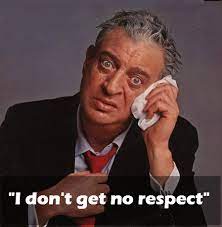
Radio, it would appear, has become the Rodney Dangerfield of media.
But then maybe, it’s a self-inflicted situation

Story #1
The other night a radio salesperson was in a restaurant. Business was a little slow, so he struck up a conversation with the owner who told him that she had used radio advertising for a restaurant she had owned back in California, and it didn’t work, and she didn’t intend to use radio ever again.
He told the owner that he and his wife had been in another restaurant in town a couple of days ago, and the service and food were both terrible. But, rather than never go to another restaurant again, he and his wife decided to try her place, where they found just the opposite. He suggested to her that just because radio didn’t work for her in one situation, there is no reason why she should conclude all radio advertising doesn’t work.
That radio sales person had a new client by the time they paid for their meal.
Story #2
Another radio salesperson was calling on a jewelry store. She had made several calls on the owner and was in the middle of a presentation when the owner suddenly asked her, “Have you ever bought anything from us?” She replied, “No, because you never asked me to.” She finished her radio advertising presentation. He signed up.
Story #3
Another radio sales person was calling on a car dealer who said, “I don’t like your radio station. I’ve never liked it and I don’t listen to it.” The radio salesperson responded, “I don’t care if you ever listen to us, for you see, we have a lot of people who do listen and like my radio station, and right now your advertising isn’t reaching any of them. But we are telling them about your competitors.” The car dealer was a little taken aback, but proceeded to get serious, and is now on-the-air.
Be Confident
Sales is the transference of confidence.
In each of these short stories, a radio salesperson was confident about their radio station delivering results. They were also prepared for such objections.
COVID-19 has shaken everyone’s confidence.
It’s never been more important that radio sellers “Be Confident.”
Preparation
Prepare, prepare, prepare.
There is no substitution for preparation.
As famed Notre Dame football coach Lou Holtz put it,

People who are the best at what they do, have one thing in common, no lack of self-confidence.
Visualization
Whenever successful people want to accomplish something, they go at it absolutely convinced they will achieve it. Science has shown that when we visualize achieving a goal, making it real in our minds, we enhance our performance and boost our self-confidence.
Improve Your Self-Esteem
Besides visualizing success, there are other things you can do to raise your self-esteem. For example: Reach out to others. Say nice things. Lend a helping hand.
When we help other people, we begin to feel more in control of our own lives.
Avoid Perfectionism
We all would like to be perfect. However, perfectionism often paralyzes us and can actually keep us from accomplishing our goals.
Respect Yourself
Make a list 20 reasons why you should. If you can’t think of 20, think of what people who admire you would say. (They’re right, you know.)
Your Values
Act in accordance with your own values. Choose the path that feels right for you.
Treat Yourself
Be good to yourself. Do something, just for you, that makes you feel good every day.
Challenge Yourself
Pick up an encyclopedia, or go online to Wikipedia, and read one new entry at random. Take a course at your local community college. Travel to a new place. Eat a new food.
As you meet new challenges, you gain new confidence.
Practice Being Optimistic
Fight pessimism. Think of setbacks as temporary, and one of a kind, not permanent and “complete” failures.
Don’t Take It Personally
Bad encounters often tell you more about how the other person feels at that moment in time, rather than representing a failure on your part.
Don’t Take Things So Seriously
Lighten up. Most of life’s little calamities have two sides. Try to gain a balanced perspective and you’ll bounce back more quickly from disappointments and embarrassing moments. And, people will enjoy being around you.
Finally
Practicing these positive measures will reinforce your self-worth, and increase self-esteem, which will make you more self-confident.

Everyone wants to see their hard work turn into successful outcomes, so, why do some people achieve success and some do not?
The reason often comes down to one factor, lack of consistency.
Whether you’re trying to lose weight, or play an instrument or another life achievement, each of your goals requires a sustained effort. Let me share some ideas to help you sustain and focus your energies to achieve success.
Make Sure It’s Your Goal
Nothing will derail your success faster, then trying to achieve someone else’s goals for you. So, if you want to stay motivated, make sure you are the one setting the goal. When you’re excited about the goal, working to achieve it doesn’t seem like work.
Write Down Your Goals
Zig Ziglar always used to promote in his motivational and sales seminars, “You’ve got to have goals.” Sadly, about 84% of people surveyed said they didn’t have any goals.
Remember what Lewis Carroll wrote in Alice’s Adventures in Wonderland, “If you don’t know where you’re going, any road will take you there.”
Writing your goals down turns out to be a critical step. Of the 3% of the people who have written goals, they earn on average about ten times as much as those who don’t.
When you write down your goals, you write them into your consciousness.
Plan Your Work, Work Your Plan
To stay focused and achieve your goals, you need to have an action plan. What are each of the steps you will take to move you from where you are today to where you want to be tomorrow, next month, next year etc.
Expect that as you proceed, things that you didn’t expect, like a global pandemic, will cause you to make changes in your plan. That’s why you should write your goals in concrete, and your plans in sand.
Keep Track of Your Progress
Write down where you started and then keep a record of your actions and progress. Measuring how your changing, provides you with a valuable feedback system, keeping you focused.
Have a Support System
Read positive books. Keep a success journal. Invite people you admire to become your mentor and make you responsible to someone other than just yourself.
You want people who will encourage you to reach your goals and challenge you to set them higher than you might otherwise.
Work Toward Your Goals Daily
I’m in my 6th year of writing this blog. I’ve now written over three hundred articles. My goal was to write an article a week, not hundreds.
Make sure you break down your goals into bite sized pieces. Don’t set too many for yourself, you can achieve almost any goal you set, but not everyone, and not all at once. So, focus on just a few until they’ve been accomplished and then make some new goals.
Celebrate Every Success
Every time you do something that takes you closer to reaching your goal, celebrate. Celebration is a positive motivational tool to help you stay focused, energized and optimistic.
Tell yourself you deserve to succeed.

It’s graduation time and invariably these occasions call for someone to make a speech. As often these speeches are about life and achieving success, each speech has a way of treading a path of looking forward and how one can seize the future.
So, after the first year of a global pandemic, the 2021 graduation speeches should be especially interesting to hear.
The Two Minute Graduation Speech
Travis Graham was a law student at the University of Tennessee with a reputation among his classmates as a hardworking student, but socially quiet. As class valedictorian, what he would say at the graduation ceremony was a mystery to all. So, after several typically musty speakers, he rose to deliver his address. After the obligatory acknowledgments, he promised to take only two minutes of everyone’s time and got to the heart of his thoughts. Audience attention was then a bit sharper.
What Would You Say to Graduates?
He started by saying that he had had difficulty deciding what “wisdom” to impart at the ceremony. For inspiration, he consulted quote books and speaker’s guides but came away uninspired. He reviewed the cases and the law he had studied and found nothing he felt appropriate to the moment. In fact, he said, he had no idea of what hard-gained understanding-born-of-study he could share until that very morning when he was sitting at his kitchen table, having a breakfast of refrigerated cinnamon rolls.
Poppin’ Fresh Wisdom
There, on the newly opened package, he spotted the lesson he knew he and his fellow graduates had in common, and felt worthy of the occasion.
The package cautioned “KEEP COOL.”
This advice, he was sure, would stand them in good stead all the rest of their lives. He continued after a dramatic pause, it went this succinct wisdom one better, by also advising, “BUT DO NOT FREEZE.”
And with that he thanked all assembled and returned to his seat.
Keep Cool Class of 2021, You Got This

The radio advertising business is all about its ability to deliver both reach (the number of people who will hear your advertisement) as well as frequency (the number of times a listener will hear the same advertisement). Radio, for all of my life has been the medium for delivering the best frequency for an advertiser, but in today’s world, it now is also the best for delivering reach.
Pierre Bouvard, my first Arbitron sales representative and today the Chief Insights Officer at Cumulus Media/Westwood One, calls AM/FM radio the soundtrack of America’s recovery and spending resurgence.
Relationships
When I started out in radio sales, my first goal was to start making friends with each business person I called on. I used to say to myself, “If you can’t make a sale, make a friend.”
People do business with people they know and like, it’s first step in building relationships with your advertisers.
Advertising is an Investment
Patience is at an all-time low, so the problem in today’s fast-paced world is everyone wants things to happen immediately.
When you’re dealing with people and human nature, things move at their own pace.
Farmers know when they plant a crop, they won’t be going out the next day to harvest it. Likewise, when you put an advertiser’s message on the radio, it will take time to grow in the mind of the consumer. Done correctly, a business can be harvesting sales 52-weeks a year.
Great Radio Ads
Great radio advertising can benefit the listeners of your radio station in addition to growing the business of your advertisers. Great ads speak about the customer’s wants, needs and desires.
Getting Referrals
Make money for your advertisers and they will be happy to refer you to other local business people who could benefit from your radio station’s audience. And unlike cold-calling (knocking on doors of people you don’t know), a referral is like getting a foot-in-the-door. It’s golden.
Fair Prices & Excellent Service
Studies have shown you don’t have to have the lowest price to attract repeat business, fair prices will do.
Combine fair prices with excellent service and you have a winning combination for building repeat business with your customers.
Your goal as a radio sales person should be to become a sustaining resource for your customers. A person who they call first when they need help with their advertising or promotions; a person they can trust.
You Can’t Do It Alone
Everyone in your radio station that comes in contact with your listeners and advertisers impacts the future relationship your enterprise will have with each of them. Everyone needs to be engaged in delighting your listeners and your advertisers.
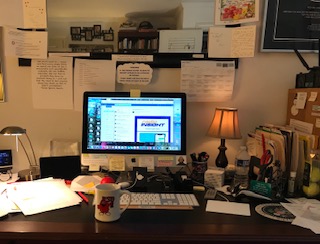
One of the snappiest dressers on television was Morley Safer. But if you were to peek into Morley’s office when he was off-camera, you would have seen an office that was quite the opposite.
Depending on your point-of-view, a cluttered desk might have been thought of as a cluttered mind, or the opposite; a clean desk means an empty mind.
Spatially Organized
Let me offer you a third perspective.
My desk is usually cluttered when I’m deep into a project.
What I have learned about myself was I tend to be spatially organized, and when things get neatly put away, out of sight, in a file drawer, they are also out of mind. Mine!
Productive Workspaces
We’re all different.
When people try to design workspaces for others, it will most likely fail.
In his book, “Messy: The Power of Disorder to Transform Our Lives,” Tim Harford explains how engineered spaces can kill productivity and innovation, while having a messy workspace might actually help us to do some of our best work.
Arbitron
I remember entering Arbitron’s new facility when it opened in Columbia, Maryland. Everything was fresh and new and oh, so very sterile.
One of the managers could be seen chasing people around and chastising them for taping things to the walls or for having a cluttered desk.
This type of order is fine for an automobile assembly line, but not your radio station.
WLAN AM/FM
When I moved WLAN AM/FM from its original location in downtown Lancaster, PA to a brand-new facility, I told everyone that their workspace was theirs to decorate as they wished.
I even let everyone pick out their own style and color of desk and chair.
Everyone was excited for moving day to arrive and had been planning for months how they would set-up their new offices.
Studies have shown that when people are allowed to decorate their work place with the stuff and personal knickknacks they love, productivity can increase by as much as 32%. In fact, people are not only more productive, they are also happier and healthier.
Moves can be really disruptive to a business, but when I moved my Lancaster radio stations, we had a record setting year in both ratings and revenues.
Mix It Up
Another way to stimulate innovation and productivity in your station, is to create spaces where everyone bumps into each other on a regular basis.
When Steve Jobs was designing Apple’s new building, he purposely made sure there would be spaces that would cause employees from all sectors to come in contact with one another.
Diversity of thought and ideas come from everywhere and everyone.
So, break down the silos that walls create, and have some space that brings your people together like a tossed salad.
This will be a real challenge as COVID-19 sees more companies allowing their employees to continue to work from home as an option, versus daily commuting to an office.
The Take Away
The key thing to know about creating a productive work environment is this, you can’t dictate it. You have to empower your people to create it for themselves.
People who have power over their workspace tend to be more engaged, productive and collaborative.
Just remember, it can get a little messy at times, but that’s how greatness is birthed.
 DickTaylorBlog