

When I heard the news that All Access would be closing its doors after twenty-eight years in business, it came as a shock to my soul, and sent a chill down my spine that foretold of a media crisis much bigger than this publication’s demise.
It reminded me of the famous poem by John Donne, For Whom the Bell Tolls:
No man is an island,
Entire of itself.
Each is a piece of the continent,
A part of the main.
If a clod be washed away by the sea,
Europe is the less.
As well as if a promontory were.
As well as if a manor of thine own
Or of thine friend’s were.
Each man’s death diminishes me,
For I am involved in mankind.
Therefore, send not to know
For whom the bell tolls,
It tolls for thee.
The Bell Tolls For Thee
The news of the coming death of All Access made each of us consider our own mortality. Fred Jacobs wrote in his blog on Monday:
“Funerals are a mandatory attendance experience where we mourn the departed, while also considering our own mortality. We think about the deceased and try to rationalize that he/she was older than us, in worse health, had questionable lifestyle habits, or had some undesirable traits and flaws. And we rationalize that their sorrowful outcome will surely not be ours.
But in fact, it is hard to disassociate All Access’ fate from our own. This isn’t just about what befell Joel and his staff – it is a referendum on radio and all of us who work in it.”
The Medium Is The Message
In his seminal 1964 book, “Understanding Media, The Extensions of Man” Canadian communications theorist Marshall McLuhan’s first chapter was titled “The medium is the message;” by which McLuhan felt “that the form of a medium embeds itself in the message, creating a symbiotic relationship by which the medium influences how the message is perceived.” (University of Michigan – Digital Rhetoric Collaborative)
But did McLuhan foresee the state of media today?
The Medium Is A Mess
Bob Iger was reinstated as CEO of The Walt Disney Company in November 2022. Iger, who had been Disney’s CEO from 2005 to 2020, had retired at the age of 69. His replacement, Bob Chapek, created two years of tumult at the mouse house, and was fired.
It was in 2006, that Iger sold Disney’s 22 ABC branded radio stations and the ABC radio network to Citadel Broadcasts Corporation in a cash and stock deal valued at $2.7 billion.
Last week, CNBC reported that Bob Iger had “opened the door to selling the company’s linear TV assets as the business struggles during the media industry’s transition to streaming and digital offerings.”
On June 30th, Audacy, the radio company formerly known as Entercom, did a 1-for-30 reverse stock split to try and prevent being expelled from the NY Stock Exchange. Stock watchers called it a “stock market Hail Mary attempt to stave off financial ruin.” (elitesportsny.com)
Adding to these two company’s woes, the media industry is also dealing with both a writers strike and an actors strike, global climate change, the ongoing war in Ukraine, out-of-control wildfires that have burned over 26 million acres of Canada, polluting the world with no end in sight, and the mess we call our democracy; it’s hard not to wonder what our future holds for anyone, anywhere.
Is This Television’s Radio Moment?
That’s what the analysts are wondering at MoffettNathanson, because radio’s lackluster revenue recovery has forced that broadcasting industry to cut into its bone and consider if using artificial intelligence (A.I.) could be their savoir to keeping investors at bay.
Goodbye All Access
To Joel Denver, Perry Michael Simon and the rest of the dedicated All Access team we say “Thank You, for 28 incredible years of chronicling the business of radio, records, and the people who made it happen.”
Your work has always been at the cutting edge, maybe that’s why your publication’s death feels like a harbinger for us all…
For whom the bell tolls,
It tolls for thee.


 DickTaylorBlog
It Was Always a “Good Day!”
He broadcast six days a week, just like all radio personalities did back in those days. It was a time when all radio was delivered LIVE. Paul Harvey was heard over the ABC Radio Networks with his News and Comment week day mornings and middays. His Saturday noon-time broadcasts were extra special broadcasts that were always sure to surprise and delight his audience of as many as 24-million people a week. Paul Harvey News was carried by 1,200 radio stations in America, plus 400 American Forces Network stations broadcasting all over the world.
Page 2
The first commercial break in each broadcast was clearly announced with the words, “now page 2.” And it caused me to turn up my radio and give Mr. Harvey my full attention as he told me about another great product that he personally used. The ad copy, just like the news and comments, were all crafted by the mind of Paul Harvey.
I bought my BOSE WAVE radio due to Mr. Harvey telling me how wonderful music sounded coming through its speakers and baffle system design. It started me on the path to owning several BOSE products as a result.
Paul Harvey News had a waiting list of sponsors to get on his program. In 1986 his News & Comment broadcasts were rated #1, #2, #3, #4 and #5 in network radio programs when he was the focus of a CBS 48-Hours broadcast commemorating Paul Harvey’s 70th birthday.
Bob Sirott did the profile piece and it showed Paul Harvey as few ever saw him. I encourage you to watch the segment on YouTube by clicking HERE
Paul Harvey News
On April 1, 1951, ABC Radio Network premiered Paul Harvey News and Comment. His Chicago based broadcasts were often called “the voice of the silent majority” or “the voice of Middle America.”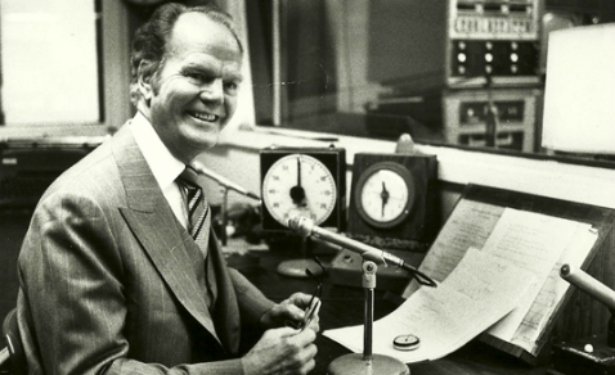
Paul Harvey was making so much money for ABC, they added a third daily broadcast to the schedule on May 10, 1976 called, The Rest of the Story. These broadcasts were written and produced by Paul’s son, Paul Harvey, Jr. for its 33-year long run.
While Paul and his son maintained this entertaining feature which was based on true stories, not all critics agreed, including urban legend expert Jan Harold Bunvand.
I know from my own personal experience of the two times Paul Harvey included stories based on my hometown of Pittsfield, Massachusetts, that Mr. Harvey played fast and loose with the facts of the events to tell a good story. It made me wonder how all the other stories I heard might have been so “massaged.”
Iowa
In 2000, I was managing a cluster of radio stations for Connoisseur and Cumulus. We carried Paul Harvey on my 100,000-watt KOEL-FM. It was the only thing, other than local news in morning drive, that stopped the flow of the best in country music.
I remember being in my car at the time Mr. Harvey’s noon-time broadcast came on the air and hitting the scan button to hear Paul Harvey News and Comment on virtually every station my car radio stopped on. In media, that’s called a “road block,” the same program or advertisement, broadcast at the same time on multiple radio or television stations.
$100 Million Dollar Contract
In November of 2000, Paul Harvey had just inked a new 10-year contract with ABC Radio Networks when a few months later he damaged his vocal cords and had to leave the air. It wasn’t until August of 2001 that Paul returned to the air waves, but only with a reduced clarity and vocal presence in his voice.
I remember this very well as I was now back in Atlantic City running a cluster of radio stations, and my AM radio station WOND-AM1400, was the Paul Harvey radio station for South Jersey.
I had been cajoling Mr. Harvey’s secretary in Chicago for months before he lost his voice for customized promotional announcements to be voiced by Paul Harvey to promote his daily broadcasts over WOND radio.
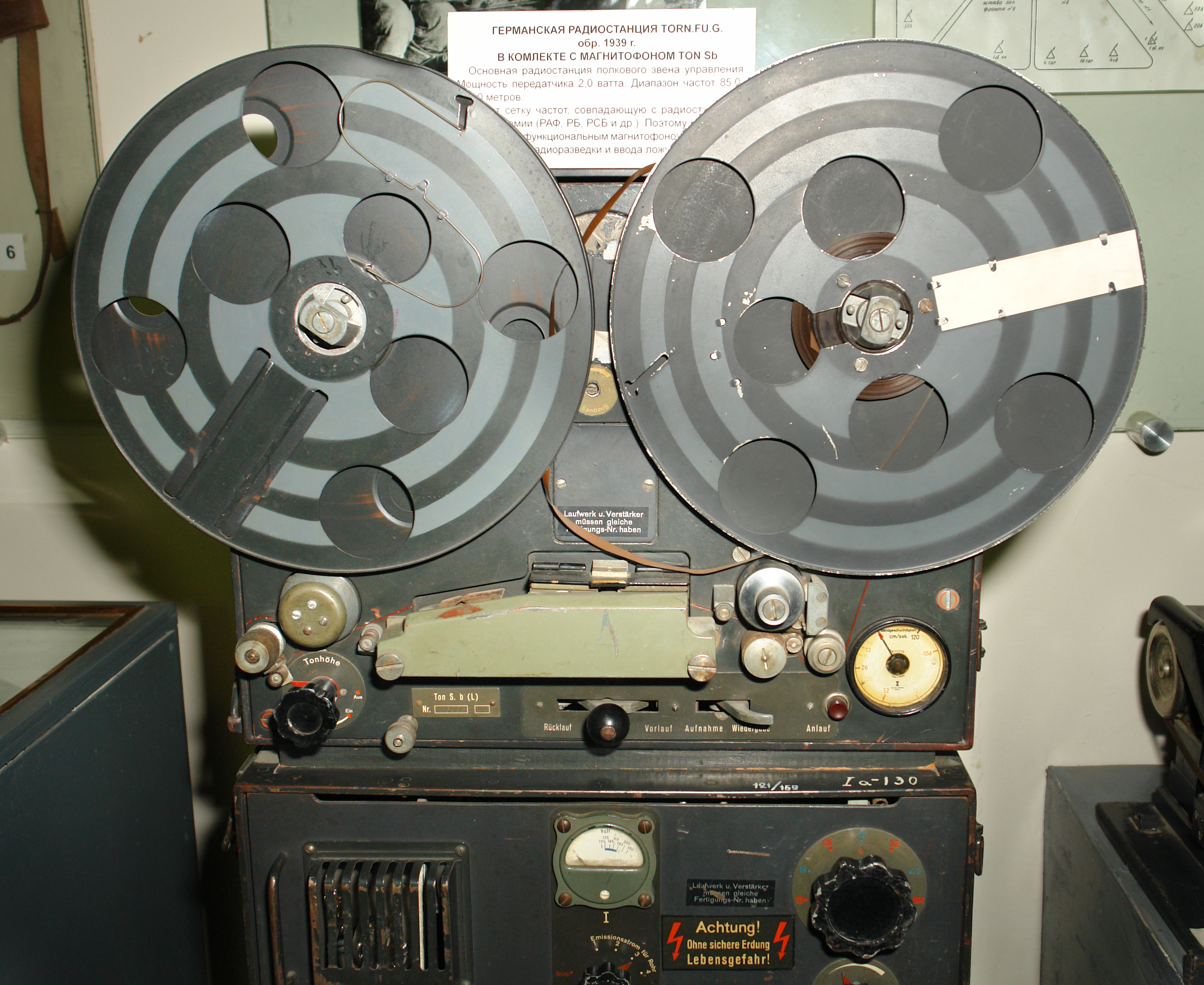
One day in the fall of 2001, a reel-to-reel tape came in an envelope from Chicago addressed to me. It contained my customized, Paul Harvey voiced, WOND announcements. I was thrilled, but just a little disappointed when we played the tape due to the hoarse, raspy sound of Paul’s voice when he recorded them.
Before the end of 2001, Paul Harvey was back to full vocal dynamics.
Touched My Heart
It was after watching the Bob Sirott piece produced for 48 Hours a second time and then sharing my personal Paul Harvey memories with the love of my life, Sue, that I found myself choking up and tearing up about the heartfelt emotional impact that this gentleman from Tulsa, Oklahoma had made on me.
Using only wire copy and his manual typewriter, Paul Harvey crafted a broadcast of words that vividly created in the mind of the listener exactly what he intended. His full vocal range, the power of the dramatic pause and dynamic inflection completed his radio magic, what most like to call radio’s “Theater of the Mind.”
Could you imagine Paul Harvey doing podcasts?
I have no doubt that they would have been as popular as the original SERIAL podcast was from NPR.
Paul Harvey didn’t use any music or sound effects.
Paul Harvey created great radio, that was welcomed into homes all across the globe by his great writing ability and vocal acting talents.
Harvey receiving the Presidential Medal of Freedom in 2005
Good Day
Paul Harvey died on February 28, 2009 at the age of 90.
Three weeks after his death, ABC Radio Networks cancelled the entire News and Comment franchise.
At the time of his death, he had less than two years left on his 10-year contract.
Paul Harvey called himself a salesman, not a journalist, newsman or anything else. He loved his sponsors saying “I am fiercely loyal to those willing to put their money where my mouth is.”
He never would have promoted his broadcast as “commercial free,” as he understood that this free, over-the-air medium called radio, was a powerful way to move product for his advertisers and that it was those very folks that paid all the bills for him and the ABC Radio Networks.
Imagine that, radio ads that were as cherished to hear as the rest of the broadcast itself.
That’s the definition of “GREAT RADIO.”
14 Comments
Filed under Education, Mentor, Radio, Sales
Tagged as ABC Radio Network, Bob Sirott, CBS 48 Hours, KOEL-FM, News and Comment, Paul H. Aurandt, Paul Harvey, Paul Harvey News, The Rest of the Story, WOND