
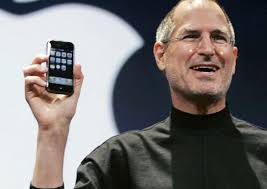
 It was only 11-years ago that Steve Jobs took the stage and held in his hand the future. It was an iPhone.
Many people were skeptical that this device could compete with the very popular Blackberry. I think I may have been one of them, as I was a Blackberry owner/user until 2012.
I quickly realized that I knew how to operate an iPhone, after buying an iPad in the fall of 2011. All Apple devices share a core eco-operating system that makes learning them fast and easy. My first iPhone was the 4S. The “S” stood for Siri and I quickly learned to use Siri to type all of my text and emails via dictation. In 2017, I upgraded to an iPhone 7.
OK, so I’m probably not telling you anything you don’t already know. But in just a decade, have you ever stopped to think about the impact that the smartphone has had on our lives and the technology we use?
RADIO
In America today, 29% of households don’t have a single working AM or FM radio. But it gets worse. The percentage of households without a single working AM or FM radio grows to 50% for the 18-34-year-old age group.
Edison Research recently reported that even 63% of heavy radio listeners now consume their audio online. 82% of those listeners own a smartphone and the most commonly downloaded App is Pandora (40%).
For many, a radio in the 21st Century looks like a smartphone.
SMARTPHONES
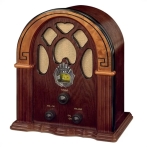
Often it appears like radio people think they are the only ones who are not affected by the innovations of technology. Such as, no matter what comes along, AM/FM radio will always be there. Unfortunately, that kind of thinking is like sticking your head in the sand.
Let’s think about how smart phones have replaced other “must have” technologies:
- My Nikon camera no longer goes on vacation with me, it has been replaced by the pictures I take on my iPhone
- Same for videos using my very expensive camcorders
- My iPod is now my iPhone
- My newspaper is my iPhone
- My calculator is my iPhone
- My eBook reader is my iPhone (or iPad)
- My pocket voice recorder is now my iPhone
- My GPS when on foot is my iPhone, though I still prefer my Garmin SmartDrive 61 in the car
- My flashlight is now my iPhone
- My iPhone is my compass, barcode scanner, and portable video player
- My iPhone is the way I access Facebook, Twitter, and LinkedIn away from home
- My iPhone is the way I get both my local weather forecast as well as access weather radar. Weather alerts come in immediately to my iPhone replacing the need for my weather radio.
- I’ve been a cellphone only household since 2000
- My smartphone is my household answering machine
- My smartphone is my alarm clock
- I no longer wear a wrist watch, as my iPhone is my watch
- I use my iPhone as a timer when I’m cooking
- I have my digital library on my iPhone
- My work and personal calendars are all on my iPhone
- I keep notes and other records on my iPhone
- Since I take all my pictures with my iPhone these days, my photo album is also my smartphone. (Note: I have 2-TerraBytes of iCloud storage to back up everything)
- My entire “rolodex” (contact list) is now on my iPhone (I started with a Day-Timer and went digital in 1989 with a Casio Boss. Then moved to a Palm Pilot. Then to the iPhone.)
- I check my email when not at home on my iPhone
- I surf the internet frequently on my iPhone
- When I call the kids & grandkids, it’s using Facetime on my iPhone
- My credit cards, plane tickets, show tickets are now all in my Apple Wallet on my iPhone
- I can even use my iPhone to run my Apple TV as a remote control
SMARTPHONE ADDICTION
A new research study by Pew finds that 54% of U.S. teenagers, age 13 to 17, worry they may be spending too much time on their phones. While they also say they are trying to reduce their smartphone and social media time spent, 56% of teenagers find that doing so makes them feel anxious, lonely, or upset.
And it’s no better for parents (and may I add, grandparents). Pew’s survey tells us that we are struggling with the same impulses over the time we spend on our phones and social media, sometimes with even worse results than teenagers.
Adults lose focus on their work and students lose focus in the classroom, by the constant need to check their smartphone.
SMART SPEAKER
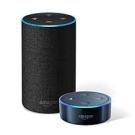 Most research today indicates that since the introduction of the smart speaker, the device that’s getting a little less use is the smartphone. I would concur that is the case in my home as well. Our 3 Amazon Echoes are the way we access at home radio listening, get flash briefs, find out the time and latest weather forecast.
At home, 100% of our radio listening is streamed through a smart speaker.
Speaking of Voice Command devices, my Garmin GPS SmartDrive 61 is now programmed by my voice and I can add via points while driving simply by telling my Garmin where I want to go next. It’s the best improvement in automobile navigation since the GPS itself.
ON DEMAND
 What the smart speaker and the smartphone have in common, are both devices give the user what they want, when they want it. On Demand is the real game changer of the 21st Century communications world.
Netflix, Hulu, Amazon Prime, Apple TV etc. are delivering on demand television. The smartphone and smart speakers are doing that same thing for podcasts, radio, news, weather and everything else.
Edison Research noted, in their recent research, that the hardware challenge in the home is significant. Getting analog radio back into the home (and I would add, in the very near future, the car) seems unlikely
 The other day, we took two of our grandchildren to a wildlife safari park here in Virginia. It was a simply magical day. But that’s not the part of the story I want to share. It is that both kids were wearing their Boston Red Sox baseball caps.
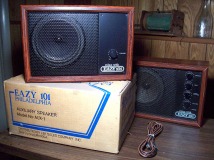 Jerry Lee recently sold his only radio station, WBEB in Philadelphia, Pennsylvania. It was 55-years ago this past May that Jerry and his partner David Kurtz put the station on the air. It signed on as WDVR. In the 1980s the call letters were changed to WEAZ and the station was branded as “EZ 101.” The station brand was not only well known, but fixed tuned FM radios were given out by the radio station to area businesses to play the station in their stores and offices.
 Most recently, Jerry rebranded his station as “101.1 MoreFM.” This change, like all the others, was promoted in every imaginable way and became familiar to listeners virtually overnight.
 Once upon a time, all radio listening was recorded using a diary, kept by a listener for seven days. Years of diary reviews at the Arbitron headquarters in Maryland proved to me that the radio stations most familiar to their listeners got the most “votes” from their fans.
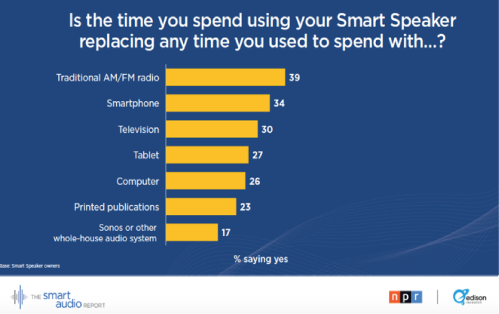 People in the survey said traditional AM/FM radio was the thing most replaced by audio listening via their smart speaker.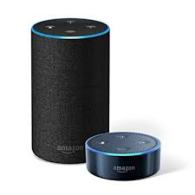
 “Brands now have a chance to behave like human beings, talking, understanding, guiding, empathizing…voice is the single biggest vector of emotion, emotion is the biggest driver of preference. This is a true 1:1 marketing opportunity and a chance to build relationships like never before.” -Mark Paul Taylor, Chief Experience Officer, Global DCX Practice, Capgemini
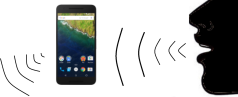 It’s only been about two months and Alexa has changed the way I interface with my devices.
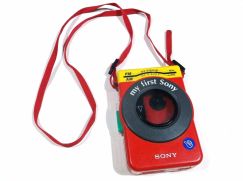 Back in the 1980s, SONY introduced a series of small-scale electronics for kids. They came in brightly colored plastic with large buttons that were easy for little people to control. The line was called “My First Sony.”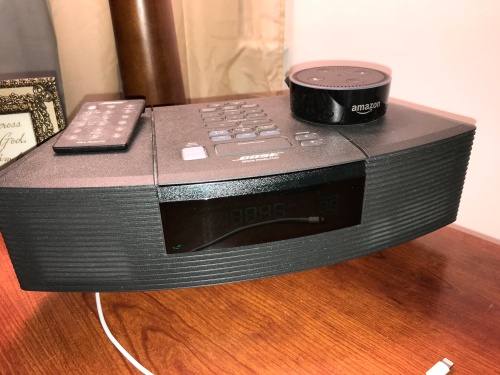
 I finally did it. I cut the cable cord in July 2017. It had been something that I had been thinking about for well over a year now.
 Everything old is new again. I’m sure you’ve heard the phrase. “Everything old is new again” was the title of a song in the movie musical “All That Jazz.” Part of the lyrics to this Peter Allen/Carole Bayer Sager song include:
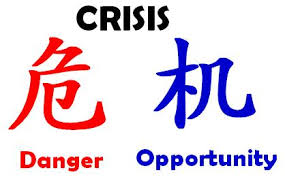 Radio has been here many times in it’s almost 100-year history before.
 DickTaylorBlog