
Thomas Kuhn used the duck-rabbit optical illusion, to demonstrate the way in which a paradigm shift could cause one to see the same information in an entirely different way.
One of my favorite weekly reads is Tim Moore’s “The Midweek Motivator.” You can sign-up for Tim’s weekly wisdom here.
This past week, Tim wrote about how people inside radio stations are asking him, “is radio failing?”
Now Tim’s a student of history, and he responded with “If you care about history (because the past is prologue) here’s the simple truth: some large groups are faced with debt loads that will either force bankruptcy or massive reorganization.”
Tim’s analysis about how America’s two largest broadcasters dug huge debt holes that can’t be re-filled by current operating revenues is spot-on. With radio, like a lot of businesses, it’s a matter of buying it right from the get-go. Start out upside down and most likely you won’t have a good day.
A system that is over-reliant on prediction through leverage, hence fragile to unforeseen “black swan” events, will eventually break into pieces.
-Nassim Taleb
Technology
Crystal balls are hard to come by but my tea leaves are leading me to believe that mass mediated communication is confronting more than just debt loads. What we are also dealing with is “paradigm paralysis.”
Radio’s leaders are holding onto a set of beliefs and views that radio is invincible.
Thomas Kuhn coined the term “paradigm shift” in his influential book “The Structure of Scientific Revolutions” in 1962. The business world adopted this terminology of “paradigm shift” to describe a profound change in a fundamental model.
Paradigm paralysis, on the other hand, is the inability or refusal to see beyond the current models of thinking.
Let Me Share a Story
John C. Harrison told this story at the First World Congress on Fluency Disorders held in Munich, Germany in 1994. See if you see a parallel to radio and the advent of satellites, streaming, podcasts, and smart speakers.
In the late 1940s a man walked into a laboratory of a major photographic
manufacturer in America to demonstrate a new photographic process. But
he didn’t bring along a camera or film. He brought along a red box with a
shiny steel plate, a charging device, a light bulb and a container of black
powder. The picture he created was faint but discernible.
“But where’s the film?” they asked. “Where’s the developer? Where’s the
darkroom? Why, that’s not really photography!” And so, the company
passed up an opportunity to acquire the process for electrostatic
photography, or xerography…a process that has grown into a multi-billion
dollar industry.
Why did they pass up such a great opportunity? Because the people who
saw the process were suffering from PARADIGM PARALYSIS.
Call Me an Outsider
Joel Barker wrote a book called “Paradigms: The Business of Discovering the Future.” Joel says that anyone who develops a new paradigm is often labeled an “outsider.”
Truthfully, when you’re running a cluster of radio stations, you don’t have time to think let alone take a step back and look at things with a fresh eye. I know. I’ve been there.
What teaching and now blogging have given me the opportunity to do is listen to everyone talk about the prevailing paradigm of radio broadcasting, in all of its subtleties and contrast it, to what I’m witnessing taking place before my eyes and ears by the end users of mass media.
And what I sense may be happening, is the radio industry being on the verge of a “black swan event.”
Black Swan Events
Credit card companies, who amass tons of data on their customers, still managed to miss the huge financial crises in housing back in 2007-2009.
When a tidal wave struck Japan’s Fukushima nuclear plant, the predictive model used to calculate how high the protective wall should be built, provided for a 20-foot wave. Yet, the wave that struck the plant was 24-feet high.
AIG, an insurance company in the business of predicting risk, missed seeing the financial collapse that bankrupted them.
Digital Advertising
Now Facebook is dealing with a black swan event over their data breach by Cambridge Analytica. Only this black swan could have major implications for how digital advertising is bought and sold in the future. The UK and Europe will put in place in May 2018 the “General Data Protection Regulation,” that will protect their citizens’ personal data or offending companies will suffer stiff penalties and fines.
So, what the Facebook story is doing, is making its two plus billion users aware of such massive collection and abuse of our data, but the fallout from this breach of trust will impact the ad supported business model of everyone in the digital advertising world.
30% of American Homes Don’t Have a Radio
Edison Research and Triton Digital’s annual “Infinite Dial” research just produced this astounding statistic. Close to a third of America’s homes no longer have a radio set in them.
Many people see smart speakers as the way back into the home for radio. But are they really?
Cable TV & Over-The-Air (OTA) TV
In the beginning, cable television was called “Community Antenna Television.” The concept was simple, TV stations were primarily located in big cities and the suburbs couldn’t receive those TV signals. So, antennas were placed high on mountains and cables would carry the signals received to homes in the valley.
TV operators loved this back then. It was like getting a power increase for no money.
Ah, but remember, there’s no such thing as a “free lunch.”
As the cable industry grew, channels such as ESPN and CNN and The Weather Channel were born and would compete with OTA TV.
Then along came streaming video.
Netflix
At the end of March 2017, one year ago, Netflix surpassed cable TV with its number of subscribers. And if you were to add up all the other streaming video services available to today’s television consumer, the lead over cable wouldn’t be a couple million viewers, but tens of millions.
What happens when a household begins subscribing to these advertising free channels? They find it almost impossible to return to ad supported ones.
Smart Speakers
Now we circle back to the smart speakers, Amazon’s, Google’s, Apple’s and Microsoft’s for starters. Instead of a handful of audio choices, the smart speaker delivers an almost infinite choice, and many, advertising-free.
When you put a prime rib steak next to hamburger and they are both the same price, which do you think most folks will choose?
The smart speaker lets you customize your favorites, much like the pre-sets on your car radio does. I’m willing to bet that the average consumer will end up with about 3 to 5 favorite audio streams they spend the bulk of their listening time with.
In fact, Nielsen’s Total Audience Report released in the second quarter of 2017 said that 87% of OTA radio listeners spent their listening time tuned to one of their three favorite radio stations. And 58% of that time was spent listening to just one station, what Nielsen calls their 1st Preference or P1 station.
Why would we expect this number to grow with the advent of smart speakers?
Goldstein’s Words
I think Steve Goldstein summed it up best in his recent blog when he wrote, “Commercial radio should put down the hammer and stop searching for nails. As they think beyond the stream, they will see how people are using audio media these days and create on-demand solutions in-sync with the vast opportunity of the exploding Smart Speaker universe. On Smart Speakers, the listeners are asking for it.”

 I recently sat in on the Edison Research webinar about people born between 1996 and 2012, known as GEN-Z.
 NuVoodoo does some really wonderful research about radio listening. They particularly focus on reaching people who are most likely to keep a radio listening diary or wear a Nielsen Portable People Meter, aka PPM.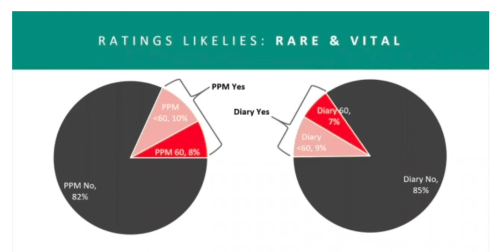
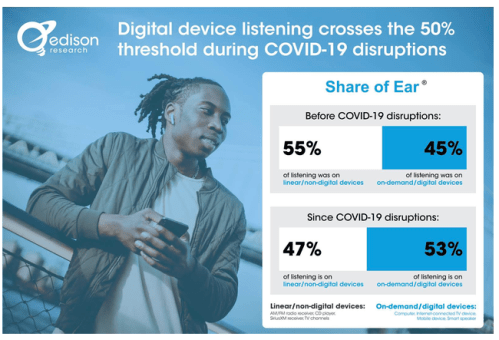
 “It ain’t over, till it’s over,” one of the many phrases made popular by Yogi Berra kept popping into my mind as I sat in on several webinars these past few weeks. COVID19 is not over, so why are people acting like it is? We can expect that we will be living with this virus through all of this year and through most of 2021.
 “These are the times that try men’s souls,” wrote Thomas Paine on December 23, 1776. What Paine was writing about in his essay “The Crisis” was about how Americans were being tested in their ability to stand up for their country and their newly won freedom.
 I was reminded of this important statement the other day when I read an article in Radio Ink penned by Larry Rosin, President of Edison Research. Larry’s article was titled “Stop Saying ‘Still’” and you can read it
  It’s not unusual for little boys and girls to ask the question “Why?” They ask it a lot.
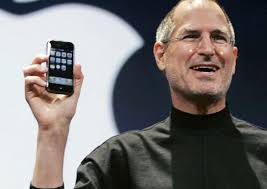 It was only 11-years ago that Steve Jobs took the stage and held in his hand the future. It was an iPhone.

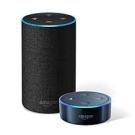 Most research today indicates that since the introduction of the smart speaker, the device that’s getting a little less use is the smartphone. I would concur that is the case in my home as well. Our 3 Amazon Echoes are the way we access at home radio listening, get flash briefs, find out the time and latest weather forecast.
 What the smart speaker and the smartphone have in common, are both devices give the user what they want, when they want it. On Demand is the real game changer of the 21st Century communications world.
 The other day, we took two of our grandchildren to a wildlife safari park here in Virginia. It was a simply magical day. But that’s not the part of the story I want to share. It is that both kids were wearing their Boston Red Sox baseball caps.
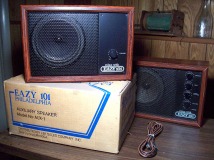 Jerry Lee recently sold his only radio station, WBEB in Philadelphia, Pennsylvania. It was 55-years ago this past May that Jerry and his partner David Kurtz put the station on the air. It signed on as WDVR. In the 1980s the call letters were changed to WEAZ and the station was branded as “EZ 101.” The station brand was not only well known, but fixed tuned FM radios were given out by the radio station to area businesses to play the station in their stores and offices.
 Most recently, Jerry rebranded his station as “101.1 MoreFM.” This change, like all the others, was promoted in every imaginable way and became familiar to listeners virtually overnight.
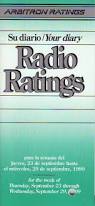 Once upon a time, all radio listening was recorded using a diary, kept by a listener for seven days. Years of diary reviews at the Arbitron headquarters in Maryland proved to me that the radio stations most familiar to their listeners got the most “votes” from their fans.
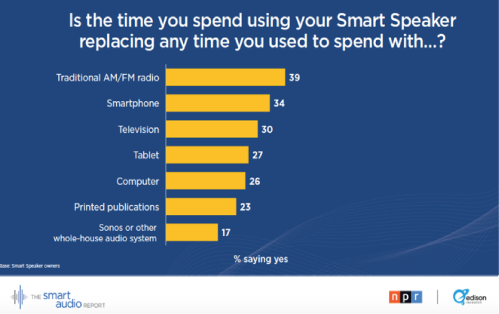 People in the survey said traditional AM/FM radio was the thing most replaced by audio listening via their smart speaker.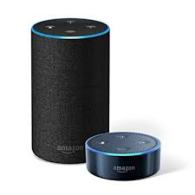
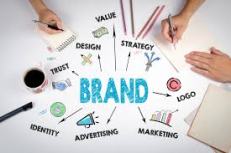 “Brands now have a chance to behave like human beings, talking, understanding, guiding, empathizing…voice is the single biggest vector of emotion, emotion is the biggest driver of preference. This is a true 1:1 marketing opportunity and a chance to build relationships like never before.” -Mark Paul Taylor, Chief Experience Officer, Global DCX Practice, Capgemini
 That was the headline that appeared in the
  DickTaylorBlog