Tag Archives: EMF

Best of the Blog 2024

2024 marked my 10th year of writing this blog, and while I reduced the number of articles I would write this year to focus more on faith, family and friends, here are the Top 5 Most Read articles from the past year.

To date, 508 articles have been published over the decade since the blog began, with over 314,215 views from folks around the world; maybe you missed them or perhaps you’d like to read them again.

Most Read Article of 2024

In 2016, Winchester, Virginia’s WINC AM/FM celebrated its 75th anniversary; eight years later this historic radio station and its 37-year morning man, Barry Lee, would be “Gone in a WINK.

As the radio industry continues to eliminate radio personalities that have become a part of the fabric of the communities they broadcast to, this story about the end of one local radio station resonated with readers.

Second Most Read Article of 20214

How important is it to have AM radio in cars, if the majority of the people on the roads don’t listen to any AM radio stations, with the subject of “Use It or Lose It.”

While I became attracted to a career in broadcasting due to AM radio and even had the opportunity to be an air personality on “The Air Castle of the South, 650AM-WSM” the reality in the 21st Century is that AM radio is the past and digital is the future.

Third Most Read Article of 2024

In the 1970s, listening to FM radio stations was pretty much equal to that of AM radio stations. However, FM radio gradually surpassed AM in popularity throughout the late 1970s, with the shift largely attributed to the introduction of FM stereo broadcasting and the FCC’s “non-duplication rule” that encouraged FM stations to offer unique programming compared to their AM counterparts.

The article “Are We Helping or Hurting by Giving AM Radio a Piggyback Ride on the Power of FM Radio” did a deep-dive into the subject of why AM radio stations can’t compete for ears with FM radio stations.  

Fourth Most Read Article of 2024

Radio station operators – commercial, public and religious – don’t play by the same rules. Readers were surprised to learn that the largest radio broadcaster deals with fewer regulations in “What If Every Radio Station in America Could Operate Like EMF?

Fifth Most Read Article of 2024

It became quite clear as I reviewed the list of articles written in 2024 and what most readers both read and shared (over 13,000 times), that AM radio stories dominated the list.

While the National Association of Broadcasters (NAB) tried to get Congress to pass the “AM Radio in Every Vehicle Act” – and failed to do so – the number of AM radio stations in America (and indeed around the world) continued to sign-off. That was the subject of “AM Radio in Retreat.”

Why I Blog

I blog for broadcasters, educators and students, to provide media mentorship and to pay-it-forward to the broadcasting industry that I have been a part of for over 56-years. I’m grateful for the more than 233,000-people from all over the world who have visited this blog (https://DickTaylorBlog.com) and have read articles that have caught their interest.

Also, every article I’ve written is archived on my blog site and easily accessible.

As I begin my 11th year of blogging, I plan to continue writing new articles when I feel I can add a different perspective to how our media world is changing and evolving; but just not on a weekly schedule.

If you’re a subscriber to my blog – IT’S FREE – you will automatically receive new articles as they are published.

8 Comments

Filed under Education, Mentor, Radio, Sales

What If Every Radio Station in America Could Operate Like EMF?

At the beginning of 2024, I read an article from Rolling Stone.com that I can’t get out of my head. It was titled “Why Is the Radio Full of Christian Rock? Thank This Nonprofit.” It’s a long article, that I encourage you to read, but if you’re short on time, I will summarize its most important content for the commercial radio industry.

What is EMF?

EMF stands for the “Educational Media Foundation,” a name that does not immediately convey that they are a religious broadcaster.

On their website, the foundation states their mission this way:

“Educational Media Foundation (EMF) is a nonprofit, multi-platform media company on a mission to draw people closer to Christ. Founded in 1982 in Santa Rosa, CA, with a singular radio station, EMF today owns and operates the nation’s two largest Christian music radio networks (K-LOVE and Air1) with over 1,000 broadcast signals across all 50 states, streaming audio reaching around the world, and a growing family of media ministries including podcasts, books, films, concerts, and events. EMF employs nearly 500 team members between its offices in Nashville, TN, Rocklin, CA, and field locations around the country.”

Today, I believe, EMF is the largest radio station owner in America, with more radio signals in its control than iHeartRadio, estimating that it reaches a weekly audience numbering over 18-million listeners. It’s those listeners – and their donations – that fund EMF’s operations, much like the listeners support at public radio stations. EMF’s radio stations are licensed as non-commercial educational (NCE) radio stations and the foundation receives the majority of their donations during their twice annual pledge drives; usually held in the spring and fall.

What is iHeartRadio?

iHeartRadio is America’s largest commercial radio broadcaster and owned by iHeartMedia, which was rebranded by CEO Bob Pittman from Clear Channel Radio in 2014.

Full-disclosure, I worked for Clear Channel Communications from 2004-2010, a time when the company operated in a decentralized manner, allowing each of its radio station’s general managers to make their own decisions based on local market conditions and to deliver what was forecast by the radio station’s annual budget. That would change after I left the company to a centralized management model.

At its peak, Clear Channel owned and operated more than twelve hundred American radio stations. Today, the iHeartMedia website says:

“With over 860 live broadcast stations [with 781 employees] in 160 markets across America, there’s an iHeartRadio station where you live. Discover how our stations can deliver your message live and local to your community.”

Wikipedia says ”iHeartRadio’s main radio competitors are Audacy, TuneIn and SiriusXM,” which I found interesting in that TuneIn owns no radio stations, and while SiriusXM is licensed to operate by the Federal Communications Commission (FCC) and does employ land-based transmitter sites in addition to its satellites, it is basically a subscription service.

Its real competitor, like that of the rest of the commercial/public radio industry, is flying under the radar.

EMF versus Commercial/Public Radio

Rolling Stone writes: The big difference between EMF and other commercial broadcasters is that it operates without a local presence and unmanned transmitters.  

“Almost every new EMF station operates as a repeater

with no local voices, few local jobs and barely any overhead.”

Rolling Stone says that as of 2022, this “little-known organization had just shy of a billion dollars in net assets (a number that grows steadily year after year), with an annual revenue of nearly a quarter billion. (National Public Radio, by comparison, had net assets of less than $150 million and operated near the break-even mark.)”

The EMF business model has few operating costs – unlike commercial and public broadcasters – where every new radio station they acquire becomes a new source for donations. It’s estimated that about ninety-seven cents of every dollar comes from listener donations.

“Nonprofit EMF has built an unassuming money-making machine.”

-Rolling Stone

The genius of the EMF business model is that it exploits loopholes that the FCC created to help small nonprofits.

“in my own heart, I know God was involved

[in the decision to form a 501(c)(3)]

because being a not-for-profit has paid off for us

many, many times.”

Mike Novak, EMF CEO

The decision to incorporate as a “not-for-profit” entity allows EMF to enjoy many benefits:

  • Avoid paying taxes
  • Waves FCC applications costs and other fees
  • No requirement to maintain a local broadcast studio
  • Legally accept tax-deductible donations from their listeners (a revenue stream not available to commercial broadcasters)
  • The acquisition of translators* that are made more easily available to entities such as religious broadcasters
  • Access to lower FM band frequencies (88.1 – 91.9) that the FCC reserved for use by colleges, community and public-radio organizations and tribes; entities that the FCC envisioned would have limited funds to acquire these frequencies, and  commercial broadcasters were banned from bidding on, but didn’t exclude a not-for-profit giant like EMF from buying up.

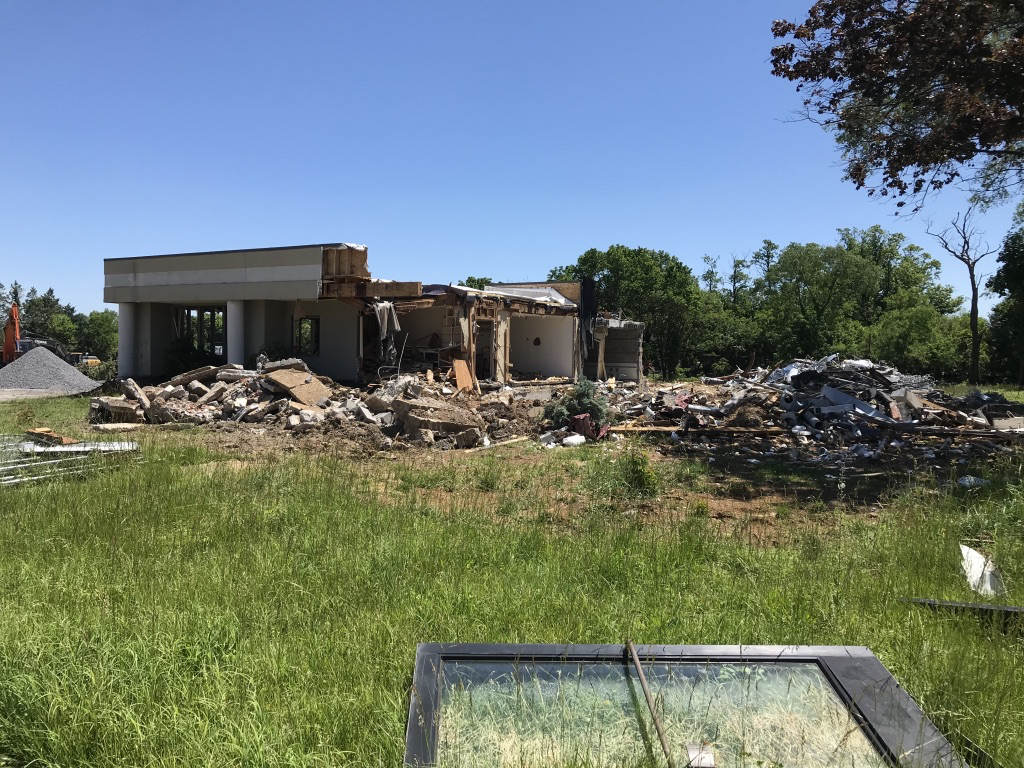
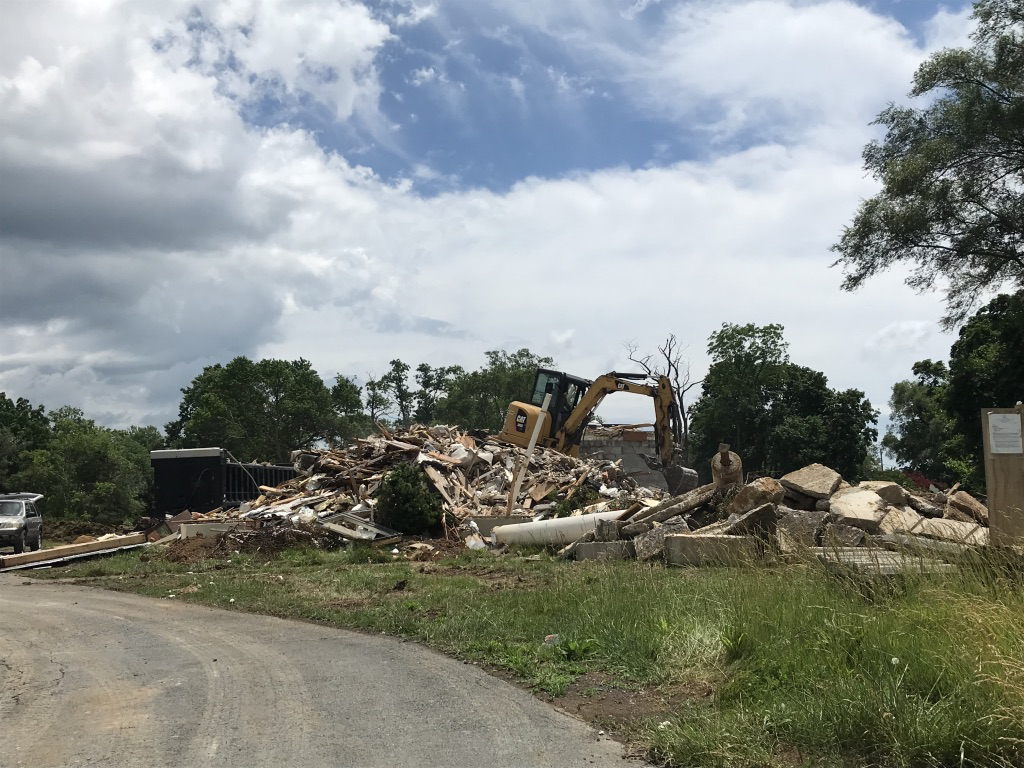
Sadly, true community broadcasters find this unlevel playing field almost impossible to compete with, when EMF’s billion-dollar foundation can offer iHeart-level prices for neighborhood radio stations. It’s something I personally witnessed happen in my city of Winchester, Virginia when EMF bought 50,000-watt WINC-FM. All local community programming vanished, along with its employees and building.

While the FCC still maintains a policy of not allowing a single radio broadcaster from owning more than five AM or five FM stations in any one city, it left open a loophole for noncommercial broadcasters by never applying its ownership cap to nonprofits. There’s also no ownership cap on the number of translators a nonprofit may own in a single radio market.

Soft Conservatism

While nonprofits can’t legally engage in any political campaign activity, don’t think EMF isn’t using its fortunes to influence its point-of-view; through lobbying and legislation. Those in the Contemporary Christian Music (CCM) industry know that the genre is a punchline for most Americans; it’s something that actually works to EMF’s advantage, by keeping them low profile.

Unfortunately, this unlevel playing field is negatively impacting local commercial and public radio stations to profitably operate, which impacts the communities these stations once served with vital local news, sports, weather and community information.

*Translators are small FM radio signals that rebroadcast a parent radio station into an area the original signal couldn’t reach.

22 Comments

Filed under Education, Mentor, Radio, Sales

Gone In a Wink

Barry Lee & Dick Taylor

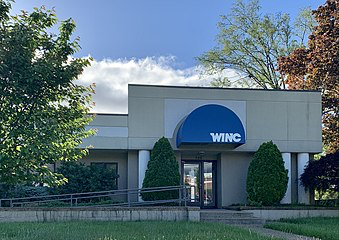
On June 26, 1941, at 6:57am, a new local radio station, WINC -1400AM began serving the Winchester, Virginia community. It was the city’s first radio station, and it brought Virginia Senator Harry F. Byrd and Virginia Governor James Hubert Price to town for the ribbon cutting ceremonies signing on this new radio service.

The radio station’s offices, studios, transmitter and tower were located at 520 Pleasant Valley Road in Winchester.

It would broadcast live descriptions of the attack on Pearl Harbor and FDR’s famous “Infamy Speech” only six months after signing on-the-air.

In 1947 a radio contest on WINC (known locally as Wink) would take down the entire telephone system for the City of Winchester, as female listeners tried to win a free pair of nylon stockings and a $10 handbag.

Virginia Hensley

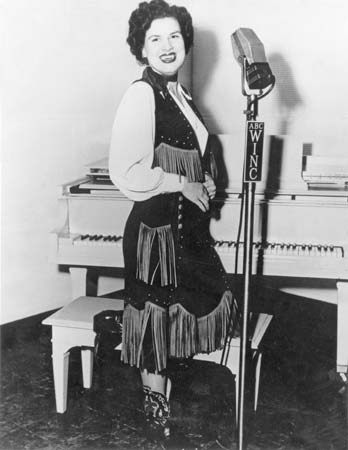
Winchester’s most famous resident is Virginia Hensley, better known to the world as Patsy Cline.

When Ginny was just fourteen years old, she walked into WINC and asked if she could sing on one the station’s live music shows, . The leader of the band, told her to come back next week and maybe he’d let her sing on the radio. Ginny returned the following weekend and made her broadcast debut on WINC in 1948.

Other stars to visit the station included, Bing Crosby, Bob Hope and Paul Harvey, who would broadcast his national News & Commentary over the ABC Radio Network on April 14, 1962.

Local Radio

WINC provided residents of Frederick County Virginia with news, entertainment and advertisements from local retailers. Those ads must have been popular with the business community because the radio station ran into trouble with the FCC (Federal Communications Commission) when trying to renew its broadcast license in 1971. At that time, the FCC allowed no more than 18-minutes of commercials per hour and WINC was airing 22-minutes of ads. It was reported that the FCC’s Broadcast Bureau Chief felt the excessive number of commercials were not in the best interests of Winchester community, but in the end renewed the station’s broadcast license.

Programming

Through the years, WINC -1400AM would undergo various programming changes. From live musical performances, to playing records. Musically, the station went from playing middle-of-the-road music, to adult contemporary, to classic hits; finally changing to a news/talk format in 1996, because its sister station, WINC-FM 92.5 had become Winchester’s most popular music radio station.

75th Anniversary

In 2016, WINC-1400AM celebrated its 75th anniversary of broadcasting. During this period of time, the station had only two different owners, the Lewis family and Centennial Broadcasting.

Richard Field Lewis, Jr., a broadcast engineer filed the initial application for a new station in Winchester in November 1940 and six years later, he would launch sister station WINC-FM.

On October 18, 1957 Richard F. Lewis, Jr. died and control of the two stations would pass to the Lewis family and incorporated as Mid-Atlantic Network, Inc.

In May 2007, the Lewis family would sell WINC AM/FM to North Carolina-based Centennial Broadcasting for about $36 million.

The End of an Era

Centennial would begin divesting their Winchester radio properties, which now numbered  three FM stations and one AM radio station in 2020.

50,000-watt WINC-FM would be sold to the Educational Media Foundation (EMF) for $1.75 million, which would begin airing EMF’s Air1 network. Centennial’s other two FM stations would be sold to Fairfax, Virginia-based Metro Radio, Inc. for $225,000.

The future of WINC-1400AM was uncertain as the radio station celebrated its 80th anniversary in 2021. Ultimately, the station would find a buyer that paid $25,000 for the signal. The call letters WINC would be changed to WZFC upon completion of the sale in October 22, 2021.

How do you mark the end of a local radio station?

Was it when:

  • WINC-FM was sold to EMF and its call letters were changed to WAIW?
  • WINC-AM was sold and the call letters were changed to WZFC?*
  • The retirement of 37-year Wink Morning Man Barry Lee when the radio stations were sold?
  • The demolition of the building WINC AM/FM had broadcast from for over its 75-year existence?

Every day, communities across America are finding a once local radio station vanishing, sometimes they’re replaced by syndicated programming with little local service, other times the city of license is changed and the local radio service is moved to a larger population center and sometimes, the signals just go off-the-air.

Generations who grew up and lived in Winchester, Virginia depended on radio stations WINC AM/FM as they were a part of the fabric of the community. More importantly, the local radio personalities that were heard over Wink Radio for decades, were very much a part of these families lives.

And now, it’s gone.

In a wink.

*Paperwork filed with the FCC to change WZFC’s call sign back to WINC, was done on February 25, 2023.

24 Comments

Filed under Education, Mentor, Radio

WPLJ Changed Format

WPLJOK, that’s not exactly new news. The latest New York City PPM Ratings show that WPLJ, now airing EMF’s Christian Contemporary K-Love format, went from a 3.1 (6+ Mon-Sun, 6a-12mid) before the format change to a 1.5 rating.

WPLJ Didn’t Die, It Changed — Again

On May 31st, the last day that WPLJ aired a Hot AC format before switching to a Contemporary Christian format, you would have thought the station had turned in their FCC license from all the hand wringing going on in the commercial radio community.

WPLJ, who’s call letters stood for White Port and Lemon Juice, began its life as WJZ-FM in the 1940s, later switching to WABC-FM WPLJ-FM's_95.5_Original_Logo_From_1971in the 1950s and simulcast 770AM-WABC. In the late 1960s it became one of the early album-oriented rock radio stations in America. On February 14, 1971 it was renamed WPLJ to clearly separate it, and its programming, from its Top 40 sister, Music Radio 77 – WABC, at that point in time the most listened to radio station in the world.
In June 1983, WPLJ changed from its album-oriented rock format to a hits format. (It was May 10, 1982 that 77-WABC changed its format from Music Radio to Talk Radio.)Power 95

On Thursday, December 17, 1987, WPLJ changed its call letters to WWPR to better promote its marketing slogan “Power 95” and its new Top 40/CHR format.

A year later, the call letters were switched back to WPLJ. mojoradio

In 1991 when Scott Shannon was hired, the branding was changed to MOJO Radio and by 1992 the station had transitioned to programming a Hot AC format calling itself “95-5 PLJ.”

Things Change

wklv-weremovingThe only constant in life is change.

The history of New York’s 95.5 FM signal has been one of both call letter and programming change since it was birthed in the 1940s. EMF changing the format to its popular and successful K-Love format does not spell the end of anything. It’s a new beginning.

Audience Surge

Those final days of the Hot AC version of WPLJ saw its raw Nielsen numbers take the station’s listenership rank from 13th to 3rd in the Big Apple.

It had nothing to do with the music played, or any of the other programming elements the station used, but it had much to do with the personalities that returned to WPLJ. The people behind the microphone caused a surge in people tuning in 95.5 FM. WPLJ listeners wanted to hear their favorite radio personalities one more time.

Radio’s Secret Weapon

To me it was living proof that radio’s secret weapon for attracting listeners is its air personalities.

Similar audience increases were witnessed in Washington, DC on WRQX and in Atlanta on WYAY, as each of those radio stations’ air personalities, past and present, said goodbye before turning over the keys to EMF and their national religious format.

EMF

The Educational Media Foundation (EMF) has grown into a Christian radio behemoth. It’s a nonprofit 503(C) 3 corporation that is supported by the listeners to its radio stations that become donors. Much like Public Radio, EMF radio stations conduct twice annual fundraisers and all listener contributions are fully tax deductible to the extent allowed by law. EMF’s broadcast network is the largest Christian media radio network in the United States, now reaching over 47 states.

EMF states their primary purpose is “to create compelling media that inspires and encourages our listeners to have a meaningful relationship with Christ.” “The programming is designed to provide encouragement, inspiration, and a deeper understanding of the Christian heritage.”

It must be fulfilling its mission, as its listeners have continued to fund EMF’s growth year-after-year, and there’s no reason it will stop anytime soon.

Funded by Listener Support

Could your radio station fund itself by listener support? Have you invested in your programming and air personalities to create something so special that listeners want to support you for fear of losing the service you provide?

It certainly makes you stop and think about your value to the market you serve.

The WPLJ signal is one of the best FM signals in New York City and I’m sure that in its evolution to Contemporary Christian programming will allow it to enjoy a radio life for many years to come.

You might say, WPLJ has been born again

5 Comments

Filed under Education, Mentor, Radio, Sales

Relevancy

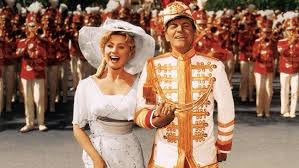
82I am a trombone player. Or maybe I should say “was” as it’s been quite a few years since I picked up the horn. Growing up, I knew that was the instrument I wanted to play. Out of all the instruments in the band, trombone was the one that caught my attention and was relevant to me.

76 Trombones

Meredith Wilson’s Broadway smash “The Music Man” is one of my all time favorite musicals. Can you guess why?

In that production, Robert Preston knows to be successful in selling band instruments “you gotta know the territory.” In fact, all of the carpetbaggers knew this. In “The Music Man” the song “Rock Island Line” establishes the rules of selling on the road. In other words, you had to know how to make what you were selling relevant.

And then I heard someone say RADIO

Alan Mason is a programmer that I’ve known for years. I subscribe to his weekly “Mason Minutes” and was thrilled to see Alan promoted to President of K-Love and Air1 as this New Year began. Alan actually assumed his presidency before Trump did.

Alan’s minute recently told the story of celebrating his birthday in a crowded restaurant. You know the scene, you hear lots of conversations but you’re not really paying attention. When Alan said he heard someone say “RADIO” and he heard that clearly.

“It’s funny how our minds are attuned to filter out almost everything except what’s relevant to us. We can be in a crowded ballroom buzzing with people and still hear our own name. It gets our attention and pulls us in,” Alan wrote.

Frost Advisory

I also subscribe to John Frost’s weekly “Frost Advisory” and John must have been as taken by what Alan wrote as I because he made it the subject of his programming memo this past week. John wrote about his friend Eddie who needed to get a passport photo. He went online and found a place all the way across town. It wasn’t until he was on his way home he noticed a camera store near where he lived that took passport photos. He never noticed, because getting a passport photo had no relevance to Eddie, until it did.

Radio Ads

And that’s the way it is with radio ads. The listener never hears them until something that’s relevant to them speaks to them.

Sadly, radio programmers no longer have a say in what commercials air on their radio stations.

I was a general manager before becoming a broadcast professor and even I had lost control of what ads would be placed on my radio stations by (at that time) Google.

Google did a deal with Clear Channel and would insert ads they had sold on all of the stations in my cluster between 2am and 3am in the morning. I wouldn’t even know what they had sold until I heard it on-the-air driving into the station.

I heard ads for restaurants advertising their lunch special for that day and the restaurant was over three hours away from my coverage area. I heard ads out-of-phase air on my AM station in the cluster that were 30-seconds of dead-air. (Out of phase ads means the left and right channels of audio cancel each other out on an AM mono signal.)

Bonneville Beautiful Music

When I moved to Atlantic City, New Jersey in 1984, WFPG-FM was a Bonneville Beautiful Music station. Bonneville had strict guidelines about what content could be added to their music presentation and that included commercials.

Atlantic City’s biggest car dealer did the loudest screaming radio ads you’ve ever heard. We dearly wanted their business but not those screaming ads.

It took lots of meetings but we finally convinced the owner not to “wear a t-shirt to our black tie” radio station over-the-air presentation. We would be the only radio station in Atlantic City to have specially created ads that would perfectly fit the musical content of our format.

I don’t hear that happening on any radio station today.

Relevancy

Today, money talks and nobody walks.

Radio stations appear to take every ad that comes through the door.

When you consider the volume of ads airing on stations these days, one or two ads in that cluster than aren’t relevant might lose the listener’s ear or worse, cause the station to be changed.

WAVV in Naples, Florida is a station that marches to a different drummer. It plays music the owner enjoys and the sound is so unique it can’t be heard anywhere else. It’s why the station doesn’t stream. You have to listen to it over-the-air on your FM radio. But what makes WAVV golden in my book is that the commercial breaks are just as carefully watched over as the music. The ads are about things that listeners attracted by the music will also enjoy. Be it theater, dining, travel, clothing etc.; it’s all relevant.

John Frost ends his article by writing “We throw a bunch of stuff at the wall without using the precise filter of relevance. Start with the listener and work back. What does she care about RIGHT NOW?”

Unless the program director is given the authority to approve every element that goes on the air and insure that each goes through the relevancy test, your product is compromised.

Is what I wrote relevant to your radio station?

16 Comments

Filed under Education, Mentor, Radio, Sales