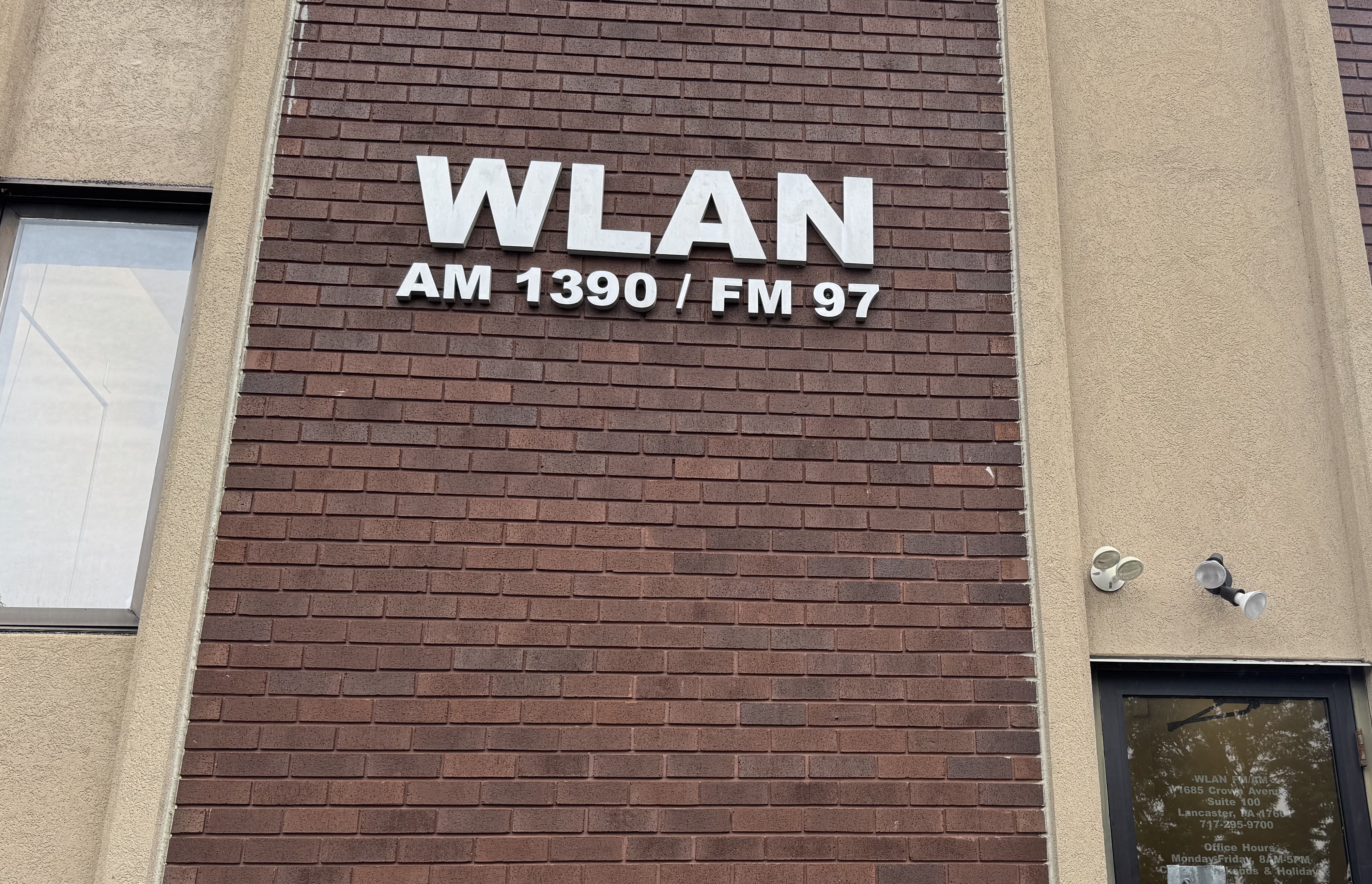
WLAN – AM1390 signed on the air in Lancaster, Pennsylvania in 1940 from offices and studios located 252 North Queen Street. Seven years later, WLAN – 96.9FM began broadcasting from the same location as the AM station, which was a three and four story walk-up.
2004
DCF 1.0DCF 1.0
I was hired as the General Manager of WLAN AM/FMN in the fall of 2004 and quickly realized the stations not only needed to be modernized but relocated to a part of Lancaster that would be more accommodating to our listeners (for prize pickups and events), our advertising clients, and our staff – in particular our sales staff, which had to come and go from the station multiple times a day.
2005
Meetings with Clear Channel corporate led to getting a budget for a move and the green light to relocate to 1685 Crown Avenue, Suite 100 in Lancaster.
2006
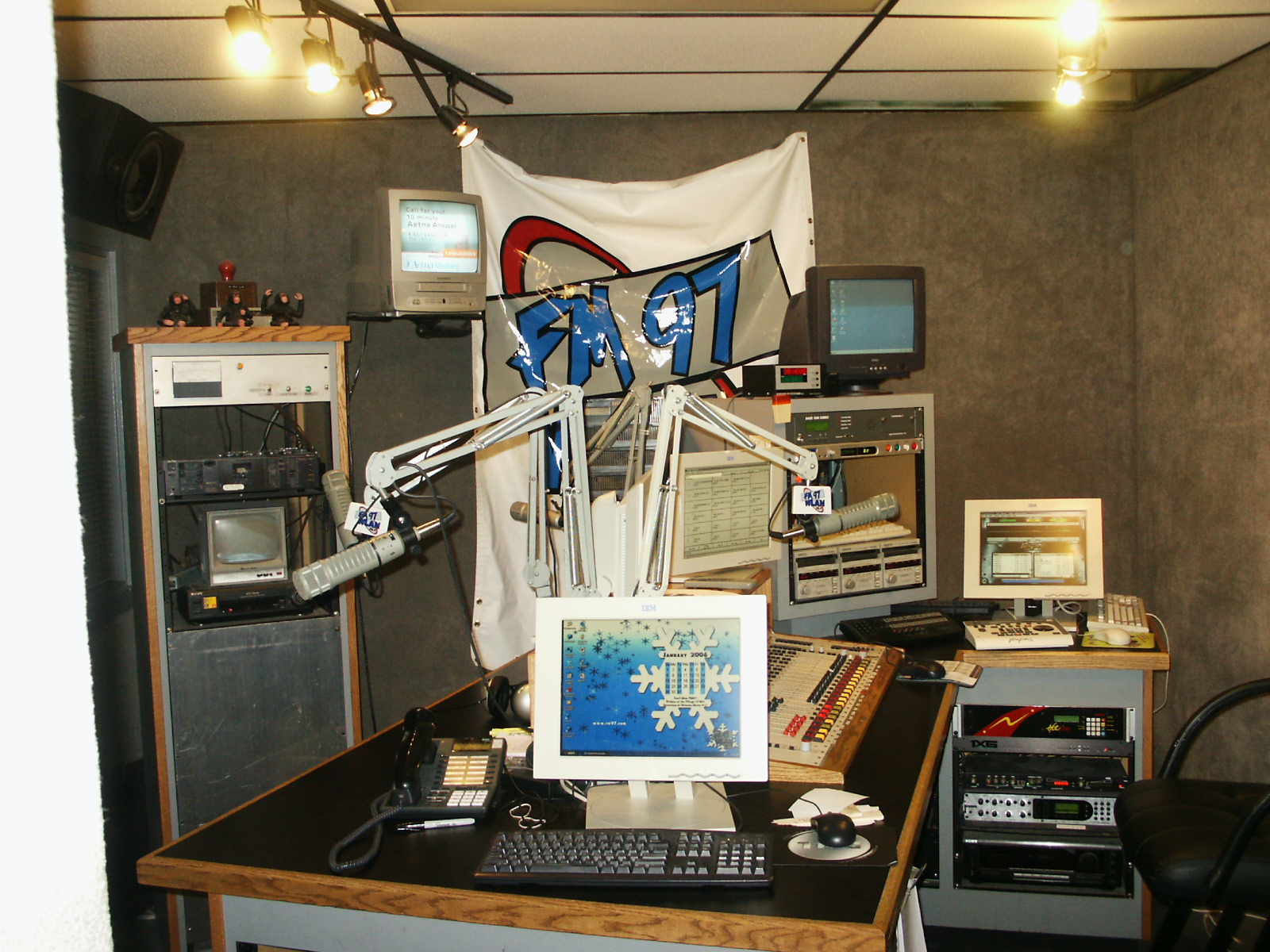
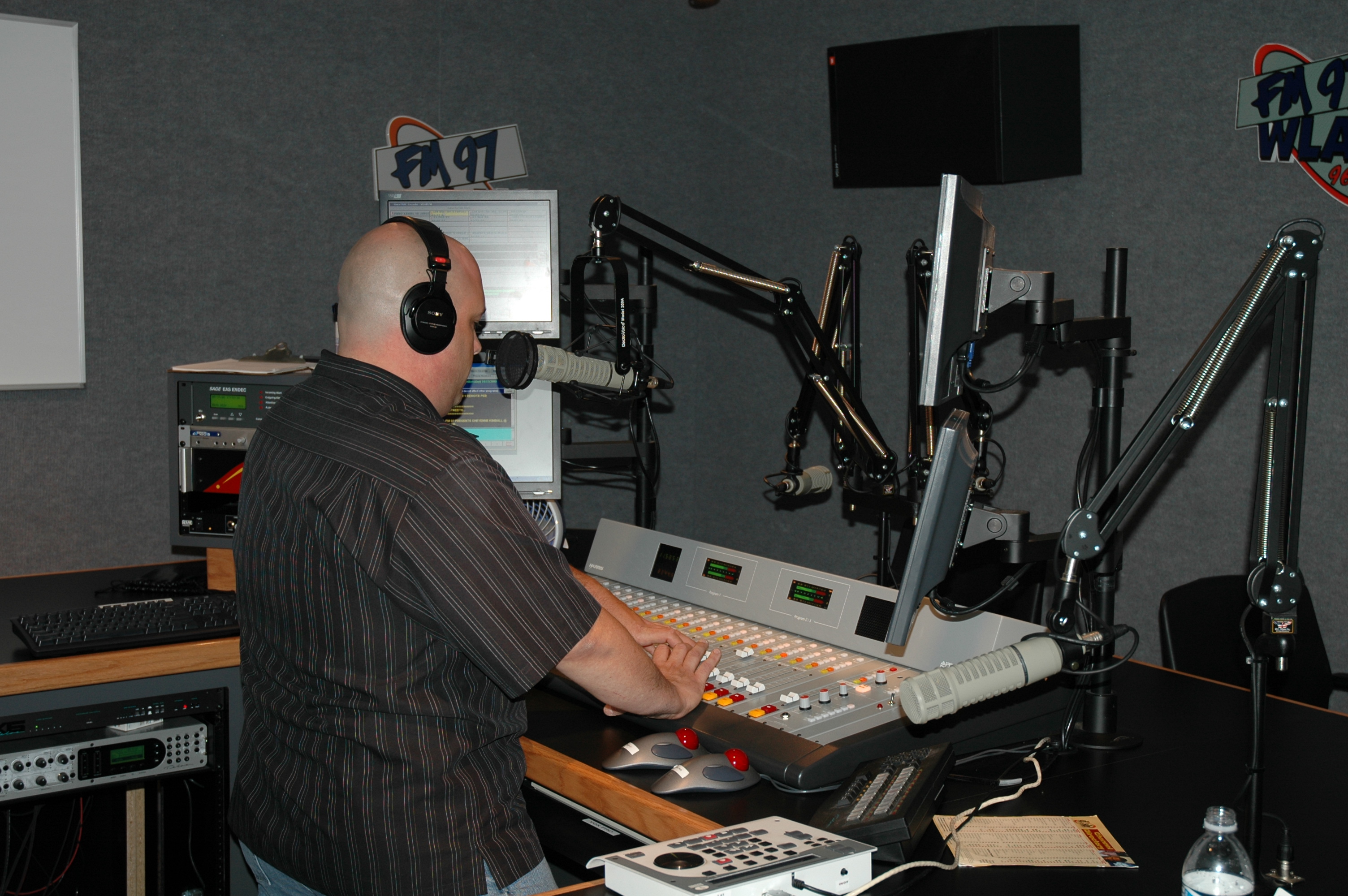
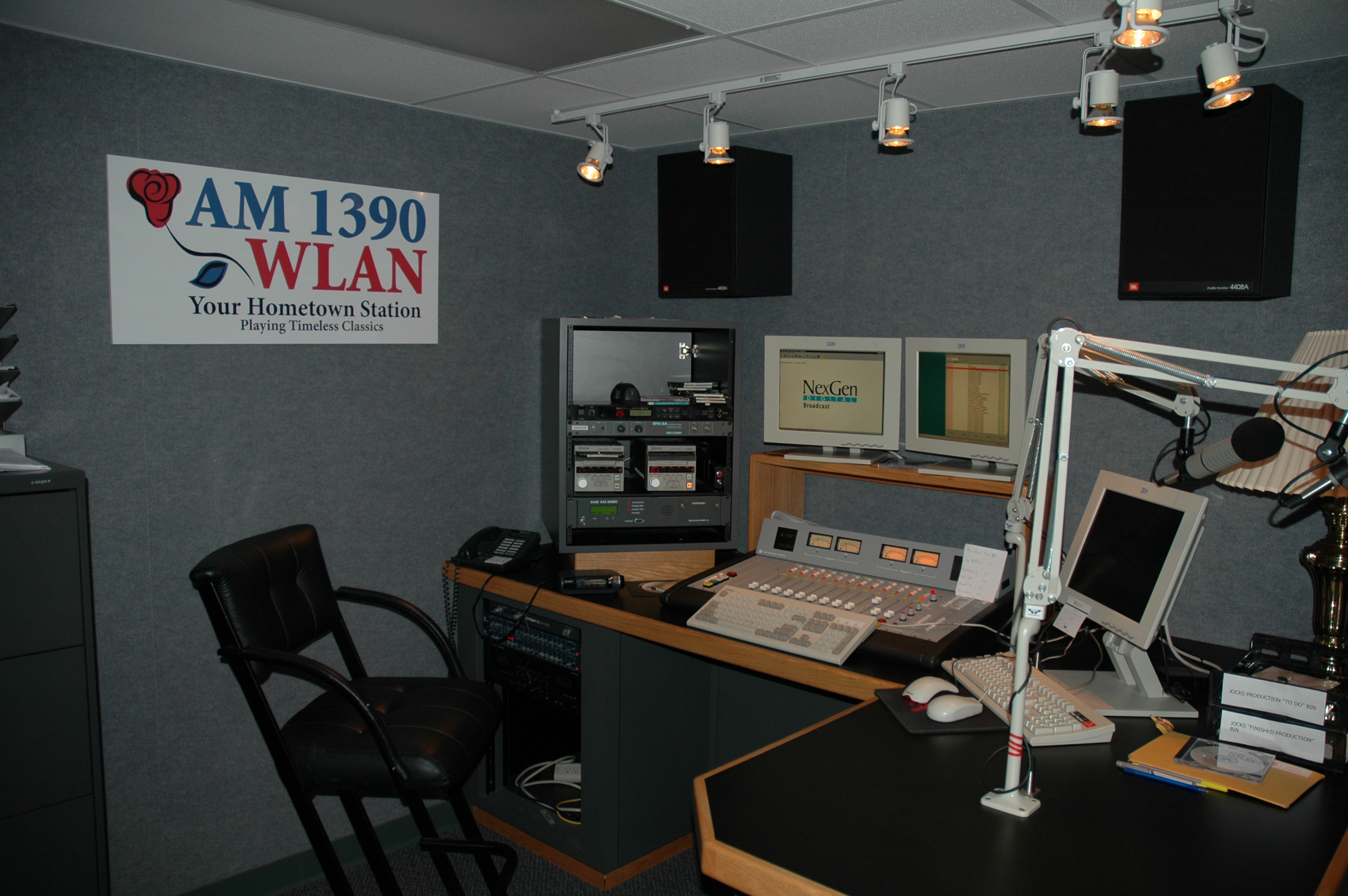
In May of 2006 the ribbon was cut and a huge party for listeners and advertisers was held in our parking lot outside of our state-of-the-art broadcast center. Tours of our offices and studios were given while members of The New Holland Band serenaded our guests.
19
Sadly, while the stations were able to broadcast from their original location for sixty-six years, the new facility would be abandoned just 19 years after it was opened.
I learned this news when I stopped in to visit the stations during a weekend getaway my wife Sue had planned in Lancaster County.
As we drove up to the front door, we saw a dumpster outside filled with building materials and looking through the windows, we saw that the former offices and studios had been completely gutted.
Nobody’s Home Anymore
What I would learn is that WLAN AM/FM had moved to Harrisburg, Pennsylvania; about 40 miles and an hour’s travel time away from Lancaster.
Listeners who wanted to pick up prizes they may have won, now had to drive to 600 Corporate Circle in Harrisburg.
The website listed numbers to call for the Studio Lines, but all I’ve gotten when I’ve tried calling is a recorded message that says “your call cannot be completed as dialed.”
Local Is Where You Live
In my time as general manager of WLAN AM/FM, I rarely traveled to Harrisburg, even though my regional manager was located there and was manager of Clear Channel’s dominant radio stations in Dauphin County and Pennsylvania’s capital city. Harrisburg was a world away from Amish country in Lancaster.
WLAN-FM now lists itself as a Harrisburg/Lancaster radio station with Elvis Duran’s New York City syndicated morning radio show airing live and voice tracked DJs the rest of the day.
The only local air personality that remains from my days at WLAN is Damian Rhodes who is the station’s production wizard and covers the 4-7pm afternoon drive time period.
Reviewing WLAN-FM’s website reveals mostly items for iHeartRadio, national news, entertainment and music stories with just a couple of items for events in Harrisburg, but it is devoid of anything happening in Lancaster.
For a city of almost 60,000 people located in a county of over 560,000 people, you would think there would be a lot going on that a LOCAL radio station would be involved in.
I know that’s the way it once was, when the radio station was actually broadcasting from the City of Lancaster.
At the beginning of 2024, I read an article from Rolling Stone.com that I can’t get out of my head. It was titled “Why Is the Radio Full of Christian Rock? Thank This Nonprofit.” It’s a long article, that I encourage you to read, but if you’re short on time, I will summarize its most important content for the commercial radio industry.
What is EMF?
EMF stands for the “Educational Media Foundation,” a name that does not immediately convey that they are a religious broadcaster.
On their website, the foundation states their mission this way:
“Educational Media Foundation (EMF) is a nonprofit, multi-platform media company on a mission to draw people closer to Christ. Founded in 1982 in Santa Rosa, CA, with a singular radio station, EMF today owns and operates the nation’s two largest Christian music radio networks (K-LOVE and Air1) with over 1,000 broadcast signals across all 50 states, streaming audio reaching around the world, and a growing family of media ministries including podcasts, books, films, concerts, and events. EMF employs nearly 500 team members between its offices in Nashville, TN, Rocklin, CA, and field locations around the country.”
Today, I believe, EMF is the largest radio station owner in America, with more radio signals in its control than iHeartRadio, estimating that it reaches a weekly audience numbering over 18-million listeners. It’s those listeners – and their donations – that fund EMF’s operations, much like the listeners support at public radio stations. EMF’s radio stations are licensed as non-commercial educational (NCE) radio stations and the foundation receives the majority of their donations during their twice annual pledge drives; usually held in the spring and fall.
What is iHeartRadio?
iHeartRadio is America’s largest commercial radio broadcaster and owned by iHeartMedia, which was rebranded by CEO Bob Pittman from Clear Channel Radio in 2014.
Full-disclosure, I worked for Clear Channel Communications from 2004-2010, a time when the company operated in a decentralized manner, allowing each of its radio station’s general managers to make their own decisions based on local market conditions and to deliver what was forecast by the radio station’s annual budget. That would change after I left the company to a centralized management model.
At its peak, Clear Channel owned and operated more than twelve hundred American radio stations. Today, the iHeartMediawebsite says:
“With over 860 live broadcast stations [with 781 employees] in 160 markets across America, there’s an iHeartRadio station where you live. Discover how our stations can deliver your message live and local to your community.”
Wikipedia says ”iHeartRadio’s main radio competitors are Audacy, TuneIn and SiriusXM,” which I found interesting in that TuneIn owns no radio stations, and while SiriusXM is licensed to operate by the Federal Communications Commission (FCC) and does employ land-based transmitter sites in addition to its satellites, it is basically a subscription service.
Its real competitor, like that of the rest of the commercial/public radio industry, is flying under the radar.
EMF versus Commercial/Public Radio
Rolling Stone writes: The big difference between EMF and other commercial broadcasters is that it operates without a local presence and unmanned transmitters.
“Almost every new EMF station operates as a repeater
with no local voices, few local jobs and barely any overhead.”
Rolling Stone says that as of 2022, this “little-known organization had just shy of a billion dollars in net assets (a number that grows steadily year after year), with an annual revenue of nearly a quarter billion. (National Public Radio, by comparison, had net assets of less than $150 million and operated near the break-even mark.)”
The EMF business model has few operating costs – unlike commercial and public broadcasters – where every new radio station they acquire becomes a new source for donations. It’s estimated that about ninety-seven cents of every dollar comes from listener donations.
“Nonprofit EMF has built an unassuming money-making machine.”
-Rolling Stone
The genius of the EMF business model is that it exploits loopholes that the FCC created to help small nonprofits.
“in my own heart, I know God was involved
[in the decision to form a 501(c)(3)]
because being a not-for-profit has paid off for us
many, many times.”
Mike Novak, EMF CEO
The decision to incorporate as a “not-for-profit” entity allows EMF to enjoy many benefits:
Avoid paying taxes
Waves FCC applications costs and other fees
No requirement to maintain a local broadcast studio
Legally accept tax-deductible donations from their listeners (a revenue stream not available to commercial broadcasters)
The acquisition of translators* that are made more easily available to entities such as religious broadcasters
Access to lower FM band frequencies (88.1 – 91.9) that the FCC reserved for use by colleges, community and public-radio organizations and tribes; entities that the FCC envisioned would have limited funds to acquire these frequencies, and commercial broadcasters were banned from bidding on, but didn’t exclude a not-for-profit giant like EMF from buying up.
Sadly, true community broadcasters find this unlevel playing field almost impossible to compete with, when EMF’s billion-dollar foundation can offer iHeart-level prices for neighborhood radio stations. It’s something I personally witnessed happen in my city of Winchester, Virginia when EMF bought 50,000-watt WINC-FM. All local community programming vanished, along with its employees and building.
While the FCC still maintains a policy of not allowing a single radio broadcaster from owning more than five AM or five FM stations in any one city, it left open a loophole for noncommercial broadcasters by never applying its ownership cap to nonprofits. There’s also no ownership cap on the number of translators a nonprofit may own in a single radio market.
Soft Conservatism
While nonprofits can’t legally engage in any political campaign activity, don’t think EMF isn’t using its fortunes to influence its point-of-view; through lobbying and legislation. Those in the Contemporary Christian Music (CCM) industry knowthat the genre is a punchline for most Americans;it’s something that actually works to EMF’s advantage, by keeping them low profile.
Unfortunately, this unlevel playing field is negatively impactinglocal commercial and public radio stations to profitably operate,which impacts the communities these stations once served withvital local news, sports, weather and community information.
*Translators are small FM radio signals that rebroadcast a parent radio station into an area the original signal couldn’t reach.
It’s human nature to wonder about how our world will change and most times, what we think will change or maybe what we worry might change, doesn’t.
So, why do we do this?
Most likely because we all want to know what the future will bring and this is why fortune tellers are still in business or why we watch The Weather Channel. It’s definitely not because they always get it right.
What’s Going to Change in 10 Years?
I just finished listening to Bob Pittman, CEO of iHeart, on the Borrell Local Marketing Trends podcast on how radio will change in the years ahead. Gordon Borrell and Corey Elliot wanted to know “how radio will remain unique over the next 10 years, whether its dependence on advertising revenue might need to change, and whether we should be calling it ‘radio’ at all.”
What was his answer? Well you can listen to the podcast HERE, if you really want to know. But I can save 23-minutes and 15-seconds of your time by telling you it doesn’t matter what he said, because he’s probably wrong, and that’s OK, because no one will remember what he said a month from now.
What’s NOT Going to Change in 10 Years?
I remember reading that Jeff Bezos said people constantly asked him the “change in 10 years question,” and he said the question they should be asked is “what won’t change in 10 years.” Both Bezos and the brilliant investor, Warren Buffett, believe this is a very important question you should be asking yourself about your business or industry.
“When you have something you know is true, even over the long term, you can afford to put a lot of energy into it,” says Bezos.
Radio Personalities
Over the Labor Day holiday weekend, Rewound Radio presented the sound of classic Chicago Top 40 radio with air checks of WCFL (Super CFL) and WLS (The Big 89 – The Rock of Chicago).
When I was growing up both of these radio stations greatly influenced me and were responsible for creating the desire to make radio my lifelong career.
Listeners to this special Labor Day Weekend presentation on Rewound Radio said they loved hearing their favorite radio personalities once again.
The program was not broadcast over any AM or FM radio signal, but was only streamed on the internet to a worldwide audience.
In fact, this past July 2022, more people watched their favorite programs by streaming them versus a cable TV subscription. Streaming, says Nielsen, is now “the most popular way to consume content.”
The one thing that Bob Pittman did share in his Borrell interview worth noting, was that in focus groups people didn’t call our medium, “radio.” They called what they listened to by the station’s brand, as much as we don’t refer to our mode of transportation as a “car”, but as a Ford, Chevy, Honda etc.
So, having a unique brand for your radio station is very important. The one unique brand every radio station in America has are its FCC call letters, like WCFL or WLS.
Dan Mason
Dan Mason was recently inducted into the Broadcasting & Cable Hall of Fame 2022. Dan said he grew up in Louisville, Kentucky listening to Cawood Ledford, the voice of the University of Kentucky sports for decades. It was Cawood that created the desire in Mason to be on the radio and he never pictured himself in the executive suite. But Dan Mason would rise to the president and CEO of CBS Radio, which he retired from at the age of 64.
Upon retiring that position, Mason quickly return to his first love, that of being on the radio and broadcasting sports play-by-play.
Dan Mason believes that great radio depends on two things: 1) community & companionship for the listener, and 2) having integrity.
For the listener, both of these are created, and earned, by the radio station’s air personalities.
And that’s something that’s never going to change.
It’s almost hard to believe, in an economy where employers are finding it difficult to hire and retain employees, that the radio industry continues to eliminate people.
iHeart Initiates Round of Cuts
Lance Venta of RadioInsight broke the news on Wednesday, June 8th about iHeart doing a new countrywide Reduction In Force (RIFs). On Friday evening, as I scrolled down my screen, Lance updated his initial report with locations of where some of the known cuts had taken place. Boston, Chicago, Des Moines, Jacksonville, New Hampshire and Tampa.
Reading the names of the people cut, I couldn’t help but notice they have been in their positions for decades, with titles like Senior Vice President of Programming and member of the National Programming Team. We’re talking some very senior level people with tenured radio careers.
Main Studio Rule Eliminated
It was back in October of 2017 that the Federal Communications Commission (FCC) voted to eliminate the Main Studio Rule, a provision that had been in place since 1934, and allowed radio owners to no longer maintain a main studio within its principal community contour. In other words, there’s no one home at your local radio station.
Lance speculated that in the future, we would see much leaner broadcast facilities. Welcome to that future.
Public Interest, Convenience and Necessity
The case broadcasters make for Over-The-Air AM/FM radio is that in times of emergencies, staying on the air is what makes radio an essential resource. They like to point out that other forms of communication, like satellite dishes, cell towers and microwave relays do not.
Ironically, without having a main studio in the affected area, broadcasters use satellite dishes, cellular communications and microwaves to feed local transmitters, often from hundreds of miles away from where a natural disaster is occurring.
Broadcasters have abandoned local staff being on the ground in their FCC licensed service area and with it, the vital connections with local emergency management officials.
Efficiently Eliminating Radio’s Advantage
Radio is a people business.
When I started in radio back in 1968, every radio station was a beehive of professionals dedicated to being the best they could be.
As an example, CKLW, a stand-alone AM radio station in the Detroit metro, had twenty-three people just in their news department.
Was radio efficient back then? No.
Was radio effective? YES!
Did radio make money? Tons of it!
Radio’s advantage has always been the people who make the magic happen.
Sadly, radio today operates in an “efficiency bubble,” where efficiency is valued over effectiveness.
Efficient radio chases away listeners.
Effective radio creates them.
The pursuit of efficiency is a rational answer to an emotional problem.
The radio business was never built on Excel spreadsheets and doing what was most efficient, it was built by creative people who touched others emotionally. Be it station imaging, air personalities, promotions, contests, community events, advertising or marketing, radio always went for people’s hearts.
Radio is successful when it delivers a sense of community and companionship to the listener.
Show me a successful radio station in 2022 and I will show you one that continues to foster emotions in their listeners and advertisers.
In November of last year, I wrote a blog titled “Why Make Radio Advertising Harder to Buy?” It was inspired by articles in all the radio trades on how Nielsen Audio was no longer going to provide buyers with any data pertaining to non-subscriber radio stations through their ratings service. It would be as if these radio stations had vanished from their markets.
That sounded pretty scary!
Winchester, Virginia Nielsen Audio Ratings
Well this week, the latest Nielsen Audio Ratings for my radio marketplace were released and it was startling.
Was it possible that the only radio stations impacting the Winchester, Virginia radio market were owned my iHeartMedia or was something missing?
Winchester, Virginia Eastlan Radio Ratings
The answer, as I’m sure you guessed, something IS missing, all the non-subscribing radio stations that put a signal into the Winchester metro don’t appear.
Eastlan Ratings has committed to showing ALL radio stations in its radio listening reports.
The first thing you notice is that iHeartMedia doesn’t have the #1 radio station in the Winchester Metro, Centennial Broadcasting’s WINC-FM/WXBN-FM has that position and by almost five share points.
Nielsen vs. Eastlan vs. Arbitron vs. Birch
Over the years, as I studied the different ratings services, it gave me some sense of how they differ.
When I managed WFPG-FM, a Bonneville Beautiful Music formatted radio station in South Jersey, Arbitron’s diary methodology was very good at finding the older adults that enjoyed this music presentation. When Birch decided to measure the market, their telephone methodology found all the young adults that enjoyed album oriented rock. As you might have guessed, I never purchased a Birch Ratings Report.
When Arbitron and Eastlan measured the same radio market, I noticed they were both good at reporting listening to the dominant, high powered radio stations, but what made Eastlan different than Arbitron was finding listeners of small niche radio signals that never made it to the pages of the Arbitron report.
When Nielsen Audio took over Arbitron, this sampling methodology remained unchanged.
Don’t Worry, Be Happy
It seems that the song the big radio owners were singing when announcing the change to “Subscriber First” was Don’t Worry, Be Happy. But when I read the trades, I saw radio advertising buyers were anything BUT happy.
Agency buyers said they expected the ratings reports they bought to be an accurate representation of the market, but if reports don’t show the non-subscriber stations, then those ratings become basically useless.
Nielsen Audio has said that agencies can get all the stations IF they pay more for respondent level data (RLD), according to published reports. But will they?
“Everybody has a plan until they get punched in the mouth.”
-Mike Tyson
Left Hook
With the start of a brand new year, it appears the first punch has been landed. Non-subscribing radio stations have been erased from Nielsen Audio’s Topline Data, the data used by the radio trades like AllAccess Music Group, Inside Radio, RadioInsight, Radio Ink, and Radio Business Reports. For radio lovers, like me, these published reports are totally useless.
Winners & Losers
The reality is that even if everyone pays to have access to the data, only the very top performing radio stations will enjoy the benefits. Often any station not rated number one or number two – will be paying for data that in the end only helps the market’s “big dawgs.” For many stations, it’s paying big money for nothing in return.
Radio Ad Sellers vs. Radio Ad Buyers
Radio ad buyers want to know who’s listening to what, and when, and for how long etc. And early indicators are showing radio buyers, as a group, are none too pleased with this change. Sadly, the people who appear to have never been consulted about this change, were, radio ad buyers.
“How am I doing?”
-Ed Koch, Mayor – New York City 1978-1989
One of the things I told my broadcast sales students was something I learned from Mayor Koch, if you want to know how you’re doing, ask. Mayor Koch was famous for asking people everywhere he went, “How am I doing?” They told him. And he listened. That’s how he was elected to three terms as New York City’s mayor.
Customer Unfriendly
With the country still in the grips of COVID-19, the timing for this change comes at an especially bad moment for the radio industry. Instead of increasing transparency of radio’s impact, it’s making it opaquer.
Might an unintended consequence be for advertisers to try another medium to advertise in that gives them more consumer engagement data?
E-Commerce Usage Explodes
COVID-19 has seen an acceleration of E-Commerce adoption by consumers of all ages. Everything from essential goods to holiday gifts are being bought online, which McKinsey & Company, an American worldwide management consulting firm, says compressed ten years of E-Commerce adoption into three months. Part and parcel with this change is a massive shift in consumer behavior, the type of shift that historically used to take decades to occur. These changes were already in motion before the onset of the global pandemic, but COVID’s impact was like hitting the fast-forward button.
Consumer behavior is moving in the direction of convenience and speed, should radio station operators think it will be any different for the behavior of buyers of advertising? If it gets harder to figure out what a market’s true listening habits are, if it takes more money, more elbow grease to get to the bottom of the audience estimates, do you think they might opt for a new direction?
Ad buyers have never had more choices. Once they invest their ad dollars in a new directions, they may never return.
“There are only two industries that call their customers ‘users’:
Illegal drugs and software.”
-Edward Tufte
My good friend and expert radio researcher, Charlie Sislen at The Research Director, poses more questions about the impact this change will make for both subscribers and non-subscribers in his blog and asks: “Is it Nielsen’s primary job to deliver data that properly reflects all radio listening in a local market OR to increase its profits for their parent company and shareholders?”
When iHeartMedia wooed away Kurt Alexander aka “Big Boy” from Emmis’ Power106 to their Real92.3 it was a big deal in more ways than one.
The top performing radio station for Emmis was their one station in Los Angeles, KPWR. That is until Alexander departed for KRRL-FM across the street. His leaving impacts both ratings and revenue.
It reminds me of the walking across the street of Scott Shannon in New York City. Shannon left WPLJ where he had been a morning fixture at the station for 23 years to take over mornings at WCBS-FM. Unlike Alexander in LA, Shannon didn’t go head-to-head with his former radio station but to a different format than the one he had just left. However his impact on both stations is much the same. WPLJ went down and WCBS-FM captured the #1 position beating WLTW for the first time.
At a time when the major radio companies are saying things like “flat is the new up” the only way for a company to grow its revenues when the revenue pie isn’t growing is to re-divide how the existing pie is being cut up. To do that means to raid another company’s talent in an effort to increase their ratings while decreasing market competition.
If we look at how talent gets created we find it’s not a quick process. In the case of Alexander, Emmis spent 20 years and millions of dollars turning him into a morning radio star. Shannon has been at the radio game since his army days, tenaciously practicing his craft to become the hall of fame legend he is today.
Radio is not about transmitters, buildings, music etc. it’s about people. People make the radio business fun; personalities behind the microphone and personalities on the street selling the ads. Strong personalities on both sides of the mic are what make for a winning radio station. Neither can be taken for granted.
Emmis didn’t think they were taking Alexander for granted. Heck they were paying this former body guard $1.45 million along with some sweeteners, but iHeartMedia was willing to up the ante to $3.5 million (which Emmis reportedly was willing to match). But what evidently Emmis couldn’t match were the other perks that a company the size of iHeartMedia could create that a company the size of Emmis could not.
The BBC has also been subjected to a talent raid. Apple enticed presenter Zane Lowe to join their iTunes Radio division which led to several more following Lowe to the Cupertino based company. The BBC has a worldwide reputation for great programming, programming talent and the discovery of new music.
The audio entertainment world is like the animal kingdom where the small animals get eaten by the bigger animals in the food chain of life.
Competition for talent that has proven it draws a big audience, not just on-the-air but also online and through social media has never been more sought after. Competition for talent that can package, present and close advertising sales also has never been in more demand.
It’s a war on talent. Good for talent, but an Excedrin headache for small operators battling the big boys; made all the more difficult in a lackluster advertising environment for many radio operators and an ever increasing amount of radio signals vying for that shrinking advertising pie.
The radio dial – including online streamers – may have become infinite, but the revenues that support it have not.
Radio Darwinism has escalated to the global village.
Today in America there are more radio stations on the air than at any time in its almost 100 year history. More radio stations are taking to the air every day. That’s a good thing, right? I would argue it’s not.
When I was working for Clear Channel Radio (yes, it was once called that – now it’s iHeartMedia), the President was a man named John Hogan. Hogan came up with a plan to reduce clutter. He called it “Less is More.” On the surface it sounded like a grand plan. However, the devil is always in the details and the devil was Clear Channel was now going to move away from a unit based inventory management system to a one that included half-minute long commercials, ten-second commercials, five-second long commercials it branded as “adlets” and one-second long commercials it branded as “blinks.” In the “blink” of an eye, the amount of units grew and we would learn that people don’t notice the length of commercials as much as they do the number of interruptions they are confronted with. “Less is More” would inadvertently introduce more clutter in the name of reducing clutter.
Well some clown named Ronald McDonald must have been watching us because at the end of last year, McDonalds announced that its menu had become so unwieldy that even the chain’s president had no clue as to how many items it contained.
In his book, “The Paradox of Choice – Why More is Less” psychologist Barry Schwartz argues that eliminating consumer choices can greatly reduce anxiety for consumers. That while autonomy and the freedom of choice can be healthy and good for our well being, modern Americans are faced with more choices than any group of people in the history of the planet and all this choice is having the reverse effect.
I remember the headline in Forbes “You Can Now Play 100,000 Radio Stations On Your TV with Google’s Chromecast.” A hundred grand? I have trouble finding enough radio stations I want to listen to, to fill the pre-sets on my car radio and they only give me pre-sets for 6 AM stations and 12 FM stations. I have a 10-minute commute on a bad day, so I don’t do a lot of button pushing.
Edison Research now calls their radio study the “Infinite Dial” because with the advent of streaming audio, we have the ability to listen to radio stations all over the world. I have ten Apps for listening to streaming radio on my iPhone and iPad. Of those, I primarily use three of them the bulk of the time. Of the three, one dominates. That single App now curates over 90 different genres of music. The good news is that I can create a “Favorites” section so I only need to choose from a limited number of genres to match my mood.
When radio began consolidating into clusters, adding HD signals & sub-channels and then streaming, the complexity proved to be a challenge to an ever shrinking workforce challenged with programming and selling all of those product offerings.
Schwartz tells us that modern psychology shows that happiness is affected by success or failure of goal achievement. Radio workers and McDonald’s folks probably aren’t all that happy; not like they once were.
McDonalds last year recorded its worst domestic comparable sales figures in more than a decade. In radio, being even with last year’s numbers was being called the new “up.”
McDonalds plan is to reduce the number of choices, focus on those items they will serve to improve their quality to delight the customer.
Most people’s cable or satellite TV package delivers hundreds of channels and yet, the most common thing people are heard to say “there’s nothing GOOD on to watch.” “Good” being the operative word. What a change from when I was growing up and my biggest problem was a GREAT show was playing on all three television networks; at the same time (days before VCRs and DVRs).
Radio in that same era was exciting, innovative and totally focused on delivering great content. These were the days when a Top40 radio station like CKLW had a 20-person news department on a radio station that was all about music not news. Had an air staff that was refreshed every three hours with a new disc jockey, had an off-air program director, a music director & assistant that did music research, a promotions department & promotions budget, plus consultants all for a single radio station.
Less is more works if more people can focus their attention on less.
Take it from a famous restaurant clown, “Less IS More” in more ways than one.
(Spoiler Alert: It never was, starting with day 2) When I hang out on social media – or imagine this, have a real face-to-face conversation – with my radio contemporaries that grew up listening to radio in the 60s & 70s, the conversation invariably turns to “radio’s not like it used to be.”
From the moment of its birth, radio has been one long experiment.
It took hold when Marconi International Marine Communication Company, Limited began to make money with wireless over-the-air transmissions. Marconi was in it for the money. He really cared little how it all worked. He wanted to build more powerful transmitters and cover greater distances. He didn’t sell his technology but leased it. He also trained and employed the wireless operators who used his equipment.
So, imagine you’re a wireless operator on Christmas Eve 1906 and you’re at sea monitoring your dots & dashes – all that you’ve ever heard come through your headphones – when at 9 PM EST on Christmas Eve you suddenly hear a human voice coming through your headphones. Then singing. Then a violin playing. And finally a man speaks a Christmas greeting. What would you have thought to yourself?
The man who did this was Reginald Fessenden. In addition to being a brilliant scientist, he also sang and played the violin. From his transmitting station in Brant Rock, Massachusetts his first wireless transmissions of voice and music were heard up and down the Eastern seaboard. He would repeat this again on New Year’s Eve.
In the United States the final commercial Morse code transmission was sent on July 12, 1999. The last message sent was the very same as the first message sent by Samuel Morse in 1844, “What hath God wrought”, and the prosign “SK”.
What brought this all to mind was a news item that has been circulating recently about a survey by Morgan Stanley that was released by Quartz.
The survey is a positive for radio. In a survey of 2,016 American adults taken last November, AM/FM radio use was #1 with 86%. Number two was YouTube, number three was Pandora and number four were “TV music channels”.
The first four were all advertising supported and thus free to the user. The fifth on the list was also the first paid service; SiriusXM radio (tied with iHeartRadio).
So one thing that hasn’t changed is that most people would rather access free-with-ads entertainment versus paid-without-ads entertainment when given a choice.
However, this survey has spurred a lot of discussion in the radio world. Broadcasters are divided on what this survey is really telling us. Owners/operators are saying that it shows “radio ain’t dead.” Broadcasters that have been consolidated out of the industry are saying “not so fast.” And to some extent, they’re both right.
As Mark Ramsey pointed out on his blog, “86% of respondents saying its part of their usage routine” is what radio folks would call “reach” and does not really address frequency of usage or “time spent listening;” two key radio metrics.
Conspicuously missing from the Morgan Stanley list is a service I use and enjoy TuneIn radio. I wonder why?
So where does that leave us?
I think it’s a twist on one of Henry Ford’s most famous quotes:
Whether you think radio is or is not, you’re right.
Radio owners/operators have it within their power to create the future for the radio industry. So what’s it going to be?





 When iHeartMedia wooed away Kurt Alexander aka “Big Boy” from Emmis’ Power106 to their Real92.3 it was a big deal in more ways than one.
 Today in America there are more radio stations on the air than at any time in its almost 100 year history. More radio stations are taking to the air every day. That’s a good thing, right? I would argue it’s not.
 DickTaylorBlog