Tag Archives: NAB

Tall Towers in Big Fields

55I worked for Clear Channel for five years. As best as I remember, not a meeting went by that John Hogan wouldn’t say “we’re not about tall towers in big fields anymore.” And as I watch radio companies all across America selling off their radio towers, I think that day has come to fruition.

Introducing the iPhone7

This week on September 7, 2016 the iPhone7 came out and the big news was that it eliminated the headphone jack. The radio industry was in shock. How would NextRadio be heard without the wire that connected the ear buds to the phone since that wire acts as the antenna to receive FM radio through a smartphone with the FM chip activated. Except Apple never activated the FM chip inside any iPhone.

PPM & the iPhone7

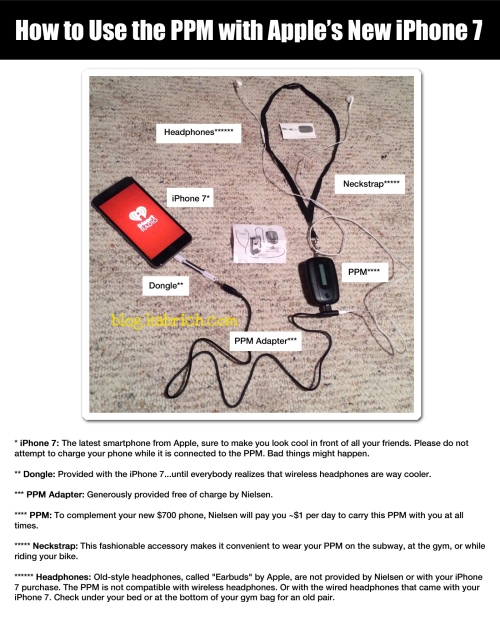
Then only two days later, Randy Kabrich published a concern that may be even more important to the radio industry, and that was, how would PPM* work with the new iPhone7? Randy posted this picture with his article iphone7-with-ppm and you really should read all that Randy has to say on the subject with his article on Tom Taylor’s NOW here.
Change is the Only Constant

Jim Carnegie, who founded Radio Business Reports, used to continuously preach to the radio industry you can’t hold back change. If you are to survive you must embrace change.

In the case of wireless headphones, the tipping point has been reached. More wireless headphones are now sold than wired ones. So I don’t think Apple was going out on a limb by eliminating a 19th century technology. I also fully suspect that AirPods will soon become the new “IN” thing.

What Should Radio Be Focused On?

MediaLife Magazine published a really interesting article on the seven important trends that radio should be focused on. You can read the article here. I will give you the “Reader’s Digest” version with some of my own thoughts.

The Future of Big Radio

Radio is best when it’s LIVE & LOCAL. The consolidation of radio has not been the successful business model that investors on Wall Street bought into. Of course the concept of “increasing shareholder value” and radio’s operating in the public interest, convenience and necessity were at odds with one another from day one. I would agree with MediaLife that radio’s future will be via locally managed radio operators.

The Future of Local Radio

Johnny Carson used to say: “If you buy the premise you buy the bit.” In this case if you believe in the demise of big radio, then you will also believe in the rise of local radio. I know right here in Kentucky many locally owned and operated radio stations that are fully engaged in every aspect of the lives of their listeners and they are thriving.

Radio Goes Digital

With radio company after radio company selling off their radio towers, the writing appears to be on the wall that all radio will be delivered digitally and via the internet. Gone will be towers and transmitters and FCC regulations, fees and fines.

Convergence of Media

I remember writing a paper on media convergence when I was in college. That was long before the concept of a world wide web. With the internet all media becomes identical. What difference is there between a newspaper, a radio station or a television station when each of them can do the same thing? What will separate them is the quality of their content.

NAB, NAA and IAB et al.

The coming convergence will really play havoc with media associations. When what once were separate and distinction constituencies will now also converge into a media association.

I remember being in Washington, DC when Senator Gordon Smith came on board at the NAB President. I shook his hand and asked him about the NAB inviting the satellite radio and internet radio operators into our big tent. I said better to have them with us than against us. He nodded and said that was certainly something to think about. (I think he may have just been being kind.)

Radio’s Opportunity

The History Channel did a program on the “100 Greatest Inventions” and number two on the list was RADIO. Number one was the smartphone. The smartphone really replaces many of our other devices. My digital camera lays somewhere gathering dust as my iPhone has been my digital camera since I got it. CD player, iPod etc, have been all replaced by my iPhone for playing my own music collection. My iPhone is my radio and TV too. Newspapers, magazines, books, are also easily accessible on my iPhone. I know I’m not alone in finding that their smartphone has become a very important part of their life. My iPhone is the model 4S. It’s ancient in the eyes of my students. That’s why the new iPhone7 with the 256GB storage, stereo sound, wireless AirPods, water resistant and all the rest has me thinking it’s time to upgrade.

For me, the big change is the size of the phone. I like the size of my 4S. It was just a bit smaller than the Blackberry Pearl it replaced, but the technology leap it offered over the Blackberry was incredible. I’m sure that the size thing is only in my perception and once I advance to the larger screen I will wonder how I lived without it.

No One Goes Backward

History shows that once people adopt something new, they never go back to the way it used to be. We may wax romantically about the good old days, but if we had to trade another time in history for life without our smartphones and wireless internet, I seriously doubt we could make the trade.

-0-

*PPM is a Nielsen’s Personal People Meter. It’s a device used to measure radio listening in the top 50 radio markets in the USA.

Note: Randy Kabrich blogs here: http://blog.kabrich.com/
 

14 Comments

Filed under Education, Mentor, Radio, Sales, Uncategorized

Paying It Forward

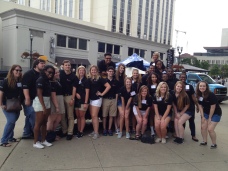
47The picture on the left is of the 2016 KBA WKU RADIO TALENT INSTITUTE class. These twenty-three outstanding students all earned their Radio Marketing Professional (RMP) certification in radio sales from the Radio Advertising Bureau during the ten-day institute.
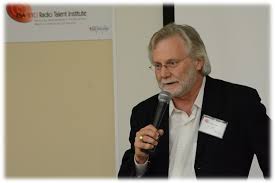
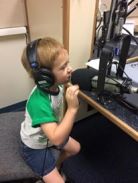
I began working with Steve Newberry, former NAB Joint Board Chairman and President/CEO of Commonwealth Broadcasting to bring the talent institute to my university in 2012. Our first class would graduate in 2013. The 2016 institute marks my fourth and last one as director at WKU. It truly has been the university activity I’m most proud of.

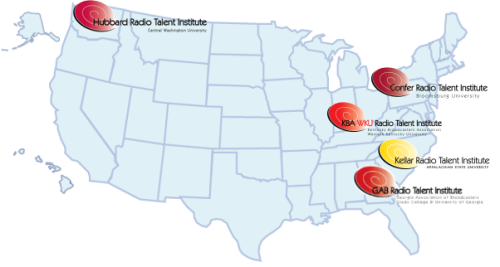
The whole concept of a radio talent institute was conceived by Dan Vallie and Art Kellar. I wrote more extensively about the program in Radio World and you can read that article here.

Working with Dan Vallie over these past five years has been an incredible experience. No one is more dedicated to “paying it forward” to the next generations than Dan. He has boundless energy and has grown the number of talent institutes in America to five.

inst_map_keller_kbawku_confer_gab_hubbard


Expect more radio industry leaders like Kerby Confer and Ginny Hubbard’s Hubbard Broadcasting along with state broadcast associations like the Kentucky Broadcasters Association and the Georgia Association of Broadcasters to sponsor even more locations in the years ahead.

Some of the industry professionals that presented at this year’s institute in Kentucky were Kristin Cantrell-owner/CEO of CapCities Communications and Seven Mountains Media, Mike Keith-the voice of the Tennessee Titans, Christine Hillard-President/COO of Forever Communications, Steve Newberry-President/CEO of Commonwealth Broadcasting, John Ivey-Senior Vice President of Programming iHeartMedia and Program Director of KIIS-FM in Los Angeles, Don Anthony-Publisher, Morning Mouth & Jockline, Creator & Host of Morning Show Boot Camp and Founder & President of Talent Masters, Gary Moore-Air Talent at KLOS in Los Angeles, Bryan Sargent, PM Drive Air Talent at Mix 92.9 in Nashville, John Shomby-Director of Programming at NASH-FM & Charlie Cook-VP/Country at Cumulus Media, Lynn Martin-President of LM Communications, Terry Forcht-Founder, Chairman & CEO of the Forcht Group of Kentucky (a company with 2,400 employees) along with the Presidents of both the Tennessee Association of Broadcasters, Whit Adamson and the Kentucky Broadcasters Association, Henry Lackey.

Thirty-six professional radio broadcasters, two of whom have been awarded the National Radio Award – the highest honor bestowed on a radio broadcaster – by the National Association of Broadcasters shared their passion and performance knowledge.

Every student that has gone through the program has told me it has been the best ten-days of their life and as the director these past four years; I know it has been for me as well.

If you know a student that wants to get into broadcasting, point them in the direction of the National Radio Talent System website  for more information, applications forms, scholarships and the dates/location of the institute nearest to them. Students who apply are thoroughly vetted for acceptance in the program.

Broadcasters looking for air talent, sales talent; digital and video talent should also go to the National Radio Talent System website for a complete listing of graduates that have gone through the program. There they will find each student’s bio and a sample of their on-air work.

I know Dan Vallie is already hard at work on the 2017 radio talent institutes. The radio industry is truly fortunate to have someone of Dan’s vision and action in establishing this innovative radio talent farm system for broadcasters.

46

Dan Vallie

4 Comments

Filed under Education, Mentor, Radio, Sales, Uncategorized

Mentoring Talent

Chase the DJThe Broadcast Education Association (BEA) meets every year in Las Vegas concurrently with the National Association of Broadcasters (NAB) annual convention. In forty-plus years of being a professional broadcaster I never attended an NAB convention. In six years of being a university professor, I’ve attended six conventions. I know, like that’s insane, right?

This year I was asked to serve on the panel about mentoring talent. This panel was not only selected by peer-review but I’ve been told was ranked number 4 out of all the panel proposals that were accepted for this year’s meeting.

My section on panel will deal with mentoring college students to be air personalities. Here’s what I’m going to say.

Rule #1

People don’t care how much you know, until they know how much you care.

Whether you’re mentoring air talent or sales talent, the person needs to first know that you really care about them and their success. What people value most is “being valued.” The tricky part is you need to know how the student (employee can be substituted every time you see the word student) wishes to be valued and do that. It’s not about you and what you think is important.

The perception of being valued is completely in the eye of the student.

Understanding this distinction creates a big opportunity for you, the teacher, to influence the student to continually strive for better and better performance.

A person who feels valued will focus their energy to the task at hand and be enthusiastic. Enthusiasm is contagious and spreads quickly to others.

Air talent likes to know they’re being heard. If you’re the teacher (or their boss) they want to know you’re listening. When you give them positive feedback it makes a big difference in their growth.

Rule #2

Everything is won or lost in the preparation stage.

Before I started teaching the Advanced Radio Performance class at my university, I noticed the students in our college radio station appeared to be bored when they were on-the-air. Those that weren’t bored were spending all their time on their smartphones. Needless to say, listening to the radio station was pretty uneventful too.

What I tell my radio performance students is the same thing I tell my broadcast sales students, if you go on the air without being prepared, you won’t attract listeners, just as if you go on a sales call without being prepared you won’t make sales.

Have Clear Goals

Establish clear goals for your class and then everyone will be on the same page. Be consistent in dealing with students both individually and as a group. Help your students to have a clear picture in their mind of what success sounds like.

Plan, Prepare, Perform

I give each of my performance students a HOT CLOCK to plan out their shows on. Each of their clocks must contain a station ID at the top of the hour, weather breaks twice an hour, a break about something happening on our campus, a break about something happening in our city, a break about something interesting that’s happening in their life, a break that tells us something new about the local musical artist we are featuring that hour that we didn’t know about.

They need to personalize their show.

If they are interested in sports, then I ask them to put a sports commentary into their show or a sports report. If they are interested in movies, then I ask them to give us a movie review or preview what new movies will be playing in our area.

Be present. Be now. Be personal.

Then practice, practice, practice off-the-air before you enter the studio to perform your show.

Students need to learn the discipline of planning and preparing before each of their shows. I tell my students about my recent guest appearance on 650AM-WSM in Nashville. I prepared for three days to do a four hour air shift.

My performance students that had previously volunteered at our college radio station tell me that now they are planning and preparing their radio shows now find radio exciting and fun. They say the hours they are on the air just fly by. One student said her mother called her and said she sounded so much better and she told her mom that it was due to her professor’s mentoring.

Remember, when your students deliver, be sure to praise them.

Catch People Doing Things Right

Ken Blanchard has written many great management books. I was delighted when one day Twitter notified me that I had a new follower and it was Ken Blanchard. Ken preaches the way to have people do more of the right things, all the time is to catch people doing things right and praise them.

Since making the move from managing radio stations for most of my life, to now teaching at a university, I’ve learned that most of the same things one needs to do in the business world with professional talent, works the same way with student talent.

Everyone loves to hear they’re doing a good job.

When I’m listening to one of my students shine on the air, I call them up and tell them how great they sound – or I send them a text message – or post it on our Facebook page for the entire world to see.

Rule #3

Praise in public and critique in private.

I won’t ever call up a student if they are doing a bad job while they’re on the air and tell them that. That’s the worst thing you can ever do to air talent.

I might call them up if there’s a technical issue that needs to be corrected – like, I think you’re saying some really great things, but your mic level is so low I can’t really hear you. Make sure you’re properly modulating those VU meters when you’re talking and don’t just think you’re OK because it sounds OK in your headphones.

Air Check Sessions

One of the things I found to be different in college radio with my students than I found in commercial radio is doing air check sessions. Professional radio talent would rather have a root canal at their dentist than go through an air check session of their last show.

Students love it.

I schedule private one-on-one air check sessions with my students and we go over a telescoped air check of their last show. Now to get that telescoped air check, my students need to scope them from a full-length air check. This means by the time we sit down to listen to it together, they’ve heard it themselves a lot.

What’s amazing is they come to these sessions with a list of things they need to improve. All I need to do is amplify on what they’re hearing and offer suggestions for their next show.

What you want students to hear when you listen to their air check together is their delivery style. You want it to be natural, like they are speaking to one listener in a conversational manner.

Whether the student is doing a show live or voice tracking, it is important that they always act as they are live and understand they need to maintain listener ear-contact.

Radio is an intimate and personal communications medium.

The whole key is to get students to critically listen. Critically listen to their own air checks, to other students and to professional broadcasters.

Learning to be a great radio personality is like learning to be great at anything. It takes practice, practice, practice. Malcolm Gladwell wrote it takes about 10,000 hours of practice to master something. Just remember, practice doesn’t make perfect, perfect practice makes perfect.

In other words, you need to coach your students to not develop bad habits that will be hard to break but keep moving them in a direction that will make them a superstar.

10 Comments

Filed under Education, Mentor, Radio, Sales, Uncategorized

Being Grateful

15There are times when the stresses that are part of everyday life can occupy a place way beyond their level of importance in the grand scheme of things. Its times like those that you need to take a time-out and remember all the things in your life you have to be grateful about.


This year, I’m grateful for three wonderful grand children that are all happy, healthy and developing into unique individuals.


I’m grateful for their parents who make their children their first priority and love them with all their heart and soul.


I’m grateful that my two sons have set exciting and meaningful goals for their lives and in so doing are working hard to make our world a safer and better place for all of us.


I’m thankful for my two older brothers that always have been there for me through ups and downs, thick and thin.


I’m grateful that I’ve come to accept myself for exactly who I am, while still having boundless curiosity and a desire to never stop learning and growing.


I’m grateful that I’ve learned how to slow down. Life is meant to be savored. It’s not getting to the finish line first but about enjoying the journey.


I’m grateful for having enough. Less is more. Too much of anything is usually toxic.


I’m grateful for each day when I can add more value to the world than I consume.


I’m grateful for learning that every situation provides an opportunity to learn something; even the difficult ones, life goes by so fast.


I’m grateful that a career in radio that I started in the 10th grade in high school would allow me to pay for my college education, graduate school and raise a family. It’s a career that was all I ever wanted to do besides one day paying-it-forward through teaching the next generation of broadcasters.


I’m grateful that I finally started a blog this past year. It’s been one of the most personally rewarding and enriching things I’ve undertaken this past year.


I’m grateful for all the wonderful people I’ve met on this journey called life, people who were only strangers until we said “hello,” and then became friends for life.


One of my mentors, Zig Ziglar said: “You can get anything in life you want, if you will just help enough other people get what they want.” I’ve tried to live those words every day.


I have so many things to be grateful for this Thanksgiving 2015. I’m sure you do too.


Remember you may make a living by what you get, but you make a life by what you give.


Today, I’m grateful for YOU.

12 Comments

Filed under Education, Mentor, Radio, Sales, Uncategorized

Why is so much of television so bad?

That’s the question that Newton Minow asked on May 9, 1961 when he addressed the National Association of Broadcasters in Washington, DC.

In his first public address after he took over as chairman of the Federal Communications Commission (FCC) Mr. Minow didn’t pull any punches. He made it clear that in his role at the FCC he was going to make darn sure that broadcasters operated in “the public interest.”

What is meant by operating in “the public interest?” That’s been open to interpretation since those words were written down. Here’s how Mr. Minow defined them:

“Some say the public interest is merely what interests the public. I disagree. And so does your distinguished (NAB) president, Governor Collins, who said ‘Broadcasting to serve the public interest, must have a soul and a conscience, a burning desire to excel, as well as to sell; the urge to build the character, citizenship, and intellectual stature of people, as well as to expand the gross national product….By no means do I imply that broadcasters disregard the public interest…But a much better job can be done, and should be done.’ I could not agree more with Governor Collins.”

Mr. Minow also told the radio broadcasters in the room that the FCC wasn’t going to go to sleep at the switch on them; they were still listening, but that most of the controversies and cross-currents in broadcast programming were swirling around TV and that’s what he planned to address in this speech.

“When television is good, nothing – not theater, not the magazines or newspapers – nothing is better. But when television is bad, nothing is worse,” said Minow.

He then threw out this challenge to television broadcasters:

“I invite each of you to sit down in front of your television set when your station goes on the air and stay there, for a day, without a book, without a magazine, without a newspaper, without a profit and loss sheet, or a rating book to distract you. Keep your eyes glued to that set until the station signs off. I can assure you that what you will observe is a vast wasteland.”

Mr. Minow is 89 and living in Milwaukee, Wisconsin. On the 50th anniversary of his famous speech, he was interviewed by James Warren of the Chicago Tribune. Minow was 35 years old when he took over as chairman of the FCC under President Kennedy. He told Warren that he couldn’t have anticipated the impact his speech would have. Minow’s severe censure of TV’s “procession of game shows, violence, audience participation shows, formula comedies about totally unbelievable families, blood and thunder, mayhem, violence, sadism, murder, western badmen, western good men, private eyes, gangsters, more violence and cartoons” remains highly “radioactive” to this day.

If you’re a fan of the television show “Gilligan’s Island” you might not have realized that the boat that sank was coyly named after the FCC chairman; however spelling it S. S. Minnow. Does that give you some idea of how distasteful having their medium called “a vast wasteland” was to the TV men of that day?

Mr. Minow’s own daughters joke that their dad’s tombstone might be inscribed with the words “On to a vaster wasteland.”

In 1998, President Clinton appointed a commission to review “the public interest” on the eve of the arrival of Digital Television. That commission issued a 160-age report on December 18, 1998.

In 2015, “the public interest” issue has been addressed with respect to the Internet.  Again, the FCC under its current chairman Thomas Wheeler has come forward with a plan that has been as well received by the “Internet men” of today as Mr. Minow’s assessment of TV back in 1961. Here’s what the FCC decided:

Adopted on February 26, 2015, the FCC’s Open Internet rules are designed to protect free expression and innovation on the Internet and promote investment in the nation’s broadband networks. The Open Internet rules are grounded in the strongest possible legal foundation by relying on multiple sources of authority, including: Title II of the Communications Act and Section 706 of the Telecommunications Act of 1996. As part of this decision, the Commission also refrains (or “forbears”) from enforcing provisions of Title II that are not relevant to modern broadband service. Together Title II and Section 706 support clear rules of the road, providing the certainty needed for innovators and investors, and the competitive choices and freedom demanded by consumers.

The new rules apply to both fixed and mobile broadband service. This approach recognizes advances in technology and the growing significance of mobile broadband Internet access in recent years. These rules will protect consumers no matter how they access the Internet, whether on a desktop computer or a mobile device.

The public interest standard has long provided guidance for promoting greater diversity in content, political debate, access, service to local communities, education, diversity and equal employment. The communications revolution will continue to challenge policymakers to ensure operating in “the public interest” remains.

Leave a comment

Filed under Education, Mentor, Radio

What if the problem isn’t PPM?

I’ve been reading a lot lately about PPM (Nielsen’s Personal People Meter) and how it may not be capturing all the listening in a radio market.

In Las Vegas at the NAB2015 show, Telos Alliance was demonstrating their Voltair.   This additional “black box” in a radio station’s audio chain will correct for times when the PPM isn’t properly watermarking a radio station’s signal. As I understand it, some formats that have pauses – like talk radio formats, classical formats – aren’t being encoded with the audio watermark the PPM encoder is supposed to transmit to be received by the PPM device a listener in a Nielsen panel carries (or not) with them.

OK – let’s take a time out here.

PPM is now the radio measurement system used in the Top 48 radio markets in the USA. It began being the currency for radio listening in the City of Brotherly Love (Philadelphia) in the spring of 2002. When a measurement system is considered “up-to-snuff” an agency called the Media Ratings Council gives that measurements service its Double Checkmark seal of approval. (The diary method of radio listening measurement has had that seal in all markets it’s used and is still the measurement method used in radio markets from #49 to #273 by Nielsen Audio.)

Now you would think that in the lucky 13-years since PPM was officially launched (it was being tested in England back in the late 90s) that it would have earned that gold standard of ratings methodology approval in all PPM markets by now, but no; it apparently only has it in about 25 markets, leaving another 23 without it. But make no mistake it IS the ratings currency used Double Checkmark or not.

This new PPM device replaced the paper diary methodology in America’s largest radio markets and here are a couple of more interesting twists to the story. There were less PPM meters deployed than the number of paper diaries they replaced. They also raised the costs of measuring these radio markets by something like 60%. (That’s sounds like Clear Channel’s old “Less is More” strategy.) But if the ratings will be more accurate, then everyone should rally around this newer system and it will be worth what they’re paying for, right?

That’s what makes the Telos Alliance Voltair black box so disturbing. Its seller’s claim it fixes a problem that no one (or not a lot of people) knew even existed. It made the PPM encoder do a better job of encoding a radio station’s signal so PPM receivers could decode the audio watermark and give that radio station its due. And to implement this “fix” to your radio signal, all it would cost you is $15,000.00 per Voltair.

I’ve had the pleasure to actually visit a station in a major metro and watch the Voltair work. The telemetry it displays appears to be doing just what its sellers claim. So maybe it IS fixing things. But what about all those formats that are no more? What about all those PDs and air personalities that are gone because a new measurement device was not giving them the proper credit they should have been getting? A lot has changed in those 13-years since the first PPM market went online.

Another manufacturer points out that this additional black box in your audio chain designed to capture more PPM receivers will actually make your radio station sound worse and drive listeners away from your station. And I know some radio engineers that would agree with that analysis.

So what’s a radio broadcaster to do?

Dick Harlow thinks he knows. He’s in PPM market #46. He’s dropping Nielsen Audio’s PPM measurement service. He’s not spending $15,000.00 on a Voltair. And he’s not going without audience ratings like Saga has done (and is still doing in some of its markets). He’s hired Mike Gould’s Eastlan ratings to measure the Greensboro/High Point/Winston-Salem market for his radio stations; WKRR-FM Rock 92 and Top 40 WKZL 107.5 FM.

Mr. Harlow says “enough is enough.”

Eastlan will reportedly deploy a sample size that’s triple the number PPM meters currently used in this radio market using its proprietary ratings estimate methodology.

And no it isn’t MRC Double Checkmark approved, or as far as I can see, under review by the MRC.   But then again, there appears to be a lot of ratings currency being used that lacks this approval.

A quick check of the Greensboro/High Point/Winston-Salem market shows that PPM is also not receiving the MRC Double Checkmark seal of approval for that market, so there’s no loss for Mr. Harlow on that metric either.

I studied the Eastlan reports back in the early part of the 21st Century when I was running radio stations. At that time it was Arbitron and Eastlan that were battling it out in a few radio markets where we could examine how each company ranked the stations. What I saw at that time was they could both agree on the Big Dawg stations, but Eastlan found those little pups that super-served a niche audience and that was the eye-opening difference to me, for at that moment in time I was running some low powered AM radio signals and needed a ratings company that could drill down a market deeper and uncover more of the radio listening that was actually occurring.

My gut tells me that Dick Harlow will find that too. And if he’s smart, he will take the cost savings by switching to Eastlan and pour it back into advertising and promotion of his radio stations; for if he does, he will not only win in Eastlan’s audience estimates, but in those done by Nielsen too. But the real win will be for his listeners, advertisers, employees and his company, for he will be investing his resources where they will pay the biggest dividends for the community he’s licensed to serve.

To sum this all up, the problem isn’t PPM. It’s that PPM has taken radio broadcaster’s eyes off the ball. The game is programming radio stations with great content. It’s hiring great talent. It’s crafting commercials for advertisers that get results and don’t annoy the listener. It’s super-serving the community you’re licensed to operate in. In other words, it’s doing all the right things, all of the time. Ratings are a by-product of doing it all fabulously well. And profits are the reward that the stakeholders receive for investing and believing in their radio team.

21 Comments

Filed under Education, Mentor, Radio, Sales

On The Road in Las Vegas

8

What I learn in Vegas, won’t stay in Vegas.

Back next Sunday with a NEW post.

Leave a comment

Filed under Education, Mentor, Radio, Sales

Top 3 In-Demand Radio Jobs

What is the future for jobs in radio in our digitally connected world? Three jobs in particular stand out as being in demand right now and look to be still in demand as radio celebrates its 100th Anniversary in the year 2020. The first won’t surprise anyone, the second is a job that only recently became critical and the third is a job that’s been a part of radio since day one.

#1 Radio Sales People

I’m sure it comes as no surprise that the need for trained, professional sales people is the number one radio job in demand today and as far out as the eye can see. Since I’ve been in radio it seems hiring good sales people was always on the lips of general managers and sales managers. So when we asked the operator’s of Kentucky’s 300 radio stations what were the jobs they most needed to fill, sales was job one.

Ironically, it’s the class not offered by many of America’s colleges and universities that offer a broadcast curriculum. Where I teach at Western Kentucky University, Bart White started teaching radio sales decades ago as part of the broadcast degree program in Radio/TV Operations. In fact, Barton C. White wrote two books on radio sales, his second called The New Ad Media Reality Electronic Over Print should have been widely distributed from the day it came out in 1993. I know I wished I had been aware of it back then.

I was hired to replace the retiring Professor White and immediately charged with teaching both the Broadcast Radio/TV/Digital Sales class as well as the Radio/TV Operations Capstone class. Since I began five years ago as a tenure track professor at WKU, I’ve overseen the creation of the KBA WKU RADIO TALENT INSTITUTE that contains a strong sales component as well as adding a second sales class to the broadcast curriculum in Advanced Radio Sales that enables students earn their professional Radio Advertising Sales certifications in both radio and digital sales from the Radio Advertising Bureau (RAB).

My students have learned that with this type of training, they are almost guaranteed a job upon graduation wherever they decide to live. I’ve successfully placed students with companies like iHeartMedia, CBS Radio, E. W. Scripps, Cromwell Broadcasting, Alpha Media, Commonwealth Broadcasting, Viacom, Summit Media, and Forever Communications.

This year at BEA2015 (Broadcast Education Association) in Las Vegas I’m moderating a panel I proposed to encourage other colleges and universities to consider adding radio sales classes to their curriculum by letting them hear directly about the need in this area from some of the radio industry’s leaders who will be in Vegas attending the NAB April Convention.

#2 Internet Content Creator

The next position that is in demand is for people who can create original content for radio station websites. Not cut and paste artists who “borrow” others’ website content and re-purpose it but innovators that can act like a combination of journalist/advertising/public relations specialist and populate radio station websites with engaging, compelling original content that is of interest to people in the station’s service area.

#3 RF Broadcast Engineers

Not that it was ever easy to hire great radio engineers, the talent pool used to be a whole lot bigger. Consolidation chased a lot of them out of the business and what they learned was the job could be more lucrative by becoming a consultant engineer to groups of radio stations. Other engineers found new opportunities in other industries that could apply their talent and strong work ethic that was instilled into them by radio’s 24/7 on-call employment. Computers and digital technology also demanded that radio engineering learn this new radio operational system or get out.

Well, those who went into private consulting are now reaching the age of retirement. Those who went into other industries learned the pay and hours were often better than radio. Further complicating things, most schools are teaching the skills needed for the digital world and radio stations still generate broadcast signals using radio frequency (RF) and there are fewer schools turning out these types of engineers for radio stations. Graduates are sought by the wireless communications companies that have similar needs to radio stations and have the deep pockets to entice them to work for them.

Positions Not In-Demand

General Managers, Promotions Directors and News Reporters are found on the bottom of the employee needs list. It would appear this is a result of radio’s consolidation. One manager is now needed to oversee a cluster(s) of radio stations. Promotions are now planned on a group-wide basis and news hubs have been set-up to serve regional areas.

22 Comments

Filed under Education, Mentor, Radio, Sales