Tag Archives: Trump

Radio’s Most Pressing Issues

This past week, Radio/TV state broadcast associations were in our nation’s capital meeting with their elected representatives in both the House and Senate about issues that are important to them. It’s the annual National Association of Broadcasters (NAB) State Leadership Conference.

More than 500 radio broadcasters from across America assembled to hear Senator Ted Cruz (R-TX) speak on his support of the “AM Radio for Every Vehicle Act,” and advocating for a level playing field in the advertising market.

Cruz is the new Chairman of the Senate Commerce Committee and he pledged a proactive approach to support broadcasters, create jobs and uphold free speech.

Free Speech

Brendan Carr is the new Chairman of the Federal Communications Commission (FCC) and in only a couple of weeks, since taking this leadership position, his actions have caught the attention of some members of Congress, who were alarmed by recent moves impacting broadcasters.

Representative Jerold Nadler (D-NY) expressed his concern over the Carr’s FCC assault on a media organization’s free speech.

“Exploiting his asserted ‘unitary executive’ powers, [President] Trump is unleashing his sycophant FCC Chairman, Brendan Carr, on every newsgroup whose news stories he does not approve of — actually threatening to pull the broadcast licenses for ABC, CBS, NBC, PBS, and NPR,” said Rep. Jamie Raskin (D-MD). “Is this North Korea?”

The President of Free Press Action, Craig Aaron, in testimony said that threats and opening investigations into broadcast outlets by the FCC is out of the norm.

“The FCC usually talks about licenses on very narrow terms, such as if an owner has committed a major crime,” Aaron said. “The idea that a news organization would be threatened because they asked a tough question of the President, or because they tried to fact check him during a debate, or because they edited their own news content before putting it out over the airwaves is preposterous, and it’s dangerous.”

DEI

Diversity, Equity and Inclusion (DEI) has been terminated by Carr at the FCC and he’s been signaling that the agency might go after FCC licensees over their own DEI programs.

Are DEI programs good for business? Apple’s shareholders think so, so do Costco shareholders, and Hyundai’s marketing executive, Erik Thomas, credits its DEI programs with driving the automobile manufacturer’s bottom line.

SiriusXM

Nine years ago I wrote an article with a title that sounded like click bait titled “SiriusXM Radio is Now Free,” which speculated when the FCC licensed satellite broadcaster would start offering ad-supported channels for free.

Four years later, I wrote that “Could 2021 Be the Year SiriusXM Adds FREE Channels?” speculating that new SiriusXM CEO, Jennifer Witz, would be pursuing revenue growth by  leveraging the 132 million cars the service was available in. SiriusXM, like commercial radio over-the-air (OTA) broadcasters, knows that the competition for listener ears is in the car. The advantage the satellite broadcaster has over AM/FM radio operators is they know exactly what their listeners are listening to, and don’t have to rely on audience estimates that may or may not be accurate in today’s media saturated world.

Last year, what I have been predicting since 2016, became a reality, as I wrote in:  “Ad-Supported SiriusXM Requires No Paid Subscription.”

Monopoly

One of the radio industry’s most respected researchers, Dr. Ed Cohen, wrote “The direct-to-consumer satellite radio business is a monopoly,” shortly after my 3rd article on this subject was published. Originally, the FCC offered only two satellite broadcast licenses, one went to a company called “Sirius” and the other to a company called “XM,” with the idea being they would be competitors and that the consumer would benefit by not having a single company – a monopoly – control satellite radio and what it could charge.

The two companies were supposed to never be able to merge, but in August of 2008, by a 3 to 2 vote of the FCC, that changed. Dr. Cohen does a really good deep dive into explaining how this all came about in his article “SiriusXM and the FCC: Is the Camel’s Nose Under the Tent?” Which is an allusion to a story that takes place in Arabia, with this metaphorical moral:

If the camel once gets his nose in the tent, his body will soon follow.

What the FCC never took into consideration was, how much damage might occur to local AM/FM radio stations, if and when, the new combined SiriusXM ever decided to provide an ad-supported free radio service.

Dr. Cohen believes that while this new free service from SiriusXM is limited in scope, like the proverbial camel, it won’t be long before the whole service becomes real competition for audio listeners and advertisers.

People Love Free

AM Radio vs SiriusXM

Dr. Cohen makes an excellent case for commercial radio broadcasters to be demanding, the FCC revisit the SiriusXM merger decision in light of this change by the satellite broadcaster.

By the way, public broadcasters also have a horse in this race, as NPR Now is part of the new free SiriusXM service.

“While the NAB is busy with getting Congress to force OEMs (Original Equipment Manufacturers) to include AM in every vehicle, the battle with SiriusXM’s ad-supported venture is probably more important to the industry in the long run,” says Dr. Cohen.

It’s The Economy Stupid

But the most important issue facing the commercial radio industry are the financial fears that have been generated by the Trump tariffs and fire hose of government regulatory changes that seem to come at us on an hourly basis. I wrote about this concern in February with an article titled “The Cost of Uncertainty to Radio.”

Now BIA Advisory Services this week updated its local advertising revenue forecast for 2025. Cameron Coats, in Radio Ink, reports that “over-the-air revenue [for radio] takes the largest hit, falling by 6%.” Digital radio, says Coats, shows a slight increase of 0.1%.

SiriusXM has enjoyed growth through the sale of new cars, but with the high tariffs Trump has announced, it wouldn’t be a surprise if people hang onto their current vehicles a little longer, which also means that AM radio will still be accessible. Without an economic downturn, the average life of a car in America is 12-years, up from 8.4-years in 1995. Progressive Insurance says that a well-maintained car will reach 300,000 or more miles, and those cars have both AM/FM radios as well as SiriusXM.

The radio industry’s most pressing issue is who wins in the car, and in that arena AM radio – a hundred year old medium is not our industry’s best play –

stopping satellite radio’s FREE ad-supported service is.

When the pie isn’t growing,

the game becomes who can cut the biggest slice.
5 Comments

Filed under Uncategorized

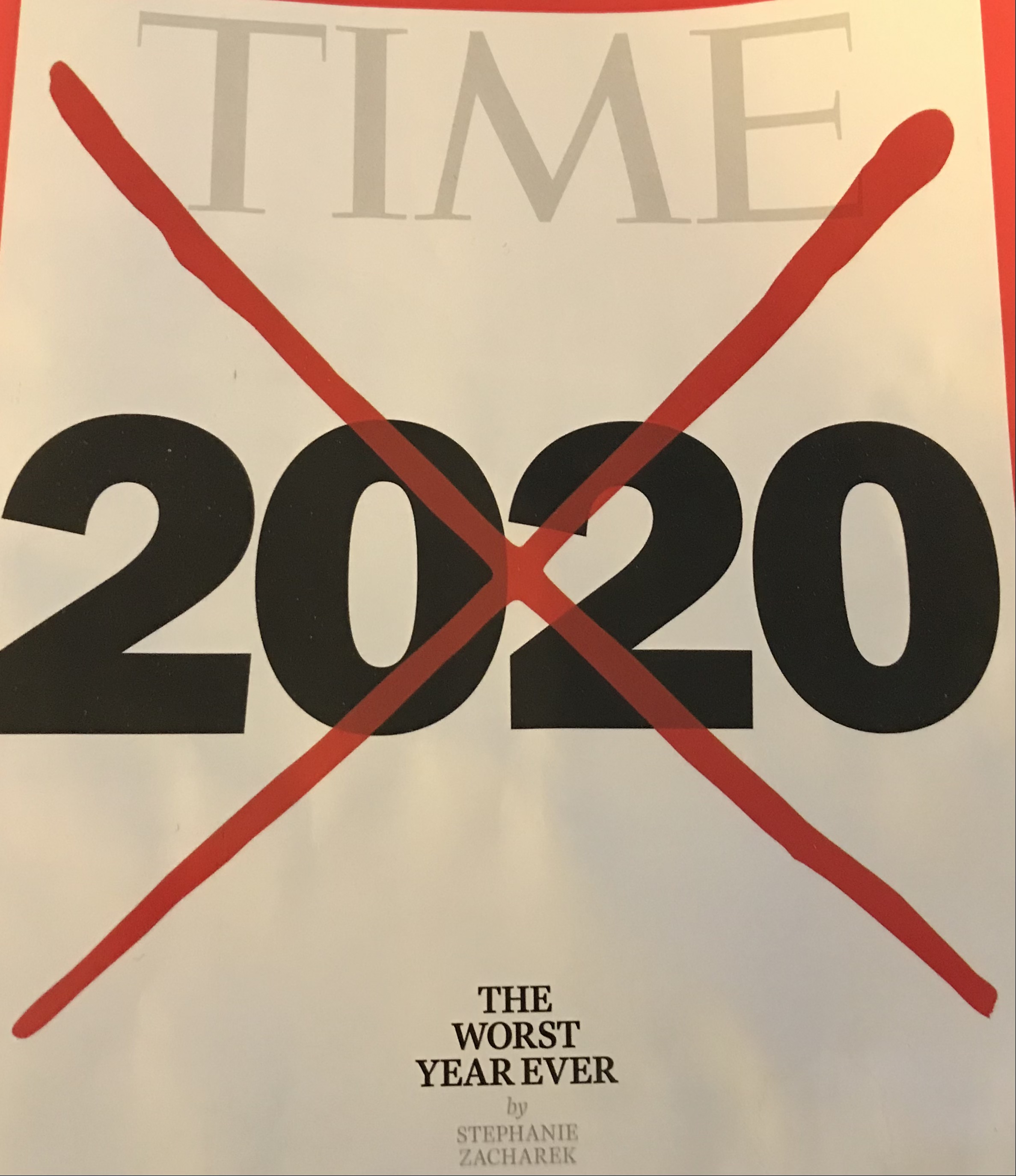
2021 the Beginning of a New Year and Decade

Last year at this time, we were debating whether 2020 was the end of the second decade of the 21st Century or the beginning of the third decade. (Spoiler Alert: it was the end. Decades start with 1 and end with 0.)

I remember being anxious for 2019 to end, but after the challenging year that 2020 became, I couldn’t for the life of me remember why 2019 was so bad. So, I decided to look back to find out what was happening. These are only some of the highlights that made 2019 an anxious year for me, and others.

United States Government Shutdown

On January 3, 2019 Democrats took control of the United States House of Representatives. Hopes were high that they would end the government shutdown. The shutdown had now been going on 22 days, leaving 800,000 employees unpaid, becoming the longest in U.S. history.

College Admissions Scandal

We learned of a college admissions scandal where around 50 people had been accused of bribery and fraud to secure admission to elite colleges for their children. The scandal featured two familiar faces, actresses Felicity Huffman and Lori Loughlin. (I’ll never think of “Aunt Becky” the same way again.)

Huffman would serve 14 days in prison, fined $30,000 and be required to perform 250 hours of community service for her involvement in the scandal. Loughlin and her husband would continue to fight into 2020 before settling with prosecutors, heading off to jail and paying fines.

The Mueller Report

What seemed like forever, 2019 was the year that Robert Mueller finally turned in his report on the 2016 Presidential election after a nearly two-year investigation on whether the Trump Campaign helped Russia interfere with our election. Attorney General William Barr would reduce the report’s findings to a four page letter to Congress that in essence said ‘there’s nothing to see here.’

Hats Get Thrown into Presidential Race for 2020

By the time Joe Biden threw his hat into the ring, announcing he was running for President in 2020, 20 candidates, the largest field of presidential candidates in U.S. history, were now all running against the incumbent, Donald Trump. It was in May of 2019, that Gallup’s tracking poll measured Trump’s approval rating at the highest of his presidency thus-far, 46%. (It never got any higher than 49%.)

That same month we also learned via the New York Times, that Donald Trump has lost $1.17 billion from his various businesses from 1985 to 1994, a far greater amount than previously known, and more than any tax payer in U.S. history.

Measles Outbreak

The Centers for Disease Control and Prevention in June reported that there were 971 cases of measles in the United States, the highest level in more than 25 years.

Jeffrey Epstein

Billionaire financier and registered sex offender, Jeffrey Epstein, is taken into federal custody in New York on charges of sex trafficking and conspiracy to traffic minors in Florida and New York. Labor Secretary Alexander Acosta would resign amid the controversy over his prosecution of Epstein in 2007, which raised lots of questions about how this case had been handled. Epstein, only months later, would be found dead in his jail cell.

NYC Blackout

Manhattan’s West Side was hit with a blackout, occurring exactly 42 years after the New York City blackout of 1977 that would also plunge much of New York City into blackness.

Election Security Blocked

Less than 24 hours after Special Counsel Robert Mueller warned of the continued threat of interference to America’s elections, Senate Majority Leader Mitch McConnell blocks legislation designed to improve election security in the United States.

The Phone Call

In September, the inspector general of Intelligence, Michael Atkinson, communicates to the House Intelligence Committee that a whistleblower had issued an “urgent” and “credible” complaint involving an apparent July 25 phone call between President Trump and Ukrainian president Zelensky. This phone call would lead to the Impeachment trial of Donald J. Trump in January of 2020.

Opioid Crisis

America’s opioid crisis would see Purdue Pharma file for bankruptcy in response to lawsuits related to its participation in the crisis.

Impeachment Proceedings Announced

The end of September would see the announcement by Speaker of the House, Nancy Pelosi, that the House would begin a formal impeachment inquiry against President Trump.

Meanwhile, the Washington Post reported that an IRS employee had filed a whistleblower complaint saying an unnamed political appointee at the United States Department of the Treasury tried to interfere with the tax audits for President Trump or Vice President Mike Pence.

On October 31, the U.S. House of Representatives votes 232 to 196 in favor of formally proceeding with an impeachment inquiry against President Trump. The first formal hearings to begin in November.

At those hearings, Gordon Sondland, the United States Ambassador to the European Union,  testified that there was a quid pro quo in the Ukraine scandal, pushed by Rudy Giuliani and ordered by Trump. The White House announces that President Trump will not participate in the House Judiciary Committee impeachment hearing on December 3.

On December 18, the House votes to forward two articles of impeachment against President Trump to the Senate, accusing him of abuse of power and obstructing Congress. Donald Trump became only the third U.S. president to be impeached by the House.

2019

Looking back, there was little wonder why we were all looking forward to the end of 2019 and the start of 2020. Little did we know what lay ahead or that we would long for the way many of the things had been in the year just past.

We knew there would be an Impeachment trial in the Senate, but we never imagined our world would be closed down by a global pandemic and that the most powerful nation in the world would be brought to its knees in the number of people testing positive for COVID-19 and dying of the novel coronavirus.

2021

Which brings us to not just the start of a new year, but the start of a new decade. We’re not out of the woods yet. Not by a long shot. Dr. Anthony Fauci believes the worst is yet to come. December became America’s deadliest month yet for COVID-19.

On top of that, our ‘make-believe economy,’ where there’s no such thing as risk, can’t go on forever, and according to Axios Markets editor Dion Rabouin, Wall Street knows it.

Creating New Habits

Experts in the study of human behavior tell us, that it can take anywhere from 18 to 254 days for a person to form a new habit. On average, it takes about 66 days for a new behavior to become automatic.

It was in March of this year that the World Health Organization declared COVID-19 a global pandemic, that was over 305 days ago.

If this lasts another six months, another 180 days, that would mean that we have been living with the new habits due to COVID-19 for 485 days. Does anyone seriously think that the new habits we’ve formed over that period of time will suddenly vanish?

Permanent Changes

This is not a blog about politics. It’s a media mentorship blog.

The big takeaway in today’s article is that the changes that have taken place during 2020 are becoming permanent. You can’t plan for the future by thinking life will return to the way it was in the first decades of the 21st Century. Hotels, for example, are now renting hotel rooms to people to use as an office, allowing them to get out of their house, but still remain COVID safe. Now that’s being creative! And if they can do it, what can your industry do?

We think too much and feel too little.

-Charlie Chaplin

So, take a moment to reflect on how the year just passed has changed you.

  • What did you love about the changes 2020 brought (no more commuting?).
  • What would you leave out or what would you do more of in 2021 to improve your career, and your life?
  • What did this year teach you, about yourself, your work, your life, your priorities?
  • What were you most grateful for?
  • Were you able to find happiness in things you previously overlooked or took for granted?
  • How will the things you learned in 2020, benefit you in 2021?

Think of 2021 as the year for letting go of the past.

Letting go of what was, is the way we create the space for building what can be.

Are you ready?

8 Comments

Filed under Uncategorized

The Post-Fact Society

68P.T. Barnum, among many others, is credited with saying: “I don’t care what they say about me, just make sure they spell my name right!”

Barnum knew it wasn’t important what people said about him as long as they were talking about him. Only the noise level about Barnum mattered.

When I saw this chart from The DataFace measuring the newspaper media coverage of the two presidential candidates, it was eye opening.  68a It mattered little that most of that coverage was negative. What mattered was they spelled “Trump” correctly.

Fake News

Once upon a time, news came from journalists who worked for newspapers, radio and television stations.

Then along came the iPhone and social media.

Now the same device that could receive text, voice, pictures and video could produce it too.

Social media platforms provided mass distribution without a filter (aka an editor).

This provided the perfect storm for the production of fake news. A cottage industry in some parts of the world, some American citizens soon learned that producing internet stories that would get lots of clicks could be profitable.

Radio & Fake News

Even syndicated radio host Sean Hannity got snared in the volume of fake news being generated and had to apologize for using fake news stories to attack Obama.

Ad Supported Media Fight for Survival

In an effort to make a little coin, trusted media sources began accepting advertising that would lead their readers, listeners, viewers to unaffiliated sources that would serve up this fake news. In so doing, they inadvertently now wore the stink of the fake news creators. The public quickly could not discern the researched and sourced news from the made-up variety.

One PM Central Standard Time

Radio and television journalism didn’t always operate this way. PBS produced an excellent documentary about the coverage of the assassination of President John F. Kennedy. The program was called “One PM Central Standard Time” and it covered how “the most trusted man in America” Walter Cronkite waited until Kennedy’s death was confirmed by  multiple sources before going live with the news to the nation over the CBS radio and television networks.

The Being First Obsession

Things changed when things started being published digitally. In this world, advertising paid based on clicks. Quantity beat quality. Sensational beat facts. Going viral meant big money to these new media folks. Plus the concept of “native advertising” means that advertising copy is presented to look like editorial.

All of these little changes contributed to consumers becoming less and less able to tell real news from what was fake news. Which has led to many not believing anything today’s media tells them.

And that’s a very sad state of affairs for journalism.

“Were it left to me to decide whether we should have a government without newspapers, or newspapers without a government, I should not hesitate a moment to prefer the latter.”
–Thomas Jefferson

21st Century Business Model Challenge

Starting with newspapers, then radio, then TV then digital, the business model has been one of ad supported media. The model is broken.

Disruption first destroys the old ways of doing things before the new ways are discovered and take root. We are living in that destruction period of disruption.

Our challenge lies in building a business model that will support solid journalism, quality entertainment and community service.

What others have shown us is that in a 21st Century world it will take a collaborative effort from people from all over the world to help build the new way.

11 Comments

Filed under Education, Mentor, Radio, Sales, Uncategorized