I’ve been a “Radio Guy” all of my life. My earliest memories were of building a radio station out of tinker toys and pretending I was a disc jockey. Later I would build a radio station in the basement of my parent’s home and using AM & FM transmitters I bought at Radio Shack I would begin broadcasting to my neighborhood for about a three block radius.
I began in commercial radio in the 10th grade in high school. A local radio station in my hometown of Pittsfield, Massachusetts decided to start a Junior Achievement company in radio. This was a really new concept in Junior Achievement as all JA companies at that time were production oriented and a radio station would be a service oriented JA company. I was a member of that first Junior Achievement radio company (WJAC) and it quickly led to a part-time job with that radio station (WBEC).
Radio would pay for my college education and graduate degrees, both of which were in education. I loved college and could have very easily become a career student. When I graduated with my Masters Degree, there were no jobs in education to apply my earned degrees but there were radio jobs and I went into the radio business full-time as a program director, operations manager and air personality.
Deciding what I’d really like to be is a radio station general manager, I knew that I would need to earn my chops in sales and so I quit my job on the product side of the business and started over at the bottom of the sales ladder as an account executive. I quickly rose to sales manager, station manager and general manager. For 27 years, I operated at the market manager level of the radio industry.
I’m a Life Member of the New Jersey Broadcasters Association and Radio Ink Magazine has named me one of radio’s best managers.
Former professor of broadcasting at the School of Journalism & Broadcasting at Western Kentucky University (WKU) in Bowling Green, Kentucky.
I have a successful track record in sales and people development, growing top line revenues, achieving leading audience ratings, reducing expenses and meeting bottom line goals. I’m a recognized expert in radio and media regulations. I’m a turnaround specialist.
I'm the founding director of the KBA WKU Radio Talent Institute coordinating a professional faculty of broadcasters who teach broadcast students who qualify and are accepted to attend a ten-day intensive program that trains tomorrow’s broadcasters in all aspects of radio station operations.
My specialties include: dynamic public speaker/presenter and sales trainer. I currently teach classes in the Process & Effects of Mediated Communications, Broadcast/Internet Sales, Broadcast Performance/Production, Broadcast Management and the History of Broadcasting in America.
I hold a BA in Physics/Education, an MS in Educational Communications, the Diamond CRMC (Certified Radio Marketing Consultant) and the CDMC (Certified Digital Marketing Consultant) from the Radio Advertising Bureau. I’m a graduate of Roy H. Williams Wizard Academy and Gitomer Sales Training.
Note: The picture on my blog is when I was invited to do a guest disc jockey appearance on The Legend - 650AM - WSM in Nasvhille, Tennessee (July 2014). For this "Radio Guy" doing a four-hour air shift on this legendary clear channel signal radio station was a dream come true.
The last article I wrote for this blog was in June. Since then, life for this grandfather has been very busy. Who knew that life in retirement could be so full?
Work & Life Stress
As I watch the world go streaming past me, I see a lot of stress on people’s faces. Often their stress is self-induced, by the way they live their lives.
So, this week, I’d like you to sit down and pour yourself a cup of coffee while you read this story I heard while teaching at the university years ago.
+++++++++++++++++++++++
Offering his guests coffee, the professor went to the kitchen and returned with a large pot of coffee and an assortment of cups – porcelain, plastic, glass, crystal, some plain-looking, some expensive, and some exquisite – telling them to help themselves to the coffee.
After all the students had a cup of coffee in hand, the professor said: “If you noticed, all the nice looking expensive cups were taken up, leaving behind the plain and cheap ones. While it is but normal for you to want only the best for yourselves, that is the source of your problems and stress.
Be assured that the cup itself adds not quality to the coffee. In most cases, it’s just more expensive and in some cases even hides what we drink. What all of you really wanted was coffee, not the cup, but you consciously went for the best cups and then began eyeing each other’s cups.
Now consider this: Life is the coffee, and jobs, money and position in society are the cups. They are just tools to hold and contain life, and the type of cup we have does not define nor change the quality of the life we live. Sometimes, by concentrating only on the cup, we fail to enjoy the coffee God has provided us.”
God brews the coffee, not the cups. Enjoy your coffee.
+++++++++++++++++++++++++
The Secret of Living a Good Life
Happy people enjoy the things they already have, instead of focusing on getting more things. Learning to appreciate what you already have may be the most vital ingredient to living a less stressful life.
What Does This Have To Do With Broadcasting?
At each moment, in both my broadcast career and that of a university professor, I always made time to pause and savor the moment. To be grateful for all the things I had.
I’ve been retired since 2017, and when people ask me how I am doing, my answer is always the same:
I’m living my BEST Life!
The Bottom Line
In the end, there are really only two ways to be happy in life.
You can get what you want.
You can want what you already have.
Spoiler Alert: Only 1 of these two strategies actually works. It’s called GRATITUDE.
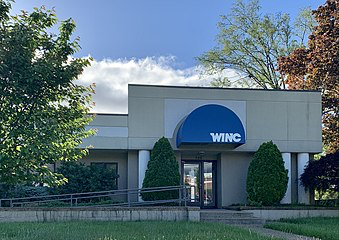
On June 26, 1941, at 6:57am, a new local radio station, WINC -1400AM began serving the Winchester, Virginia community. It was the city’s first radio station, and it brought Virginia Senator Harry F. Byrd and Virginia Governor James Hubert Price to town for the ribbon cutting ceremonies signing on this new radio service.
The radio station’s offices, studios, transmitter and tower were located at 520 Pleasant Valley Road in Winchester.
It would broadcast live descriptions of the attack on Pearl Harbor and FDR’s famous “Infamy Speech” only six months after signing on-the-air.
In 1947 a radio contest on WINC (known locally as Wink) would take down the entire telephone system for the City of Winchester, as female listeners tried to win a free pair of nylon stockings and a $10 handbag.
Virginia Hensley
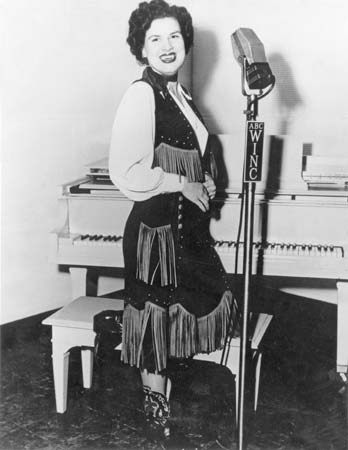
Winchester’s most famous resident is Virginia Hensley, better known to the world as Patsy Cline.
When Ginny was just fourteen years old, she walked into WINC and asked if she could sing on one the station’s live music shows, . The leader of the band, told her to come back next week and maybe he’d let her sing on the radio. Ginny returned the following weekend and made her broadcast debut on WINC in 1948.
Other stars to visit the station included, Bing Crosby, Bob Hope and Paul Harvey, who would broadcast his national News & Commentary over the ABC Radio Network on April 14, 1962.
Local Radio
WINC provided residents of Frederick County Virginia with news, entertainment and advertisements from local retailers. Those ads must have been popular with the business community because the radio station ran into trouble with the FCC (Federal Communications Commission) when trying to renew its broadcast license in 1971. At that time, the FCC allowed no more than 18-minutes of commercials per hour and WINC was airing 22-minutes of ads. It was reported that the FCC’s Broadcast Bureau Chief felt the excessive number of commercials were not in the best interests of Winchester community, but in the end renewed the station’s broadcast license.
Programming
Through the years, WINC -1400AM would undergo various programming changes. From live musical performances, to playing records. Musically, the station went from playing middle-of-the-road music, to adult contemporary, to classic hits; finally changing to a news/talk format in 1996, because its sister station, WINC-FM 92.5 had become Winchester’s most popular music radio station.
75th Anniversary
In 2016, WINC-1400AM celebrated its 75th anniversary of broadcasting. During this period of time, the station had only two different owners, the Lewis family and Centennial Broadcasting.
Richard Field Lewis, Jr., a broadcast engineer filed the initial application for a new station in Winchester in November 1940 and six years later, he would launch sister station WINC-FM.
On October 18, 1957 Richard F. Lewis, Jr. died and control of the two stations would pass to the Lewis family and incorporated as Mid-Atlantic Network, Inc.
In May 2007, the Lewis family would sell WINC AM/FM to North Carolina-based Centennial Broadcasting for about $36 million.
The End of an Era
Centennial would begin divesting their Winchester radio properties, which now numbered three FM stations and one AM radio station in 2020.
50,000-watt WINC-FM would be sold to the Educational Media Foundation (EMF) for $1.75 million, which would begin airing EMF’s Air1 network. Centennial’s other two FM stations would be sold to Fairfax, Virginia-based Metro Radio, Inc. for $225,000.
The future of WINC-1400AM was uncertain as the radio station celebrated its 80th anniversary in 2021. Ultimately, the station would find a buyer that paid $25,000 for the signal. The call letters WINC would be changed to WZFC upon completion of the sale in October 22, 2021.
How do you mark the end of a local radio station?
Was it when:
WINC-FM was sold to EMF and its call letters were changed to WAIW?
WINC-AM was sold and the call letters were changed to WZFC?*
The retirement of 37-year Wink Morning Man Barry Lee when the radio stations were sold?
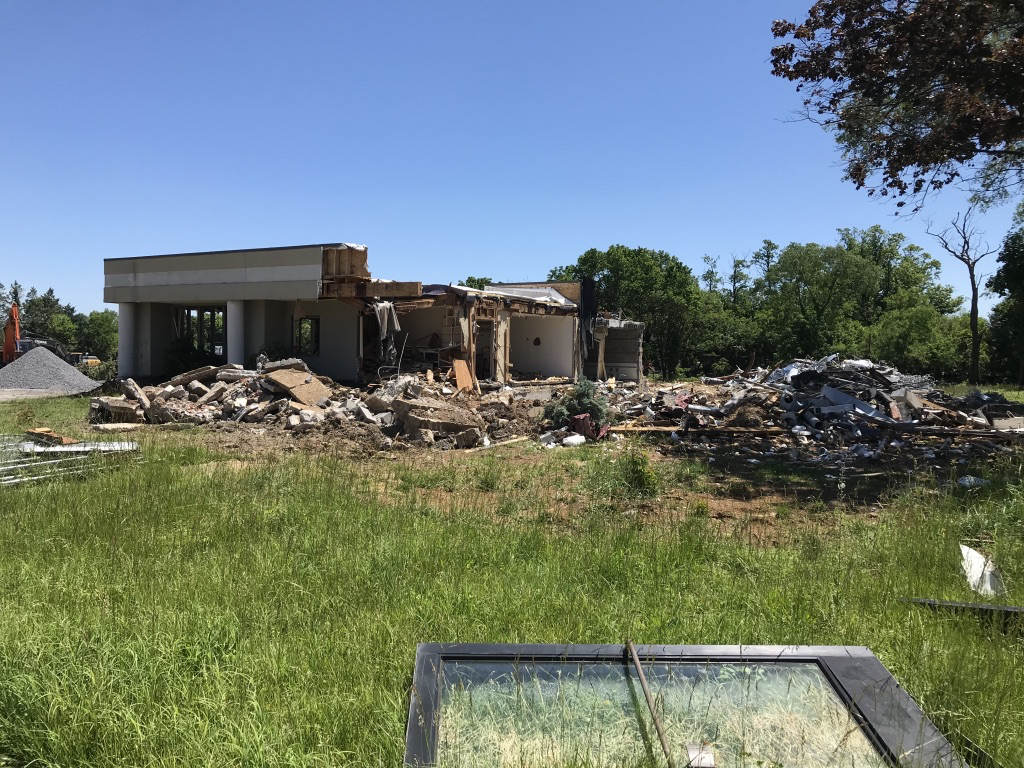
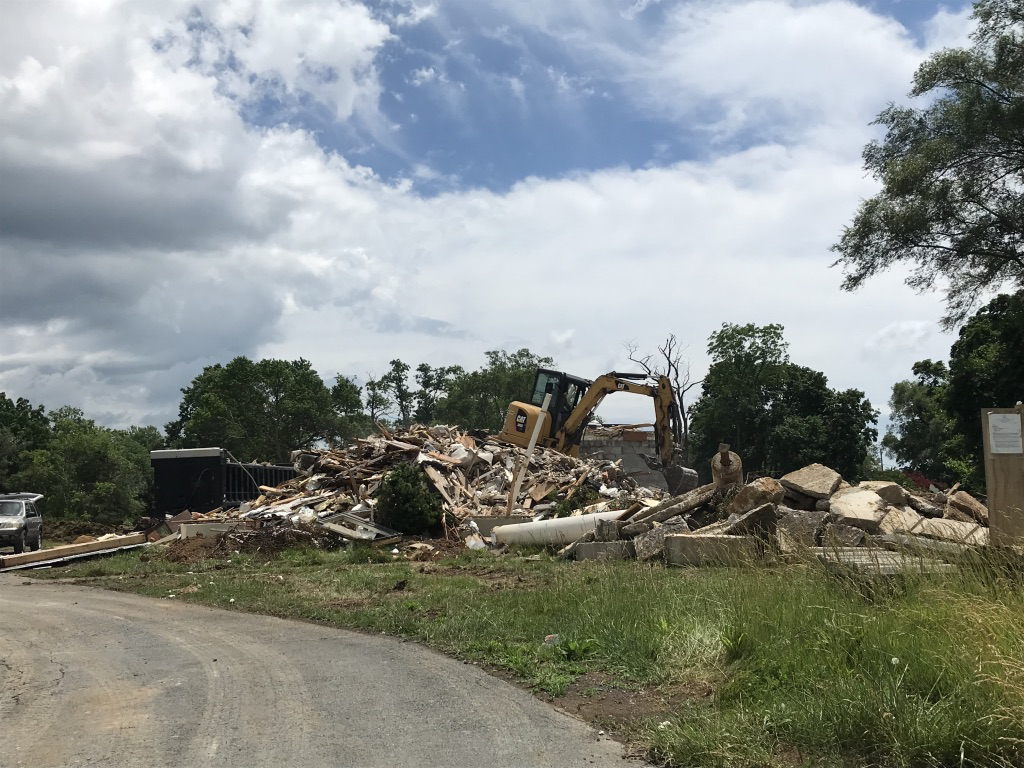
The demolition of the building WINC AM/FM had broadcast from for over its 75-year existence?
Every day, communities across America are finding a once local radio station vanishing, sometimes they’re replaced by syndicated programming with little local service, other times the city of license is changed and the local radio service is moved to a larger population center and sometimes, the signals just go off-the-air.
Generations who grew up and lived in Winchester, Virginia depended on radio stations WINC AM/FM as they were a part of the fabric of the community. More importantly, the local radio personalities that were heard over Wink Radio for decades, were very much a part of these families lives.
And now, it’s gone.
In a wink.
*Paperwork filed with the FCC to change WZFC’s call sign back to WINC, was done on February 25, 2023.
While the National Association of Broadcasters (NAB) is still pursuing its goal of getting Congress to pass the “AM Radio in Every Vehicle Act*,” the number of AM radio stations on-the-air continues to shrink.
How Many Radio Stations Are There?
Inside Radio published the latest FCC radio station count and the number of AM radio stations on-the-air continues to shrink.
In 1968, I passed my 3rd Class Radiotelephone FCC License, Broadcast endorsed, it was also the year that the Federal Communications Commission (FCC) began publishing its Broadcast Station Totals reports.
At that time the FCC said that 4,236 AM radio stations and 2,306 FM radio stations were on the air.
In December 1990, the next report the FCC published became available showing 4,987 AM radio stations and 5,832 full power FM radio stations were now on the air; plus, another 1,866 FM translator/boosters.
It’s worthy to note that the general public cannot tell the difference between a:
Full power FM
FM booster
FM translator signal
as to the FM listener they all are received on a standard AM/FM receiver. Only broadcasters, broadcast engineers and the FCC are concerned about such distinctions.
So, in just the first two decades of my radio career, FM signals outnumbered AM signals by 2,711.
Telecommunications Act of 1996
On February 8, 1996, President William Jefferson Clinton signed into law what is commonly referred to as “The Telcom Act of 96.” The intent of the legislation was to allow more companies to operate in the communications space, but what actually happened was a flurry of mergers and acquisitions as corporate media giants bought out small, local broadcasters.
The FCC reported that as of February 29, 1996 there were:
4,906 AM stations
7,151 FM stations
2,527 FM translators/boosters on-the-air
almost two FM signals beating the airwaves to every AM signal.
A year after the Telcom Act of 96, the number of AM signals began its decline to:
4,840 (a loss of 66 AM signals in one year)
full power FM signals increased to 7,295 (up 144 FM signals)
FM translator/booster signals grew to 2,744 (up 217 FM signals)
While AM radio signals were signing off, FM radio signals were growing by an additional 361.
Ten Years After Passage of the Telcom Act of 96
On March 31, 2006, ten years after the Telcom Act became law, and the consolidation of the radio industry began, the FCC Broadcast Station Totals report listed:
4,759 AM signals
8,989 full power FM signals
4,049 FM translator/booster signals
and now something new began appearing, Low Power FM signals (LPFM) which numbered 712, meaning the radio listening consumer could now access 13,750 FM signals versus 4,759 AM signals.
Wall Street investors were clearly showing more interest in FM signals than AM signals as their money poured into the radio industry.
Twenty Years After Passage of the Telcom Act of 96
Twenty years after President Clinton signed the Telcom Act and consolidation continued squeezing out the mom and pop broadcasters, the FCC Broadcast Station Totals report listed:
4,680 AM signals (down 307 signals from the day I began my broadcast career)
10,811 full power FM signals
6,582 FM translator/booster signals
1,516 LPFM signals
AM signals totaled 4,680 and FM signals totaled 18,908.
Radio Broadcast Signals 2024
Which brings us to the present day report, March 31, 2024. The FCC Broadcast Station Totals report now lists:
4,427 AM signals
10,983 full power FM signals
8,913 FM translator/booster signals
1,960 LPFM signals
Remember, the radio listening public DOES NOT distinguish between the different classifications of FM signals, as they all appear on the same FM radio receiver they are using.
To the radio listener, they have
4,427 AM signals compared to 21,856 FM signals
they can access. Almost 5 times as many FM signals as AM signals, and each year we witness those AM signals either reducing their power or just signing off-the-air and turning in their FCC broadcast license.
Radio Dominates in Vehicles
The latest research from Quu ( www.quureport.com ) shows that in 2023 model vehicles:
100% of them have an FM radio
98% of them have an AM radio
98% of them have Android Audio
98% of them have Apple CarPlay
92% have SiriusXM
70% have HD Radio
What surprised me about this research report, was that this was the first time I’ve ever seen separate AM and FM numbers listed. All reporting about radio usage should list AM and FM listening separately. I feel it is disingenuous to give the false impression that AM and FM broadcast signals contribute equally when that’s clearly NOT the case.
Having access to an audio service does not equate to usage.
Fred Jacobs in his TechSurvey 2023 for example, revealed how HD Radio was only listened to by 16% and SiriusXM was only listened to by 28%, which shows that despite their high availability numbers in vehicle dashboards, usage is still low. Unfortunately, AM/FM is never broken apart, but listed together so can they can garner 86% of the listening.
I’m thinking that both HD radio and SiriusXM usage might eclipse AM radio listening, if we were allowed to see AM and FM usage shown separately.
Vehicles On The Road in America Today
According to S&P Global Mobility, there are 284 million vehicles on our roadways and the average age of them continues to rise to a new record of 12.5 years. About 23% of all passenger cars now are 20 years or older with the bulk of them made between 2015 and 2019.
By 2050, when electric vehicles are projected to make up 60% of new sales, the majority of vehicles on America’s highways will still be powered by gasoline, because most vehicles today last twenty years meaning AM radio will still be in most cars, but the bigger question is how many AM radio stations will still be on-the-air.
Radio Needs To Look Forward
In ten to twenty years, AM radio will be at best a niche way to listen to audio.
Where the radio industry and the National Association of Broadcasters should be focusing their time is keeping FM radio viable, in all vehicles and FREE!
Sadly, the FM band is becoming overcrowded with signals and this, I believe, needs to be seriously addressed.
Finally, I would like to believe, as does Scott Shannon, that radio can still succeed in the 21st Century if it will just be “authentic, local, magical, and deliver an audio product with passion.” Or as radio programming consultant and author Valerie Geller puts it:
Great radio is interesting people communicating with listeners
by telling the truth, making it matter and never being boring.
While radio advertising is still being heard by radio listeners, the relevancy of those ads to listeners is low. In contrast, the audio ads heard by podcast listeners were deemed highly meaningful.*
The Radio Ad Disconnect
Once upon a time, radio stations employed gatekeepers. (Gatekeeping – “the process of controlling information as it moves through a gate.)
Let me give you a personal example of what I’m talking about. In the 80s, I was managing WFPG-FM in Atlantic City, New Jersey. WFPG-FM programmed a Bonneville Beautiful Music format and was the market leader in the Atlantic City-Cape May, New Jersey Metro. Walter Powers, Vice President of Operations at Bonneville Broadcasting System, was our music gatekeeper. But just as important as making sure that the music was well targeted, WFPG-FM’s program director was the gatekeeper of every other element of content that would be heard on the radio station. Every advertisement was reviewed to insure it was appropriate and relevant to our audience. We employed these same standards when it came to our promotions and air personalities too.
Paul Harvey
Paul Harvey News and Commentary on the ABC Radio Network was an advertising powerhouse. Paul considered himself to be a salesman first and a broadcaster second. Harvey wrote and voiced the radio copy for the products and services he told his listeners about and it was well-known he would not advertise a product or service he did not personally use.
Today, we see this happening with podcasters who likewise voice the ad copy for the company that sponsors their podcast. I believe this is why podcast ads resonate with podcast listeners versus radio advertising.
Howard Stern
When Howard Stern was the afternoon air personality on 66-WNBC in New York City, he often read live copy for his local advertisers.
On one of my trips to New York City to meet with advertisers, I stopped into the broadcast facilities of WNBC and met with their local sales manager. I will never forget asking her this question: “What are fewest number of commercials you will sell an advertiser?” She answered: “one, if it’s on Howard Stern’s show.” One, I asked? Is that effective? She told me that Howard Stern was such a good communicator and had such a loyal audience, that if he promoted a product or business, even just once, they always got results. But then again, Howard had the authority to accept or reject any advertiser.
Both Paul Harvey and Howard Stern were gatekeepers for their radio programs.
Randy Kabrich
This past week, we learned of the passing of one of radio’s great CHR/Top40 programmers, Randy Kabrich.
In reading an article about his life, I couldn’t help but notice that the twice named Billboard magazine CHR/Top40 radio programmer of the year was a serious gatekeeper.
When Kabrich was Program Director at WROQ-AM/FM in Charlotte, North Carolina, the station management planned to accept an advertising buy from Planned Parenthood. Randy felt the ads were “too volatile and blatant” to appear on a “family” radio station. Inside Radio reported that Kabrich said “I’ve been trying to make WROQ a fun, family radio station – an escape from reality, from the conflicts in life – and I felt these spots were inappropriate for the station’s audience.” This resulted in Randy resigning.
Anything For a Buck
There was a time when radio operators employed gatekeepers that weren’t afraid to say “NO” to an advertiser and his money when their product, service or simply the way they wanted to deliver their message was not in concert to the goals of the radio station.
Those were the days when radio operators understood that EVERYTHING
that came out of the listener’s radio speaker mattered. Spoiler Alert:
My wife, Sue, is the editor for this blog. She is the person responsible for why what I write is actually readable, challenging things that are not clear for all readers and insuring that I don’t use jargon that might obscure what I’m trying to share.
Every year at Easter, I ask my wife to write an article about this sacred season for all Christians.
Here now is this year’s Easter message.
-0-
As a Child, holidays always start with important firsts that go with them throughout their life, colors, smells, impressions, people, animals and music, the lists might, could, and should go on throughout our life span.
For me there were 4, Halloween, Birthdays, Christmas, Easter, and always in that order.
Halloween was candy, traveling the same neighborhood, the same ghost costume and the same container to collect the candy, always having to wear my winter clothes under that sheet, year after year, after year, and of course the sounds of squealing children echoing from the tallest trees with the smells of fall embracing your core.
Christmas wore the colors, red and green, the smell of evergreen, and cinnamon, family members everywhere, favorite gifts, of course the let down of having to wait another year once it was over, and “Here Comes Santa Claus, ringing in your ears continually.”
Birthdays were the excitement of a day “just for me to be celebrated,” a favorite birthday cake, gifts, parties and also knowing that Christmas was going to be just a few short weeks away.
Then there was, Easter, a new dress, new shoes, a bonnet that tied under my chin, a carnation corsage, a basket of goodies with a small stuffed animal, Church, and the smells of a fresh, new season- spring, trees and flowers blooming, (as well as the horrible smell of vinegar, the main ingredient to dying hard boiled eggs.)
As I grew these impressions stayed in the back of my mind, but new ones developed, Marriages happened, children and grandchildren arrived, new expensive costumes were made, as well as candy that had never been seen or tasted before, then traveling by car from neighborhood to neighborhood, experiencing the different sounds, screaming and frightening emotions.
Birthdays turned from just me, to everyone else and cake went from a great treat to extra pounds.
Growing Christmas traditions, large expensive fad gifts, and quite interesting yuletide songs.
Easter still has all it’s pomp and bunnies, but in my adult life, I find the stories and narratives gathered in this once a year celebration, helps me to immerse myself, spanning the rest of the year in joyous prayer, encouraging me to find my daily solace, as well as settling into His daily word.
But, it’s also the music, the calming words, in beautiful hymns that have given me a legion of reasons to build new impressions for adult growth and year long gratitude with a deeper understanding of:
Why We Were Put Here.
Hymns such as “The Strife is Over, the Battle Won,” “Christ the Lord has Risen Today; Alleluia, “Thine is the Glory,” and Handel’s Messiah,
For Christians, Easter commemorates the resurrection of Jesus Christ, and stands as the bedrock of Christian belief, embodying the promise of redemption, eternal life and the triumph of light over darkness.
“Let us all sing and shout with the armies of Heaven, Hosannah to God and the Lamb! Let glory to them in the highest be given, Henceforth and forever; Amen and Amen.”
We all have beautiful memories, impressions and blessings, you don’t need to count them, just live them. He will keep you safe and warm as the blessings keep coming for you to celebrate His world.
He is Light, He is Celebration, He is definitely LOVE,
In 1984, when I was hired as a general manager in Atlantic City, New Jersey, Pierre Bouvard was my first sales representative from the Arbitron Company. I’ve known Pierre for forty years and have great respect for him. But his latest research presentation “Nielsen: AM/FM Radio Expands Its Ratings Lead Over TV And Smashing AM/FM Radio’s Drive Time Myth” https://www.westwoodone.com/blog/2024/03/04/nielsen-am-fm-radio-expands-its-ratings-lead-over-tv-and-smashing-am-fm-radios-drive-time-myth/ does something that really troubles me. It combines AM listening with FM listening, as if they contributed equally to radio’s total listening pie. They don’t.
I first wrote about this uneasiness in an article six years ago titled “AM/FM or just FM?” I felt it was worth re-sharing what I wrote as this blog has now broken through the 300,000 views level. I think you will find what I wrote is even more pertinent in the 21st Century.
AM/FM or just FM?
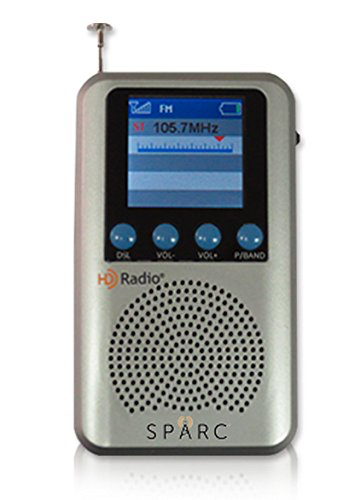
SPARC HD RADIO with FM, but no AM
There’s something that’s been troubling me for some time. It’s the radio industry’s habit of reporting radio listening results by calling it “AM/FM” versus what it really is, virtually all FM radio listening.
When I read the ratings reports from both PPM and diary markets, I see an FM world.
Don’t get me wrong, I grew up on AM radio and recognize that almost every market has a heritage AM radio station that still garners a big audience. I’m not blind to the wonderful ratings of 1010 WINS in New York City for example.
But there are only 26 all-news terrestrial radio stations left in America according to Nieman. This popular format is missing from the majority of America’s radio markets.
WTOP
WTOP was built on AM radio. It moved its entire operation over to the FM band and grew its audience, revenues and lowered its listener demographic. People who never heard this radio station on its AM dial position were suddenly newly minted fans of their all news format.
The FCC Saves AM Radio
The FCC’s mission to save AM radio is to give these radio stations an FM dial position using a translator. What are we really saving? The AM band or a particular format that a radio operator created on the AM band and now, to survive, needs to move it, like WTOP, to the FM side of the dial.
WIP
From my blogging, I get lots of feedback about a variety of things concerning broadcasting. One reader wrote to me about his father, a sports fan, who turned on WIP-FM to hear the latest chatter. WIP-FM was broadcasting a game of no interest to his father, so his son said to him, why don’t you turn on WIP AM610. Sadly, this person wrote the audio was unlistenable. He wrote: “You’d think the FCC would mandate that AM have standards for audio quality in receivers.”
WSM
When I was living in Bowling Green, Kentucky, I couldn’t receive 650AM WSM in my office, even though my office looked south and my antenna was able to enjoy a full wall of windows. The noise floor both inside my university office as well as around town while driving in my car made the station unlistenable. WSM was once listened to all the way to Louisville in northern Kentucky. Instead, I downloaded WSM’s app and could enjoy the radio station in crystal clear stereo. (I see WSM has stopped subscribing to Nashville Nielsen Audio ratings.)
BBC
The British Broadcasting Corporation (BBC) did a review of the range of services it offered on the AM band (called medium wave across the pond) and it included a financial review of all its services too. They concluded the ROI (return on investment) in AM was not there and announced they would be turning off some 13-AM radio stations in January 2018 according to Radio Business Reports.
WHVO
There’s a great radio operator in Cadiz, Kentucky by the name of Beth Mann. WHVO is her AM radio station at 1480, but if you go on her website, you won’t find any mention of this station being on the AM radio dial. It’s promoted as WHVO 96.5 & 100.9 FM. ( http://www.whvoradio.com/ )
Bottom Line
It’s time to face the fact that AM radio needs to be re-deployed for a new service. Current radio station owners should be given a viable FM dial position that replaces their AM service area, and doesn’t require multiple translators to attempt to accomplish this task. (Note: WHVO needs two translators to deliver the signal of its AM 1480.)
It’s time to allow those same dedicated radio broadcasters to sell off their expensive AM tower sites and turn off their AM stations that consume electrical power with no real ROI.
Ecclesiastes 3
“To everything there is a season, and a time to every purpose under heaven…”
AM radio’s time has come and gone as the mass communication delivery system it was from the 1920s to the 1970s, much as radio replaced vaudeville.
To put things in perspective, at a time in America’s radio history when the number of FM signals equaled the number of AM signals on the air, 75% of all radio listening was to FM. So, you can only imagine what it’s like today for AM radio listening.
That’s why I believe we do no service in promoting radio as “AM/FM” and not being honest about where virtually all of the radio listening is really taking place.
How important is it to have AM radio in cars if the majority of the people don’t listen to any AM radio stations?
I loved AM radio and my five decades plus career started on AM radio back in the 60s, but if I’m being honest, I can’t remember the last time I listened to any AM radio station, even though both of my older cars have decent AM radios in them – and I’m a “radio guy.”
Can we get real about AM radio’s problems? Mandating AM radio in all vehicles won’t cause more people to listen this radio service.
650AM – WSM
When I worked at Western Kentucky University in Bowling Green, Kentucky, the only way I could listen to 650AM – WSM broadcasting from Nashville, Tennessee was via their stream. My office had a huge picture window that looked south towards the WSM tower site, but the interference from the fluorescent lights and the steel structure of the building made AM reception impossible.
Inviting radio professionals into my Capstone Class to talk about radio, one of those professionals was the program director of WSM who told my students that more people listened to his radio station via the WSM App & stream, than did via their AM 50,000-watt FCC licensed clear channel frequency on the AM radio dial in Nashville.
Monthly Radio Ratings
Every month, when the radio trades publish radio ratings, you’re lucky to find a single AM radio station listed; in market after market. Often you find no AM radio stations listed at all, and on rare occasions you might find two.
If you go deep into the weeds, you might find an all religious station or foreign language AM radio station with a small listener base.
WIIN – AM1450
Back in the early 80s, WIIN-AM1450 in Atlantic City had a news/talk format with a local news team, sports director and even a plane in the sky doing traffic reports during the busy summer tourist season. Its sister FM radio station was 50,000-watt WFPG that featured a beautiful music format. WFPG was rated #1 by Arbitron and WIIN never showed up in the ratings.
WFPG, on the FM band, was fully automated and made all the money. WIIN-AM was fully staffed and lost a great deal of money. The owners of WIIN once said it would be more cost effective to mail the station’s few listeners a news sheet than broadcast the news to them.
AM Radio or AM Programming
Every radio format, once only associated with AM radio – like news or sports programming –today can now be heard on an FM signal.
18-years ago WTOP-AM 1500 moved its excellent news format to FM and yet, do you recall anyone being up in arms that Washington, DC area residents had just been “unserved” with important news and information, because this format moved from the AM band to FM? Quite the opposite, many FM only listeners discovered WTOP for the very first time and became avid listeners.
Revenue wise, WTOP-FM has been the nation’s top billing radio station and has won all the major radio awards year after year. In fact, our nation’s capital is dominated by FM signals. The first AM radio station doesn’t show up until you get to #24 and it only managed a 0.4 audience rating – it also is connected to an FM translator where I’m guessing, the audience is listening.
The reason AM radio formats have moved to the FM radio band is that most people today only listen to FM radio.
I rob banks, because that’s where the money is.
-Willie Sutton, bank robber
Corollary:
We broadcast emergency information on FM, because that’s where the listeners are.
-Dick Taylor
The AM Exceptions
The Big One, 700AM-WLW in Cincinnati is just one of the notable exceptions to the problem with AM radio listening. It operates on what the FRC (Federal Radio Commission, which predated the FCC or Federal Communications Commission) called a clear channel frequency. It was in November 1928, under provisions of the FRC’s General Order 40, that 700kHz was one of 40 frequencies designated as “clear channels”, allowing WLW to operate exclusively on this frequency in both the United States and Canada.
Then in early 1933, WLW would begin building the largest broadcasting transmitter in the world with 500,000-watts of AM broadcast power, at a cost in today’s dollars of $11.3 million. It would sign-on its new half-million watt transmitter on May 2, 1934 with President Franklin D. Roosevelt pressing a golden telegraph key to ceremonially launch the new signal. WLW truly became “The Nation’s Station.”
Saving AM Radio
It seems to me that if AM radio is deemed such a critical service for the nation in times of emergency, maybe it’s time to re-think the entire AM radio band and once again establish a network of high powered AM radio stations that cover the entire continental United States, and are manned 24-hours a day, 7-days a week, providing all Americans with this type of radio service. There could even be a special circuit in all radios that would automatically switch the radio to these emergency channels when warranted; much as cellphones so effectively alert their owners of an impending emergency situation.
Likewise, current local AM stations should be allowed to sunset their AM signals and continue serving their communities via their FM signals (translators), just as they are currently doing, often with much better coverage than their original AM license permits.
Saving AM Radio via FM Translators
Giving AM radio stations an FM translator signal in order to save its AM signal – would be like trying to save Ford by giving everyone a Chevy. It was a ludicrous of an idea that the FCC never fully thought out before implementing.
The FCC was also derelict in its duties by not protecting the AM band from all kinds of noise interference, for example the kind generated by the electronic ballast in fluorescent lighting and by not standardizing AM stereo along with not setting audio quality standards for AM broadcasting.
The “AM Radio in Every Vehicle Act” currently before Congress says nothing about mandating a certain quality standard for AM radio in vehicles, leaving open the possibility that vehicle manufacturers will install the cheapest and lowest quality AM receivers, if such a law is passed?
Longtime agricultural broadcaster, Max Armstrong, loves AM radio, but admits that broadcasters are part of the blame for AM radio’s decline. Some examples are:
Sold the land that was needed for strong AM signals, and reduced power
Changed the format of their AM station, once they obtained an FM translator
Re-allocated resources for areas other than for AM broadcasting
Poorly maintained their AM transmitting facilities, in favor of their FM
“When the epitaph is written for AM radio, I think it will be
that AM radio killed itself. I think broadcasters have
Twenty-four years ago, in October 2000, a new relationship website launched called “Hot or Not.” The premise of the site was for people to submit photos of themselves (or others) to have users of the site rate them on a scale of 1 to 10 on their attractiveness.
Within a month of launching, the site reached around two million page views per day.
Mark Zuckerberg’s original idea was to do something similar with a site he created called FashMash, which became TheFacebook.com in 2004 (now just Facebook.com). Likewise, the founders of YouTube said they originally set out to create a video version of “hot or not” before developing a more inclusive site.
HOT or NOT
It was based on this site that Fred Jacobs presented, the things he did and saw at this year’s Consumer Electronics Show in Las Vegas, aka CES 2024, as being “Hot or Not.”
During the webinar, I asked the smarmy question “Is AM Radio HOT?” in the chat box. (No, I didn’t get an answer.)
However, the bigger question really is, “Is RADIO Hot or Not?”
The answer from everything I’m reading is “Not,” at least in the way things are going.
When it came to radio audience ratings, I never concerned myself with individual ratings, but preferred to study audience trends. Here’s the latest trend lines for both broadcast radio and digital streaming:
Not A Viable Business Anymore
In Canada this month, the chief legal and regulatory officer of Bell Media grabbed the headlines worldwide, when he explained the reason Bell was selling off 45 of its radio broadcast properties, was they were “not a viable business anymore.”
“One man’s trash is another man’s radio stations.”
-Fred Jacobs
So, what do you think the buyers of these radio stations must have thought, after the seller tells the world they think the radio stations they just sold are not a viable business?
Harker Bos Group https://harkerbos.com/ released new research on the state of media today and here are some of the key takeaways.
What are radio listeners looking to hear?
54% highlight the importance of local coverage
67% sound quality
54% station availability
53% ease of use
When the researchers compared broadcast radio to digital streaming of music, they found that usage of broadcast by younger audiences was losing out to streaming services. Those that are frequent users of streaming music tend to access it via smartphones, computers, smart speakers and tablets preferring on-demand music services with personalized playlists and recommendations. Streaming also provides users global access that is not bound by geographical limitations.
Is The Media Prepared For An Extinction-Level Event?
That headline in the New Yorker caught my attention! The author, Claire Malone, cites “ads are scarce, search and social traffic is dying, and readers are burned out, [which means] the future will require fundamentally rethinking the press’s relationship to its audience.”
The way to become a millionaire in radio,
is to start with a billion dollars.
That’s not something new, that witticism has been around since the end of the 20th Century. I was reminded of it when Claire shared the words of a late-career writer’s advice to the newbies: “You want to make it in journalism, marry rich.”
Last year, 2,681 people were laid off in broadcast, print and digital news media.
In February of this year, after the record-setting viewership to the CBS broadcast of Super Bowl 58, that very network announced it would be cutting 800 jobs.
Significant job cuts have taken place at:
NBC News
Vox Media
Vice News
Business Insider
Spotify
theSkimm
FiveThirtyEight
The Athletic
The New Yorker
Sports Illustrated
And some other media outlets closed down:
BuzzFeed
Gawker
Pitchfork
The Messenger (this endeavor lasted less than a year)
“Publishers, brace yourselves – it’s going to be a wild ride.
I see a potential extinction-level event in the future.”
-Matthew Goldstein, media consultant
I share these stories with you, not to depress you, but for you to better understand what’s going on, and that it’s not just a radio problem, but a media problem.
As Netflix, Amazon Prime Video and others add advertising to formerly ad-free streaming channels, where will those ad dollars come from; radio, TV, cable, newspapers, magazines? The advertising dollar pie is not infinite; to grow your piece of the pie, means eating someone else’s.
“It’s time for a new revolution.”
-Mark Thompson, CNN’s new CEO/Editor-in-Chief
Sadly, many media folks working in the industry today, have only been part of the culture of decline – where cutting expenses has been the only plan to achieve future success.
What’s always been true, is it takes money to make money.
Netflix, for example, invests a billion dollars in research and development – mostly on data scientists, engineers, and designers who help Netflix subscribers discover content that they will love.
How’s that working out for Netflix? Here’s the latest data:
In 2024, media companies will find media users making decisions on which services they really want – and can afford – to continue subscribing to.
For radio operators, who operate a subscription-free service, the challenge will be:
to understand what your listening area’s population wants, needs and desires, and
to deliver for your underwriters or advertisers the best R.O.I. (Return On Investment)
I just finished reading the public radio research report “An Audience Growth Strategy for Public Media” prepared by Jacobs Media and Mark Ramsey Media for Maine Public radio service. What really stood out to me was how clearly this report shows where the future is for all traditional linear media.
Linear Is In The Rear-view Mirror
Broadcast radio and television – traditional media – was built on a linear program schedule, delivering to the media consumer, information and entertainment on a schedule determined by the broadcaster. The VCR (video cassette recorder) developed in 1956 became widely available in the late 70s and by the early 2000s was in virtually every American household, giving television consumers the ability to now watch shows on their schedule, not the program provider’s.
“It is painfully obvious neither broadcast radio nor television is growing, especially as it concerns traditional (terrestrial) usage and linear program schedules,” writes Jacobs/Ramsey.
Today’s Media Consumer
America continues to become more diversified: 72% of Baby Boomers are white but only about half of Millennials are white and four-in-ten of Gen Zs are white.
Millennials were born between 1981 and 1994, so VCRs have always been a part of their life and Gen Zs were born 1995 and 2009, which means also having an iPod type device has always been part of their life. Both of these devices contributed to the habit of having what you want, ON-DEMAND.
In 2007, the iPhone introduced us to a media device that made ON-DEMAND media consumption ubiquitous.
Listening Options
Today’s non-radio listeners have a plethora of media options:
Spotify
Pandora
Apple Music
Amazon Music
Radio Tunes
SiriusXM
Podcasts
Audio Books
YouTube
Social Media
…just to name a few.
Jacob/Ramsey says “Linear program schedules common to over-the-air [broadcast] stations are not in alignment with new media consumption habits.” Today’s consumer is in control, not the media provider.
ON-DEMAND Digital
In today’s world, the future is “Go Digital, or Go Home.”
Today’s traditional broadcasters (Radio & TV), must take advantage of digital’s ability to serve their audiences with what they want, when they want it and on the media platform they want it on. The same attention given to over-the-air broadcasts will need to be given to all the other ways of content distribution; as each is of equal importance to the media consumer.
“Broadcast radio and television will remain the core business for years to come, but a focus on traditional media can no longer be considered a growth strategy,” writes Jacobs/Ramsey.
Peacock & Netflix
NBC’s Peacock streaming service paid $100 million dollars to exclusively stream the wild-card playoff game between the Kansas City Chiefs and the Miami Dolphins, setting a record for the most-streamed live event in American history. Comcast Chairman & CEO Brian Roberts considered the streaming gamble a success and a very proud moment for the company, but for consumers it will mean having to pay for playoff games in the future.
This week Netflix announced it had struck a 10-year deal with WWE to air “Monday Night Raw” on its streaming service. This program has been on linear television since 1993; 31-years ago.
Peak Listening On Audio Platforms
This pat week, when Edison Research published their article on which media platform commands the most listening in different dayparts, it was eye-opening.
The only daypart that broadcast radio commands is morning drive (6-10am), which just happens to be the one daypart the broadcast radio industry still invests in live air personalities. For the rest of the dayparts, consumers utilize streaming audio or previously downloaded content to their media device.
My favorite time to listen to radio growing up was 7pm to midnight. Some of the best known and loved air personalities broadcast during this daypart; Big Ron O’Brien, John Records Landecker, Wolfman Jack, Cousin Brucie among others. However, today the research shows that YouTube is what people listen to at this time of day.
Just before the end of last year, SiriusXM announced the debut of its new streaming App. It offers “discoverability and personalization at the forefront, [so] listeners can quickly and easily find and dive into the content they love across SiriusXM’s 400+ channels and tens of thousands of hours [with] on-demand content and podcasts, [allowing] fans to go deeper into their passions and get closer to their favorite music, artists, personalities and sports; [providing] a seamless listening experience across streaming devices that reflects listener preferences and interests, [ensuring] subscribers never miss a moment wherever they are and whenever they want to listen.”
Don’t you wish the NAB (National Association of Broadcasters)
was working on something like this, instead of focusing on linear AM radio?*
When commercial radio was born in the 1920s, radio’s WHYwas thought to be a technology that could provide nationwide communications that would be a unifier for cultural and social systems. Radio’s regulatory guiding principle was to “operate in the public interest, convenience and/or necessity.”
When people were still trying to wrap their minds around what exactly radio would be, there was one common reoccurring theme about what radio broadcasting could do, and that was to unify a nation and create an American identity.
It could accomplish this in several areas:
Physical Unity: the ability to unite America from coast-to-coast, border to border, with instantaneous wireless communication.
Cultural Unity: through entertainment, news and the spoken word (English); radio could create a kind of national homogeneity.
Institutional Unity: corporations and the federal government would come together on a mandate that this new powerful form of communications needed centralized control.
Economic Unity: through advertising, radio could now offer national, regional and local opportunities for businesses to expose their products and services and grow our nation’s economy.
Radio vs. The Internet & Artificial Intelligence
Just about every business has found its original business model challenged by a population connected to the internet. Think about the original radio WHY areas and you can easily see how each of them has been overtaken, embellished – and depending on your point of view – improved upon by the world wide web and artificial intelligence.
The internet, it turns out, is a better innovation for addressing those original foundational tenets of radio’s purpose than radio itself. So now what?
Radio needs to re-think its “WHY;” its reason for existing. Then it needs to communicate it, clearly and simply or suffer the consequences. Bud Walters of The Cromwell Group loves to say, “If you don’t know where you’re going, any road will take you there.” Until the radio industry figures this out, getting new people to listen (or former listeners to return) will be a challenge.
People don’t buy what you do, they buy why you do it.
-Simon Sinek
Two Questions
To help you get started on defining radio’s WHY for the 21st Century, I’d like to share two questions that GOODRATINGS Strategic Services consultant Tommy Kramer asked his clients:
What do you have that I can’t get everywhere else?
What do you have that I can’t get ANYWHERE else?
Tommy says that coming up with the answers to these two questions will decide your future.
I would add that working through these two questions might just uncover your new WHYfor your radio station(s) in the 21st Century.