

 On this last Sunday of 2018, it’s a good time to look back at the year that just past and share with you the Top 5 Most Read and shared blog articles from 2018. Maybe you missed them or perhaps you’d like to read them again.
To date I’ve published 233 articles that have been viewed around the world over 158,000 times. 2018 was the year that my blog visitors crossed the 100,000-milestone.
Most Read Article of 2018
My most read/shared article of this past year was “Corporate FM” published on March 11, 2018. It told the story of Kansas City Filmmaker Kevin McKinney’s movie “Corporate FM” released in 2012. In 2015, the film was re-edited, updated and released on Amazon Prime for viewing nationwide. A link to the film is contained in the article. “Corporate FM” received the most comments of any article I published this year and was widely shared. To read it, click HERE.
Second Most Read Article of 2018
In August, I wrote an article asking the question if the radio industry does itself a disservice in referring to all radio studies as being AM/FM radio, when virtually all of the radio listening today is to only FM radio. I’m sure this article will continue to stimulate reader comments. You can read “AM/FM or just FM” HERE.
Third Most Read Article of 2018
My third most read article received lots of sharing and was republished in several publications. It pondered if “Automation Killed the Radio Star”. When I was growing up, radio built an audience on the personalities who presented the music. Having the right line-up of personalities was key to winning the most listeners in a market. Join the discussion by adding your own thoughts after you’ve read the article HERE.
Fourth Most Read Article of 2018
Radio in America reaches 93% of adults on a weekly basis according to Nielsen Audio. So, the article on “Why Do People Love Radio?” came in as my fourth most popular for the year. The primary takeaway for the radio industry was to focus on what is not going to change in the next 10-years. The “secret sauce” that has led Amazon to dominate retailing. Read the whole article by clicking HERE.
Fifth Most Read Article of 2018
And finally, the fifth most read blog article I wrote and was widely shared was “Radio’s Money Problem.” Between now and 2029, one Baby Boomer will turn 65 every eight seconds. People aged 50 or older have 47-times more net wealth than households headed by a person under the age of 35. The discretionary dollars are with the Baby Boomers and the Greatest Generation, the very people who were raised on radio. There’s money to be made for savvy radio operators. Read more HERE.
Most Read Articles, Period
Two articles I’ve written continue to see lots of traffic and continue to be far and away the two most read on my blog.
They are “SiriusXM Radio is Now FREE” and “The Day the “Dumbest Idea” Invaded the Radio Industry”.
Both articles have now been viewed over 17,000-times.
The first article I wrote for my blog was “Clear Channel Media & Entertainment becomes iHeartMedia” and it has now been viewed a total of 8-times.
Why I Blog
I blog for broadcasters, educators and students.
I blog to provide media mentorship and to pay-it-forward to the broadcasting industry that I have been a part of for over 50-years.
I’m grateful for the more than 119,230 people from all over the world who have visited to read an article that caught their interest.
FREE SUBSCRIPTIONS
You can subscribe to this blog for FREE and get a copy of each week’s article delivered to your email IN BOX every Sunday morning. To subscribe, simply go to the bottom right-hand corner on your screen and click on the FOLLOW button. (If you’re accessing this blog via mobile phone or tablet, that button may not be visible, so be sure to do this on a computer or laptop.)
Thank You for reading, next week I will begin my fifth year of blogging with all new articles.
Together we can all learn from one another by sharing our experiences, knowledge and wisdom. Feel free to contribute your thoughts to the discussion in the comments section, I read every one of them.
Happy New Year!

 We can all be sitting in the same place and listening to the same thing, yet hear something different. The reason often is our level of attention to what’s being presented and our ability to focus or be distracted.
 It was the radio commercial that planted Motel 6’s “We’ll keep the light on for you,” in your brain. The frequency and repetition of that phrase, along with a well-crafted and ever changing script always kept you wondering what
  Sadly, it’s that time of the year when radio station budgets are being finalized and staffs are being cut before the start of a new year.
 It’s the Sunday after Thanksgiving and you’ve probably had too much to eat. It won’t be much longer before it’s time to make New Year’s resolutions and many will again make losing some of those extra holiday pounds their goal in 2019.
 On this Sunday before Thanksgiving, I’d like to take a time-out from my normal blogging topics and reflect on all of the things in my life I have to be grateful for. Hopefully, it will bring to mind similar thoughts about your life this past year and those things you have to be grateful for too.
 There are lots of items in the news these days about what the radio industry should be doing. Streaming, podcasting, smart speaker accessible etc. The one thing I hear little talk about is, improving the core product and focusing on what the listener is seeking.
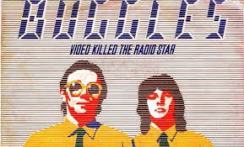 Remember when the rock group, The Buggles, introduced a new cable TV channel, MTV (Music Television) with the song “
 Radio used to really promote its greatest asset, its radio talent. WHDH in Boston promoted itself as having “New England’s Finest Radio Entertainment 24 Hours Every Day!” The “Big 5 on 85” print ad featured Jess Cain, Fred B. Cole, Hank Forbes, Bob Clayton and Norm Nathan, as their air staff, and never mentions what kind of music they play, or news they featured or anything else the radio station did. WHDH was not alone in doing this. Every radio station promoted its talent line-up. Radio air talent WAS the reason people listened.
 For the radio listener, your next break is all that matters. Does it speak to your listener? Does it have relevance to your listener’s life right this second? How do you know?
