Author Archives: Dick Taylor, CRMC/CDMC

Dick Taylor, CRMC/CDMC's avatar

About Dick Taylor, CRMC/CDMC

I’ve been a “Radio Guy” all of my life. My earliest memories were of building a radio station out of tinker toys and pretending I was a disc jockey. Later I would build a radio station in the basement of my parent’s home and using AM & FM transmitters I bought at Radio Shack I would begin broadcasting to my neighborhood for about a three block radius. I began in commercial radio in the 10th grade in high school. A local radio station in my hometown of Pittsfield, Massachusetts decided to start a Junior Achievement company in radio. This was a really new concept in Junior Achievement as all JA companies at that time were production oriented and a radio station would be a service oriented JA company. I was a member of that first Junior Achievement radio company (WJAC) and it quickly led to a part-time job with that radio station (WBEC). Radio would pay for my college education and graduate degrees, both of which were in education. I loved college and could have very easily become a career student. When I graduated with my Masters Degree, there were no jobs in education to apply my earned degrees but there were radio jobs and I went into the radio business full-time as a program director, operations manager and air personality. Deciding what I’d really like to be is a radio station general manager, I knew that I would need to earn my chops in sales and so I quit my job on the product side of the business and started over at the bottom of the sales ladder as an account executive. I quickly rose to sales manager, station manager and general manager. For 27 years, I operated at the market manager level of the radio industry. I’m a Life Member of the New Jersey Broadcasters Association and Radio Ink Magazine has named me one of radio’s best managers. Former professor of broadcasting at the School of Journalism & Broadcasting at Western Kentucky University (WKU) in Bowling Green, Kentucky. I have a successful track record in sales and people development, growing top line revenues, achieving leading audience ratings, reducing expenses and meeting bottom line goals. I’m a recognized expert in radio and media regulations. I’m a turnaround specialist. I'm the founding director of the KBA WKU Radio Talent Institute coordinating a professional faculty of broadcasters who teach broadcast students who qualify and are accepted to attend a ten-day intensive program that trains tomorrow’s broadcasters in all aspects of radio station operations. My specialties include: dynamic public speaker/presenter and sales trainer. I currently teach classes in the Process & Effects of Mediated Communications, Broadcast/Internet Sales, Broadcast Performance/Production, Broadcast Management and the History of Broadcasting in America. I hold a BA in Physics/Education, an MS in Educational Communications, the Diamond CRMC (Certified Radio Marketing Consultant) and the CDMC (Certified Digital Marketing Consultant) from the Radio Advertising Bureau. I’m a graduate of Roy H. Williams Wizard Academy and Gitomer Sales Training. Note: The picture on my blog is when I was invited to do a guest disc jockey appearance on The Legend - 650AM - WSM in Nasvhille, Tennessee (July 2014). For this "Radio Guy" doing a four-hour air shift on this legendary clear channel signal radio station was a dream come true.

Looking Back at My 1st Year of Blogging

635867993253266683346579856_blog4Hard to believe I started this blog one year ago. It seems like only yesterday. Ironically, it was Sunday, January 3rd – the same date as today’s date.

Those early days were pretty lean when it came to readership, only a couple of folks to a couple of dozen in those first cold and blustery winter months of 2015. Most blogs – like most diet/exercise programs begun with a new year – last about four months. This blog is celebrating its 1st birthday and its readership has grown dramatically. Thank YOU for being a reader.

 Here were my top 3 most read blog posts of 2015:

We Never Called It Content

Larry Lujack, The Real Don Steele, Robert W. Morgan, Dale Dorman, Ron Lundy, Salty Brine, Bob Steele, and so many, many more. These names I’ve dropped are all no longer on the radio. Terrestrial radio anyway. We radio geeks like to think they are now Rockin’ N Rollin’ the hinges off the pearly gates. https://dicktaylorblog.com/2015/09/06/we-never-called-it-content/

Top 3 In-Demand Radio Jobs

What is the future for jobs in radio in our digitally connected world? Three jobs in particular stand out as being in demand right now and look to be still in demand as radio celebrates its 100th Anniversary in the year 2020. The first won’t surprise anyone, the second is a job that only recently became critical and the third is a job that’s been a part of radio since day one. https://dicktaylorblog.com/2015/02/22/top-3-in-demand-radio-jobs/

Why I Fired My Top Salesperson

My students are always stunned when I tell them about the time I fired my top salesperson. “Why would you do that?” they always ask. Today, I’m going to share that story with you.

In today’s competitive world, top performers are usually cut a little slack. There’s nothing really wrong with that, unless it breaks a culture of honesty, fairness and trust.   https://dicktaylorblog.com/2015/11/01/why-i-fired-my-top-salesperson/

-0-

I learned that my readers, while coming from all over the world, are mainly located in the United States, Canada and United Kingdom. My readership has grown to near 18,000.

Some of the posts I consider to be some of my most insightful you might have missed, the links are posted below:

https://dicktaylorblog.com/2015/03/15/the-future-of-ad-supported-media/

https://dicktaylorblog.com/2015/09/13/is-radio-ready-for-a-black-swan/

https://dicktaylorblog.com/2015/10/25/the-limitations-of-a-spreadsheet/

https://dicktaylorblog.com/2015/04/05/attention-to-detail/

https://dicktaylorblog.com/2015/10/18/how-do-you-measure-employee-performance/

Posts from this blog have been re-published in Tom Taylor’s NOW – Radio’s Daily Management Newsletter, radioINSIGHT, North American Radio Network, Radio Ink, James Cridland’s newsletter, and RAIN among many others (I know I’m leaving some wonderful publications and people out, my apologies in advance). Thank You for sharing my thoughts.

I’ve been invited to appear on Vlogs and podcasts by Owen Murphy, Ryan Wrecker and Larry Gifford as a direct result of my blog. Thank You too.

Next week I will begin a new year of blogging my thoughts about radio, education and the changes each is working through during the communications revolution caused by the Internet of things (IoT).

I hope you will continue to enjoy reading my posts and learning something from what I share. You’re always invited to share your thoughts in the comments section. I learned at the Wharton School that while no one can predict the future, it is amazing when minds come together and share their perspective of what the future holds, how close to what will happen can be revealed.

Let’s grow together in media mentorship.

-0-

Next week, I will take a look at the plight of the small to mid-size Internet streaming broadcasters’ dilemma in light of the Copyright Royal Board’s rates for 2016-2020 and why what’s happening is not new. It’s déjà vu.

4 Comments

Filed under Education, Mentor, Radio, Sales, Uncategorized

An Open Letter To The Class of 2016 (And Beyond)

17When you’re in a management role, you receive inquiries for employment on a daily basis. Heck, sometimes it’s on an hourly basis. Job seekers have many different approaches and strategies for getting the attention of a hiring manager, and depending on the style of the individual who’s making the decision, it may or may not work.

I’ve often been asked for feedback on what to submit on a demo, how to craft an email, and who to reach out to when chasing opportunities and I usually tell each person that there’s no particular formula and the results will vary. Some programmers prefer longer demos that are unedited. Others like shorter “best of” clips that get right to the point. One executive wants a quick one paragraph introduction, and the other prefers a cover letter, resume, references and extensive details about your background.

These are important factors to remember when you’re pursuing an opportunity. All that matters is finding that one person and company who’s willing to give you a shot. Don’t take the rejections personally. Sometimes openings don’t exist, the fit isn’t there, or a manager doesn’t like you or believe in you. You can waste a lot of energy wondering why you’re not getting the nod, but that’s valuable time you could be spending on chasing the next situation.

It’s well documented that Michael Jordan didn’t make his High School basketball team, Tom Brady was drafted in the 6th round, and 24 players went ahead of Mike Trout in the 2009 MLB Draft. I think they all turned out alright. If you prefer an industry example, watch this video of Adam Schefter talking about his climb up the ladder. If the top NFL Insider in our industry had to go through tough moments, you likely will too.

There is though one misunderstanding that I do want to address. A number of young people today are of the belief that by going to college and pursuing a broadcasting or journalism degree, it will open up the door for landing an opportunity.

Newsflash – it doesn’t!

Yes education is important, and a degree has great value, but if you think you’re going to land a job on the air with an established radio station or produce one of their top shows simply because you went to college, received your degree, worked at the campus radio station, and are smart and love sports, prepare to be disappointed.

What a degree often does is help you get inside the building. But so does going to a broadcasting school, having a relationship in the industry, or knocking on the door and refusing to take no for an answer. It’s what you do once you’re in the building that determines whether or not you stick around and get a bigger break.

One person who has a great read on this subject is Matt Sammon, the Tampa Bay Lightning’s Director of Broadcasting and Programming. As you’d expect, working for a sports franchise attracts a lot of interest and Matt deals with it on a regular basis. There are certain things a college student or young person can do to stand out when trying to get their foot in the door and Matt’s taken the time to share his advice on the best ways to do it.

That Degree Alone Won’t Get You a Job in Sports Broadcasting

If you’re one of the handful of people who have followed my blog, you know I’m willing to offer advice to aspiring young broadcasters any day. You also know I’ve been very vocal in the past with some less than prepared intern candidates not once, but twice. Well I’m glad to say after a recent intern fair at Amalie Arena, the intern candidates were well-dressed and I even got a few samples of the lost art of a cover letter.

But with some candidates, I saw an issue I’ve seen not just in recent years, but one that has been around for as long as I can remember. A candidate is months away from graduating, and is solely counting on his or her degree to land a job. It doesn’t work that way, but I’m happy to provide some direction for you.

That Degree Is Valuable

Don’t get me wrong, there is a value to having a college degree or even a broadcasting school certification. That piece of paper shows you were instructed on the basics, and I can tell you some things I picked up in college 20 years ago are still utilized today. Having a degree or certification from a reputable school can help you get a foot in the door, but make sure you have a major that puts you right in front of that door, and a minor that you can either “fall back” on or supplement that major degree.

I majored in broadcast communications, and minored in management, and thankfully that education paid off to where I’m in both fields. But if I ever needed to do something other than manage in broadcasting, or if I ever needed to do some management outside of broadcasting, I have the documentation that says I can do that. But more importantly, I have experience, and THAT is the key to accelerating your career.

ANY Experience Helps

I know what you’re saying college students, “I don’t have 20 years of experience!” Guess what, when I was starting out, neither did I! But believe it or not, I didn’t just stay out late and sleep in late while I was in college (please believe it). I worked, and even though the broadcasting business has changed since I went to college, there are still opportunities out there. It’s hard to balance a school schedule and a work schedule, especially when a lot of that work falls in to the “volunteer” category, but nothing brings me down more than a college senior with absolutely no experience looking for that internship in the final semester. And I can tell you, I’m not the only person in this position who feels the same. Yes, the internship is the big link between college and the real world, but you can’t come in totally cold.

We All Are Fans of Sports, But You Need More Than That

Some of us are fans of the team we’re working for. But simply knowing a lot about our favorite team or favorite sport didn’t clinch the job. Knowledge of a particular sport or team you want to work for is helpful, but experience in any form of journalism or broadcasting trumps that. The encyclopedia-like memory, or collection of team memorabilia, is the icing on the cake if you can convince us you can carry out the simple tasks the job demands.

Utilize Your School’s Resources

You (or your parents) are paying a ton of money for you to attend that reputable school. You (and not likely your parents) will be paying off student loans out the wazoo for the next 20 years of your life. While you’re in school, use those facilities you’re paying for and will continue to pay for. If you want to get into broadcasting, sign up to work at the student radio station or TV station. If you’re into print journalism, sign up to work at the student newspaper or yearbook. Yes, these are “old school” mediums in a digital age, but a lot of schools have made the shift to digital while continuing to teach the journalism basics that are sorely lacking from a lot of what’s out there on the digital playground.

The shift at the radio station will suck (my first shift was Sunday mornings from 1-6 a.m.). You’re going to be pulling cable at the TV station, and you’re going to get the less-than-desirable assignment for the newspaper. Take it. Take it and ask for more. This is where you’re going to learn, where you’ll make mistakes, where you’ll find your style and personality. Don’t turn down any opportunity, even if it’s unpaid or “just” for credit.

The Earlier You Start, The Better

While this was titled for the class of 2016, it’s better suited for 2017 and beyond. One reason why I chose the University of Alabama for my college experience, was that I could work at the student radio station as soon as I got there (and as long as I maintained a good GPA which wasn’t an issue). You will learn a lot working for the school, but nothing replaces that real-world experience of an internship, which most are done for college credit. As soon as you make that fateful decision to go in to broadcasting (God bless you), check with your adviser on how the school does internships and how soon you can get one.

I was fortunate to work an internship the summer after my freshman year, and again the summer after my sophomore year. The second internship lasted 2 weeks before the station decided to hire me part-time. Those two summers prepared me to do some of my finest work at the school in my junior and senior years, preparing me to enter that real-world job search during my senior year. The time for an internship is not when you have 6 months left in your education, although all is not lost if that is the case for you. The time is heading in to your junior or senior year if possible, with the experience you have picked up working at a school facility.

Why Wait Until Graduation, When You Can Work Now?

If you’re fortunate enough to find paid part-time work in your field while you’re at school, by all means take it. Don’t fret over the format, the network affiliation, the hours or the pay. I worked part-time in a classic rock station, a news/sports talk station, a public radio station, a hot AC station. Very little of my work then was in sports, but I can’t tell you how much that experience in different formats, doing various jobs on and off the air helped me do what I do now.

Now times have changed, and unfortunately a lot of the entry level jobs I had while in college have dried up, especially in large markets. There still are opportunities in fringe markets and smaller markets. And while entry level jobs in traditional broadcast outlets have dried up, there are new outlets with new opportunities including website writing, video production, and podcasting. You want to work with a legitimate company, but don’t get wrapped up in how big the company is or if the job pays you enough. Work is work, experience is experience, and even a part-time wage buys you plenty of ramen noodles (and I’m told, beer).

If You Can’t Land That Official Job, Make Your Own Work

Technology is amazing these days– portable, affordable, and for the most part durable. If you can’t get that gig at your college calling basketball games, go find an open area in the seats and record your call in to an mp3 recorder. Ask the local high school if you can cover their football team, or call up the nearest minor league baseball team to see if they have a spot for you in the press box. You’re probably doing this for free, but nine times out of ten these teams will be thrilled someone is showing interest in their product. You’ll get a seat in the press box, and game notes, and support. Suddenly that turns in to interview opportunities with coaches and players, and more importantly you build up contacts and connections who undoubtedly will be helpful down the line.

I will give an intern or a job candidate a second look if they have 6 months of “freelance” work with the Capital City Capitals compared to nothing at all. At the very least you’re showing initiative to make something out of limited opportunities. And the same can be done if you want to host a show– start your own podcast. I don’t care if 4 people listen to it on average… you’re working out the kinks. If you want to do video work, shoot your own stand-ups. Make your own feature stories. Edit your own 30-second highlight videos (note I said 30-second, not 8 minutes and 47 seconds set to your Limp Bizkit megamix). Your iPhone camera work won’t be perfect, but again it’s something to get your feet wet.

NOTHING Is Given

I can’t stress this enough. Unless you know someone who knows someone who owes someone a favor, and that is very rare, you’re not just going to suddenly wake up one day and have that dream job. In fact, you won’t just be dropped on to the path of the dream job. You have to work for it, and that includes less than glorious work, little or no pay, and forget about 9-5 hours Monday through Friday. There is sacrifice to get to where you want to go, and it doesn’t happen quickly.

And I’m going to break this to you right now: you’re not good enough to turn down any good opportunities. That also goes for those of you who are a few years removed from college. Just because you’re 28 doesn’t mean you can put your nose in the air because the job isn’t 100% perfect.

You got this far, GO DO some of the things I suggested, and gradually get to where you want to be. Don’t just sit across from me with a resume full of summer wait jobs, telling me how big of a fan you are of the team I work for. I’m not a big fan of your prospects.

Matt Sammon is the Director of Broadcasting/Programming for the Tampa Bay Lightning. You can reach him on Twitter @SammonSez or by email at MattSammonSez@Gmail.com.

Reblogged with permission by Jason Barrett.

Jason’s blog: http://sportsradiopd.com


1 Comment

Filed under Uncategorized

Wishing You & Yours the Very Best

happy_holidays

Leave a comment

December 20, 2015 · 8:00 am

Radio – America’s #1 Mass Reach Medium

radio-reaches-245-million-americans-2015-2This was certainly true in the first golden age of radio, that period of time from its birth in 1920 through the mass takeover of television in the 1950s. Once TV came along, radio had to reinvent itself.
 

That reinvention came in the form of Rock ‘N’ Roll, the transistor radio and the car radio. Radio was portable, TV was not. TV took over the living room, but radio took over every other place.


In my life, I’ve lived through every new form of technology that was going to be the death of radio. The 8-track tape, the cassette tape, the CB radio, the CD player, the CD changer, the cell phone, the MP3 player, and most recently, the World Wide Web, Internet streaming and wireless broadband.


So you might be surprised to learn that at the 2015 annual meeting of the Association of National Advertisers Masters of Marketing Conference in Orlando, Florida attendees learned that when it comes to adults 18+, RADIO reaches 93% of them every week. That’s more than TV, more than smart phones, more than PCs and more than tablets.

8

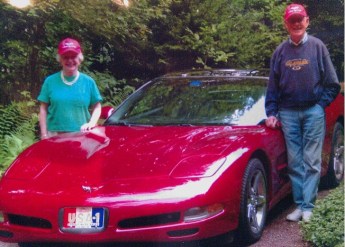
I remember when I got my first GM position. It was a daytime radio station that featured Al Ham’s “Music of YOUR Life” format, big band music for those not familiar with the programming. Yes, my audience was old. But only according to the calendar, but not the way they thought about themselves. Nampa and his corvette

It was always a tough putt with new advertisers, getting across this concept that you are as young as you think. So I wasn’t surprised to learn that one of the sessions talked about “APT.” APT was all about the “Age People Think” not demographics.


I’m not sure that lumping people by demographics was ever a sound marketing idea, but like a lot of bad ideas (buying radio on a Cost Per Point basis) in advertising, people do what’s always been done and ignore if it’s a sound way to place advertising.


A lot of my radio stations over my career have focused on an older demo. When Ken Dychtwald’s book “Age Wave” came out in 1990, I read it with enthusiasm. Dychtwald told of the massive population and cultural shifts that would be taking place because of the Baby Boom Generation. He put forward how the boomers would shift the epicenter of consumer activity from a focus on youth to the needs, challenges, and aspirations of maturing consumers. Those predictions are playing out today.


So again, I wasn’t surprised to read that at the ANA gathering attendees were told that old people were a growth market. In light of the trillion dollars in student loan debt, the millennials are cash challenged in a way that the Boomers are not.


I grew up in a Chevy family. Remember those days of yore? Chevy families and Ford families competing for bragging rights as to which drove the better cars?


Many marketers would have you believe that we are now stuck in a rut with our product choices and only the young are pliable enough to be swayed to try or change brands. So let’s see how that plays out in my family. I have two older brothers; one drives a Honda and the other a Toyota. How about our kids? Well we have a BMW, Mercedes Benz, Hyundai and Honda. In my case, I drove a Hyundai for the past eight years before switching to a Honda Accord; so much for that concept that once you are stuck in a brand, you stay there for life. Even my toothpaste is not the brand I grew up using.


Everything has changed about the world with the exception the way marketing is created and advertising is bought.


One of the big changes is that RADIO is back! It’s the massive reach medium that advertisers seek to expose their products and services on, except that they don’t know it.


Radio needs to use some frequency and repetition to get the word out.


Willie Sutton said he robbed banks because that’s where the money was.


If you’re an advertiser, you need to advertise where the people are and that’s today’s RADIO.

1 Comment

Filed under Education, Mentor, Radio, Sales, Uncategorized

Colleges That Give-up Their FCC License

fcc-logoI recently wrote an article for Radio World about the impact of colleges that sold their student radio station’s FCC license had on the pedagogical program at those institutions. You can read that article in Radio World here.


Today, I’d like to share with you something else I learned in talking with educators from around the country while researching this article. The FM license in every case connected the student station to the community. It was the heart and soul of the operation. When the license was sold and the station would become an online Internet only radio station it lost that connection.


Now the irony is that all of these student radio stations didn’t stop broadcasting over the FM band and then become Internet radio stations. No, they already had been streaming on the Internet and had listeners from all over the world in many cases. So why didn’t that continue to sustain these radio stations?


Let me make a comparison to help you understand this a little better. When you buy a magazine, do you read only one article and then toss it away or do you turn all the pages and look at other things in addition to that cover story that first attracted your attention and caused you to purchase the magazine? You read, if only skimming, the entire magazine. You spent time with that publication and became a little more invested in it. If you subscribe to the magazine this would be akin to being a P1 listener to a radio station.


When you see an article from a magazine online do you read the whole magazine or just the article that captured your attention and then leave? You do what we all do. It’s one and done. No investment in the magazine, just the article.


Well, what I learned is that it apparently isn’t all that much different when it comes to student streaming radio stations. It’s more of a hit and run.


There’s also a problem with student online radio stations in that they have limited connection capacity in most cases. That means only a limited number of people can listen to the stream, unless the college makes a big investment in expanding the capacity in the number of listeners can be connected at the same time. This is somewhat solved if a student station goes with a large online aggregator like TuneIn or Live365.


But let’s be real, when you enter a store and everything in the place is priced the same – FREE – which would you chose? The best you could find. Good Luck student stations.


Contrast that with student radio stations that broadcast over FM radio. What you find is that they are now only competing within the local community of service and in that playing field, have a chance to break through and be heard.


Over 92% of Americans 12-years of age and older still have the radio habit and listen every week. When it comes to listening to streaming stations on the Internet the percentage of penetration doesn’t come close. And those that do listen to streaming Internet music are very likely tuned to Pandora, if the current data available about such things is to be believed.


Another thing I heard was how more and more of these student radio stations were working to get a LPFM license so they could return to the air on the FM radios in their community.


When Zane Lowe was getting ready to launch Apple’s Beats1, he told the trades that a big part of the three months leading up to the launch was spent trying to come up with a better name for the new service than radio. They couldn’t do it.


Radio is the brand, because it works.

10 Comments

Filed under Education, Mentor, Radio, Uncategorized

Building Trust

trust-building-big-sizeA couple of weeks ago, I wrote about “Why I Fired My Top Salesperson.” And it all came down to a single reason, trust. I can’t think of one thing a successful leader needs to do more in a business than establish a culture of trust.


Leaders influence people. Trust is the foundation upon which the ability to influence others is built.


Simon Sinek puts it this way: “Being a good leader is like being a good parent. You catch glimmers of hope when you catch them doing something right, but you really don’t know if you’ve done a good job for like 30-years.”


Trust is comprised of two basic components: character and competence. Character means you make decisions that go beyond your own self-interests. Certainly, in firing my top salesperson, that wasn’t going to help my month or quarter. It wasn’t in my own self-interests for the present moment. But knowing that the long-term good of my radio stations was the value I was protecting, and maintaining the trust of the people who I worked with every day, made doing the right thing clear albeit difficult. Competence doesn’t mean having all the answers. Competence means having the experience and knowledge to make decisions that positively impact the performance of the enterprise and the courage to ask for help when you need it. (I always tell people I have an awesome contact file full of brilliant people to call when I need help.)


When your people trust your character and believe in your competence, they will follow you wherever you lead them.


Being a trusted leader is done with love.


I attended Weight Watcher meetings for the first time in my life this year. Like everyone else on the planet I wanted to drop a few pounds, but I also wanted to see if I could pick up any new information about nutrition and living a healthy lifestyle. What I learned was that change occurs by what you consistently do every day. That message was shared by others in the room that had lost lots of weight, all taking the same journey and it was shared with love. Simon Sinek also says when we are surrounded by people who believe what we believe and we feel loved, trust develops.


10,000 Hours


Malcolm Gladwell wrote in his book “The Tipping Point” that it takes about 10,000 hours of practice to get really good at something. You can’t rush trust building anymore than you can rush how long it takes to make a baby. Babies are born when they are good and ready. And you can’t build trust via email, Facebook, Twitter or any other form of modern day communication. You build trust when people come together through human contact. It’s why webinars lose one of the main benefits of seminars, that being people coming together and meeting one another. (Besides, I don’t know about you, but I’m always doing at least two other things when I’m on a webinar.)


Again, when we’re surrounded by people who believe what we believe trust develops.


Be Like Ed Koch


Ed Koch was a three-time mayor of New York City. Mayor Koch was famous for asking people everywhere he went “How Am I Doing?” He got in their faces and asked. Over and over and over; Mayor Koch asked “How Am I Doing?”


You build trust by being consistent.


The best teachers teach by sharing their mistakes and what they learned. People don’t connect with perfection. People connect with people who’ve been there, screwed it up, learned from it and shared the experience. Real courage is being able to share your mistakes with others and like who you are in the process of doing that.


When you reveal yourself in this way, you demonstrate what you believe and value.


In other words, you build trust.

2 Comments

Filed under Education, Mentor, Radio, Sales, Uncategorized

Being Grateful

15There are times when the stresses that are part of everyday life can occupy a place way beyond their level of importance in the grand scheme of things. Its times like those that you need to take a time-out and remember all the things in your life you have to be grateful about.


This year, I’m grateful for three wonderful grand children that are all happy, healthy and developing into unique individuals.


I’m grateful for their parents who make their children their first priority and love them with all their heart and soul.


I’m grateful that my two sons have set exciting and meaningful goals for their lives and in so doing are working hard to make our world a safer and better place for all of us.


I’m thankful for my two older brothers that always have been there for me through ups and downs, thick and thin.


I’m grateful that I’ve come to accept myself for exactly who I am, while still having boundless curiosity and a desire to never stop learning and growing.


I’m grateful that I’ve learned how to slow down. Life is meant to be savored. It’s not getting to the finish line first but about enjoying the journey.


I’m grateful for having enough. Less is more. Too much of anything is usually toxic.


I’m grateful for each day when I can add more value to the world than I consume.


I’m grateful for learning that every situation provides an opportunity to learn something; even the difficult ones, life goes by so fast.


I’m grateful that a career in radio that I started in the 10th grade in high school would allow me to pay for my college education, graduate school and raise a family. It’s a career that was all I ever wanted to do besides one day paying-it-forward through teaching the next generation of broadcasters.


I’m grateful that I finally started a blog this past year. It’s been one of the most personally rewarding and enriching things I’ve undertaken this past year.


I’m grateful for all the wonderful people I’ve met on this journey called life, people who were only strangers until we said “hello,” and then became friends for life.


One of my mentors, Zig Ziglar said: “You can get anything in life you want, if you will just help enough other people get what they want.” I’ve tried to live those words every day.


I have so many things to be grateful for this Thanksgiving 2015. I’m sure you do too.


Remember you may make a living by what you get, but you make a life by what you give.


Today, I’m grateful for YOU.

12 Comments

Filed under Education, Mentor, Radio, Sales, Uncategorized

Bring Back the Radio Hackers

We never called them that back in the early days of radio’s reinvention period after the birth of television in the 1950s, but that’s what they were.

Radio from the beginning basically was a medium that killed Vaudeville. Radio enticed the performers of Vaudeville to bring their acts to this new mass medium. The sales pitch went something like this: you won’t have to travel every day of the year, sleep on trains and eat your meals on the run. When you move your act to radio, you will be able to go home every night to your family and have a “normal” life. And you’ll make more money!

Not all performers would make this transition. The downside to moving their act to radio was that no longer could they have one act that they could perform night after night. On the radio, they needed a new act every performance. That’s a BIG CHANGE.

When television came along, the successful radio acts moved to TV and radio needed a new idea.

Enter the Hackers

 Alan Freed would hack the term Rock ‘N’ Roll and become the first famous disc jockey introducing a new venue for radio.

Todd Storz and Gordon McLendon aka “the Maverick of Radio” would hack the idea of Top 40 radio introducing a tighter playlist and higher repetition of the biggest hits. After observing teenagers playing the same songs over and over in a juke box.

Better Practices

 Today’s world is infested with the concept of “Best Practices.” It can be a stifling thing when it comes to creativity.

Today’s radio was born out of hackers that were constantly thinking up “Better Practices.” Ron Jacobs and Bill Drake certainly did at Boss Radio in Los Angeles with 93 KHJ. John Rook did it in Chicago with both WLS and WCFL. Rick Sklar did it in New York at Music Radio 77 WABC. Plus there were so many others in all size markets. Radio was different everywhere you listened because it was being hacked in so many wonderful ways. It was exciting to turn on your radio and hear what was going to come out next.

Insanity

 The definition of insanity is doing the same thing and expecting a different result. We have a lot of that kind of stinking thinking today and I’m sure you’ve heard all the reasons for why this is the path some of our biggest broadcasters are taking. As the radio business grew from a mom and pop business to the behemoths of today a ritual of “Best Practices” replaced hacking.

Today’s Economy is a Hacker Economy

 We live in a world where it seems everything has been turned upside down by the World Wide Web, the Internet and mobile Apps. The power is shifting from the big to the nimble; the hackers. Learn to hack or be attacked by those that hack.

Radio is not exempt from this shift. And it doesn’t have to lose.

Radio has what everyone else would love to own, a mass audience. Radio today is delivering the largest mass audience of all the mediums.

It’s why every entity trying to play in the audio medium calls itself “radio.” Pandora Radio, Spotify Radio, TuneIn Radio, RadioTunes, Beats 1 Radio etc. What radio folks have that these folks don’t have is a broadcast signal that is ubiquitous and a listening habit that has been cultivated over many years.

However, what those pure plays have that radio is missing are hackers.

Radio needs to stimulate agility, creativity and take risks.

Stop thinking about where you want to be in 5 years and start thinking about what problems you want to solve most right now. The winners will be those most able to adapt.

18 Comments

Filed under Education, Mentor, Radio

Memories of Pinky

PinkyShortly after I arrived in Atlantic City to begin my 13-year run as general manager of WIIN/WFPG, I would be interviewed by Atlantic City Magazine about some of the changes I was making at the radio stations.

WIIN was a news station with a five person news staff, a full-time sports director, even a plane in the sky over the South Jersey Shore doing traffic reports in season. WFPG was the iconic Bonneville Beautiful Music formatted radio station with an hour I.D. that many remember for the sound of ocean waves, sea gulls and buoy bells. During my interview with the magazine I was asked about Pinky and his WOND radio show Pinky’s Corner, to which I replied something to the effect that he wasn’t on my radar and what he did made no difference on my operation; basically a one-liner in a much longer story on South Jersey radio.

By the time I arrived in South Jersey Pinky had been doing his radio show longer than I had been sucking up oxygen as part of the human race.

Sunday morning November 1st I woke up to the news that Pinky had passed away Saturday night at the age of 88. He had retired only earlier this year after heart surgery in May had caused Pinky to call in sick for the first time in his 57-year radio work history.

I have so many memories of Pinky.

As a competitor I remember calling on advertisers that told me they bought ads in Pinky’s show so he would never say anything negative about them. Hard to argue with that reason. I remember Pinky broadcasting his radio show by the cash registers as I was checking out with my groceries at the supermarket. I remember the time when Pinky was without a remote location sponsor to do his show from, so he took the latest technology – a bag phone – and hopped in the back of Atlantic City police cars and did his radio broadcast live on patrol, the kind of thing that COPS does on TV.

My radio career would take me to the Midwest and one day my office phone would ring and it would be Howard Green, the owner of WOND, home of Pinky’s Corner. Howard said to me “Dick Taylor, what would it take for me to get you back to Atlantic City and working for me?” I said, “Make me an offer.” He did. I took it. I returned to Atlantic City.

Because Pinky always did his radio show from a remote location, he was usually never in the radio station broadcast center. One day, I saw Pinky walking towards my 3rd floor corner office. I said “Hi Pinky,” to which Pinky said “I have no confidence your ability to manage this radio station,” then turned around left. It’s always nice to receive that kind of positive encouragement from your team when you start a new job.

I would learn those words were due to that Atlantic City magazine article of over a decade earlier. Pinky had an incredible memory. He remembered everything. He even did his radio commercials from memory for his clients who sponsored Pinky’s Corner.

When we were approaching Pinky’s 45th year on-the-air, I conspired with his remote sponsor to throw a big 45th anniversary celebration surprise party during his live radio show. The casino folks agreed and it was a surprise that I’m sure Pinky never expected to have occurred on my watch.

Another thing I remember about Pinky was that during my time as the WOND manager, Pinky wouldn’t say the call letters or the frequency of the radio station. No matter how I cajoled Pinky he would not change his ways. I commissioned a research study of the people who listened to Pinky’s Corner and found that 60% of the people who listened to Pinky every day did not know the call letters of the radio station his show was broadcast over. But I still couldn’t change Pinky’s mind.

Frustrated I went to the company owner, Howard Green, and asked for advice. Howard’s response was priceless. “Don’t ask me” he said. “Pinky one time had t-shirts made up with his picture drawn on them and the words ‘Listen to Pinky’s Corner’.” Howard said when he saw them he said to Pinky “Pinky, you didn’t put the call letters or the frequency of the radio station on your t-shirts.” To which Pinky replied “and you didn’t pay for the t-shirts.”

Since Atlantic City uses unaided diary recall I decided to put the WOND call letters in every station break and between every commercial during Pinky’s Corner I could squeeze them into. Then Howard Green became ill while on an ocean cruise, lapsed into a coma and died. The next day I turned on Pinky’s Corner to hear what Pinky would say about his friend and employer of over four decades and what struck me most was that Pinky was saying the station call letters everywhere. And that would continue from that point forward. I guess I’ll never know the reason why that change occurred.

I’m happy to say that Pinky and I became friends, who respected one another’s abilities and love of the radio business. I always enjoyed seeing him on my annual trips back to Atlantic City for the New Jersey Broadcasters Association conventions.

For so many people in South Jersey, they don’t remember a time when Pinky wasn’t on their radio. He truly was one-of-a-kind.

Thank You Pinky for making WOND, like the slogan said, “Radio You Can Depend On.”

WOND LOGO

3 Comments

Filed under Education, Mentor, Radio, Sales

Why I Fired My Top Salesperson

My students are always stunned when I tell them about the time I fired my top salesperson. “Why would you do that?” they always ask. Today, I’m going to share that story with you.

In today’s competitive world, top performers are usually cut a little slack. There’s nothing really wrong with that, unless it breaks a culture of honesty, fairness and trust.

If you’re in any kind of sales, you know that one of the ways management motivates and stimulates sales people are through the use of contests. Sales people are competitive folks and the best like to win. I know I do. In fact, I have a picture that has hung the wall of every office I’ve ever occupied. It says “If you ain’t the lead dog, the scenery never changes.” Lead Dog

Well this latest sales contest was coming down to the wire and the sales people were running neck and neck. It was having every employee in the whole radio station wondering which one of the sales people would capture the top prize and finish first.

On the final day of the contest, just before the 5 o’clock bell rang signifying the end of the contest, my top sales person came running into my office with a contract that put him in first place. We all congratulated him on his win and went home to enjoy the weekend.

On Monday morning, my traffic and business department people came to me with that signed contract along with other signed contracts from that same client and it was quite apparent something was fishy. The signature turned in just before the bell on Friday was quite different than all the others.

I called my top sales person into my office along with my sales manager and we asked this person if the client had actually signed this contract. After some hemming and hawing, he said “NO.” He explained that the client was on a cruise and wouldn’t be back in the office until today and he was planning to go over there and get his approval for the advertising. He said that he knew the client would definitely agree to the advertising. I knew he would too. And that’s why it was so sad when I told him he was fired.

Enforcing a culture of honesty, fairness and trust is hard.

The only way you can maintain that culture is by understanding that you have to fire people no matter what their performance has been. You can’t build a great organization unless you commit to doing just that.

Unlike many other radio stations in my market, I had a waiting line of top sales people wanting to join my team. A great culture helps you attract the most talented people.

A half-dozen years later I was recruited back into this same market from the Midwest and had the task of launching a brand new radio format. I needed to hire people for every position.

The good news is that because of my reputation for honesty, fairness and trust, I attracted many in-market pros when I hung out the “Help Wanted” sign.

One of the people who came to see me and apply for a position on my new sales team was the top salesperson I had fired years ago. He was employed in sales at another radio station in the metro and was doing quite well. Most of the accounts he had on-the-air at his current station had already been assigned to sales people I had already hired. He didn’t care. He wanted to come back and work with me. We reviewed the past that led up to his termination and he swore he had learned his lesson and that it would never happen again. I believed him. It never did.

In his first 30-days, he sold over $100,000.00 in advertising. Most of it paid cash-in-advance. He once again was my top salesperson. I believe in second chances. I also believe in committing to the type of culture that wins with honesty, fairness and trust.

5 Comments

Filed under Education, Mentor, Radio, Sales