Category Archives: Education

Two of America’s “Big Jim Edwards”

These past few weeks, I once again tried to find the whereabouts of one of my earliest mentors in the radio business; Big Jim Edwards (not his real name). What got me to thinking about this man was a post on Facebook by Jim Davis aka “Big Jim Edwards.”

Big Jim Edwards

I learned from Bill Hennes, former program director of CKLW, that “Big Jim Edwards” was often used at radio stations consulted by the legendary Bill Drake* for one of the station’s air personalities. Jim Davis was recruited to be part of a new team of air personalities being assembled to light-up The Big 8-CKLW in Windsor-Ontario, Canada. CKLW would identify itself as being part of “The Motor City” aka Detroit, Michigan. It would be at this Drake formatted radio station where Jim Davis would be anointed “Big Jim Edwards.”

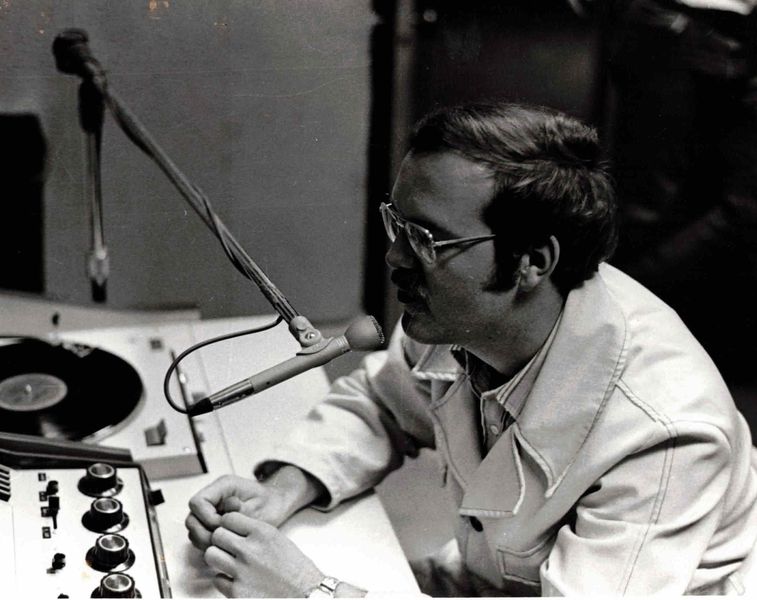
Richard Poirier

When I started working weekends at 1420-WBEC back in the late 60s, the evening DJ on this station was a man named Richard Poirier, but to his listeners, he was known as Jim Walker. While the radio station was a mixture of news, talk and middle-of-the-road music during the day, at night it would turn into a Top40 station to appeal to the teenagers of Berkshire County while their parents were glued to the tube (TV).

Jim would listen to the practice tapes I would produce in WBEC’s production room and critique them, trying to make me a better air personality.

Jim Walker Become Big Jim Edwards

In 1968, Jim Walker was hired by 1340-WNHC in New Haven, Connecticut to hold down the 6-10pm (Monday-Friday) and 6pm-Midnight (Saturdays) at this smoking hot Top40 radio station. It would be here, that Jim Walker would become “Big Jim Edwards.” This is a short air check of my mentor on New Haven’s Boss Radio.

https://archive.org/details/big-jim-edwards-1340-wnhc

I’m sure you can see why, as a 17-year old teenager, I was smitten with this style of radio.

Sadly, this high energy format quickly would burn Jim out and he departed the station in August of 1969. Jim wrote to me that he wanted to move intro radio programming. He would get that opportunity at 1450-WSVP in West Warwick, Rhode Island, where the more music sound of Drake-Chenault was programmed on this Providence rim-shot radio signal.

I lost touch with Jim after he departed WSVP. I’ve reached out to people who he worked with like Bill Hennes and Jim Hooker (GM of WSVP back in the day), but they both didn’t know where my Big Jim Edwards is today.

Oh, how I wish I could tell you

how much you inspired me!

Thank You Jim

*(Bill Drake {January 14, 1937 – November 29, 2008}, born Philip Yarbrough, was an American radio programmer who co-developed the Boss Radio format with Gene Chenault via their company Drake-Chenault, and was heard on radio stations like 93-KHJ, 68-WRKO and The Big 8- CKLW.)

7 Comments

Filed under Education, Mentor, Radio

Welcome, Virginia Brown Fairbanks

Today this blog site is going to begin something new; sharing air checks and other audio files from my collection of reel-to-reel and cassette tapes that I’ve just started to digitize. I hope you will find it interesting and fun, as I share some of the radio stations, personalities and other tidbits that created my lifelong desire to be in radio.

Call Letters

One of the fascinating aspects of the radio industry has been that of station call letters. Some, like WLS (“World’s Largest Store” which was at that time owned by Sears), WCFL (Chicago Federation of Labor), KHJ (Kindness, Happiness & Joy) or WKBW (Well Known Bible Witness).

The WVBF call letters (Welcome, Virginia Brown Fairbanks) were chosen by Fairbanks Broadcasting owner, Richard M. Fairbanks after the station was purchased in July of 1971 to honor his wife, Virginia. Mr. Fairbanks had done something similar in 1957, when his company purchased a radio station in the Cape Canaveral area of Florida and changed the call letters to his initials; WRMF.

Short History of WVBF

Fairbanks Broadcasting bought WKOX and WKOX-FM in July of 1971. After the purchase, WKOX-FM’s call letters were changed to WVBF. George Johns was brought in, to create a new sound for this radio station, giving birth to “The Electronic Mama,” as a hybrid Top 40/Rock Station.

By 1975, during Fairbanks ownership, the music programming would evolve to mainstream Top 40, eventually moving to a hot adult contemporary format by the end of the decade.

In 1981, WVBF debuted a new morning show hosted by Loren Owens and Wally Brine. Loren and Wally would survive multiple ownership, format and call letter changes until 2019.

Even Delilah, in the early 1990s, was an air personality on the station before moving to Seattle and entering national syndication. In 1996, the station’s call letters were changed to WROR 105.7 FM and programed a classic hits music format.

Electronic Mama

Today, I will feature an audio clip of WVBF Stereo 105 from Framingham, Massachusetts that I recorded, in stereo, in the early 70s.

To listen to this air check, just click on the link below.

https://archive.org/details/wvbf-stereo-105-electronic-mama

7 Comments

Filed under Education, Mentor, Radio

Happy 80th Birthday Art Vuolo, Jr

On September 27, 2025, radio people from all over the United States traveled to Novi, Michigan to celebrate Art Vuolo, Jr’s 80th birthday and enjoy each other’s company. The weather was spectacular, as the 150 or so folks that gathered renewed old acquaintances and/or made new ones.

I’ve known Art for over four decades, and cherish him like a brother.

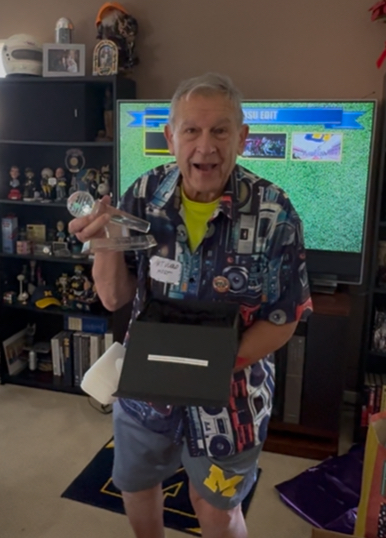
Sue and I commemorated Art’s decades of video recording America’s Best Air Personalities, by presenting Art with a crystal microphone for truly being “Radio’s Best Friend.”

Today’s blog is a montage of pictures Sue and I took on that special day.

Art Vuolo, Jr holding his “Radio’s Best Friend” crystal microphone
Phlash Phelps is presented with a plaque commemorating his 25-years on the air at SiriusXM
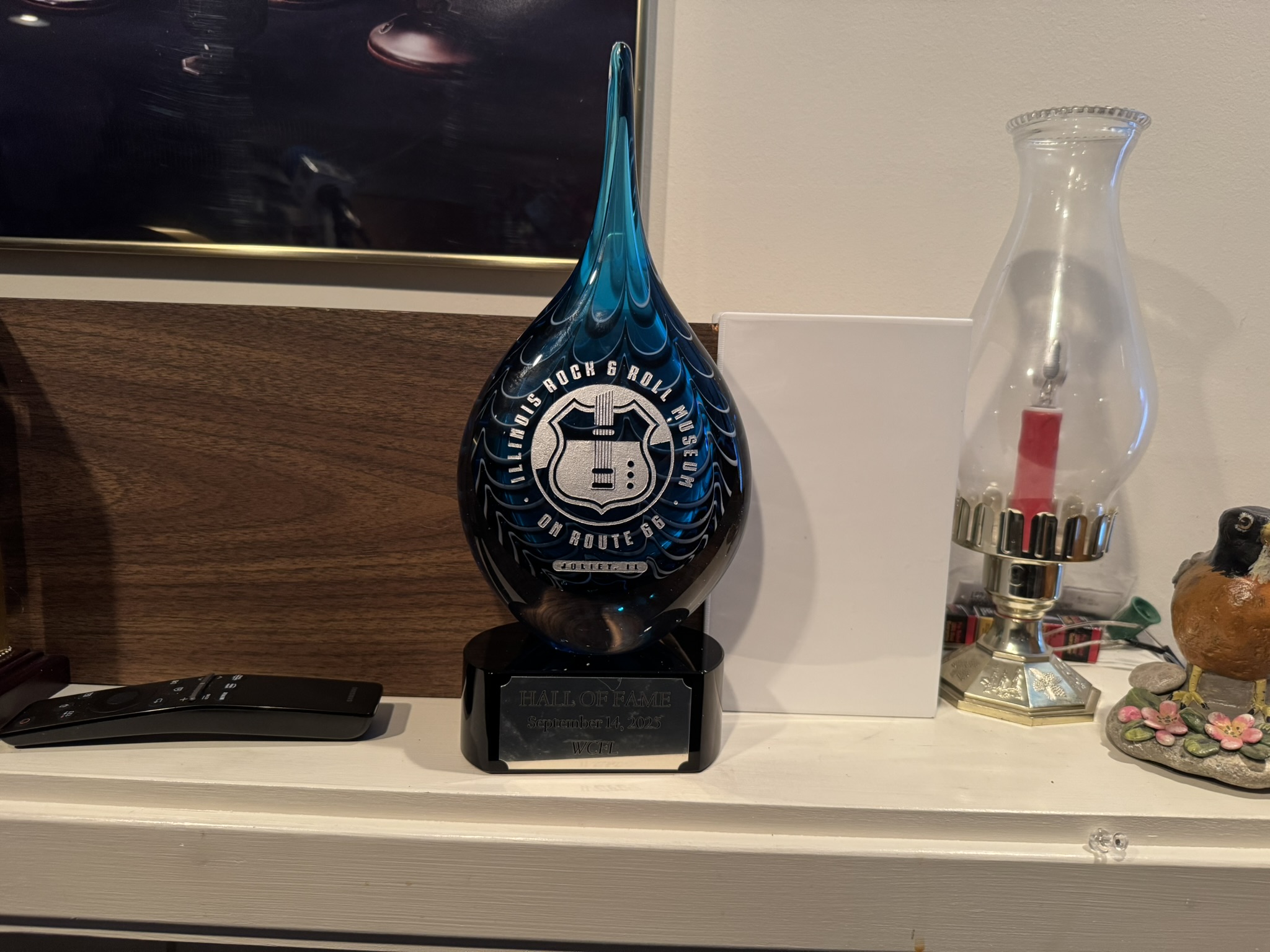
The Illinois Rock & Roll Museum inducted Chicago radio station WCFL into it’s Hall of Fame, two weeks before Art’s 80th party. Since WCFL is no more, it was decided that Art Vuolo, Jr should be the caretaker for this award.
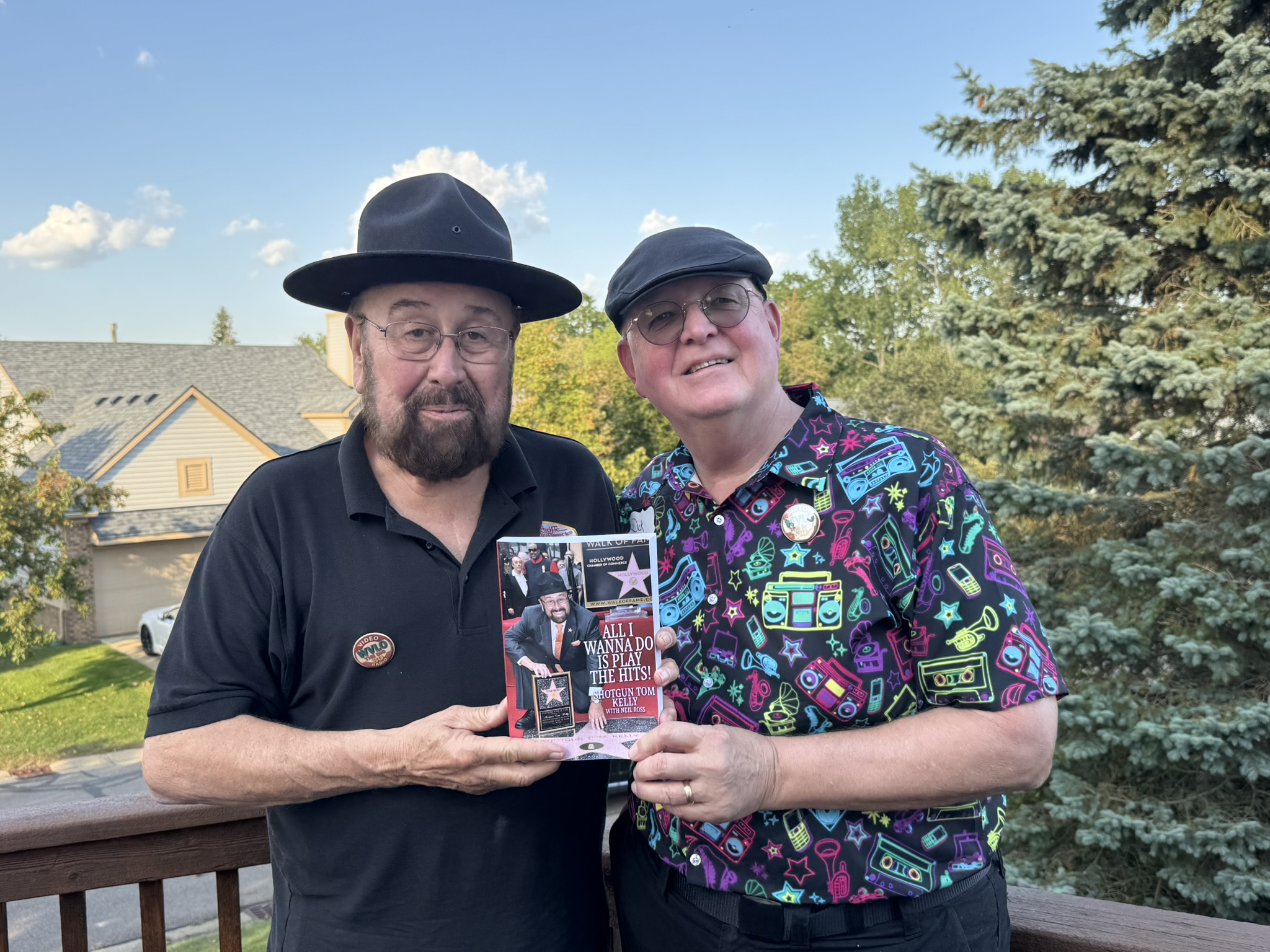
Shotgun Tom Kelly presenting me with a copy of his book, “All I Wanna Do Is Play The Hits!”
Shotgun Tom Kelly, John Records Landecker, Dusty Rhodes & Gary Jeff
Kathy & Terry Stevens, Art talk with Fred Jacobs and Paul Jacobs

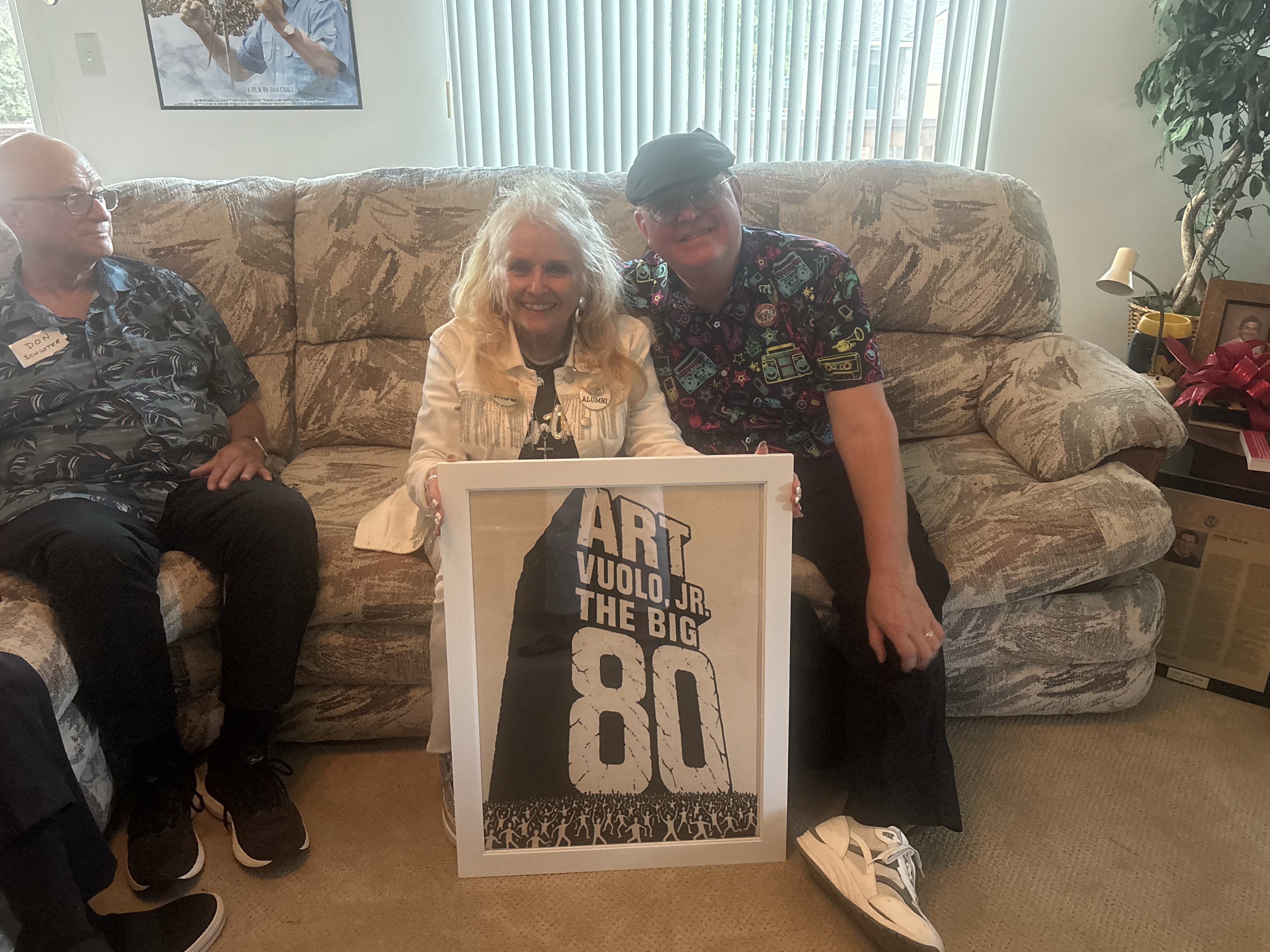
What a fabulous gift idea, a take-off of the BIG 8’s logo. Jo Jo Shutty, of CKLW, is holding it for the picture. Jo-Jo Shutty was the First Female News and Traffic Helicopter Reporter in North America while at CKLW.
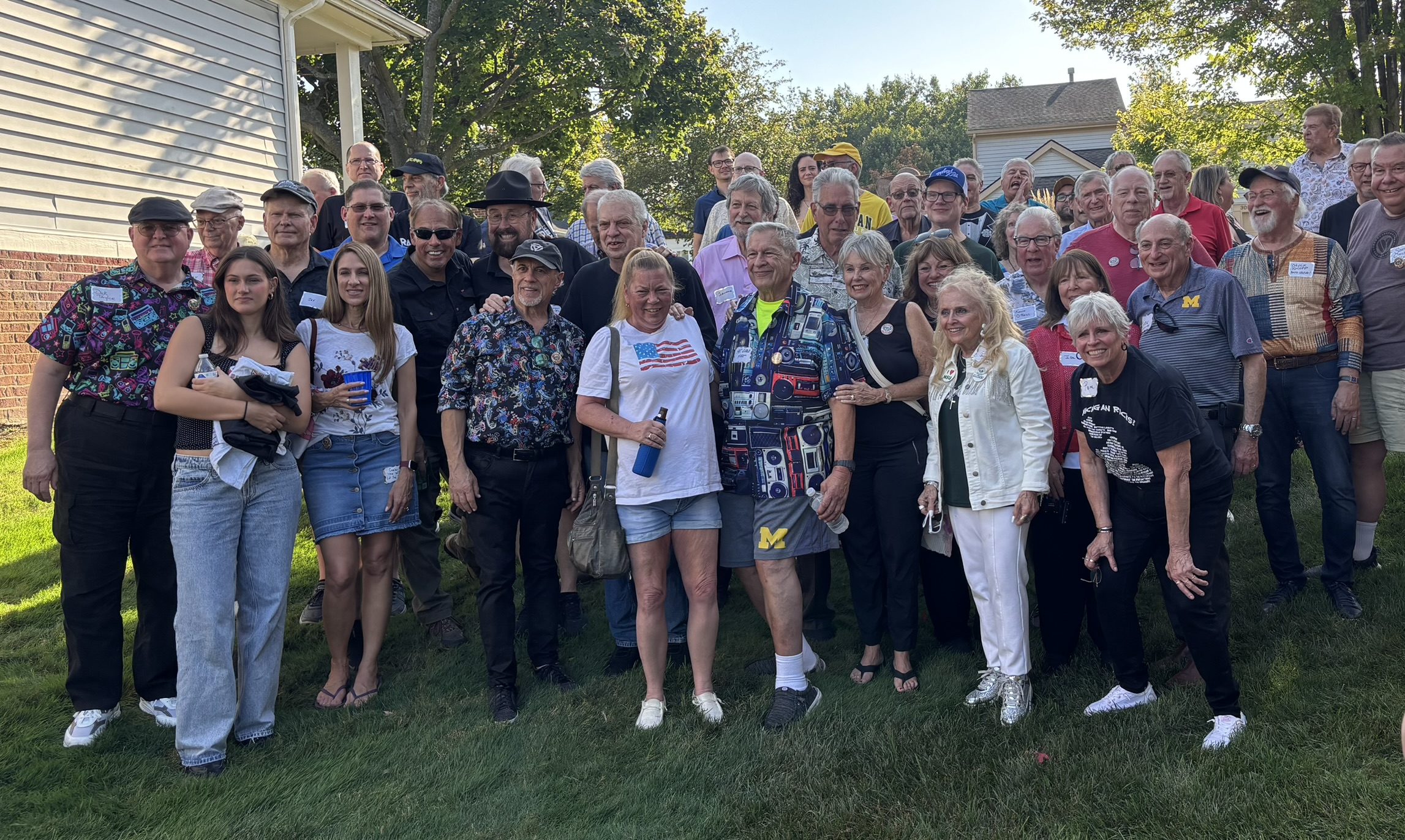
Some of the attendees gathered on the hillside, next to Art’s home, for a group picture.

This was not only Art’s 80th birthday celebration, but sadly, also the last Motor City Radio Reunion. After all, we are all getting older, making it difficult for many of us to make this radio pilgrimage.

4 Comments

Filed under Education, Mentor, Radio

When Is Local Radio NOT Local?

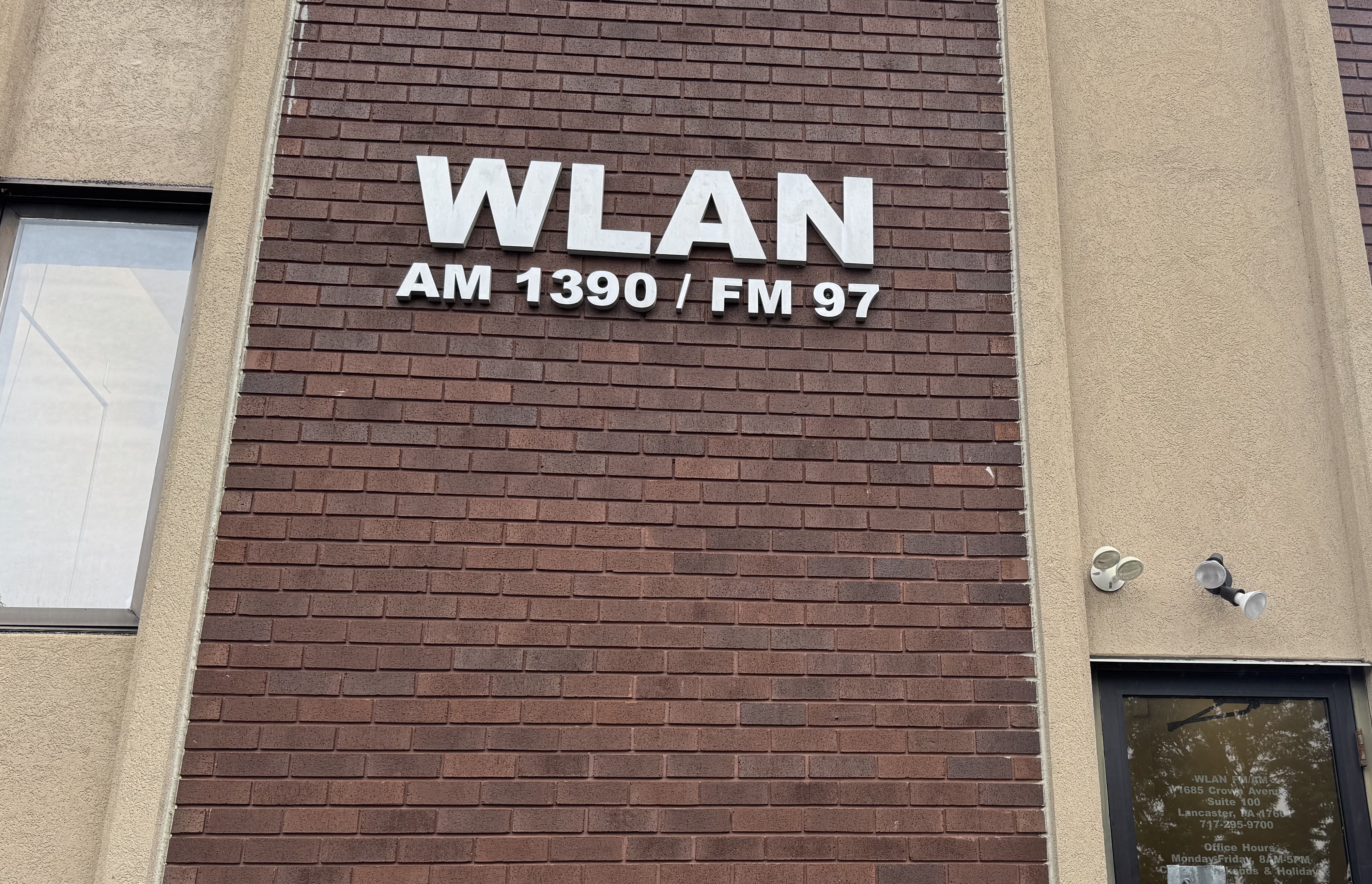
WLAN – AM1390 signed on the air in Lancaster, Pennsylvania in 1940 from offices and studios located 252 North Queen Street. Seven years later, WLAN – 96.9FM began broadcasting from the same location as the AM station, which was a three and four story walk-up.

2004

I was hired as the General Manager of WLAN AM/FMN in the fall of 2004 and quickly realized the stations not only needed to be modernized but relocated to a part of Lancaster that would be more accommodating to our listeners (for prize pickups and events), our advertising clients, and our staff – in particular our sales staff, which had to come and go from the station multiple times a day.

2005

Meetings with Clear Channel corporate led to getting a budget for a move and the green light to relocate to 1685 Crown Avenue, Suite 100 in Lancaster.

2006

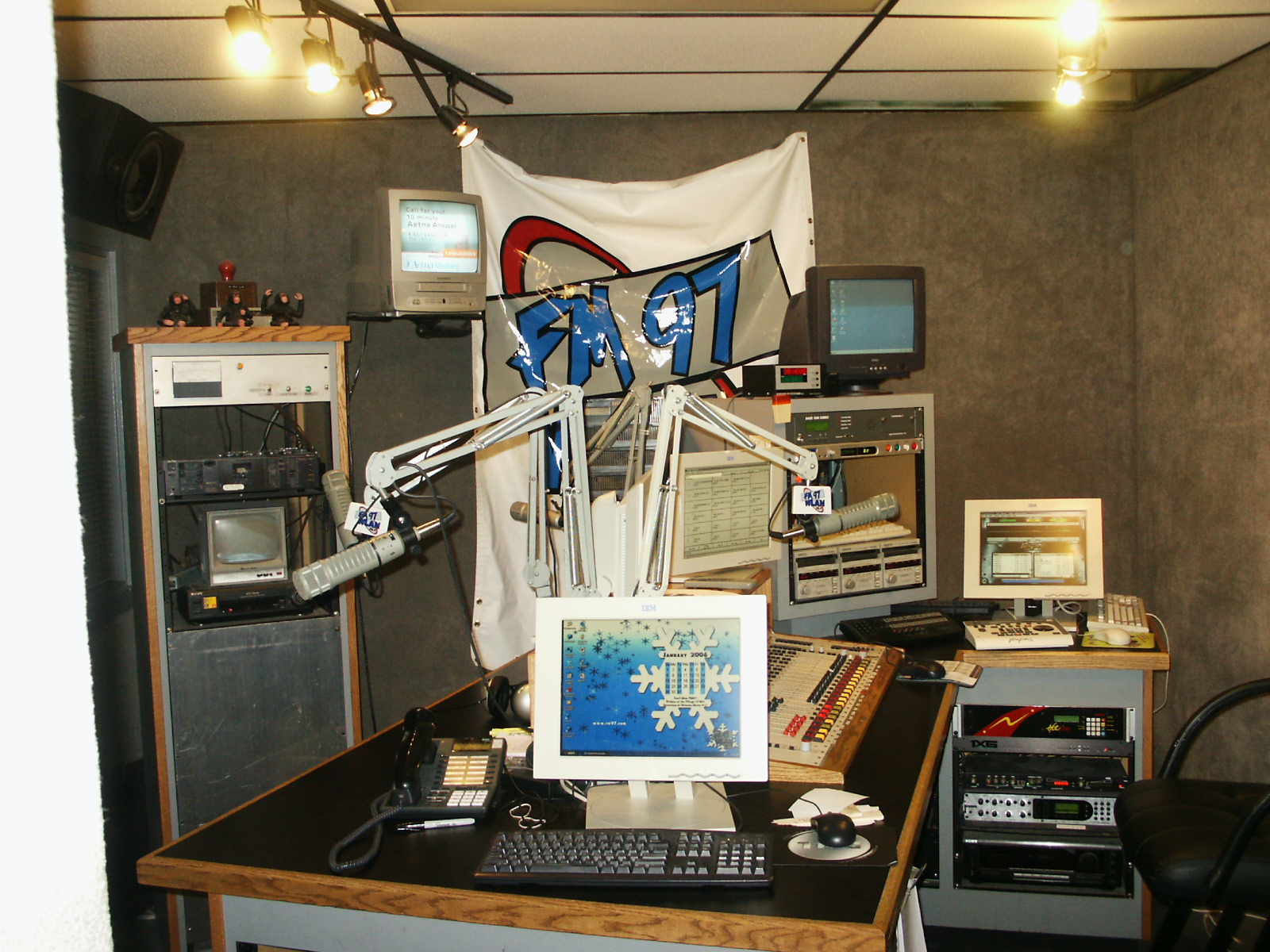
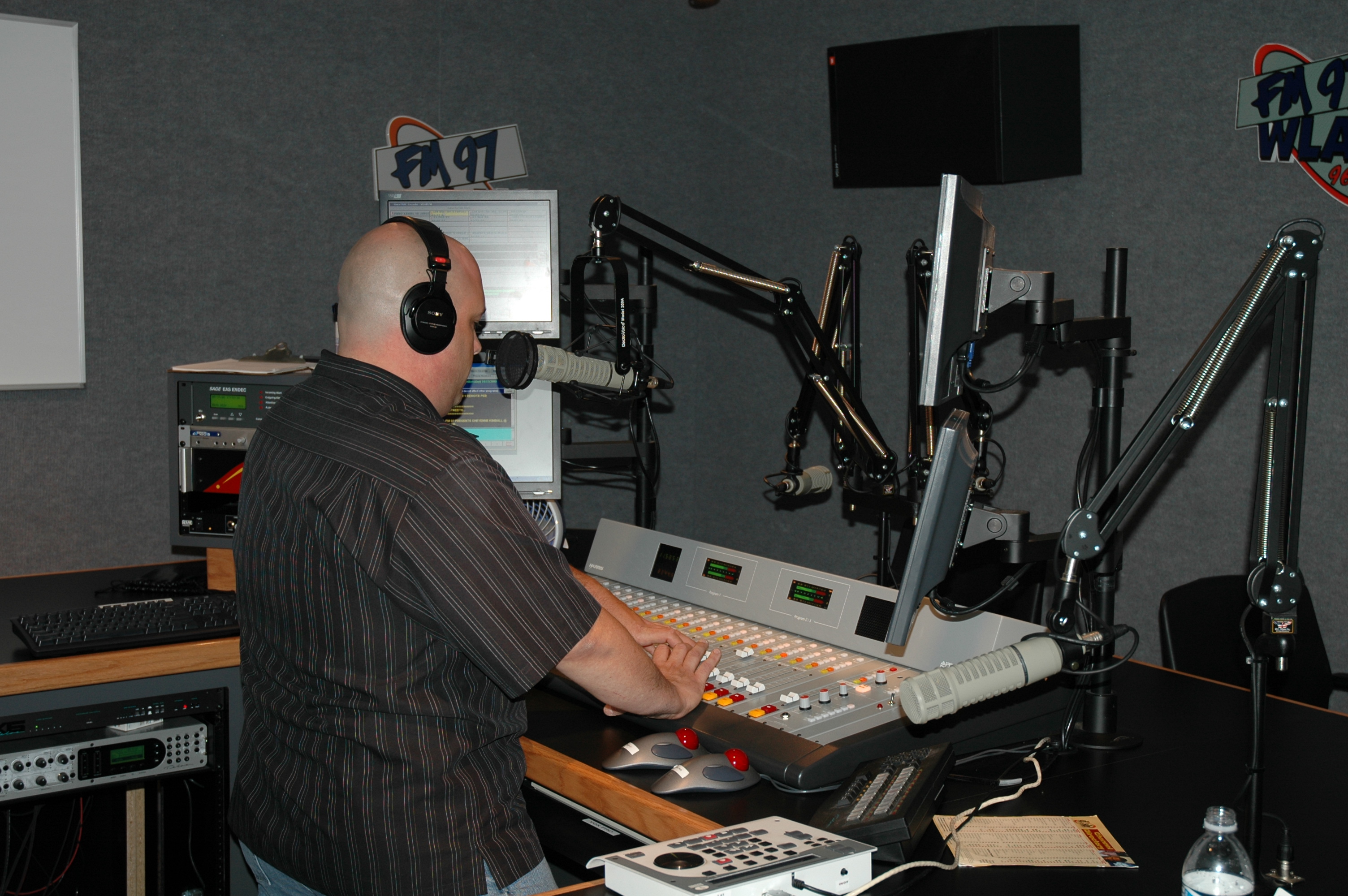
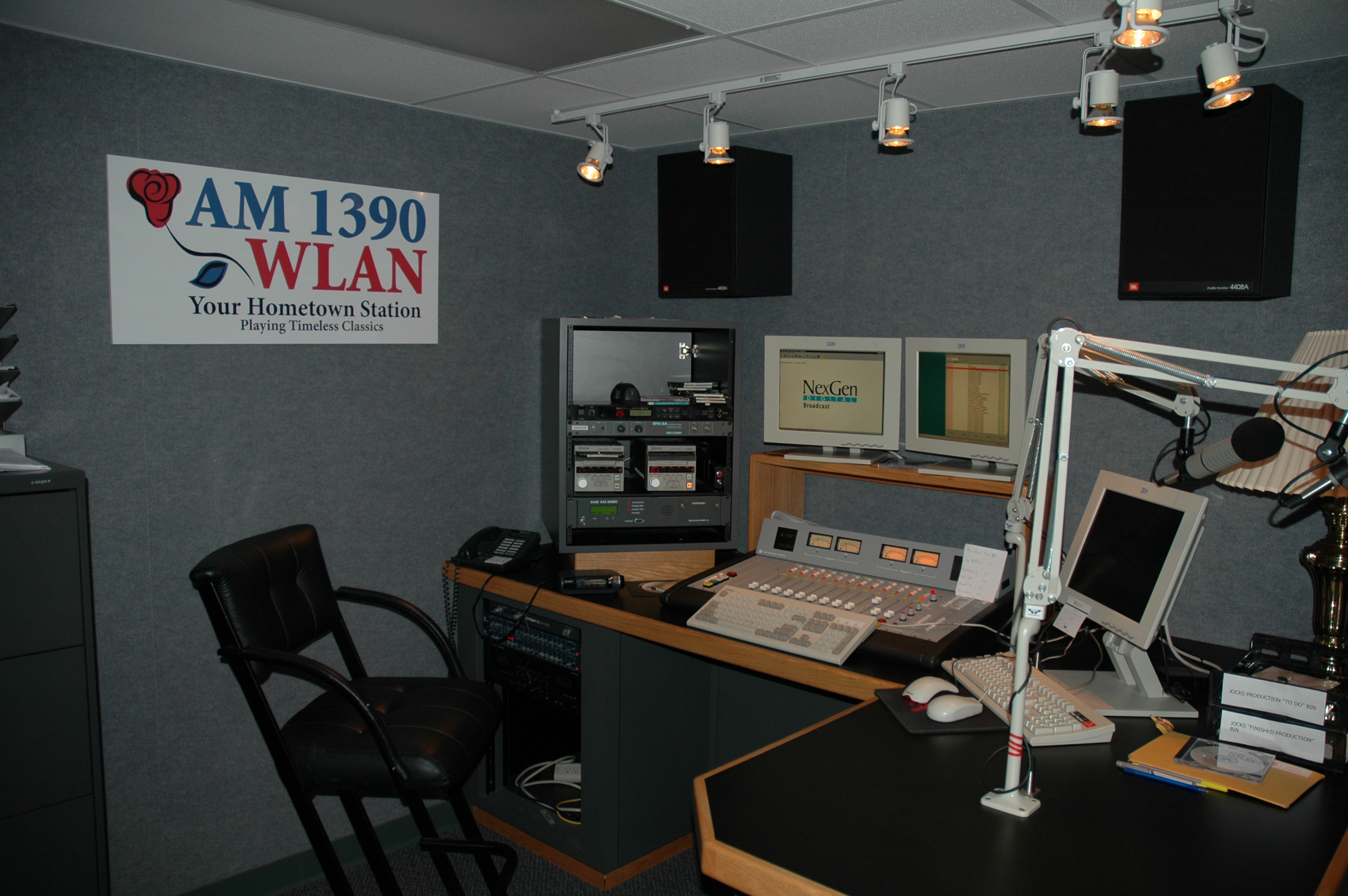
In May of 2006 the ribbon was cut and a huge party for listeners and advertisers was held in our parking lot outside of our state-of-the-art broadcast center. Tours of our offices and studios were given while members of The New Holland Band serenaded our guests.

19

Sadly, while the stations were able to broadcast from their original location for sixty-six years, the new facility would be abandoned just 19 years after it was opened.

I learned this news when I stopped in to visit the stations during a weekend getaway my wife Sue had planned in Lancaster County.

As we drove up to the front door, we saw a dumpster outside filled with building materials and looking through the windows, we saw that the former offices and studios had been completely gutted.

Nobody’s Home Anymore

What I would learn is that WLAN AM/FM had moved to Harrisburg, Pennsylvania; about 40 miles and an hour’s travel time away from Lancaster.

Listeners who wanted to pick up prizes they may have won, now had to drive to 600 Corporate Circle in Harrisburg.

The website listed numbers to call for the Studio Lines, but all I’ve gotten when I’ve tried calling is a recorded message that says “your call cannot be completed as dialed.”

Local Is Where You Live

In my time as general manager of WLAN AM/FM, I rarely traveled to Harrisburg, even though my regional manager was located there and was manager of Clear Channel’s dominant radio stations in Dauphin County and Pennsylvania’s capital city. Harrisburg was a world away from Amish country in Lancaster.

WLAN-FM now lists itself as a Harrisburg/Lancaster radio station with Elvis Duran’s New York City syndicated morning radio show airing live and voice tracked DJs the rest of the day.

The only local air personality that remains from my days at WLAN is Damian Rhodes who is the station’s production wizard and covers the 4-7pm afternoon drive time period.

Reviewing WLAN-FM’s website reveals mostly items for iHeartRadio, national news, entertainment and music stories with just a couple of items for events in Harrisburg, but it is devoid of anything happening in Lancaster.

For a city of almost 60,000 people located in a county of over 560,000 people, you would think there would be a lot going on that a LOCAL radio station would be involved in.

I know that’s the way it once was, when the radio station was actually broadcasting from the City of Lancaster.

“Doesn’t it always seem to go,

You don’t know what you’ve got,

Til it’s gone.”

-Joni Mitchell

26 Comments

Filed under Education, Mentor, Radio, Sales

Where Should the Radio Industry Be Focused?

You most likely have heard how the radio industry in America is trying to get Congress to pass a law requiring that all cars sold must have an AM radio installed in them. Radio folks say this is necessary so emergency information will be available to the general public in times of a crisis.

The AM Radio for Every Vehicle Act is bipartisan legislation aimed at ensuring AM radio remains accessible in all new vehicles sold in the United States. It would require automakers to include AM broadcast radio as a standard feature, without any additional cost to consumers. The bill also addresses transparency by requiring automakers to disclose if a vehicle lacks AM radio access before the rule takes effect.

But is this really necessary, if we’re being honest with one another?

When Sue and I are on one of our many road trips, and a weather emergency or some other crisis occurs in the area that we are traveling in, our iPhones go crazy with that critical information.

Redundancy

Today, we live in a world with a lot of redundancy when it comes to communication. It’s not like a hundred years ago where radio provided the only means of immediate information to the public. In addition to broadcast radio/TV, we have computers, tablets, and smartphones filling the role of delivering emergency information quickly.

I won’t ever forget the day a tornado alert was issued for Bowling Green, Kentucky, including the campus of Western Kentucky University; every electronic device my students carried with them went off with the tornado warning.

The sound was deafening.

Obviously, as I was teaching a class at the time, no one was listening to a radio or watching TV but we all immediately knew of the imminent danger and sought protective cover.

AM Radio

From my earliest years as a listener, it was AM radio that caused me to want to pursue a career in the radio industry.

The first ten years of my radio career were spent on-air, in programming and operations. The next thirty years would see me move in to radio sales, sales management, general management and finally as a market manager of radio station clusters.

Over that period of time I watched as AM radio listenership grew older and declined, while FM radio amassed a large audience and the lion’s share of the advertising revenue.

The point I’m trying to make is, that AM radio was always available in cars and trucks, but people had moved on; to FM radio, satellite radio and portable music playing devices.

Reach people where they are, not where you want them to be.

Where Did All Radios Go?

Pete Seeger wrote a song that is applicable to the radio issue today, “Where Have All the Flowers Gone?” This song could be radio’s battle cry, by changing “flowers” to “radios.”

If you go into any retailer today, you’ll feel like Harrison Ford in Raiders of the Lost Arc trying to find a radio receiver.

Recently, Sue and I road tripped to Gainesville, Florida for another one of our grandchildren graduating from high school. During our two weeks of travel, every hotel we stayed in no longer had a radio in our room. Instead they had a large screen TV (up to 85 inches) and by our bed a charging block for plugging in our smartphones, tablets and computers.

So, should the radio industry be adding to the “AM Radio for Every Vehicle Act” as well as hotel rooms too? I think not! Have you ever tried to listen to AM radio on one of those cheap radio’s that hotels used to put into their rooms?

The Francis Marion Hotel

On our way home from Florida, we stayed a couple of nights in Charleston, South Carolina at The Francis Marion Hotel. The hotel was named after a revolutionary war hero and built in 1924. The Francis Marion hotel was early to include an AM radio in every room and even housed the city’s first radio station on an upper floor of the hotel.

The 1920s was the Golden Age of railroads, radio and grand hotels, and the Charleston Renaissance was in full bloom.

That was then, this is now.

Today, our room at The Francis Marion featured one of those clock charging cubes by our bedside, two flat screen TVs and excellent WiFi. Oh, and there is no longer a radio station broadcasting from the hotel; that’s been gone for years.

Radio Today

James Cridland reported in his latest newsletter that he read in Radio Today that the UK’s first commercial radio station is switching off two of its FM frequencies. The owners claim that DAB (Digital Audio Broadcasting) and online streaming serves its audience well enough. Cridland believes they won’t be the last either.

The Future is here, NOW!

What Do We Listen To When We Road Trip?

Everything we want to hear when we’re on-the-road comes from our smartphones. They automatically connect to our Honda’s audio system via Apple CarPlay. For music we can choose from my own music library, RadioTunes or Pandora. If we want to hear any radio station, we can listen to it via TuneIn Radio, StreamS, myTuner Radio, or Simple Radio. Plus, any time I want a quick check of the latest news, I click on my Hourly News app which streams the latest news from NPR, CBC, AP, ABC, CBS, FOX, and the BBC in succession. By the time I’ve finished listening, I not only have a good sense of what’s going on in the world, but how each news service ranks each story’s importance to its listeners.

The amazing thing about all of this is, the streaming of audio content we’ve found, is stable; with no dropouts, static or disruption of any kind. Unlike satellite radio which drops out under bridges, streaming audio does not.

In fact, my blog of January 9, 2022 titled “Why I Stream ALL of My Radio Listening,” goes into detail about how and why I started doing this. https://dicktaylorblog.com/2022/01/09/why-i-stream-all-my-radio-listening/ While we still own the 2009 Honda Accord talked about in that article, we recently upgraded to a 2018 Honda Accord for our road trips, which makes everything even easier. Mind you, this vehicle is seven years old and has an AM radio in it; somewhere, I just haven’t spent any time looking for it. The touch screen does have a button at the top that says FM Radio, even when I’m in Apple CarPlay mode, which is ALWAYS.

The Bottomline

Today we live in an ON DEMAND world. People want what they want, when they want it, and where they want it. The focus of today’s radio owner/operators should be on that reality, not on trying to keep a 20th Century technology alive by forcing it on people.

Five years ago, the Radio Advertising Bureau’s Senior Vice President Jeff Schmidt was telling radio sales people,

“If you’re selling the way you were five years ago,

you’re in trouble because the world is changing

and we need to change with it.”

And he’s right, but not just about radio sales, about the entire radio industry. It can’t try and hold back the massive change that is occurring in the world of communications. That’s the message.

Radio needs to get on board

or

miss the boat.

23 Comments

Filed under Education, Mentor, Radio, Sales

How You Say It, Makes All the Difference

A few of weeks ago, my wife Sue & I went to two different churches for Easter Sunday services; our new church, where we just became members and our old church where we exchanged our vows of commitment to each other.

Here’s what I learned…

Talking versus Preaching

One of the pastors delivered the service as if he was talking to us. He engaged us with his message, as if he were having a conversation, and even posed questions to the congregation. The religious meaning of Easter Sunday was delivered in a relatable way, bringing meaning and perspective to the world we are living in today.

The other pastor, at our second Easter service, preached…or what I might characterize as “talking at and not to” me. It didn’t really relate to the world outside the church doors, in tone or message. The sermon made no effort to tie a religious message to our current reality.

WABC – “The Last Aircheck”

On Saturday, May 10th, Rewound Radio aired, what’s become known as “The Last Aircheck,” the day that WABC Music Radio 77 would switch their format to Talk Radio 77. That happened 43 years ago on May 10, 1982.

Those final hours were hosted by Ron Lundy and Dan Ingram, and as I listened to the replay of that broadcast, I got goosebumps. The sound of their voices took me back in time, when listening to the radio was like a religious experience for me.

Techsurvey 2025

Fred Jacobs has been tracking the power of personalities in his annual Techsuveys, the most recent one which came out in the first quarter of this year. Here’s the trendline:

Fred’s graph only goes back to 2014, but radio captured my heart in the 60s. It was a time when great radio personalities ruled the airwaves on virtually every broadcast signal.

Radio owners would covet, promote and value their air personalities and so did the radio audience. For the radio listener, meeting their favorite air personality was a heart pounding experience.

The Human Voice

I never had the opportunity to meet Ron Lundy or Dan Ingram, but their voices owned real estate in my brain. As it was broadcast over Rewound Radio, hearing them talking on “The Last Aircheck” made the same impact as it did when I heard them LIVE 43 years ago.

That’s the power of the human voice.

Church Attendance & Radio Listenership

In today’s world, both entities are challenged to build and hold an audience. Our new church saw its lead pastor of 12 years promoted and a new pastor was named to replace him.

Like a radio station that loses a popular personality, and causes listeners to seek out other listening possibilities, a church changing its pastor is monumental change, often causing people to try other churches.

One saving grace in our church’s situation was having an assistant pastor that provided continuity to the congregation during this time of change.

The good news is that when the new pastor arrived, he would be as dynamic as the pastor who had left; maybe even more so. Our congregation has grown under his leadership, at a time when other churches have not. He talks, not preaches; and he listens.

Every Hour in Radio is Front Page

Radio, unlike print publications, doesn’t have a back page. Every minute of the broadcast day is like being on the front page. Every minute counts and a radio station is either building an audience, keeping an audience or losing an audience.

Radio’s reduction in force (RIF) of its air personalities has created two problems:

1) many hours of the broadcast day are now sterile and

2) those sterile hours aren’t just driving away radio listeners to other venues, but they also aren’t attracting a new generation of broadcasters who’ve been inspired by what they hear coming through their radio speaker.

BOTTOM LINE

Today’s radio lacks personality and FOMO.*

*FOMO is Fear Of Missing Out

18 Comments

Filed under Education, Mentor, Radio

What Skills Are Needed in Today’s Media & Communications Industry?

This week, Sarah McGrath, an editor with the LinkedIn News team, emailed me to get my feedback about their inaugural “List of Skills on the Rise in Media and Communications.”

LinkedIn mined its member data base of media and communications folks to compile a list of the 10 fastest-growing skills that working professionals feel are needed to get ahead and grow in the 21st Century.

I’m going to post LinkedIn’s list and invite you to share your thoughts and comments about what people interested in a career in the media and communications industry should be investing in. If you feel this list missed a skill that you believe should have been included, please respond on the www.DickTaylorBlog.com website’s comments section.

AI Literacy

Artificial Intelligence or A.I. is certainly a must in today’s world. A.I. is turning our world upside down at the speed of light. I don’t believe anyone could imagine not having the skills and understanding needed to leverage this technology, for fun and profit.

Emotional Intelligence

In a world where your smartphone can quickly provide the answers to any question you might have, the skill I see that should be on this list – and maybe #2 – is emotional intelligence, also referred to as EQ.

People with a high EQ possess the skills necessary in building strong relationships and navigating social situations. They are able to manage emotions effectively, allowing for the achievement of both personal and professional success.

The Harvard Business Review says that while technical skills may have helped you to secure your first promotion, without emotional intelligence it may not guarantee your next one. For EQ is the skill that will help you successfully coach teams, manage stress, deliver feedback and collaborate with others.

“Emotional Intelligence is one of the most sought-after interpersonal skills in the workplace. In fact, 71 percent of employers value emotional intelligence more than technical skills when evaluating candidates.”

The good news is, emotional intelligence can be improved in each of us if we make a conscious effort to practice on developing self-awareness, self-regulation, empathy and social skills.

My wife Sue, who edits this blog, says listening is a very important EQ skill. It’s one I’m still working on.

Active listening means to pay close attention to what others are saying, both verbally and nonverbally, and trying to understand their perspectives.

For “50 Tips on Improving your Emotional Intelligence” click on this LINK.

Now It’s Your Turn

I would really love to hear what your thoughts are on the skills young people should be developing and strengthening to thrive in today’s media and communications world.

Be sure to click on this LINK and share your thoughts in the comments section on the blog.

I look forward to hearing what you have to say.

4 Comments

Filed under Education, Mentor, Radio, Sales

The Cost of Uncertainty to Radio

In January, I characterized the future of radio in a word, and that word was “uncertain.” Since then, the future of the business world is now being described using that same word.

Radio Advertising

The radio industry has one means of support for all that it does in our local communities;

ADVERTISING.

Local businesses that advertise their products and services are the economic engine that pays for everything a radio station provides to its listeners. Depending on the size of a radio market, additional monies may come from regional and national advertising too. But it is through advertising that commercial broadcast radio exists.

It’s a business model that today is challenged by digital media services, which offer a subscription with an advertising plan allowing two revenue streams for their support.

Uncertainty is Bad For Business

Every business student has heard repeatedly that “uncertainty is bad for business.”

Under President Trump, uncertainty is gripping the business world, with the Associated Press writing:

Trump is taking a blowtorch to the rules that have governed world trade for decades,” and the “reciprocal” tariffs “are likely to create chaos for global businesses and conflict with America’s allies and adversaries alike.”

The reality is business has no idea how to plan in a long-term, sustainable way, and that includes the radio business.

Seventy percent of America’s economy is based on consumer spending, and the National Retail Federation (NRF) is warning that the myriad of tariffs being proposed “will be extremely disruptive to [America’s] supply chains.” It will also mean higher prices for America’s families which will erode household spending power.

Recessions & Advertising

I started in radio sales during the recession of the early 80s. Orders for radio advertising didn’t just come in over the transom, as had been the case up until that time. If you wanted to build your account list with advertisers, you had to burn some shoe leather and go out to see them, work with them to developing an advertising program that would bring customers into their establishment. I remember Warren Buffett describing these days as…

“Only when the tide goes out

do you discover who’s been swimming naked.”

Which meant to those of us selling radio, tough times revealed who was actually working at the art of radio sales and who was just waiting for the phone to ring.

History clearly taught that businesses that advertised during difficult economic times like during a recession were taking advantage of a strategic opportunity to increase their share of the market and increase their business’s awareness in the mind of the consumer.

The University of Michigan, which monitors consumer sentiment, says that its index continues to decline, suggesting that consumers are very aware of what’s happening in Washington, DC with the talk of tariffs and the possibility of a global trade war.

“Tariffs are taxes,” said the European Commission. “By imposing tariffs, the U.S. is taxing its own citizens, raising costs for business, stifling growth and fueling inflation. Tariffs heighten economic uncertainty and disrupt the efficiency and integration of global markets.”

Uncertainty & Business

Economists have tried to study what uncertain conditions mean for business in countries all over the world. What they’ve consistently learned was that uncertainty makes businesses:

  • More reluctant to hire
  • More reluctant to invest
  • Leads to lower sales

Businesses can adapt when they have some idea of what the future looks like, but when it isn’t clear what the rules will be, both businesses – and their customers – end up in limbo.

Past spikes of uncertainty were caused by recessions, financial crises, negative word events – and most recently, the Covid-19 pandemic. However, this time the uncertainty is almost like a deliberate move to cause it, making it hard for anyone to predict how both businesses and consumers will respond.

Already both businesses and consumers are pulling back on expenditures of big ticket items, spending only on those things necessary for their daily existence. It’s that pull-back that could result in a much larger impact to the American economy.

People in times of uncertainty hunker down.

When anyone of us is uncertain about our future, we tend to hold on to our money, preserving capital to be ready for whatever the future may hold.

These days, whether you are the radio station owner, the radio seller of advertising or the radio listener, we are all trying to figure out what’s going on, what it means to the world and our family – for at this point in time…

No one knows what’s going to happen next, and that’s the problem.

6 Comments

Filed under Education, Mentor, Radio, Sales

UNCERTAIN

If you had to sum up, in one word, what the year ahead for radio would be like, what word would you choose?

The word I chose was “UNCERTAIN,” when Fred Jacobs posed that question to the readers of his blog.

Word Salad

To be more specific, the question Fred Jacobs asked his readers to respond to was:

What’s your unique “take” on broadcast radio in 2025?  In a word, how would you describe this next 11+ months?  What’s the state of radio in 2025 – in just one word?

He put that question to the readers of his blog on Monday (1/20/2025) and on Wednesday (1/22/2025), after more than 225 people responded,  produced the “Word Cloud” shown below.

My response of “UNCERTAIN,” can be found in the upper left hand corner.

CES 2025

On Tuesday (1/21/2025), Fred gave a webinar on this year’s Consumer Electronics Show (now just simply called CES) held at the beginning of each year in Las Vegas. He characterized this year’s show as “NOT NORMAL” calling it a transformative event.

In his summary of the Top 10 Themes at CES 2025, all of them included Artificial Intelligence (AI).

Filling Talent Shortages

A new study released Tuesday (1/21/2025) by Hult International Business School and Workplace Intelligence found that even when faced with widespread talent shortages, employers would rather hire a robot or AI than a recent graduate.

You don’t have to be in radio to feel a sense of terror for what lies ahead for America’s working class.

College Graduates

“Meanwhile, recent graduates who have successfully joined companies, have found the work experience invaluable. 77% said they learned more in half a year on the job than in four years of undergrad and 87% said their employer provided better job training than college.”

“Over half (55%) said that college didn’t prepare them in any way for the job they currently hold,” according to the survey, which isn’t a glowing endorsement for getting an expensive college education and racking up a large debt.

This was something I realized while teaching at the university back in 2016 and blogged about in an article called “Just In Time Learning.”

Division

Fred summed up the results of his unscientific experiment saying:

“And we wonder why radio discussions on social media turn into debates, while often devolving into rants and responses in ALL CAPS. We may as well be talking politics. Actually, we very much are.”

The one word that never came up in the more than two hundred participants was…

“unified.”

For America today, the one word that best describes our country is “divided.”

So, it shouldn’t surprise anyone that when asked about what the future of broadcasting is, the answer is…

Radio, like our country, is divided.

We have the large and powerful radio operators and then we have a few mom & pop stations, with the rest of the local service primarily being the dedicated operators of Low Power FM (LPFM) radio stations, supported by listeners and local business underwriters.

The gap between the haves and have-nots keeps widening, which prevents the radio industry from speaking with one voice.

America’s 2nd Gilded Age

You tell me if what happened a century ago sounds like what’s happening in America today.

During the 1920s, America became more prosperous and saw unprecedented growth in industry and technology. But the Gilded Age had a more sinister side: It was a period where greedy, corrupt industrialists, bankers and politicians enjoyed extraordinary wealth and opulence at the expense of the working class.

3 Comments

Filed under Education, Mentor, Radio

I Propose the “Speedometers in Every Car Act”

When my wife Sue & I are driving, locally or on one of our road trips, we’ve noticed that drivers have no idea how fast they’re going. Speed Limit signs are no longer even considered a suggested “speed limit,” but more like something that should be considered a minimum speed.

Speedometers

In 1902, German engineer Otto Schulze patented the speedometer and Oldsmobile would be the first American car company to factory install them into their vehicles. However, speedometers were originally considered an option, that owners could buy.

It wasn’t until 1910 that speedometers started becoming standard equipment in American automobiles.

How to Become a Road Hazard

If you really want to put your life in jeopardy, try traveling the posted speed limit. We have, and there’s not a single vehicle that will follow us. NOT ONE.

The Drive Rite Academy says: Speed limit signs serve as a guide for drivers to maintain a safe and appropriate speed, based on the type of road, traffic, and environmental conditions. They are designed to protect both drivers and pedestrians by reducing the risk of accidents and ensuring smooth traffic flow.

            KEY POINTS:

  • The number on the sign represents the maximum speed you’re legally allowed to drive, under ideal driving conditions.
  • Ideal driving conditions include clear weather, dry roads, and low traffic.
  • It’s important to note that the posted speed limit is NOT a target speed. Drivers should adjust their speed based on traffic and weather conditions, even if it means driving below the posted limit.

Does Your Car Have a Speedometer?

The question posed at the beginning of this section is rhetorical. Every vehicle built and sold for use on our highways and byways in America comes equipped with a speedometer, but we’re beginning to wonder if today’s drivers know how to use them.

Speed Limit signs are the law on our roadways.

Once upon a time, Americans believed no one was above the law. But those days are now in the rearview mirror. 99% of today’s drivers believe that speed limit signs don’t apply to them.

And don’t get me started on drivers who don’t come to a full-stop at STOP SIGNS.

AM Radio

It’s why I chuckle when the National Association of Broadcasters (NAB) will try again in the 119th Congress to pass their “AM Radio in Every Vehicle Act.”

Personally, I believe, it’s more important that every vehicle come equipped with an FM radio, as that’s what the majority of Americans use – if they listen to broadcast radio at all.

Just Because…

Just because a vehicle has an AM radio – or speedometer for that matter – doesn’t mean anyone will use them for their safety, or that of their passengers.

I rest my case.

9 Comments

Filed under Education, Mentor, Radio