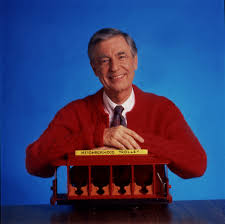
 I didn’t grow up watching “Mister Rogers Neighborhood.” The television in my family’s house was connected to two different antennas that each picked up a single television station. One TV station was affiliated with the NBC television network and the other with the CBS television network. My childhood mentor was Captain Kangaroo. Bob Keeshan’s broadcast was on commercial television, so I was also exposed to products such as pre-sweetened Kool-Aid, where the “sugar, sugar, sugar…is already in it.” Sad, that I remember that sell line over 50-years later, more than any other lesson taught by that show.
Fred Rogers
I think I really became aware of the impact that Fred Rogers’ telecast made on children when in 2003 my oldest son Chris called me and said, “Dad, today’s a very sad day, Mister Rogers died.”
But my quest to learn more about this man really came about when I viewed the documentary on Netflix called “Mister Rogers & Me: A Deep & Simple Documentary Film.”
“I feel so strongly that deep and simple is far more essential than shallow and complex.”
-Fred Rogers
Deep & Simple
Fred Rogers learned of this concept from a friend, mystic, activist and author in Durham, North Carolina by the name of Bo Lozoff. Bo wrote a book titled “Deep & Simple.” I bought a copy of the book from the Human Kindness Foundation, which Bo and his wife Sita founded. I wanted to read about the three core tenets of a deeper life that inspired Mister Rogers.
$20 Million Testimony
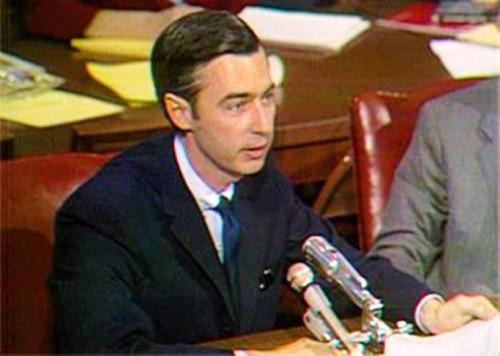 On May 1, 1969, Fred Rogers appeared before Senator John Pastore’s Senate committee to explain why they should continue to fund PBS (Public Broadcasting System) for another term at a cost to the taxpayers of America of twenty million dollars. If you’ve never seen Mister Rogers’ testimony, I encourage you to stop, and take a moment to view it now. Click HERE
Spoiler Alert, Senator Pastore gave PBS its $20 million funding.
Be Real
What Fred Rogers did before the Senate hearing, was the same thing he did on his TV program, in interviews and in life. He was himself. He was being real.
His truthfulness and sincerity were never in question.
2002 Dartmouth Commencement Speech
In May of 2002, Fred Rogers was invited back to his alma mater, Dartmouth, to give that year’s commencement address. It was powerful in its deep and simple message. Here are some of the things he said that day, that I feel have importance to the radio broadcasting industry.
Mister Rogers told one his favorite stories about the Seattle Special Olympics, where nine contestants, all of them physically or mentally disabled, were to run a 100-yard dash.
The starting gun fired and all of them began to run. One little boy stumbled, fell and hurt his knee. He began to cry. Hearing him cry, the other eight children turned around and ran back to him. They picked him up, linked arms and all joyfully crossed the finish line at the same time.
What makes this story so powerful, Fred Rogers told the graduates, was that
“Deep down, we know that what matters in this life is more than winning for ourselves. What really matters is helping others win, too. Even if it means slowing down and changing our course now and then.”
Radio used to operate with this everybody wins type of esprit de corps, a feeling of pride, fellowship, and common loyalty, to its staff, its advertisers and its community of license.
You Are Unique
Fred told the graduates that day that each one of them is unique and special. No one will ever be like them.
Radio stations used to be unique and special when I was growing up. DX’ing (listening to distant AM radio signals via the night skywave) was a cornucopia of theater for the mind. Every station was unique. Every radio personality was special. To not listen to any one of them left the radio listener with a sense of FOMO (Fear Of Missing Out).
Choices
Fred Rogers said that he was very much interested in choices.
“What it is, and who it is, that enable us human beings to make the choices we make all through our lives. What choices led to ethnic cleansing? What choices lead to healing? What choices lead to the destruction of the environment, the erosion of the Sabbath, suicide bombings, or teenagers shooting teachers. What choices encourage heroism in the midst of chaos?”
Radio has been constantly faced with choices over its nearly 100-years.
When television was born, radio chose to move in new directions and created new kinds of programs that would engage the next generation of listeners.
“What is essential is invisible to the eye.”
-from Saint-Exupery’s Little Prince
What’s Essential About Radio?
In the 21st Century, who’s asking this question? What’s essential about radio today? What’s essential about the people who broadcast over your radio station?
Fred Rogers told those Dartmouth students that commencement day, they were graduating because of the people who helped them become the people they are.
“Anyone who has ever graduated from a college, anyone who has ever been able to sustain a good work, has had at least one person, and often many, who have believed in him or her. We just don’t get to be competent human beings without a lot of different investments from others,” said Mister Rogers.
 This past week, news spread that Brother Bill Gable had died. For many of us, it was the time he broadcast over The Big 8 – CKLW out of Windsor-Ontario, Canada that endeared him to our hearts. His best friend, Pat Holiday shared a story about what made Brother Bill and the rest of the air personalities at CKLW essential radio listening. Pat wrote:
“Each day on CKLW the big deal was the show opener. We’d all try to outdo each other. No, ‘Hi…how you doing?’ stuff. It HAD to be larger than life. We’d all do our best to do some crazy or funny or amazing thing to set the tone for the rest of the show. Something mesmerizing. So much that you’d think, ‘Holy shit that was great. How am I going to top that?’”
This is in such stark contrast to what we hear over the radio today.
George Johns shared a blog post from his radio friend Bob Christy that was titled “It’s Over…” The blog was written by Bob after he had spent a couple of hours listening to New York City’s #1 radio station. You can read the complete blog article HERE
The essential element for most radio listeners, the air personality, was throttled to four mic breaks per hour. Worse, the personality sounded uninterested according to Christy and the only local story he shared was ripped off the internet.
Bob ends his post by asking, “So is it fair to judge a station by listening to one break or for ‘only a few hours,” hell yes it is. The audience will give you one shot, you better be ready and make it count.”
Won’t You Be My Listener?
Radio has choices. It will either work to become essential in people’s lives again, or it won’t. Will it continue down the path of being shallow and complex, or return to its roots, being deep and simple? Great radio is more than anything you can see, hear or touch. Great radio is community and companionship. Great radio is LIVE and engaging to its target audience.
Great radio is created by dedicated radio people who spend every waking hour focused on delivering great radio.
I wish for the people in today’s radio industry to possess the wisdom, strength and grace to make the choices the industry needs, to make it the best radio it can be, going forward.

 On this Sunday before Thanksgiving, I’d like to take a time-out from my normal blogging topics and reflect on all of the things in my life I have to be grateful for. Hopefully, it will bring to mind similar thoughts about your life this past year and those things you have to be grateful for too.
 There are lots of items in the news these days about what the radio industry should be doing. Streaming, podcasting, smart speaker accessible etc. The one thing I hear little talk about is, improving the core product and focusing on what the listener is seeking.
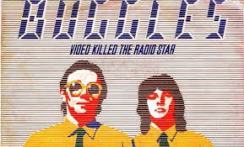 Remember when the rock group, The Buggles, introduced a new cable TV channel, MTV (Music Television) with the song “
 Radio used to really promote its greatest asset, its radio talent. WHDH in Boston promoted itself as having “New England’s Finest Radio Entertainment 24 Hours Every Day!” The “Big 5 on 85” print ad featured Jess Cain, Fred B. Cole, Hank Forbes, Bob Clayton and Norm Nathan, as their air staff, and never mentions what kind of music they play, or news they featured or anything else the radio station did. WHDH was not alone in doing this. Every radio station promoted its talent line-up. Radio air talent WAS the reason people listened.
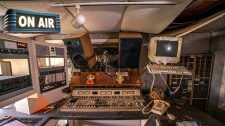 For the radio listener, your next break is all that matters. Does it speak to your listener? Does it have relevance to your listener’s life right this second? How do you know?
 Is the retail industry dying?
 This past Friday, October 12th, was my 66th birthday. Notable because according to Social Security I’m now at “full retirement age.”
 Simon Sinek says people don’t buy what you do, they buy
  I remember how a weekly fax changed my radio life. It was called the “Monday Morning Memo,” and it was written by a guy in Texas by the name of Roy H. Williams.
 This past Tuesday, September 11, 2018, America remembered the 17th anniversary of the 9/11 attack on America in New York City, Washington, DC and Shanksville, Pennsylvania. My class at the Wizard Academy was supposed to have 29 students. Only four of us showed up: Dr. Kevin Ryan, a famous writing coach from Utah; Chet Young, a big salesman with a booming voice from Burlington, Iowa; Akintunde Omitowoju, a senior programmer of Nintendo games from Kyoto, Japan and me, a radio station general manager from Atlantic City, New Jersey.
 Want to make your radio station more effective for your advertisers and more engaging for your listeners? Then do those things that will not change for effective radio in ten years.
 DickTaylorBlog
It Was Always a “Good Day!”
He broadcast six days a week, just like all radio personalities did back in those days. It was a time when all radio was delivered LIVE. Paul Harvey was heard over the ABC Radio Networks with his News and Comment week day mornings and middays. His Saturday noon-time broadcasts were extra special broadcasts that were always sure to surprise and delight his audience of as many as 24-million people a week. Paul Harvey News was carried by 1,200 radio stations in America, plus 400 American Forces Network stations broadcasting all over the world.
Page 2
The first commercial break in each broadcast was clearly announced with the words, “now page 2.” And it caused me to turn up my radio and give Mr. Harvey my full attention as he told me about another great product that he personally used. The ad copy, just like the news and comments, were all crafted by the mind of Paul Harvey.
I bought my BOSE WAVE radio due to Mr. Harvey telling me how wonderful music sounded coming through its speakers and baffle system design. It started me on the path to owning several BOSE products as a result.
Paul Harvey News had a waiting list of sponsors to get on his program. In 1986 his News & Comment broadcasts were rated #1, #2, #3, #4 and #5 in network radio programs when he was the focus of a CBS 48-Hours broadcast commemorating Paul Harvey’s 70th birthday.
Bob Sirott did the profile piece and it showed Paul Harvey as few ever saw him. I encourage you to watch the segment on YouTube by clicking HERE
Paul Harvey News
On April 1, 1951, ABC Radio Network premiered Paul Harvey News and Comment. His Chicago based broadcasts were often called “the voice of the silent majority” or “the voice of Middle America.”
Paul Harvey was making so much money for ABC, they added a third daily broadcast to the schedule on May 10, 1976 called, The Rest of the Story. These broadcasts were written and produced by Paul’s son, Paul Harvey, Jr. for its 33-year long run.
While Paul and his son maintained this entertaining feature which was based on true stories, not all critics agreed, including urban legend expert Jan Harold Bunvand.
I know from my own personal experience of the two times Paul Harvey included stories based on my hometown of Pittsfield, Massachusetts, that Mr. Harvey played fast and loose with the facts of the events to tell a good story. It made me wonder how all the other stories I heard might have been so “massaged.”
Iowa
In 2000, I was managing a cluster of radio stations for Connoisseur and Cumulus. We carried Paul Harvey on my 100,000-watt KOEL-FM. It was the only thing, other than local news in morning drive, that stopped the flow of the best in country music.
I remember being in my car at the time Mr. Harvey’s noon-time broadcast came on the air and hitting the scan button to hear Paul Harvey News and Comment on virtually every station my car radio stopped on. In media, that’s called a “road block,” the same program or advertisement, broadcast at the same time on multiple radio or television stations.
$100 Million Dollar Contract
In November of 2000, Paul Harvey had just inked a new 10-year contract with ABC Radio Networks when a few months later he damaged his vocal cords and had to leave the air. It wasn’t until August of 2001 that Paul returned to the air waves, but only with a reduced clarity and vocal presence in his voice.
I remember this very well as I was now back in Atlantic City running a cluster of radio stations, and my AM radio station WOND-AM1400, was the Paul Harvey radio station for South Jersey.
I had been cajoling Mr. Harvey’s secretary in Chicago for months before he lost his voice for customized promotional announcements to be voiced by Paul Harvey to promote his daily broadcasts over WOND radio.
One day in the fall of 2001, a reel-to-reel tape came in an envelope from Chicago addressed to me. It contained my customized, Paul Harvey voiced, WOND announcements. I was thrilled, but just a little disappointed when we played the tape due to the hoarse, raspy sound of Paul’s voice when he recorded them.
Before the end of 2001, Paul Harvey was back to full vocal dynamics.
Touched My Heart
It was after watching the Bob Sirott piece produced for 48 Hours a second time and then sharing my personal Paul Harvey memories with the love of my life, Sue, that I found myself choking up and tearing up about the heartfelt emotional impact that this gentleman from Tulsa, Oklahoma had made on me.
Using only wire copy and his manual typewriter, Paul Harvey crafted a broadcast of words that vividly created in the mind of the listener exactly what he intended. His full vocal range, the power of the dramatic pause and dynamic inflection completed his radio magic, what most like to call radio’s “Theater of the Mind.”
Could you imagine Paul Harvey doing podcasts?
I have no doubt that they would have been as popular as the original SERIAL podcast was from NPR.
Paul Harvey didn’t use any music or sound effects.
Paul Harvey created great radio, that was welcomed into homes all across the globe by his great writing ability and vocal acting talents.
Harvey receiving the Presidential Medal of Freedom in 2005
Good Day
Paul Harvey died on February 28, 2009 at the age of 90.
Three weeks after his death, ABC Radio Networks cancelled the entire News and Comment franchise.
At the time of his death, he had less than two years left on his 10-year contract.
Paul Harvey called himself a salesman, not a journalist, newsman or anything else. He loved his sponsors saying “I am fiercely loyal to those willing to put their money where my mouth is.”
He never would have promoted his broadcast as “commercial free,” as he understood that this free, over-the-air medium called radio, was a powerful way to move product for his advertisers and that it was those very folks that paid all the bills for him and the ABC Radio Networks.
Imagine that, radio ads that were as cherished to hear as the rest of the broadcast itself.
That’s the definition of “GREAT RADIO.”
14 Comments
Filed under Education, Mentor, Radio, Sales
Tagged as ABC Radio Network, Bob Sirott, CBS 48 Hours, KOEL-FM, News and Comment, Paul H. Aurandt, Paul Harvey, Paul Harvey News, The Rest of the Story, WOND