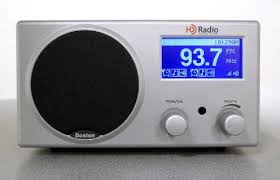
Radios Go High-Definition

37That was the headline that appeared in the Baltimore Sun on January 7, 2004. Unfortunately, unlike HDTV (High Definition Television) HDRadio never stood for “High Definition” radio. And maybe that was the first mistake. HDRadio was simply a name they chose for the digital radio technology.

The iPod was introduced in October 2001. Steve Jobs introduced this music delivery changing device this way. Only a month earlier, XM began broadcasting the first satellite radio programming to be followed four months later by Sirius satellite radio. So by 2004, digital radio was already late to the party.

KZIA-FM Z102.9 saw Kenwood USA sell its first digital receiver in Cedar Rapids, Iowa to take advantage of KZIA-FM’s HDRadio broadcasts. “This is a significant move,” Michelle Abraham, senior analyst at In-Sat/MDR, a market research firm in Arizona, said of the roll-out of digital radio equipment. “It may not seem duly significant in the beginning, but in a few years from now, it will be a huge leap.” The hope was it would prove to be competitive to the newly launched satellite radio offerings from XM and Sirius (now merged into a single satellite company). HDRadio was also seen as improving FM to have CD quality sound and making AM sound like FM. It was heralded to help struggling AM radio stations.

Solving a Problem That Didn’t Exist

What HDRadio did for FM radio stations was solve a problem that listeners to FM didn’t feel existed. No one who listened to FM radio was complaining about the quality of the sound of the transmission. (They were complaining about other things, like too many commercials.) And for AM radio stations, it meant people buying radios for a service that didn’t offer anything they really wanted to hear or couldn’t get from someplace else. AM radio was now the service of senior citizens who already owned AM radios, who grew up with AM radio’s characteristics and whose hearing was not the best now anyway. So HDRadio for AM wasn’t something they were asking for either. Worse, AM radio stations that put on the new digital signal found it lacked the benefits of skywave and often interfered with other company AM radio stations as the industry quickly consolidated radio ownership.

Industries Most Disrupted By Digital

In March 2016, an article published by Rhys Grossman in the Harvard Business Review listed “Media” as the most disrupted by the growing digital economy. Turns out if you’re a business to consumer business, you’re the first being most disrupted by digital. The barriers to be a media company used to be huge, but in a digital world they are not. The business model that media companies depend on has not adapted well to the digital economy.

Education – Disruption Ahead

Having moved from media to education I only got ahead of digital’s disruption for a while. But even those industries that had perceived high barriers of entry are finding those walls crumbling quickly. Grossman says fifty percent of executives see education being impacted in a big way in the next twelve months.

Where Are The Radios?

Edison Research did their latest “Infinite Dial” webinar and the slide that most impacted me was the one about radio ownership. From 2008 to 2016 the percentage of people in America that don’t own a single radio in their home has gone from 4% to 21%. When Edison narrowed this down to household between the ages of 18-34, non-radio ownership rose to 32%. Mark Ramsey’s Hivio 2016 Conference had one Millennial describe a radio set as being “ancient technology.” Ouch!

It doesn’t seem all that long ago that Jerry Lee’s WEAZ in Philadelphia was giving away high quality FM radios to increase listenership to not just his radio station but to FM radio. And KZIA in Cedar Rapids gave away HDRadios to allow people to hear their new signal. It now appears time for the radio industry to begin giving away AM/FM radios every time they are doing station remotes, contests or appearing at venues that will attract lots of people.

Elephant in the Room

But the elephant in the room remains the broken media business model. Newspapers, magazines, radio, and television – any media that is ad supported – will be challenged to find a way to capture revenue to continue.

As Walt Disney famously said “We don’t make movies to make money, we make money to make movies.”

To anyone in ad supported media, we would agree we do it for the same reasons.

The $64,000 question is how.

16 Comments

Filed under Education, Mentor, Radio, Sales, Uncategorized

When Radio Was Color Blind

35Once upon a time, radio was pretty much like the TV show The Voice. We only knew what we heard coming through the speaker on our radio.

Those pilots of the airwaves were magical.

We may not have had a clue as to what they looked like, but we created a persona in our minds as if we did. It was never even close to the real person, if we ever happened to meet them.

As a young lad, most of my radio listening occurred at night, after the sun had gone down and when AM radio signals enjoyed the benefit of the skywave effect. The reasons for this were simple. First, during the day I was in school and when school got out, I was outdoors playing sandlot sports. Second, at night the only TV set in the household was controlled by either my parents or older siblings. But the transistor radio was completely in my control. I’d listen to radio stations from all over North America. One of those stations would be the most listened to AM radio station of its day, WABC out of New York City.

Who’s the Black Guy?

I got my best school friend hooked on radio and each day at school we’d compare notes of who we listened to the night before and how far away the stations we picked up were and where on the dial they were located.

Music Radio 77 – WABC out of New York City threw a pretty consistent signal over Western Massachusetts at night and so it got a lot of my after dark listening time. My friend listened to WABC a lot as well, so you can imagine our surprise the first time we saw a picture of the WABC All Americans (that’s what they called their air personalities back in the 70s). We looked at one another and said simultaneously, “Who’s the Black Guy?”

That personality was Chuck Leonard. His cool factor just went up in our eyes. Chuck Leonard was not only heard over WABC late at night but on one of our local ABC network affiliated radio stations doing the feature show “Sneak Preview.” Chuck was famous for one-liners like “The best that ever did it and got away with it.” Yes we heard a lot of Chuck Leonard and loved everything he did. But in our minds, we had never thought of him as being black. And once we found out, we didn’t care.

Jerry Lee Lewis and Chuck Berry

In 1958, two hit recording artists were having a backstage fight over who would close the show that night, Lewis or Berry. The decision would be made by the show’s host and producer. He chose Berry. Lewis would end his act with Great Balls of Fire and then torch his piano.

The man who enraged Lewis was the radio personality who is credited with coining the term “Rock and Roll,” Alan Freed.

While many remember Freed for his involvement in accepting payola for playing records on his radio show, Freed was instrumental in integrating Top 40 radio with black artists.

Motown Sound

Contemporary music on the “kid’s stations” was integrated with the birth of this type of radio. Everything that wasn’t your parent’s music was embraced. It was the silent rebellion for many of us.

My favorite artists were The Four Tops, The Supremes, Stevie Wonder, Marvin Gaye, The Temptations, The Spinners, Smokey Robinson & the Miracles, Al Green, Martha Reeves, Gladys Knight, Michael Jackson among many others. Berry Gordy’s Motown Records out of Detroit would craft the sound that quickly integrated America’s contemporary radio stations.

I remember thinking; I should have been born black.

But it was Alan Freed that would be the first to break down the color barrier and integrate the music he played over the radio. It’s almost hard to believe that people in his day considered Freed a threat to society because he was playing “race music.”

You can read a really interesting history about Alan Freed and this period in his life at my professor friend Jay Douglas’ “Out of My Mind” blog.

Radio Formats Begin to Silo

As music radio began moving from AM to FM, the Top 40 – or the best of the newest songs type of format – began to silo into their own formats. Depending on who’s counting, there are at least 20 different music radio formats today. It’s hard to find any radio station nowadays that plays the wide variety of artists, styles and music that one could hear over a single radio station back in the 70s, as this 1970 Top 100 Songs from WABC demonstrates.

Bowling Alone

In  2001, Robert Putnam wrote a book called Bowling Alone. His thesis was that our American society was breaking down as we became more disconnected from our families, our neighbors, our communities and from the republic itself. While once upon a time bowling leagues had thousands of members, today we are more likely to bowl alone.

The great Yogi Berra captured this societal breakdown this way, “If you don’t go to somebody’s funeral, they won’t come to yours.”

PTSD

More recently, Sebastian Junger made an interesting observation about PTSD. What he wrote about and famously talks about in his TED Talk is that soldiers don’t experience PTSD from being at war, but from coming back home to America where today’s society is such a disconnect from the close tribal life of a soldier’s military unit. Where they eat together, sleep together, care for one another and protect each other’s life. When they come home from today’s modern warfront, what they find is an alienating and bitterly divided modern society. Maybe a better term for what our soldiers feel should be called “post deployment alienation disorder” says Junger.

The question becomes not can we save our vets, but can we save ourselves?

For radio’s future, the question might not be all that different.

20 Comments

Filed under Education, Mentor, Radio, Sales, Uncategorized

What’s In a Name?

34In his play Romeo & Juliet, William Shakespeare wrote “A rose by any other name would smell as sweet.” Gertrude Stein in her 1913 poem Sacred Emily wrote “Rose is a rose is a rose is a rose.” It is one of her most famous quotes and has been interpreted to mean “things are what they are.” In other words, the fact that simply using the name of a thing invokes the imagery and emotions associated with it.

Podcasting

Which brings me to a follow-up on last week’s blog post “Podcasts & Homework.” This past week, Jacobs Media Strategies in their blog asked the question “Is the Name ‘Podcasting’ Hurting the Medium’s Growth?”  Jacobs’ resident podcaster, Seth Resler, said there are basically two types of people: “Those who think the word ‘podcasting’ is preventing the medium from reaching its full potential, and those who think that idea is silly.”

Where Did the Name Podcasting Come From?

The term “podcasting” came from a portmanteau of the words broadcasting and the Apple device known as the iPod. The iPod was the first device to make using MP3 files simple and easy to download, organize and use. Its ubiquitous use made it the name people used for all such devices, much like Kleenex came to represent all tissues and Xerox came to represent all paper copies.

Is Podcasting the Correct Name For This Type of Content Delivery?

The debate is whether a name that is so tied to a device, the iPod, and to a single company, Apple, a good thing? Well, if you own an iPhone, you now have an App for podcasts. Likewise if you own an Android phone you also have many Apps for listening to podcasts. So the Alphabet Company isn’t fighting the use of the term on their platform. The name podcast is also the way the big internet content aggregators like Pandora, TuneIn, Stitcher and others refer to this type of programming.

As I read through the various comments from the podcasting gurus Seth had put the question to, one concept seem to rise above the others and that was podcasts were really “On Demand Audio.” They are the TiVo of audio. (TiVo is the digital video recorder that allows people record and watch video content on demand.)

What’s the dictionary say?

David Plotz, CEO of Atlas Obscura and co-host of Slate’s Political Gabfest said in Seth’s blog post


“Podcasting is (a) dreadful name. No one uses iPods anymore. Podcasts are not broadcast. The only part of the word that’s accurate is the ‘ing.’”


So that got me to thinking about what Merriam Webster had to say about this. Turns out that the word “casting” is defined as “1: something (as excrement of an earthworm) that is cast out or off. “ Depending on what your experience has been with either broadcasting or podcasting, you might think old Webster got it right with the excrement part. So “casting” is appropriate in the name “podcasting.” But how about the “pod” part?  If you remember, the theme that was heard over and over being said by the gurus in Seth’s blog was that podcasts were really “On Demand Audio.” So, if the “pod” were to stand for “Programs On Demand,” then the word Podcasting is absolutely the perfect word for this type of programming.

Radiotelephone License

And since most people who listen to podcasts, do so on their mobile phone, that signal is arriving through the ether, just like radio and television signals do, to your mobile device.

In fact, my very first FCC 3rd Class Operators License was called a Radiotelephone license because when this whole wireless communications world was born, no one knew what it would become. Initially some, like Nathan B. Stubblefield, felt it would be one-to-one wireless telephony. Others, like David Sarnoff and Edwin Howard Armstrong, would see it as a one-to-many form of communication that would become broadcast radio.


Leave a comment

Filed under Education, Mentor, Radio, Sales, Uncategorized

Podcasts & Homework

33On the surface these two things appear to have nothing in common. Right? But stay with me as I explain. I follow Duke Professor, celebrated author and student of human nature Dan Ariely. Dan writes a regular column for the Wall Street Journal in which he answers people’s questions. A recent question was “Any tips for encouraging kids to view their homework as play?”

Being that my second career is teaching at a university, subjects dealing with learning catch my eye, so I read what Dan had to say about this.

Can Homework Be Viewed As Play?

Two words: Not really.

However Dan goes on to explain why this is. While you can get kids to maybe enjoy homework more or to hate doing homework less, it is still work. Play is something else entirely.

So what does this have to do with Podcasts?

Hold on, I’m getting to that. Dan goes on to tell the story of how in a part of the world that has little water; deep wells need to be dug to find water. Pumping water out of these deep wells is a lot of work. A person noticing how children at a playground near the well loved to push a merry-go-round around for hours on end while at play had an idea. What if the children’s merry-go-round were connected to a pump that would draw water out of the well? Are you with me so far?  Well, that’s what they did.

A Not So Bright Idea

The result of this new “PlayPump” was underwhelming. And here’s the key point of the story. Dan says that “when you take a play activity and force children to do it, you change the activity from play to work, and the fun goes away.”

Podcasts = Work

In my honest opinion, Podcasts take work. You have to remember they are there. You have to download them onto your device. You have to schedule a time you’re going to listen to them. You have the ability to fast-forward or repeat them – which I’m sure you would say is their benefit – and that means you have control over them. You have a role to play. You have to work. So if Podcasts are to be a threat to over-the-air radio, listening to them is going to have to get a whole lot easier.

Don’t Discount Curation

Over-the-air radio is easy, just an on/off button, volume control, and your favorite stations ready to listen to at the push of a button. Someone else does all the work. They pick out the songs, they tell you the weather, they give you the time and traffic conditions, they entertain you, and they alert you to anything important happening in your world you should know about. All you have to do is play.

Who wants to do homework anyway?

9 Comments

Filed under Education, Mentor, Radio, Sales, Uncategorized

Real Possibilities

AARPBefore I get into the meat of this week’s post, I first need to walk you through a bit of a preamble. Also, this week’s post is a continuance of last week’s post about Millennials vs. Baby Boomers, so if you missed it, you might want to read that first here before you read this week’s. Now please bear with me while I set-up the story for this week’s post.
I’ve been a card carrying member of AARP since I turned 50. When you hit this milestone birthday, don’t worry the folks at AARP will find you and solicit you to become a member.

When I became a member, AARP stood for the American Association of Retired Persons. But at age 50, I was a long way from actually retiring.

AARP was founded in 1958, so this organization could be classified a “Baby Boomer” just like me. And just like me, AARP has changed over the years. It officially changed its name from the American Association of Retired Persons to just AARP. AARP no longer requires members be retired but they must be at least 50 years of age.

In 2013, AARP launched its “Life Reimagined” program that sub-labeled the “RP” part of AARP to mean “Real Possibilities.” You see, AARP realizes that today people aren’t thinking about retiring when they hit 50 as much as they are thinking about tackling a second, or maybe a third career or endeavor.

At my university we started a wellness program in 2013. I was a charter member. Our university self-insures employees for healthcare and one of the ways to control costs is to incentivize employees to be as healthy as possible.

My university office is on the third floor of the Mass Media & Technology Hall building. We have three elevators in our building. I never use them. I prefer the stairs for two reasons: 1) they are much quicker than the elevator and 2) I use the stairs as a part of my wellness fitness program.

When a student says they’d like to meet with me for a moment in my office after class, I often find them a third of the way up the stairs when I reach the top floor (I take stairs two-steps at a time). They are also huffing and puffing. I just wait for them to catch up.

Now here’s the point of this week’s post…

Millennials Don’t Know What Age “Old” Is

Millennials are today’s media buyers. Millennials are today’s creative’s. Millennials are today’s planners. Heck, Millennials are probably the people running the place too. So if they have a warped concept of age, it is going to affect their advertising placement decisions.

Millennials now populate today’s media properties. They are the programmers, air talent, sales management, sales people and possibly the senior management.

I just met the director of Cox Digital Media in Las Vegas this past April and he is 28 years old.

Millennials Describe What Old Age Means to Them

Well AARP did some research into this question of what Millennials think “old” is. Then they asked them to show them what they thought “old” looks like. Then they introduced these same Millennials to some real “old” folks. Best of all, AARP recorded everything on video.

Watch the four-minute long video and then continue reading.

https://www.youtube.com/watch?v=lYdNjrUs4NM

See the problem now?

If you are wondering why more radio stations aren’t programming to Baby Boomers, or if you are wondering why more media buyers aren’t buying the BIG MONEY demos, now you have a better understanding of the problem. They think you and I have one foot in grave, instead of one foot away from the summit of Mount Everest.

Corvette Buyers

I live a short distance away from the only place Chevrolet makes the Corvette in the world. The average age of a Corvette buyer is 59. Boomers and people even older are the people who are buying Corvettes. They are NOT the Geritol-set.

We Are Part of the Problem

We call them Millennials, Generation X’ers and Baby Boomers etc, but another way to look at these generations is as tribes. Seth Godin has written extensively about this concept.

Seth says that sooner or later tribes begin to exclude newcomers. So each of these groups operates in their own little silo because it is easier than to keep breaking in newbies and because it could threaten the existing power structure.

Consolidation

The consolidation of media hasn’t helped either. RIFs (Reduction In Force) mainly dismissed the highest priced employees (Boomers) and left an organization of low cost employees (Millennials) all in the pursuit of increasing Shareholder Value.

Recent studies have shown that private companies out-perform public companies. The reason, they operate on the Peter Drucker principle that the only valid purpose of an enterprise is to create a customer. Privately owned radio companies also out-perform their publicly traded radio company counterparts. Same reason.

Turns out delighting customers is simple, clear and measurable, moreover it is the genuine path to successfully operating any business.

Leadership

The first question of a leader always is: “Who do we intend to be?”

NOT “What are we going to do?

BUT “Who do we intend to be?”

In other words, says Max De Pree of Herman Miller “What are we here for?”

Napoleon put it this way “Leaders are dealers in hope.”

Tom Peters says “The leader is the person who inspires us, sends us on quests to places we had never imagined.”

Think Thomas Edison, Nikola Tesla, Steve Jobs, Elon Musk and so many more just like them.

To paraphrase the title of Lee Iacocca’s 2008 book:

“Where have all of the radio leaders gone?”

22 Comments

Filed under Education, Mentor, Radio, Sales, Uncategorized

Millennials vs. Baby Boomers

31The radio world was all a buzz this week when it was announced that Millennials now out-number Baby Boomers.
Well la-te-da.

Let me tell you why that doesn’t really matter.

William Francis Sutton’s Advice to Radio Operators & Advertisers

Sutton was famous for making money, lots of money. Actually, he didn’t really make money as much as he stole money. Sutton stole an estimated $2 Million over his forty year career. And while he denies he originated it, Sutton’s Law states that when diagnosing, one should first consider the obvious. So when Willie Sutton was asked by a reporter why he robbed banks all his life, he replied “because that’s where the money is.”

Boomers Are Where the Money Is

When the Boomers were growing up, rates of productivity and hourly compensation rose in lock-step. Productivity rose 96.7% and hourly compensation rose 91.3%. That changed in 1973. While productivity continued its upward slope, compensation flat-lined; productivity was rising around 75% in the period of 1973 to 2013, wages went up a mere 9%.

Worse, today a college education not only doesn’t guarantee increased earnings, it is more like an economic boat anchor that saddles a Millennial with student loan debt of tens of thousands of dollars as they begin to enter the workforce. Paul Campos wrote in the New York Times that “if over the past three decades car prices had gone up as fast as tuition; the average car would cost more than $80,000.”

Unlike us Baby Boomers, Millennials have come of age at the very moment when economic opportunities are few and far between.

Trading Places in Income

Trading places: The income of younger working-aged families was falling long before the Great Recession and has now been surpassed by the rising incomes of families well into retirement age. (Median Income for Younger and Older Families in Inflation- Adjusted Dollars)


Stagnant Income

The average middle-class family today makes the same household income as it did thirty-six years ago. The problem is that today’s heads of household weren’t even born yet. We’re talking about different people. So the advantage of a middle-class family today over one three decades ago has evaporated. That’s if they can even be considered “middle-class” as 61% of Americans considered “middle-class” in 1971 comprise less than 50% of those families today.

Vastly Different Economic Trajectories

In the more recent economic history of America, each new generation would far surpass that of their parents’ in material standard of living. Millennials, and Generation X’ers who came before them, “are falling farther and farther behind their parents’ generation in most measures of economic well-being.” This represents a change being experienced by today’s living generations that is unprecedented in America’s history.

Millennials Number 75.4 Million vs. Baby Boomers at 74.9 Million

Here’s why radio and advertisers shouldn’t be freaking out over the headline that Millennials now out-number Baby Boomers. There may be more of them, but when it comes to discretionary income – the money that buys stuff – Boomers are still your “bank.” Don’t take your eye off the ball.
If Willie Sutton were operating a media company or an advertising agency, he’d be focused on putting his marketing investment where the best R.O.I. (Return On Investment) is, radio and its #1 reach that delivers 93% of Americans every week. It’s the traditional mass media that Boomers grew up with and still use in great numbers. Radio still delivers.

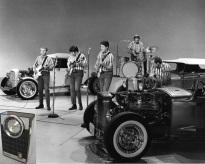
The “Music of YOUR Life” is Now The Rolling Stones

Back in the 1980s, I managed one of the first Al Ham “Music of YOUR Life” radio stations. Next to Rush Limbaugh, this big band based music format was one of two formats that were attracting people back to AM radio. I remember joking that one day, when we Boomers were their age, the music of our life would replace the sounds of Tommy Dorsey and Glenn Miller.

That day is here!

And there’s money to be made.

20 Comments

Filed under Education, Mentor, Radio, Sales, Uncategorized

History’s Technology Rhyme

Transistor Radio, Car Radio and Rock & Roll

Transistor Radio, Cars & Rock ‘n Roll

I’ve written before how history never repeats itself, but usually rhymes. So when I was reading an article in the NY Times about “Tech’s ‘Frightful 5’ Will Dominate Digital Life for Foreseeable Future” it hit me. Here was how history was rhyming when it came to communications. Fasten your seat-belt, this will get bumpy.

What this article’s author Farhad Manjoo wrote was how Amazon, Apple, Facebook, Google and Microsoft (others include Netflix in this mix) came along at a perfect time to roll up their user base. They were in the right place, at the right time in other words.

Geoffrey G. Parker, a business professor at Tulane University has co-authored a book called “Platform Revolution” where he explains how these tech companies were able to ride the perfect wave of technology change – that being a decrease in the cost of IT, an increase in connectivity and the introduction/fast adoption of mobile phones.

And when it comes to advertising, these companies are in the right place to leverage digital marketing and enjoy most of the benefits of this growth area as well. In fact, since there is a sense that these major digital companies will receive most of the online advertising monies, traditional media – like radio & TV – could see advertising monies return to them.  Let’s hope that happens.

So, where’s the rhyme in this story? Well consider this other time in communications history when television burst onto the scene after the end of World War Two in the 1950s. Radio, a lot of people thought, would cease to exist. Radio’s stars, programs and advertisers, to a large measure, jumped into television. Radio had to find a new act.

Radio was in the right place, at the right time for the birth of three things when TV came along; the transistor radio and the car radio. Both of these technology advancements would be the savior of radio along with one other important development; rock ‘n roll.

Radio was in the perfect place to ride the baby boomer youth wave of rock music, cars and transistor radios. Television grew in large measure by scarcity, only two or three television networks and few TV stations.

When broadband came along, that scarcity factor went poof. Radio now sees its dominance in the car being challenged by a digital dashboard.

The newest radio format to have come into existence – all sports/talk – is now 29 years old. Clearly, innovation in the radio world has stalled.

The good news is radio in America has more reach than any other form of mass media. The bad news is it sees annual erosion of its TSL (time spent listening). This can be fixed. To do this, radio needs to address the very factors that are causing its TSL to erode.

The thing most often heard from consumers about what they dislike about radio are its commercials. Yet, commercials don’t have to be a tune-out factor. No one tunes out the Super Bowl when it’s a blowout because they want to see what other clever commercials might still be coming on their television.

Most radio stations long ago did away with their copywriters. These masters of the spoken word who can craft a story about businesses need to be enticed back into the radio business at every radio station.

The number of commercials in a break needs to be reassessed by the radio industry as well. You can’t kill the goose that lays your gold revenue egg and expect it to continue to lay you golden eggs.

Bring back personalities. They not only sell the music (the record companies need you!); they sell your station and through live reads, your advertisers’ products and services.

Those who remember Paul Harvey News & Commentary will tell you that page two (his first live read commercial) was always something you turned up the radio for. I remember reading Paul Harvey brought in more money for the ABC Radio Network than everything else they did. And everyone loved Paul Harvey’s commercials and bought the products he talked about.

I think retired CBS Radio President Dan Mason said it best when he said this about radio:

“Without community and companionship, we have nothing.”

14 Comments

Filed under Education, Mentor, Radio, Sales, Uncategorized

Broadcast Educational Association

Doing my teaching thing at BEA 2016 in Las Vegas.Dick Taylor BEA 2016

Leave a comment

Filed under Uncategorized

Viva Las Vegas

27Today kicks off the BEA 2016 Conference in Las Vegas and on Monday, the annual National Association of Broadcasters (NAB) Convention begins here as well.
Lots of people, from all over the world, sharing and learning this week and I will be among them.

Things I will be sharing with you in future blog posts.

1 Comment

Filed under Uncategorized

Mentoring Talent

Chase the DJThe Broadcast Education Association (BEA) meets every year in Las Vegas concurrently with the National Association of Broadcasters (NAB) annual convention. In forty-plus years of being a professional broadcaster I never attended an NAB convention. In six years of being a university professor, I’ve attended six conventions. I know, like that’s insane, right?

This year I was asked to serve on the panel about mentoring talent. This panel was not only selected by peer-review but I’ve been told was ranked number 4 out of all the panel proposals that were accepted for this year’s meeting.

My section on panel will deal with mentoring college students to be air personalities. Here’s what I’m going to say.

Rule #1

People don’t care how much you know, until they know how much you care.

Whether you’re mentoring air talent or sales talent, the person needs to first know that you really care about them and their success. What people value most is “being valued.” The tricky part is you need to know how the student (employee can be substituted every time you see the word student) wishes to be valued and do that. It’s not about you and what you think is important.

The perception of being valued is completely in the eye of the student.

Understanding this distinction creates a big opportunity for you, the teacher, to influence the student to continually strive for better and better performance.

A person who feels valued will focus their energy to the task at hand and be enthusiastic. Enthusiasm is contagious and spreads quickly to others.

Air talent likes to know they’re being heard. If you’re the teacher (or their boss) they want to know you’re listening. When you give them positive feedback it makes a big difference in their growth.

Rule #2

Everything is won or lost in the preparation stage.

Before I started teaching the Advanced Radio Performance class at my university, I noticed the students in our college radio station appeared to be bored when they were on-the-air. Those that weren’t bored were spending all their time on their smartphones. Needless to say, listening to the radio station was pretty uneventful too.

What I tell my radio performance students is the same thing I tell my broadcast sales students, if you go on the air without being prepared, you won’t attract listeners, just as if you go on a sales call without being prepared you won’t make sales.

Have Clear Goals

Establish clear goals for your class and then everyone will be on the same page. Be consistent in dealing with students both individually and as a group. Help your students to have a clear picture in their mind of what success sounds like.

Plan, Prepare, Perform

I give each of my performance students a HOT CLOCK to plan out their shows on. Each of their clocks must contain a station ID at the top of the hour, weather breaks twice an hour, a break about something happening on our campus, a break about something happening in our city, a break about something interesting that’s happening in their life, a break that tells us something new about the local musical artist we are featuring that hour that we didn’t know about.

They need to personalize their show.

If they are interested in sports, then I ask them to put a sports commentary into their show or a sports report. If they are interested in movies, then I ask them to give us a movie review or preview what new movies will be playing in our area.

Be present. Be now. Be personal.

Then practice, practice, practice off-the-air before you enter the studio to perform your show.

Students need to learn the discipline of planning and preparing before each of their shows. I tell my students about my recent guest appearance on 650AM-WSM in Nashville. I prepared for three days to do a four hour air shift.

My performance students that had previously volunteered at our college radio station tell me that now they are planning and preparing their radio shows now find radio exciting and fun. They say the hours they are on the air just fly by. One student said her mother called her and said she sounded so much better and she told her mom that it was due to her professor’s mentoring.

Remember, when your students deliver, be sure to praise them.

Catch People Doing Things Right

Ken Blanchard has written many great management books. I was delighted when one day Twitter notified me that I had a new follower and it was Ken Blanchard. Ken preaches the way to have people do more of the right things, all the time is to catch people doing things right and praise them.

Since making the move from managing radio stations for most of my life, to now teaching at a university, I’ve learned that most of the same things one needs to do in the business world with professional talent, works the same way with student talent.

Everyone loves to hear they’re doing a good job.

When I’m listening to one of my students shine on the air, I call them up and tell them how great they sound – or I send them a text message – or post it on our Facebook page for the entire world to see.

Rule #3

Praise in public and critique in private.

I won’t ever call up a student if they are doing a bad job while they’re on the air and tell them that. That’s the worst thing you can ever do to air talent.

I might call them up if there’s a technical issue that needs to be corrected – like, I think you’re saying some really great things, but your mic level is so low I can’t really hear you. Make sure you’re properly modulating those VU meters when you’re talking and don’t just think you’re OK because it sounds OK in your headphones.

Air Check Sessions

One of the things I found to be different in college radio with my students than I found in commercial radio is doing air check sessions. Professional radio talent would rather have a root canal at their dentist than go through an air check session of their last show.

Students love it.

I schedule private one-on-one air check sessions with my students and we go over a telescoped air check of their last show. Now to get that telescoped air check, my students need to scope them from a full-length air check. This means by the time we sit down to listen to it together, they’ve heard it themselves a lot.

What’s amazing is they come to these sessions with a list of things they need to improve. All I need to do is amplify on what they’re hearing and offer suggestions for their next show.

What you want students to hear when you listen to their air check together is their delivery style. You want it to be natural, like they are speaking to one listener in a conversational manner.

Whether the student is doing a show live or voice tracking, it is important that they always act as they are live and understand they need to maintain listener ear-contact.

Radio is an intimate and personal communications medium.

The whole key is to get students to critically listen. Critically listen to their own air checks, to other students and to professional broadcasters.

Learning to be a great radio personality is like learning to be great at anything. It takes practice, practice, practice. Malcolm Gladwell wrote it takes about 10,000 hours of practice to master something. Just remember, practice doesn’t make perfect, perfect practice makes perfect.

In other words, you need to coach your students to not develop bad habits that will be hard to break but keep moving them in a direction that will make them a superstar.

10 Comments

Filed under Education, Mentor, Radio, Sales, Uncategorized