Tag Archives: 2001 A Space Odyssey

Is There a Future For Anyone in an A.I. World?

Last week I asked the question “Is There a Future for Radio Personalities?” That blog was my analysis of the latest research done by Jacob Media Strategies for Don Anthony’s annual Morning Show Boot Camp. I wasn’t surprised by the volume of comments about the blog, however it was sad to find that most people feel the days of making RADIO a career are over.

A.I. (Artificial Intelligence)

The part of Fred Jacob’s research I didn’t include in last week’s blog was the impact that air personalities thought A.I. would make on their future. 76% of the people in the survey agreed with the question: “I’m personally concerned that A.I. technology will lead to many more on-air radio jobs being lost.”

It’s Worse Than You Think

Our universe is estimated to be 26.7 billion years old. Humans on planet earth have only been around 6,000 years, but look at all we’ve accomplished in such a short period of time.

Now, what maybe mankind’s greatest invention might also be responsible for our demise: A.I. or Artificial Intelligence.

This technology has the potential to take away

30% OF ALL JOBS within 10 years.

Think of all the jobs that A.I. can do better (and maybe do even better than you or I).

  • Stock Trader
  • Truck Driver
  • Accountant
  • Telemarketer
  • Lawyer
  • Bookkeeper
  • Actor
  • Writer
  • Musician
  • Painter
  • Radio Personality

It would be easier to make a list of the jobs that cannot be impacted by A.I., than a list of those that will.

To get a better idea of how scary this technology is, listen to either of these links:

The proliferation of these kind of A.I. creations can abundantly be found on YouTube.

Today’s A.I. voice software can listen to a few seconds of anyone’s voice and completely re-create a replica that is almost indistinguishable from the original. I don’t know what is most troubling, that it can be done, that it can be done so quickly or that it’s so easy that anyone can do it.

Call Centers

Call centers are big business around the world, making up 8% of India’s GDP (Gross Domestic Product), 6.3% of Brazil’s GDP and while America outsources the majority of this type of work, the U.S. still employs 3.4 million people who work in call centers.

A.I. has the ability to completely replace everyone

working in call centers around the world.

You don’t have to be a political scientist to predict what would happen if 8% of a country’s GDP is suddenly wiped away. You’ll see more people carrying pitchforks and torches than stormed the castle in “Beauty & The Beast.”

I have radio friends that have used their incredible voices to produce audio books, and earned a good living in the process. A.I. will replace these talented people as well.

Actors & Writers Strike

It’s not just the radio industry that is finding itself in unknown territory.

Actors fear they will lose control of their lucrative likeness and writers fear they will have to share credit with a machine. Watch this situation closely, because writers and actors are the proverbial “canary in the coal mine” for what’s to come for the rest of us in media.

A.I. is at the very heart of the current actors and writers strike, it’s ahead of pay models, benefits and job protections.

Federal A.I. Commission

Senator Chris Murphy is one of the most outspoken members of Congress on artificial intelligence. “When you start to outsource the bulk of human creativity to machines, there comes with that a human rot,” says Senator Murphy. He estimates that humans being replaced for creativity by computers will happen at a staggering scale within the next two to three years, and it scares the hell out of him.

Senator Murphy believes that it is time to create a new regulatory body, like the creation of the FCC (Federal Communications Commission) that came into existence with the advent of broadcast radio.

“There are really deep spiritual questions at hand here. I don’t think policymakers should be shy about talking about that,” Senator Murphy believes.

Putting Things In Perspective

While humans may have inhabited this planet for 6,000 years, look at what has happened in just the last 50 years:

  • The personal computer is 50 years old
  • The iPhone is 16 years old
  • Today’s A.I. is 5 years old

Of all the many calamities the human race faces in the years ahead — a full-scale nuclear war, climate change or artificial intelligence – it’s A.I. that poses the greatest risk. One highly researched economist report on A.I. noted that “there’s more than a 50-50 chance A.I. will wipe out all of humanity by the middle of the century.”

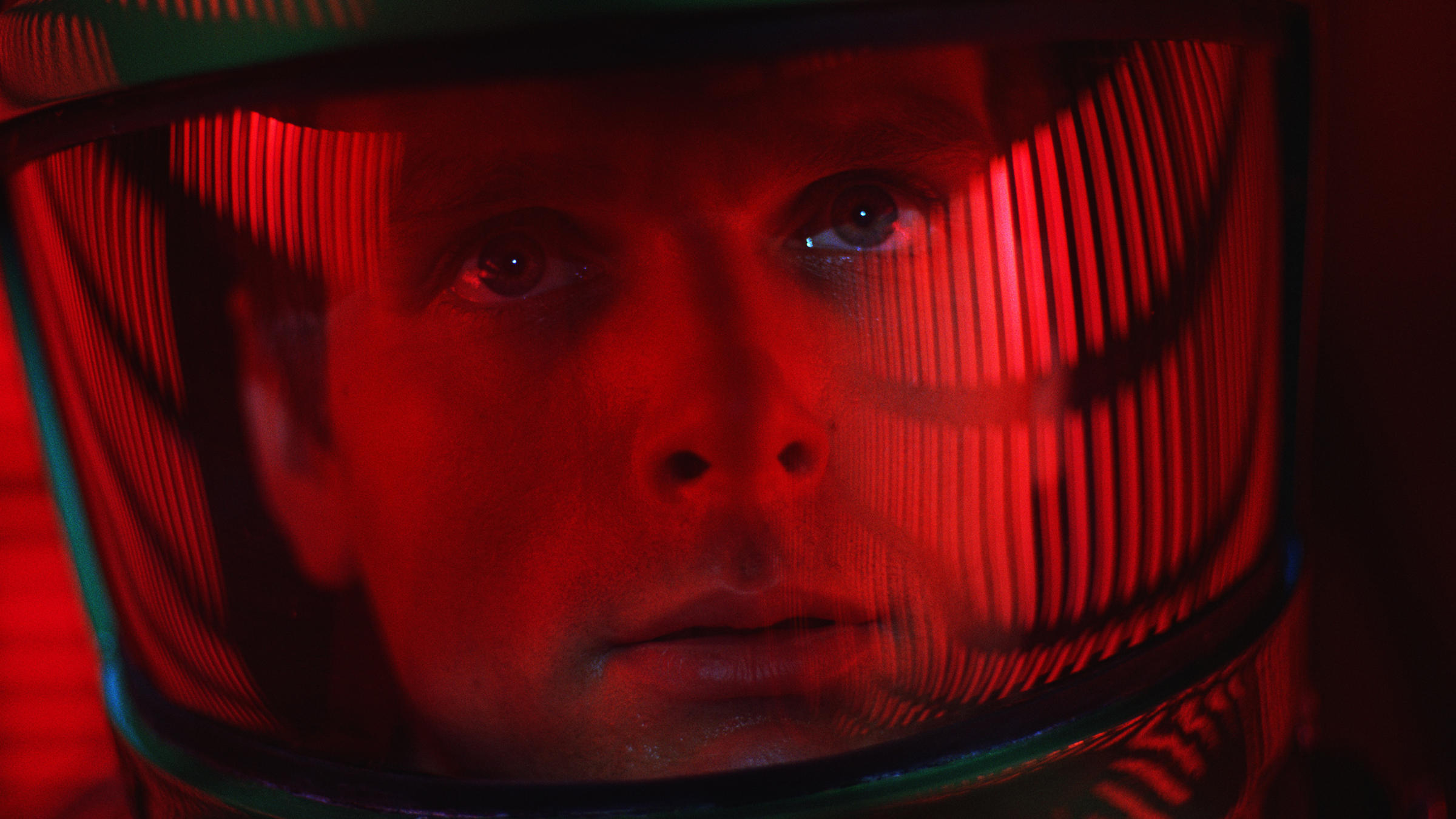
“Open the pod bay doors please Hal.

I’m sorry Dave, I’m afraid I can’t do that.”

-from the movie “2001 – A Space Odyssey”

https://www.youtube.com/watch?v=dSIKBliboIo

Google co-founder, Larry Page, believes that once computers are smarter than humans, they will find no use for us humans, and they will simply get rid of us. He sees this as the next step in the evolutionary process.

If we don’t understand the risks, along with the benefits A.I. brings to us, we might all end up like Dave.

-0-

Note: For a deep dive on this subject, read the article by Nick Bolton from the September 13, 2023 edition of Vanity Fair. It was this article that provided many of the facts and quotes used in this week’s blog: Artificial Intelligence May Be Humanity’s Most Ingenious Invention—And Its Last? Silicon Valley is barreling ahead with AI technology that could unlock novel forms of creativity, art, and medicine, and potentially, wipe out all mankind. As one AI engineer warns, “We’re creating God.”
7 Comments

Filed under Education, Mentor, Radio, Sales

CES 2019

Dave - 2001 .jpgI wasn’t at CES 2019. In fact, I’ve never been to CES.

But after reading the reports on this year’s Consumer Electronics Show (CES) in Las Vegas, I feel like I was there 50-years ago via Stanley Kubrick’s 1968 motion picture phenomena “2001: A Space Odyssey.”

Technology Integration

The Radio Advertising Bureau (RAB) did a special video they called “Bonus Report of C-Suite Radio Exec’s attending CES” and some of the comments those radio executives made is what made me feel like I’d seen this “movie” before.

Steve Goldstein

Steve said that what he’s marveled at over the years is how media is continually being integrated. He said only a couple of years ago, there was virtually no mention of smart speakers, and this year it’s not only a device exploding in the home, but now is coming into the car too. Goldstein thinks this voice activated technology is important because these devices are not radios, but audio devices and radio stations, as audio content producers need to re-imagine how they will sound and feel like on these devices. And he added, “it’s happening fast!”

Dennis Gwiazdon

Before recently moving to Las Vegas to manage the Beasley Media Group radio stations in that city, Dennis ran the top radio stations in Nashville, TN. When I was teaching at the university in Kentucky, Dennis was an annual guest in my Broadcast Capstone Class.

Dennis said of his visit to CES 2019 it helps radio broadcasters to think about where things are heading and to plan for the future.

Technology today is making our lives simpler by our ability to talk to our devices and connect ourselves to things we used to have to physically operate. Gwiazdon told the RAB that he lives in a smart home in Las Vegas and it’s fascinating to him how he can walk around his house, talk to it and make it do whatever he wants it to do. “I don’t have to touch a light switch, I don’t have to adjust the thermostat, when I come home I can have a routine set-up that will have everything ready for me when I walk through the door.”  “I’m living in that experience now, “said Dennis.

I’m Sorry Dave, I’m Afraid I Can’t Do Thathal 9000

And it was Dennis’ comments that brought to mind the astronaut named Dave in “2001: A Space Odyssey” that when his space pod was trying to re-enter the mother ship and Dave asked the HAL 9000 computer system to open the pod bay doors. Here’s a link to that memorable moment: https://www.youtube.com/watch?v=ARJ8cAGm6JE

HAL’s response to Dave was “I’m sorry Dave, I’m afraid I can’t do that.” The reason was that the HAL 9000 computer could not only respond to voice commands but, it turned out, could also read lips and knew what Dave and his fellow astronaut were planning on doing. They were planning on taking the HAL 9000 off-line because they suspected the computer was making mistakes.

The HAL (Heuristically programmed ALgorithmic computer) 9000 was basically artificial intelligence that was designed to learn, grow and protect itself from attacks. HAL sensed he was coming under attack and was trying to protect itself from the humans.

iPhone 4S

iphone 4s

Oh, it all seemed so innocent back in 2012 when I switched from my Blackberry to my first iPhone. It was the iPhone 4S. The “S” stood for Siri. Siri was my first voice activated assistant.

I found that I used Siri mainly for dictating text messages and emails rather than trying to type things into the phone’s touch screen. Siri did a pretty good job too.

Occasionally I asked Siri to tell me a joke or look something up for me, but not often.

Alexa

So now it’s 2019 and I have Siri on my tablets, my MAC, and iPhone 7. I have three Amazon Echo’s with Alexa, and in my car, my Garmin Smart Drive responds to my voice commands.  It sends me instant traffic information and detours when necessary, along with important weather alerts and breaking news.

I really feel like Dave in 2001, controlling so much of my world with just my voice.

It’s quite addictive and it happens very fast.

I hope they don’t ever turn against me.

Artificial Intelligence

Elon Musk and Stephen Hawking have both warned that AI (artificial intelligence) could potentially be very dangerous. Stanley Kubrick and Arthur C. Clarke certainly showed my generation why, back in 1968. AI is about building machines that think for themselves and grow in their intelligence. It’s what will make a world of self-driving cars, and so much more, possible.

Elon Musk has written:

“The pace of progress in artificial intelligence is incredibly fast. Unless you have direct exposure to groups like Deepmind, you have no idea how fast – it is growing at a pace close to exponential. The risk of something seriously dangerous happening is in the five-year timeframe. 10 years at most.”

On Demand

The world we live in today is one of “On Demand.” The future belongs to those who can create what people want and deliver it when they want it.

The consumer won’t have it any other way.

It’s not an attack on radio broadcasters. It’s the future. Here. Now.


3 Comments

Filed under Education, Mentor, Radio, Sales

Radio is Going to HAL

22You remember HAL? The HAL 9000 is a fictional character from Arthur C. Clarke’s Space Odyssey series. HAL’s name stood for Heuristically programmed Algorithmic computer. HAL was the future of artificial intelligence. HAL always spoke in a soft, calm voice and in a conversational manner. HAL was born in the 90s according to Clarke.

I remember computerizing my radio station’s traffic and billing system around that same time. Computers would quickly invade every part of my radio station operations. It was scary. I remember looking at that computer box and thinking, if that darn thing “dies” there goes the whole enchilada. It wasn’t like losing a phonograph needle or a cart machine or a CD player. Computers changed the game to an all or nothing model. Computers also introduced another concept foreign to radio broadcasters, planned replacement schedules while they were still fully operational. Radio always used to run every piece of equipment until it could run no more. But you couldn’t play that game with computers.

More Dead Air

Programming great, George Johns, recently posted this thought on his blog: “Is it just me or are there a lot more pauses on the radio now than there was when we were using carts.”   And I wrote back to Geo that I noticed the same thing. I figured it was because today, the people charged with running radio stations are not listening to them. Not because they don’t want to, but because they can’t. They are busy – very busy – multi-tasking.

When computers were introduced into radio, I thought it would be great because it would allow air talent to spend more time working on show prep, interacting with the listeners and being focused on their show and not about cuing up records, pulling carts etc. For small market radio stations, it meant that air talent would have an engineer just like the big city radio stations had always had for their air talent. But that’s not what happened.

The radio industry had a different idea in mind. Computers would allow air talent to do more.

After the Telcom Act of 1996, the radio industry began to rapidly consolidate. General Managers became Market Managers. (GMs usually were charged with overseeing an AM/FM broadcast property. MMs would oversee multiple AMs, FMs and in many cases, multiple markets of AMs & FMs.) Computers were quickly seen as a way to do more with less. More work with less people that is.

Multi-tasking Kills Your Brain

Air personalities now could be on multiple radio stations at the same time. They could multi-task. The unfortunate part of this is research now shows that multi-tasking will kill your brain. Turns out our brains were not built to multi-task.

MIT neuroscientist Earl Miller quoted in Inc. magazine says that our brains are “not wired to multi-task well and when people think they are multi-tasking, they are actually just switching from one task to another very rapidly. And every time they do, there’s a cognitive cost.” This constant switching actually produces bad brain habits. Worse, multi-tasking actually lowers your work quality and your efficiency. It actually lowers a person’s IQ like if you were to skip sleeping or use drugs. So if you wonder why today’s air talent isn’t connecting with listeners like they used to, it really isn’t their fault. The deck has been stacked against them by an industry that is using computers and voice tracking to enable their air talent to multi-task. Multi-tasking is not a skill to add to resume. It’s a bad habit to quit doing.

Computers Change College Radio

Erik O’Brien wrote in an article in Radio Survivor about how automation was introduced into his college radio station and how it changed the way college radio was now done and not for the better in his opinion.

KUTE adopted the ENCO DAD radio automation software. What had been a college radio station comprised of student radio enthusiasts, experimenting, having fun – sometimes producing radio greatness and sometimes not – would turn into a more “professional” operation through the use of computerized software. A radio station that had live radio personalities around the clock could now operate without any DJs.

Everything that goes on the air goes through DAD (Digital Audio Delivery). If it’s not in the computer, it won’t go on-the-air. This standardization now allowed for KUTE to begin monetizing their programming. KUTE had an AM signal, licensed by the FCC, but when the transmitter broke down and there was no money to repair it, it became an online only station. Now it was not subject to FCC rules that embraced a community-driven model of radio. It also could now support advertising that could be scheduled and aired that its non-commercial FCC license did not allow.

The new computerized system meant the station was now stable and standardized and predictable. Except when the computer loaded programs didn’t air and other operator errors would plague the station’s on-air sound. What used to be a fun college experience now was a stressful chore.

The Bottom Line

What it all comes down to, whether we’re talking about college radio or commercial radio, is what value are we offering to our listeners by the technology we employ? What do we want the listener experience to be? If we use technology to allow our air talent to be more focused on the station’s mission, radio will be great but if we use it in other ways, probably not.

9 Comments

Filed under Education, Mentor, Radio, Sales, Uncategorized