
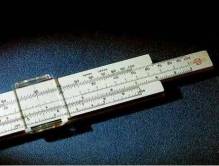
 I was a physics major in college. The slide rule was a necessary piece of equipment when I was going to school. Hewlett-Packard then came along and replaced it with a line of scientific pocket calculators.
When I began my radio sales career, I adopted the DayTimer written system for keeping track of my schedule and appointments. Then Palm came along and I replaced it with their Palm Pilot Digital Assistant.
When I became a general manager, I wore a pager. That soon was replaced by a Motorola flip phone.
Then Research In Motion (RIM) came along with the Blackberry and suddenly my flip phone and Palm were replaced by a single device.
I loved the size of my Blackberry Pearl smartphone and it wasn’t until I realized that the iPhone4S was the same size as the Pearl and more versatile that I switched to my first iPhone. I also saw Blackberry phones were clinging to life and wanted to adopt an ecosystem that would be around as long as I would be.
Today, I’m fully immersed in the Apple ecosystem and could not imagine what would ever get me to leave it.
Disruptive Innovation
I thought for years that these disruptive changes were due to mechanical innovation. But was that the core reason? Could it be something else?
In 1943, Thomas J. Watson of IBM is credited with saying, “I think there is a world market for maybe five computers.” And Ken Olson of Digital Equipment Company (DEC) while acknowledging the growth of people using personal computers, said he couldn’t understand why.
The Human Factor
How important is the Human Factor in the future of a company, or even an industry?
October 6, 1997: Michael Dell makes an infamously bleak appraisal of Apple’s fortunes. Asked what he would do with Apple, the founder of Dell Inc. says he would “shut it down and give the money back to the shareholders.”
Where do you think Apple would be today if Michael Dell had been put in charge? What did Steve Jobs, who had just returned to lead Apple say to Dell’s assessment? “We’re coming after you buddy!”
Jobs gave Apple a vision, backed it up with management fortitude and people with the technical skills to make the Apple vision a reality. It was those human factors that carried Apple to become one of the most valuable companies in the world.
Apple’s market value (at the time I was writing this article) was $948M and Dell’s was $27M.
Radio’s Human Factor
Which brings me around to the industry I loved for over 50-years, RADIO. The aspect of radio that first captured my attention was the radio personality. These were the people who built the relationship with the listener.
Then there was the dedicated radio programmer who created the stationality, the promotions and like a good sports coach, kept the radio stars playing together as a winning team.
While it appears, too much of the radio industry is focused these days on mechanical things, blaming it for disruptive innovation, maybe the real culprit is radio’s loss of the “Human Factor.”
“Absolutely everything begins with imagination.”
-George Johns
Howard Stern was never really replaced when he left OTA radio for Satellite Radio. Howard Stern, like him or not, has a vivid imagination. For his listeners, he creates a style of radio that they have to hear.
My favorite part of the Stern movie, “Private Parts,” is dialog between the audience researcher and Stern’s WNBC program director Kevin Metheny, aka Pig Vomit.
RESEARCHER: The average radio listener listens for eighteen minutes. The average Howard Stern fan listens for – are you ready for this? – an hour and twenty minutes.
PIG VOMIT: How can that be?
RESEARCHER: Answer most commonly given? “I want to see what he’ll say next.”
PIG VOMIT: Okay, fine. But what about the people who hate Stern?
RESEARCHER: Good point. The average Stern hater listens for two and a half hours a day.
PIG VOMIT: But… if they hate him, why do they listen?
RESEARCHER: Most common answer? “I want to see what he’ll say next.”
Does anyone want to listen to your radio station to hear what comes next?
“Radio only needs to move @ the speed of life.”
-George Johns
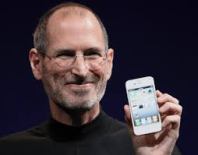
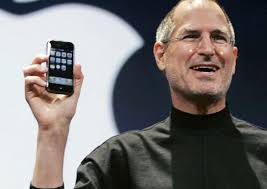 It was only 11-years ago that Steve Jobs took the stage and held in his hand the future. It was an iPhone.

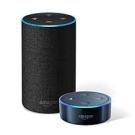 Most research today indicates that since the introduction of the smart speaker, the device that’s getting a little less use is the smartphone. I would concur that is the case in my home as well. Our 3 Amazon Echoes are the way we access at home radio listening, get flash briefs, find out the time and latest weather forecast.
 What the smart speaker and the smartphone have in common, are both devices give the user what they want, when they want it. On Demand is the real game changer of the 21st Century communications world.
 an FM translator for their AM station.Putting your programming content on an FM translator is NOT saving AM radio. Period.Saving Fax MachinesI remember the day I got a fax machine for my radio stations in Atlantic City. It was the day one of our biggest client's ad agency called about the next month's orders for their casino client and told me that if I wanted to be on the buys going forward, I needed a fax machine. Only those radio stations with fax machines would be bought.Holy Batman! I got a fax machine that same afternoon.Soon a dedicated phone line was installed just for the fax machine.How important is faxing these days? I still see fax numbers on business cards and websites but really, does anybody send faxes anymore?There’s no effort that I know of to save the fax machine.AM RadioI spent over four decades of my life in radio broadcasting because of AM radio. I remember my first radio, a Zenith transistor radio (120.jpg)
 I write about radio in most of these weekly articles. Recently, an article that compared
  that came with a single ear piece. I remember sneaking it into school to hear the Red Sox playing in the world series. I don’t remember what the teacher said in those classes.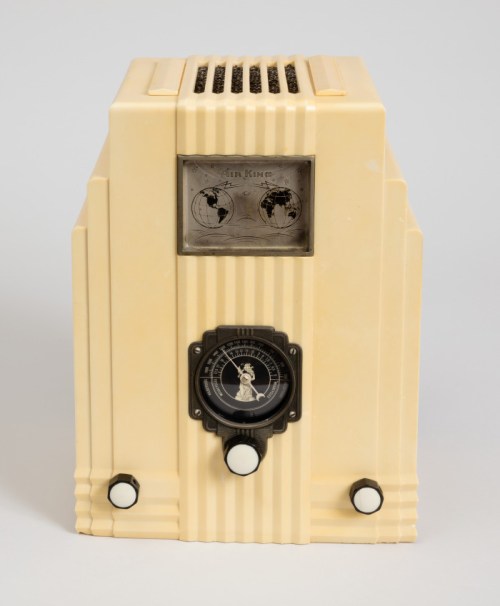
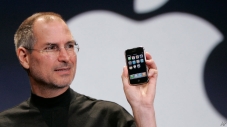 It was 10-years ago this past Thursday that the iPhone went on sale. On that fateful day, I was using a company issued Blackberry Pearl. It was such an amazing upgrade from my old Motorola flip-phone that I got a couple of years earlier.
 DickTaylorBlog