Tag Archives: Radio

Being Grateful

15There are times when the stresses that are part of everyday life can occupy a place way beyond their level of importance in the grand scheme of things. Its times like those that you need to take a time-out and remember all the things in your life you have to be grateful about.


This year, I’m grateful for three wonderful grand children that are all happy, healthy and developing into unique individuals.


I’m grateful for their parents who make their children their first priority and love them with all their heart and soul.


I’m grateful that my two sons have set exciting and meaningful goals for their lives and in so doing are working hard to make our world a safer and better place for all of us.


I’m thankful for my two older brothers that always have been there for me through ups and downs, thick and thin.


I’m grateful that I’ve come to accept myself for exactly who I am, while still having boundless curiosity and a desire to never stop learning and growing.


I’m grateful that I’ve learned how to slow down. Life is meant to be savored. It’s not getting to the finish line first but about enjoying the journey.


I’m grateful for having enough. Less is more. Too much of anything is usually toxic.


I’m grateful for each day when I can add more value to the world than I consume.


I’m grateful for learning that every situation provides an opportunity to learn something; even the difficult ones, life goes by so fast.


I’m grateful that a career in radio that I started in the 10th grade in high school would allow me to pay for my college education, graduate school and raise a family. It’s a career that was all I ever wanted to do besides one day paying-it-forward through teaching the next generation of broadcasters.


I’m grateful that I finally started a blog this past year. It’s been one of the most personally rewarding and enriching things I’ve undertaken this past year.


I’m grateful for all the wonderful people I’ve met on this journey called life, people who were only strangers until we said “hello,” and then became friends for life.


One of my mentors, Zig Ziglar said: “You can get anything in life you want, if you will just help enough other people get what they want.” I’ve tried to live those words every day.


I have so many things to be grateful for this Thanksgiving 2015. I’m sure you do too.


Remember you may make a living by what you get, but you make a life by what you give.


Today, I’m grateful for YOU.

12 Comments

Filed under Education, Mentor, Radio, Sales, Uncategorized

The Outlook for Radio vs. Print

John Cassaday retired. For a quarter of a century he had an up-close and personal view of the communications revolution. For sixteen years he was the CEO of Corus Entertainment, a leading Canadian media company. When he stepped down from that position in March of this year, he was asked to reflect on the broadcasting industry. I was most interested in his thoughts about the outlook for radio.

What’s the outlook for radio?

Cassaday was asked that question by The Globe and Mail. He responded:

“Radio is probably the most sustainable traditional medium. It’s becoming the only truly local advertising opportunity.”

The thing that separates chronically positive people from everyone else is that while they know everyone has their problems – it’s a part of life – it’s that they keep in perspective, that adversity brings growth. But what happens if your medium is headed for a cliff?

What’s the outlook for print?

Print aka newspaper revenue was over a $65-Billion (adjusted for inflation) behemoth as the world approached 2000. The current trend line has it eroding to less than it was in 1950; a little over $17-Billion. But it’s worse than that.

NYU professor Clay Shirky sees print revenue headed for a cliff.  One of the tipping points will arrive when the cost of printing the paper is more than the advertising dollars/subscriptions that support its printing. But that’s still not the worst of it.

Shirky believes there’s another even more important tipping point that will occur before the one I just mentioned. That’s the one concerning the psychological threshold for the advertiser. The point where the amount of papers printed and distributed no longer justifies the investment in this form of advertising. How attractive will print advertising be when it no longer delivers the massive audience that an advertiser desires? That’s the point when revenues go from bleeding to hemorrhage.

One of the suggestions Shirky puts forward for newspaper owners is to get their best customers to think about getting the paper more as membership than a subscription.

The NPR Membership Concept

The concept of having people so loyal, so dedicated to the content you create that they want to be part of the family is the powerful concept that has been used by public radio stations to raise the necessary funds they need to operate. But let’s be clear, NPR has made a major investment in content creation and serving it up on any platform a member desires.

Much as HBO used to say “It’s not TV, its HBO,” NPR could just as easily proclaim “It’s not radio, its NPR.” And if you think that’s absurd, more than one focus group has shown that people, who say they don’t listen to radio any more, still listen to their local NPR radio station and support it through membership.

The iPad was never going to save newspapers

Shirky says you can add the iPad saving newspapers to the long list of cruel jokes Steve Jobs played on the media industry. Jobs was always about doing what was right for Apple. How do you think Apple became the most valuable company in the world?

Google+ is not Facebook

Even media companies that we think have all the answers, don’t.   Google+ was a bad Facebook. Instead of trying to figure out a new niche that wasn’t being served and doing an incredible job, Google created Google+. The world wasn’t asking for another Facebook. This isn’t all that different than HD Radio. The world wasn’t asking for another type of FM radio either. The digital difference for the radio consumer has never been seen as a “must have.”

Shared interests is the new local

It’s clear that while geography used to be the only thing that defined what it meant to be “local,” going forward local is going to come to mean people who share similar interests. To a substantial portion of the population, where they live may indeed be the very interest they share. But radio operators will need to clearly identify and serve those interests if they are to survive and thrive. Leverage the opportunity to deliver desired content to your “members” or someone else will.

4 Comments

Filed under Education, Mentor, Radio

The End of Facebook…

…is about as likely as the end of radio. I’m sure I got your attention with that headline. But you might be surprised to learn that Facebook and radio have a lot more in common than you ever gave much thought to.

A study by two Princeton researchers in 2014 created quite a stir when they announced that Facebook would undergo a rapid decline in the coming years. They predicted that Facebook would lose 80% of its peak user base between 2015 and 2017.

Facebook folks, using the same flawed research techniques as those used in the study predicted that Princeton University would only have half of its current enrollment by 2018 and zero students by 2021. They were making a point, those fun folks at Facebook.

This whole dust-up reminded me of all that we in radio have been going through of late; everyone predicting our demise.

Gawd, I feel old to tell you how many end times of radio I’ve lived through. The 8-track tape player was going to put us out of business, then the cassette player, then the CB radio (never happened good buddy, but are CB radios still around?) then the CD player & CD changer, then the cell phone, then the iPod, then the Smartphone, then satellite radio and now Internet radio.  It never happened, but oh, did folks worry that it might.

Let’s face it, there are times we like to listen to our own music; our favorite tunes. I’m a radio guy and I do it. Nothing to be ashamed of. And how did all those tunes get bought and loaded into my digital music playing device? I heard them on the radio, that’s how.

Now I would like to say to Facebook, welcome to our world, the world of radio. Both over-the-air radio and Facebook are ubiquitous and when you get that big you suddenly find that your users take you for granted. They simply expect you to always be there when they want you, but they no longer talk-you-up all the time because you’re no longer the shiny, new thing in the world.

Radio appears to be losing its younger audience these days. Facebook is reported to be hemorrhaging fresh faced teens as well. Welcome to the consumer group of former leisure suit wearers.

Did you know that 45% of of Internet users over 65-years of age use Facebook?*  That means they’ve been AARP members for 15 years now; minimum.

Facebook likes to tell the world they have 1.4 billion users, but when we roll that back to just the USA it only amounts to around 56% percent of the population of 316 million Americans. Radio reaches 92% of Americans over the age of 12 and that number is only down 2% in the last decade. So radio reaches more people every week than use Facebook, but from the advertising world perspective, radio might as well be Rodney Dangerfield. We don’t get no respect.

Facebook likes to combine the USA stats with the Canada stats. We’re all family right? Wrong. Canada, as it turns out, is the country with the most active Facebook users. When you combine Canada’s users with those “lazy Americans” it makes the USA performance appear to be a little more robust.

I have 393 friends on Facebook. The average number of Facebook friends a person has is 245, so I’m above average (not that I care). My radio stations had tens of thousands of “friends” (we called them listeners) and that I DID care about!

The average radio listener listens to radio over 2 hours a day. In that amount of time, they might come in contact with about 20 to 30 ads. The average amount of posts that a Facebook book user is confronted with when they log on is around 1,500 and that’s in about 20-minutes time.

And while I’m talking about time spent with radio and Facebook, the average amount of time a Facebook user spends on Facebook per month is 8.3 hours. Now compare that with the amount of time a radio listener spends with radio in a month; 66 hours.

That’s over 8-times as much time spent listening to radio as browsing Facebook.

Radio is 93 years old. Facebook is just a teenager and like a teenager it really doesn’t know what it wants to be when it grows up.

Once upon a time, radio stations tried to be all things to all people. Then it began to specialize into various formats, demographics and lifestyles. Facebook is still in that mode of trying to be all things to all people. Good luck with that!

So am I telling you Facebook is over? Not at all. But if perception is reality, then Facebook is feeling the pain of radio.

Radio is the most impactful medium in the world today. In the history of innovation, the History Channel ranked radio as the #2 most important invention of all time (the Smartphone was #1). However, when you look at how it’s treated by the “Mad Men” it sure doesn’t feel that way.

At the moment those ad guys think things go better with Facebook. But like the soft drink Coca Cola that started out with a single beverage product (today it’s over 3,500) Facebook was created by Mark Zuckerberg to provide a simple and easy way for college students to connect with other college students. Today, that concept feels like ancient history.

By the way, the social media innovation for college students to communicate with other college students – Facebook – today only sees 11% of US college student social network users posting to Facebook daily.

Wall Street says you’re worth $128 to Facebook.

I’m here to tell you, that to your local radio station, you’re worth so much more than that.

You’re family.

-0-

*Earlier version said: “Did you know that 45% of Facebook users are over 65 years of age?” which was incorrect.  Source: http://expandedramblings.com/index.php/by-the-numbers-17-amazing-facebook-stats/4/

12 Comments

Filed under Education, Mentor, Radio, Sales

Radio: Landmark or Beacon

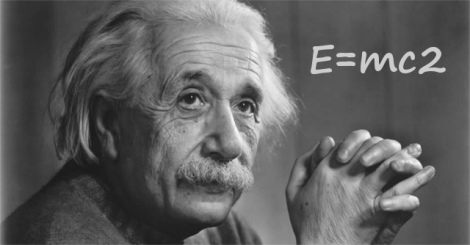
albert-einstein-2Even though it was 110-years ago that Albert Einstein would disrupt the world with how we saw the universe and how we saw time, space, mass, energy and light, we still invoke his name when a person does something brilliant. We say they’re an “Einstein.”

Unfortunately for Einstein, his groundbreaking 1905 theory that would be the foundation for a new way of thinking in physics – quantum mechanics (which gave us things like lasers, microprocessors and iPhones) – wasn’t embraced by this genius. It would be his undoing for the rest of his life.

In the world of higher education, the importance of publishing in an academic journal is more revered than publishing on LinkedIn (where other forwarding thinking professionals hangout) or on a personal blog that’s available to the world. What once was – really isn’t anymore, except to those who cannot accept that today we live in a world made up of platforms, not products.

Radio suffers from a similar dilemma. To traditional broadcasters, radio is something that needs an FCC license, radio tower, antenna and transmitter that sends a signal out over the AM or FM radio bands. I always smile when I look at my old Radio Telephone Third Class Operator Permit that I earned taking a test administered by the Federal Communications Commission at the Customs House in Boston back in 1968. Notice it had the world “telephone” in the name.

Kentucky melon farmer Nathan Stubblefield was an early experimenter in radio broadcasting. Only Nathan wanted his wife to be able to talk to him while he was driving his car from their farmhouse. For you see, in those early days no one was quite sure what this new technology would or could be used for.

“The next big thing always starts out looking like a toy,” says Chris Dixon.

So when people started streaming over the Internet and calling it “radio,” traditional broadcasters looked down their noses at it in much the same way that journalists looked down their noses at the new media platforms like Buzzfeed and Vice Media invading their world.

Einstein teaches us something more than E=mc2, it’s that we need to learn to accept the new platforms that disrupt the world as we knew it and are creating the world that will be. Radio, higher education – most likely your business too – cannot afford to be Einstein-like in our future thinking. The world is moving faster and faster. 50% of today’s jobs won’t exist in ten years.

The iPhone, the Connected Car, Buzzfeed, Bitcoin etc are all platforms.  Radio, colleges, newspapers etc. are all products. Understanding this dichotomy is critical.

In Abraham Pais’s book “J. Robert Oppenheimer: A Life” he writes that Einstein’s inability to adapt to new platforms failed him and that he became a “landmark, but not a beacon.”

And so the choice in our world today is to adapt or die.

Welcome to the age of disruption created by the Internet.

5 Comments

Filed under Education, Mentor, Radio

Why is so much of television so bad?

That’s the question that Newton Minow asked on May 9, 1961 when he addressed the National Association of Broadcasters in Washington, DC.

In his first public address after he took over as chairman of the Federal Communications Commission (FCC) Mr. Minow didn’t pull any punches. He made it clear that in his role at the FCC he was going to make darn sure that broadcasters operated in “the public interest.”

What is meant by operating in “the public interest?” That’s been open to interpretation since those words were written down. Here’s how Mr. Minow defined them:

“Some say the public interest is merely what interests the public. I disagree. And so does your distinguished (NAB) president, Governor Collins, who said ‘Broadcasting to serve the public interest, must have a soul and a conscience, a burning desire to excel, as well as to sell; the urge to build the character, citizenship, and intellectual stature of people, as well as to expand the gross national product….By no means do I imply that broadcasters disregard the public interest…But a much better job can be done, and should be done.’ I could not agree more with Governor Collins.”

Mr. Minow also told the radio broadcasters in the room that the FCC wasn’t going to go to sleep at the switch on them; they were still listening, but that most of the controversies and cross-currents in broadcast programming were swirling around TV and that’s what he planned to address in this speech.

“When television is good, nothing – not theater, not the magazines or newspapers – nothing is better. But when television is bad, nothing is worse,” said Minow.

He then threw out this challenge to television broadcasters:

“I invite each of you to sit down in front of your television set when your station goes on the air and stay there, for a day, without a book, without a magazine, without a newspaper, without a profit and loss sheet, or a rating book to distract you. Keep your eyes glued to that set until the station signs off. I can assure you that what you will observe is a vast wasteland.”

Mr. Minow is 89 and living in Milwaukee, Wisconsin. On the 50th anniversary of his famous speech, he was interviewed by James Warren of the Chicago Tribune. Minow was 35 years old when he took over as chairman of the FCC under President Kennedy. He told Warren that he couldn’t have anticipated the impact his speech would have. Minow’s severe censure of TV’s “procession of game shows, violence, audience participation shows, formula comedies about totally unbelievable families, blood and thunder, mayhem, violence, sadism, murder, western badmen, western good men, private eyes, gangsters, more violence and cartoons” remains highly “radioactive” to this day.

If you’re a fan of the television show “Gilligan’s Island” you might not have realized that the boat that sank was coyly named after the FCC chairman; however spelling it S. S. Minnow. Does that give you some idea of how distasteful having their medium called “a vast wasteland” was to the TV men of that day?

Mr. Minow’s own daughters joke that their dad’s tombstone might be inscribed with the words “On to a vaster wasteland.”

In 1998, President Clinton appointed a commission to review “the public interest” on the eve of the arrival of Digital Television. That commission issued a 160-age report on December 18, 1998.

In 2015, “the public interest” issue has been addressed with respect to the Internet.  Again, the FCC under its current chairman Thomas Wheeler has come forward with a plan that has been as well received by the “Internet men” of today as Mr. Minow’s assessment of TV back in 1961. Here’s what the FCC decided:

Adopted on February 26, 2015, the FCC’s Open Internet rules are designed to protect free expression and innovation on the Internet and promote investment in the nation’s broadband networks. The Open Internet rules are grounded in the strongest possible legal foundation by relying on multiple sources of authority, including: Title II of the Communications Act and Section 706 of the Telecommunications Act of 1996. As part of this decision, the Commission also refrains (or “forbears”) from enforcing provisions of Title II that are not relevant to modern broadband service. Together Title II and Section 706 support clear rules of the road, providing the certainty needed for innovators and investors, and the competitive choices and freedom demanded by consumers.

The new rules apply to both fixed and mobile broadband service. This approach recognizes advances in technology and the growing significance of mobile broadband Internet access in recent years. These rules will protect consumers no matter how they access the Internet, whether on a desktop computer or a mobile device.

The public interest standard has long provided guidance for promoting greater diversity in content, political debate, access, service to local communities, education, diversity and equal employment. The communications revolution will continue to challenge policymakers to ensure operating in “the public interest” remains.

Leave a comment

Filed under Education, Mentor, Radio

What if…

I had the opportunity to sit in on a webinar on “The Creative Economy” that is considered to be the direction the future of business is headed in compared to the traditional business methods of the past. What is meant by the term “The Creative Economy?” It’s one where business revolves around the customer versus the past where the customer revolved around the business.

The Creative Economy also breaks from tradition in the sense that it means the goal of a company is no longer about making money for the stakeholders but about delighting customers. But, you ask, isn’t “maximizing shareholder value” the mantra of Wall Street? Good question. Listen to what these CEOs have to say about that mantra:

            Jack Welch former CEO of GE: “the dumbest idea in the world”

            Vinci Group Chairman/CEO Xavier Hulliard: “totally idiotic”

            Paul Polman, CEO of Unilever: (has denounced) “the cult of shareholder value”

            Marc Benioff, CEO of Salesforce declared this still-pervasive business theory “wrong”

I guess it’s quickly losing favor with those who should know.

The Internet and “The Cloud” are enabling “The Creative Economy.”

Which brings me back to my initial question, “What if…”. What if radio stations were supposed to be small operations? What if the radio industry wasn’t meant to scale?

When I entered the radio business, companies were limited in the total number of radio stations they could own; in the entire USA. It was known as the 7-7-7 rule. A single company could own not more than 7 AM, 7 FM and 7 TV stations in all of America.

What this created was competition between owners of radio stations in a market. Each station was a team of people working as hard as they could to win the audience in that market. The focus was all about the listener or the viewer. Win the most listeners/viewers and advertisers would soon follow to showcase their wares on that radio or TV station’s airwaves.

Hearing “The Creative Economy” described on this webinar was like radio déjà vu.

In 1996, President William Jefferson Clinton signed the Telcom Act of 1996 into law. That was the moment that the “land rush” for broadcast properties began and Wall Street became heavily invested in the radio industry. Wall Street would bring its “maximize shareholder value” mantra to broadcasting.

This point was really brought home to me in 1999 when my stations were sold to a large radio consolidator. The head of this “big box” radio operator told us that we needed to “sell, sell, sell” that it was all about making money for the company and “maximizing shareholder value.”

This “pump up the troops” speech left me cold. I was brought up in a radio world that was about operating “in the public interest, convenience and/or necessity.” I was brought up in a world where if we treated the members of our team well, our team focused on delighting the listener, the advertisers would flock to our station and the owners would be rewarded for doing everything right. That view of life served me well my entire radio career.

Needless to say, I opted not to remain with this new company.

However, I would find myself playing “musical chairs” going forward as it was getting impossible to not be working for a company that hadn’t adopted this modus operandi.

Steve Denning, who writes for Forbes, lead this webinar and pointed out that economics was driving the change for companies worldwide. He told us that no company is doing it all right. Companies like Apple, Amazon, Google and Salesforce are moving in the right direction. In fact, Tim Cook is better at navigating the change to this style of management than Steve Jobs ever was and it no doubt is contributing to Apple being the most valuable company in the world. To give you an example of what it means to focus on the customer first, consider Tim Cook telling an investor in Apple this:

“If you want me to do things only for ROI reasons, you should get out of this stock.”

That was kind of radio world I grew up in. We always tried to do the right thing for our employees, our listeners, our advertisers and the money would follow.

I’m encouraged that radio people who sold out when Wall Street was buying, are now getting back into the radio business with that same ethic, spirit and sense of innovation that seduced me into a four decade long radio career. They understand the concept of “The Creative Economy” because that’s how they built their radio companies the first time around. They also understand that today, radio is more of a concept of operation than a method of delivery.

I’m excited to be working with the next generation of radio broadcasters at my university knowing that radio’s future has never been brighter.

7 Comments

Filed under Education, Mentor, Radio, Sales

The Choices We Make

You are what you are; you are who you are, by the choices you have made. You can change what you are, you can change who you are by changing the choices you make going forward.

To make things simple, let’s break down the choices into large choices and small choices. Large choices would be things like changing careers, getting married or divorced, having kids, picking a college/course of study etc. Small choices are exercising or sitting on the couch watching TV, having that extra cookie or not, going to the football game or listening to it on the radio etc.

Both large and small choices impact our lives. The difference is immediate with large choices but the small choices, over time, can be just as impactful. We just don’t see the change all at once, so they give the appearance of not having any impact, but that’s what makes them so deceptive. The reality is both are as important.

So what does this have to do with radio and TV? Listening to the radio or watching a TV show is a choice we make. We do it often to feel good. Feeling good releases endorphins in the brain that stimulate the pleasure center. It can become an addiction.

Today’s entertainment consumer has lots of choices. They also want to feel good. So it’s only natural that they are going to seek out those entertainment choices that stimulate their brain’s pleasure center.

Netflix and YouTube are two video services that are doing a better job of providing this video pleasure than broadcast TV. YouTube and Pandora are two audio services that are doing this better than broadcast radio (in the opinion of their users). YouTube, as you can see is a double threat, as it is strong in two different media areas and is a real force to be reckoned with. New habits are being formed; new entertainment addictions.

Once upon a time, people jumped through lots of hoops to receive a radio or TV broadcast. Today, all of those choices are quickly and easily available on their smartphone or tablet. Mobile is the fastest growing segment of media in the world. Mobile advertising holds unlimited potential for those service providers that get chosen and make themselves a habit.

The consumer is making little choices each and every day. Broadcasters have ignored them because they seem small and insignificant. But I’m here to tell you that those little choices are just as impactful to your future as if they were of the large variety.

Broadcasters too, have a choice. Accept the new reality and embrace change or let the change happen to you.

Remember, death by a thousand cuts is still dead.

1 Comment

Filed under Education, Mentor, Radio

Radio, the Same on Every Device, It’s Time

Once upon a time, cars were steered by a stick. The throttle was located on the steering wheel. The high beams switch was located on the floor. And it was different in every car. Computers started off all being different just like the software programs they operated. Today, the only real learning curve is switching between Microsoft and Apple for computers or Apple and Android for smartphones and even they aren’t all that different anymore.

It’s time for radio to standardize.

AM, FM, DAB, DAB+, HD Radio, HD2, HD3, HD4, Streaming….it’s insane. It’s confusing.

Norway, a country about the size of New Mexico has decided to standardize radio around the digital broadcast format. No more AM or FM, just digital. This caused uproar around the globe, but aren’t the Viking folks really doing radio in their country a favor? Standardizing around a single format?

Just imagine if the world operated on a standardized radio platform? All car manufacturers could build a universal radio platform into their vehicle dashboards worldwide and smartphones could all be designed to be used as radios anywhere in the world. Computers, tablets and even radios could all be on the same platform. Less variation in the method of transmission would be more impact.

Likewise, radio programming from any single source should be the same on all devices, not one way over-the-air and another way if you pick up the same broadcast on a stream. If you want to listen to a radio station in Los Angeles and you’re in Boston, you should hear everything being broadcast by that LA radio station. For the incremental dollars, broadcast radio stations degrade their streams with bumpy transitions, high repetition of nonsense filler material and just plain too long breaks; especially compared to commercial breaks on the pureplays.

The pureplays are paying 100% attention to their streams because it’s all they have. Broadcast radio stations handle their streams as an afterthought; if they even give them that much attention.

Hindsight is 20/20. Without changing, historians of broadcasting might one day say “What were they thinking?”

Radio owners and operators need to employ a technique called “premortem.”  What you do is imagine yourself in the future after your project has crashed and burned. In radio’s case, that would be to imagine that AM/FM broadcast radio has ended. The drill is to assume the patient died. You’re screwed. Everything that could go wrong did. You start there and ask “Why?”

Attacking the problem in this manner allows people to freely speak to the reasons things failed without retribution. You can’t kill a patient that’s already dead. See the magic in this exercise?

How could radio be improved on all platforms with this kind of thinking today?

I talk with lots of radio folks every week and in a hushed whisper they will freely share what they know to be wrong with radio today. But they in essence are “winking in the dark” and no one is stepping forward to say “the emperor has no clothes.”

Well here’s a way to do get everyone playing “devil’s advocate” and brainstorming ideas to improve radio programming, delivery and standardization.

If not now, when?

35 Comments

Filed under Education, Mentor, Radio

Will Programmatic Buying Help Radio?

My good friend Pierre Bouvard circulated an article on LinkedIn that was published in Ad Age titled “Programmatic TV: Lots of Talk Lately, Not Much Real Action.”  We know what happens in TV land trickles down to radio. That’s what got me thinking about the impact that programmatic buying might make on the radio industry.

First, if you haven’t heard the term, programmatic buying is letting computers buy advertising time. This type of advertising placement is already pretty commonplace in the online world. It can take the form of data-driven real-time purchasing, online auctions or private exchanges, with transactions handled by machines according to Rino Scanzoni, chief investment officer at GroupM. It’s fast, efficient and needs no human sellers.

The large radio companies have been trimming the work force since the beginning of the “Great Recession.” Don’t waste a good crisis was the way one radio industry leader put it at a meeting I attended. Meaning, when the economy is in the dumper and all companies are trimming their expenses to survive, you can use this type of environment to make lots of cuts; especially through RIFs (Reduction In Force).

Computer automation equipment, voice-tracking, syndication, and networking has all replaced live and local radio program origination. However, when it came to ad revenue, the personnel has largely remained intact. Could programmatic buying do to radio sales staffs what the aforementioned computerization did to programming staffs?

The short answer is yes.

At the end of the last decade I watched Google’s ad insertion system place ads onto my radio stations in the very early morning hours. Google’s hardware recorded air checks of every ad they placed on my stations and Google was able to give their advertisers not just a paper verification of the ad running but air checks of every ad, run on every station. Something my local sellers could not do for their clients. It was impressive.

The downside was Google had no idea where anything was in my state and so many of the ads were not appropriate to be airing on my stations for any number of reasons; the most important reason was that business was a hundred miles or more away.

Now while I realize that what I’m talking about here is more programmatic ad placement than programmatic ad buying, I’m making the assumption that the selling of those ads were executed in a similar manner; via automation like Google sells online.

The Ad Age article stated that one big reason that programmatic buying of TV would be a ways off was due to “TV networks also still need to approve the ads before they run, both for standards and to make sure they fit with the surrounding programming. That step doesn’t exist in programmatic ad sales online.”

Remember when radio stations had program directors that listened to everything that would go out over their airwaves to make sure that it met their standards and made sure it fit with the surrounding programming? Ah, the good old days of radio. That attention to detail is why radio sounded so good.

The Google experience taught me that even as a market manager, I no longer had any control over what might be heard over my air. Automated ad insertion is why streaming commercial breaks might air the same commercial multiple times during the same break. It’s a reason that many listeners find listening to over-the-air radio stations online so annoying. (I know I do)

ESPN’s Eric Johnson put it this way: “Programmatic buying means a lot of things to a lot of people. It includes providing some automation to the buying and selling process.”

For radio, only one thing has ever mattered; what comes out of the listener’s speaker. My fear is that as radio continues to abandon this critical aspect of its product in the pursuit of saving money it will kill the goose that lays the golden egg. No one is looking out for the radio listener and in a world of infinite choice, the listener will simply go elsewhere.

You can’t save your way to success.

1 Comment

Filed under Education, Mentor, Radio, Sales

Choices Radio & Colleges Should Be Making Right Now

Every day the radio business and the business of higher education are faced with lots of choices that will affect them in the years ahead. Here are my thoughts about some of the choices they should be making right now.

Do what only you do best.

 Before the era of instant communication and search engines, both radio and colleges provided many services that people couldn’t get anywhere else. If you wanted to know if the snow storm cancelled school, you turned on the radio. If you wanted to earn a college degree, you attended college.

Today, schools will text message the status of school opening to teachers, students and staff the moment a decision has been made following a big storm. Radio is no longer necessary to fulfill this message delivery task. Likewise, anyone who wants to learn about anything – including earning a diploma in that discipline – can do it online. You don’t need to go any further than your computer.

Radio needs to take a hard look at everything it does that was important to their listeners and eliminate all of the things that the listener today gets faster and easier from someplace else. Colleges likewise need to re-think their mission and focus on those things that it does best and that only they can offer.

Thinking you can stop a changing world.

 People have been warning the radio industry for years at annual conferences that the Internet was going to change things for them BIG TIME. I know, I attended most of those meetings regionally and nationally over many years. But radio continued to do what it had always done and thought that the changing world would stop at their door. Higher education pretty much is doing the same thing. Both are highly computerized, but only to do what they’ve always done a little faster than before.

Think of the possibilities.

 The Internet provides every business the opportunity to do things that were not possible before there was an Internet. Did established businesses like radio or colleges seize this new opportunity? No. Google, Amazon, eBay, Facebook, Twitter, LinkedIn etc did.

But it gets worse. Pandora used the capabilities of the Internet to build a streaming juggernaut. Listeners can build their own “radio stations” and skip songs that they don’t like.   University of Phoenix grew to 600,000 students* in over 100 degree programs. A website I visited listing the top online colleges framed the issue of an online education this way:

“It’s up to you to decide whether you want to attend a large, recognized online university or a smaller, less known college. As long as your program is accredited by an authorized agency, you can receive an education online that is as valuable as your campus experiences.”

The radio industry could have created Pandora. Higher education could have created University of Phoenix. Heck, Kodak could have created the digital camera – oh wait, they did, but didn’t pursue it because they were invested in making and selling print film.

History is a great teacher.

 When TV came along in the 1950s, it stole radio’s programming and people. All those must hear radio shows in the evening prime time hours moved to television. The family that gathered around the radio in the living room now sent the radio packing to another location in the home and TV took its place. Radio operators quickly began developing programming that only radio could do. They found a niche and filled it.

Colleges did this too. Many began as normal schools and grew to teachers colleges. As the needs of the nation changed, colleges grew to universities.

What makes today’s world different is the changes both radio and colleges made might be called evolutionary. Today’s world has brought on a revolution in communication and learning.

Make mistakes.

 The pressure to not make mistakes is daunting. The big radio companies have large debts to service. Public colleges and universities are more privately funded by tuitions, alumni, endowments, grants etc than they are public tax dollars. In order to play it safe institutions try to avoid risks. Avoiding risks means keeping things status quo.

Nothing stays the same. Things are either getting better or getting worse.

There’s no time to waste.

 Both radio and colleges need to be creating incubator programs that are allowed to make mistakes and fail. Thomas Edison put his research activities on finding the right filament to power his light bulb this way: “I have not failed, not once.  I’ve discovered ten thousand ways that don’t work.”

If there’s one lesson history has taught us it’s that if existing industries don’t create the future, somebody else will.

*University of Phoenix’s numbers have declined almost 60 percent since 2010. The enrollment drop has been attributed to operational changes amid criticism of high debt loads and low job prospects for university students according to published reports.

4 Comments

Filed under Education, Mentor, Radio