

 That seems like a simple question.
But in reality, it’s really complex.
Worse, most people have never asked themselves this question, let alone answered it.
Advertising Strategy
Let me state for the record that I’m a BIG Wizard of Ads disciple. Roy H. Williams is the person known as “The Wizard of Ads.” I have the Wizard’s bestselling book trilogy, taught the Wizard’s methods in my sales class at the university and am a member of the Wizard Class known as the “Fearless Flyers.” (Ask me why, if you want to know why my class was named that.)
A key question to ask any advertiser at the outset of doing business is, “How will YOU measure success.”
Simply saying, to make a lot of money is not the answer.
If money is the goal, then how much money and in what period of time, needs to be asked. It is important that both the advertiser and the seller of advertising are on the same page. Both parties must agree before you can move forward.
12 Core Questions
I recently shared a graphic from fellow Wizard Craig Arthur that listed 12 core questions an advertiser needed to answer when developing an advertising strategy. Let me explore those questions in a little more detail here:
- WHAT are you trying to make happen? What’s the destination you are trying to reach with your advertising?
- HOW will you measure progress? What will be the method employed to keep track of how things are going? How will things be tweaked to insure progress is being made?
- HOW big is the pie? In other words, how big is the market for what you’re trying to accomplish? It’s no use winning if the market potential is so small you still starve.
- HOW good are your competitors? In the musical, The Music Man, the carpet baggers (picture above) would constantly say “But you gotta know the territory.” You need to know who the people, businesses, systems, etc. are, that you will be up against.
- HOW good are you? This is a tough one. You need to be able to look yourself in the mirror and honestly address your own skills and abilities. Can you provide an outstanding customer experience?
- WHO to talk to? Who are the customers you’re attempting to attract? You need to be specific and target.
- WHAT to say? Roy says there are no wrong media to use to tell your story, only bad stories. In other words, is your story relevant? If it is, it will reach your target by word of mouth a.k.a. sharing on social media.
- HOW to say it? Most radio stations no longer employ dedicated copywriters and production people. Everyone is multitasking. Crafting the message is most critical. Just like in the movies or on TV, the script makes the difference between a hit and a miss.
- WHAT will it sound/look like? Having a well written message will sink like the Titanic if it’s produced poorly. Dick Orkin’s Radio Ranch not only produces great copy but employs professional voice actors to deliver the goods.
- HOW much to spend? When crafting an ad budget you should keep in mind that you want to hit the target every week. When the data isn’t available, say in an unrated radio market for example, the rule of thumb is 21 ads per week (3/day), 52 weeks a year. If the ad budget is small, then spend it on only one station and possibly on only one daypart until the business grows to support more.
- HOW to schedule it? In all advertising, repetition is key to gaining top of mind awareness in your customer. Radio is best because of its affordability to allow virtually any advertiser to purchase a three frequency with the listener on a weekly basis. To achieve this minimum level of frequency is usually unaffordable in other mediums.
- WHERE to say it? Again, Roy believes there are really no wrong radio stations, only wrong messages. Obviously, there are some businesses/products that are an obvious non-fit with a particular radio station format, but in general, any radio station with a cume of 30,000 people or more has the audience size to get an advertiser good R.O.I. (Return On Investment).
As Craig Arthur points out, most advertisers skip questions 1 to 11 and only focus on question 12.
That’s why most advertising fails.
 If you’re in sales, this is probably the question that haunts you most: Why do people do the things they do?
 Then Houston was hit by Hurricane Harvey and KTRH zoomed to #3, but soon after the impact of the storm began to fade and life in Houston began its long road back to “normal,” KTRH sank back to #15.
 For most of my life I was a radio manager. Then I had the opportunity to be a university professor. What those two professions had most in common was the training of others, employees in the work place and students in higher education.
 I was just reading an article about car buying and it said that buying a car is one of the largest financial decisions most consumers will make in their lifetime. Really? I thought that was buying a house.
 Back before the turn of the century, radio station owners often did market research to find viable programming “holes” in a market. Often it didn’t even take research, just an experienced radio nerd with a sense of what was to be popular. Once identified, the task was simply to put it altogether and hit the air.
 It’s why they forked over hundreds of millions of dollars to have Howard join their team.
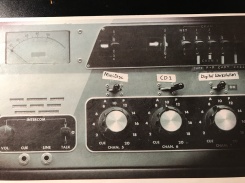 I’ve been attending a lot of radio meetings these past years and one refrain I’ve heard over and over and over and over is that the power of radio is it’s “live & local.”
 When I was growing up, kids when asked “What do you want to be when you grow up?” would respond with things like: Actor, Postman, Astronaut, Scientist, TV Star, Pilot, Explorer, Teacher, Disc Jockey etc. The answers would be as varied as the career choices out there.
 I just recently moved to Virginia from Kentucky.
 I think if I were a student in elementary school today, I would probably be diagnosed as being ADHD (Attention-Deficit/Hyperactivity Disorder).
 an FM translator for their AM station.Putting your programming content on an FM translator is NOT saving AM radio. Period.Saving Fax MachinesI remember the day I got a fax machine for my radio stations in Atlantic City. It was the day one of our biggest client's ad agency called about the next month's orders for their casino client and told me that if I wanted to be on the buys going forward, I needed a fax machine. Only those radio stations with fax machines would be bought.Holy Batman! I got a fax machine that same afternoon.Soon a dedicated phone line was installed just for the fax machine.How important is faxing these days? I still see fax numbers on business cards and websites but really, does anybody send faxes anymore?There’s no effort that I know of to save the fax machine.AM RadioI spent over four decades of my life in radio broadcasting because of AM radio. I remember my first radio, a Zenith transistor radio (120.jpg)
 I write about radio in most of these weekly articles. Recently, an article that compared
  that came with a single ear piece. I remember sneaking it into school to hear the Red Sox playing in the world series. I don’t remember what the teacher said in those classes.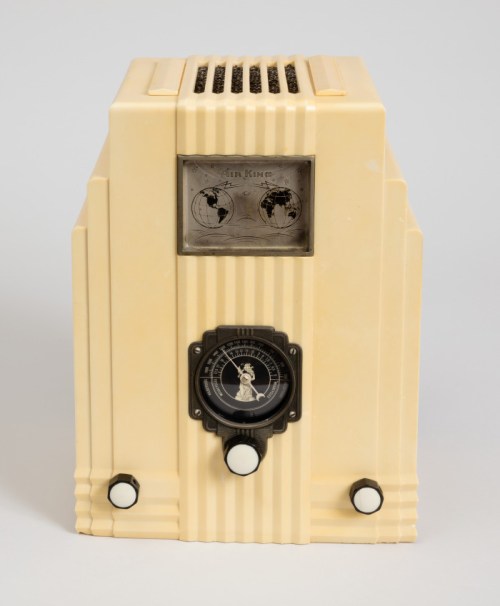
 DickTaylorBlog