Category Archives: Education

Things I’ve Learned Over 66 Years

Dick Taylor WBECThis past Friday, October 12th, was my 66th birthday. Notable because according to Social Security I’m now at “full retirement age.”

Commercial radio is 98-years old, but the first 30+ years of radio – often called “The Golden Age of Radio” – was broadcast more in the style of today’s television.

The radio I grew up with was format radio, born in the 60s.

So, you might say, today’s radio and I, grew up together.

However, no matter what your career path has been, I’m willing to bet, you and I share more things in common than we differ. See if you don’t agree.

25 Things I Learned Over the Years

  1. Don’t worry about things. The things you do worry about usually never happen and things you never even considered happening, do.
  2. Life is a celebration. Welcome each day as you would New Year’s Day, as a new chance to start over and do something new.
  3. Love who you are. You are one-of-a-kind and there will never be another you.
  4. Be grateful and show gratitude for everything that happens in your life. It happened for a reason and its part of the growth process.
  5. Laugh a lot. You will never be able to control what happens in your life, so learn to find the humor in what happens.
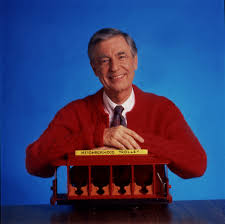
  6. When bad things happen in our world, take the advice of Fred Rogers’s mom and look for the helpers. Even better, be one of the helpers.
  7. Never miss an opportunity to let someone know how much they mean to you.
  8. Never spend more than you earn. There will always be a “rainy day” and you need to be financially fit to float above the flood waters of a life crisis.
  9. “Our lives begin to end the day we become silent about things that matter,”said Dr. Martin Luther King, Jr. He’s right. Don’t be afraid to speak out.
  10. Mentor others with all that you know. Sharing is caring.
  11. Always say “Please” and “Thank You.” It matters not whether you’re the parent or the child, the employer or the employee, the teacher or the student, courtesy counts.
  12. People learn from what you do, not what you say. You can’t just talk the talk, you must walk it too.
  13. Over the years, I’ve come to understand that just being there for another person is the most important thing you can do. Be sure to hold on tight to each and every friend you meet in life.
  14. Write hand-written “Thank You” notes. They always make the most impact on those you are grateful for.
  15. Plan for the future, but stay flexible. “Life is what happens to you while you’re busy making other plans,” sang John Lennon in his song Beautiful Boy, and he was right.
  16. Try to live a balanced life: spiritual/home/community/work but don’t fret if things get out-of-balance at times, because they always do.
  17. Forgive, it’s the best thing you can do for yourself.
  18. Yesterday is gone, tomorrow is unknown. Live in the present.
  19. ‘There ain’t no big time.’ Many of us in radio spent years honing our careers to rise to positions of more responsibility or to perform in larger radio markets only to learn nothing really changes. People are people, nobody’s perfect, and most of the same challenges remain.
  20. There’s always someone you can reach out to for the answer you seek, you don’t need to have all the answers, but you also shouldn’t be afraid to ask others for help.
  21. Everything in life comes to an end, including life itself. Embrace life.
  22. No matter how fast the world today moves, nature continues to move at the same pace it always has. Spend more time in nature and calm your soul.
  23. Serve others, you will be amazed how it changes your life for the better.
  24. If you do the work you love, you will never call it work. After over four decades in radio, I went into college teaching, both never seemed like work but a true labor of love.
  25. And finally, believe that the best things in your life are yet to be. To paraphrase Henry Ford, whether you believe that’s true or you don’t, you’re right.

22 Comments

Filed under Education, Mentor, Radio

It Was Always a “Good Day!”

harvey_ozy_1When I started in professional radio, 51 years ago this week, there was a gentleman broadcasting that captivated my attention, his name was Paul H. Aurandt. The radio audience knew him better by his middle name, Harvey; Paul Harvey.

He broadcast six days a week, just like all radio personalities did back in those days. It was a time when all radio was delivered LIVE. Paul Harvey was heard over the ABC Radio Networks with his News and Comment week day mornings and middays. His Saturday noon-time broadcasts were extra special broadcasts that were always sure to surprise and delight his audience of as many as 24-million people a week. Paul Harvey News was carried by 1,200 radio stations in America, plus 400 American Forces Network stations broadcasting all over the world.

Page 2

The first commercial break in each broadcast was clearly announced with the words, “now page 2.” And it caused me to turn up my radio and give Mr. Harvey my full attention as he told me about another great product that he personally used. The ad copy, just like the news and comments, were all crafted by the mind of Paul Harvey.

I bought my BOSE WAVE radio due to Mr. Harvey telling me how wonderful music sounded coming through its speakers and baffle system design. It started me on the path to owning several BOSE products as a result.

Paul Harvey News had a waiting list of sponsors to get on his program. In 1986 his News & Comment broadcasts were rated #1, #2, #3, #4 and #5 in network radio programs when he was the focus of a CBS 48-Hours broadcast commemorating Paul Harvey’s 70th birthday.

Bob Sirott did the profile piece and it showed Paul Harvey as few ever saw him. I encourage you to watch the segment on YouTube by clicking HERE 

Paul Harvey News

On April 1, 1951, ABC Radio Network premiered Paul Harvey News and Comment. His Chicago based broadcasts were often called “the voice of the silent majority” or “the voice of Middle America.”Paul Harvey (2)

Paul Harvey was making so much money for ABC, they added a third daily broadcast to the schedule on May 10, 1976 called, The Rest of the Story. These broadcasts were written and produced by Paul’s son, Paul Harvey, Jr. for its 33-year long run.

While Paul and his son maintained this entertaining feature which was based on true stories, not all critics agreed, including urban legend expert Jan Harold Bunvand.

I know from my own personal experience of the two times Paul Harvey included stories based on my hometown of Pittsfield, Massachusetts, that Mr. Harvey played fast and loose with the facts of the events to tell a good story. It made me wonder how all the other stories I heard might have been so “massaged.”

Iowa

In 2000, I was managing a cluster of radio stations for Connoisseur and Cumulus. We carried Paul Harvey on my 100,000-watt KOEL-FM. It was the only thing, other than local news in morning drive, that stopped the flow of the best in country music.

I remember being in my car at the time Mr. Harvey’s noon-time broadcast came on the air and hitting the scan button to hear Paul Harvey News and Comment on virtually every station my car radio stopped on. In media, that’s called a “road block,” the same program or advertisement, broadcast at the same time on multiple radio or television stations.

$100 Million Dollar Contract

In November of 2000, Paul Harvey had just inked a new 10-year contract with ABC Radio Networks when a few months later he damaged his vocal cords and had to leave the air. It wasn’t until August of 2001 that Paul returned to the air waves, but only with a reduced clarity and vocal presence in his voice.

I remember this very well as I was now back in Atlantic City running a cluster of radio stations, and my AM radio station WOND-AM1400, was the Paul Harvey radio station for South Jersey.

I had been cajoling Mr. Harvey’s secretary in Chicago for months before he lost his voice for customized promotional announcements to be voiced by Paul Harvey to promote his daily broadcasts over WOND radio.

One day in the fall of 2001, a reel-to-reel tape came in an envelope from Chicago addressed to me. It contained my customized, Paul Harvey voiced, WOND announcements. I was thrilled, but just a little disappointed when we played the tape due to the hoarse, raspy sound of Paul’s voice when he recorded them.

Before the end of 2001, Paul Harvey was back to full vocal dynamics.

Touched My Heart

It was after watching the Bob Sirott piece produced for 48 Hours a second time and then sharing my personal Paul Harvey memories with the love of my life, Sue, that I found myself choking up and tearing up about the heartfelt emotional impact that this gentleman from Tulsa, Oklahoma had made on me.

Using only wire copy and his manual typewriter, Paul Harvey crafted a broadcast of words that vividly created in the mind of the listener exactly what he intended. His full vocal range, the power of the dramatic pause and dynamic inflection completed his radio magic, what most like to call radio’s “Theater of the Mind.”

Could you imagine Paul Harvey doing podcasts?

I have no doubt that they would have been as popular as the original SERIAL podcast was from NPR.

Paul Harvey didn’t use any music or sound effects.

Paul Harvey created great radio, that was welcomed into homes all across the globe by his great writing ability and vocal acting talents.

Paul Harvey (3)

Harvey receiving the Presidential Medal of Freedom in 2005

Good Day

Paul Harvey died on February 28, 2009 at the age of 90.

Three weeks after his death, ABC Radio Networks cancelled the entire News and Comment franchise.

At the time of his death, he had less than two years left on his 10-year contract.

Paul Harvey called himself a salesman, not a journalist, newsman or anything else. He loved his sponsors saying “I am fiercely loyal to those willing to put their money where my mouth is.

He never would have promoted his broadcast as “commercial free,” as he understood that this free, over-the-air medium called radio, was a powerful way to move product for his advertisers and that it was those very folks that paid all the bills for him and the ABC Radio Networks.

Imagine that, radio ads that were as cherished to hear as the rest of the broadcast itself.

That’s the definition of “GREAT RADIO.”

14 Comments

Filed under Education, Mentor, Radio, Sales

What’s Radio’s Why?

WHYSimon Sinek says people don’t buy what you do, they buy why you do it. Watching the live streams of the 2018 Radio Show sessions and reading all of the reporting on the meetings in Orlando this past week, left me asking the simple question: “What’s radio’s why?”
College Kids on Radio

The RAIN Conference in Orlando put four college kids from the University of Central Florida on stage and asked them about their radio listening habits.

Spoiler Alert: They don’t have any radio listening habits.

These four students said things like “radio is obsolete,” “there’s no need for radio,” and “it’s very rare that I listen to radio.”

To these kids, radio doesn’t have any “why.”

What does?

YouTube, Apple Music, Spotify…in other words things that stream what they want, when they want it.

Write The Wrongs About Radio

George Johns and Bob Christy are getting together to write a blog aimed at fixing radio, by writing about the things they hear radio is doing wrong.

“(Radio) has to evolve to be relevant in today’s world,” they write. “There has been almost no evolution in radio (and) what George and (Bob) want to do is challenge radio to evolve and become relevant again.”

They write the  3 basics of great radio are: 1) be professional, 2) be interesting and 3) be entertaining.

The 25-54 Demo

Fred Jacobs wrote about the fabled radio demo of 25-54, also known as, the “family reunion demo.” It never really existed, except as a way for an agency buyer to get the C.P.P. (Cost Per Point) down for a radio station they really wanted to place their client on.

You would have thought as the number of radio signals increased, that the variety of programming choices would have too, but the reverse happened. Radio offered less choice of programming and music formats. As Fred writes, “broadcast radio surrendered its Soft AC, Smooth Jazz and Oldies stations to SiriusXM and streaming pure-plays.”

Millennials are not kids. I know, both of my sons are part of the millennial generation. They are both well-entrenched in successful careers and raising families.

The college kids referenced earlier are part of Generation Z. And those kids don’t know (or care) what radio even is. They don’t even know what life was like before smartphones. And smartphones have really replaced just about every other device Millennials and Boomers grew up with.

Norway Turns OFF Analog Radio

Norway is a country of about 5.5 million people. Norway turned off their FM signals almost a year ago and went all digital using DAB+. So what’s happened to radio listening in Norway?

Jon Branaes writes, “Norwegians still choose radio when they think it’s worth choosing. Radio has not lost our biggest fans but the more casual listeners.”

Norway has also seen FM listening replaced by internet delivered radio, which grew significantly after turning off analog FM signals. They expect smart speakers to contribute to even more of that type of listening in the future.

The Takeaways

Radio first needs to know its “WHY.” Then it needs to communicate it, clearly and simply or suffer the consequences.  Bud Walters of Cromwell loves to say, “If you don’t know where you’re going, any road will take you there.” Until the radio industry figures this out, getting new people to listen (or former listeners to return) will be a challenge.

“FM is not the future. DAB+ (digital broadcasting) can keep radio relevant in a digital future of endless choices.” But Jon Branaes adds, “Radio must respond with its core strengths – being live and alive, useful and present in listener’s lives.”

21 Comments

Filed under Education, Mentor, Radio, Sales

Mister Radio

mr rogersI didn’t grow up watching “Mister Rogers Neighborhood.” The television in my family’s house was connected to two different antennas that each picked up a single television station. One TV station was affiliated with the NBC television network and the other with the CBS television network. My childhood mentor was Captain Kangaroo. Bob Keeshan’s broadcast was on commercial television, so I was also exposed to products such as pre-sweetened Kool-Aid, where the “sugar, sugar, sugar…is already in it.” Sad, that I remember that sell line over 50-years later, more than any other lesson taught by that show.

Fred Rogers

I think I really became aware of the impact that Fred Rogers’ telecast made on children when in 2003 my oldest son Chris called me and said, “Dad, today’s a very sad day, Mister Rogers died.”

But my quest to learn more about this man really came about when I viewed the documentary on Netflix called “Mister Rogers & Me: A Deep & Simple Documentary Film.”

“I feel so strongly that deep and simple is far more essential than shallow and complex.”

-Fred Rogers

Deep & SimpleDeep & Simple

Fred Rogers learned of this concept from a friend, mystic, activist and author in Durham, North Carolina by the name of Bo Lozoff. Bo wrote a book titled “Deep & Simple.” I bought a copy of the book from the Human Kindness Foundation, which Bo and his wife Sita founded. I wanted to read about the three core tenets of a deeper life that inspired Mister Rogers.

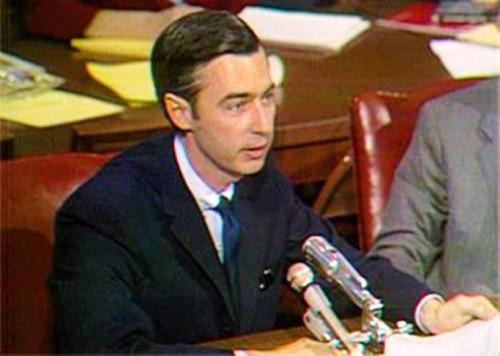
$20 Million Testimony

rogers-pastoreOn May 1, 1969, Fred Rogers appeared before Senator John Pastore’s Senate committee to explain why they should continue to fund PBS (Public Broadcasting System) for another term at a cost to the taxpayers of America of twenty million dollars. If you’ve never seen Mister Rogers’ testimony, I encourage you to stop, and take a moment to view it now. Click HERE

Spoiler Alert, Senator Pastore gave PBS its $20 million funding.

Be Real

What Fred Rogers did before the Senate hearing, was the same thing he did on his TV program, in interviews and in life. He was himself. He was being real.

His truthfulness and sincerity were never in question.

2002 Dartmouth Commencement Speechdartmouth-rogers

In May of 2002, Fred Rogers was invited back to his alma mater, Dartmouth, to give that year’s commencement address. It was powerful in its deep and simple message. Here are some of the things he said that day, that I feel have importance to the radio broadcasting industry.

Mister Rogers told one his favorite stories about the Seattle Special Olympics, where nine contestants, all of them physically or mentally disabled, were to run a 100-yard dash.

The starting gun fired and all of them began to run. One little boy stumbled, fell and hurt his knee. He began to cry. Hearing him cry, the other eight children turned around and ran back to him. They picked him up, linked arms and all joyfully crossed the finish line at the same time.

What makes this story so powerful, Fred Rogers told the graduates, was that

“Deep down, we know that what matters in this life is more than winning for ourselves. What really matters is helping others win, too. Even if it means slowing down and changing our course now and then.”

Radio used to operate with this everybody wins type of esprit de corps, a feeling of pride, fellowship, and common loyalty, to its staff, its advertisers and its community of license.

You Are Unique

Fred told the graduates that day that each one of them is unique and special. No one will ever be like them.

Radio stations used to be unique and special when I was growing up. DX’ing (listening to distant AM radio signals via the night skywave) was a cornucopia of theater for the mind. Every station was unique. Every radio personality was special. To not listen to any one of them left the radio listener with a sense of FOMO (Fear Of Missing Out).

Choices

Fred Rogers said that he was very much interested in choices.

“What it is, and who it is, that enable us human beings to make the choices we make all through our lives. What choices led to ethnic cleansing? What choices lead to healing? What choices lead to the destruction of the environment, the erosion of the Sabbath, suicide bombings, or teenagers shooting teachers. What choices encourage heroism in the midst of chaos?”

Radio has been constantly faced with choices over its nearly 100-years.

When television was born, radio chose to move in new directions and created new kinds of programs that would engage the next generation of listeners.

“What is essential is invisible to the eye.”

-from Saint-Exupery’s Little Prince

What’s Essential About Radio?

In the 21st Century, who’s asking this question? What’s essential about radio today? What’s essential about the people who broadcast over your radio station?

Fred Rogers told those Dartmouth students that commencement day, they were graduating because of the people who helped them become the people they are.

“Anyone who has ever graduated from a college, anyone who has ever been able to sustain a good work, has had at least one person, and often many, who have believed in him or her. We just don’t get to be competent human beings without a lot of different investments from others,” said Mister Rogers.

bill gableThis past week, news spread that Brother Bill Gable had died. For many of us, it was the time he broadcast over The Big 8 – CKLW out of Windsor-Ontario, Canada that endeared him to our hearts. His best friend, Pat Holiday shared a story about what made Brother Bill and the rest of the air personalities at CKLW essential radio listening. Pat wrote:

“Each day on CKLW the big deal was the show opener. We’d all try to outdo each other. No, ‘Hi…how you doing?’ stuff. It HAD to be larger than life. We’d all do our best to do some crazy or funny or amazing thing to set the tone for the rest of the show. Something mesmerizing. So much that you’d think, ‘Holy shit that was great. How am I going to top that?’”

This is in such stark contrast to what we hear over the radio today.

George Johns shared a blog post from his radio friend Bob Christy that was titled “It’s Over…” The blog was written by Bob after he had spent a couple of hours listening to New York City’s #1 radio station. You can read the complete blog article HERE 

The essential element for most radio listeners, the air personality, was throttled to four mic breaks per hour. Worse, the personality sounded uninterested according to Christy and the only local story he shared was ripped off the internet.

Bob ends his post by asking, “So is it fair to judge a station by listening to one break or for ‘only a few hours,” hell yes it is. The audience will give you one shot, you better be ready and make it count.”

Won’t You Be My Listener?

Radio has choices. It will either work to become essential in people’s lives again, or it won’t. Will it continue down the path of being shallow and complex, or return to its roots, being deep and simple? Great radio is more than anything you can see, hear or touch. Great radio is community and companionship. Great radio is LIVE and engaging to its target audience.

Great radio is created by dedicated radio people who spend every waking hour focused on delivering great radio.

I wish for the people in today’s radio industry to possess the wisdom, strength and grace to make the choices the industry needs, to make it the best radio it can be, going forward.


7 Comments

Filed under Education, Mentor, Radio, Sales

Radio’s Wizards

Wizard NotebookI remember how a weekly fax changed my radio life. It was called the “Monday Morning Memo,” and it was written by a guy in Texas by the name of Roy H. Williams.

Every Monday, I couldn’t wait to get into the radio station and check the fax machine for his latest missive. It never failed to ignite my soul.

Things That Won’t Change

I’ve written in this space about Jeff Bezos of Amazon and what he considers to be the most important question most people don’t ask about their business and that is “What won’t change in ten years?”

Roy’s Monday Morning Memos are an excellent example of focusing on those universal things that won’t change about branding, marketing and selling. They are those universal concepts that will don’t change with the latest technology.

Secret Formulas

In my broadcast sales class at the university, I would spend the end of the semester with each class reviewing principles of Roy’s book “Secret Formulas of the Wizard of Ads.” All of Roy’s books are a must read for anyone in radio sales.

Here’s an example of some of the things that won’t change for great radio advertising:

  • Surprising Broca – most radio ads are predictable and use clichés that listeners have become adept at tuning out. Great radio ads seduce the listener and then persuade.
  • Words are Keys – you know the product, just by the ad keys used by the brand. Let me give you a couple of examples: “We’ll leave the light on for you” or “Just Do It.”* Do I need to tell you the brand name or what they sell? Do these two companies surprise you with their ads?
  • Engage the Imagination – people only go to places they’ve already been in their mind. The skillful ad writer will engage the listener’s imagination and take the listener where they want the listener to go.
  • Sleep is the mind’s eraser – when we go to bed, sleep is the process where the mind clears itself for the next day. Like an eraser on a chalkboard, sleep wipes away all of the advertising messages a listener is exposed to that day. Knowing this is why, building a radio schedule that delivers the minimum frequency to be effective, is so important.
  • Power Verbs – present tense and present progressive tense verbs conjure up powerful images in the mind. How often to most radio ads use them? Sadly, not very often.
  • The Secret Path to Miraculous Ads – Roy says “journalistic writing is an objective presentation of the facts in an attempt to inform, not persuade. Creative writing is the telling of a story with wit and charm in an attempt to entertain, not to persuade. And Poetry is writing to communicate a new perspective in a brief, tight economy of words. An attempt to persuade.” Will your ad persuade a listener when they hear it? Emotion is KEY. They may forget what you said, but they will never forget how you made them feel. How do you feel after viewing this ad for State Farm called “Never”?

Fearless Flyers

Fearless-Flyers_Chet-Young-at-the-Beach_780This past Tuesday, September 11, 2018, America remembered the 17th anniversary of the 9/11 attack on America in New York City, Washington, DC and Shanksville, Pennsylvania. My class at the Wizard Academy was supposed to have 29 students. Only four of us showed up: Dr. Kevin Ryan, a famous writing coach from Utah; Chet Young, a big salesman with a booming voice from Burlington, Iowa; Akintunde Omitowoju, a senior programmer of Nintendo games from Kyoto, Japan and me, a radio station general manager from Atlantic City, New Jersey.

It took place in a small, converted gym in the offices of Williams Marketing in Buda, Texas just one week after 9/11 in 2001.

Roy has the students come up with a special name for their class and ours became the “Fearless Flyers.” Each of us flew on a commercial airliner whose crew outnumbered the passengers.

This past week I learned of the passing of Chet Young. His niece dropped by the Wizard Academy to see if this magical place her Uncle Chet always talked about really existed. It does.

Roy shared a memory of our class in this week’s Monday Morning Memo’s “Rabbit Hole.” You can read more about it HERE.

Positive Things YOU Can Do

Roy H WilliamsWant to make your radio station more effective for your advertisers and more engaging for your listeners? Then do those things that will not change for effective radio in ten years.

Subscribe to Roy H. Williams’ “Monday Morning Memo,” read the Wizard of Ads book trilogy and make plans to spend a week at the Wizard Academy to learn directly from the Wizard of Ads, Roy H. Williams.

Thank You and God Bless You Roy.

Wizard of Ads Coin

*Motel 6 & Nike

10 Comments

Filed under Education, Mentor, Radio, Sales

Watch the Media

John ShraderI was recently invited to be a guest on the radio show and podcast “Watch the Media with John Shrader.” The program airs on the University of Nebraska-Lincoln campus radio station and the podcast of the show can be heard on SoundCloud.

John had some interesting questions and I thought I’d share them, along with my answers in this week’s blog article.

What is the State of Terrestrial Radio?

If we look at the topline number of how many Americans listen to terrestrial radio today versus the last ten years or so, that number is remarkably stable. Unfortunately, what has changed are the TSL (Time Spent Listening) and PUR (Persons Using Radio) numbers. They’ve been in a steady decline since 2007. That’s 11-years of erosion.

What’s not pretty is the accompanying loss of revenue that comes with losing 30% of your TSL.

Radio revenues today are characterized with such phrases as “flat is the new up.”

In 2017, U.S. commercial radio’s over-the-air income declined 2% year-over-year, according to BIA Advisory Services’ Q1 2018 “Investing in Radio Market Report.”

In should be noted that, the same report showed that radio stations reported a 9.7% increase in online revenues over the same period.

Radio Revenue Recent History

During the 1990s, ratings and ad revenue rose rapidly. According to the Radio Advertising Bureau, industry revenues grew from around $11 Billion per year to nearly $20 Billion between 1994 and 2000. After 1996, revenues grew by double digit percentages every year until 2001.dollar sign

PBS reported that “The collapse of advertising budgets that came in 2001 after 9/11 hit radio hard, cutting revenues by 8-percent that year to $18.4 Billion.”

In February 2005, then Viacom (today CBS) President Leslie Moonves told the L.A. Times this his top priority was returning the business to a “growth path.” Moonves recently sold off all of CBS radio stations to Entercom.

2017 Radio Revenues

In 2017, radio revenues ended at $13.87 Billion; not exactly a “growth path.”

BIA SVP and Chief Economist Mark Fratrik summarized the situation for American radio this way:

“Revenues are growing for broadcasters online but not over-the-air. We do not expect over-the-air advertising revenue of U.S. radio stations to grow much this year or in the near future. There is an unprecedented number of new audio entertainment and information sources and new advertising platforms competing with radio, including many that are unregulated. It’s an aggressive environment that competes for audiences with local radio.”

Who are Radio’s Listeners and Where do They Listen?

In general, today’s radio listeners are on the backside of Everett Rogers “Diffusion of Innovation Curve.” diff-of-innovationThey are part of the Late Majority and Laggards.

car radio.jpgThe primary way people access radio today is in their car. But by 2020, it is estimated that 75% of the cars sold will be connected to digital services.

Today’s heaviest radio listeners are reported to be Black or Hispanic.

Radio’s best listeners tend to be employed full-time versus unemployed. That’s great news for radio sales people to share.

What’s alarming is the fact that recent research showed that 29% of all American households don’t have a single AM or FM radio in them and even more alarming, 18-34 year old households are now at the tipping point of radio ownership. 50% of those household don’t have a single AM or FM radio in them. That probably explains how monthly online audio listening reportedly increased from 5% in 2000 to 64% in 2018.

Edison Research has more HERE

What’s the Future for Podcasting?

Podcasting is still growing. About 26% of people over the age of 12 have listened to any podcast in the past 30-days. However, 36% of Americans still don’t have a clue as to what podcasting even is. So, it would appear there’s a lot of growth potential.

Great podcasts, like great radio personalities, tell great stories.

Something to watch is Amazon. It laid off its entire original podcast staff in August.

What’s the Impact of Smart Speakers on Radio?

Tom Webster at Edison Research says “smart speaker adoption is the fastest tech adoption we’ve ever tracked in the Infinite Dial research. It went from 7% to 18% in a year.” echo

Smart speaker growth isn’t slowing and these new devices are replacing radios in the home.

I got my first Amazon Echo for Christmas 2017. By the end of Q1 2018, I owned three of them. 100% of my in-home radio listening now occurs via a smart speaker.

These things are addictive.

65% of people who own a smart speaker say they wouldn’t give them up.

What’s Radio’s Future?

People my age grew up with radio. Our parents controlled our home’s only television back in the 60s/70s. Radio was a way we could escape and connect with people our own age and the music of our generation.

Much as we created radio for our generation of listeners, today’s future broadcasters will need to mold it for their generation.

We are living in the days of a communications revolution. Not since the invention of the printing press and movable type has the world of communication been so rocked by change. Revolutions are messy, the future is not always clear, major disruption is par for the course.

New ways of communicating are being created.

Radio, as we knew it, is not coming back.

ON DEMAND

We now live in an ON DEMAND world. It has changed the way we use all forms of mass media. People going forward will want what they want, when they want it.on-demand-cpe

Netflix created the new phenomena of binge-watching TV shows. I do that now too. I also binge-listened to the podcast SERIAL on a long car drive after that weekly podcast had completed season one.

What Won’t Change?

What we know is that people will always be drawn to great story telling. Our brains are wired for stories. We also know that people will want to be connected to others like themselves.

Dan Mason puts it this way, radio is all about community and companionship.

I don’t see that changing, do you?

2 Comments

Filed under Education, Mentor, Radio, Sales

What a Radio Looks Like in the 21st Century

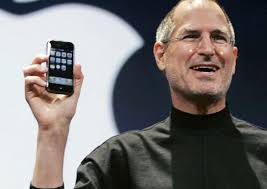
first iPhone introducedIt was only 11-years ago that Steve Jobs took the stage and held in his hand the future. It was an iPhone.
Many people were skeptical that this device could compete with the very popular Blackberry. I think I may have been one of them, as I was a Blackberry owner/user until 2012.

I quickly realized that I knew how to operate an iPhone, after buying an iPad in the fall of 2011.  All Apple devices share a core eco-operating system that makes learning them fast and easy. My first iPhone was the 4S. The “S” stood for Siri and I quickly learned to use Siri to type all of my text and emails via dictation. In 2017, I upgraded to an iPhone 7.

OK, so I’m probably not telling you anything you don’t already know. But in just a decade, have you ever stopped to think about the impact that the smartphone has had on our lives and the technology we use?

RADIO

In America today, 29% of households don’t have a single working AM or FM radio. But it gets worse. The percentage of households without a single working AM or FM radio grows to 50% for the 18-34-year-old age group.

Edison Research recently reported that even 63% of heavy radio listeners now consume their audio online. 82% of those listeners own a smartphone and the most commonly downloaded App is Pandora (40%).

For many, a radio in the 21st Century looks like a smartphone.

SMARTPHONES

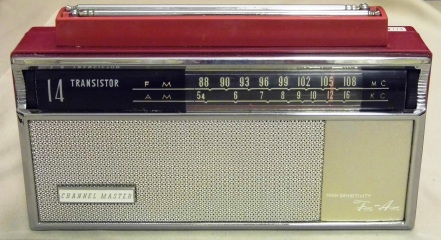
Crosley AM FM Radio

Often it appears like radio people think they are the only ones who are not affected by the innovations of technology. Such as, no matter what comes along, AM/FM radio will always be there. Unfortunately, that kind of thinking is like sticking your head in the sand.

Let’s think about how smart phones have replaced other “must have” technologies:

  • My Nikon camera no longer goes on vacation with me, it has been replaced by the pictures I take on my iPhone
  • Same for videos using my very expensive camcorders
  • My iPod is now my iPhone
  • My newspaper is my iPhone
  • My calculator is my iPhone
  • My eBook reader is my iPhone (or iPad)
  • My pocket voice recorder is now my iPhone
  • My GPS when on foot is my iPhone, though I still prefer my Garmin SmartDrive 61 in the car
  • My flashlight is now my iPhone
  • My iPhone is my compass, barcode scanner, and portable video player
  • My iPhone is the way I access Facebook, Twitter, and LinkedIn away from home
  • My iPhone is the way I get both my local weather forecast as well as access weather radar. Weather alerts come in immediately to my iPhone replacing the need for my weather radio.
  • I’ve been a cellphone only household since 2000
  • My smartphone is my household answering machine
  • My smartphone is my alarm clock
  • I no longer wear a wrist watch, as my iPhone is my watch
  • I use my iPhone as a timer when I’m cooking
  • I have my digital library on my iPhone
  • My work and personal calendars are all on my iPhone
  • I keep notes and other records on my iPhone
  • Since I take all my pictures with my iPhone these days, my photo album is also my smartphone. (Note: I have 2-TerraBytes of iCloud storage to back up everything)
  • My entire “rolodex” (contact list) is now on my iPhone (I started with a Day-Timer and went digital in 1989 with a Casio Boss. Then moved to a Palm Pilot. Then to the iPhone.)
  • I check my email when not at home on my iPhone
  • I surf the internet frequently on my iPhone
  • When I call the kids & grandkids, it’s using Facetime on my iPhone
  • My credit cards, plane tickets, show tickets are now all in my Apple Wallet on my iPhone
  • I can even use my iPhone to run my Apple TV as a remote control

SMARTPHONE ADDICTION

A new research study by Pew finds that 54% of U.S. teenagers, age 13 to 17, worry they may be spending too much time on their phones. While they also say they are trying to reduce their smartphone and social media time spent, 56% of teenagers find that doing so makes them feel anxious, lonely, or upset.Group Of Children Sitting In Mall Using Mobile Phones

And it’s no better for parents (and may I add, grandparents). Pew’s survey tells us that we are struggling with the same impulses over the time we spend on our phones and social media, sometimes with even worse results than teenagers.

Adults lose focus on their work and students lose focus in the classroom, by the constant need to check their smartphone.

SMART SPEAKER

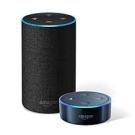
echoMost research today indicates that since the introduction of the smart speaker, the device that’s getting a little less use is the smartphone. I would concur that is the case in my home as well. Our 3 Amazon Echoes are the way we access at home radio listening, get flash briefs, find out the time and latest weather forecast.

At home, 100% of our radio listening is streamed through a smart speaker.

Speaking of Voice Command devices, my Garmin GPS SmartDrive 61 is now programmed by my voice and I can add via points while driving simply by telling my Garmin where I want to go next. It’s the best improvement in automobile navigation since the GPS itself.

ON DEMAND

on-demand-cpeWhat the smart speaker and the smartphone have in common, are both devices give the user what they want, when they want it. On Demand is the real game changer of the 21st Century communications world.
Netflix, Hulu, Amazon Prime, Apple TV etc. are delivering on demand television. The smartphone and smart speakers are doing that same thing for podcasts, radio, news, weather and everything else.

Edison Research noted, in their recent research, that the hardware challenge in the home is significant. Getting analog radio back into the home (and I would add, in the very near future, the car) seems unlikely

18 Comments

Filed under Education, Mentor, Radio, Sales

Whatever happened to…

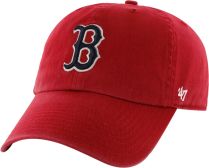
Red Sox CapThe other day, we took two of our grandchildren to a wildlife safari park here in Virginia. It was a simply magical day. But that’s not the part of the story I want to share. It is that both kids were wearing their Boston Red Sox baseball caps.

As we were getting ready to leave we met one of the animal caretakers who screamed “YES!” Then a second later, she exclaimed, “They’re both Red Sox Fans!” Instantly, there was a bond between complete strangers.

Purple People

Minnesota Vikings Mower

I’m convinced that Minnesota Vikings fans bleed purple. I know one whose whole wardrobe is virtually branded with Vikings colors and logos; even his lawn mower.

Sports franchises truly understand the power of their brand and building their fan base.

So, whatever happened to this sort of thing with radio stations?

Eazy 101

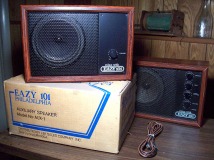
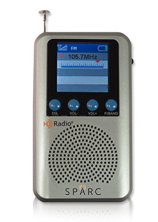
Eazy 101 receiverJerry Lee recently sold his only radio station, WBEB in Philadelphia, Pennsylvania. It was 55-years ago this past May that Jerry and his partner David Kurtz put the station on the air. It signed on as WDVR. In the 1980s the call letters were changed to WEAZ and the station was branded as “EZ 101.” The station brand was not only well known, but fixed tuned FM radios were given out by the radio station to area businesses to play the station in their stores and offices.
B101 Bee

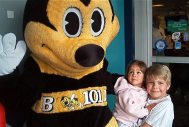
When the station updated its format, and changed its call letters again, this time to WBEB and branded itself as “B101.1,” giant bees appeared at events all over the “City of Brotherly Love.”

The End of an Era

Marlin Taylor (no relation) was there from the beginning and recently blogged about the station’s sale to Entercom. His article was titled “End of an Era.” You can read it HERE 

Marlin wrote:

“While I pretty much grew up with a ‘Can Do’ attitude…seeing Jerry in action confirmed that staying pro-active and constantly on the offensive were keys to a meaningful and effective life! If you need proof, just take a look at the 55-year track record of the station at 101.1 on the FM dial in Philadelphia.

There’s no question that Jerry was and is a promoter, pure and simple! And, yes, he’s a Futurist…a person who studies the future and makes predictions about it based on current trends and conditions. I would also add…always looking down the road to see what challenges and opportunities lay ahead, then utilizing (his) assets to most effectively counter-act or benefit from them.”

Familiarity

As Jerry changed his brand over the years to keep his station’s programming and image in vogue with the times and his target listeners, he understood the power of familiarity in attracting and keeping a radio audience tuned to his radio station. Mark Ramsey suggests that “familiarity IS preference.”

morefm rebrandingMost recently, Jerry rebranded his station as “101.1 MoreFM.” This change, like all the others, was promoted in every imaginable way and became familiar to listeners virtually overnight.
wobm bumper sticker

Bumper Stickers

Once upon a time, you couldn’t drive in New Jersey without seeing a WOBM-FM bumper sticker on the car driving in front of you. They were everywhere. They made this station VERY familiar and Paul Most, a former GM of WOBM-FM, always used to say “When you can’t be heard, you’ve got to be seen.”

Arbitron Diary

arbitron diaryOnce upon a time, all radio listening was recorded using a diary, kept by a listener for seven days. Years of diary reviews at the Arbitron headquarters in Maryland proved to me that the radio stations most familiar to their listeners got the most “votes” from their fans.
When PPM measurements were introduced, the importance of unaided recall seemed to take a back seat with radio operators. Best Practices in large radio companies replaced the old tried and true ways of doing things. Radio promotion, except for over a station’s own airwaves, was cut from station budgets.

New Media Platforms

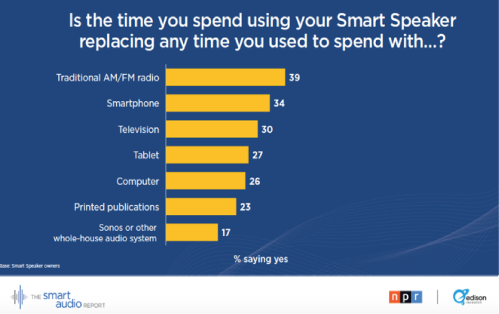
The shiniest new media platform on the block is the smart speaker. A recent research study, “The Smart Audio Report” from NPR and Edison Research, showed that traditional OTA radio was seeing the time people spent with radio, being the most disrupted. smartaudio-chartPeople in the survey said traditional AM/FM radio was the thing most replaced by audio listening via their smart speaker.echo
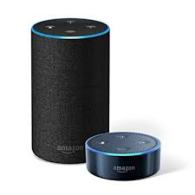
Having now owned three Amazon Echo smart speakers for six months, I can tell you Alexa is very addictive. But she’s also very precise. To have her serve up what you want to hear, you need to say it correctly, in the exact way she is programmed to understand, or else she will serve up some really bizarre things.

My household pretty much matches the research on why audio consumers love their smart speakers: 1) it’s fast, 2) it’s convenient and 3) it provides great choice.

Brand Promotion

In an interactive voice world, if people are familiar with your brand, they will ask for it by name. If not, the digital assistant will make that choice for you. That will make branding more critical than ever.

This means that the way radio promoted itself to its listeners back before PPM – the unaided diary days – will be the way it will need to promote itself in a world of voice control devices.

“Brands are a risk of being marginalized in a voice driven world, so brand marketing may matter even more.” -Bryan Moffett, COO, National Public Media

branding“Brands now have a chance to behave like human beings, talking, understanding, guiding, empathizing…voice is the single biggest vector of emotion, emotion is the biggest driver of preference. This is a true 1:1 marketing opportunity and a chance to build relationships like never before.” -Mark Paul Taylor, Chief Experience Officer, Global DCX Practice, Capgemini
Jerry Lee never deviated from his proven path of spending on promotion and delivering a quality product.

Everything old is new again, when it comes to branding a winning radio operation.

3 Comments

Filed under Education, Mentor, Radio, Sales

AM/FM or just FM?

HD FM Radio ReceiverThere’s something that’s been troubling me for some time. It’s the radio industry’s habit of reporting radio listening results by calling it “AM/FM” versus what it really is, virtually all FM radio listening.

Nieman Lab

Who could not be buoyed by this headline from Nieman Lab: “AM/FM radio holds strong for American listeners.”

But is it true?

When I read the ratings reports from both PPM and diary markets, I see an FM world.

Don’t get me wrong, I grew up on AM radio and recognize that almost every market has a heritage AM radio station that still garners a big audience. I’m not blind to the wonderful ratings of 1010 WINS in New York City for example.

But there are only 26 all-news terrestrial radio stations left in America according to Nieman. This popular format is missing from the majority of America’s radio markets.

WTOP

WTOP logoWTOP was built on AM radio. It moved its entire operation over to the FM band and grew its audience, revenues and lowered its listener demographic. People who never heard this radio station on its AM dial position were suddenly newly minted fans of their all news format.
The FCC Saves AM Radio

The FCC’s mission to save AM radio is to give these radio stations an FM dial position using a translator. What are we really saving? The AM band or a particular format that a radio operator created on the AM band and now, to survive, needs to move it, like WTOP, to the FM side of the dial.

WIP

WIP logoFrom my blogging, I get lots of feedback about a variety of things concerning broadcasting. One reader wrote to me about his father, a sports fan, who turned on WIP-FM to hear the latest chatter. WIP-FM was broadcasting a game of no interest to his father, so his son said to him, why don’t you turn on WIP AM610. Sadly, this person wrote the audio was unlistenable. He wrote: “You’d think the FCC would mandate that AM have standards for audio quality in receivers.”
WSM

WSM logoWhen I was living in Bowling Green, Kentucky, I couldn’t receive 650AM WSM in my office, even though my office looked south and my antenna was able to enjoy a full wall of windows. The noise floor both inside my university office as well as around town while driving in my car made the station unlistenable. WSM was once listened to all the way to Louisville in northern Kentucky. Instead, I downloaded WSM’s app and could enjoy the radio station in crystal clear stereo. (I see WSM has stopped subscribing to Nashville Nielsen Audio ratings.)

BBC

BBC logoThe British Broadcasting Corporation (BBC) did a review of the range of services it offered on the AM band (called medium wave across the pond) and it included a financial review of all its services too. They concluded the ROI (return on investment) in AM was not there and announced they would be turning off some 13-AM radio stations in January 2018 according to Radio Business Reports.
WHVO

WHVO logoThere’s a great radio operator in Cadiz, Kentucky by the name of Beth Mann. WHVO is her AM radio station at 1480, but if you go on her website, you won’t find any mention of this station being on the AM radio dial. It’s promoted as WHVO 96.5 & 100.9 FM.
Bottom Line

It’s time to face the fact that AM radio needs to be re-deployed for a new service. Current radio station owners should be given a viable FM dial position that replaces their AM service area, and doesn’t require multiple translators to attempt to accomplish this task. (Note: WHVO needs two translators to deliver the signal of its AM 1480.)

It’s time to allow those same dedicated radio broadcasters to sell off their expensive AM tower sites and turn off their AM stations that consume electrical power with no real ROI.

Ecclesiastes 3

“To everything there is a season, and a time to every purpose under heaven…”

AM radio’s time has come and gone as the mass communication delivery system it was from the 1920s to the 1970s, much as radio replaced vaudeville.

To put things in perspective, at a time in America’s radio history when the number of FM signals equaled the number of AM signals on the air, 75% of all radio listening was to FM. So, you can only imagine what it’s like today for AM radio listening when FM signals outnumber AM signals by four and a half times in the USA. (FCC BROADCAST STATION TOTALS AS OF JUNE 30, 2018:  4,633 AM signals / 20,758 FM signals)

That’s why I believe we do no service in promoting radio as “AM/FM” and not being honest about where virtually all of the radio listening is really taking place.

Sadly, AM radio is to broadcasting as coal is to power generation. It was the perfect solution in its day.


43 Comments

Filed under Education, Mentor, Radio, Sales

Why Do People Love Radio?

We-Love-RadioI read a recent article in Bloomberg about how in an age of cord cutting, where millions of Americans are leaving the cable bundles and abandoning traditional TV, others are staying put.

Why?

The big reason should scare anyone working in ad supported media: “Our customers don’t want to cut the cord because they’d have to give up critical features like the ability to skip commercials…” said Jay Roth, chief marketing officer at Dish Network Corp.

Commercials = Clutter

A former colleague of mine at the university wrote to me the other day about the changes going on in higher education and the field of radio broadcasting. He wrote:

“I’ve also had it with local radio and TV, too. Too many commercials back to back to back – it’s like classified ads. Who remembers the 5th ad in a spot set, even if it is well written? (most are not). Thank goodness for SiriusXM. That’s where I am, unfortunately.”

Here’s the concerning point of sharing my colleague’s comment, this person grew up, worked in and taught AM/FM radio, and is of the age group that should still be “in love” with the business.No Ads

We have plenty of data showing how the younger age groups don’t even own a radio, instead listening to audio content via their smartphone or some other connected device.

So, what makes radio listeners stay?

The Radio Habit

A 2017 Jacobs Media survey found that AM/FM listening is pure habit. 91% of survey respondents said they listened to radio for an hour or more per day, but TV/video and the smartphone usage came in at 87%.AM FM Radio

Digging a little deeper, respondents cited hearing their favorite music and a connection to their favorite air personalities as reasons they listen to AM/FM radio.

Radio’s Free

The 2018 Infinite Dial  study from Edison Research and Triton Digital reported that 82% of respondents who have ridden or driven in a car in the past month listened to traditional car radio.

Pandora For Brands authored a “State of AM/FM Radio: What Advertisers Need to Know” piece that said:

“True, America’s oldest electronic mass medium – AM/FM radio – is still alive, kicking and serving throngs of listeners every day, but it’s also being disrupted by today’s growing digital media landscape. Radio has prospered for so many decades because it’s free, easy-to-use and there are tons of them around. In fact, it used to be the only way to enjoy music without having to invest in a record collection or to hear news, sports and traffic information on-the-go.”

But the real shocker was this data point:

“Currently, people between the ages of 50-60 years old who have mobile devices are spending more time with mobile apps than they are listening to AM/FM radio.”

-Nielsen Total Audience Report, Q1 2017

This age group was raised on AM/FM radio!

New Habits

I bring this all up because we are seeing new habits being formed with the new disruptive media technologies.

It’s like the old saying “Once they’ve seen New York, how are you going to keep them down on the farm?”

Once you experience Netflix or Amazon Prime, it’s hard to return to ad supported TV. And those folks who still buy the cable bundle, do so in part to have a way to eliminate the commercial clutter and to produce a more Netflix type of viewing experience.

Once you listen to your music on Pandora, Spotify, Apple Music or access your music via a smart speaker, you will be hard pressed to go back to a cluttered listening environment.

But the biggest new habit in our short-attention-span world is On Demand.

Whether we are talking about TV or audio, we are now a culture of wanting things when we want them, not when they are served up, and that’s the juggernaut all traditional media are faced with.

Newspapers, television and yes, radio, serve what they want you to have.

Today’s media consumer knows they have choices and they don’t have the time or patience for the way it used to be.

The Future is…

In 1967, the movie “The Graduate” had a scene where the Dustin Hoffman character was taken aside by a family friend who advised him about where the future was for a person his age. The answer was one word: “Plastics. There’s a great future in plastics.”

What might a friend advise a young person today to focus on? Podcasts?

Focus on the Things That Don’t Change

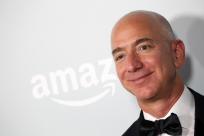
BezosJeff Bezos’ secret sauce has been to focus his efforts on things that would not change.

He said the question that he’s always asked is “What’s going to change in the next 10-years,” but the question that’s rarely asked is “What’s not going to change in the next 10-years?”

It’s that second question he feels is most important.

Bezos doesn’t concern himself with what will change, but on what won’t change. Then working to make those things better and better and better.

With this strategy, Bezos has become the richest man in the world.

This is what the radio industry should be doing.


21 Comments

Filed under Education, Mentor, Radio, Sales