Category Archives: Education

Who’s in Their Ear?

When radio was first introduced, to listen to it, you needed to wear headphones. Radio was one-to-one and very intimate. As the technology evolved the radio speaker would change the medium from one-to-one to group listening. Radios were expensive. If you owned a radio you shared it. A family would gather around the radio and listen together. Families would transfer this together media habit to TV and the transistor radio would become the refuge of teenagers who wanted to go in a different direction.
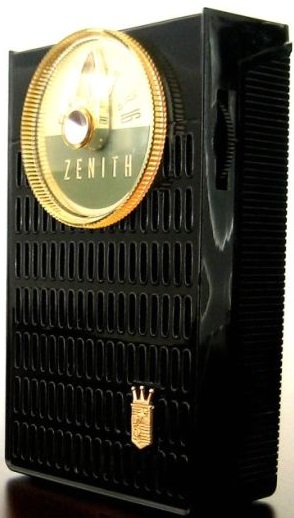
Zenith Transister Radio

My first radio was a Zenith transistor with a little ear piece for one ear. I would go to bed and turn it on under the covers and listen to “the world.” It was all AM radio and after sunset, the DX’ing of the nighttime skywave would always bring a new radio station into my ear to savor.

In the mid-70s the Boombox would be introduced to America and these radios grew both in size and the amount of bass they 1could produce. By the 80s they could be as big as a suitcase and carrying them around on your shoulder was a status symbol.

Go to a beach resort, and whether you were walking the boardwalk or on the beach, radios were blasting music from every direction.

When Y2K didn’t impact our fully computerized radio stations, we all breathed a short-lived sigh of relief because it was quickly followed by a new threat; the iPod and ear buds. Once again listening to music became a very personal activity.

The ear buds would transfer to the iPhone and iPad. The introduction of the iPhone6 may have killed the iPod, but not the use of headphones or ear buds to listen to your audio.

So what exactly are all those people listening to? lady listening with ear buds

The latest research from Edison Research says American Teens are spending more time with streaming audio services from places like Pandora and Spotify, than they are listening to either streaming AM/FM radio or over-the-air radio. Edison reports this finding in their fall 2014 “Share of Ear” report.

Remember it was my generation that grew up hooked on radio & TV that were credited with eroding newspaper readership. (Full disclosure: I read all my news online using my computer, iPad or iPhone.)

It’s not all bad news for AM/FM radio. It is still popular Edison tells us “by a significant margin among all other age groups.” So where did the teens go? Pureplay Internet streamers. What do they love most? The ability to skip a song they don’t like.

That’s really not hard to understand. I love my DVR for a similar reason. Especially when it comes to award shows. I never watch them live anymore. I record them for later viewing and I can watch a 3+ hour awards show in about 20 minutes time. I skip all the bad parts.

In fact, I rarely watch anything on TV live anymore. Everything is recorded so I can control it. So is it any surprise that teenagers once they are given this kind of control will ever want to give it up. A new habit is being formed.

The other aspect about pureplays that AM/FM radio could be addressing is their complete focus on the quality of their streaming product. What I’m hearing is a clean commercial insertion. Nothing gets cut off in the middle or repeated multiple times in the same long break. Pureplays deliver their commercial messages in a style that compliments the music programming; in a way that actually has you enjoying listening to the commercial message.

The teenagers have moved their listening to streaming and podcasts. The spectrum auction being held by the Federal Communications Commission is all about creating more wireless connections for all kinds of mobile devices.

I live in South Central Kentucky. I can stream my iPhone into my car’s seven speaker sound system through Bluetooth and everywhere I drive it’s clean and clear with no dropout or buffering. It’s scary good. It’s as easy to do as turning on my car’s audio system. Nothing to plug in or connect. It happens automatically.

South Central Kentucky is also blessed with some excellent over-the-air radio stations. So they very effectively compete, in my opinion, with streaming. But I wasn’t raised on streaming. I also like a good air personality.

The next generation is being raised on streaming that they have some power over to skip things they don’t wish to hear. Reminds me of the old saying “How are you going to get the kids back on the farm, after they’ve seen New York?”

baby listening to ear buds

2 Comments

Filed under Education, Mentor, Radio

The Problem with Digital Radio

The problem with digital radio is FM radio. FM radio is loved by the consumer. They don’t find anything wrong with FM radio (other than too many commercials). With no perceived need to change, the FM radio listener doesn’t. That’s not just a problem for radio station owners in America, but all around the world.

I often like to compare the start of HD Radio with the introduction of the iPod by Apple. Both happened about the same time. One has sold hundreds of millions of units and now is no longer made, and the other is HD Radio.

Interestingly enough, the introduction of digital audio broadcasting was born around the same time as the World Wide Web. It was born before MP3s and iPods. Born long before the advent of Smartphones and Tablets and yet, digital in the world of over-the-air radio transmission is still waiting to get traction with the consumer.

FM radio commanded 75% of all radio listening in America back in the 1980s when the number of AM and FM radio stations in America numbered about the same. So it’s no surprise that over three decades later that FM dominates when the number of FM radio stations, translators (FM stations) and LPFM (FM stations) far outnumber AM radio stations that are on-the-air today in the USA.

Across the pond, the British government was planning to switch that country’s radio listening from FM analog to digital when the penetration of digital radio listening reached 50%. They thought that would happen by 2015. Currently digital radio listening in England stands at only 36% and the government has now wisely put off setting a new date for this transition.

The problem in England goes beyond just radio sets in homes and cars. British folks also can listen to FM radio on their Smartphones. Unlike here in America, the FM chip that comes inside Smartphones has been turned on. These chips remain in the off position in America with no way for a Smartphone owner to turn it on without “jailbreaking” their phone which is illegal. The members of parliament aren’t about to turn off a system that serves around 25 million listeners, if they want to get re-elected.

I own one HD Radio. My local NPR FM radio station broadcasts with 100,000 watts on their analog FM signal. It’s crystal clear and comes in everywhere I go. They simulcast their NPR and other talk programming on their HD Radio signal too. That is plagued with dropout and a short range in terms of where I can pick it up. The same HD Radio that picks up the digital broadcast of my local NPR radio station also has an FM tuner (but no AM tuner). I can switch between the analog FM and digital FM, and to my ears they sound about the same. And therein lies the problem. No perceived difference other than one goes great distances with no drop out and the other is HD Radio.

At this point in time, what seems clear is that is FM radio isn’t going anywhere anytime soon. AM radio station operators would benefit by having a similar FM signal that delivers the same coverage area as their AM license provides sans the sky wave effect. Giving them a low power translator is an insult in my opinion. All Smartphones should have their FM chips turned on. NextRadio should be embraced by FM broadcasters. All broadcasters need to focus on their content and make sure that whether it’s over-the-air or over-the-Internet, it’s of the same high quality and offers all of the same content on both.

I’ve never heard an FM radio listener complain about the quality of their signal and what they do complain about, isn’t being focused on by broadcasters. We have no time to lose.

FM radio has the delivery system in place. Take advantage of it to serve, entertain and inform.

7 Comments

Filed under Education, Mentor, Radio

Radio’s NOT Like it Used to Be

Marconi Wireless(Spoiler Alert: It never was, starting with day 2) When I hang out on social media – or imagine this, have a real face-to-face conversation – with my radio contemporaries that grew up listening to radio in the 60s & 70s, the conversation invariably turns to “radio’s not like it used to be.”

From the moment of its birth, radio has been one long experiment.

It took hold when Marconi International Marine Communication Company, Limited began to make money with wireless over-the-air transmissions. Marconi was in it for the money. He really cared little how it all worked. He wanted to build more powerful transmitters and cover greater distances. He didn’t sell his technology but leased it. He also trained and employed the wireless operators who used his equipment.

So, imagine you’re a wireless operator on Christmas Eve 1906 and you’re at sea monitoring your dots & dashes – all that you’ve ever heard come through your headphones – when at 9 PM EST on Christmas Eve you suddenly hear a human voice coming through your headphones. Then singing. Then a violin playing. And finally a man speaks a Christmas greeting. What would you have thought to yourself?

The man who did this was Reginald Fessenden. In addition to being a brilliant scientist, he also sang and played the violin. From his transmitting station in Brant Rock, Massachusetts his first wireless transmissions of voice and music were heard up and down the Eastern seaboard. He would repeat this again on New Year’s Eve.

In the United States the final commercial Morse code transmission was sent on July 12, 1999. The last message sent was the very same as the first message sent by Samuel Morse in 1844, “What hath God wrought”, and the prosign “SK”.

What brought this all to mind was a news item that has been circulating recently about a survey by Morgan Stanley that was released by Quartz.

The survey is a positive for radio. In a survey of 2,016 American adults taken last November, AM/FM radio use was #1 with 86%. Number two was YouTube, number three was Pandora and number four were “TV music channels”.

The first four were all advertising supported and thus free to the user. The fifth on the list was also the first paid service; SiriusXM radio (tied with iHeartRadio).

So one thing that hasn’t changed is that most people would rather access free-with-ads entertainment versus paid-without-ads entertainment when given a choice.

However, this survey has spurred a lot of discussion in the radio world. Broadcasters are divided on what this survey is really telling us. Owners/operators are saying that it shows “radio ain’t dead.” Broadcasters that have been consolidated out of the industry are saying “not so fast.” And to some extent, they’re both right.

As Mark Ramsey pointed out on his blog, “86% of respondents saying its part of their usage routine” is what radio folks would call “reach” and does not really address frequency of usage or “time spent listening;” two key radio metrics.

Conspicuously missing from the Morgan Stanley list is a service I use and enjoy TuneIn radio. I wonder why?

So where does that leave us?

I think it’s a twist on one of Henry Ford’s most famous quotes:

Whether you think radio is or is not, you’re right.

Radio owners/operators have it within their power to create the future for the radio industry. So what’s it going to be?

2 Comments

Filed under Education, Mentor, Radio

New Radio World Column Premieres

Thirty years ago Michael C. Keith entered a small New England college to start a new career. Keith had just spent the past ten years as a professional broadcaster and was now transitioning into the world of teaching. The first thing that he would learn was the only textbooks available at that time were woefully out-of-date. Radio was now format driven and there were no textbooks available in 1986 that were teaching the kind of radio Michael Keith had just left. So, Keith decided to write his own textbook. He called it simply “The Radio Station” and he pitched his manuscript to Focal Press.

If you like to read the entire article, simply click here: Focal Press Updates “Keith’s Radio Station”

This is the premiere of my new column in Radio World that will appear quarterly.

Leave a comment

Filed under Education, Radio

Different or Better?

In education, we measure students by GPA (grade point average). The higher a student’s GPA, the more everyone believes that student is the higher achiever. In school, that measure is usually pretty accurate, but what about when the student graduates?
The best baseball players don’t always become all-stars. The best scientists don’t always win a Nobel Prize; the best known do.

Stanford’s business school once tried to learn what their most successful graduates had in common. They found two things. They all graduated in the lower half of their class and they all were very good at socializing. Being able to work a crowd, it turns out, is a skill-set that leads one to be successful.

Lee de Forest wanted to be called “the father of radio.” He even tried to use the “Miracle on 34th Street” concept having the post office make that determination. Only unlike in the movie, the United States Post Office did not deliver the mail addressed “the father of radio” to de Forest. Worse, de Forest never really understood his own Audion tube that made the radio we know today possible.

Edwin Howard Armstrong, the creator of FM radio (that is also the way the audio on your TV set gets delivered too) did understand the science that made the Audion tube work, but most people don’t know Armstrong.

Armstrong was better than de Forest, but de Forest was different.

Nielsen Audio measures better, something audiences really can’t distinguish. However, different is something that audiences can distinguish.

Think of top rated radio personalities. Were they better or different? Howard Stern? The Real Don Steele? Salty Brine? Dale Dorman? Paul Harvey? Jean Shepherd? Wolfman Jack? Etc.

I’m sure you will say they were better, because they were different. They were also all well promoted; either through self-promotion or a radio company that promoted them.

Today, every streaming audio service calls themselves “radio” and they’ve all copied the best practices of radio stations and one another that eliminate their differences; except one. Pandora. Pandora uses their “Music Genome Project” to put together their stream. Is it better than a music format that a person curates? Probably not. But it’s different.

Radio used to be filled with innovators dreaming up different. We need to let those folks back into the business and turn them loose. It’s why FM radio finally got traction and HD Radio never did.

It’s time for radio, like Steve Jobs did for Apple, to “Think Different.”

Leave a comment

Filed under Education, Radio

Giving Thanks

1At this moment in time, I would have to say I’m thankful for having the opportunity to fulfill a life-long goal of one day teaching at a college or university. I’m now in my fifth year of teaching broadcasting at the School of Journalism and Broadcasting at Western Kentucky University. I’m grateful for my students that write a note to say how appreciative they are for the effort I put into my classes and how they benefitted from them. And I’m thankful for those students who stay in touch with me after they graduate to let me know how they’re doing in their broadcast careers.

I’m thankful for being able to have the whole family together for Thanksgiving for the first time in five years as each of us have moved to different parts of the country but this year will all return to my hometown of Pittsfield, Massachusetts. It will be our first Thanksgiving that will have three grandchildren celebrating this family holiday spanning four generations.

I’m grateful for my two sons that each have distinguished themselves in their chosen careers and are wonderful fathers.

I’m thankful for my two older brothers that always been there for me through ups and downs, thick and thin.

I’m grateful that a career in radio that I started in the 10th grade in high school would allow me to pay for my college education, graduate school and raise a family. It’s a career that was all I ever wanted to do besides one day pay-it-forward through teaching the next generation of broadcasters.

I’m thankful for all the wonderful people I’ve met on this journey called life, people who were only strangers until we said “hello,” and then became friends for life.

One of my mentors, Zig Ziglar said: “You can get anything in life you want, if you will just help enough other people get what they want.” I’ve tried to live those words every day.

As we approach Thanksgiving Day 2014, remember you may make a living by what you get, but you make a life by what you give.

Today, I’m giving thanks for you.

1 Comment

Filed under Education, Radio

It’s Christmas Time – Hammacher Schlemmer’s “Last Minute Gift 2014 Catalog” Arrived

Hammacher Schlemmer (2)Growing up, I always thought I was blessed to have been born in the month of October. Why you ask? Because in September the Sears “Christmas Wish Book” would arrive in the mail and I would carefully comb through its pages to make out my Christmas list for Santa.

Doing this in September was a good way to let the members of my family know of my “needs” since my birthday was right around the corner. Sometimes, I’d get an item or two on my birthday from the Wish Book and I’d update my Santa list.

Well Sears ended its catalogs years ago. That’s the bad news. The good news is that Hammacher Schlemmer still publishes theirs and I’m on their mailing list.

So what’s hot for 2014? How about a high definition camera drone. A gravity defying clock (not like I’m planning a trip into space anytime soon). There’s the instant transmitting paper to iPhone pen. The hands free hair rejuvenator (Hmm, I wonder).

There are a lot of different ways to amplify or clarify people’s hearing. Makes me wonder if the Hammacher Schlemmer customers are all going deaf.

There are lots of things to connect with your iPhone or iPad; even a piece of electronics that will transfer your records or cassettes into the digital format for use on those same devices.

But what really got me excited was that my Hammacher Schlemmer “Last Minute Gift 2014” catalog featured not one, not two, but three different radios.

The first was called “The Best Emergency Radio” and Hammacher Schlemmer says it earned their best rating because it had the longest playback time and clearest reception.

The next radio I came across was the Bose Wave Sound Touch Music System. I have one of these radios by my bed. I love it. Paul Harvey sold it to me over the radio during his page two on his news and commentary broadcasts. (Yes, radio sells stuff!)

The third radio featured was the Longwave Shortwave Radio. You can listen to AM/FM and the world using this beast.

If you count the device that converts your cassette tapes and albums to digital, you actually will find four radios in this 2014 edition of Hammacher Schlemmer’s Christmas catalog.

What you don’t find is an HD Radio. You also don’t find a single TV for sale from Hammacher Schlemmer.

HD radio was introduced the same year that Steve Jobs stood up and introduced the world to the iPod; 2003. In 2014, after four hundred million iPods had been sold, Tim Cook quietly announced the iPod was over with the introduction of the iPhone 6 and 6+.

I tried to find the number of HD Radios that had been sold in that same decade of time and the best number I could come up with was maybe seven million.

Is the HD Radio a solution to a problem the customer never said they were having?

The main application of HD Radio technology by the broadcaster has been to feed an FM translator with programming. Did you know that’s how radio broadcasters first used Edwin Howard Armstrong’s FM radio? Only back in those days, when FM was in the 40 MHz band, broadcasters were trying to avoid paying AT&T their high charges for dedicated phone lines. FM radio was an inexpensive way to get audio from one location to another and re-broadcast it over AM radio. The Yankee Network was built on Armstrong’s FM radio technology.

Hammacher Schlemmer is a catalog made up of cool merchandise. What does that say about the future of HD Radio? Just askin’.

Leave a comment

Filed under Education, Radio

5 Reasons Radio Works

1Since I got into radio, the thing I’ve probably heard more times than I can count is “radio doesn’t work.” It wasn’t true then and it’s not true now. So why is this question even still around?

Radio stations that program Adult Contemporary, Gospel, Urban, Lite Rock, Classic Rock, Country and Oldies have raised over $250 million over thirty years for St. Jude Children’s Research Hospital. The hospital says their “Radio Cares for St. Jude Kids” is one of the fastest growing radiothon programs. Who wants to be the first person to tell them the sad news “radio doesn’t work?”

In 1986, a budget hotel chain’s ad agency hired a home builder in Homer, Alaska to voice their new radio campaign. Tom Bodett was “discovered” by The Richards Group when a creative director heard Tom on NPR’s “All Things Considered.” Tom Bodett would ad lib “We’ll leave the light on for you” as the closing line. He’s been their radio spokesperson ever since. The Blackstone Group paid $1.9 billion for the chain in 2012. Who wants to be the first person to tell them the sad news “radio doesn’t work?”

A single store jeweler in Springfield, Missouri became a major jewelry retailer. It was the advertising strategy and creative copy of Roy H. Williams, aka The Wizard of Ads that would see his agency’s first client double and then triple in sales volume each year. Roy used radio to build the customer base of Woody Justice’s jewelry store. At the time Roy began working with Justice Jewelers, the gross sales volume of the average jewelry store in America was less than $650,000. I lost track after Woody crossed $11 million in sales. Who wants to be the first person to tell Woody the sad news “radio doesn’t work?”

It’s the fact that radio does work that SiriusXM radio was born. It’s the fact that radio does work that we now see every Internet pureplay call their stream radio. Pandora Radio, Spotify Radio, Rdio, Radio Tunes, iTunes Radio, TuneIn Radio etc.

There are more FCC licensed broadcast radio stations on the air today than at any time since the birth of commercial radio in October 1920 with the sign-on of KDKA in Pittsburgh, Pennsylvania. Even more amazing is that radio still reaches over 92% of persons 12-years of age and older every week in America.

Radio works just fine. The difference between using radio to get results and not, depends on the person who creates the message. The skilled writer who knows how to write persuasively and talk to the heart of the listener is worth their weight in gold.

1 Comment

Filed under Education, Radio

Should We Sell the FCC License?

1Last week I wrote about how Radio is Relationships and what I was talking about was the relationship between the air personality and the listener. However, relationships are also important inside a radio station.

My hometown newspaper recently wrote an article about the local high school radio station in Pittsfield, Massachusetts – WTBR – that might go dark. This FM radio station that operates out of one of the city’s two public high schools has been on-the-air for over 40 years. It was recently fined $7,000 by the Federal Communications Commission (FCC) for violating the commission’s regulations at the time of its license renewal.

The body that holds the license for WTBR is the Pittsfield School Committee and the school committee appealed the amount of the fine. The FCC reduced the fine from $7,000 to $5,600 “based on Pittsfield’s history of compliance” the local paper reported.

Now to put this fine in perspective, WTBR operates on an annual budget of only $6,000.

How it’s able to operate on such a small budget is due to the fact that everyone who works at the station is an adult volunteer from the community or a high school student. The annual budget goes to pay for equipment maintenance, fees and other miscellaneous expenses.

So what changed? A long time advisor to the school FM radio station retired. With his departure, student interest in the radio station also diminished, to just five students.   Without this inside champion, the radio station is staring at a seven day a week, three hundred sixty-five day operating schedule with no people.

The school superintendent in addressing the school committee at a recent meeting outline three alternatives: invest in the program to develop a more professional broadcast curriculum, partner with a local media company that would be charged with overseeing the station’s operations or selling the FCC license.

The superintendent said with around five students interested in the operation, it didn’t appear that the investing option made much sense. Consolidation of the commercial radio industry in the area didn’t seem very plausible either. The last option could bring in $100,000 he thought.

The irony here is that WTBR is usually the only radio station in the city that is doing LIVE & LOCAL programming when I return home to visit family and friends during holidays. The local commercial radio stations usually are running either voice-tracking, syndicated or network programming.

The difference to me as a listener is the passion and one-on-one nature of WTBR. It’s the kind of radio that still attracts me as a listener. But without a visionary inside this radio station who’s building relationships with both students and the local community to run the station and be responsible for its operation and not getting it in trouble with the FCC, it may nearing its final days.

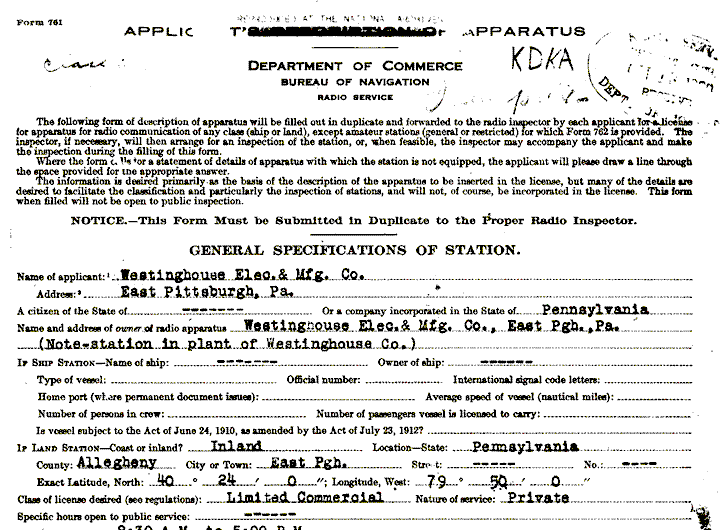
(Note: The first commercial radio station license was issued to Westinghouse for KDKA in Pittsburgh, PA in October 1920. In October 2020, radio will mark its 100th Anniversary. That original license for KDKA is pictured above.)

2 Comments

Filed under Education, Radio

Radio is Relationships

1
Radio, from the very beginning, has been about relationships. The first radio stations were amateur experimental stations. Dr. Frank Conrad, a Westinghouse engineer, was a ham radio operator. On October 17, 1919 he broadcast a recording over his station and that precipitated requests for more musical broadcasts. Conrad obliged by programming two hours of recorded music on Wednesday and Sunday evenings. Conrad even took requests.

It was from these early beginnings that a Westinghouse VP decided that Westinghouse should build a radio station and encourage people to listen and acquire the habit of listening to the radio. Westinghouse would benefit, because it was in the business of building radio receivers.

Westinghouse would file an application with the Department of Commerce on October 16, 1920 and receive its license for radio station KDKA eleven days later.

Radio gave people at that point in time a new way to connect and build relationships.

When radio pretends that what can’t be easily measured doesn’t exist, it’s on the path to extinction. Radio is relationships. No one ever had a relationship with automation.

Throughout radio’s history, savvy operators have known that being different can be a competitive advantage. Howard Stern, Rush Limbaugh, Ryan Seacrest, Casey Kasem, Arthur Godfrey among many others all knew how to distinguish themselves from the pack and build a relationship with the radio audience.

The competitive advantage that Pandora has is through its ability to be like your iPod, with an element of surprise. Each person creates his or her own personalized radio station.

But I seriously doubt anyone would say they have a “relationship” with Pandora. It serves a need in much the same way a low price retailer serves a need. Once someone comes along with a little bit better “mouse trap” the people quickly move on. That certainly was the case with Blockbuster when Netflix came along.

America’s radio stations that have a relationship with their audience will not have to live in fear. Relationships can transcend technology. Just ask Howard Stern’s listeners.

What concerns me is when audience relationships that took years to build are so quickly dismissed with automation in one of its various forms. Do you think radio would have grown to be the industry it is had it started out with automation?

-0-

This post was previously published in RBR-TVBR’s “Thought Leaders” on October 3, 2014 and in the New Jersey Broadcasters Association’s “QuickNews” on October 10, 2014.

Leave a comment

Filed under Education, Radio