
 In August 2015, the high school classes of PHS, THS and SJHS held their 45th class reunion. The weather was spectacular and members of all three high schools traveled back to The Berkshires to laugh, reminisce and enjoy good times together. We parted knowing that our next reunion, would be the milestone golden reunion.
I’m sure if anyone had done a poll asking alumni where they would be in five years, they would have responded with something like, I hope to be alive and back home in Pittsfield for the 50th. No one would have answered, stuck at home, avoiding a novel coronavirus, wondering if we’d run out of toilet paper, watching our nation’s cities with protests, reminiscent of the 1960s, seeing unemployment inching its way towards that of The Great Depression and wondering if our retirement savings wouldn’t vanish with another economic collapse. No, none of us were thinking those things.
50 Years Later
Here we are, 50 years later, Sunday June 7th 2020 is the same day of the week it was when we all graduated in 1970, except this time nothing will be like it was 50 years ago. In 1970, the high temperature of the day was 73 degrees, visibility was over 24 miles, winds were blowing at a gentle 5 to 6 miles per hour and the sun was shining brightly.
The 70s
1970 was the year the U.S. Military invaded Cambodia and Laos, George Wallace led a major backlash against racial integration, the Environmental Protection Agency was created under Republican President Richard M. Nixon, an explosion aboard Apollo 13 forced the space craft to make an emergency return to Earth, the first Earth Day to stop pollution was celebrated, Bobby Orr scores an Over Time Win leading the Boston Bruins to a 4-0 sweep of the Stanley Cup over the St. Louis Blues, Casey Kasem debuted “American Top 40” on the radio, you could buy a gallon of gas for 36 cents and life expectancy was 70.8.
We’re Getting Older
That last statistic, life expectancy, weighs heavy on the Class of 1970 for most of us are turning 68 this year and due to COVID19, our 50th Class Reunion in October has been cancelled. The class leaders are hoping it can be held in either the summer or fall of 2021, but for now, everything is up-in-the-air.
50 Years Earlier
All of this is quite a change from June of 1970 when the number one song playing on radios everywhere was “Everything Is Beautiful” by Ray Stevens. 50 years later, things simply don’t appear all that beautiful at the moment.
Speaking of radio, I would begin my radio career in the 10th grade of high school when  through a new Junior Achievement program, I would take my first steps into a commercial radio station. I would pass my FCC broadcast license exam six months later, landing a position as a commercial broadcaster.
53 years later, I still am broadcasting on the radio, from my home in Virginia over 105.9 WMEX-FM in New Hampshire and streaming over the internet on TuneIn radio.
I started this media mentorship blog six years ago, writing and publishing articles about broadcasting every Sunday morning.
2020 Graduates
The Class of 2020 finds their graduations being held online, or as a drive-up, like getting a takeout order from a fast food restaurant. The most positive spin on these aborted high school graduations being a lawn sign that read, “They closed the world for us. Congratulations Class of 2020.”
The Clock is Ticking
The Class of 1970 has waited 600 months, 2,609 weeks, 18,265 days, 438,360 hours to celebrate its Golden Reunion, but who’s counting.
Sadly, we have been counting the classmates we’ve lost over these 50 years, 111 for all three high schools, from a three high school graduating class of 891, including the first graduating class for Taconic High School.
We’re Baby Boomers. A generation that was so big that Pittsfield needed three high schools to accommodate us.
We may have been separate back then and even competitive, but today we are one.
Stay Safe Everyone and we’ll see you in 2021.
 Growing up telling mom or dad that I wanted something now, got the usual response of “you will have to work for it” or “you’ll get it when it’s ready.” Learning that good things come to those who wait was part of my maturing process.
 Is there a lesson for radio broadcasters from what I just shared about television viewing habits? I think there is. Programmer Steve Goldstein puts it this way, “Traditional radio – by design – is a lean-back business. Podcasting is a lean-in business.” That perfectly describes the difference between Netflix (lean-in) and broadcast (lean-back) commercial television.

 A reader of this blog recently asked me if things would one day return to “normal.” They said that over the past ten years, they’ve moved beyond wondering “why” there have been so many massive changes and disruptions in our lives, pondering now if things will ever settle down.
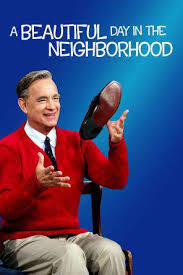 The other evening, I re-watched the excellent Tom Hanks movie about Fred Rogers, “

 COVID-19 will change our world in so many ways. Dr. Anthony Fauci said he hopes the world will end the custom of handshakes going forward. It’s a custom that dates back to the 5th century B.C. in Greece. It was a symbol of peace and a way to demonstrate that neither person was carrying a weapon.
 The headline read, “The Price of Wine is Dropping Fast.” Being a wine drinker, I wondered what was the reason for this downward price spiral and it turns out that it’s due to a surplus of California grapes. (Note: this story broke before the COVID-19 Pandemic. I’ll have an update on how that’s impacting wine sales at the end of this article.)
 We are living in a surreal time. The birds are singing, the trees and flowers are blooming and yet, life is anything but what we used to call normal.
 “These are the times that try men’s souls,” wrote Thomas Paine on December 23, 1776. What Paine was writing about in his essay “The Crisis” was about how Americans were being tested in their ability to stand up for their country and their newly won freedom.
