Category Archives: Sales

Voice Command

Voice CommandIt’s only been about two months and Alexa has changed the way I interface with my devices.

I’ve had Siri since I switched from a Blackberry to an iPhone4S. (The S stood for Siri.)

The new smartphone was such an improvement over my Blackberry Pearl that I never used Siri much in the beginning, later, I would use her to type my text messages, but that was about it.

Enter Alexa…

All that changed this past Christmas when my fiancé, Sue, put an Amazon Echo Dot into my Christmas stocking. It took about two weeks before I finally got around to plugging the Dot into electrical power, downloaded the Amazon Echo app to my iPhone7 and connected the Dot to our house Wi-Fi.

Now Sue has never been thrilled by all the remote controls to operate our TVs, radios and audio systems. And truthfully, I wish it could be simpler too.

Alexa teaches us both new tricks, by simply talking to her artificial intelligence voice. And we both love it!

Hey Siri…

Once adapted to Alexa, I began to use Siri to do more things on my iPhone7 and AppleTV.

We cut the cord last year but to satisfy my news diet, I put in Sling TV with the news package. The rest of our TV watching is filled up with Netflix, Amazon Prime and YouTube. New movies that we missed at the local theaters or never played in our area are viewed using iTunes.

Finding something to watch used to be rather tedious, but now, I just say “Hey Siri…”and she goes off and finds it, offers me the viewing options available to me (I always opt for the FREE route) and the program begins immediately.

GARMIN

Something that has long been on my bucket list has been driving across America from coast-to-coast and seeing those things I’ve only seen by flying over them. Places like Mount Rushmore, Yellowstone, the Grand Canyon etc. Lucky for me, that’s been on Sue’s bucket list too.

We put up a big map of the United States in our kitchen and have lined out the route we plan to take with bright yellow dots marking our planned stops along the way.

In preparation for this 8,000-mile, eight-week trip, I bought the latest GARMIN SmartDrive 61 GPS. It comes with the ability to do “Voice Commands” for plotting your next destination, finding hotels, restaurants and points of interest.

Thanks to Alexa and Siri, I quickly embraced this feature.

But it doesn’t stop there, my new GPS also links to my smartphone and displays news bulletins, real-time traffic, weather conditions, my complete contact phone book, helps me to find parking and then remembers where I parked when I want to return to my car. And it makes it all easily accessible by just using my voice.

But You’re a Radio Guy

Whenever I write something about new technology, what I hear back are things like, “You’re a radio guy” or “you love technology.” The meaning being, I’m not like your average consumer. But, I believe that just as Amazon has changed the way we shop for just about everything, Alexa will bring about a similar change in the way we interface with our devices.

Carnegie’s Constant Reminder

One of the many radio publications I would read daily was Jim & Cathy Carnegie’s Radio Business Reports (RBR). If there was one thing I remember most about that publication under Jim’s reign, it was about dealing with change. Jim constantly banged the drum warning the radio industry “to get with it or be left behind by it.”

He reflected change by taking his own publication and changing the way it would be delivered and cover the broadcasting industry. He led by example.

Seniors & VADs

I know the young person’s perception are that senior citizens (anyone with an AARP card) is stuck in their ways and not likely to adopt anything new. Well, I’m here to tell you, you would be wrong. Especially, when it comes to voice activated devices (VADs).

I fully anticipate that seniors, aka Boomers, will lead the adoption of these devices. One of the reasons being they enable us to eliminate the multitude of buttons and collection of remote controls by simply using our voices.

What I Learned About Seniors from a Pharmacist’s Son

Back when I was put in charge of a thousand-watt, daytime, Music of Your Life radio station, I remember going out and meeting with clients to build up my new radio station’s client base.

One day, I walked into a pharmacy thinking that my “old folks format” would be perfect for people needing medication. Well, I never got the pharmacy on-the-air for drug announcements.

Upstairs above the pharmacy, the youngest member of the family had started an electronics division, selling the latest computers, phones, and other gadgets. He told me he’d love to be a big advertiser on my radio station catering to the over 65 age group.

Why?

Because, he told me, unlike young people who when something new came out, would look at it and say, “I’m going to wait until they come out with the new and improved version,” seniors would buy it on the spot.

What he learned was, seniors felt they could afford to have the latest technology now, and if something better came out, they’d trade up to that next. And this was almost 40-years ago!

Now, with my AARP card occupying a place in my wallet for more than decade, I can tell you, that’s exactly how I feel.

Get on board the change train

OR

Get left behind

14 Comments

Filed under Education, Mentor, Radio, Sales

“Corporate FM”

corporate fmKansas City Filmmaker Kevin McKinney originally released his movie “Corporate FM” in 2012, but unless you lived near a community that was screening the film or attended a film festival where it was being shown, you probably never saw it. Or even heard of it.

Amazon Prime

After re-editing the film in 2015 to reflect updates and changes in commercial radio since 2012, McKinney decided it was time to let more people access the information he covered in the film and just released it on Amazon Prime. (Here’s the LINK ) “Corporate FM” explores the consolidation of radio after the Telcom Act of 1996 and how big corporations with the help of Wall Street and private equity firms swallowed up the radio industry in America.

February 1996

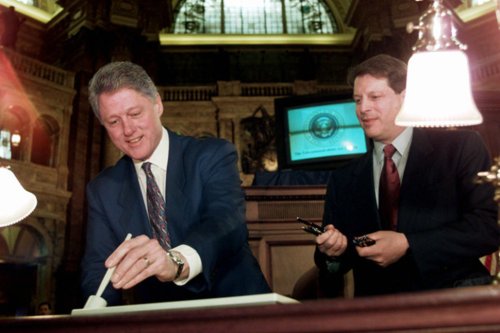
I remember the day that President Bill Clinton signed the Telcom Act of 1996 into law. Clinton signs Telcom Act of 1996It was supposed to provide competition between the phone companies and the cable companies with the goal to increase services and reduce prices to the consumer.

Inserted into the bill at the 11th hour were two paragraphs that would change the radio industry forever.

In the film, Robert McChesney, Professor of Communication Studies, University of Illinois points out that commercial media lobbyists, without a single public hearing or any public debate, would insert these paragraphs and open up the consolidation floodgates for radio/TV. Politicians would later say they didn’t know what they were voting for. Even President Clinton would say that he didn’t know that those two paragraphs had been added before he signed the bill into law.

Cumulus and Clear Channel

As the McKinney film told the story of the rise of Cumulus and Clear Channel, it reminded me of my time with both of those companies.

In Waterloo, Iowa I was running the #1, #2 and #3 radio stations. When Cumulus took them over, John Dickey showed up at the stations and proceeded to tell all of us gathered in the station’s conference room what our new logos would look like, what our new jingle packages would sound like, who our new station voice guys would be, how our playlist would be compiled, who are new consultants were etc. To say we were all stunned would be an understatement.

Then later when I was working for Clear Channel (after the Bain/Lee takeover, but before it became iHeartMedia) in Sussex, New Jersey, we received a survey from corporate asking us how local decisions were made about branding, marketing, promotions, music and the like. I assume a similar survey was sent to every market cluster inside Clear Channel.

When the results were tabulated at HQ, we then received directives that no longer would those types of decisions be made on the local level. Local radio had changed.

Local Bands

Growing up, local radio was a way for local bands to get exposure and grow their audience. “Corporate FM” tells the story of how Jewel became a national artist being discovered by local radio and played on-the-air in San Diego.

In fact, it was seeing a drop in attendance at live shows that got McKinney to wondering what was happening, and giving birth to his movie about the consolidation/corporatization of the radio industry.

I know a local band here in Winchester, Virginia “Sons of Liberty.” They play all over the Shenandoah Valley and beyond. They have a CD that Rob McKenzie of Fireworks Magazine spoke glowingly about. Where you won’t hear the “Sons of Liberty” music is on the radio.

Oh, they’ve been heard on an FM radio station (98 Rock) out of Harrisonburg, Virginia on their Sunday night “Wet Paint” show that starts at 11pm. But as “Corporate FM” points out it takes repetition to have an audience become familiar with anything, and for someone to decide they like it, or don’t. Radio used to provide that type of exposure and then monitor audience reaction to see if the record was a hit or a miss. (Remember features like “Champ & Challenger?”)

Sneak Preview

ABC Radio Networks used to air a feature hosted by WABC’s Chuck Leonard called “Sneak Preview.” The network would call affiliates of the ABC Contemporary Radio Network to get their hottest new song and then play it to a nationwide audience. I remember being at WBEC in Pittsfield, Massachusetts when we told Chuck that our hottest new song was “Tracy by The Cufflinks.” He told us he had a terrible time trying to find a copy of the song in New York City.  But Chuck Leonard did find it and it played over the ABC network to a national audience. That was how radio made the hits.

Fifty to Six

“Corporate FM” tells how in the 80s ninety percent of mass media in America was owned and controlled by about fifty different companies, but after the Telcom Act of 1996 it was down to just six corporations.

“Most radio studios are completely empty after 7pm and for the entire weekend.

They set the phone lines to “busy” so callers will believe that someone is there.”

-Slide shown in film

Big N Rich

The popular country recording artists “Big N Rich” addressed the FCC in Memphis, Tennessee. They told the commissioners that one person in a corporate office today can dictate what 35, 55, or 100 stations play.

“Let’s say an artist puts out a song with a political viewpoint and that corporate person says I don’t believe in that position so we’re not going to play that record (Dixie Chicks?). One guy can affect what 30 million people get to hear.

That’s censorship.”

-John Rich

Fatherly Advice

Dick Fatherly says “the broadcasters have become the victims, and the winners are – who do you think? -Goldman Sachs.”

Josh Kosman, who wrote the book “The Buyout of America” put it this way: “Private equity took the radio business that was doing pretty well and gutted it.”

Josh has studied how private equity has impacted all industries in America. He used a simple example to explain the difference between you or I buying a house and a private equity firm buying a business doing a leverage buyout (LBO).

When we buy a house, we put down say 30% as a down payment and then take out a mortgage for the 70% balance.

When private equity buys a radio station, they make a small down payment and then the radio station they’re buying takes on the debt for the balance, leaving the radio station with crushing new debt.

The private equity companies then charge management and other fees, making back their down payment money, and a whole lot more. So, it’s zero risk to them.

It reminds me of the guys on the Atlantic City Boardwalk who used to entice you to let them guess your weight and if they got it wrong you won a prize. The only way those guys lost is if you didn’t pay them to guess your weight. For if they got your weight right, they gave you nothing and if they got your weight wrong, they gave you a prize that was valued less than what you paid them to play the game.

“Financial deals allow the corporate owners to keep their stations after bankruptcy.

This prevents local owners from reviving local radio.”

-Slide shown in the film

For those who hold out hope that if/when the big corporate entities fail, and it will return radio to local operators once more, that slide should send a chill down your spine.

America’s bankruptcy laws now favor the debtor in the corporate world.

Conclusion

This is probably a film that many will miss and that’s unfortunate. It’s only a little over an hour in length. It’s well worth your time.

For this is a film not just about what happened to the radio industry but what is happening to our way of life, in industry after industry. This modus operandi is being repeated today.

The people in the film offer their ideas for making radio great again.

I won’t spoil that for you, so you’ll have to watch the film.

Some of the statements made by various participants have since been proven wrong from the time the film was shot. Some of the statements are also inaccurate in terms of how today’s FCC license renewals can be challenged.

In all fairness, many people are still believing that the way it was, is the way it still is. Only it isn’t. Those laws have been changed by corporate lobbyists too.

I hope you will watch the film “Corporate FM” and then post your comments here on DickTaylorBlog dot com.

Note: Don’t have Amazon Prime, you can rent this movie for $2.99

63 Comments

Filed under Education, Mentor, Radio, Sales

Radio Stations Aren’t Performing Like it’s 1999

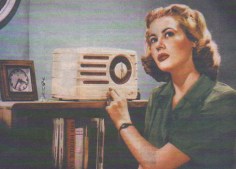
Calendar 1999Remember when spot loads were small, rates were high, profit margins were 30% to 50%+ and revenue growth was double digit. I do.
What Happened?

Change happened.

FM radio replaced AM radio.

And AM radio stations are adding FM translators in an attempt to stay relevant.

An Abundance of Listening Options

Today there are too many radio stations playing the same program features, repeating the same positioning liners and doing the same things that we used to do 30 to 35 years ago.

Pureplay streamers are relentlessly competing for our listeners’ ears.

Listening options are infinite.

The Internet Tore Down the Gate

Traditional media was born when the “gates” to being a media property were very high. For newspapers those high gates consisted of having to buy large printing presses, paper, ink, etc. For radio & TV those high gates were things like having a broadcast license, a transmitter, studios, etc.

Traditional media enjoyed being gatekeepers for news, information and entertainment because there was no place else to go.

Legacy media enjoyed attracting huge audiences, huge margins and lots of cash flow.

The Gatekeepers of the 21st Century

The new gatekeepers are called listeners, readers and viewers of media.

The new gatekeepers are accessing their media via their smartphones, tablets, computers, smartTVs and now voice activated devices such as Alexa, Google, Apple and Cortana.

Bottom Line

Long stop sets no longer need to be tolerated by listeners or advertisers. Every element that goes out over-the-air needs to be thoroughly vetted from the listener’s perspective.

And your streaming product cannot be an afterthought. It’s your future and if you expect it to grow into your new revenue source, you need to give it your full attention.

Listener Supported

Have you noticed the growth of Christian formatted radio stations? Have you noticed the growth of NPR and public radio?

These radio stations depend on listener support as well as business underwriting.

If your station stopped selling commercials and asked its listeners to donate money to support it, would they?

Our Challenge

The challenge for broadcasters is to build audio brands that our audience doesn’t just casually listen to but feels they can’t live without. To do that, your media property needs to know your listener so well, that you are creating a product that they find engaging in every way.

It’s time to play to win again versus a decade of trying not to lose.

Consumers Have a Choice

Here’s the reality of today. Consumers of media have lots of choices for how they want to spend their time. They don’t need us. It’s up to us to create a reason for them to want us, to need us.

NAB Radio Show 2009

Now here’s the ear-opening part of this article.

Most of these points were made during an NAB Radio Show presentation I attended almost a decade ago.

It’s 2018, how many of these issues are the same today?

Why is that?

I’d love to hear your thoughts.

28 Comments

Filed under Education, Mentor, Radio, Sales

Radio Has an Addiction Problem

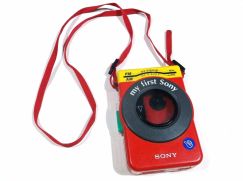
listening_to_radioHave you heard the latest? People are addicted to their smartphones. “We now see smartphones as dangerous for young minds,” writes Jean-Louis Gassée in a Monday Note.
More than 30 years ago MIT professor Sherry Turkle postulated that computers weren’t just a tool, but were sneaking into our minds. In doing so, they would change our relationship with the world around us.

Smartphones are Mobile Computers

Turkle would continue her thoughts on this subject in a 1995 book “Life on the Screen, Identity in the Age of the Internet” saying “computers don’t just do things for us, they do things to us, including our ways we think about ourselves and other people.”

Smartphones plus Social Media

When our mobile computers are married to a social media site like Facebook, things get really sticky. Sean Parker, a founding partner at Facebook, wrote about the problem after he left the company saying, “[Social Media] literally changes your relationship with society, with each other…It probably interferes with productivity in weird ways. God only knows what it is doing to our children’s brains.”

Time for Apple to Build A Less Addictive iPhone

The NY Times published an article by Farhad Manjoo that made the case for a less addictive iPhone. Can you imagine someone writing that broadcasters should be making TV or radio less addictive? That watching too much TV or listening to too much radio might be bad for our brains.

Broadcasters today find they have a different problem. They have lost the addictive luster of the past.

The Amazon Addiction

“For many businesses, Amazon is simultaneously a sales channel, a potential service provider and a competitive threat,” says Forrest Research. For broadcasters, Amazon is attacking our retail advertising revenue, by undermining the very businesses we sell to. Today Amazon is the go-to website for retail search, surpassing Google.

Trying to compete with Amazon is a retail challenge. The very retailers’ broadcasters depend on for their revenue.

Retailers measure how well they’re doing by their bottom line.

Amazon is all about increasing top line sales growth. (Wall Street hasn’t demanded Amazon to be profitable yet.)

See the problem?

Trying to beat the Amazon model is a race to the bottom with pricing for our advertising customers.

Free shipping, two-day shipping, lowest prices, biggest selection, customer ratings etc. are among the things making Amazon addictive.

People Made Radio Addictive

Over the years, radio has had personalities that made the medium addictive like Howard Stern, Rush Limbaugh, Dan Ingram, Larry Lujack, Robert W. Morgan, Jess Cain, Dale Dorman, Paul Harvey and many more.

Once upon a time, music formats could be addictive, but today’s access to streaming audio is challenging that beachfront.

Alexa Doesn’t Know My Local Radio Station

My local radio stations are called KISS (WKSI-FM) and WINK (WINC-FM). When I ask Alexa to play either KISS-FM or WINC-FM, I get the Los Angeles KIIS-FM or the WINK-FM licensed to Harrisburg, Pennsylvania.

When I asked Siri the same questions, she couldn’t help me play anything. Siri told me, “Sorry, Dick, I can’t help you with that on your iPhone.”

When your branding is not unique, these new consumer voice activated devices don’t have a clue what you’re trying to ask them. They either make their best algorithm guess or just throw in the towel.

Broadcast Station Call Letters

The FCC (Federal Communications Commission) solved this problem early in broadcasting by assigning each broadcast station its own unique call letters, but broadcasters abandoning those identifiers for branding like Kiss, Froggy, Hot, and others, that are duplicated all across the country, is now a problem in a voice activated world. But it’s not just the brand not being unique, the programming is likewise just as non-unique.

Don’t Be Generic

No one ever became addicted to a generic.

Addiction stimulates parts of the brain that trigger craving and longing, that release habit-forming, feel-good chemicals such as dopamine and endorphins.

Your iPhone does that for you.

You voice activated smart speaker does too.

Broadcasting is show business.

Which do you think stimulates the part of the brain that causes addiction? The show part or the business part?

Answer that question correctly and you’re on your way.

10 Comments

Filed under Education, Mentor, Radio, Sales

My First Echo

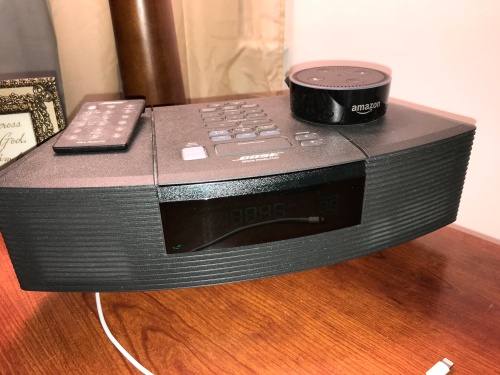
My First SonyBack in the 1980s, SONY introduced a series of small-scale electronics for kids. They came in brightly colored plastic with large buttons that were easy for little people to control. The line was called “My First Sony.”

SONY even introduced this line with a slick TV ad. Take a moment and watch it HERE.

The tag line in the ads was “What I love is my first Sony. It won’t be your last.”

That was over 30-years ago.

Voice Activated Devices

This past Christmas, my fiancé, Sue, gave me an Amazon Echo Dot. Why a Dot and not the larger version? Because I said I didn’t want one of these things. Heck, I own a “million” radio sets.

But she figured for $29 it would make a fun stocking stuffer.

Amazon Echo’s and Google Homes’ were the hot Christmas gift of 2017. Amazon said that they sold “tens of millions” of Echo devices all over the world and that it’s Echo Dot and Fire TV Stick with Alexa voice remote were its most popular products across all categories.

Our Family Got Bigger

The Echo Dot was so easy to set-up and begin using. You basically plug it in. Then use your smartphone to connect it up to your WiFi and begin using it.

Like most new owners, the thing we used it for was to play music.

Now the Dot has a speaker akin to the one in my iPhone7. It reminded me of the sound that I used to get out of my first Zenith transistor radio back when I was in grade school. But then, it sounded great listening to the oldies on WMEX-FM via TuneIn radio. It’s the way I originally heard all of these songs.

My fiancé is not a fan of my many remote controls and especially all the buttons they have, but she very quickly fell in love with Alexa and controlling everything with her voice. We both did.

Alexa quickly became the third member of our family.

I told Sue that I could see us getting an Amazon Echo with the bigger speaker in our future.

Happy Valentine’s Day

That future came on Valentine’s Day 2018. I gifted the love of my life jewelry, candy, a romantic dinner out and she gifted me an Amazon Echo. Oh, there were many other things she gifted me, but the second Echo device is what I remember most and quickly put into service in our living room replacing the location previously occupied by the Dot.

When we got back home from our Valentine’s Day dinner, we sat on our living room couch, and asked Alexa to play our favorite love songs.

No Going Back

When I think of how quickly Alexa has taken over our lives – and we haven’t even scratched the surface of all she can do – I realize that there’s no going back.

It’s like giving up the microwave oven in the kitchen, or power windows in the car, or Google search or the internet. Once you have made these new innovations a part of your life, you won’t ever wish to return to a life before them.

The TV remote control made it possible to quickly change channels without leaving the couch. The video cassette recorder and then the DVR made it possible to no longer be chained to the TV network’s schedule. Netflix made watching a series, a binge affair.

Now these voice activated devices are changing the world of audio.

Quickly.

Addictively.

So, What Happened to the Dot?

If you’ve read this far, you might now be wondering what happened to our Amazon Dot.

It’s been re-deployed to the bedroom where it now puts us to sleep and wakes us up.

And it sounds great! Thanks to my BOSE Wave Radio.

Amazon Echo Dot & Bose Wave Radio

Let’s see the next holiday on the calendar is St. Patrick’s Day. I could see getting a couple more of these Dots to connect to our other BOSE Wave Radio and other radios I have in each room of our home.

Alexa, welcome to the family.


7 Comments

Filed under Education, Mentor, Radio, Sales

My First Sale

red-gas-pump-clipart.jpgI began my broadcasting career as a disc jockey when I entered the 10th grade in high school. Broadcasting would pay for my college undergraduate and graduate degrees. Anyone who knew me from the outset would have told you I was a real radio guy. I thought I knew it all.

That is, until I decided that if I were to ever to be promoted to the position of general manager, I would need to have proven myself in the area of sales.

Account Executive

The way I would become an account executive happened when I was approached by a general manager, at one of our competitors, who wanted to hire me to come work for him as his program director/operations manager; the same position I currently held. I thanked him for the offer but said my goal was to become a general manager and I wanted my next move to be in sales.

“Seriously?” he asked astonishingly. “Let me get back to you on that,” and the phone call ended.

Two weeks later, he called back and said, “I’ve got your sales job. Let’s talk.”

The offer to become a radio account executive would pay me the same money I was currently paid as a program director/operations manager as a salary with 10% more for each sale I made. I was stunned and wondered why I had not made this move sooner. I took the job.

Front & Back of the Building

From my earliest days in radio, I learned there were two parts to a radio station building. The front half and the back half.

The front had all the executives and sales people. The back had the DJs, production people and engineering. Both ends seemed to always get a rug burn when they met in the middle.

My First Week in Sales

When I was hired for my new sales position, I was told I would be given an active list of advertisers. That might have been the case, but my current employer wanted me to give them two weeks’ notice before leaving – unusual in broadcasting when a person is crossing the street to a competitor – and I did, which meant by the time I arrived at my new station, the active advertisers had now fallen in love with other account executives who had been asked to babysit those accounts until my arrival.

So, my first day in sales would see my list of active advertisers whittled down three and on my first morning all three of those called in to cancel their advertising. But I was still excited to be in advertising and could not wait to hit the streets.

My boss told me at the outset, that since I would be using a lot of gas for my car driving around to prospect for new advertisers, I could sell a gas trade to off-set this expense. It didn’t take a lot of math skills to realize that such a sale would result in 100% commission to me.

All that first week, the only businesses I called on were gas stations.

I heard a lot of “NOs.”

Until Friday around noontime, I called on a gas station owner who was eating his lunch. He said if I would come back after he finished eating he’d listen to me. I did. He liked the plan I proposed and I signed my first sale, a gas trade.

Friday Afternoon at the Sales Office

At the end of a week, sales people are usually back in the sales office, taking care of orders and planning out the coming week before going home for the weekend. They also are sharing stories of their week in sales.

“So, how did your first week go in sales?” someone asked me. “Did you sell anything?” inquired another.

Yes, I responded. I sold a gas trade.

The room went deathly silent.

“You sold a gas trade?” they asked, almost in unison.

“Yes, yes I did.” I replied. “Don’t each of you have a gas trade?” I asked.

Don’t Tell Me It Can’t Be Done, Until I’ve Done It

It was at that moment I learned I was now the only sales person in that radio station that had a gas trade. And the reason was simple. They all knew what I didn’t. They all knew gas stations didn’t trade gas for advertising, but I didn’t know that.

Pam Lontos often says in her sales training, “Don’t tell me I can’t do something, until after I’ve done it.”

I was sure glad that I hadn’t been told that gas stations didn’t trade advertising for gas at the outset or I might never have had that gas trade for the entire time I was in sales and sales management at that radio station.

The Lesson Learned

The lesson I would learn from my first sale was not to let others tell me what I could or could not accomplish. If I was going to be successful, I would need to set my own goals, make my plan and work my plan.

I became a general manager at the age of 30. That job morphed into a market manager as the radio industry began consolidation.

My next goal was to use my college education in teaching to land a job as a broadcast professor at a university. That happened in 2010 when I joined the faculty of The School of Journalism & Broadcasting at WKU.

In 2014, I began this mentorship blog with the goal of paying-it-forward to others.

Throughout my life, so many people have been there for me, openly sharing their knowledge, wisdom and help to further my career.

That’s why I work every day to lead and mentor others in finding their own success in broadcasting.


6 Comments

Filed under Education, Mentor, Radio, Sales

It’s Like Mowing the Yard When the House is On Fire

Screen Shot 2018-01-30 at 1.38.20 PM copy

Ladies & Gentlemen, we have a problem. Our business model is broken.

Trying to make your daily, weekly or monthly budget while ignoring the 800-pound gorilla in the room is akin to the title of this article.

The Big Disconnect in Local Media

Nancy Lane is the president of the Local Media Association. Her latest article on LinkedIN really caught my attention. Like the fact that only 1% of publishers/station managers/GMs agree that their sales reps do a good job when it comes to selling digital. Why do you think that might be?

Gordon Borrell Knows

LMA research notes that most traditional media sellers have too many things to sell, making it hard for them to be consultative.

I’ve been hearing Gordon Borrell tell broadcasters exactly what they need to do to grow their slice of the ad pie for a couple of years now. At seminars I’ve attended, Gordon always adds that the companies doing the best job of growing their digital sales, employ sales people dedicated to only selling digital. It’s probably why this month Gordon Borrell was quoted as saying, “The pool of dollars is stunningly large, and radio often doesn’t get more than a ladle dip in the shallow end.”

Finding Good Sales People

If you’re a sales manager, director of sales or GM, the best way for you to find good sales people would be if your current staff would recommend working for your broadcast station, right?

Well, Nancy’s LMA found in their research that current media employees recommending others to work at their company came in at a 3. To put that number in perspective, the company that does this kind of research for all industries, found historically with all of their clients, that an average score for employees recommending their company as a good place to work was 36. In fact, the company hired to do the research by LMA had never seen a score of 3 before. It was the lowest they’ve ever seen in the history of their research.

That news alone should be a BIG wake-up call to everyone in media, since talent recruitment/retention was cited as the #1 challenge.

Digital is a Marathon, NOT a Sprint

A couple of the hard realities of digital is that it will take a long-term commitment and there still isn’t an overall business model to effectively monetize the audience being attracted.

Another hard reality is that the time to see a return on a company’s digital investment is longer than many CEOs want to hear about, plus the digital margins won’t look anything like the fat margins enjoyed by legacy media companies of the past.

Just One Example

To try and put all of this into a little more in perspective, let me share some of the cold hard facts shared in an article titled “Thinking of Starting a Podcast, DON’T.”

Jordon Harbinger writes “We are in the golden age of podcasting.” So why when asked if everyone should be starting a podcast does he give this super complicated advice: “DON’T.”

Here’s why, Harbinger has been hosting a podcast since 2006 (The Art of Charm) and candidly admits that if he had to start all over again today, he’s not sure he would. “It’s never been easy and it’s not easily profitable,” says Harbinger.

Today, Harbinger says his podcast is grossing about $480k/year, but in the beginning, he was spending around $10k/month with no promise of an immediate return on that investment. In fact, he suspects if you were to add it all up, they’d be just barely in the black after six years.

The Problem is Us

Bob Hoffman, aka The Ad Contrarian, says that technology has impacted all aspects of the advertising business. Before technology, ad folks were flying by the seat of their pants and their gut. However, Bob says now that we have technology, he’s not convinced we still have any better reality of what works and what doesn’t.

Hoffman sums it up this way, “In my mind, advertising technology has lost its credibility for two reasons. First, we haven’t acknowledged the unanticipated consequences of what has ensued. Second, we have refused to act honestly and correct the errors of our expectations. Instead we have created an ongoing crisis of credibility with a constant stream of half-truths, lame excuses, and public scandals.”

If digital is our future, we have to fix this big disconnect.

Going Deeper

The Local Media Association has offered their research report for FREE and you can download a copy by following this link HERE

As LMA President, Nancy Lane puts it, “One thing is clear, the disconnect is hurting the industry’s ability to move the needle when it comes to growing digital. Politics, defensive postures, silos and more still exist. That needs to end tomorrow and only strong leadership will change that.”

4 Comments

Filed under Education, Mentor, Radio, Sales

Fail. Forward. Fast.

Success FailureIf there is one thing that both college professors and college students have in common, is that they both hate to fail. Professors never want to see their students fail. And students fear failing on many levels.

But failure is a necessary part of success.

Tom Peters

In my sales classes, I showed a short video clip of Tom Peters sharing his favorite slide from his huge slide deck. It reads:

Fail. Forward. Fast.

(“Reward Excellent Failures, Punish Mediocre Successes.”)

Nobody wins by playing it safe.

Nobody learns either.

Woody Allen

Woody cut his creative teeth during the Golden Age of Television writing for Sid Caesar’s “Your Show of Shows.”

Woody learned “if you’re not failing every now and again, it’s a sign you’re not doing anything very innovative.”

Radio Innovation

When I was growing up, the radio dial was a cornucopia of innovation.

Every radio station was original and unique.

Sunset would open up the skywave for AM radio listening and I would tune in great radio stations like WKBW from Buffalo, WLS & WCFL from Chicago, CKLW from Windsor-Ontario, Canada and many, many more.

Each of them was unique, a part of their community and provided great companionship.

Then radio began to copy one another.

Imitation, while maybe the sincerest form of flattery, lacks innovation.

Best Practices

With the passage of the Telcom Act of 1996, the radio industry began to rapidly consolidate.

The concept of “Best Practices” would further stifle experimentation and failure by trying to lay a safe, secure foundation for every radio station in these expanding companies to follow.

The new publicly funded corporations quickly learned that funding, not innovation was the way to grow larger. Money gets invested in business models that are familiar.

That’s why the movie industry cranks out so many sequels when they find a hit film.

Failure leads to Innovation

Thomas Edison when asked how it felt to fail 1,000 times inventing his light bulb responded “I didn’t fail 1, 000 times. The light bulb was an invention with 1,000 steps.”

Walt Disney is said to have gone bankrupt a couple of times before he became a successful innovator.

In other words, we can learn, grow and become better from our failures.

Radio’s New Heroes’

I’m confident that new blood is flowing into the radio industry that will quickly discard things that aren’t working, try new ideas, innovate and fail, forward, fast.

Everything in life brings risk.

It’s true that you risk failure if you try something bold

because you might miss it.

But you also risk failure if you stand still and don’t try anything new.”

-John C. Maxwell


1 Comment

Filed under Education, Mentor, Radio, Sales

Best of the Blog 2017

73On this last Sunday of 2017, it’s a good time to look back at the year just past and share with you The Top 5 Most Read and shared blog articles from 2017. Maybe you missed them or perhaps you’d like to read them again.

To date I’ve published 180 articles that have been viewed around the world over 115,800 times.

My Most Read Article in 2017

My most read/shared article of this past year was “Coal Ain’t Coming Back & Neither is AM Radio”. It was published on August 20, 2017. It told the story of how the fate of the coal industry in America was akin to that of AM radio stations. America’s broadcast industry was built on AM radio beginning with the first commercial radio license issued in 1920. This article received the most comments of any I published this year and was widely shared.

Second Most Read Article of 2017

In April, I wrote an article based on a blog reader question titled “The Question Radio Itself Has Yet to Answer.” That big question was, “what can radio do that other media can’t.” I opened the issue to readers to share with me their thoughts before sharing mine. It stimulated lots of emails, sharing and discussion.

Third Most Read Article of 2017

My third most read article would be the follow-up article to the one above, “What Can Radio Do That Other Media Can’t.” It was in this article I shared some of the over fifteen pages of reader comments, as well as my own thoughts. In my summary, I boiled it down to 5 key things: Live, Local, Community, Companionship and Relevant.

Fourth Most Read Article of 2017

In October, after the FCC voted 3 to 2 to eliminate the Main Studio Rule, I wrote “Live & Local?” It posed the question about maintaining the first of the five key things radio can do that other media can’t I wrote about back in April.

In this article, I shared the observations of Maynard Meyer, a local radio manager and owner from Madison, Minnesota who concluded in his statement to the FCC in 2004, “From what I’ve seen through my personal experience, as soon as a hometown studio is closed and relocated, the local service is relocated as well.”

After the article published, Mr. Meyer emailed me and said he still felt the same in 2017 as he did back when he testified before the Federal Communications Commission 13-years earlier.

Fifth Most Read Article of 2017

And finally, the fifth most read blog article I wrote and saw lots of people sharing, was “Radio’s Best Feature.” In it, I wrote about the speed of change in our world today and how to expect it to keep accelerating going forward.

Radio needs to understand its role in humankind. Technology doesn’t transform our human nature.

Our need for love, touch, companionship and community will always be a part of our humanity no matter what technology brings.

Most Read Articles, Period

Two articles I’ve written continue to see lots of traffic and continue to be far and away the two most read on my blog.

They are “SiriusXM Radio is Now FREE” and “The Day the “Dumbest Idea” Invaded the Radio Industry.” Both articles have now been read over 7,000 times.

The first article I wrote for my blog was “Clear Channel Media & Entertainment becomes iHeartMedia” and it was read a total of five times.

Why I Blog

I blog for broadcasters, educators and students.

I blog to provide media mentorship and to pay-it-forward to the broadcasting industry that I have been a part of for 50-years.

I’m grateful for the more than 88,000 people from all over the world who have visited to read an article that caught their interest.

FREE SUBSCRIPTIONS

You can subscribe to this blog for FREE and get a copy of each week’s article delivered to your email IN BOX every Sunday morning. To subscribe, simply go to the bottom right-hand corner of your screen and click on the FOLLOW button. (If you’re accessing this blog via a mobile phone or tablet, that button may not be visible, so be sure to do this on a computer or laptop.)

Next week I will begin my fourth year of blogging with all new articles.

Thank You for reading.

Feel free to contribute your thoughts to the discussion in the comments. Together we can all learn by sharing our experiences, knowledge and wisdom.

Happy New Year!

5 Comments

Filed under Education, Mentor, Radio, Sales

Radio’s Serenity Prayer

Serenity Stained Glass Window


In everyone’s life, there are trials and tribulations.

During a particularly trying moment in my life, I found comfort in Reinhold Niebuhr’s Serenity Prayer.


Niebuhr’s Serenity Prayer

God grant me the serenity to accept the things, I cannot change; courage to change the things I can; and wisdom to know the difference.

The prayer is actually made of three parts: 1) accepting things that can’t be changed, 2) courage to change the things that can be changed, and 3) wisdom to know the difference.

So how does that apply to those of us in radio broadcasting?

Somethings Never Change

I’m sure, like me, you’ve been reading a lot about the future of radio and all the changes it faces on the horizon of 2018 and beyond.

It can be overwhelming.

But I fear that too many in radio are too focused on changing the things that are beyond our control or are working hard to change the things we believe we can change, and are missing the bigger opportunity, the things that won’t change.

In my long radio career, I’ve seen the consistency of radio’s power to make a difference in a community.

I’ve also seen the number of radio stations on-the-air multiply like bunnies, and the number of radio pre-sets on a car radio expand to 30, but the number of favorite radio stations a person has remains at about three. And one of those three favorite radio stations will dominate with over 80% of the time spent listening to radio.

Nielsen confirms this is still the case.

“I very frequently get the question: ‘What’s going to change in the next 10 years?’ And that is a very interesting question; it’s a very common one. I almost never get the question: ‘What’s not going to change in the next 10 years?’ And I submit to you that that second question is actually the more important of the two — because you can build a business strategy around the things that are stable in time.”

– Jeff Bezos, Amazon CEO

Radio’s Constants

Great radio will always be about the listener.

Great radio personalities will be great entertainers and a friend to the listener.

Great radio will not only serve listener needs but also their wants and desires.

Great radio will be dependable, in good times and bad.

Great radio will always be about community and companionship.

Great radio will always be surprising and unpredictable.

Great radio will attract listeners who don’t want to miss out.

Great radio adds value to everyone it comes in contact with.

Invest in the Future

Jeff Bezos is a very rich man.

Jeff began Amazon in his garage in Seattle twenty years ago.

Jeff bought the Washington Post with his pocket change and infused it with a new spirit by focusing on a newspapers’ constants.

Bezos says the way to invest in the future, is to identify the constants of people who use your product or service and build on them with relentless focus.

For Amazon it’s lower prices, and speedier delivery for example. Do you see either of those going in the opposite direction, with respect to consumer expectations, in the years ahead?

And so, it is with radio.

The very constants that made radio great for nearly one hundred years will continue into the next century. The secret is not to take your eye off the ball.

“When you have something that you know is true,

even over the long term,

you can afford to put a lot of energy into it.”

-Jeff Bezos

Radio needs to live one day at a time, enjoying the special place it holds in people’s lives.

Radio needs to accept the hardships, knowing they will lead to a better place.

Trust that if you focus on the radio constants, the future will be alright.

Or as Bezos put it in Forbes, “Successful businesses are those that continue to find ways to best fulfill core needs. Does our business fulfill one or more core human needs? Are we meeting that need in the most effective and efficient way possible given the changes in technology and people’s expectations?”

(Hat Tip to John Frost’s Frost Advisory #390 for the inspiration)


12 Comments

Filed under Education, Mentor, Radio, Sales