Category Archives: Sales

Being Grateful

15There are times when the stresses that are part of everyday life can occupy a place way beyond their level of importance in the grand scheme of things. Its times like those that you need to take a time-out and remember all the things in your life you have to be grateful about.


This year, I’m grateful for three wonderful grand children that are all happy, healthy and developing into unique individuals.


I’m grateful for their parents who make their children their first priority and love them with all their heart and soul.


I’m grateful that my two sons have set exciting and meaningful goals for their lives and in so doing are working hard to make our world a safer and better place for all of us.


I’m thankful for my two older brothers that always have been there for me through ups and downs, thick and thin.


I’m grateful that I’ve come to accept myself for exactly who I am, while still having boundless curiosity and a desire to never stop learning and growing.


I’m grateful that I’ve learned how to slow down. Life is meant to be savored. It’s not getting to the finish line first but about enjoying the journey.


I’m grateful for having enough. Less is more. Too much of anything is usually toxic.


I’m grateful for each day when I can add more value to the world than I consume.


I’m grateful for learning that every situation provides an opportunity to learn something; even the difficult ones, life goes by so fast.


I’m grateful that a career in radio that I started in the 10th grade in high school would allow me to pay for my college education, graduate school and raise a family. It’s a career that was all I ever wanted to do besides one day paying-it-forward through teaching the next generation of broadcasters.


I’m grateful that I finally started a blog this past year. It’s been one of the most personally rewarding and enriching things I’ve undertaken this past year.


I’m grateful for all the wonderful people I’ve met on this journey called life, people who were only strangers until we said “hello,” and then became friends for life.


One of my mentors, Zig Ziglar said: “You can get anything in life you want, if you will just help enough other people get what they want.” I’ve tried to live those words every day.


I have so many things to be grateful for this Thanksgiving 2015. I’m sure you do too.


Remember you may make a living by what you get, but you make a life by what you give.


Today, I’m grateful for YOU.

12 Comments

Filed under Education, Mentor, Radio, Sales, Uncategorized

Memories of Pinky

PinkyShortly after I arrived in Atlantic City to begin my 13-year run as general manager of WIIN/WFPG, I would be interviewed by Atlantic City Magazine about some of the changes I was making at the radio stations.

WIIN was a news station with a five person news staff, a full-time sports director, even a plane in the sky over the South Jersey Shore doing traffic reports in season. WFPG was the iconic Bonneville Beautiful Music formatted radio station with an hour I.D. that many remember for the sound of ocean waves, sea gulls and buoy bells. During my interview with the magazine I was asked about Pinky and his WOND radio show Pinky’s Corner, to which I replied something to the effect that he wasn’t on my radar and what he did made no difference on my operation; basically a one-liner in a much longer story on South Jersey radio.

By the time I arrived in South Jersey Pinky had been doing his radio show longer than I had been sucking up oxygen as part of the human race.

Sunday morning November 1st I woke up to the news that Pinky had passed away Saturday night at the age of 88. He had retired only earlier this year after heart surgery in May had caused Pinky to call in sick for the first time in his 57-year radio work history.

I have so many memories of Pinky.

As a competitor I remember calling on advertisers that told me they bought ads in Pinky’s show so he would never say anything negative about them. Hard to argue with that reason. I remember Pinky broadcasting his radio show by the cash registers as I was checking out with my groceries at the supermarket. I remember the time when Pinky was without a remote location sponsor to do his show from, so he took the latest technology – a bag phone – and hopped in the back of Atlantic City police cars and did his radio broadcast live on patrol, the kind of thing that COPS does on TV.

My radio career would take me to the Midwest and one day my office phone would ring and it would be Howard Green, the owner of WOND, home of Pinky’s Corner. Howard said to me “Dick Taylor, what would it take for me to get you back to Atlantic City and working for me?” I said, “Make me an offer.” He did. I took it. I returned to Atlantic City.

Because Pinky always did his radio show from a remote location, he was usually never in the radio station broadcast center. One day, I saw Pinky walking towards my 3rd floor corner office. I said “Hi Pinky,” to which Pinky said “I have no confidence your ability to manage this radio station,” then turned around left. It’s always nice to receive that kind of positive encouragement from your team when you start a new job.

I would learn those words were due to that Atlantic City magazine article of over a decade earlier. Pinky had an incredible memory. He remembered everything. He even did his radio commercials from memory for his clients who sponsored Pinky’s Corner.

When we were approaching Pinky’s 45th year on-the-air, I conspired with his remote sponsor to throw a big 45th anniversary celebration surprise party during his live radio show. The casino folks agreed and it was a surprise that I’m sure Pinky never expected to have occurred on my watch.

Another thing I remember about Pinky was that during my time as the WOND manager, Pinky wouldn’t say the call letters or the frequency of the radio station. No matter how I cajoled Pinky he would not change his ways. I commissioned a research study of the people who listened to Pinky’s Corner and found that 60% of the people who listened to Pinky every day did not know the call letters of the radio station his show was broadcast over. But I still couldn’t change Pinky’s mind.

Frustrated I went to the company owner, Howard Green, and asked for advice. Howard’s response was priceless. “Don’t ask me” he said. “Pinky one time had t-shirts made up with his picture drawn on them and the words ‘Listen to Pinky’s Corner’.” Howard said when he saw them he said to Pinky “Pinky, you didn’t put the call letters or the frequency of the radio station on your t-shirts.” To which Pinky replied “and you didn’t pay for the t-shirts.”

Since Atlantic City uses unaided diary recall I decided to put the WOND call letters in every station break and between every commercial during Pinky’s Corner I could squeeze them into. Then Howard Green became ill while on an ocean cruise, lapsed into a coma and died. The next day I turned on Pinky’s Corner to hear what Pinky would say about his friend and employer of over four decades and what struck me most was that Pinky was saying the station call letters everywhere. And that would continue from that point forward. I guess I’ll never know the reason why that change occurred.

I’m happy to say that Pinky and I became friends, who respected one another’s abilities and love of the radio business. I always enjoyed seeing him on my annual trips back to Atlantic City for the New Jersey Broadcasters Association conventions.

For so many people in South Jersey, they don’t remember a time when Pinky wasn’t on their radio. He truly was one-of-a-kind.

Thank You Pinky for making WOND, like the slogan said, “Radio You Can Depend On.”

WOND LOGO

3 Comments

Filed under Education, Mentor, Radio, Sales

Why I Fired My Top Salesperson

My students are always stunned when I tell them about the time I fired my top salesperson. “Why would you do that?” they always ask. Today, I’m going to share that story with you.

In today’s competitive world, top performers are usually cut a little slack. There’s nothing really wrong with that, unless it breaks a culture of honesty, fairness and trust.

If you’re in any kind of sales, you know that one of the ways management motivates and stimulates sales people are through the use of contests. Sales people are competitive folks and the best like to win. I know I do. In fact, I have a picture that has hung the wall of every office I’ve ever occupied. It says “If you ain’t the lead dog, the scenery never changes.” Lead Dog

Well this latest sales contest was coming down to the wire and the sales people were running neck and neck. It was having every employee in the whole radio station wondering which one of the sales people would capture the top prize and finish first.

On the final day of the contest, just before the 5 o’clock bell rang signifying the end of the contest, my top sales person came running into my office with a contract that put him in first place. We all congratulated him on his win and went home to enjoy the weekend.

On Monday morning, my traffic and business department people came to me with that signed contract along with other signed contracts from that same client and it was quite apparent something was fishy. The signature turned in just before the bell on Friday was quite different than all the others.

I called my top sales person into my office along with my sales manager and we asked this person if the client had actually signed this contract. After some hemming and hawing, he said “NO.” He explained that the client was on a cruise and wouldn’t be back in the office until today and he was planning to go over there and get his approval for the advertising. He said that he knew the client would definitely agree to the advertising. I knew he would too. And that’s why it was so sad when I told him he was fired.

Enforcing a culture of honesty, fairness and trust is hard.

The only way you can maintain that culture is by understanding that you have to fire people no matter what their performance has been. You can’t build a great organization unless you commit to doing just that.

Unlike many other radio stations in my market, I had a waiting line of top sales people wanting to join my team. A great culture helps you attract the most talented people.

A half-dozen years later I was recruited back into this same market from the Midwest and had the task of launching a brand new radio format. I needed to hire people for every position.

The good news is that because of my reputation for honesty, fairness and trust, I attracted many in-market pros when I hung out the “Help Wanted” sign.

One of the people who came to see me and apply for a position on my new sales team was the top salesperson I had fired years ago. He was employed in sales at another radio station in the metro and was doing quite well. Most of the accounts he had on-the-air at his current station had already been assigned to sales people I had already hired. He didn’t care. He wanted to come back and work with me. We reviewed the past that led up to his termination and he swore he had learned his lesson and that it would never happen again. I believed him. It never did.

In his first 30-days, he sold over $100,000.00 in advertising. Most of it paid cash-in-advance. He once again was my top salesperson. I believe in second chances. I also believe in committing to the type of culture that wins with honesty, fairness and trust.

5 Comments

Filed under Education, Mentor, Radio, Sales

How Do You Measure Employee Performance?

Whether you’re the boss doing the evaluation or the employee being evaluated, it’s not a fun time on either side of the process. Evaluations never are, except maybe when you are rated “fabulous” by a boss who loves you.

Unfortunately, many bosses feel the need to find something wrong with an employee when doing their evaluation. The reason, I suspect, is to show that they know more than the employee or to give the employee something to work for in the coming year or to tamp down any employee expectations for getting a raise in pay.

Also the size of the organization, often determines how many questions make up the evaluation process. Some mom and pop operations probably avoid them altogether.

EMPLOYEE EVALUATIONS GET A FAILING GRADE

Studies have shown that 60 to 90 percent of employees, including managers, dislike the whole evaluation process.  Worse, the evaluation process has been shown to be ineffective, unsatisfactory and unreliable, and contribute nothing to making positive changes going forward.

So why does any organization do employee evaluations? Because they’ve always been done? Because every organization does them? Because (fill in the blank)?

Not very satisfying answers.

BETTER EMPLOYEE EVALUATIONS

But the Harvard Business Review recently published a new way Deloitte is doing these dreaded annual reviews.   And I really like the concept.  Let me give you the “Reader’s Digest” version, but I encourage you to read about it in more detail.

The basic problem with employee evaluations is that they really tell us more about the person doing the evaluation than they tell us about the person being evaluated. That’s just messed up!

Ashley Goodall, director of leader development at Deloitte Services and Marcus Buckingham (author of the book “First Break All The Rules” which I recommend you read as well), worked on the employee evaluation redesign at Deloitte.

What they came up with is so simple, but beta test results show it to be effective too.

The new evaluation process contains four simple questions. That’s right, only four. The first two questions are ranked on a scale from one to five; from strongly agree to strongly disagree. The other two questions are answered with a simple “yes” or “no.”

So what are the four questions? They are these:

  1. Given what I know about this person’s performance, and if it were my money, I would award this person the highest possible compensation increase and bonus.

  2. Given what I know about this person’s performance, I would always want him or her on my team.

  3. This person is at risk for low performance.

  4. This person is ready for promotion today.

What do you think? I think it’s powerful.

But whether you adopt this concept or not, can we all agree that the employee evaluation process is due for a much needed overhaul?

What’s your new plan for evaluating your employees?

1 Comment

Filed under Education, Mentor, Radio, Sales

A New Revenue Model for Radio

When radio was coming into existence, the early owners of radio stations were manufacturers of radios. (I’m really simplifying things here, but bear with me.) They knew if they didn’t broadcast radio programs that people desired to hear, they wouldn’t sell many radios. They didn’t look at those early radio stations to make money as much as they looked to them to sell radio sets.

AT&T didn’t make radios. AT&T provided phone service and phone lines. AT&T to better understand this new thing called radio put a radio station on the air. Not wishing to have it cost them money, they figured they needed to come up with a way to make their station self-supporting. The best model at that time was the one used by newspapers and magazines; the selling of advertising. So AT&T sold the first radio commercial on their station; WEAF.

As more people and businesses went into the radio business, the selling of advertising became the model for making money. It’s been that way for nearly 100 years. But that was before the great disruptor; the Internet.

Every ad supported medium is faced with the same crisis; how to support itself when advertising isn’t getting the job done.

Rachel White is working on this problem for The Guardian. This newspaper began in the United Kingdom and today has become the most-read serious English-language media outlet in the world thanks to the Internet.

Rachel is The Guardian’s new global director of philanthropic and strategic partnerships. She’s charged with replacing the traditional ad-supported business model with fundraising. (Sounds like how NPR and PBS operate, doesn’t it.)

In a world where advertising has become increasingly fragmented, the challenge for news organizations is to maintain editorial integrity without selling out to the demands of advertisers.

Much like colleges and universities seek endowments from their well-off graduates or others who share in the vision of the institution, Rachel White is part of an innovative philanthropic model for sustaining an independent media platform.

Rachel is tasked with the mission to create major relationships with organizations such as the Gates and Rockefeller Foundations.

The Guardian isn’t doing away with advertising. It will continue to sell advertising to those organizations that wish to be associated with a journalism enterprise that takes a strong and independent stance. It’s just making sure it is never put in a position where advertisers can bias editorial decisions.

“If you think about the future of media, how do you fund media in the long term?” White was reported as asking. “Media underpins democracy. So how can philanthropy underpin that democratic model?”

Which got me to thinking….if radio’s business model came from print and print is now exploring philanthropy, might this not be an idea for local radio too?

5 Comments

Filed under Education, Mentor, Radio, Sales

Seems Like We’ve Been Here Before

I teach a course called the “History of Broadcasting in America” at the School of Journalism & Broadcasting at Western Kentucky University. It’s from this background I’m writing this week’s blog.

Broadcasting began with the U.S. Department of Commerce, Bureau of Navigation issuing KDKA the first commercial broadcast license on October 27, 1920. Let’s be clear, there was lots of broadcasting going on in America before this date, but this license marks the beginning of radio broadcasting that would be ad-supported.

Think about it. This period in American history was called the “Roaring 20s.” It would be a time the first tabloid newspaper would appear along with publications like Reader’s Digest, New Yorker magazine, and TIME magazine. This would be the world that commercial radio would be born in.

It was a time in America of unprecedented economic prosperity and social change. It was also a time of a strong backlash of racism, fear of immigration and morality.

Radio would be the new kid on the block in the 1920s. Broadband wireless Internet is the new kid today as we live in a period of time giving birth to the “Internet of Things (IoT).”

Déjà vu

Let’s compare the issues of then and now. In the 1920s, immigration was feared. America got tough on immigration with a stringent set of restrictions embodied in the Immigration Act of 1924 designed to limit the flow of immigrants from Europe primarily. Today we hear all about how we need to build a great wall between the American and Mexican border.

In the 1920s, the focus was segregation and discrimination of African-Americans. These same sticky issues are still with us today. Think Charter Schools. Gay Marriage. Muslims.

While women had earned the right to vote by the Roaring 20s, they still couldn’t go to college, most professions excluded women, they couldn’t own property, couldn’t establish credit or get loan to start a business. Women? How’s it going today besides your fight for equal pay, equal rights and women’s health?

The 1920s had the 18th Amendment, which brought about Prohibition. Today we have the “War on Drugs.” It’s been about as successful as Prohibition was, but it appears America learned nothing from its past.

The 1920s saw a technology revolution. American-made films not only captivated Americans, but the world. Every American city would have a movie theater by the end of the 20s. Today, virtually every American home is connected to the Internet, most with Broadband service.

Radio would grow up to be an ad-supported medium. It still is today. The Internet pursued the same ad-support path.

The 1920s were the best of times and the worst of times. Society was made up of the haves and the have-nots. The wealth-gap was huge. Today, that gap is bigger than it was a century ago.

The 1920s saw modern corporations and the federal government in a close alliance. And everyone thought that was a good thing, until October 29, 1929. A day known as Black Tuesday, the day stock market crashed, which would mark the beginning of the Great Depression. After that happened, Americans weren’t so sure about the big corporations’ influence over their government.

The equivalent (and hopefully the extent of it) comparison in our time would be “The Great Recession of 2007 – 2009.”

America 1920, commercial radio was born in America. It was the start of a mass communications revolution. It would kill Vaudeville.

Déjà vu All Over Again – Yogi Berra

Today, we are living in a period of world history that is undergoing a new communications revolution brought about by the creation of the Internet and the smartphone. And what the Internet of Things is doing is challenging the business model of just about every business.

When TV came along in the 1950s, it took the entertainment that radio had stolen from Vaudeville and stole it from radio. But radio, unlike Vaudeville back in the 20s, didn’t die. It re-invented itself into a new form of mass communication.

The challenge for radio today, unlike back in the beginning, is that broadcasters and the government understood they had to make a choice. Have lots of broadcasters and poor quality of broadcasts – OR – have fewer broadcasters but ones that could support the economics of high quality broadcasts.

Broadcasting in those early days was all live programs. Live music, live drama, live comedy, live variety, live everything. This requirement to do only live programming is what separated the big boys from the amateurs and that’s how those corporations got the best signals and the most power to broadcast on.

Operating in the Public Interest

 The requirement for gaining access to the public airwaves for these big broadcasters was that they operate in the “public interest, convenience and/or necessity.” The Radio Act of 1927 would embody these principles:

  • Access to the public airwaves would be restricted to a few quality broadcasters vs. lots of mediocre ones

  • They would operate in the public interest

  • They would be regulated by the government

  • They would be a commercial medium operated by private entities

Today, the government is licensing Lower Power FM stations and Translator FM stations like Johnny Appleseed planted apple trees. Today there are 22,970 radio stations broadcasting in America as of June 2015. Add to this the infinite number of streaming radio stations on the Internet and you can see how this challenges today’s radio owner to fulfill operating in the “public interest, convenience and/or necessity” and make a profit.

While some may make the case that radio is not living up to the original covenant, you also need to realize that neither is the government. Less radio stations enabled broadcasters to provide more services to their communities of license.

Nielsen Audio says radio still reaches over 92% of all Americans 12-years of age and older on a weekly basis. It’s the #1 reach medium today. It has always been the #1 frequency medium. That powerful combination of reach & frequency is the one-two punch of effective advertising. American’s still love their radio.

But today, places to advertise on radio are infinite. The advertising budgets, however, are finite. The advertising pie has never been cut thinner.

And that’s the problem.

3 Comments

Filed under Education, Mentor, Radio, Sales

The End of Facebook…

…is about as likely as the end of radio. I’m sure I got your attention with that headline. But you might be surprised to learn that Facebook and radio have a lot more in common than you ever gave much thought to.

A study by two Princeton researchers in 2014 created quite a stir when they announced that Facebook would undergo a rapid decline in the coming years. They predicted that Facebook would lose 80% of its peak user base between 2015 and 2017.

Facebook folks, using the same flawed research techniques as those used in the study predicted that Princeton University would only have half of its current enrollment by 2018 and zero students by 2021. They were making a point, those fun folks at Facebook.

This whole dust-up reminded me of all that we in radio have been going through of late; everyone predicting our demise.

Gawd, I feel old to tell you how many end times of radio I’ve lived through. The 8-track tape player was going to put us out of business, then the cassette player, then the CB radio (never happened good buddy, but are CB radios still around?) then the CD player & CD changer, then the cell phone, then the iPod, then the Smartphone, then satellite radio and now Internet radio.  It never happened, but oh, did folks worry that it might.

Let’s face it, there are times we like to listen to our own music; our favorite tunes. I’m a radio guy and I do it. Nothing to be ashamed of. And how did all those tunes get bought and loaded into my digital music playing device? I heard them on the radio, that’s how.

Now I would like to say to Facebook, welcome to our world, the world of radio. Both over-the-air radio and Facebook are ubiquitous and when you get that big you suddenly find that your users take you for granted. They simply expect you to always be there when they want you, but they no longer talk-you-up all the time because you’re no longer the shiny, new thing in the world.

Radio appears to be losing its younger audience these days. Facebook is reported to be hemorrhaging fresh faced teens as well. Welcome to the consumer group of former leisure suit wearers.

Did you know that 45% of of Internet users over 65-years of age use Facebook?*  That means they’ve been AARP members for 15 years now; minimum.

Facebook likes to tell the world they have 1.4 billion users, but when we roll that back to just the USA it only amounts to around 56% percent of the population of 316 million Americans. Radio reaches 92% of Americans over the age of 12 and that number is only down 2% in the last decade. So radio reaches more people every week than use Facebook, but from the advertising world perspective, radio might as well be Rodney Dangerfield. We don’t get no respect.

Facebook likes to combine the USA stats with the Canada stats. We’re all family right? Wrong. Canada, as it turns out, is the country with the most active Facebook users. When you combine Canada’s users with those “lazy Americans” it makes the USA performance appear to be a little more robust.

I have 393 friends on Facebook. The average number of Facebook friends a person has is 245, so I’m above average (not that I care). My radio stations had tens of thousands of “friends” (we called them listeners) and that I DID care about!

The average radio listener listens to radio over 2 hours a day. In that amount of time, they might come in contact with about 20 to 30 ads. The average amount of posts that a Facebook book user is confronted with when they log on is around 1,500 and that’s in about 20-minutes time.

And while I’m talking about time spent with radio and Facebook, the average amount of time a Facebook user spends on Facebook per month is 8.3 hours. Now compare that with the amount of time a radio listener spends with radio in a month; 66 hours.

That’s over 8-times as much time spent listening to radio as browsing Facebook.

Radio is 93 years old. Facebook is just a teenager and like a teenager it really doesn’t know what it wants to be when it grows up.

Once upon a time, radio stations tried to be all things to all people. Then it began to specialize into various formats, demographics and lifestyles. Facebook is still in that mode of trying to be all things to all people. Good luck with that!

So am I telling you Facebook is over? Not at all. But if perception is reality, then Facebook is feeling the pain of radio.

Radio is the most impactful medium in the world today. In the history of innovation, the History Channel ranked radio as the #2 most important invention of all time (the Smartphone was #1). However, when you look at how it’s treated by the “Mad Men” it sure doesn’t feel that way.

At the moment those ad guys think things go better with Facebook. But like the soft drink Coca Cola that started out with a single beverage product (today it’s over 3,500) Facebook was created by Mark Zuckerberg to provide a simple and easy way for college students to connect with other college students. Today, that concept feels like ancient history.

By the way, the social media innovation for college students to communicate with other college students – Facebook – today only sees 11% of US college student social network users posting to Facebook daily.

Wall Street says you’re worth $128 to Facebook.

I’m here to tell you, that to your local radio station, you’re worth so much more than that.

You’re family.

-0-

*Earlier version said: “Did you know that 45% of Facebook users are over 65 years of age?” which was incorrect.  Source: http://expandedramblings.com/index.php/by-the-numbers-17-amazing-facebook-stats/4/

12 Comments

Filed under Education, Mentor, Radio, Sales

Celebrating A Reunion

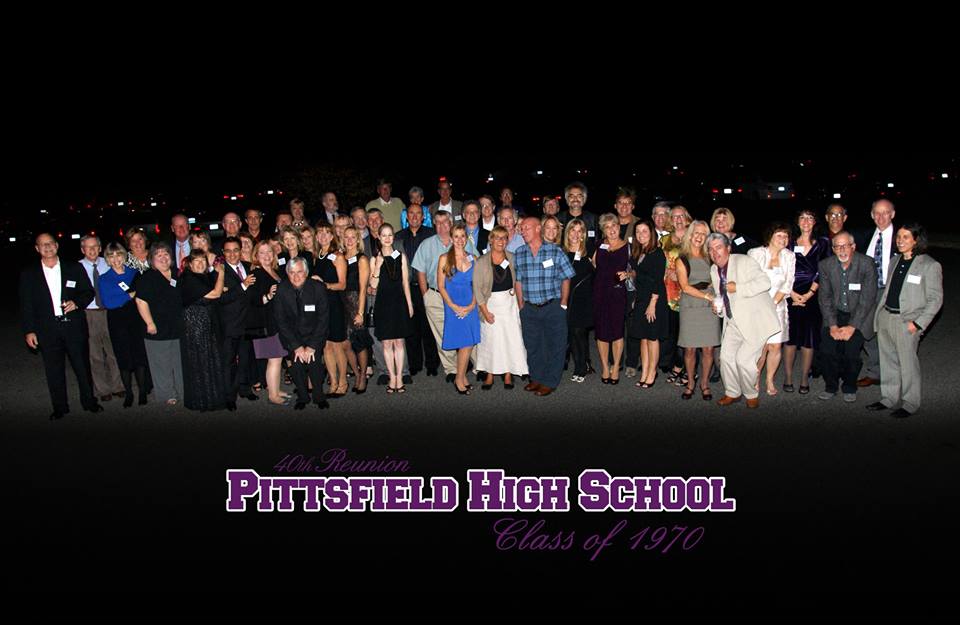
PHS 45th Reunion InviteIt was 45 years ago that I graduated from high school.  It’s really hard to believe that much time has passed, but this weekend I’m back in my hometown of Pittsfield, Massachusetts – in the “Heart of the Berkshires” – celebrating that teenage milestone.

This invitation has been on my refrigerator for months.  The anticipation has been building steadily and now it’s almost over.

Friday night we all went to the wonderfully restored Colonial Theater to see Mary Poppins.  Saturday night was our big reunion dinner/dance.  This morning we will meet one more time for Sunday brunch before we depart, all hoping we’ll be able to make it to the 50th reunion in 2020.

2020 is the year that commercial RADIO will become 100 years old.DT WBEC (1970s)  I was fortunate to start in radio back in 1967 while just starting high school.  I earned my 3rd class Radio Telephone FCC Operators License in February 1968 allowing me to professionally start working in radio shortly thereafter.  Radio would help me pay for my college education; bachelors and masters degrees.

My first radio station was WBEC – AM1420 in Pittsfield.

I had visions of being a big time disc jockey working at one of the major market 50,000-watt clear channel signal radio stations like WBZ in Boston or WLS in Chicago or WABC in New York.

But that never happened.  Instead I would move into radio sales and very quickly into radio station management.  It is in this senior management position that I would spend over thirty years of my radio life.

WSM(15)But never give up on your dreams.  Because when I began teaching at Western Kentucky University’s School of Journalism & Broadcasting, I invited radio & TV professionals into my capstone class.  One of those professionals, the operations manager & program director of Nashville’s legendary 650AM – WSM invited me to be a guest disc jockey on this 50,000-watt clear channel signal radio station.

Those high school dreams really can come true!

For four hours on Sunday, July 13, 2014 I was in the air chair doing “The Dick Taylor Show” on this iconic radio institution.

This weekend we all remembered the good times, like the price of a gallon of gas (35-cents) or the price of a 1st class postage stamp (6-cents).  But 1970 was also the year that the Beatles broke up and four students were slain by National Guardsmen at Kent State University in Ohio.

The movies featured: M*A*S*H, Patton, Love Story and Airport.PHS 40th Reunion Picture

The record of the year was “Aquarius/Let the Sunshine In” by the 5th Dimension.  The song of the year was “Games People Play” by Joe South and the album of the year was the self-titled album by Blood, Sweat & Tears.

Five years ago, we all stepped out of the dinner/dance hall for a group photo.  We looked FABULOUS!

We’re Baby Boomers.  A generation that was so big that the city had to handle our class size over three high schools – Pittsfield High, Taconic High and St. Joseph’s High.

We may have been separate back then and even competitive, but today we celebrate as one big high school class.

We’re the high school Class of 1970.

6 Comments

Filed under Education, Mentor, Radio, Sales

What if…

I had the opportunity to sit in on a webinar on “The Creative Economy” that is considered to be the direction the future of business is headed in compared to the traditional business methods of the past. What is meant by the term “The Creative Economy?” It’s one where business revolves around the customer versus the past where the customer revolved around the business.

The Creative Economy also breaks from tradition in the sense that it means the goal of a company is no longer about making money for the stakeholders but about delighting customers. But, you ask, isn’t “maximizing shareholder value” the mantra of Wall Street? Good question. Listen to what these CEOs have to say about that mantra:

            Jack Welch former CEO of GE: “the dumbest idea in the world”

            Vinci Group Chairman/CEO Xavier Hulliard: “totally idiotic”

            Paul Polman, CEO of Unilever: (has denounced) “the cult of shareholder value”

            Marc Benioff, CEO of Salesforce declared this still-pervasive business theory “wrong”

I guess it’s quickly losing favor with those who should know.

The Internet and “The Cloud” are enabling “The Creative Economy.”

Which brings me back to my initial question, “What if…”. What if radio stations were supposed to be small operations? What if the radio industry wasn’t meant to scale?

When I entered the radio business, companies were limited in the total number of radio stations they could own; in the entire USA. It was known as the 7-7-7 rule. A single company could own not more than 7 AM, 7 FM and 7 TV stations in all of America.

What this created was competition between owners of radio stations in a market. Each station was a team of people working as hard as they could to win the audience in that market. The focus was all about the listener or the viewer. Win the most listeners/viewers and advertisers would soon follow to showcase their wares on that radio or TV station’s airwaves.

Hearing “The Creative Economy” described on this webinar was like radio déjà vu.

In 1996, President William Jefferson Clinton signed the Telcom Act of 1996 into law. That was the moment that the “land rush” for broadcast properties began and Wall Street became heavily invested in the radio industry. Wall Street would bring its “maximize shareholder value” mantra to broadcasting.

This point was really brought home to me in 1999 when my stations were sold to a large radio consolidator. The head of this “big box” radio operator told us that we needed to “sell, sell, sell” that it was all about making money for the company and “maximizing shareholder value.”

This “pump up the troops” speech left me cold. I was brought up in a radio world that was about operating “in the public interest, convenience and/or necessity.” I was brought up in a world where if we treated the members of our team well, our team focused on delighting the listener, the advertisers would flock to our station and the owners would be rewarded for doing everything right. That view of life served me well my entire radio career.

Needless to say, I opted not to remain with this new company.

However, I would find myself playing “musical chairs” going forward as it was getting impossible to not be working for a company that hadn’t adopted this modus operandi.

Steve Denning, who writes for Forbes, lead this webinar and pointed out that economics was driving the change for companies worldwide. He told us that no company is doing it all right. Companies like Apple, Amazon, Google and Salesforce are moving in the right direction. In fact, Tim Cook is better at navigating the change to this style of management than Steve Jobs ever was and it no doubt is contributing to Apple being the most valuable company in the world. To give you an example of what it means to focus on the customer first, consider Tim Cook telling an investor in Apple this:

“If you want me to do things only for ROI reasons, you should get out of this stock.”

That was kind of radio world I grew up in. We always tried to do the right thing for our employees, our listeners, our advertisers and the money would follow.

I’m encouraged that radio people who sold out when Wall Street was buying, are now getting back into the radio business with that same ethic, spirit and sense of innovation that seduced me into a four decade long radio career. They understand the concept of “The Creative Economy” because that’s how they built their radio companies the first time around. They also understand that today, radio is more of a concept of operation than a method of delivery.

I’m excited to be working with the next generation of radio broadcasters at my university knowing that radio’s future has never been brighter.

7 Comments

Filed under Education, Mentor, Radio, Sales

A War on Talent

When iHeartMedia wooed away Kurt Alexander aka “Big Boy” from Emmis’ Power106 to their Real92.3 it was a big deal in more ways than one.

The top performing radio station for Emmis was their one station in Los Angeles, KPWR. That is until Alexander departed for KRRL-FM across the street. His leaving impacts both ratings and revenue.

It reminds me of the walking across the street of Scott Shannon in New York City. Shannon left WPLJ where he had been a morning fixture at the station for 23 years to take over mornings at WCBS-FM. Unlike Alexander in LA, Shannon didn’t go head-to-head with his former radio station but to a different format than the one he had just left. However his impact on both stations is much the same. WPLJ went down and WCBS-FM captured the #1 position beating WLTW for the first time.

At a time when the major radio companies are saying things like “flat is the new up” the only way for a company to grow its revenues when the revenue pie isn’t growing is to re-divide how the existing pie is being cut up. To do that means to raid another company’s talent in an effort to increase their ratings while decreasing market competition.

If we look at how talent gets created we find it’s not a quick process. In the case of Alexander, Emmis spent 20 years and millions of dollars turning him into a morning radio star. Shannon has been at the radio game since his army days, tenaciously practicing his craft to become the hall of fame legend he is today.

Radio is not about transmitters, buildings, music etc. it’s about people. People make the radio business fun; personalities behind the microphone and personalities on the street selling the ads. Strong personalities on both sides of the mic are what make for a winning radio station. Neither can be taken for granted.

Emmis didn’t think they were taking Alexander for granted. Heck they were paying this former body guard $1.45 million along with some sweeteners, but iHeartMedia was willing to up the ante to $3.5 million (which Emmis reportedly was willing to match). But what evidently Emmis couldn’t match were the other perks that a company the size of iHeartMedia could create that a company the size of Emmis could not.

The BBC has also been subjected to a talent raid. Apple enticed presenter Zane Lowe to join their iTunes Radio division which led to several more following Lowe to the Cupertino based company. The BBC has a worldwide reputation for great programming, programming talent and the discovery of new music.

The audio entertainment world is like the animal kingdom where the small animals get eaten by the bigger animals in the food chain of life.

Competition for talent that has proven it draws a big audience, not just on-the-air but also online and through social media has never been more sought after. Competition for talent that can package, present and close advertising sales also has never been in more demand.

It’s a war on talent. Good for talent, but an Excedrin headache for small operators battling the big boys; made all the more difficult in a lackluster advertising environment for many radio operators and an ever increasing amount of radio signals vying for that shrinking advertising pie.

The radio dial – including online streamers – may have become infinite, but the revenues that support it have not.

Radio Darwinism has escalated to the global village.

3 Comments

Filed under Education, Mentor, Radio, Sales